
高通跃龙IQ10系列

Search documents
信创ETF(159537)涨超4%,市场关注半导体需求回暖与AI算力升级
Mei Ri Jing Ji Xin Wen· 2026-01-14 06:11
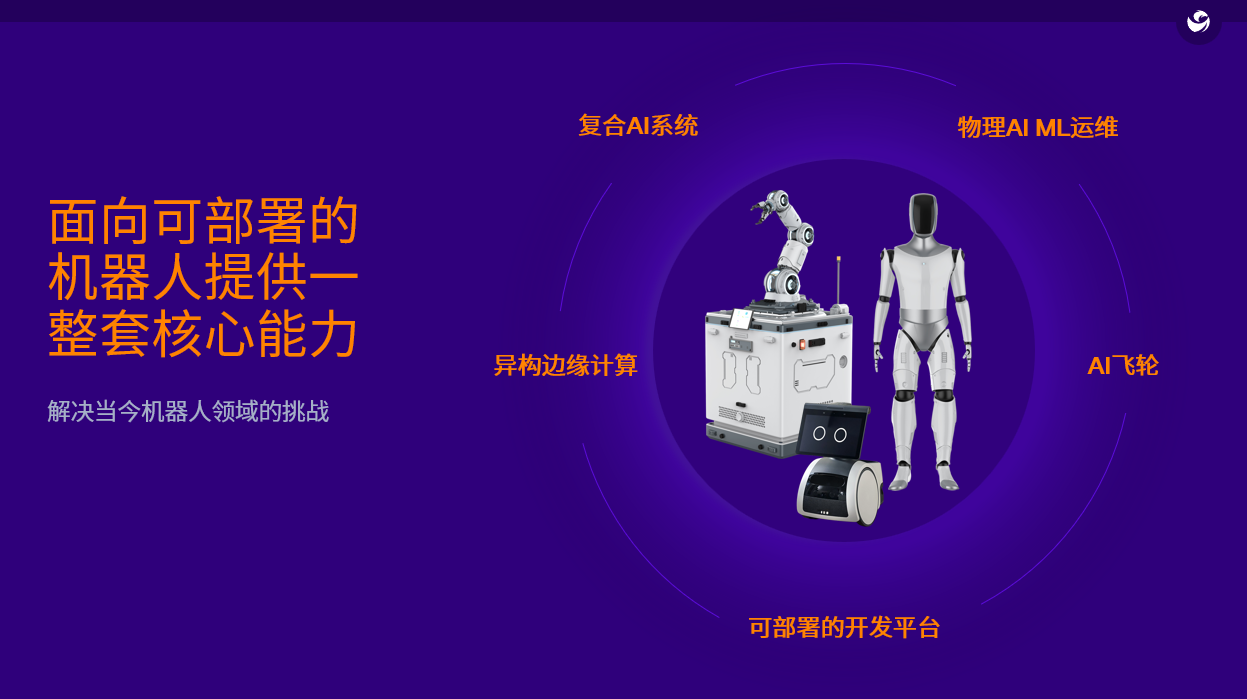
Group 1 - The core viewpoint is that the reduction in AI training and inference costs is driving the prosperity of AI applications, with Qualcomm's high-performance robot processor, the Snapdragon IQ10 series, showcasing significant potential for edge AI, particularly in devices like headphones and glasses [1] - NVIDIA's Rubin platform AI chips have begun mass production, demonstrating a significant increase in computing speed compared to the Blackwell platform while also being more cost-effective, indicating a surge in demand for computing power driven by the AI wave [1] - The storage prices have bottomed out and are beginning to recover, with the packaging and testing sector's utilization rates gradually increasing, suggesting future benefits from advanced packaging demands driven by AI chips [1] Group 2 - TSMC's Q4 revenue increased by 20.45% year-on-year, exceeding expectations, primarily due to the surge in AI application demand [1] - Domestic equipment advancements in technology are continuously progressing, with the next three years potentially focusing on "advanced process expansion" as a key line for self-control, highlighting the importance of advanced packaging in the AI industry trend [1] - The Xinchang ETF (159537) tracks the Guozheng Xinchang Index (CN5075), which selects listed companies in the semiconductor, software development, and computer equipment sectors from the Shanghai and Shenzhen markets to reflect the overall performance of companies related to the information technology theme [1]
四大芯片巨头掌门人罕见同台发声
2 1 Shi Ji Jing Ji Bao Dao· 2026-01-08 05:57
Core Insights - The CES 2026 highlighted the significant advancements in AI technology, particularly in the context of increasing computational power and the emergence of new applications across various sectors [1][2][8] - Chinese companies are playing an increasingly vital role in the global tech landscape, showcasing innovative AI hardware and solutions that attract considerable attention at international events [1][4][9] Group 1: AI and Computational Power - NVIDIA's CEO Jensen Huang emphasized the arrival of the "ChatGPT moment," indicating that machines are beginning to understand and act in the real world, with autonomous taxis being one of the first applications to benefit [2] - Huang introduced the new Rubin architecture, which includes a comprehensive stack solution with six core components, addressing the exponential growth in AI computational demands, projected to increase tenfold annually [2] - AMD's CEO Lisa Su noted that the computational power is transitioning from Zetta to Yotta Scale, with AI model training floating-point computation power increasing fourfold each year and inference token consumption rising by 100 times over the past two years [2] Group 2: Emerging AI Applications - Qualcomm's CEO Cristiano Amon highlighted the potential of next-generation personal AI devices, predicting a market size of 100 million units in the coming years, driven by edge AI and situational awareness capabilities [3] - The CES showcased a variety of AI-native products, with a notable increase in the capabilities of robots, moving beyond simple demonstrations to more complex functionalities [4][6] - The development of humanoid robots is progressing towards commercialization, with companies achieving significant advancements in motion control and operational precision, indicating a clear path for deployment in sectors like manufacturing and logistics [6][7] Group 3: Chinese Companies and Global Impact - Chinese firms are increasingly recognized as key players in the global tech ecosystem, leveraging their supply chain and R&D capabilities to drive innovation and efficiency [1][8][9] - The ability of Chinese companies to rapidly iterate on products, with a typical development cycle of about one year compared to two to three years for European counterparts, is enhancing their competitive edge [8][9] - The CES 2026 served as a platform for showcasing how AI technologies are set to permeate everyday life, with a focus on transforming concepts into tangible value through collaborative global efforts [9]


CES 2026见证AI生态变局 中国厂商跻身全球核心阵营
2 1 Shi Ji Jing Ji Bao Dao· 2026-01-07 23:14
Core Insights - The competition among major chip manufacturers is intensifying around the foundational computing power for AI, with native AI hardware accelerating its large-scale implementation, transitioning from laboratory settings to consumer and industrial applications [1][2] - Chinese manufacturers are playing an increasingly significant role at global tech events, showcasing their advancements in AI hardware and capabilities, which are supported by their supply chain and R&D strengths [2][11] Group 1: Computing Power and AI Development - The rapid evolution of underlying computing infrastructure is crucial for the accelerated development of AI large models, with chip leaders emphasizing the exponential growth of computing power and the new application opportunities it creates [3][4] - NVIDIA's CEO highlighted the arrival of the "ChatGPT moment" for physical AI, indicating that machines are beginning to understand and act in the real world, with autonomous taxis being one of the first applications to benefit [3] - AMD's CEO noted that the floating-point computing power for training AI models is growing fourfold annually, with inference token consumption increasing by 100 times over the past two years, necessitating new product offerings to meet Yotta-scale infrastructure demands [4] Group 2: Emerging AI Applications - The potential of edge AI is significant, with advancements in smart wearable devices being highlighted as a new category of mobile terminals that will coexist with smartphones [5][6] - Qualcomm's CEO projected that the market for personal AI devices could reach 100 million units in the coming years, emphasizing the importance of edge data for providing highly relevant user services [6] Group 3: Robotics and Physical AI - The maturity of physical AI was showcased at CES, with Chinese manufacturers presenting advanced robots that demonstrate improved capabilities compared to previous years [7][8] - The introduction of humanoid robots and their increasing commercial viability was noted, with companies achieving substantial progress in motion control and operational precision [9][10] - The integration of hardware, sensors, and environmental perception into scalable systems is seen as essential for advancing physical AI applications across various industries [10] Group 4: Chinese Manufacturers' Competitive Edge - Chinese companies are leveraging their supply chain efficiencies and R&D capabilities to drive rapid iterations and cost optimization in the robotics sector, significantly outpacing European competitors in product development cycles [11][12] - The shift from simple manufacturing to innovative solutions reflects a broader transformation in the perception of "Made in China" to "Created in China," highlighting the technological advancements and better solutions being offered [12]
CES 2026见证AI生态变局,中国厂商跻身全球核心阵营
2 1 Shi Ji Jing Ji Bao Dao· 2026-01-07 13:35
Core Insights - The article highlights the acceleration of native AI hardware development, emphasizing the growing demand for computing power and the expansion of AI applications from cloud to edge [1][2][12] - Chinese manufacturers are increasingly becoming significant players at CES 2026, showcasing a variety of AI hardware, including AI glasses and robots, which have garnered substantial attention [1][12] Group 1: AI Hardware and Computing Power - The rapid evolution of underlying computing infrastructure is supporting the accelerated development of AI large models, with a noted annual increase in floating-point operations for training by four times and a 100-fold increase in inference token consumption over the past two years [2][3] - NVIDIA's CEO highlighted the arrival of the "ChatGPT moment" for physical AI, with autonomous taxis being one of the first applications to benefit from this technology [2] - AMD's CEO discussed the transition to Yotta Scale compute, indicating that AI potential will be fully unleashed across data centers, personal computing devices, and edge AI [2][3] Group 2: Robotics and Physical AI - The maturity of physical AI was emphasized at CES, with a notable improvement in the capabilities of showcased robots compared to previous years, indicating a shift from simple demonstrations to more complex functionalities [7][8] - Companies like UTree Technology and Zongqiong Robotics are showcasing advanced robots capable of performing intricate movements, signaling a move towards mass production and real-world applications [8][9] - The integration of edge AI and real-time situational awareness in wearable devices is expected to create significant market opportunities, with projections of reaching 100 million units in the coming years [5][6] Group 3: Chinese Manufacturers and Global Role - Chinese firms are transitioning from being merely the "world's factory" to becoming key players in global technological innovation, supported by strong supply chain and R&D capabilities [1][12] - The efficiency of China's supply chain allows for rapid product iteration, with a production cycle of about one year compared to three to five years for European companies [12][13] - The article underscores that the advancements in AI technology are not just about manufacturing but also about creating better solutions and technologies, marking a shift from "Chinese manufacturing" to "Chinese innovation" [13]
高通发布跃龙 IQ10 系列,以完整技术组合赋能全场景物理 AI 机器人应用
Huan Qiu Wang· 2026-01-07 11:12
Core Insights - Qualcomm has unveiled its next-generation complete technology solution for robotics at CES 2026, integrating hardware, software, and composite AI capabilities, along with the latest high-performance robotics processor, the Qualcomm Snapdragon IQ10 series [1][3] Group 1: Qualcomm's Innovations - The Snapdragon IQ10 series is designed specifically for industrial-grade autonomous mobile robots (AMRs) and advanced full-sized humanoid robots, enhancing Qualcomm's existing robotics product roadmap with a "robotic brain" that combines high performance and energy efficiency [1][3] - Qualcomm's expertise in edge AI and high-performance low-power systems is expected to help developers transition robot prototypes into deployable intelligent devices [1][3] Group 2: Industry Collaboration and Vision - Nakul Duggal, Qualcomm's Executive Vice President, emphasized the importance of reliable, safe, and scalable operation for complex robotic systems, highlighting Qualcomm's foundational technologies that cover various aspects from sensing to execution [3] - Brett Adcock, CEO of Figure, stated that Qualcomm's platform, with its superior computing power and energy efficiency, is a crucial technological foundation for realizing Figure's mission of creating AI-driven humanoid robots to enhance productivity and improve quality of life [3] Group 3: Technological Advancements - The universal robot architecture powered by Snapdragon IQ10 integrates heterogeneous edge computing, edge AI, hybrid safety-critical systems, software, machine learning operations, and AI data flywheel technology, redefining the application possibilities of robotics [4] - This end-to-end solution enables robots to perform environmental reasoning and intelligently adapt to spatial and temporal changes, facilitating scalable deployment with industrial-grade reliability across various robot forms [4] Group 4: Product Demonstrations - During CES, Qualcomm showcased several robot products powered by its technology, including the VinMotion Motion 2 humanoid robot and the Booster K1 geek version robot, demonstrating Qualcomm's leadership in edge AI and commitment to advancing physical AI [4] - The exhibition also featured a commercially available robot development kit from Advantech, supporting rapid development and multi-scenario deployment, along with tools for remote robot control and AI data flywheel for data collection, training, and deployment [4]


AI泡沫退潮、落地为王,芯片巨头“拉帮结派”激战CES 2026
Tai Mei Ti A P P· 2026-01-07 08:01
Group 1 - NVIDIA's founder Jensen Huang emphasized the shift of AI from mere model competition to practical applications, focusing on "last mile" implementations during his keynote at CES 2026 [2][6] - The industry is transitioning from a "technology demonstration phase" to a "value realization phase," centering around real user scenarios [2] - AI technology is moving from "cloud-side intelligence" to "edge-side integration," becoming a fundamental infrastructure for human-computer interaction [2][6] Group 2 - CES serves as a platform for both tech giants and startups, particularly for Chinese companies to convert algorithms and technologies into tangible hardware [3] - AMD's CEO Lisa Su highlighted that AI is becoming a default capability in PCs, with AI performance improved by 1000 times over the past four years [9] - Intel introduced its third-generation AI PC processor, showcasing advancements in energy efficiency and CPU performance [11] Group 3 - Qualcomm launched the Snapdragon X2 Plus platform, featuring a 35% increase in single-core performance and a 43% reduction in power consumption [13] - IDC predicts that global AI PC shipments will reach 150 million units by 2027, with a penetration rate of 79% [13] - Major home appliance brands are now integrating AI into their products, focusing on enhancing core functionalities rather than superficial features [18] Group 4 - Companies like Hisense and TCL are showcasing advanced display technologies and AI-integrated home appliances at CES, with Hisense's RGB-Mini LED technology expected to see a significant increase in shipments [18][20] - Samsung plans to increase the number of mobile devices equipped with Google Gemini AI to 800 million by 2026 [22] - The competition among chip manufacturers is intensifying as they seek to define the future of physical AI [17] Group 5 - The CES 2026 highlighted the emergence of embodied intelligent robots and AI+AR glasses, indicating a shift from demonstration to market-ready products [29][34] - Startups are increasingly participating in CES to showcase innovative technologies and seek market opportunities [45] - The event serves as a critical platform for companies to adapt their strategies in response to rapid industry changes [47]
直击CES:AI,加速影响物理世界
Zhong Guo Zheng Quan Bao· 2026-01-07 04:44
Group 1: AI Technology and Developments - AI has become the central theme at CES 2026, with discussions focusing on extending AI into the physical world [2][3] - NVIDIA's CEO Jensen Huang announced that the company's open-source physical AI model "Cosmos" has reached one million downloads, indicating a significant shift in AI capabilities [2] - AMD introduced several new AI products, including the MI455X GPU AI chip and Ryzen AI processors, with plans to launch the MI500 series chip in 2027, aiming for a 1000-fold increase in AI performance over the next four years [2] - Qualcomm's new high-performance robot processor, the Snapdragon IQ10 series, is designed for industrial autonomous mobile robots and advanced humanoid robots [2][3] Group 2: Robotics and Smart Products - The humanoid robot TORA-ONE showcased at CES 2026 demonstrates strong adaptability in new retail scenarios, featuring advanced tactile sensors with high precision and sampling rates [4] - Companies like 松延动力 are targeting key global markets for their products, aiming for significant overseas expansion in 2026 [5] - The exhibition highlighted various smart home products, including robotic lawn mowers and pool cleaning robots, indicating a growing market for AI-integrated home appliances [6] Group 3: Autonomous Driving - The maturity of technology is pushing L4-level autonomous driving into everyday life, with significant advancements in AI driving this trend [7] - Huang announced the Alpamayo R1, an open-source VLA inference model for assisted driving, suggesting that autonomous driving may become a mainstream application of physical AI [7]
