
AI生态

Search documents
家电行业深度分析:从规模到价值:智能家电行业的竞争与增长
Zhongyuan Securities· 2026-03-25 09:06
Investment Rating - The report provides an investment rating of "In line with the market" for the home appliance industry, indicating a neutral outlook compared to the Shanghai and Shenzhen 300 Index [2]. Core Insights - The global smart home appliance market is projected to reach approximately $147.5 billion by 2025, with a compound annual growth rate (CAGR) of 22% from 2016 to 2026. By 2026, the market is expected to touch $180 billion, maintaining strong double-digit growth [8][13]. - China's smart home appliance market has seen significant growth, expanding from 200 billion yuan in 2016 to 500 billion yuan in 2022, with a market penetration rate of 12.66% in 2016, rising to 65% for smart TVs and 38.5% for smart air conditioners by 2022 [19][21]. - The competitive landscape of the global smart home appliance market is characterized by a tripartite structure of "Chinese giants + Korean duopoly + Western legacy brands," with Chinese brands holding a 38% to 40% share of global shipments [31]. Summary by Sections Global Smart Home Appliance Market - The smart home appliance market is defined as appliances that incorporate microprocessors, sensors, and network communication technologies, enabling them to have autonomous sensing, decision-making, and remote control capabilities [9]. - The market is expected to grow significantly, driven by the adoption of the Matter protocol and advancements in generative AI [13]. Chinese Smart Home Appliance Market - China's retail sales of smart home appliances are projected to reach approximately 450 billion yuan (around $642.86 billion) by 2025, accounting for 43.58% of the global market [19]. - There is substantial room for growth in market penetration for products like robotic vacuums and smart kitchen appliances, which remain lower in China compared to the U.S. [21][22]. High-Growth Niche Markets - The robotic vacuum market is expected to see a rise in shipments from 11 million units in 2019 to 24.12 million units by 2025, with a sales value of $11.5 billion [26]. - The high-end kitchen appliance market is projected to grow from $38 billion in 2020 to $50.2 billion in 2024, with China being a significant contributor to this growth [27]. Supply Chain Dynamics - The supply side of the smart home appliance market is dominated by Chinese brands, which have a significant advantage in terms of supply chain efficiency and cost [31]. - Major players in the smart appliance market include Haier, Midea, Samsung, and LG, with Haier leading in global market share for large home appliances [31][36]. Profitability Analysis - Companies are categorized into three tiers based on gross margin: - **Technology Leaders** (high gross margin of 45-55%): Companies like Roborock and Boss Electric benefit from technological barriers and high-end market positioning [56]. - **Scale Leaders** (mid-high gross margin of 25-30%): Companies like Gree and Haier leverage scale and supply chain advantages [62]. - **Mid-Pressure** (low gross margin of 14-22%): Companies like Samsung and LG face pressure from intense competition and cost structures [64]. Investment Recommendations - The report suggests a three-pronged investment strategy focusing on dividend-friendly stocks, high-growth opportunities in robotic vacuums and high-end kitchen appliances, and international expansion strategies [68]. - Recommended stocks include Haier Smart Home, Midea Group, and Gree Electric for their low valuations and high dividend yields [74].





绿联科技20260320
2026-03-22 14:35
Summary of Ugreen Technology Conference Call Company Overview - **Company**: Ugreen Technology - **Industry**: Consumer Electronics, specifically focusing on NAS (Network Attached Storage) products and accessories Key Points Sales Performance and Growth Trends - Ugreen's sales growth in January and February 2026 exceeded that of Q4 2025, with an expected net profit of approximately 1 billion yuan in 2026, representing a year-on-year increase of about 50%, corresponding to a PE ratio of around 30 times [2][14] - The NAS business is identified as the core growth driver, with projected revenue of about 1 billion yuan in 2025 and a domestic market share exceeding 30%, leading the industry [2][11] - Revenue is expected to reach 1.5 to 2 billion yuan in 2026, with growth rates approaching 100% [2] Product Development and AI Integration - Ugreen has launched AI NAS products equipped with Intel's Ultra series chips, capable of running large models with 5 to 10 billion parameters locally [4] - The company plans to continuously iterate its AI system, enhancing user experience by fine-tuning based on open-source models [4] Government Support and Market Position - The Shenzhen Longgang District government announced a 30% subsidy for AI NAS products, which is expected to benefit price-sensitive consumers [5] - Ugreen's NAS products can serve as a data hub in the AI ecosystem, enhancing seamless data access and task execution [5] Revenue Structure and Profitability - Current revenue structure: Domestic business accounts for about 40%, while overseas business constitutes approximately 60% [6] - Overseas operations have a significantly higher gross margin of over 40%, compared to less than 30% domestically, leading to overall profit growth of 30% to 40% [7] Product Positioning and Competitive Landscape - Ugreen positions itself as a "value-for-money" brand, similar to Xiaomi, focusing on low markup strategies [8] - In contrast, Anker adopts a high-price, high-margin strategy, positioning itself as a premium choice in the market [8] Product Categories and Growth Rates - Ugreen's product categories include: - Traditional products (e.g., adapters, data cables) accounting for over 40% of revenue, with a growth rate of around 15% [9] - Charging products (e.g., high-power chargers) also around 40% of revenue, maintaining over 50% growth [10] - NAS products, currently over 10% of revenue, are the fastest-growing segment [10] NAS Business Insights - Ugreen's NAS business achieved approximately 1 billion yuan in revenue in 2025, with a market share exceeding 30% domestically [11] - The NAS segment is expected to see close to triple-digit growth in 2026, with revenue potentially reaching 1.5 to 2 billion yuan [11] - The competitive edge lies in performance and pricing, with Ugreen's products priced significantly lower than traditional competitors [11] Profitability in B2B Market - The profitability structure varies between domestic and overseas markets, with overseas pricing generally 30% higher [12][13] - Ugreen's high-end models are targeting small and medium enterprises, which could yield substantial profit margins if successful [13] Future Performance and Valuation - Ugreen anticipates a net profit of about 700 million yuan in 2025, with a target of 1 billion yuan in 2026, driven by NAS and traditional product growth [14] - The current market capitalization of under 30 billion yuan corresponds to a PE ratio of about 30 times for 2026 projected profits, deemed reasonable for a company with clear growth logic and quality [14]
闭门小局:OpenClaw之后,有哪些创业机会真正值得去做?
Founder Park· 2026-03-12 07:19
Core Insights - The article emphasizes the excitement generated by OpenClaw in the AI startup ecosystem, highlighting the importance of understanding the new ecosystem being formed rather than just the products that can be developed using OpenClaw [2][3] - It suggests that entrepreneurs should focus on the emerging opportunities within the new ecosystem surrounding agents, including payment systems, identity, permissions, protocols, runtime, agent-ready websites, AI collaboration infrastructure, and IP entry points [4][8] Group 1: Emerging Opportunities - The article poses questions about the next generation of payment systems in the agent era, asking where the next Alipay will come from [7][8] - It discusses the need for protocol standardization to make web pages more readable for agents, transitioning from screen reading to language reading [7][8] - The concept of runtime engineering is introduced, questioning how to transform the black box of agents into a controllable interface [7][8] Group 2: AI Collaboration and Infrastructure - The article explores what AI-native office tools will look like, specifically referencing the future of platforms like Feishu in the AI era [7][9] - It raises the idea of integrating IP with agents, questioning the feasibility of combining niche markets like the two-dimensional space with IP and agents [9] - The article also discusses how corporate websites can be rewritten to cater to AI, positioning agents as new traffic entry points [9]


早报 | 美防长称美伊冲突或持续八周或更长;委员建议废除劳务派遣制度;苹果MacBook Neo来了;特朗普正式提名美联储主席
虎嗅APP· 2026-03-05 00:19
Group 1 - Iran has identified several candidates for the Supreme Leader position, with a temporary committee set to exercise the leader's powers until a new leader is elected [2][3] - Israel has issued a warning that any new Supreme Leader who opposes Israel and the U.S. will be targeted for elimination [3] - The U.S. Defense Secretary stated that the conflict between the U.S. and Iran could last for eight weeks or longer, while Iran denied reports of seeking negotiations with the U.S. [4] Group 2 - Russia's President Putin suggested that Russia might proactively cut off gas supplies to Europe, citing rising energy prices and the EU's plans to ban Russian gas imports [5] - The Iranian military successfully attacked Israeli defense installations, destroying seven radar systems, which has left the U.S. and Israel at a disadvantage in the region [7][8] Group 3 - Morgan Stanley plans to cut approximately 3% of its workforce, affecting various departments, including investment banking and asset management, due to performance-related reasons and changes in business priorities [14] - Xiaomi announced plans to upgrade its self-developed SOC chips annually and is preparing to launch an independent AI assistant for international markets, aiming to create a competitive edge in technology [15] Group 4 - Nvidia's CEO indicated that the recent $30 billion investment in OpenAI might be the last before the company goes public, and he expressed skepticism about a previously announced $100 billion infrastructure deal [16] - China Merchants Industry announced that the recent export ban on lithium from Zimbabwe will have a limited impact on its operations, as it maintains sufficient domestic raw material inventory [25][26]





和林微纳业绩快报:2025年净利润2963.8万元
Ge Long Hui· 2026-02-27 13:57
Core Viewpoint - Helin Micro-Nano (688661.SH) reported a significant increase in revenue and net profit for the fiscal year 2025, driven by AI ecosystem innovations and a recovering market demand [1] Financial Performance - The company achieved an operating revenue of 868 million yuan, representing a 52.47% increase compared to the same period last year [1] - The net profit attributable to the parent company was 29.638 million yuan [1] - The net profit attributable to the parent company after deducting non-recurring gains and losses was 24.897 million yuan [1] Strategic Focus - In 2025, the company continued to focus on its core business development, driven by market orientation and innovation [1] - The company actively expanded its market presence and optimized its product structure, leading to an effective improvement in overall performance [1]

和林微纳:2025年净利润2963.8万元
Xin Lang Cai Jing· 2026-02-27 13:05
Core Viewpoint - The company reported a total operating revenue of 868 million yuan for the fiscal year 2025, representing a year-on-year growth of 52.47%, with a net profit of 29.638 million yuan [1] Group 1: Financial Performance - The total operating revenue for 2025 reached 868 million yuan, marking a significant increase of 52.47% compared to the previous year [1] - The net profit for the same period was recorded at 29.638 million yuan [1] Group 2: Market and Industry Trends - The growth in revenue is attributed to the ongoing recovery in market demand driven by innovations in the AI ecosystem [1] - The company continues to focus on its core business development, driven by market orientation and innovation [1] - There is an active effort to expand market presence and optimize product structure, contributing to the overall improvement in company performance [1]
豪掷80亿后发现,AI大战的胜负不靠红包
3 6 Ke· 2026-02-26 12:50
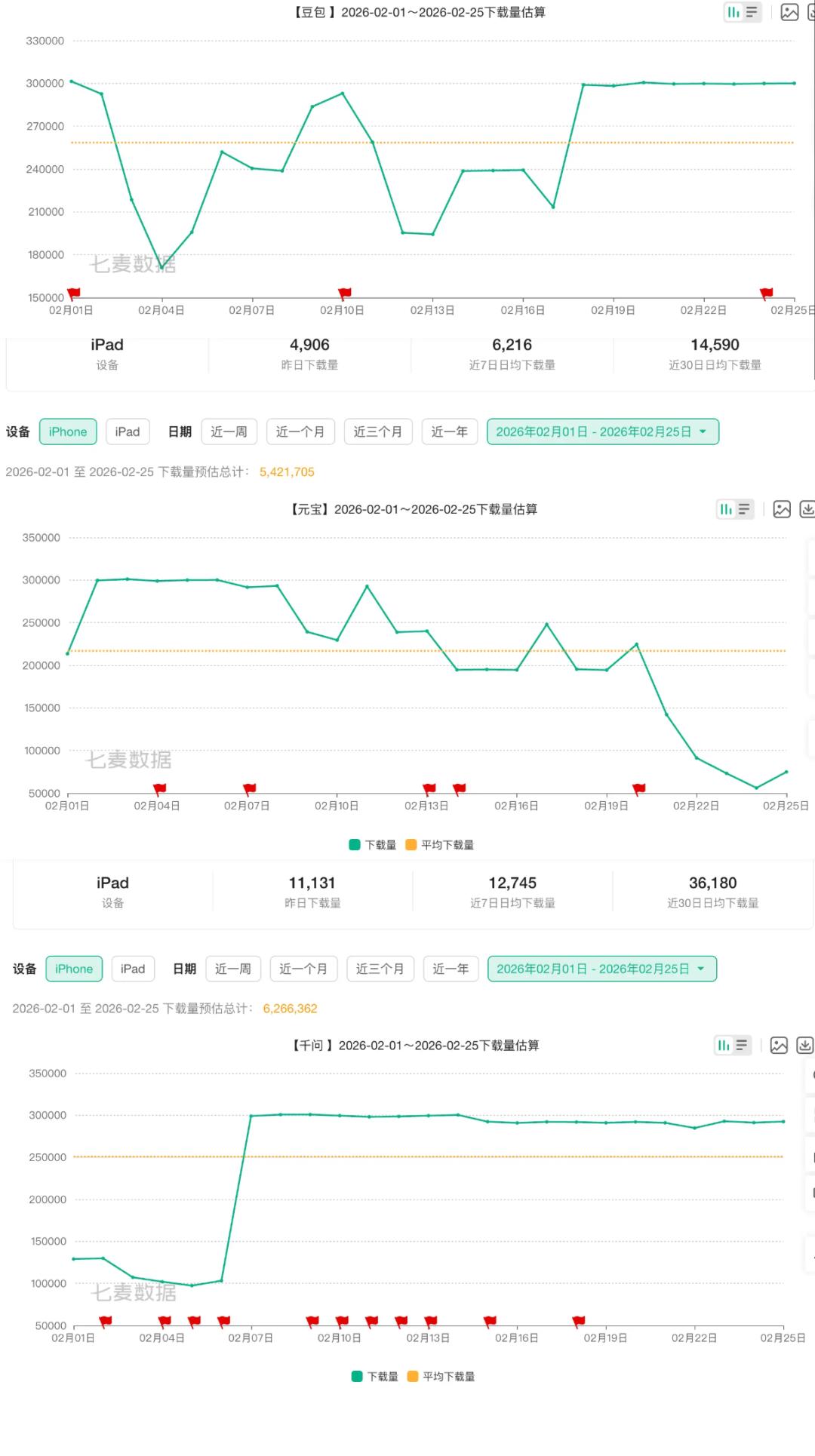
Core Insights - The AI red envelope battle during the Spring Festival saw over 8 billion yuan invested, making AI and large models accessible beyond first-tier cities, reaching elderly users and lower-tier markets [1][11] - Major tech giants like ByteDance, Alibaba, Tencent, and Baidu engaged in a strategic competition, each with distinct approaches to integrate AI into everyday life [2][4][11] Group 1: Industry Dynamics - The AI applications experienced a surge in user engagement during the Spring Festival, with ByteDance's Doubao achieving 1.9 billion interactions on New Year's Eve, while Alibaba's Qianwen attracted over 130 million first-time AI shoppers [4][11] - Despite the initial success, post-festival user retention rates dropped significantly, with average 30-day retention at only 12.8%, indicating challenges in maintaining user engagement after promotional activities ended [6][10] Group 2: Company Strategies - Doubao replicated WeChat's successful model by partnering with CCTV for the Spring Festival, integrating AI features like avatar generation and greeting videos into user interactions [3][4] - Alibaba's strategy focused on leveraging its ecosystem, converting 3 billion yuan in subsidies into practical AI experiences across various consumer scenarios, enhancing user engagement through familiar platforms [4][13] - Tencent utilized social engagement tactics, offering cash rewards through its Yuanbao app to encourage users to interact with AI features, aiming to create habitual usage patterns [4][12] Group 3: User Experience and Retention - The initial excitement from the red envelope promotions led to a significant influx of users, but many were driven by short-term incentives, resulting in a high churn rate post-festival [6][10][12] - Users expressed dissatisfaction with the complexity of tasks and low perceived value of rewards, leading to a rapid decline in app usage after the promotional period [6][10] - The effectiveness of AI applications in retaining users is closely tied to their integration into daily activities, as seen with Alibaba and ByteDance's strategies of embedding AI into existing services [13][14]



超8800亿营收护航,华为解密生态的“合纵连横”
Sou Hu Cai Jing· 2026-02-24 13:23
Core Insights - Huawei is planning a strategic focus on building an open and collaborative AI ecosystem and Harmony ecosystem, with a projected sales revenue exceeding 880 billion RMB in 2025, indicating stable business operations [1][3] Group 1: Financial Performance - Huawei's sales revenue for 2025 is expected to surpass 880 billion RMB, showing steady growth from 862.1 billion RMB in 2024 [3] - The terminal business grew by 38.3% year-on-year in 2024, while the smart automotive solutions business surged by 474.4% [3] Group 2: Strategic Focus - Huawei's core strategic points include: 1. Digital infrastructure as the foundation for AI innovation and application 2. Building an open-source AI ecosystem to accelerate the release of AI industrial value 3. Co-constructing the Harmony operating system ecosystem to enhance user experience [3][5] - The construction of a technology ecosystem requires open collaboration and innovation, leveraging industry ecosystems to drive technological advancement [3] Group 3: AI Ecosystem Development - Huawei is establishing an open system centered around Ascend, with significant progress made in AI computing [4] - The Ascend ecosystem currently supports 43 mainstream large model pre-training and has adapted over 200 open-source models, facilitating more than 6,000 industry solutions [5] Group 4: Harmony Operating System Growth - The Harmony operating system has surpassed 18% market share in China, ranking second after iOS, and has achieved a global smartphone market share of 4% [5] - Over 45 million devices are equipped with HarmonyOS, with more than 75,000 native applications and cloud services available [5] Group 5: OpenHarmony Community - The OpenHarmony community has grown to over 520 partners and more than 10,000 code contributors, becoming a key project of the OpenAtom Open Source Foundation [6] Group 6: Industry Collaboration - Other companies, such as Shein and Siemens, are also focusing on building intelligent ecosystems, indicating a broader trend in the market towards collaborative innovation [8][9]
全年销售收入超8800亿元!华为董事长梁华最新发声
半导体芯闻· 2026-02-24 10:08
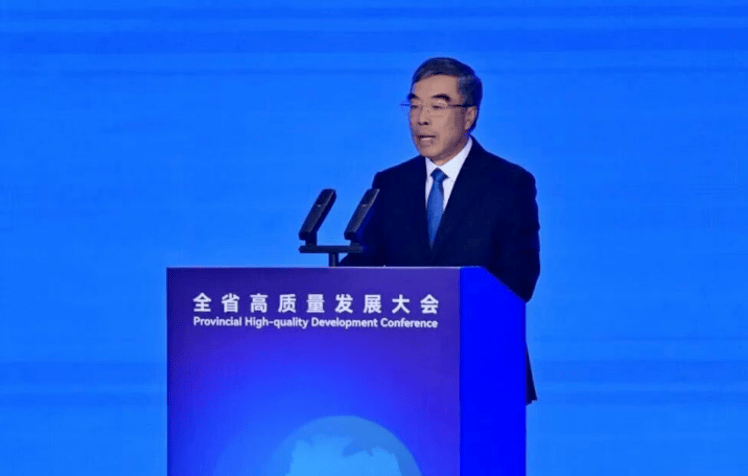
Core Insights - Huawei's overall business remains stable, with annual sales revenue exceeding 880 billion RMB [1][2] - The Harmony OS ecosystem is evolving from usable to user-friendly, with over 40 million devices running Harmony OS 5 and 6, and more than 75,000 native applications and cloud services available [1][4] - The Ascend ecosystem has 43 mainstream large models based on Ascend pre-training, over 200 open-source models adapted for production, and more than 6,000 solutions implemented [1][4] - The rapid development of artificial intelligence is reshaping existing development, production, and service models, creating new applications and driving innovation in manufacturing and services [2][3] Summary by Sections Business Performance - Huawei's sales revenue for the year surpassed 880 billion RMB, reflecting a strong focus on high-quality development and core competitiveness [2] - The company plans to increase R&D investment to meet the growing demand for computing power and to build an AI open ecosystem centered around Ascend [2] Digital Infrastructure - Emphasis on solidifying digital infrastructure as a foundation for high-quality AI development, highlighting the need for advanced planning in AI data center construction and communication infrastructure [3] - The integration of AI technology, infrastructure, and application scenarios is crucial for sustainable development in the AI industry [3] AI Ecosystem - The creation of an open-source AI ecosystem is essential for unlocking the industrial value of AI, requiring collaboration and continuous development [4] - Huawei's efforts in building an AI ecosystem centered around Ascend aim to enhance application capabilities and foster innovation among developers [4] Harmony OS Development - The Harmony OS ecosystem is advancing towards a more user-friendly experience, with significant growth in the number of devices and applications available [4] - The interoperability of devices is key to providing an intelligent user experience, with ongoing efforts to establish a unified operating system and middleware [4] Call for Collaboration - The construction of a technology ecosystem requires collaboration and open innovation, urging more developers and partners to join the Ascend and Harmony ecosystems [5] - The integration of technological and industrial ecosystems is vital for driving innovation and promoting the convergence of the real economy and digital economy [5]
投资经理王攀峰新春寄语 | 智行致远,共见“十五五”新价值
Xin Lang Cai Jing· 2026-02-16 00:51
Core Viewpoint - The article emphasizes the transition of China's economy into a new phase starting in 2026, focusing on total factor productivity and the capital market's role as a resource allocation engine rather than just a financing tool [3][12]. Investment Opportunities - Future investment opportunities are rooted in two main aspects: the resilience of industrial upgrades and the benefits of capital market reforms, particularly in shareholder returns [3][12]. - The article identifies three key sectors for investment in 2026: pharmaceuticals, technology, and advanced manufacturing [4][13]. Pharmaceuticals - The pharmaceutical industry is expected to see clearer innovation-driven and global competition trends, with a focus on Chinese innovative drug companies that have established strong technology platforms and successful international cases in areas like ADC and dual antibodies [4][13]. Technology - In the technology sector, AI models are evolving from mere tools to ecosystem builders, with increasing monetization capabilities. The focus in the Chinese market is on the progress of AI hardware localization, with expectations for more mature AI edge products by 2026 [4][13]. Advanced Manufacturing - The advanced manufacturing sector, particularly in humanoid robotics, is transitioning from thematic investment to performance verification, with a focus on companies that have established competitive advantages in products, technology, and customer relationships [5][14]. - In the smart vehicle sector, the emphasis is on leading companies with high barriers to entry and strong global competitiveness, especially in batteries and glass, while closely monitoring developments in smart driving technology [5][14]. Market Trends - The Chinese capital market is experiencing structural differentiation as it recovers from the bottom, with a shift from valuation recovery to profit growth driving market trends in 2026 [15]. - The article advocates for a disciplined approach to value investing, suggesting that the best opportunities often arise from contrarian views in volatile markets [15].
