
鲑鳟鱼

Search documents
鲑鳟鱼成智利第三大出口产品
Shang Wu Bu Wang Zhan· 2026-01-16 16:10
Core Insights - Chile's salmon and trout export revenue is projected to reach $6.55 billion in 2025, marking a 3% year-on-year growth and achieving three consecutive years of growth, making it the third-largest export product after copper and cherries [1] Group 1: Export Performance - Salmon exports are expected to contribute $6.21 billion, while trout exports are projected at $338 million [1] - The salmon and trout sector accounts for 6% of Chile's total export revenue, 15% of non-mineral exports, and 48% of processed food exports [1] Group 2: Market Distribution - The United States remains the largest market for Chilean Atlantic salmon and trout, accounting for 40% of export revenue, approximately $2.399 billion [1] - Other significant markets include Japan, with $1.044 billion, and Brazil, with $796 million [1]
大河东流万物生
Xin Lang Cai Jing· 2025-12-31 21:06
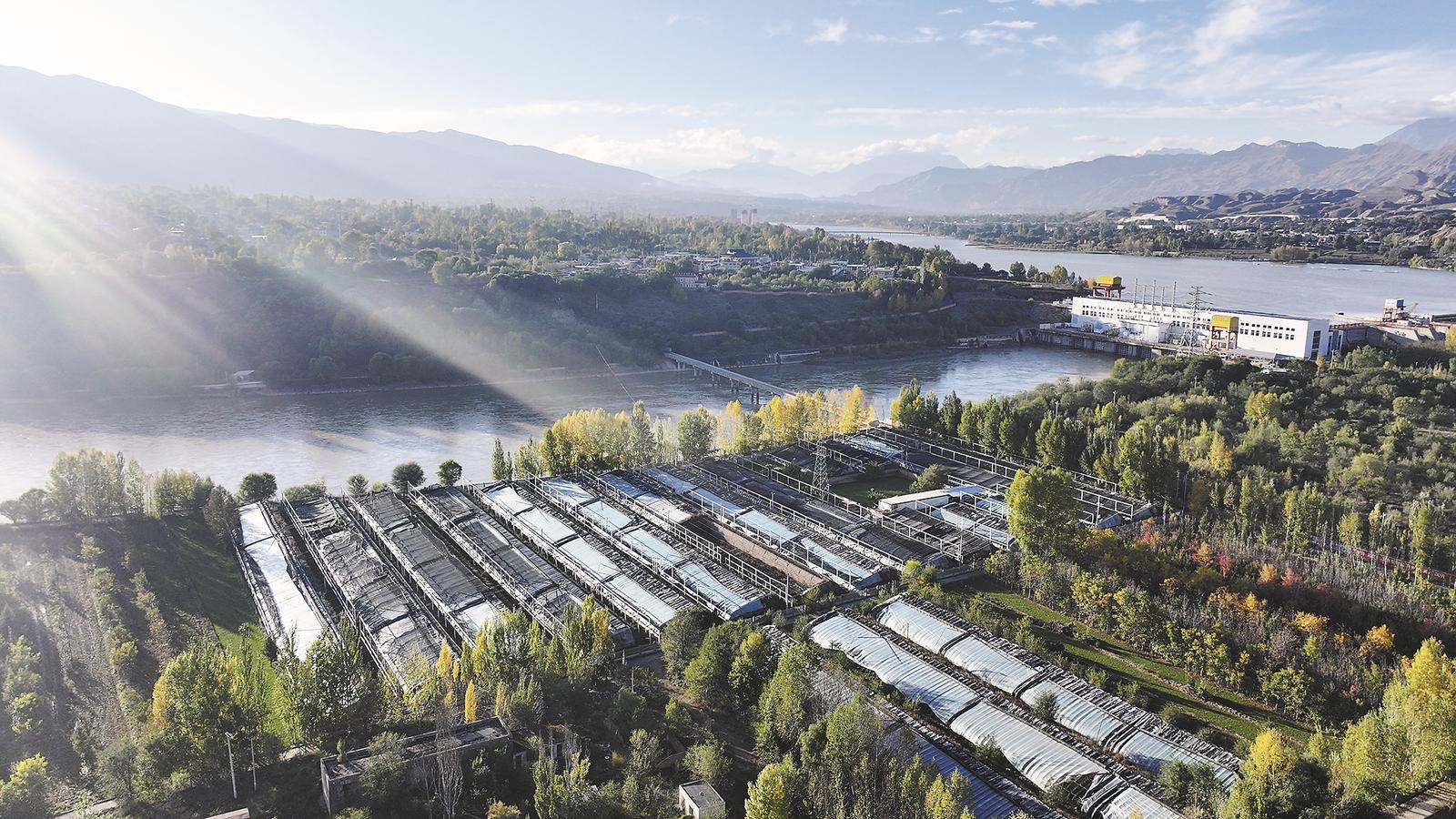
Core Viewpoint - The article highlights the ecological protection and high-quality development practices in the Yellow River basin, particularly in Qinghai, showcasing the integration of environmental conservation with economic growth and community well-being [5][10]. Group 1: Ecological Protection and Community Involvement - The Yellow River, originating from the Tibetan Plateau, plays a crucial role in the ecological and economic landscape of Qinghai, contributing nearly half of the river's runoff [5]. - Local residents, such as Tsering and Te Bao, exemplify the connection between ecological protection and livelihood, with Te Bao transitioning from poverty to stability through ecological management roles [8][9]. - The number of ecological guardians in Qinghai has stabilized at approximately 145,000, with an average annual income increase of over 20,000 yuan, benefiting many former impoverished households [9][10]. Group 2: Green Transformation and Energy Development - Qinghai is leading a green transformation by integrating renewable energy sources, with 94.23% of its installed capacity being clean energy, and it has become a significant player in national electricity supply [13][15]. - The "water-light complementary" project in Longyangxia demonstrates the synergy between hydropower and solar energy, enhancing environmental conditions and agricultural productivity [11][12]. - The province aims to establish a modern industrial system supported by clean energy, organic certification for over 12 million acres of grassland, and the promotion of high-quality agricultural products [15]. Group 3: Innovation and High-Quality Development - Qinghai is leveraging digital technology to modernize traditional industries, such as livestock trading, enhancing transparency and market responsiveness [14]. - The province's strategic focus on developing a "green electricity-green computing" model reflects a systematic approach to optimizing its unique ecological advantages [15]. - The commitment to sustainable development is evident in the promise that the best growth allows for mutual benefit between nature and communities, ensuring a harmonious future [15].

迈向“十五五”的发展图景|大型养殖工船到深海“牧渔”
Ren Min Ri Bao· 2025-11-27 07:12
Core Insights - The article emphasizes the importance of high-quality development in the marine economy and the construction of a strong marine nation, advocating for a diversified food supply system through modern agricultural practices [1]. Group 1: Innovations in Marine Aquaculture - The "Guoxin 1号2—1" is the world's first 150,000-ton smart fishery large-scale breeding vessel, which was launched on April 17 and began trial operations shortly after [3]. - The vessel has a capacity of approximately 96,000 cubic meters for aquaculture, with 15 standard breeding cabins and advanced environmental control systems that ensure optimal living conditions for fish [4]. - Automation and smart technology have significantly reduced labor costs by 20%, with over 90% mechanization and a 45% increase in automation levels, allowing just two people to manage daily feeding operations [4]. Group 2: Supply Chain and Market Impact - The innovative breeding vessel is part of a broader trend in the marine fishery industry, enhancing the entire supply chain from feed formulation to logistics, achieving rapid delivery times of 6 hours for 500 kilometers and 15 hours for 1,000 kilometers [5]. - The successful harvest of 46,000 fish from the "Guoxin 1号2—1" is seen as a starting point, with expectations that the series of vessels will yield over 10,000 tons annually once fully operational [5]. - The industrialization of aquaculture is transforming the marine fishery sector, allowing for seasonal complementarity in fish farming across different regions, thus turning deep-sea areas into sustainable "blue granaries" [6].
大型养殖工船到深海“牧渔”
Ren Min Ri Bao· 2025-11-27 06:29
Core Viewpoint - The article highlights the advancements in marine economy and the development of high-quality marine resources through innovative aquaculture practices, particularly focusing on the "Guoxin 1号2—1" smart fish farming vessel and its impact on the industry [1][5]. Group 1: Marine Economy Development - The initiative aims to promote high-quality development of the marine economy and accelerate the construction of a strong marine nation [1]. - The "Guoxin 1号2—1" is the world's first 150,000-ton smart aquaculture vessel, which was launched in April 2023 and has already begun trial operations [5]. Group 2: Aquaculture Innovations - The vessel has successfully harvested over 46,000 large yellow croakers in a single catch, showcasing its operational efficiency [5]. - The aquaculture system on board includes advanced environmental control systems that ensure optimal living conditions for fish, significantly enhancing their growth and health [5][6]. - The vessel operates with a high degree of automation, achieving over 90% mechanization and a 45% increase in automation levels, which reduces labor costs by 20% [6]. Group 3: Industry Impact - The innovations in aquaculture are driving the overall upgrade of the marine fishery industry, with specialized feed formulas and smart software pushing the industry towards high-end transformation [7]. - The logistics system enables rapid delivery, achieving "fast delivery" within 6 hours for 500 kilometers and 15 hours for 1,000 kilometers [7]. - The expected annual production capacity of the "Guoxin 1号" series vessels is over 10,000 tons, indicating a significant shift towards industrialized aquaculture that enhances production efficiency and resource utilization [7].
大型养殖工船到深海“牧渔”(迈向“十五五”的发展图景)
Ren Min Ri Bao· 2025-11-26 22:21
Core Viewpoint - The article emphasizes the high-quality development of the marine economy and the acceleration of building a strong marine nation, highlighting advancements in modern aquaculture and the innovative capabilities of large-scale fish farming vessels [1][6]. Group 1: Marine Economy Development - The "Guoxin 1 No. 2-1" is the world's first 150,000-ton intelligent fish farming vessel, launched in April 2023, which has successfully harvested over 46,000 large yellow croakers in November [4][6]. - The vessel employs a mobile farming model, allowing it to navigate to optimal water conditions, enhancing fish growth and quality [4][6]. Group 2: Technological Innovations - The "Guoxin 1 No. 2-1" features advanced environmental control systems and a comprehensive monitoring setup with over 200 cameras and 2,000 sensors, achieving over 90% mechanization and a 45% increase in automation levels [5][6]. - The vessel's operational efficiency allows for significant reductions in labor costs, with only 35 personnel managing the entire facility [5][6]. Group 3: Industry Impact - The innovative aquaculture practices are expected to transform the marine fishery industry, enhancing production efficiency and resource utilization, thus creating a sustainable "blue granary" [6]. - The series of "Guoxin" vessels, once fully operational, is projected to yield an annual total capacity exceeding 10,000 tons, contributing to a diversified food supply system [6].
山东让辽阔海洋变“蓝色粮仓”
Qi Lu Wan Bao Wang· 2025-08-31 01:04
Core Viewpoint - Shandong is leveraging its marine resources to enhance food security and economic growth through the development of a "blue granary" concept, focusing on both land and sea food sources [2][4]. Group 1: Marine Economic Development - Shandong aims to achieve a total aquatic product output of 9.53 million tons and a fishery economic output value of 490.4 billion yuan by 2024 [2]. - The province is transitioning from traditional fishing and aquaculture to a more sustainable "marine ranching" model, which has increased per-acre yields by over 30% compared to conventional methods [3]. Group 2: Technological Advancements in Aquaculture - The launch of the world's first 150,000-ton smart fishery vessel, "Guoxin 1号2-1," represents a significant upgrade in marine ranching capabilities, designed to produce approximately 3,600 tons of high-quality fish annually [4]. - Shandong has established over 2,800 gravity-type deep-water cages and 37 large-scale deep-sea aquaculture facilities, expanding its aquaculture water volume to 4 million cubic meters [4]. Group 3: Breeding and Processing Innovations - The province leads the nation with 17 national-level aquatic breeding farms and has formed a breeding consortium involving 26 leading enterprises and 30 research teams [5]. - Shandong's processing industry is enhancing the value of marine products, with the oyster industry alone generating a total industrial chain value of 10 billion yuan through various processed products [5].
