鸿蒙元服务

Search documents
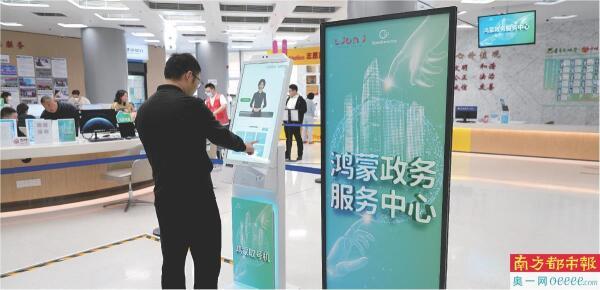
“智能前台”实时答疑 无感取号智慧填表
Nan Fang Du Shi Bao· 2025-12-23 23:15
Core Insights - The first government service center in Shenzhen's Luohu District, powered by the HarmonyOS, has been officially launched, featuring an AI digital assistant that enhances service efficiency and user experience [2][3]. Group 1: AI Digital Assistant and Service Efficiency - The AI digital assistant, referred to as "smart front desk," utilizes over 52,000 pieces of government data to provide instant responses to citizen inquiries, reducing average consultation wait times from over 10 minutes to immediate replies [3]. - Citizens using HarmonyOS smartphones can access services without downloading apps, allowing for seamless appointment scheduling and real-time queue updates, resulting in an average queue time reduction of 80% [3]. Group 2: Enhanced Business Services - The "Harmony + AI Smart Form Filling" system addresses the challenges of filling out multiple forms for business registrations, enabling over 95% of fields to be auto-filled, significantly speeding up the process to just a few minutes [4]. - The streamlined process has been praised by users for saving time and reducing the need for repetitive checks and multiple window visits [4]. Group 3: Integration of HarmonyOS in Government Services - The Luohu District has integrated the distributed capabilities of the HarmonyOS with government service reforms, creating a digital foundation that enhances service efficiency through collaborative device capabilities and AI technology [5]. - A dedicated Harmony service window allows staff to operate across various systems seamlessly, transforming tedious verification tasks into more personalized and proactive assistance [5]. Group 4: Future Development and Ecosystem Building - Luohu aims to establish a comprehensive ecosystem centered around open-source HarmonyOS and RISC-V technologies, promoting a collaborative environment for software and hardware integration [6]. - The district has opened high-value Harmony application scenarios across various sectors, including education and healthcare, fostering a multi-domain integration that benefits the Harmony ecosystem and its enterprises [6].

服务分发创新实践:鸿蒙元服务研究报告|36氪研究院
36氪· 2025-12-15 11:12
Core Viewpoint - The article emphasizes the emergence of "Yuan Service" as a solution for developers to enhance their commercial performance in a saturated mobile internet market, focusing on lightweight and scenario-based service distribution to address user needs and operational challenges [5][10][12]. Group 1: Current State of Mobile Applications and Distribution Market - The mobile internet is entering a phase of stock competition, with user growth slowing and customer acquisition costs rising significantly, with a 109% increase in mainstream channel costs over three years [7][31]. - By mid-2025, the internet penetration rate in China is projected to reach 79.7%, but the growth rate has dropped to around 2%, indicating a ceiling on traffic growth [7][31]. - The number of applications on Android and iOS systems reached 4.83 million and 3.26 million respectively by mid-2025, with growth rates of 2.43% and 6.52% [7][34]. Group 2: Challenges and Opportunities for Developers - Developers face the challenge of increasing customer acquisition costs while needing to focus on refined operations to capture existing user value [5][31]. - User engagement in segmented scenarios is rising, indicating a shift towards more precise service delivery based on user needs [8][37]. - The explosive growth of AI applications, with a 32.7% year-on-year increase in average monthly usage time, presents new opportunities for developers to leverage lightweight AI experiences [8][38]. Group 3: Yuan Service and Its Value Proposition - Yuan Service provides a comprehensive empowerment process for developers, covering development, user acquisition, retention, and monetization through a lightweight and scenario-based service distribution model [10][46]. - The service aims to enhance development efficiency by allowing developers to deploy across multiple platforms with reduced costs and increased exposure through various entry points [11][49]. - Yuan Service integrates AI capabilities and distributed technology to create a seamless user experience across devices, enhancing service value and user engagement [12][14]. Group 4: Practical Applications and Trends of Yuan Service - Yuan Service is being implemented in various sectors, such as finance and logistics, to improve user experience by providing real-time information and reducing the complexity of service access [76][81]. - The service is expected to continue expanding, creating a growth flywheel through increased capability density and scenario depth as more developers join the ecosystem [82].

36氪研究院 | 服务分发创新实践:鸿蒙元服务研究报告
3 6 Ke· 2025-12-14 23:32
Group 1 - The mobile internet is entering a phase of stock competition, with slowing traffic growth and rising customer acquisition costs posing significant challenges for developers [2][20][23] - By mid-2025, China's internet penetration rate is projected to reach 79.7%, but the year-on-year growth rate has dropped to around 2%, indicating a ceiling on traffic growth [2][20] - The number of applications on Android and iOS systems reached 4.83 million and 3.26 million respectively by mid-2025, with year-on-year growth rates of 2.43% and 6.52% [2][22] Group 2 - User demand is shifting towards more precise service delivery in segmented scenarios, which is crucial for developers to achieve refined operations [3][27] - The explosive growth of AI applications is injecting new vitality into the industry, with user preference for lightweight AI experiences providing new value points for developers [3][28] - By mid-2025, the average monthly usage time for AI applications increased by 32.7%, leading the mobile application market [3][28] Group 3 - The "Meta Service" is designed to provide lightweight, scenario-based service distribution capabilities, empowering developers throughout the entire process from development to monetization [5][37] - Meta Service leverages distributed technology architecture and AI capabilities to offer smart service distribution solutions, enhancing efficiency in development, user acquisition, retention, and monetization [5][37] - The service aims to bridge the gap between developers and users, optimizing the adaptation of supply-side services to demand-side experiences [5][37] Group 4 - In the development phase, the ASCF framework supports developers in achieving multi-end deployment and technical capability reuse, improving efficiency in development and listing [8][41] - For user acquisition, Meta Service opens various service entry points, including the negative one-screen and smart SMS, to provide effective paths for user acquisition [8][47] - Retention strategies include differentiated solutions for various service types, enhancing user stickiness through dynamic service reminders and frequent exposure [8][56] Group 5 - Meta Service is expected to become a foundational infrastructure for the smart ecosystem, with increasing developer participation enhancing service density and scenario depth [9][71] - The growth cycle of "more partners - richer services - more precise reach - stronger commercial value" is anticipated as more developers join the Harmony ecosystem [9][71] - The service network aims to achieve seamless transitions across multiple devices, expanding the service value radius and creating a user-centered cross-end experience [9][71]

移动应用服务新路径研究:轻应用生态发展洞察(以鸿蒙元服务为实践案例)
Ai Rui Zi Xun· 2025-12-04 02:04
Investment Rating - The report does not explicitly state an investment rating for the industry Core Insights - The report highlights the rapid growth of lightweight applications driven by market, user, and technological factors, indicating a shift towards a more efficient and user-friendly application ecosystem [3][5] - The emergence of the "meta-service" as a representative of lightweight applications addresses developer pain points and enhances the application development and operation process [3][4] - The lightweight application ecosystem is expected to continue expanding, with significant user engagement and market potential [4][44] Summary by Sections 01 Multiple Factors Driving Application Evolution - The evolution of mobile application services has transitioned from simple WAP web applications to complex native applications, and now to a dual ecosystem of super apps and lightweight applications [9][10] - The core logic of this evolution focuses on efficiently meeting user needs, with future applications expected to be more diverse and adaptable to various scenarios [9][10] 02 Developer Perspective on Lightweight Application Solutions - Developers face challenges in both revenue generation and cost reduction, necessitating a shift towards lightweight applications to lower user experience barriers and enhance user retention [61][62] - The report outlines a comprehensive distribution matrix for meta-services, integrating various traffic sources to provide developers with efficient user acquisition channels [67][68] 03 User Perspective on Lightweight Application Experience - Nearly 90% of users favor lightweight applications, primarily due to their simplicity, efficiency, and minimal resource consumption [23][25] - User feedback indicates a strong willingness to adopt lightweight applications, driven by the desire for a clean and efficient experience [23][24] 04 Future Trends in the Lightweight Application Ecosystem - The report anticipates significant growth in the lightweight application sector, with the number of such applications expected to exceed 8 million by 2025 [40][44] - The synergy between traditional applications and lightweight applications is emphasized, suggesting a collaborative approach to enhance user experience and service delivery [50][51]
鸿蒙独家快递服务体验!京东快递接入鸿蒙元服务,收发快递更便捷
Sou Hu Cai Jing· 2025-11-22 12:33
Group 1 - JD Express officially announced its integration with HarmonyOS Meta Service, becoming the first express company to embrace this unique service form within the HarmonyOS ecosystem [1] - The collaboration aims to leverage the core advantages of HarmonyOS Meta Service, such as no installation, instant access, and cross-device flow, to enhance the express service experience for HarmonyOS users [1][7] - JD Express has already established a foundation for cooperation with HarmonyOS, being one of the first to integrate express application services and deploy the HarmonyOS quick access feature [7] Group 2 - HarmonyOS Meta Service is a lightweight program that offers features like instant opening and no installation, providing diverse service options for Huawei users [7] - The integration of JD Express into the HarmonyOS ecosystem enhances the service landscape, with over 30,000 HarmonyOS applications and Meta Services being updated and developed by June 2025 [8] - Future collaboration will explore the integration of AI models with logistics scenarios, enhancing smart logistics services through voice interaction with HarmonyOS AI assistant [8]

AI重塑交互,元服务成为服务精准触达的新解法
36氪· 2025-09-22 14:28
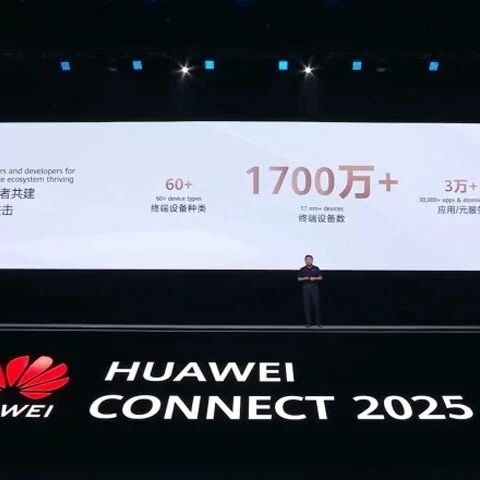
Core Insights - The article discusses the transformation of AI from a passive tool to an active partner in complex task execution, enhancing user experience and operational efficiency [4][5][7] - It highlights the emergence of AI-native services, particularly Huawei's HarmonyOS "meta services," which provide lightweight, on-demand solutions that cater to user needs without replacing traditional apps [5][9] Group 1: AI Transformation - AI agents have shifted from being passive responders to proactive executors of complex tasks, significantly improving productivity (66%), cost savings (57%), decision-making speed (55%), and customer experience (54%) for businesses [4] - The transition represents a fundamental redefinition of human-machine relationships, where AI understands user intent through multimodal inputs and provides timely services [4][8] Group 2: HarmonyOS Meta Services - HarmonyOS meta services, with over 30,000 applications, are designed to respond precisely to user needs, enhancing the user experience by eliminating multiple steps in service access [5][9] - The services utilize an intent framework that allows for proactive service delivery, transforming the interaction from "users finding services" to "services finding users" [8][9] Group 3: Developer Empowerment - Huawei's ASCF (Atomic Service Cross Framework) facilitates efficient development and deployment of meta services, allowing developers to reuse existing assets and achieve multi-device distribution [12][20] - The introduction of HarmonyOS payment services streamlines transactions for developers, offering features like fund distribution and marketing support, which are particularly beneficial for high-frequency trading sectors [13][14] Group 4: Ecosystem Expansion - The rapid growth of HarmonyOS meta services, driven by AI capabilities, has led to a significant increase in developer engagement, with over 800,000 developers and 17 million HarmonyOS devices [19][21] - The services are expanding globally, with international developers joining the ecosystem, enhancing user experience across various regions [21][23]
让AI主动干活,给你找服务,鸿蒙“6”啊
量子位· 2025-06-24 13:36
Core Viewpoint - The article discusses the evolution of Huawei's HarmonyOS and its new service distribution capabilities, emphasizing how it enhances user experience by proactively providing services based on user habits and location [1][3][5]. Group 1: Service Distribution Capabilities - HarmonyOS introduces a service distribution model that allows users to receive relevant services without actively searching for them, transforming the user experience [2][6]. - The system can recognize user habits and push service cards at appropriate times, such as suggesting coffee when arriving at the office [6][7]. - The "exploration" service flow will cover various scenarios, providing personalized and immersive experiences while reducing the development costs for service providers [7][9]. Group 2: Developer Engagement - Huawei has launched a growth platform for developers, offering tools like API and SKU integration to facilitate the adoption of HarmonyOS services [9][12]. - The ArkUI framework allows developers to create services easily, even without prior experience, and supports multi-device deployment [12][14]. - Existing applications can be adapted for HarmonyOS using the ASCF framework, enabling faster integration into the ecosystem [13][14]. Group 3: Market Adoption and Success Stories - Notable partners like Nayuki Tea and Dongfang Wealth have successfully integrated into the HarmonyOS ecosystem, leading to significant increases in user engagement and service usage [10][11]. - Nayuki Tea implemented a "tap to order" feature, enhancing the ordering process and achieving record daily order volumes [10]. - Dongfang Wealth developed a service card that increased daily active users tenfold by providing real-time stock market information without requiring app downloads [10]. Group 4: Future Opportunities - The article highlights the current momentum of HarmonyOS as it aligns with the AI era, presenting a unique opportunity for early adopters to benefit from the ecosystem [15][16]. - Huawei is incentivizing both users and developers through various promotional activities and fee reimbursement policies to encourage participation in the HarmonyOS ecosystem [15].