2nm晶圆

Search documents
台积电南科2nm扩厂,将于2028年完工
Jing Ji Ri Bao· 2026-02-22 22:58
Core Viewpoint - TSMC is ramping up investments in its 2nm chip manufacturing facility to meet the increasing demand for AI chips, with plans for construction and operation set for the coming years [1] Group 1: Investment Plans - TSMC plans to invest in a new semiconductor factory in the Tainan Science Park, covering an area of approximately 15.46 hectares [1] - The construction planning, licensing applications, and on-site work are expected to start in 2026, with completion and operational readiness anticipated by 2028 [1] Group 2: Market Demand - NVIDIA's CEO Jensen Huang indicated a significant demand for chips this year, projecting that TSMC's capacity could potentially grow by over 100% in the next decade [1] - TSMC's ongoing expansion efforts are seen as a response to alleviate the pressure from 2nm orders [1] Group 3: Environmental Impact Assessment - The environmental impact assessment for the new semiconductor factory is scheduled for a public meeting on February 24 [1] - The planned site is located in the specific development area of Tainan Science Park, adjacent to the "Tree Valley Park" and the "Tainan Park" [1]

台积电最大客户换人了!
国芯网· 2026-01-21 12:07
Core Viewpoint - The relationship between Apple and TSMC has shifted, with NVIDIA becoming TSMC's largest customer, accounting for 13% of its total revenue, while Apple no longer holds priority shipping rights [2][4]. Group 1: Customer Dynamics - TSMC has stopped granting Apple priority shipping rights, indicating a change in their long-standing partnership [4]. - NVIDIA has overtaken Apple as TSMC's largest customer, reflecting a significant shift in the semiconductor supply chain [2][4]. Group 2: Supply Chain and Production - TSMC's 2nm wafer supply is under pressure due to high demand, leading to continuous price increases for advanced process nodes over the past four years [4]. - The number of 2nm process tape-outs is 1.5 times that of 3nm, suggesting a competitive landscape with multiple clients vying for TSMC's advanced capacity [4]. Group 3: Strategic Moves by Apple - Apple is preparing for a transition to Intel as a second supplier for advanced processes, with plans to release M-series processors using Intel's 18A process by mid-2027 [4]. - The introduction of Intel as a secondary supplier is strategically significant for Apple, as it aims to enhance supply chain management while still relying heavily on TSMC in the foreseeable future [4].


报道:三星美国厂3月启动EUV试产,计划下半年量产特斯拉AI芯片
Hua Er Jie Jian Wen· 2026-01-20 10:37
Group 1 - Samsung Electronics is accelerating the mass production process at its first wafer fab in the U.S., planning to start trial operations of extreme ultraviolet lithography (EUV) equipment in March this year to prepare for mass production of Tesla's AI5 and AI6 autonomous driving chips [1] - The construction of the facility is nearing completion, with approximately 7,000 workers on-site daily, and about 1,000 already working in the office building [1] Group 2 - The Taylor factory in Texas covers approximately 4.85 million square meters, exceeding the combined area of Samsung's two factories in Korea, and has reserved land for an additional 10 wafer fabs, indicating a long-term expansion strategy in the U.S. [2] - Initially planned as a 4nm chip production base, the strategic goal has shifted to a monthly production of 50,000 2nm wafers, reflecting a clear direction towards advanced process technology [2] Group 3 - Yield remains a core challenge for Samsung in the competitive landscape of advanced semiconductor processes, with TSMC expected to start 2nm mass production in Taiwan by the end of 2025, achieving initial yields of 70% to 90%, while Samsung's 2nm pilot line has not yet reached this level [3] - Samsung has reportedly improved its 2nm process yield to about 50% and is beginning to promote its second-generation 2nm technology, SF2P, which is crucial for meeting supply commitments to key customers like Tesla [3]
AI需求强劲+贸易协议驱动 台积电(TSM.US)加码对美投资
智通财经网· 2026-01-16 07:33
Core Viewpoint - TSMC is accelerating its expansion plans in Arizona, USA, driven by a strong financial report and a recent trade agreement between the US and Taiwan, with an increased investment commitment to meet the rising demand for AI chips [1][2]. Group 1: Investment Plans - TSMC has committed to invest $165 billion in the US to support the government's initiative to rebuild domestic chip manufacturing [1]. - The company plans to increase its investment in Arizona further, with CFO Emily Tan expressing confidence in the AI trend as a reason for the capital expenditure increase [1][2]. - TSMC's capital expenditure is projected to rise significantly, with expectations for 2026 to reach between $52 billion and $56 billion, up from $40.9 billion in 2025, exceeding market expectations [2]. Group 2: Expansion Details - TSMC initially purchased 1,100 acres of land in Arizona for six fabs, two advanced packaging facilities, and a research center, but has since acquired an additional 900 acres to support its expansion plans [2]. - The company is advancing its construction of multiple fabs, including the completion of the P2 facility in Arizona, which is expected to begin production in 2026 [3]. - TSMC's first fab in Arizona is already operational, achieving production yields and process levels comparable to its advanced facilities in Taiwan [3]. Group 3: Trade Agreement Context - The recent US-Taiwan trade agreement includes a reduction of tariffs on Taiwanese goods to 15% and a commitment for Taiwanese chip companies to invest at least $250 billion in US chip production [2]. - Despite the trade agreement, TSMC's investment plans are primarily driven by customer demand rather than direct involvement in the trade negotiations [3].
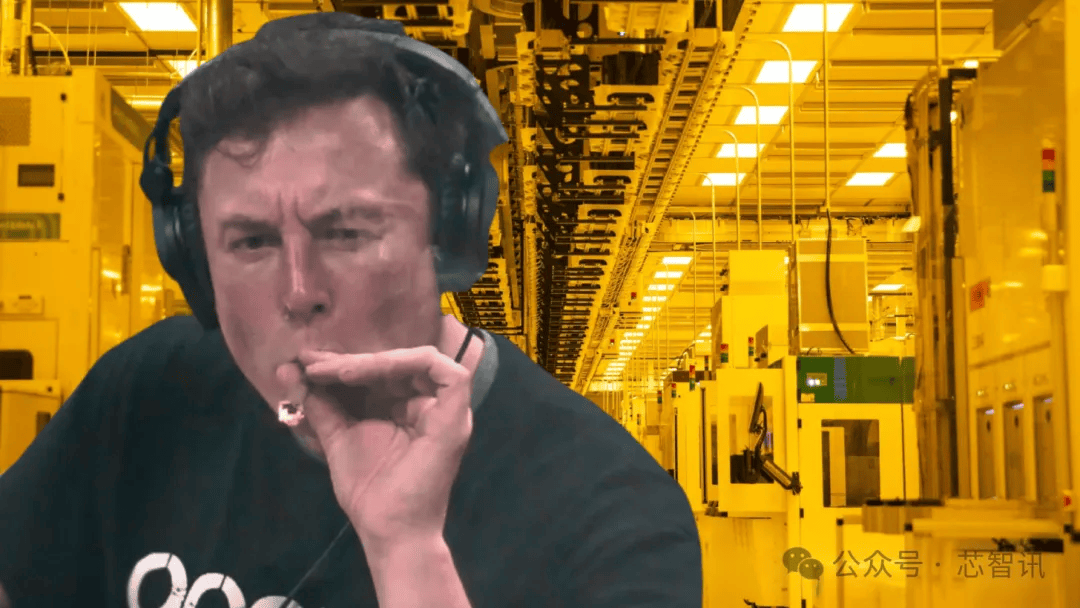
马斯克确认:将建2nm晶圆厂!但他想在里面抽雪茄、吃汉堡!
Sou Hu Cai Jing· 2026-01-08 04:40
Core Viewpoint - Elon Musk confirmed that Tesla will establish its own 2nm wafer fabrication plant, expressing skepticism about the current methods used in the semiconductor manufacturing industry for cleanroom construction [3][4]. Group 1: Tesla's 2nm Wafer Fab - Tesla is planning to build a 2nm wafer fabrication facility, which Musk believes will revolutionize the manufacturing process [3]. - Musk humorously suggested that he could eat a cheeseburger and smoke a cigar inside the wafer fab, indicating a casual approach to the environment within the facility [1][3]. Group 2: Cleanroom Environment - Current cleanroom environments in semiconductor manufacturing are designed to be highly isolated, with wafers transported in nitrogen-filled boxes to maintain a micro-positive pressure environment [3][4]. - Cleanrooms are classified by ISO standards, with ISO 1 and 2 being the most stringent, allowing only a limited number of particles per cubic meter of air [4]. - Activities such as smoking or eating are strictly prohibited in ISO 1-3 cleanroom environments due to the risk of contamination from particles generated by human activities [5].

台积电2nm,4月1日开始接单
半导体芯闻· 2025-03-24 10:20
Core Insights - TSMC has achieved a significant milestone with a 60% yield rate for its 2nm technology and will start accepting orders from April 1 [1][2] - Apple is expected to be the first customer for TSMC's 2nm wafers, with the A20 chip designed for the iPhone 18 series set to launch in the second half of 2026 [1][2] - TSMC aims to reach a monthly production target of 50,000 wafers by the end of 2025, with the potential to increase capacity to 80,000 wafers [2] Production and Capacity - TSMC's production will focus on two factories located in Kaohsiung and Baoshan, with an expansion ceremony scheduled for March 31 [1] - The first batch of 2nm wafers is expected to be delivered to Hsinchu Baoshan by late April [1] - The company plans to implement the "CyberShuttle" service to help reduce customer costs associated with wafer testing [2] Market Demand - There is high demand for 2nm wafers, surpassing that for 3nm wafers, with several major clients including AMD, Intel, Broadcom, and AWS lining up for orders [2] - The estimated cost per wafer is around $30,000, indicating a significant investment in advanced semiconductor technology [2]