AI数据平台

Search documents
盘前必读丨15只硬科技主题基金获批;福耀玻璃营收净利双增
Di Yi Cai Jing· 2026-03-18 00:04
Group 1 - The Chinese government has launched a new batch of 13 major foreign investment projects with a planned investment of $13.4 billion, focusing on manufacturing sectors such as electronics, chemicals, automotive, and machinery [2] - The new projects include logistics and biopharmaceutical R&D centers, signaling increased support for the service industry and the integration of modern services with advanced manufacturing [2] - The investment sources are diversified, including multinational companies from the UK, Germany, Switzerland, Sweden, and Turkey [2] Group 2 - The China Securities Regulatory Commission has approved a new batch of 15 hard technology-themed fund products, focusing on core technology and strategic emerging industries [3] - These funds will track indices related to artificial intelligence and China's strategic emerging industries, with plans to start fundraising soon [3] Group 3 - Nvidia's CEO announced at the GTC conference that the AI inference market has reached a turning point, with exponential growth in demand for inference computing power [4] - Nvidia plans to collaborate with a startup focused on inference technology to launch AI server systems, targeting the trillion-level computing market [4] - Huawei introduced new AI data infrastructure aimed at enhancing AI inference efficiency and reducing deployment barriers, with significant improvements in accuracy and utilization rates [4] Group 4 - Tencent Music's stock dropped by 24.65% after reporting a gross margin of 44.7%, below market expectations of 45.1%, and lower-than-expected active user numbers [7] - The company reported total revenue of 8.64 billion yuan for the fourth quarter, a year-on-year increase of 15.9% [7] Group 5 - The U.S. stock market saw slight gains, with the S&P 500 up 0.25%, the Nasdaq up 0.47%, and the Dow Jones up 0.10% [5] - Major tech stocks showed mixed performance, with Tesla, Amazon, and Google all rising, while Nvidia and other tech stocks experienced declines [6]





【太平洋科技-每日观点&资讯】(2026-03-18)
远峰电子· 2026-03-17 14:05
Market Overview - Major indices declined with Shanghai Composite Index down 0.85%, North China 50 down 1.85%, Shenzhen Component down 1.87%, Sci-Tech 50 down 2.23%, and ChiNext Index down 2.29% [1] - TMT sector led the decline, with SW Communication Cables and Accessories down 7.23%, SW Discrete Devices down 5.37%, and SW Communication Network Equipment and Devices down 5.32% [1] Domestic News - Semiconductor Investment Alliance: LightSpeed Technology will showcase the world's first 3.2T silicon photonic single-mode NPO module at the 2026 Fiber Optic Communication Expo, having completed sample testing months ago [1] - Huawei's data storage launch introduced an AI data platform and edge scenario FusionCube A1000 AI hyper-converged machine, enhancing knowledge retrieval accuracy and reducing inference latency by 80% [1] - BOE is accelerating investments in next-generation display production lines in Beijing and Chengdu to expand capacity for ultra-high-resolution panels for virtual reality devices and OLED panels for IT equipment [1] - Vivo announced a price adjustment for some products starting March 18, 2026, due to significant increases in global semiconductor and storage costs [1] Overseas News - Semiconductor packaging and testing: Onsemi announced a price increase for certain products effective April 1, driven by rising costs and demand, with key material prices up over 30% [2] - Micron Technology announced mass production of a 36GB 12-Hi HBM4 memory designed for NVIDIA's Vera Rubin GPU platform, along with the industry's first PCIe 6.0 data center SSD [2] - Murata Manufacturing, a global leader in MLCC, will implement price increases of 15%-35% for AI server and high-end automotive MLCC products starting April 1 [2] - ASML has partnered with Prodrive and VDL-ETG to develop hybrid bonding equipment, marking a strategic move in the "beyond Moore" technology race [2] AI News - Manus announced the expansion of its AI Agent from the cloud to local computers, enabling local file access and operations, supporting tasks like file organization and data processing [3] - NVIDIA launched the NemoClaw software stack for the "Little Lobster" OpenClaw intelligent platform, emphasizing ease of deployment with a single command [3] - Apple acquired MotionVFX, a company specializing in plugins and templates for Final Cut Pro, likely to integrate its tools into Apple's service ecosystem [3] - Nebius signed a five-year agreement with Meta for exclusive computing capacity worth $12 billion, with plans to build data centers to meet urgent industry computing demands [3] Industry Tracking - Semiconductor materials and processes: The first "Yaotai" computing power station by Chasing Chip was successfully launched, aimed at testing capabilities in space environments [4] - The UK plans to invest over £1 billion (approximately $1.3 billion) in quantum computing research over the next four years, focusing on applications in pharmaceuticals, financial services, and energy [4] - EmboX completed a $120 million Series B funding round to enhance its embodied intelligence technology, focusing on hardware and software integration [4] - Jiangxi Dayi New Materials Technology is nearing the production phase of a new optical functional film material project, with equipment installation underway [4] Pricing Information - DRAM prices showed slight fluctuations, with DDR5 16G averaging $39.667, up 0.42%, and DDR4 16Gb averaging $77.364, up 0.18% [5] - Semiconductor material prices from Baichuan Yingfu indicated stable pricing for various high-purity materials, with no significant daily changes reported [6] GTC Highlights - The Feynman 1.6nm chip was unveiled, boasting a 300% performance improvement and 40% lower power consumption, expected to launch in 2028 [7] - The Rubin Ultra supercomputing platform was introduced, capable of integrating 144 GPUs per cabinet, enhancing computing density by 50% [7] - The NemoClaw open-source platform was launched to simplify AI agent development, supporting multi-modal interactions [7] - Space-1 computing service was launched, designed for extreme space environments, providing significant AI computing power for space exploration [7] Investment Initiatives - NVIDIA announced a $2 billion investment with Nebius to build a large-scale AI cloud platform focused on advanced fields like space pharmaceuticals and climate simulation [8]


AI日报丨OpenAI年化营收超250亿美元;Meta计划研发自研芯片
美股研究社· 2026-03-05 13:48
Group 1 - The article highlights the rapid development of artificial intelligence (AI) technology, presenting significant opportunities in the market [3] - Huawei launched its AI data platform at the MWC Barcelona 2026, aimed at addressing key challenges faced by enterprises in deploying AI agents and supporting digital transformation [5] - OpenAI's annualized revenue has surpassed $25 billion, reflecting a 17% increase from $21.4 billion at the end of last year, while its competitor Anthropic has seen its revenue grow nearly threefold to over $19 billion [6] - Broadcom predicts that its AI chip revenue will exceed $100 billion by 2027, indicating a surge in demand for custom AI chips in a market dominated by Nvidia [7] Group 2 - Meta Platforms Inc. plans to develop its own custom chips for training AI models, despite recent agreements with top chip manufacturers, focusing on highly customized workloads [9] - Nvidia's CEO Jensen Huang stated that the possibility of investing $100 billion in OpenAI is unlikely, especially with OpenAI's plans for an IPO, and mentioned that their recent $10 billion investment in Anthropic might be the last [9]

国元证券晨会纪要-20260305
Guoyuan Securities2· 2026-03-05 01:48
Core Insights - The report highlights the divergence in policy positions among Federal Reserve officials due to the Middle East situation, indicating potential shifts in monetary policy [4] - The U.S. Treasury Secretary announced that a 15% global tariff is expected to take effect this week, which may impact international trade dynamics [4] - The report notes a significant increase in European natural gas prices, which surged by 60%, reaching a three-year high, suggesting potential inflationary pressures [4] Economic Data Summary - The Baltic Dry Index closed at 2242.00, up by 2.51% [5] - CME Bitcoin futures rose to 73580.00, reflecting a 7.47% increase [5] - ICE Brent crude oil prices increased by 1.45% to 82.58 [5] - The Nasdaq Index closed at 22807.48, up by 1.29%, while the Dow Jones Industrial Average rose by 0.49% to 48739.41 [5] - The Hang Seng Index fell by 2.01% to 25249.48, indicating a decline in the Hong Kong market [6] - The Shanghai Composite Index decreased by 0.98% to 4082.47, reflecting a downward trend in mainland markets [6]
华为悬赏300万元,解决AI时代存储难题
第一财经· 2025-12-26 13:54
Core Viewpoint - The Olympus Mons Awards, initiated by Huawei, aims to encourage global researchers to address challenges in data storage and processing in the AI era, with a total prize pool of 3 million RMB for innovative solutions [1][3]. Group 1: Award Details - The total prize pool for this year's Olympus Mons Awards is 3 million RMB, including 2 Olympus Awards of 1 million RMB each and 5 Pioneer Awards of 200,000 RMB each [1][6]. - Since its establishment in 2019, the Olympus Mons Awards have attracted over 320 scholars from 12 countries, awarding 6 Olympus Awards and 18 Pioneer Awards [3]. Group 2: Focus Areas - This year's awards will focus on solving issues related to high computational costs, conflicts between inference efficiency and accuracy, and rising storage costs in the AI era [3][5]. - The awards will specifically address challenges such as SSD-based storage-computing integration, high-density storage channel modulation coding, and hierarchical large memory network protocols [5][6]. Group 3: Research Directions - The first direction emphasizes innovative medium technologies for the AI era, including high-density information recording and cost-effective storage systems [5]. - The second direction focuses on creating a data foundation for Agentic AI, requiring advancements in knowledge extraction and multi-modal data representation [5][6].

华为:全球悬赏300万元解决AI时代的存储难题
财联社· 2025-12-26 11:01
Core Viewpoint - The sixth Olympus Award by Huawei officially launches a global call for solutions on December 26, focusing on addressing storage challenges in the AI era with a prize pool of 3 million RMB [1]. Group 1: 2025 Olympus Challenges - The challenges are centered around innovative medium technologies for the AI era, driven by the need for efficient data processing as cold data becomes warm and warm data becomes hot, leading to increased processing costs [4]. - Challenge 1: Fusion of storage and computing based on SSDs and efficient indexing technology [4]. - Challenge 2: Storage channel modulation and coding technology for ultra-high recording density [4]. - Challenge 3: Hierarchical large memory network protocols and IO path optimization technology [4]. Group 2: Agentic AI Data Foundation - The development of Agentic AI necessitates the evolution of storage systems from simple data storage to data management platforms for AI, focusing on high-quality knowledge bases and semantic information refinement [4]. - Challenge 1: Knowledge extraction, multi-modal data representation, and knowledge retrieval technology [4]. - Challenge 2: Semantic information refinement technology for efficient inference in large models [4]. Group 3: Evaluation Criteria and Timeline - The evaluation will consider scalability, potential social or economic benefits, and the technical and commercial value of the research proposals submitted by participants [6]. - Submission period: December 26, 2025 - April 30, 2026 [6]. - Review period: May 2026 - June 2026 [6]. - Award ceremony: August 2026 [6].

甲骨文2026财年第二季度电话会全文
美股IPO· 2025-12-11 00:34
Core Insights - Oracle Corporation reported a strong performance in Q2 of FY2026, with Remaining Performance Obligations (RPO) reaching $52.33 billion, a 433% year-over-year increase, driven by large contracts with companies like Meta and Nvidia [2][5][6] - Total cloud revenue reached $8 billion, growing by 33%, with Cloud Infrastructure (OCI) being the main growth driver, increasing by 66% to $4.1 billion, and GPU-related revenue surging by 177% [2][5][6] - The company is confident in executing its business backlog and maintaining an investment-grade debt rating, with capital expenditures expected to increase by approximately $15 billion to support accelerated business growth [2][5][9] Financial Performance Review and Outlook - The company reported a total revenue of $16.1 billion, a 13% increase year-over-year, with operating profit rising by 8% to $6.7 billion [6][8] - Non-GAAP earnings per share were $2.26, up 51%, while GAAP earnings per share were $2.10, reflecting an 86% increase [6][8] - The company anticipates that IPOs will account for 40% of revenue in the next 12 months, up from 25% in the previous year [5][6] Cloud Infrastructure (OCI) Growth - OCI's revenue growth accelerated by 66%, with significant demand for AI infrastructure, including the deployment of Nvidia GPUs [10][12] - The company operates 147 customer-facing real-time regions and plans to add 64 more, with a focus on delivering high-capacity data centers [10][12] - OCI's market consumption grew by 80%, supported by partnerships with companies like Broadcom and Palo Alto [13][15] AI Data Platform and Application Strategy - Oracle has developed the Oracle AI database and AI data platform to enable multi-step reasoning on private enterprise data while ensuring data privacy and security [16][17] - The AI data platform integrates various AI models, allowing for comprehensive data access and analysis across different databases and applications [17][18] - The company is focused on leveraging AI to enhance its applications, with significant growth in sectors like healthcare, where AI-driven solutions are being implemented [20][21] Application Business Performance and Sales Synergy - Total application revenue grew by 11%, with strong performance in core applications like Fusion ERP, SCM, and HCM, which saw growth rates of 17%, 18%, and 14% respectively [19][21] - The integration of industry application sales with core application sales teams has led to increased strategic conversations and larger transactions [21][22] - The company has successfully migrated 330 customers to the cloud, demonstrating robust demand for its application solutions [25][26]


华为深度布局AI医疗领域
Zheng Quan Ri Bao· 2025-12-10 16:45
Core Insights - Huawei has officially launched an AI data platform for the healthcare industry, marking a new phase in its strategic layout in smart healthcare [1] - The integration of AI in healthcare is not only about technology but also about deepening ecosystem strategies, with Huawei aiming to create a full-stack capability loop from computing power to data and applications [1][2] - The global AI healthcare market is projected to reach $40 billion by 2025, with China being the second-largest market, indicating significant growth potential [2] Group 1 - Huawei has established a "Healthcare Corps," its 21st vertical industry corps, and has served over 5,600 healthcare institutions globally [1] - The core technologies of Huawei's AI healthcare ecosystem include the Pangu model, Ascend AI framework, and cloud computing, covering various scenarios such as pathological diagnosis and health management [1] - The company aims to deepen cooperation with healthcare institutions and industry partners to promote the AI data platform's implementation in more medical scenarios [1][2] Group 2 - The clinical decision support system market is expected to exceed 15 billion yuan by 2026, driven by technological upgrades and policy support [2] - There are currently 33 A-share companies involved in AI healthcare, with 10 confirming collaboration with Huawei in this field [2] - The core contradiction in AI healthcare is shifting from "large models and computing power competition" to "data value reassessment," positioning Huawei as a central data hub in the healthcare sector [2]
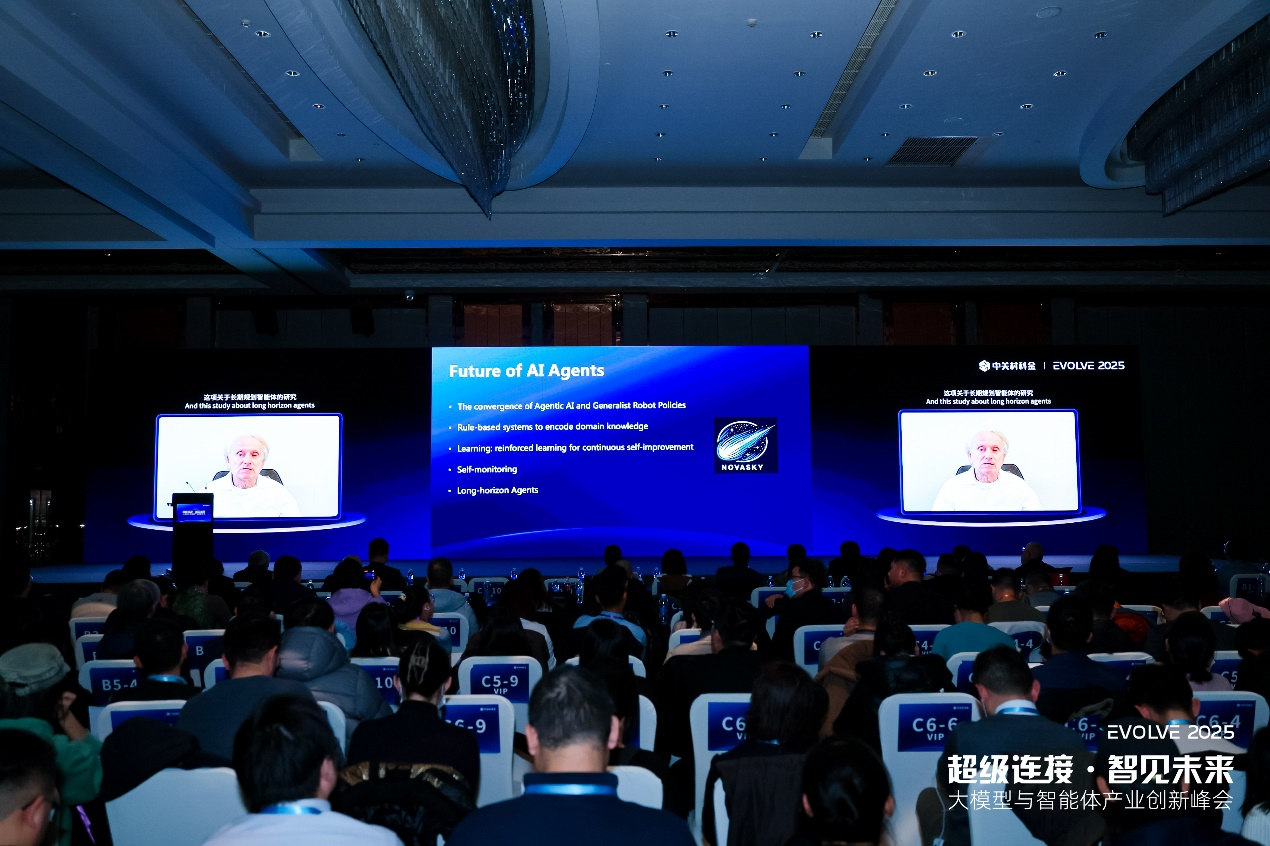
硅谷人工智能研究院院长皮埃罗·斯加鲁菲:2025年AI智能体将重塑数字劳动力
Jin Rong Jie· 2025-12-10 08:41
Core Insights - The "EVOLVE 2025" summit showcased the roadmap for enterprise-level AI agents and introduced a "3+2+2" product matrix to facilitate rapid development of AI agents for businesses [1] - The summit emphasized the collaboration among major cloud service providers to create a sustainable AI ecosystem through the "Super Connection" global partner program [1] Group 1: AI Development Trends - Piero Scaruffi highlighted a clear trend of technological integration in generative AI by 2025, with innovations like diffusion Transformers and multi-modal capabilities becoming standard [3] - The emergence of new technologies such as thinking chains and expert mixtures is reshaping the landscape of AI applications [3] Group 2: Evolution of AI Agents - The distinction between traditional AI products and advanced AI agents was made, with the latter being likened to autonomous driving, capable of executing complex workflows independently [4] - The operational mechanism of these AI agents is summarized as a cycle of perception, decision-making, action, and learning, allowing them to adapt to various environmental changes [4] Group 3: Multi-Agent Systems - The transition from applications to multi-agent systems introduces challenges in orchestration, necessitating a new technology stack that includes hardware, cloud services, and orchestration layers [5] - The concept of "context engineering" is emphasized, requiring AI agents to understand organizational structures and goals beyond executing single tasks [5] Group 4: Industry Applications - Various sectors are witnessing innovative applications of AI, particularly in customer support, where intelligent systems can understand context and emotions, enhancing user experience [6] - Companies like Johnson Controls have developed integrated AI systems that significantly improve efficiency in maintenance and troubleshooting [6] Group 5: Trust in AI - The "Waymo effect" illustrates the growing trust in AI as autonomous vehicles become more prevalent, laying a foundation for broader AI agent applications [7] - Scaruffi envisions a future where multiple AI agents collaborate dynamically, akin to human social interactions, to achieve common goals [7]
中关村科金公开企业级智能体落地路线图,发布“3+2+2”全栈智能体产品矩阵
Jiang Nan Shi Bao· 2025-12-10 03:03
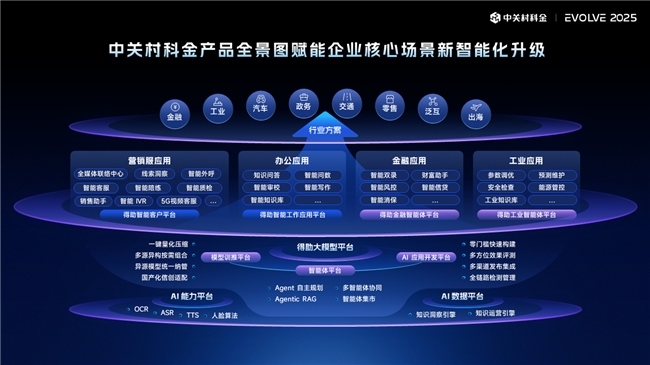
Core Insights - The article discusses the launch of the "3+2+2" full-stack intelligent agent product matrix by Zhongguancun KJ at the EVOLVE 2025 summit, aimed at addressing challenges in enterprise AI implementation [1][14] - The product matrix is designed to provide comprehensive solutions across technology, application, and industry, enhancing the usability of AI technology [1][14] Group 1: Technical Foundations - The three foundational platforms support the intelligent agent's deployment by ensuring a full-cycle guarantee across model, capability, and data dimensions [2] - The upgraded Dazhu Model Platform 5.0 serves as the core engine for enterprise-level intelligent agents, integrating over 300 ready-to-use agents across six industries, achieving a success rate of over 95% in deployment [2] - The AI Capability Platform offers high-precision recognition tools tailored for vertical industries, while the AI Data Platform focuses on activating data value for informed decision-making [2] Group 2: General Scenario Platforms - Two general scenario platforms enhance core business processes, focusing on customer operations and office collaboration [3] - The Dazhu Intelligent Customer Platform 5.0 sets a new standard for human-machine collaboration in marketing, customer service, sales, and overseas operations, significantly improving performance and efficiency [3][6] Group 3: Industry-Specific Solutions - The Dazhu Financial Intelligent Agent Platform addresses specific needs in the financial sector, supporting over 500 leading financial institutions and enabling product and service innovation [9][10] - The Dazhu Industrial Intelligent Agent Platform collaborates with industry partners to optimize core business processes, achieving significant efficiency improvements in production and energy management [12] Group 4: Open Ecosystem Empowerment - Zhongguancun KJ has launched the "Super Connection" global ecosystem partner program, collaborating with major cloud service providers to enhance the adaptability of the "3+2+2" product matrix across various industries [13][14] - The product system has already served over 2,000 leading clients across more than 180 countries, establishing itself as a preferred solution for enterprise-level intelligent agent deployment [14]