
AI编程工具

Search documents
马斯克放言“年底告别编程”!程序员终局将至?国产大模型春节档激战AI代码
Jin Rong Jie· 2026-02-16 00:49
Group 1 - Elon Musk predicts that AI will eventually write binary code, making programming obsolete as it takes over the entire process from demand to execution [1] - The AI programming sector is heating up, with major companies like ByteDance, MiniMax, and Zhizhu launching new models focused on programming capabilities [1] - ByteDance's Doubao 2.0 series includes a Code model aimed at enhancing code library interpretation and application generation [1] Group 2 - Anthropic's report indicates that AI is transforming software development, reducing project timelines from months to weeks, but suggests that programmers will not disappear entirely [2] - The report highlights that tools like Claude and Cursor are demonstrating strong commercial viability due to significant efficiency improvements [2] - Grand View Horizon forecasts that the global AI code tools market will reach $26 billion by 2030, indicating substantial growth potential [2]
Kimi K2.5接入阿里、腾讯、字节跳动AI编程工具
Feng Huang Wang· 2026-02-10 08:43
Core Viewpoint - Kimi Intelligent Assistant has launched its latest model Kimi K2.5, which integrates with AI programming tools from major companies like Alibaba, Tencent, and ByteDance, showcasing significant improvements in various tasks including coding, image processing, video handling, and general intelligence tasks [1] Group 1: Model Performance - Kimi K2.5 has achieved a weekly API call volume of 1.3 trillion tokens on the global API aggregation platform OpenRouter, surpassing models like Gemini3 and Claude Sonnet4.5 [1] - The model supports both conversational and agent task modes and is now available for developers [1] - Kimi K2.5 has received the best scores in multiple agent evaluations, including HLE (Human Last Exam), BrowseComp, and DeepSearchQA, among global open-source models [1] Group 2: Technical Features - The model is designed with a native multimodal architecture, allowing it to process both visual and textual inputs simultaneously [1] - Kimi K2.5 integrates capabilities for visual understanding, reasoning, programming, and agent tasks into a single model [1] - The founder and CEO of Kimi, Yang Zhilin, stated that the company has restructured the reinforcement learning infrastructure and optimized training algorithms to ensure maximum efficiency and performance [1]


ST宏达:1月19日召开董事会会议
Mei Ri Jing Ji Xin Wen· 2026-01-20 11:30
Group 1 - The company ST Hongda announced that its seventh board meeting was held on January 19, 2026, combining in-person and remote participation [1] - The meeting reviewed the proposal regarding the expected amount of daily related transactions for the year 2026 [1] Group 2 - A new AI programming tool has gained significant popularity among Silicon Valley programmers, with reports of it enabling them to complete a year's worth of work in just one week [1] - The CEO of a tech company expressed mixed feelings about the tool, noting that skills honed over a lifetime can be resolved in an instant, leading to excitement and fear [1]

安诺其:1月16日召开董事会会议
Mei Ri Jing Ji Xin Wen· 2026-01-20 09:29
Group 1 - The company Anuoqi announced that its 24th meeting of the 6th board of directors was held on January 16, 2026, via communication methods [1] - The meeting reviewed a proposal regarding the company's wholly-owned subsidiary to engage in financing leasing business and to provide guarantees for it [1]

定制APP人工费4000元起,用AI做一款APP仅需10分钟
Xin Lang Cai Jing· 2026-01-19 13:15
Core Insights - There is a growing demand for customized lightweight applications, with many software development studios receiving numerous requests from users looking to capitalize on this trend [1] - The cost for developing such applications typically ranges from 4,000 to 6,000 yuan, which is perceived as a low investment compared to the potential high valuation of successful apps [1] - AI tools are increasingly being utilized to generate app code quickly, with reports indicating that users can create a functional lightweight application in under 10 minutes by simply inputting their requirements [1] Group 1 - The rise in demand for lightweight app development is driven by the perception of high potential returns, with some apps reportedly valued at 100 million yuan after a low initial investment [1] - The average price for a complete service from requirement confirmation to app store launch is between 4,000 and 6,000 yuan, making it an attractive option for many users [1] - Social media is flooded with tutorials on using AI tools for app generation, indicating a shift towards more accessible app development methods [1] Group 2 - AI programming tools can interpret user commands and generate runnable code, showcasing the efficiency and speed of modern app development processes [1] - The entire process of creating a lightweight application, from inputting commands to generating code, can be completed in less than 10 minutes, highlighting the advancements in technology [1]
美国码农,正被AI“大屠杀”
虎嗅APP· 2025-12-31 14:08
Core Viewpoint - The article discusses the significant impact of AI on the job market for programmers in the U.S., highlighting a drastic decline in employment rates and the challenges faced by new graduates in securing jobs in the tech industry [2][3]. Group 1: Employment Trends - AI-related layoffs are projected to reach 1.17 million by 2025, marking the highest level since 2020 [4]. - The employment rate for programmers has plummeted by 27.5%, indicating a loss of nearly one-third of jobs in this sector [5][6]. - A study from Stanford University reveals that the employment rate for programmers aged 22 to 25 has decreased by nearly 20% since the end of 2022 due to the proliferation of AI tools [10]. Group 2: Challenges for Graduates - Graduates from computer science programs, such as those from Stanford and the University of Toronto, are facing unprecedented difficulties in finding jobs, with many opting to pursue further studies due to a lack of opportunities [21][25]. - The job market has shifted dramatically, with many positions now requiring at least one year of experience, which most new graduates do not possess [31]. - A significant decline in entry-level job opportunities has been noted, with the share of new hires with less than one year of experience dropping by 50% from pre-pandemic levels [101]. Group 3: AI's Role in Job Market Dynamics - AI is not merely a tool for enhancing productivity but is increasingly replacing programming roles, leading to a crisis in the software engineering field [18]. - A report indicates that 90% of tech positions now utilize AI tools, a sharp increase from just 14% in 2024 [51]. - Despite the rise of AI, the quality of AI-generated code is concerning, with AI code exhibiting a higher error rate compared to human-written code, leading to significant technical debt [60][62]. Group 4: Industry Transformation - The nature of programming jobs is evolving, with employers now seeking higher-level skills beyond mere coding, such as understanding client needs and managing the software development lifecycle [57]. - The article emphasizes the need for programmers to adapt to new roles that involve critical thinking and strategic business understanding, as traditional coding tasks are increasingly automated [116][118]. - The shift towards AI in programming has created a paradox where experienced developers find themselves reviewing and correcting AI-generated code, which can slow down their productivity [91].

在岳麓书院写代码是种什么体验?这场黑客松让千年学府“玩”出新火花
Xin Lang Cai Jing· 2025-12-21 15:39
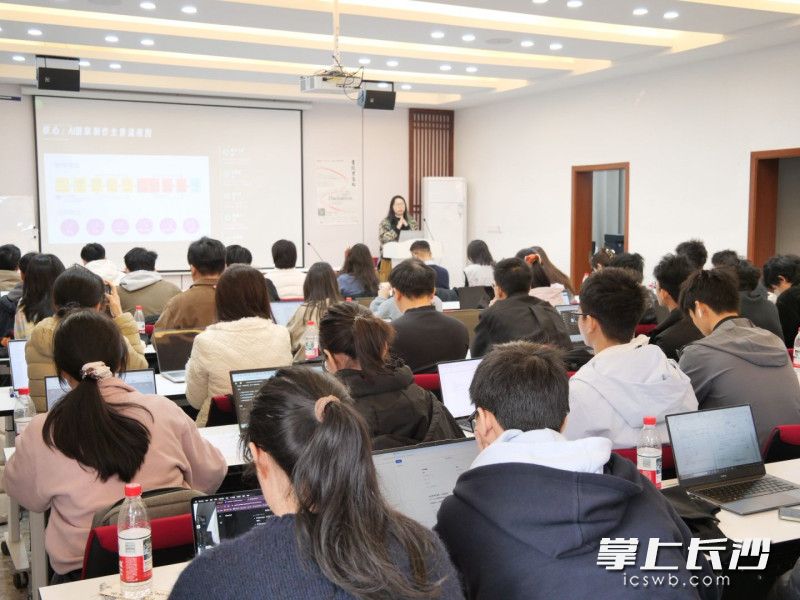
Core Idea - The event "Yuelu Academy Hackathon" at Hunan University aims to merge traditional education with artificial intelligence, focusing on practical applications and humanistic values rather than mere technical competition [1][3]. Group 1: Event Overview - The hackathon emphasizes the integration of technology with humanistic warmth and real-world significance, rejecting "pseudo-demand" and pure computational contests [3]. - The event is designed to inspire students' enthusiasm for AI and promote its application in higher education [3]. Group 2: Themes and Focus Areas - Two main themes were established: "Cultural Revival (AI + Interdisciplinary)" focusing on the intersection of AI with humanities, regional studies, and financial economics; and "Smart Living (AI + Real Scenarios)" encouraging participants to use AI to optimize campus life and enhance learning efficiency and social interactions [3][4]. - Various expert presentations were made, including topics on AI in creative processes, digital humanities, and applications of large language models in financial research [3]. Group 3: Competition Structure - During the "Rapid Creation" phase, teams developed product prototypes using AI programming tools within six hours, followed by project presentations and evaluations [4]. - The hackathon serves as an important platform for the Hunan University Financial Technology Association to promote "AI + Finance" practices, which has built a national community of nearly 4,000 members [4].
从酷炫功能到真实产业应用,AI卡在了哪里?
3 6 Ke· 2025-11-17 04:20
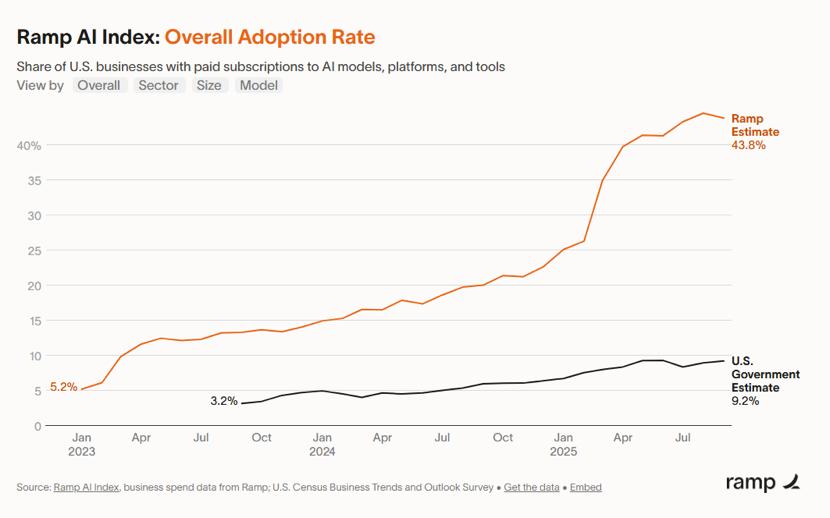
Core Insights - The rapid development of generative AI since the release of ChatGPT in November 2022 has led to a heated competition among large model vendors, with claims that the era of Artificial General Intelligence (AGI) is approaching. However, the commercial adoption of AI has shown signs of stagnation, with a recent decline in the proportion of U.S. companies using paid AI products [1][4]. Group 1: Business Process Reconstruction and AI Path Planning - AI model performance metrics do not directly translate into commercial value, as AI often fails to provide end-to-end solutions. Successful AI implementation requires identifying business segments where AI capabilities are mature and data accumulation is sufficient [4][5]. - The process of AI application requires a restructuring of business workflows, where tasks suited for AI are delegated to it, while remaining tasks that require human judgment and emotional interaction are managed by people [5][6]. - The path planning analogy illustrates that AI can enhance certain business segments, but human involvement is necessary to connect different AI functions and ensure task completion [6]. Group 2: Who Leads AI Implementation - Effective AI application necessitates both AI expertise and industry insight. This can be achieved either by having AI experts learn about the industry or by industry professionals acquiring AI skills [7][8]. - The rise of Forward Deployed Engineers (FDE) represents a model where engineers familiar with AI are embedded within client companies to identify value creation points that align with business needs [8][11]. Group 3: AI Programming Activating Industry Self-Transformation - The advancement of AI programming tools has significantly lowered the barriers to software development, allowing non-experts to create functional prototypes using natural language [12][13]. - This shift indicates a potential transition in AI implementation from being driven by technical experts to being led by industry practitioners who can autonomously utilize AI tools to address specific business challenges [12][14]. - Small and medium-sized enterprises (SMEs) are positioned to become key players in AI implementation due to their agility and reduced complexity in decision-making processes [13][14]. Group 4: Conclusion - AI implementation is a gradual process that requires alignment between AI technology and industry needs. Companies should focus on specific, high-adaptability scenarios to create effective AI applications [14]. - The growing capabilities of AI programming tools will empower more individuals to leverage technology for problem-solving, ultimately enhancing productivity across various sectors [14].
从大厂管理层到独立开发者!AI技术拓宽新职业边界
Zheng Quan Shi Bao· 2025-10-14 05:07
Core Insights - The article discusses the transformative impact of AI technology on career opportunities, highlighting the shift from traditional roles to independent developer positions enabled by AI tools [1][3][4]. Group 1: Career Transformation - AI tools have significantly lowered the skill barriers for independent developers, allowing individuals without extensive programming knowledge to create complex applications [3][4]. - The experience gained in traditional roles can enhance the effectiveness of new career paths, as demonstrated by the case of a former user researcher who successfully transitioned to an independent developer [4]. Group 2: Expanding Employment Demographics - The emergence of new careers driven by AI technology has eliminated age and educational barriers, enabling younger individuals and those with no prior experience to enter the tech field [6][8]. - A notable example includes a high school student who, with the help of AI, was able to participate in a hackathon and gain recognition, showcasing the potential for youth in the tech industry [6]. Group 3: Evolving Work Models - The article emphasizes a shift towards flexible work models where employment is centered around ideas and AI tools rather than fixed roles and teams [8]. - The diversification of income streams for independent developers, such as through content creation and app monetization, reflects a broader trend towards stability in new career paths [8].
从大厂管理层到独立开发者 AI技术拓宽新职业边界
Zheng Quan Shi Bao· 2025-10-13 18:08
Core Insights - The emergence of AI tools has transformed the landscape of independent app development, allowing individuals to create complex applications without extensive coding skills [1][2][5] - The transition from traditional roles to independent developers is facilitated by AI, which simplifies the development process and broadens employment opportunities [2][4] Group 1: Transition to New Careers - The shift from working in large companies to becoming independent developers is exemplified by individuals like Chen Yunfei, who recognized the potential of AI tools early on [2][3] - AI tools have lowered the skill barrier for app development, enabling those with ideas but lacking technical skills to enter the independent development space [2][3] Group 2: Experience Utilization - Previous experience in user research and operations has proven beneficial for new developers, allowing them to better understand user needs and market strategies [3] - The ability to leverage past experiences in new roles demonstrates that transitioning to new careers does not require abandoning previous knowledge [3] Group 3: Expanding Employment Demographics - New career opportunities created by AI are accessible to a wider demographic, including young individuals with no prior programming experience [4] - The case of a high school student successfully entering app development illustrates that age and educational background are no longer barriers in the AI-driven job market [4] Group 4: Diverse Income Streams - The development of multiple income streams, such as content sharing and commercial partnerships, is a key advantage of new career paths enabled by AI [5] - The flexibility of new roles allows individuals to explore various income opportunities while maintaining their primary jobs, reducing risk during the transition [5] Group 5: Future of Employment - The evolution of employment towards a model centered around ideas and AI tools signifies a shift from traditional fixed roles to more flexible, innovative job structures [5] - The ongoing maturation of AI tools continues to expand the landscape of new career opportunities, making it possible for individuals to find unique employment paths [5]
