
BC产品

Search documents
未知机构:继续强call帝尔激光申万机械电新月度金股事件爱旭股份-20260210
未知机构· 2026-02-10 01:55
Summary of the Conference Call on 帝尔激光 (Dier Laser) Industry and Company Overview - The conference call discusses the solar energy industry, specifically focusing on 帝尔激光 (Dier Laser) and its role in the photovoltaic (PV) sector, particularly in the BC (Bifacial Cell) technology segment [1]. Core Points and Arguments - **Patent Licensing Agreement**: 爱旭股份 (Aixu Co.) has signed a patent licensing agreement with Maxeon Solar, which eliminates uncertainties related to potential patent disputes. This agreement facilitates smoother entry of BC products into global markets outside the United States, leveraging cost advantages associated with low-silver and silver-free technologies to expand sales [1]. - **BC Technology Value**: 帝尔激光's value in the BC cell segment is estimated at 0.6-0.8 billion CNY per GW, while the module segment is valued at 0.3-0.4 billion CNY per GW. The total value per GW reaches the billion CNY level. The company holds a 100% market share in the mass production of BC technology, benefiting from the expansion of BC production and the increase in value [1]. - **Non-Solar Business Growth**: The advanced packaging sectors, including TGV (Through Glass Via), PCB (Printed Circuit Board) ultra-fast laser drilling, and semiconductor applications, are expected to reach a turning point in growth. Orders for 2026 are projected to reach around 1 billion CNY, creating a second growth curve while continuously optimizing the profit structure [1]. - **Profit Forecast**: The expected performance for 2026 and 2027 is projected to be 700 million CNY and 900 million CNY, respectively, corresponding to price-to-earnings (PE) ratios of 35X and 27X [1]. Other Important Insights - The call emphasizes the strengthening of the photovoltaic core business as it emerges from a low point, indicating a positive outlook for the sector [1]. - The focus on non-photovoltaic business segments highlights the company's strategy to diversify and enhance its revenue streams, which may mitigate risks associated with reliance on a single industry [1].

未知机构:继续强call帝尔激光申万机械电新月度金股事件爱旭股份与Maxeo-20260210
未知机构· 2026-02-10 01:55
Summary of Conference Call Notes Company and Industry Involved - The conference call discusses **Aixu Co., Ltd.** and its collaboration with **Maxeon Solar** in the **photovoltaic (PV) industry** [1] Core Points and Arguments - **Patent License Agreement**: Aixu Co., Ltd. signed a patent license agreement with Maxeon Solar, which eliminates uncertainties related to potential patent disputes. This agreement facilitates smoother entry of BC products into global markets outside the United States, leveraging cost advantages associated with low-silver and silver-free technologies [1] - **BC Product Value**: The value of BC battery cells is estimated at **0.6-0.8 billion CNY per GW**, while the value of components is around **0.3-0.4 billion CNY per GW**. The total value per GW reaches the billion CNY level. Aixu Co., Ltd. holds a **100% market share** in the mass production of BC products, benefiting from the expansion of BC production and the increase in value [1] - **Non-PV Business Growth**: The advanced packaging sectors, including TGV/PCB ultra-fast laser drilling and semiconductors, are approaching a growth inflection point. Orders for 2026 are expected to reach the **10 billion CNY** level, contributing to the establishment of a second growth curve while continuously optimizing the profit structure [1] Other Important but Possibly Overlooked Content - The emphasis on the **cost advantages** of low-silver and silver-free technologies indicates a strategic focus on reducing production costs, which may enhance competitive positioning in the global market [1] - The mention of **non-PV business** growth highlights the company's diversification strategy, which may mitigate risks associated with reliance on the PV sector alone [1]
隆基绿能着力拓展BC产品海外市场
Zheng Quan Ri Bao· 2025-12-05 16:37
Group 1 - Longi Green Energy has intensified its overseas expansion of Back Contact (BC) products, recently partnering with Petronas to supply efficient BC modules for clean energy projects in the Asia-Pacific market [2] - The collaboration with Petronas aims to enhance the strategic partnership and promote high-level BC technology demonstration projects [2] - Longi Green Energy's Hi-MO9 module has shown a stable power generation increase of 1.21% to 3.92% compared to mainstream TOPCon modules, particularly excelling in high-temperature and high-humidity environments [3] Group 2 - Longi Green Energy has signed a strategic cooperation memorandum with Universiti Kebangsaan Malaysia (UKM) to focus on solar technology innovation and local talent development [3] - The company has also signed a cooperation agreement for the 1.5GW solar project in Abu Dhabi, which is the largest single solar power plant under construction globally, supplying the latest Hi-MO9BC modules [4] - Longi Green Energy's net profit for the first three quarters of the year has reduced losses by approximately 48%, with operating cash flow turning positive, indicating a strong recovery momentum [5] Group 3 - The BC products have a significant premium in overseas markets, particularly in Europe, contributing to the company's financial recovery [6] - As of mid-2025, approximately 45% of Longi Green Energy's BC product sales occurred in overseas markets, with plans to increase BC second-generation capacity to 50GW by the end of 2025 [7] - The company's recent overseas market strategies are expected to enhance its global market share amid complex international conditions [7]


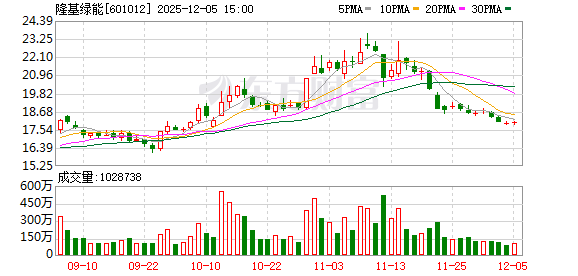
隆基绿能前三季度亏损34.03亿元,连续两个季度减亏
Di Yi Cai Jing· 2025-10-30 09:53
Core Viewpoint - Longi Green Energy reported a significant reduction in net losses for the first nine months of the year, indicating a potential recovery despite ongoing challenges in the photovoltaic industry [1][2]. Financial Performance - For Q3 2025, Longi Green Energy's revenue was 18.101 billion yuan, a decrease of 9.78% year-on-year, with a net loss of 834 million yuan. For the first three quarters, revenue totaled 50.915 billion yuan, down 13.10% year-on-year, with a net loss of 3.403 billion yuan [1]. - The company achieved a reduction in net losses, with a cumulative net profit attributable to the parent company decreasing by approximately 48% year-on-year from January to September [1]. Market Strategy - The company aims to achieve breakeven in Q4 2025, focusing on increasing the revenue share of BC products and scenario-based products to improve operational performance [2]. - Longi Green Energy's monthly BC production is approximately 2.5 GW, with expectations for gradual increases. By the end of 2025, the HPBC2.0 battery capacity is projected to exceed 60% [2]. Sales and Production - From January to September, Longi Green Energy sold 38.15 GW of silicon wafers and 63.43 GW of battery modules, with BC module sales reaching 14.48 GW [3]. - In the first half of 2025, driven by a domestic market rush, BC component sales accounted for about 55% in the domestic market and 45% in overseas markets [2]. Market Outlook - The management anticipates that the photovoltaic market demand in 2026 will remain close to this year's levels, with significant growth facing considerable pressure. Demand is expected to stabilize in China, Europe, and the U.S., while notable increases may occur in regions with electricity shortages [3].
硅片龙头TCL中环2025年前三季度净亏近58亿元 第三季度收入环比改善超10%
Mei Ri Jing Ji Xin Wen· 2025-10-29 07:13
Core Insights - TCL Zhonghuan reported a revenue of 21.572 billion yuan for the first three quarters of 2025, with a net profit attributable to shareholders of -5.777 billion yuan, indicating a reduction in losses year-on-year [1] - The company’s photovoltaic business generated sales revenue of 16.01 billion yuan, showing a quarter-on-quarter improvement of 22% [1] - The third quarter of 2025 saw significant performance improvements, with revenue reaching 8.174 billion yuan, and a net profit of -1.534 billion yuan, reflecting a year-on-year improvement of 48.82% and a quarter-on-quarter improvement of 34.32% [2] Financial Performance - For the first three quarters, TCL Zhonghuan's revenue decreased by 4.48% year-on-year, while the net profit showed a reduction in losses compared to the previous year [2] - The basic earnings per share for the company were -1.4467 yuan, with a weighted average return on equity of -20.59% [2] - The third quarter's revenue and net profit improvements were crucial for reducing overall losses in the first three quarters [2] Industry Dynamics - The photovoltaic industry is advocating for "anti-involution," encouraging a return to rational business logic on the supply side [1] - The company noted that the prices in the upstream supply chain began to recover from July to September, which positively impacted the profitability of the silicon wafer segment [2] Business Segments - The photovoltaic cell and module business has emerged as a new growth driver, with product capabilities improving and a brand matrix established [2] - The semiconductor materials business saw a revenue increase of 28.7%, achieving sales of 4.24 billion yuan, with shipments reaching 907 million square inches [3] - The "other silicon materials" segment reported a revenue of 4.687 billion yuan, marking a year-on-year growth of 30.46%, driven by the rapid release of 12-inch semiconductor silicon wafer capacity [3]

隆基绿能: 第四季度主业或实现盈亏平衡
Zheng Quan Ri Bao· 2025-09-03 01:30
Core Viewpoint - The photovoltaic industry is experiencing a "de-involution," with a focus on when Longi Green Energy Technology Co., Ltd. can achieve profitability, which is a key concern for the market [1] Financial Performance - Longi Green Energy reported a net loss of 2.569 billion yuan in the first half of the year, a significant reduction in losses by 2.661 billion yuan compared to the same period last year [1] - The company aims to achieve breakeven in the fourth quarter of this year, driven by an increase in revenue from BC products and scenario-based products [2] Product Strategy - The company plans to increase the revenue share of BC products and scenario-based products, which is seen as crucial for improving its financial situation [2] - The sales volume of the second-generation BC products was only 4 GW in the first half of the year, with a target of exceeding 10 GW in the fourth quarter [2] Market Trends - The "de-involution" effect in the photovoltaic industry is becoming evident, with prices of silicon materials and wafers rising since early July [2] - The market sentiment is positive, contributing to the recent price increases in silicon wafers [2] Technological Advancements - Longi Green Energy has made significant progress in technology, with the HIBC battery technology ready for large-scale production, achieving a power output of over 700W and an efficiency of 25.9% [4] - The company is focused on reducing non-silicon costs by over 10% annually, leveraging advanced technologies to drive cost reduction and efficiency improvements [4] Market Positioning - The company aims to enhance the sales proportion of BC products in the European market, targeting over 80% in the distributed market and an overall composite share exceeding 60% in the European market next year [3] - The company believes that the clearing of excess capacity in the photovoltaic sector will depend on technological advancements and encouraging advanced production capacity [3]
隆基绿能:第四季度主业或实现盈亏平衡
Zheng Quan Ri Bao Zhi Sheng· 2025-09-02 16:37
Core Viewpoint - The photovoltaic industry is experiencing a "de-involution" effect, with a focus on when Longi Green Energy Technology Co., Ltd. will achieve profitability. The company aims to reach breakeven by the fourth quarter of this year, driven by an increase in the revenue share of BC products and scenario-based products [1][2]. Group 1: Financial Performance - Longi Green Energy reported a net loss of 2.569 billion yuan in the first half of the year, a significant reduction in losses by 2.661 billion yuan compared to the same period last year [1]. - The company anticipates a 40% quarter-on-quarter increase in revenue by the second quarter of 2025, benefiting from strong domestic demand and declining costs of key products [1]. Group 2: Product Strategy - The company aims to increase the sales volume of its second-generation BC products to over 10 GW in the fourth quarter, which is expected to have a direct impact on profitability [1]. - The gross margin target for BC products is currently 10% higher than that of TOPCon products, with a significant premium in the European market [2]. Group 3: Market Trends - The prices of silicon materials and wafers have been rising since early July, reflecting a positive market sentiment driven by the "de-involution" policy [2]. - Companies with advantages in technology, product quality, and service are expected to be more competitive in the market as the "de-involution" continues [2]. Group 4: Technological Advancements - Longi Green Energy has achieved scale production conditions for HIBC battery technology, with a component efficiency of 25.9%, making it the highest efficiency industrial photovoltaic product globally [4]. - The company is actively exploring cost reduction strategies, expecting to maintain a non-silicon cost reduction rate of over 10% annually [4]. - Advanced technologies such as laser patterning and composite passivation are being applied to drive cost reduction and efficiency improvements [4].
隆基绿能董事长钟宝申:今年四季度扭亏
Sou Hu Cai Jing· 2025-09-02 13:05
Core Viewpoint - Longi Green Energy aims to achieve breakeven in its main business by the fourth quarter of 2025, primarily driven by the increased production capacity of its new generation BC (Back Contact) battery technology [4][6]. Financial Performance - In the first half of 2025, Longi Green Energy reported revenue of 32.813 billion yuan, a year-on-year decrease of 14.83%, with a net loss of 2.569 billion yuan, although this represented a reduction in losses by 2.661 billion yuan compared to the previous year [4]. - The company achieved a revenue of 19.16 billion yuan in the second quarter of 2025, a quarter-on-quarter increase of approximately 40%, with a net loss of 1.133 billion yuan, narrowing losses by 21% [5]. - The total asset impairment loss decreased significantly from 5.78 billion yuan in the first half of the previous year to 1.17 billion yuan in the current year [4]. Production Capacity and Product Strategy - The production capacity of BC products is expected to exceed 60% of the company's total capacity by the end of 2025, up from approximately 20% in the first half of the year [4][5]. - The company plans to enhance its gross margin by increasing the proportion of BC products, which are currently more expensive but offer higher power output compared to mainstream TOPCon products [8]. Market Context and Competitive Position - The global market for photovoltaic installations saw a year-on-year growth of 106% in the first half of 2025, with Longi Green Energy ranking second among the top ten suppliers, shipping 39.57 GW of components [5]. - The company reported the lowest loss among the top five photovoltaic component companies, with a total loss of 15.931 billion yuan in the first half of 2025 [5]. Cost Management and Future Outlook - The company anticipates that the reduction in metal costs will be realized in the first and second quarters of the following year, with silver paste costs being a significant non-silicon cost component [7]. - Longi Green Energy is focusing on increasing the proportion of scenario-based products, which cater to diverse applications such as building-integrated photovoltaics and offshore photovoltaics, to differentiate itself in the market [8].

隆基绿能钟宝申:四季度大概率实现主业盈亏平衡 BC产品成盈利关键
Zhong Guo Jing Ying Bao· 2025-09-02 06:15
Core Viewpoint - Longi Green Energy is optimistic about achieving a breakeven point for its main business in the fourth quarter of 2025, despite challenges in the third quarter [1][2]. Financial Performance - In the first half of 2025, Longi Green Energy reported revenue of 32.813 billion yuan, a year-on-year decrease of 14.83% [2]. - The company recorded a net loss attributable to shareholders of 2.569 billion yuan, which is a reduction in loss by 2.661 billion yuan compared to the previous year [2]. - The reduction in loss was primarily due to improved operational efficiency, leading to significant decreases in sales and management expenses, as well as a substantial reduction in asset impairment losses [2]. Product Performance - The company experienced steady growth in the shipment of its main products, driven by a "rush installation" trend in the domestic market, with silicon wafer shipments reaching 52.08 GW, a year-on-year increase of 17%, and module shipments of 39.57 GW, a year-on-year increase of 26% [2]. - The share of BC products in total shipments has exceeded 20% [2]. - The HPBC 2.0 component product was gradually introduced to the market, with sales volume around 4 GW and a significant quarter-on-quarter increase of over 100% in the second quarter [2]. Cost Management - The company faces challenges in reducing costs for silicon products, which are relatively mature, but expects to maintain a non-silicon cost reduction rate of over 10% annually [2]. - Longi Green Energy believes that its Tai Rui silicon products have a technological advantage and, combined with ongoing cost reductions, will be able to achieve profitability in this segment at an appropriate time [2]. Technological Development - Progress in perovskite tandem technology was highlighted, with increased reliability indicators enhancing commercialization opportunities, although challenges remain regarding efficiency and stability [3]. - The company is adapting to changes in U.S. trade policies, particularly the "Inflation Reduction Act," which may impact its market presence and supply chain in the U.S. [3]. Market Outlook - The global photovoltaic market demand is expected to be uncertain in 2026, with potential fluctuations, and significant growth may face considerable pressure [4]. - Demand in regions with electricity shortages is increasing rapidly compared to traditional markets like China, the U.S., and Europe [4]. Industry Dynamics - The path for capacity reduction in the photovoltaic industry remains unclear, with a focus on maintaining market supply-demand balance rather than excessive competition [4]. - Longi Green Energy aims to enhance technology, product development, operational efficiency, and cost reduction, aligning with central government directives to promote industry progress through quality and technological standards [4].
业绩会提近30次“毛利”,隆基绿能钟宝申更新主营业务扭亏为盈预期
Di Yi Cai Jing· 2025-09-01 12:10
Core Viewpoint - The company is focused on improving the gross margin of its BC products, with a strong emphasis on cost reduction and operational efficiency to achieve profitability in its main business by Q4 2025 [1][2]. Financial Performance - In the first half of 2025, the company reported revenue of 32.813 billion yuan and a net loss of 2.569 billion yuan, significantly reducing the loss from 5.231 billion yuan in the same period last year [1]. - The company experienced a year-on-year reduction in losses by 2.661 billion yuan, primarily due to improved operational efficiency leading to a significant decrease in sales and management expenses, which fell by 37% and 23% respectively [2]. Product Development and Efficiency - The company is currently producing approximately 2.5 GW of BC products per month, with plans for gradual monthly increases [2]. - The company’s BC second-generation products have a competitive edge, boasting a 30W efficiency advantage over TOPCon products, with expectations of maintaining a 20W to 30W advantage even with future enhancements to TOPCon technology [2]. - As of September, the proportion of BC products in the company's order structure has rapidly increased, with over 50% in most regions [2]. Production Capacity - As of the reporting period, the company has a self-owned battery capacity of 24 GW for HPBC2.0, with production gradually commencing in Shaanxi and ongoing projects in Weibei [3]. - In the first half of 2025, the company achieved a silicon wafer shipment of 52.08 GW (with external sales of 24.72 GW) and a battery module shipment of 41.85 GW, including approximately 4 GW of BC second-generation modules with a conversion efficiency of 24.8% and a yield exceeding 97% [3].