Comet AI

Search documents
AI版「互联网协议」面世,豆包手机们再也不怕被「封禁」了?
3 6 Ke· 2025-12-12 08:36
Core Viewpoint - The article discusses the growing restrictions on the "Doubao Phone" (Nubia M53) applications, highlighting a significant conflict between AI-driven tools and established app ecosystems, particularly regarding user access and operational permissions [1][13]. Group 1: Doubao Phone and GUI Agent - The Doubao Phone is facing increasing bans on major applications like WeChat, Alipay, and various e-commerce platforms, limiting user access [1]. - The Doubao Phone Assistant employs a GUI Agent approach, allowing AI to interact with mobile interfaces without relying on official APIs, which raises concerns among major app providers [2][15]. - The conflict is not new; platforms like WeChat have previously opposed GUI-based AI interactions, indicating a broader resistance within the industry [13][15]. Group 2: MCP Protocol and Industry Standards - The Model Context Protocol (MCP) has emerged as a potential solution to the challenges posed by GUI Agents, aiming to establish a standardized interface for AI interactions across platforms [4][5]. - MCP is gaining traction as a de facto standard, with major tech companies like OpenAI and Google integrating it into their systems, indicating a shift towards a more interoperable AI ecosystem [7][8]. - The donation of MCP to the Linux Foundation signifies a move towards a neutral governance structure, enhancing its credibility and adoption across the industry [8][9]. Group 3: Future of AI Interaction - The article suggests that the future of AI will rely on a combination of GUI and MCP approaches, where GUI serves as a fallback in the current ecosystem while MCP establishes clearer operational boundaries for AI interactions [20][21]. - The transition to MCP will require significant changes in the internet ecosystem, but it promises a more structured and secure way for AI to interact with various platforms [19][20]. - Ultimately, the goal is to create a unified system where AI can operate seamlessly across different services while adhering to established rules and permissions [20][21].


豆包手机助手下线金融类应用能力,AI手机如何打消隐私担忧
Nan Fang Du Shi Bao· 2025-12-06 13:24
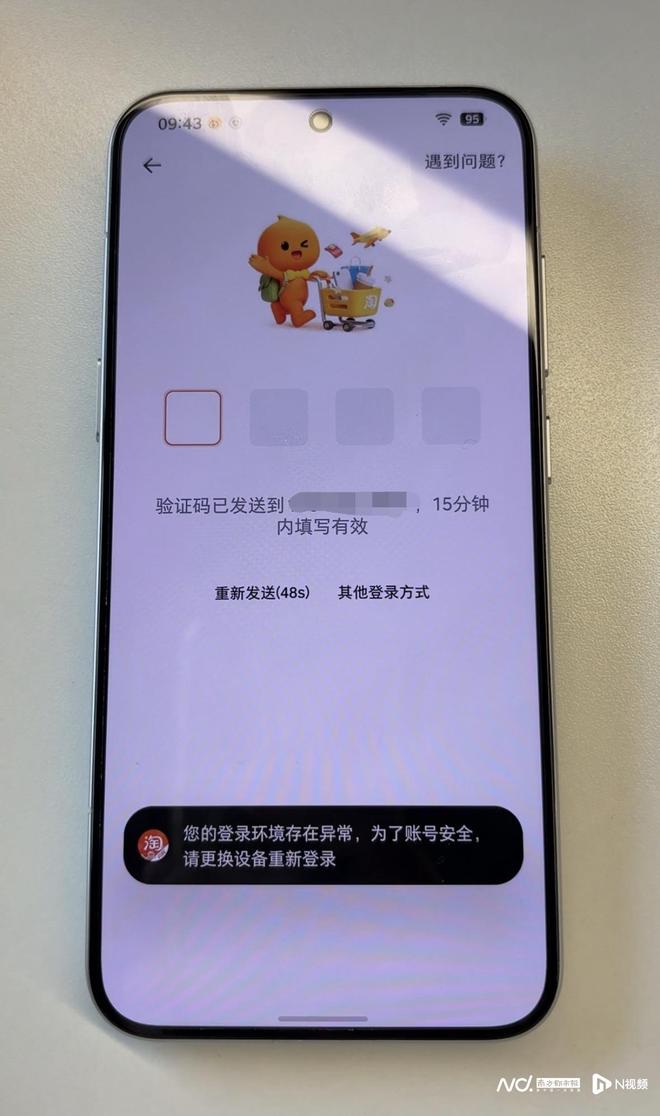
Core Viewpoint - The launch of the "Doubao Assistant" smartphone in collaboration with ZTE has generated mixed market reactions, highlighting both the potential of AI in automating tasks and the challenges related to privacy and app security [1][4][12]. Group 1: Product Launch and Market Response - Doubao and ZTE released the "Doubao Assistant" smartphone priced at 3499 yuan, which quickly sold out due to its AI capabilities [1]. - The smartphone allows users to perform tasks like ordering and price comparison through voice commands, showcasing significant improvements in AI functionality [5][12]. - Despite the initial success, users reported issues with third-party app security measures, leading to account access problems [6][12]. Group 2: Technical and Privacy Concerns - The AI assistant's ability to perform tasks is linked to its use of high-risk permissions, such as INJECT_EVENTS, which allows it to simulate user actions across applications [6][13]. - Concerns have been raised about privacy, as the AI's operation may expose sensitive user data, leading to potential misuse [14][15]. - Doubao has announced plans to limit certain functionalities to address privacy concerns, including restrictions on financial applications and gaming scenarios [8][11]. Group 3: Industry Implications and Future Directions - The integration of AI assistants into smartphones represents a shift in the competitive landscape, as it challenges traditional app interactions and revenue models [18][20]. - The ongoing debate about user consent and the legitimacy of AI actions raises questions about the future of AI in mobile technology and its impact on user privacy [19][20]. - Industry standards are being developed to address the use of accessibility permissions, but consensus on best practices remains elusive [16][20].
豆包手机助手触发微信账号强制下线,最新回应
2 1 Shi Ji Jing Ji Bao Dao· 2025-12-03 16:39
Core Insights - Doubao Mobile Assistant faced operational challenges shortly after its launch, particularly with WeChat, which was forced offline due to security measures [1][2] - The assistant is currently in a technical preview phase and is not aimed at the general consumer market, focusing instead on industry and AI enthusiasts [2] Group 1: Product Launch and Features - Doubao Mobile Assistant was officially launched on December 1, exclusively for the Nubia M153 smartphone, priced at 3499 yuan, and is currently sold out [2] - The assistant allows users to automate tasks such as ordering food, booking flights, and responding to WeChat messages, all while running in the background [2] Group 2: Security and Privacy Concerns - Doubao Mobile Assistant's operations triggered security alerts from WeChat, leading to account restrictions, which the company attributed to existing security measures [1] - Doubao emphasized that it does not engage in any hacking activities and requires user authorization to access sensitive functions [1] Group 3: Industry Implications - The rise of AI assistants like Doubao has led to conflicts with third-party apps, as these assistants may be perceived as bots, triggering security protocols [4][5] - Other smartphone manufacturers, such as Vivo and OPPO, have also faced similar issues with their AI assistants being restricted by apps like WeChat and Bilibili [5][6] - The broader industry is witnessing legal disputes, such as Amazon's lawsuit against Perplexity AI, highlighting tensions between AI innovation and established platforms [6]

温峥嵘回击被AI换脸直播卖货丨南财合规周报(第214期)
2 1 Shi Ji Jing Ji Bao Dao· 2025-11-09 05:08
Group 1: AI and Copyright Issues - The first AI copyright infringement case in Shanghai ruled that the AI company is not liable as it complied with the "notice-and-takedown" obligation after being notified of the infringement [2] - An actor, Wen Zhengrong, reported that her identity was impersonated using AI for live-stream selling, leading to Douyin's removal of over 10,000 infringing videos and penalties for 37 accounts [3] Group 2: Legal Actions Against AI Companies - Multiple families in the U.S. and Canada are suing OpenAI, claiming that prolonged interactions with ChatGPT led to harmful delusions and even suicides, with allegations including negligence and assisted suicide [4] Group 3: E-commerce and AI Conflicts - Amazon has initiated legal action against Perplexity AI, accusing it of fraudulently impersonating users to make purchases on its platform, which raises concerns about user privacy and data security [5] Group 4: Regulatory Scrutiny - Taobao is under investigation for misleading advertising practices during the "Double 11" shopping festival, following user complaints about forced redirects to its platform [6] Group 5: Brand Strategy and Market Positioning - Ele.me has rebranded to "Taobao Flash Sale," indicating a strategic shift in the competitive landscape of food delivery services, emphasizing the importance of brand value realignment [7] Group 6: IPO Speculations and Company Statements - OpenAI has denied rumors of an imminent IPO, clarifying that while a public offering is a future goal, there are no specific plans or timelines in place [8] Group 7: International Regulatory Actions - The French government is moving to suspend SHEIN's operations in France until compliance with local laws is demonstrated, highlighting the regulatory challenges faced by international e-commerce platforms [9]
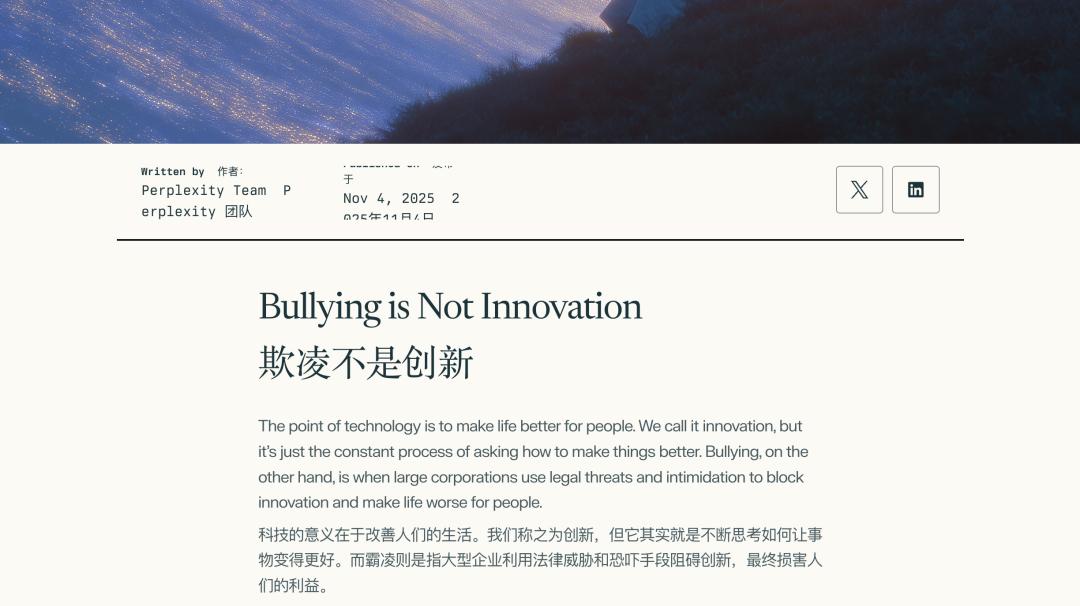
互联网平台正面开撕智能体,禁止AI“假扮”用户
2 1 Shi Ji Jing Ji Bao Dao· 2025-11-06 08:40
Core Viewpoint - Amazon has initiated a legal confrontation with AI startup Perplexity AI, accusing it of violating the Computer Fraud and Abuse Act by using its AI browser to make purchases on Amazon's platform without authorization, raising concerns over user privacy and data security [2][5][6]. Group 1: Legal Dispute - Amazon sent a cease-and-desist letter to Perplexity's CEO, claiming that Perplexity's Comet AI disguised itself as a Google user to bypass Amazon's detection and complete purchases, constituting fraud [2][6]. - The legal conflict traces back to November 2023 when Perplexity launched its "Buy with Pro" feature, allowing users to search and purchase items directly through its platform, which Amazon claims violates its Prime terms [5][6]. - In August 2024, Amazon discovered that Perplexity's Comet AI was again circumventing its checks, leading to further communication between the two parties [6]. Group 2: Company Responses - Perplexity responded to Amazon's accusations by labeling the company as a "bully," asserting that large corporations should not interfere with users' rights to utilize AI tools [6][8]. - Perplexity argues that its AI assistant saves users time and enhances shopping convenience, potentially increasing transaction volume and customer satisfaction for platforms like Amazon [8]. - The relationship between Amazon and Perplexity is complex, as Perplexity received investment from Amazon founder Jeff Bezos and is also a customer of Amazon Web Services (AWS) [8]. Group 3: Industry Implications - The ongoing dispute highlights a significant shift in how users interact with e-commerce platforms, as AI-driven purchasing could disrupt traditional traffic and advertising models that underpin these platforms [10]. - The competition for user engagement between AI assistants and traditional apps is intensifying, with major companies in the industry beginning to develop their own AI tools to maintain user interaction [11].