DRAM(动态随机存储器)

Search documents
手机集体涨价后,汽车会是下一个吗?
Di Yi Cai Jing· 2026-02-27 13:25
Core Viewpoint - The automotive industry is facing a significant shortage of DRAM chips, leading to increased costs and potential price hikes for vehicles due to rising chip prices [1][2][4]. Group 1: Chip Price Increases - The price of general DRAM is expected to rise by 55% to 60%, while NAND Flash prices are projected to increase by 33% to 38%. High-end automotive-grade DDR5 chips have seen price surges of up to 300% [1]. - Since the second half of 2025, automotive storage chips have experienced substantial price increases, with car-grade DRAM prices rising by 180% in three months and DDR4 prices increasing over 150% [2]. - The current shortage is attributed to a shift in supply dynamics, as major DRAM manufacturers are reducing production of lower-margin DDR4 chips in favor of higher-margin HBM and DDR5 chips [2][3]. Group 2: Impact on Automotive Costs - The cost of DRAM chips for a mid-range electric vehicle, which typically requires 5 to 6 chips, has increased from approximately 700 yuan to about 2000 yuan, reflecting a nearly threefold rise [4][5]. - The overall cost pressure on automotive manufacturers is expected to lead to an increase in vehicle prices, with estimates suggesting a cost increase of 1000 to 3000 yuan due to rising storage chip prices [5]. - Some manufacturers, like Volkswagen and BYD, have secured priority supply through long-term agreements, but the overall price increases remain unavoidable [5]. Group 3: Market Dynamics and Consumer Behavior - The average price of passenger vehicles in China has risen, with the average price reaching 186,000 yuan in January 2026, an increase of 15,000 yuan [6]. - The average price of new energy vehicles also saw a significant rise, reaching 195,000 yuan in January 2026, up from 179,000 yuan in December 2025 [6]. - The ongoing "trade-in" policy for vehicles in 2026 is expected to stimulate consumer demand, particularly in the mid-to-high-end market segment [6].




重视行业景气周期 看好半导体设备板块
Zhong Guo Zheng Quan Bao· 2025-12-14 20:19
Core Viewpoint - The investment strategy emphasizes the importance of industry cycle analysis, focusing on companies with high technical barriers and a strong commitment to their core business, particularly in the semiconductor equipment sector [1][5]. Investment Framework - The investment framework consists of three main components: industry cycle (40%-50% weight), competitive barriers (30%-40% weight), and valuation [1][2]. - Industry cycles are categorized into four phases: introduction, growth, maturity, and decline, with a preference for entering during the transition from introduction to growth [2]. - Competitive barriers include technological barriers and product moats, which are crucial for generating excess returns, especially for companies in new productive forces [2][3]. - Valuation has become less significant in the investment framework, with a focus on product and technological barriers rather than traditional valuation metrics [3]. Company Selection Criteria - Key aspects for selecting companies include industry position and core competitiveness, growth potential and market space, innovation capability, financial health, and the management team's strategic ability [3][4]. - Companies lacking core technology, overly diversified, or engaged in price wars are avoided [4]. Market Outlook - The semiconductor equipment sector is viewed as a promising investment area, with expectations for growth in industry demand, orders, and profits over the next three years [5][6]. - The demand for mid-to-high-end semiconductor equipment is expected to increase due to clear expansion plans from large wafer fabs and the driving force of AI and emerging applications [6][7]. - The recent price increases in memory chips, particularly DRAM, have created a tight supply structure, which may continue into the first half of next year, although caution is advised due to potential impacts on downstream customer demand [6][7].
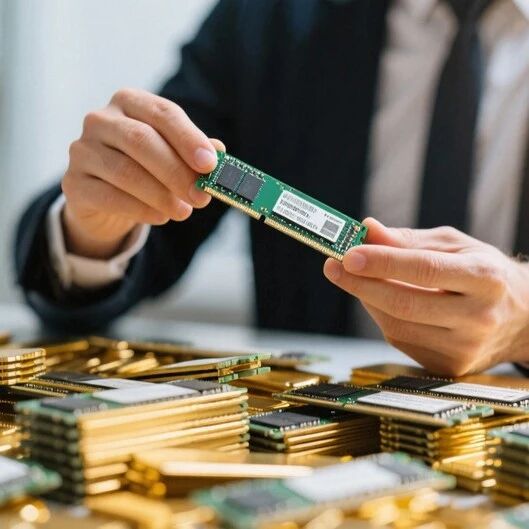
疯狂的内存,被炒成了“金条”
虎嗅APP· 2025-11-13 09:47
Core Insights - The article discusses the significant price surge in memory storage products driven by AI companies' aggressive procurement strategies, leading to a super cycle in the storage industry [4][5][9] - The price of DRAM chips has increased by 171.8% year-on-year in Q3, with SSD prices also doubling in a short period [4][6] - Major tech companies are investing heavily in AI data centers, which is a key factor pushing storage prices higher [9][11] Group 1: Price Surge and Market Dynamics - AI giants are hoarding memory products, causing a drastic increase in prices, with solid-state drives and memory modules seeing prices double within two months [4][5] - The price of a 16GB Samsung DDR4 memory module rose from 200 yuan in September to 400 yuan in November, compared to just over 100 yuan for the same product last year [4] - Companies like Xiaomi are facing challenges in maintaining profit margins due to rising storage costs, with their smartphone gross margin dropping from 14.6% in 2023 to 12.6% in 2024 [12] Group 2: Impact on End Products - The price increases have affected consumer electronics, with smartphone prices rising significantly; for instance, Xiaomi's K90 series saw a price increase of 600 yuan for a specific model [5][12] - PC components are also experiencing price hikes, with some consumers reporting increases of 1,000 to 2,000 yuan for desktop PCs during the shopping season [13] - Companies are struggling to manage the impact of rising storage costs on their product pricing and sales strategies [13] Group 3: Future Outlook and Industry Response - The demand for storage is expected to continue outpacing supply, with many manufacturers already locking in orders for 2027 [11] - Companies are exploring ways to mitigate the impact of rising costs, such as developing smaller AI models that require less memory [14][15] - The industry is also focusing on increasing production capacity for memory chips to stabilize prices in the long term [14][15]