
行业景气周期

Search documents
春节淘母积压影响能繁存栏,关注产能调控政策或加码
Guotou Securities· 2026-03-09 10:29
Investment Rating - The industry is rated as "Outperforming the Market" with a target of exceeding the performance of the CSI 300 index by 10% or more over the next six months [3]. Core Insights - The report highlights that the pig farming sector is experiencing a backlog of breeding sows due to the Spring Festival, which is affecting the breeding stock. There is a potential for increased capacity regulation policies [19][20]. - The average price of live pigs this week is 10.56 CNY/kg, reflecting a week-on-week decrease of 3.39% and a two-week decrease of 5.24%. The average price of piglets is 448 CNY/head, down 3.24% week-on-week [19][24]. - The poultry sector is facing a downward trend in white feather broiler prices, with the average price at 7.20 CNY/kg, a decrease of 3.61% week-on-week [24]. - The corn market shows stability with a slight increase in prices, averaging 2405.53 CNY/ton, up 1.09% week-on-week, influenced by geopolitical tensions affecting oil prices and ethanol demand [32]. Summary by Sections 1. Weekly Market Review - The agricultural sector increased by 2.12% this week, outperforming major indices such as the CSI 300, which decreased by 1.07% [11]. - Sub-sectors like planting and breeding have shown positive growth, while agricultural processing, fishery, and animal health sectors experienced slight declines [14]. 2. Industry Data Tracking 2.1 Pig Farming - The average daily slaughter volume of pigs is 152,700 heads, with a week-on-week change of 26.05% [19]. - The breeding sow stock is expected to be adjusted down to 36.5 million heads, a reduction of 3.11 million heads, which will help to eliminate excess capacity in the industry [20]. 2.2 Poultry Farming - The market for white feather broilers is weak, with prices fluctuating and overall market confidence low due to slow sales and high inventory levels [24]. 2.3 Planting Sector - The prices of planting products remain stable, with corn prices showing a slight increase due to supply concerns and rising international oil prices [32]. 2.4 Aquaculture Sector - Prices for various aquatic products remain stable, with specific declines noted in shrimp prices, which decreased by 6.67% [37]. 3. Industry Events - A meeting was held with several pig farming companies to discuss the implementation of production capacity control targets for 2025 [49].
南方基金郑晓曦: 重视行业景气周期 看好半导体设备板块
Zhong Guo Zheng Quan Bao· 2025-12-14 22:27
Core Viewpoint - The investment strategy emphasizes the importance of industry cycle analysis, focusing on companies with high technical barriers and a strong commitment to their core business, particularly in the semiconductor equipment sector [1][6]. Investment Framework - The investment framework consists of three main components: industry cycle (40%-50% weight), competitive barriers (30%-40% weight), and valuation [2][3]. - Industry cycles are categorized into four phases: introduction, growth, maturity, and decline, with a preference for entering during the transition from introduction to growth [2][3]. Competitive Barriers - Competitive barriers include technological barriers and product moats, which are crucial for generating excess returns [3]. - High competitive barriers are linked to company governance, management, core R&D technology, operational efficiency, and foresight in future growth [3]. Valuation Perspective - Valuation has become less significant in the investment framework, especially for technology stocks, where focus should be on product and technological barriers [3]. - High R&D investments during the transition from introduction to growth may not yield immediate financial returns, making high valuation metrics common in this phase [3]. Stock Selection Criteria - Key traits for stock selection include industry position, growth potential, innovation capability, financial health, and management quality [4]. - Companies lacking core technology, overly diversified, or engaged in price wars are avoided [5]. Market Outlook - The semiconductor equipment sector is viewed as a promising investment area, with expected growth driven by demand from large wafer fabs and emerging applications like AI [6][7]. - The recent price increases in memory chips, particularly DRAM, are expected to continue impacting demand, although caution is advised due to potential profit erosion for downstream clients [6][7]. Future Projections - The next three years are anticipated to see strong growth in the storage sector, driven by AI-related demand and a lack of significant capacity growth in recent years [7].
重视行业景气周期 看好半导体设备板块
Zhong Guo Zheng Quan Bao· 2025-12-14 20:19
Core Viewpoint - The investment strategy emphasizes the importance of industry cycle analysis, focusing on companies with high technical barriers and a strong commitment to their core business, particularly in the semiconductor equipment sector [1][5]. Investment Framework - The investment framework consists of three main components: industry cycle (40%-50% weight), competitive barriers (30%-40% weight), and valuation [1][2]. - Industry cycles are categorized into four phases: introduction, growth, maturity, and decline, with a preference for entering during the transition from introduction to growth [2]. - Competitive barriers include technological barriers and product moats, which are crucial for generating excess returns, especially for companies in new productive forces [2][3]. - Valuation has become less significant in the investment framework, with a focus on product and technological barriers rather than traditional valuation metrics [3]. Company Selection Criteria - Key aspects for selecting companies include industry position and core competitiveness, growth potential and market space, innovation capability, financial health, and the management team's strategic ability [3][4]. - Companies lacking core technology, overly diversified, or engaged in price wars are avoided [4]. Market Outlook - The semiconductor equipment sector is viewed as a promising investment area, with expectations for growth in industry demand, orders, and profits over the next three years [5][6]. - The demand for mid-to-high-end semiconductor equipment is expected to increase due to clear expansion plans from large wafer fabs and the driving force of AI and emerging applications [6][7]. - The recent price increases in memory chips, particularly DRAM, have created a tight supply structure, which may continue into the first half of next year, although caution is advised due to potential impacts on downstream customer demand [6][7].
基础化工行业周报:万华上调东南亚及南亚地区MDI价格,韩国提高对华PET薄膜反倾销税-20251130
Huafu Securities· 2025-11-30 12:13
Investment Rating - The report does not explicitly state an investment rating for the industry Core Views - The chemical sector has shown positive performance with the Shanghai Composite Index rising by 1.4%, the ChiNext Index by 4.54%, and the CSI 300 by 1.64% during the week. The CITIC Basic Chemical Index increased by 3.49%, and the Shenwan Chemical Index rose by 2.98% [2][14] - Key sub-industries within the chemical sector have experienced varied performance, with membrane materials leading at 7.48% growth, followed by titanium dioxide at 5.85% and chlor-alkali at 4.57% [2][17] Summary by Sections Industry Dynamics - Wanhua Chemical announced a price increase of $200/ton for MDI products in Southeast Asia and South Asia starting December 1, 2025, due to market conditions and supply stability [3] - South Korea raised anti-dumping duties on PET film imports from China, significantly increasing the tax rate on Tianjin Wanhua's products from 3.84% to 36.98% [3] Investment Themes - **Tire Sector**: Domestic tire companies are becoming increasingly competitive, with a focus on scarce growth targets. Recommended companies include Sailun Tire, Senqcia, General Motors, and Linglong Tire [4] - **Consumer Electronics**: A gradual recovery in consumer electronics is anticipated, benefiting upstream material companies. Key players in the panel supply chain include Dongcai Technology, Stik, Light Optoelectronics, and Ruile New Materials [4] - **Phosphate Chemicals**: Supply constraints due to environmental policies and increasing demand from the new energy sector are tightening the supply-demand balance. Recommended companies include Yuntianhua, Chuanheng Co., Xingfa Group, and Batian Co. [5] - **Fluorochemicals**: The reduction of production quotas for second-generation refrigerants is stabilizing profitability, with a focus on companies like Jinshi Resources and Juhua Co. [5] - **Economic Recovery**: As the economy improves, leading chemical companies are expected to benefit significantly from price and demand recovery. Recommended companies include Wanhua Chemical, Hualu Hengsheng, and Baofeng Energy [9] - **Vitamin Supply Disruptions**: BASF's supply issues with vitamins A and E are expected to create market imbalances, with companies like Zhejiang Medicine and New Hecheng recommended for attention [9] Sub-Industry Reviews - **Polyurethane**: Pure MDI prices in East China rose to 19,700 RMB/ton, a 1.55% increase week-on-week, with operating rates stable at 68% [30] - **Tire Industry**: Full steel tire operating rates increased to 63.91%, while semi-steel tire rates decreased to 72.37% [54] - **Fertilizers**: Urea prices rose to 1,679.1 RMB/ton, with operating rates for urea at 86.4% [67][68] - **Vitamins**: Vitamin A prices remained stable at 63 RMB/kg, while Vitamin E prices fell by 2.88% to 50.5 RMB/kg [86][87] - **Fluorochemicals**: Fluorspar prices decreased to 3,350 RMB/ton, with a decline in operating rates to 34.12% [91]

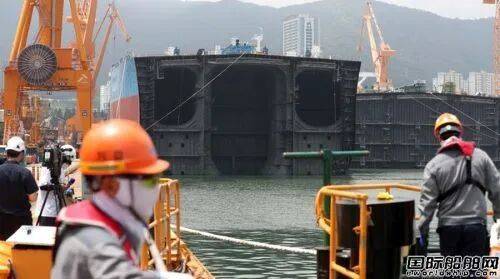
订单回暖!三大船企招聘4000新员工
Sou Hu Cai Jing· 2025-11-01 13:10
Group 1 - The three major South Korean shipbuilding companies are experiencing a significant increase in hiring, with nearly 4,000 new employees recruited in 2024, marking a 29.4% increase from 2023 and more than double the number from 2022 [2][3] - The largest number of new hires comes from Hanwha Ocean, which recruited 2,122 employees, followed by Samsung Heavy Industries with 1,037, and HD Korea Shipbuilding & Offshore Engineering with 762 [2] - The proportion of "boomerang employees" (those returning to their previous companies) is high, accounting for 66% of the new hires among the three companies [3] Group 2 - HD Korea Shipbuilding & Offshore Engineering reported a revenue of 255,386 billion KRW (approximately 1,340 million RMB) in 2024, a year-on-year increase of 19.9%, and an operating profit of 14,341 billion KRW (approximately 75.2 million RMB), up 408% [3] - Samsung Heavy Industries achieved a revenue of 99,031 billion KRW (approximately 519 million RMB) in 2024, a 23.6% increase, with an operating profit of 5,027 billion KRW (approximately 26.36 million RMB), reflecting a significant growth of 115.5% [4] - Hanwha Ocean's revenue reached 107,760 billion KRW (approximately 565 million RMB) in 2024, a 45.5% increase, and it turned a profit with an operating profit of 2,379 billion KRW (approximately 12.5 million RMB) [4] Group 3 - Despite a projected decline in global new ship orders in the first half of 2025, the South Korean shipbuilding industry maintains a strong order backlog of 33.81 million compensated gross tons (CGT), with an order coverage ratio of approximately 3.2 years [4][5] - Hanwha Ocean has initiated recruitment for new graduates for the second half of 2025, increasing the hiring scale by over 200 to reach 800 [5]

供需格局逐步改善,化工行业周期拐点渐近,多只概念股涨停
Sou Hu Cai Jing· 2025-05-27 08:58
Core Viewpoint - The chemical industry is expected to experience a recovery in demand and a gradual elimination of outdated production capacity, leading to a potential upward trend in the industry cycle [1][3][6]. Group 1: Supply Side Dynamics - The capital expenditure of chemical listed companies is projected to decline starting in 2024, resulting in a decrease in fixed asset investment growth for chemical raw materials and products [3]. - The rapid expansion of chemical production capacity is anticipated to conclude by the second half of 2025 [3]. - The exit of outdated production capacity in Europe, driven by high energy costs and frequent uncontrollable events, is expected to alleviate global supply-demand imbalances for various chemical products [3]. - China's ongoing "energy conservation and carbon reduction" initiatives are likely to accelerate the elimination and transformation of high-energy-consuming outdated production capacity [3]. Group 2: Demand Side Factors - Favorable policies in China are expected to boost domestic demand for chemical products, with recent initiatives like the trade-in policy for consumer goods driving sales in the automotive and home appliance sectors [4]. - The Chinese government plans to enhance support for large-scale equipment upgrades and expand the variety and scale of trade-in policies by 2025, which is likely to further stimulate domestic chemical product demand [4]. - The impact of U.S. tariffs on direct exports of chemical products from China is considered limited, as the proportion of exports to the U.S. is relatively low compared to domestic production [5]. Group 3: Industry Cycle and Performance - In Q1 2025, the chemical industry showed mixed performance, with the petroleum and basic chemical sectors reporting revenues of 1,015.1 billion and 607 billion respectively, reflecting year-on-year changes of -7.1% and 6.4% [6]. - The net profit attributable to shareholders for the petroleum and basic chemical sectors was 17 billion and 37.1 billion respectively, with year-on-year changes of -23.5% and 4.7% [6]. - The gross profit margins for these sectors were at historical low levels, indicating a challenging environment [6]. - Analysts suggest that the recovery in oil prices and the ongoing domestic stimulus policies are likely to stabilize demand and improve the supply-demand balance, signaling a potential turning point for the chemical industry cycle by 2025 [6].

中国银河证券:化工行业景气低位徘徊,静待周期筑底向上
news flash· 2025-05-16 00:41
Core Viewpoint - The chemical industry in China is experiencing internal performance divergence in Q1 2025, with the petroleum and basic chemical sectors showing contrasting revenue and profit trends [1] Group 1: Revenue and Profit Performance - The petroleum chemical sector achieved revenue of 1,015.1 billion yuan, reflecting a year-on-year decline of 7.1% [1] - The basic chemical sector reported revenue of 607.0 billion yuan, with a year-on-year increase of 6.4% [1] - The net profit attributable to shareholders for the petroleum chemical sector was 17.0 billion yuan, down 23.5% year-on-year [1] - The basic chemical sector's net profit attributable to shareholders was 37.1 billion yuan, showing a year-on-year growth of 4.7% [1] Group 2: Factors Influencing Performance - The decline in oil prices is expected to be the main factor dragging down the performance of the petroleum chemical sector [1] - The growth in the basic chemical sector's performance may be attributed to industry scale expansion and supply disruptions leading to price increases for certain products [1] Group 3: Industry Outlook - The sales gross margins for the petroleum and basic chemical sectors were 14.3% and 17.9%, respectively, both at historical low levels [1] - The low prosperity in the chemical industry is anticipated to accelerate the elimination of backward production capacity and enhance industry self-discipline [1] - With the continued implementation of domestic demand stimulation policies, terminal demand momentum is expected to gradually stabilize, awaiting a bottoming out of the industry prosperity cycle [1]
