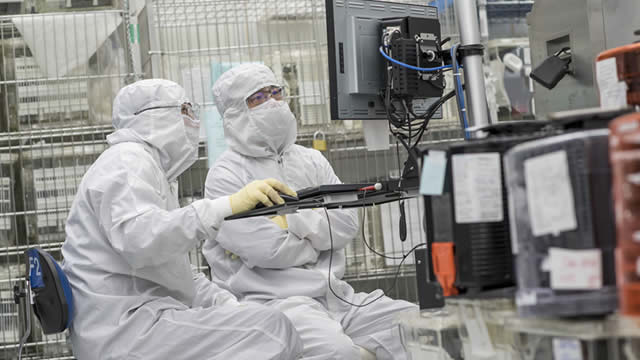
EUV光刻系统

Search documents
AI驱动需求高增,积压在手订单达388亿欧元:ASML(ASML)2025Q4业绩点评及业绩说明会纪要
Huachuang Securities· 2026-01-30 10:30
Investment Rating - The report does not explicitly state an investment rating for ASML Core Insights - ASML's Q4 2025 revenue reached €9.718 billion, a year-over-year increase of 4.9% and a quarter-over-quarter increase of 29.3% [3][9] - The company has a backlog of €38.8 billion in orders, with €25.5 billion attributed to EUV systems, representing 65% of the total backlog [4][26] - The demand outlook is significantly improved due to confidence in sustainable AI-related demand, driving customers to accelerate capacity planning and investment [28] Summary by Sections 1. ASML Q4 2025 and Full Year Performance - Q4 2025 revenue and profitability: Revenue of €9.718 billion, gross margin of 52.2%, and net profit of €2.84 billion [3][9] - Full year 2025 revenue was €32.667 billion, a 15.6% increase year-over-year, with a gross margin of 52.8% and net profit of €9.609 billion [11][14] 2. Business Segment Performance - System sales revenue for Q4 2025 was €7.584 billion, including €3.640 billion from EUV sales and €3.944 billion from non-EUV sales [12][15] - Full year system sales revenue was €24.474 billion, with EUV sales at €11.748 billion and non-EUV sales at €12.726 billion [13] 3. Order Situation - Backlog as of the end of 2025 was €38.8 billion, with net orders in Q4 2025 reaching €13.2 billion, of which €7.4 billion were EUV orders [4][29] - Full year net orders totaled €28 billion [29] 4. Shareholder Return Strategy - ASML repurchased approximately €1.7 billion in shares in Q4 2025, with a total repurchase amount of €7.6 billion under the 2022-2025 plan [27] 5. Industry Observation and Company Progress - The market outlook has improved significantly, driven by confidence in AI-related demand sustainability [28] - ASML has established a strategic partnership with MistralAI, investing €1.3 billion to accelerate AI-driven innovations [31] 6. Future Guidance - For Q1 2026, ASML expects revenue between €8.2 billion and €8.9 billion, with a gross margin of 51-53% [32][35] - For the full year 2026, revenue is projected to be between €34 billion and €39 billion, with a growth rate of 4.0% to 19.3% [33][35] - Long-term revenue target for 2030 is set between €44 billion and €60 billion, with a gross margin target of 56% to 60% [36]

突发!最大规模裁员!
是说芯语· 2026-01-28 13:46
Core Insights - ASML announced a significant layoff of 1,700 employees, representing 3.8% of its total workforce, marking the largest reduction since its long-term expansion began in 2010 [1] - The company's Q4 2025 orders exceeded market expectations, reaching €13.2 billion, with EUV orders accounting for €7.4 billion and a backlog of €38.8 billion [3] - ASML's Q4 2025 net sales hit a record high of €9.7 billion, contributing to an annual net sales figure of €32.7 billion and a net profit of €9.6 billion, both historical highs [3] Financial Performance - In Q4 2025, ASML sold 94 new lithography systems and 8 used systems, totaling 300 new systems and 27 used systems for the year, indicating a decline from 2024's figures [3] - EUV lithography system sales increased by 39% year-on-year to €11.6 billion, with 48 systems recognized in revenue [3] - DUV lithography system sales decreased by 6% year-on-year to €12 billion, with 279 systems recognized in revenue [3] Market Outlook - The CEO of ASML noted a positive shift in customer assessments regarding the mid-term market, driven by stronger expectations for sustainable AI-related demand, suggesting 2026 will be another growth year for the company [4] - The CFO indicated that the layoffs were part of an effort to simplify the organizational structure, allowing engineers to focus more on their core engineering roles [4]


突发!大规模裁员!
国芯网· 2026-01-28 12:36
Core Viewpoint - ASML is undergoing significant changes, including a major workforce reduction and a positive outlook for future growth driven by AI demand, despite a decline in certain product sales [2][5]. Group 1: ASML Workforce Changes - ASML announced a layoff of 1,700 employees, which represents 3.8% of its total workforce, marking the largest reduction since 2010 [2]. - The layoffs are part of a strategy to simplify the company's organizational structure, allowing engineers to focus more on their core engineering roles [5]. Group 2: Financial Performance and Market Outlook - ASML's Q4 2025 orders exceeded market expectations, reaching €13.2 billion, with EUV orders accounting for €7.4 billion and a backlog of €38.8 billion [4]. - The company reported record net sales of €9.7 billion for Q4 2025, contributing to an annual net sales total of €32.7 billion and a net profit of €9.6 billion, both historical highs [4]. - In 2025, ASML's sales of EUV lithography systems are expected to grow by 39% year-over-year, reaching €11.6 billion, while DUV system sales are projected to decline by 6% to €12 billion [4].
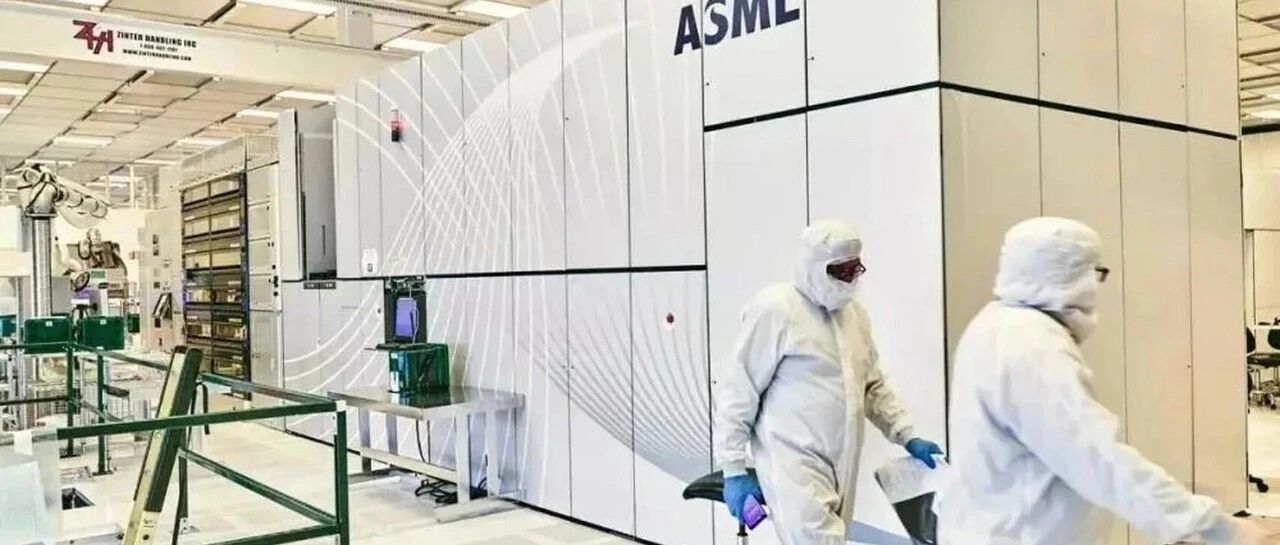
阿斯麦ASML:存储爆单,光刻机的超级周期也来了
3 6 Ke· 2026-01-28 11:56
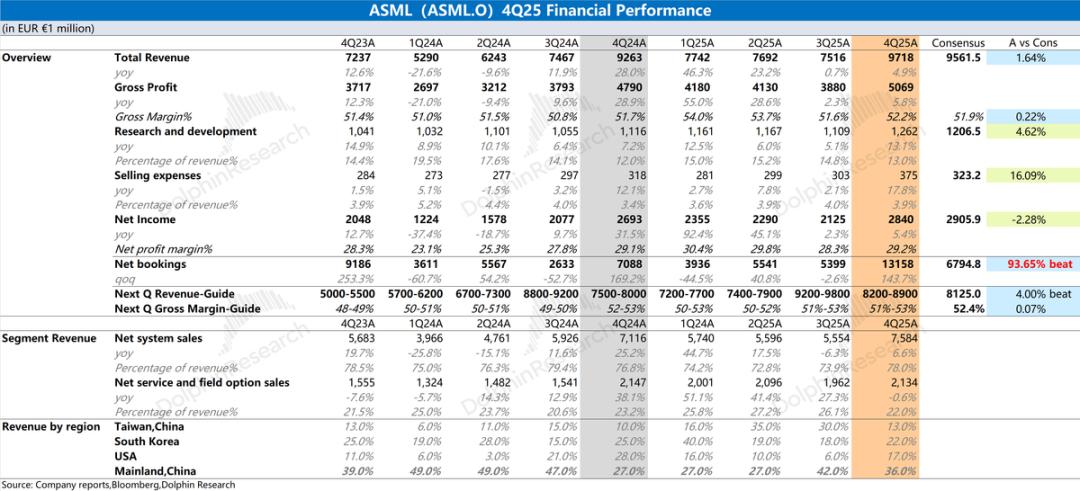
Core Viewpoint - ASML's Q4 2025 financial performance exceeded market expectations, driven by significant growth in orders, particularly from storage manufacturers, indicating a positive outlook for 2026 [1][5][34] Revenue and Profitability - The company reported revenue of €9.72 billion for Q4 2025, a 5% year-over-year increase, surpassing market expectations of €9.56 billion, primarily due to growth from mainland China customers [1][16] - Gross margin for the quarter was 52.2%, aligning with the company's guidance of 51-53%, supported by a higher proportion of EUV shipments [1][17] - Net income reached €2.84 billion, also a 5% increase year-over-year, with a net profit margin of 29.2% [1][19] Business Segments - Lithography systems revenue was €7.58 billion, up 6.6% year-over-year, while service revenue was €2.13 billion, down 0.6% [1][29] - EUV and ArFi systems accounted for nearly 88% of lithography system revenue, with EUV revenue at approximately €3.64 billion, reflecting a 22% year-over-year increase [1][26] - The average selling price for EUV systems rose to around €260 million, while ArFi systems averaged about €82 million [2][26] Regional Performance - Mainland China was the largest revenue contributor, accounting for 36% of total revenue, approximately €3.5 billion, exceeding the company's previous expectations of 25% [3][31] - Taiwan contributed around €1.26 billion, representing 13% of total revenue, while South Korea's contribution rose to 22% [3][31] Orders and Guidance - Net orders surged to €13.16 billion, significantly higher than the market expectation of €6.8 billion, driven by increased orders from storage manufacturers [3][5] - For Q1 2026, ASML expects revenue between €8.2 billion and €8.9 billion, with a gross margin guidance of 51-53% [3][7] - The company provided a full-year revenue guidance for 2026 of €34 billion to €39 billion, representing a year-over-year growth of 4%-19% [3][15] Capital Expenditure Trends - Major clients like TSMC and Micron have announced significant increases in capital expenditures for 2026, which is expected to drive demand for ASML's lithography systems [8][34] - TSMC's capital expenditure is projected to exceed $52 billion, indicating strong demand for advanced semiconductor manufacturing [9][34] Future Outlook - The introduction of High-NA EUV technology is anticipated to further enhance ASML's growth trajectory post-2026, as it becomes essential for next-generation semiconductor manufacturing [10][34] - The combination of increased capital expenditures from key clients and the upcoming High-NA EUV shipments positions ASML for sustained growth in the semiconductor equipment market [12][34]
阿斯麦:最坏时期已过
Hu Xiu· 2025-10-15 23:45
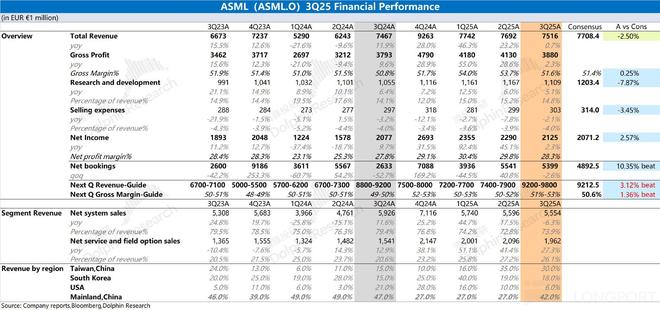
Core Viewpoint - ASML's Q3 2025 financial results indicate a stabilization in performance, with revenue and gross margin meeting company guidance, while the focus shifts to order trends and future operational guidance [7][8][40]. Revenue & Gross Margin - Q3 2025 revenue reached €7.5 billion, a year-on-year increase of 0.7%, slightly below market expectations of €7.7 billion, primarily driven by contributions from TSMC and customers in mainland China [1][28]. - The gross margin for the quarter was 51.6%, near the upper end of the company's guidance range (50%-52%), supported by an increase in service revenue [1][32]. Expenses & Profit - R&D and sales management expenses remained stable, with net profit for the quarter at €2.13 billion, a year-on-year increase of 2.3%, driven by improved gross margin [2][38]. - The net profit margin for the quarter was 28.3% [2][38]. Business Performance - Lithography system revenue was €5.55 billion, down 6.3% year-on-year, while service revenue grew by 27.3% to €1.96 billion, indicating a shift in revenue composition [3][55]. - The revenue split between lithography systems and services was approximately 70:30, with lithography systems remaining the core of ASML's performance [3][42]. Regional Revenue - Mainland China was the largest revenue source, contributing 42% or approximately €3.16 billion, significantly exceeding the company's previous expectation of 25% [4][56]. - Taiwan contributed around €2.26 billion, accounting for 30% of revenue, reflecting strong demand from TSMC [4][56]. Order Metrics - The net order intake for the quarter was €5.4 billion, a decrease of €1.4 billion from the previous quarter but better than market expectations of €4.9 billion [5][9]. - The sustained net orders above €5 billion indicate a recovery in customer confidence [5][9]. Future Guidance - For Q4 2025, ASML expects revenue between €9.2 billion and €9.8 billion, with a gross margin of 51%-53%, both above market expectations [6][12]. Market Context - The current operational phase for ASML is transitioning from a low point to recovery, driven by increased capital expenditures in the semiconductor industry, particularly in storage and AI-related investments [14][40]. - The positive outlook for major clients like TSMC, Samsung, and Intel is expected to boost ASML's performance as they increase capital spending [22][25]. Competitive Position - ASML remains the sole provider of EUV lithography systems, holding over 80% market share, which solidifies its investment rationale [23][60]. - The introduction of High-NA EUV systems is anticipated to further enhance ASML's market position and pricing power [24][60].

阿斯麦 ASML:AI Capex 加 buff,最坏时期已过!
Xin Lang Cai Jing· 2025-10-15 10:27
Core Insights - ASML reported Q3 2025 revenue of €7.5 billion, a 0.7% year-over-year increase, below market expectations of €7.7 billion, primarily driven by contributions from TSMC and customers in mainland China [1][17] - The gross margin for the quarter was 51.6%, slightly above the company's guidance range of 50-52%, supported by an increase in service revenue [1][17] - Net profit for the quarter was €2.13 billion, a 2.3% year-over-year increase, with a net profit margin of 28.3% [1][20] Revenue and Profitability - Total revenue for Q3 2025 was €7.5 billion, with a gross profit of €3.88 billion, reflecting a gross margin of 51.6% [1][17] - Net income reached €2.13 billion, with a net profit margin of 28.3%, indicating stable operating expenses [1][20][21] - Research and development expenses were €1.11 billion, representing 14.8% of revenue, while selling and administrative expenses were €300 million, or 4% of revenue [18][21] Business Segments - Lithography system revenue was €5.55 billion, down 6.3% year-over-year, while service revenue increased by 27.3% to €1.96 billion [1][30] - EUV and ArFi systems accounted for nearly 66% of lithography system revenue, with EUV revenue at approximately €2.11 billion and ArFi at €2.89 billion [2][27] - The average selling price for EUV systems was around €23.5 million, while ArFi systems averaged €7.6 million [2][28] Regional Performance - Mainland China was the largest revenue contributor, accounting for 42% of total revenue, approximately €3.16 billion, significantly above the expected 25% [3][32] - Taiwan contributed around €2.26 billion, representing 30% of revenue, primarily driven by TSMC's demand [3][32] - Revenue from South Korea and the USA remained low due to reduced capital expenditures from major clients like Samsung and Intel [32] Order Trends and Future Guidance - The net order intake for the quarter was €5.4 billion, exceeding market expectations of €4.9 billion, indicating improved customer confidence [5][7] - For Q4 2025, ASML expects revenue between €9.2 billion and €9.8 billion, above market expectations of €9.2 billion [7][14] - The company is positioned to benefit from increased capital expenditures in the semiconductor industry, particularly driven by AI demand and recovery in the storage sector [14][20]

一种“新型”的光刻技术
半导体行业观察· 2025-10-13 01:36
Core Insights - The article discusses the geopolitical landscape of semiconductor manufacturing, emphasizing the dominance of ASML's EUV lithography systems as the only means to access advanced nodes below 5nm, which has locked the innovation pace of major companies like Apple, TSMC, Samsung, and Intel [1] - The emergence of AI is shifting the demand for semiconductor manufacturing technologies, leading to a renewed interest in non-EUV technologies such as electron beam lithography (E-Beam Lithography) and others that were previously sidelined [1][14] Group 1: Non-EUV Technologies - Non-EUV technologies like E-Beam Lithography, Nanoimprint Lithography (NIL), and Maskless Lithography (ML2) have been considered alternatives but have struggled to enter mass production [1] - SecureFoundry's Hyper-Beam Array (HBA) lithography system utilizes 65,000 independently controlled electron beams, allowing AI chip designers to test multiple design variants simultaneously, significantly reducing production time and costs [5][7] - The HBA system is designed for flexible batch production, making it suitable for small-batch prototypes and advanced designs, and it operates effectively within the 22nm to 65nm process nodes [7] Group 2: Historical Context of E-Beam Technology - E-Beam technology has two main applications: mask writing and direct lithography, with the latter being less successful due to low throughput and high costs associated with batch production [8][9] - The multi-beam approach was explored by various companies, including TSMC, but faced challenges in commercialization due to technical difficulties and funding issues [9][10] - Mapper Lithography's multi-beam system was an early attempt to commercialize this technology but ultimately failed due to financial constraints, leading to its acquisition by ASML [10][11] Group 3: Current Developments and Future Prospects - The rise of AI and the need for flexible, rapid, and customizable lithography solutions have reignited interest in multi-beam electron beam technologies [14][15] - Multibeam has announced the industry's first multi-column electron beam lithography system (MEBL), claiming it offers over 100 times the throughput of traditional E-Beam systems, with configurations for 150mm, 200mm, and 300mm wafers [15][18] - The funding received by Multibeam will accelerate the development of next-generation MEBL platforms, catering to the semiconductor industry's demand for lower power and higher performance chips in the AI era [18][19]
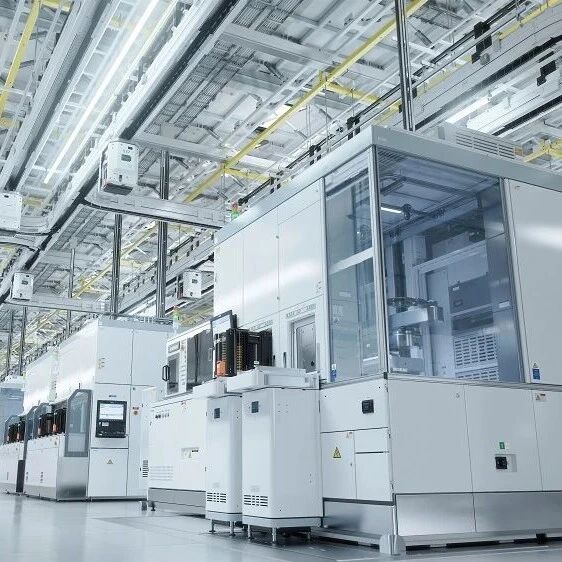
SK海力士6万亿买光刻机!
国芯网· 2025-09-24 12:18
Core Viewpoint - SK Hynix plans to double its EUV lithography equipment by purchasing approximately 20 additional ASML machines over the next two years, indicating a significant investment in advanced semiconductor manufacturing technology [1][3]. Group 1: Investment and Equipment - SK Hynix currently owns about 20 EUV machines and aims to acquire an additional 20, which will increase its total to around 40 machines [1]. - The price of each EUV machine ranges from 300 billion to 500 billion Korean Won, leading to an estimated investment of at least 6 trillion Korean Won for this acquisition [3]. - The new equipment will be installed at the Cheongju M15X factory and the Icheon M16 factory, with M15X expected to start production by the end of this year [3]. Group 2: Production and Technology - The EUV lithography process has been commercialized in SK Hynix's memory segment since the introduction of 1a nm DRAM in 2021, and its application is steadily increasing with the evolution of memory generations [3]. - The demand for high-performance storage, particularly HBM, driven by AI development, necessitates more EUV equipment to expand the production scale of advanced DRAM [3]. - SK Hynix has also introduced its first mass-production High-NA EUV lithography machine, the ASML TWINSCAN EXE:5200B, in the memory industry [3].
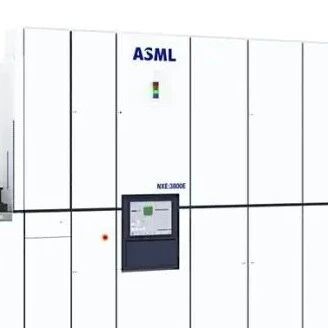
阿斯麦Q2财报:订单额环比增41%!管理层警告2026年增长或无法实现
仪器信息网· 2025-07-23 03:37
Core Viewpoint - ASML reported strong Q2 2025 results with net sales of €7.7 billion, a gross margin of 53.7%, and a net profit of €2.29 billion, driven by robust demand for EUV lithography systems and a significant increase in new orders [1][2][3]. Financial Performance - Q2 2025 net sales reached €7.692 billion, slightly down from Q1 2025's €7.742 billion, but still within the guidance range [4]. - Gross profit for Q2 2025 was €4.13 billion, with a gross margin of 53.7%, slightly lower than Q1's 54.0% [4]. - Net income for Q2 2025 was €2.29 billion, translating to earnings per share (EPS) of €5.90, down from €6.00 in Q1 [4][3]. Order and Sales Dynamics - New orders surged to €5.541 billion in Q2 2025, a 40.8% increase from €3.936 billion in Q1 2025, indicating strong market demand [3][4]. - EUV lithography systems accounted for €2.3 billion of the new orders, representing 41.5% of total bookings, highlighting the resilience in advanced process technology demand [3][2]. Future Outlook - The company expects Q3 2025 net sales to be between €7.4 billion and €7.9 billion, with a gross margin forecasted between 50% and 52% [5]. - For the full year 2025, ASML anticipates a 15% growth in total net sales, with a gross margin around 52% [5]. - The CEO noted ongoing uncertainties due to macroeconomic and geopolitical factors, which may impact growth projections for 2026 [5].

3 Semiconductor Stocks That Could Help Make You a Fortune
The Motley Fool· 2025-05-04 09:05
Core Viewpoint - The semiconductor market is experiencing a pullback due to tariffs, trade wars, and recession fears, but this creates attractive buying opportunities for long-term investors as the market is expected to grow significantly over the coming decades [1][2]. Group 1: TSMC - TSMC is the largest and most advanced contract chipmaker, relied upon by major companies like Nvidia, AMD, Qualcomm, and Apple for producing high-performance chips [4][5]. - In the latest quarter, TSMC generated 59% of its revenue from the high-performance computing (HPC) market and 28% from the smartphone market, with HPC growth offsetting smartphone market softness [5]. - TSMC's revenue is expected to grow at a compound annual growth rate (CAGR) of 21% from 2024 to 2027, with earnings per share (EPS) expected to grow at a CAGR of 22% [8]. Group 2: ASML - ASML is the largest producer of lithography systems and the only producer of extreme ultraviolet (EUV) lithography systems, essential for manufacturing advanced chips [9][10]. - ASML's low-NA EUV systems cost approximately $180 million each, while high-NA systems cost around $380 million, giving the company significant pricing power [10]. - Analysts expect ASML's revenue and EPS to grow at a CAGR of 12% and 19%, respectively, from 2024 to 2027 [11]. Group 3: Arm Holdings - Arm designs power-efficient CPUs, which are widely used in smartphones, tablets, IoT devices, and connected vehicles, capturing about 99% of the smartphone market [13][14]. - Arm plans to develop its own first-party chips, which could enhance its competitiveness and reduce costs by eliminating licensing fees [15]. - From fiscal 2024 to fiscal 2027, Arm's revenue is expected to grow at a CAGR of 23%, while EPS is projected to grow at 81% [16].