
G9 NAND

Search documents
Micron Technology's NAND Revenues Reach $2.7B: Is It a Growth Lever?
ZACKS· 2025-12-31 15:11
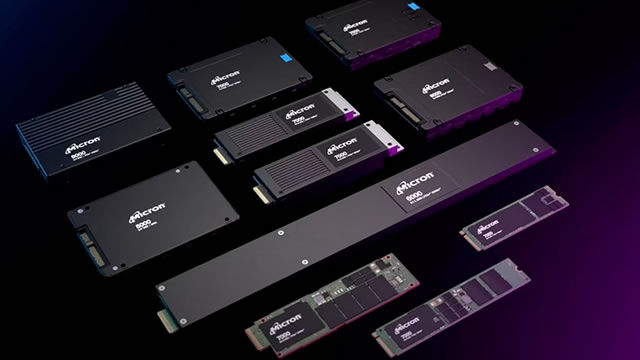
Core Insights - Micron Technology (MU) reported a 22% sequential and year-over-year growth in NAND revenues for the first quarter of fiscal 2026, now accounting for 20% of its total revenue [1][10] - The growth is attributed to increased shipments and price rises due to tight industry supply and a favorable product mix [1] Group 1: Demand and Supply Dynamics - The management of Micron Technology highlighted that the constrained NAND supply amid rising demand will enable a 20% growth in shipments for 2026 [2] - Strong demand for G9 NAND is driven by its applications in data center solid state drives (SSDs) and client SSD products [2] - G9 NAND is expected to be the primary driver of NAND bit growth in calendar 2026, with the launch of the world's first PCIe Gen6 SSD further enhancing this momentum [3] Group 2: AI and Storage Solutions - Artificial Intelligence (AI) is a significant consumer of storage and memory products, with Micron leveraging its QLC NAND, including G9 QLC, to meet AI-driven storage demand [4] - The NAND technology is crucial for high-capacity data center use cases, with G9 SSDs entering qualification at multiple hyperscale customers [4][5] Group 3: Competitive Landscape - Micron Technology faces competition from Sandisk and Seagate Technology in the data storage market [6] - Sandisk reported a 26% sequential increase in data center revenues, driven by AI-related NAND demand [7] - Seagate is expanding its presence in the SSD market while maintaining a strong position in high-capacity HDD solutions [7] Group 4: Financial Performance and Valuation - Micron's shares have increased by 142.1% over the past six months, outperforming the Zacks Computer - Integrated Systems industry's growth of 51.1% [8] - In fiscal Q1, Micron's NAND revenues reached $2.7 billion, with data center NAND revenues exceeding $1 billion [10] - The company trades at a forward price-to-sales ratio of 4.33X, slightly above the industry average of 4.28X [11] Group 5: Earnings Estimates - The Zacks Consensus Estimate for Micron's fiscal 2026 earnings indicates a year-over-year growth of 278.3%, with upward revisions in estimates over the past 30 days [14]


存储周期没死,但它正在被AI改写
是说芯语· 2025-12-18 23:29
Core Viewpoint - Micron's recent earnings report for Q1 FY26 signifies a shift in market focus from quarterly earnings to future earnings guidance and the sustainability of supply-demand dynamics [3]. Group 1: Financial Performance - For Q1 FY26, Micron reported revenue of $13.64 billion, Non-GAAP EPS of $4.78, Non-GAAP gross margin of 56.8%, operating cash flow of $8.41 billion, and adjusted free cash flow of $3.91 billion [4]. - The Cloud Memory Business Unit, which is closely tied to cloud and data center operations, has grown significantly with a gross margin of 66%, indicating a quantifiable impact from AI [4]. - The guidance for Q2 FY26 includes revenue of $18.7 billion (±$400 million), Non-GAAP gross margin of 68% (±1%), and Non-GAAP EPS of $8.42 (±$0.20), representing a substantial upward revision from market expectations of approximately $14.2 billion [4]. Group 2: Key Market Concerns - HBM (High Bandwidth Memory) has transitioned from a demand-driven market to a supply-constrained environment, with management indicating that they have secured pricing and quantity agreements for the entire calendar year 2026 [5]. - Micron's management stated that they can only meet about 50% to 66% of demand for key customers, highlighting the limited elasticity of supply even if demand increases [5]. - The long-term market potential for HBM is projected to reach approximately $35 billion by 2025 and $100 billion by 2028, with a CAGR of around 40%, indicating a more aggressive outlook than previously anticipated [5]. Group 3: Traditional DRAM/NAND Market - Micron confirmed that both DRAM and NAND markets are experiencing demand exceeding supply, with gross margin expansion driven by higher prices, lower costs, and improved product mix [6]. - The transition to 1-gamma DRAM is progressing, expected to become the primary output by the second half of 2026, while NAND is shifting towards G9 NAND and higher QLC ratios [6][7]. Group 4: Capital Expenditure Insights - Micron has raised its capital expenditure (Capex) for FY26 to approximately $20 billion, focusing on HBM supply capacity and 1-gamma DRAM supply [8]. - This Capex increase signals a positive outlook on demand certainty and the company's commitment to meeting that demand, although it also poses a risk if the industry collectively increases Capex too rapidly [8]. Group 5: Conclusion and Future Monitoring - Micron has not completely shed its cyclical nature, but structural factors such as increased HBM and data center business proportions are elevating the overall profit curve [9]. - The shift towards longer-term supply agreements and stronger multi-year contract tendencies may lead to a more predictable cycle, moving away from short-term price-driven volatility [9]. - Key areas to monitor include the balance of DRAM/NAND supply and demand, the completion of HBM pricing and quantity agreements for 2026, and the potential impact of new tariffs not included in the guidance [10][11].
Micron Technology(MU) - 2026 Q1 - Earnings Call Transcript
2025-12-17 22:32
Financial Data and Key Metrics Changes - Micron reported fiscal Q1 revenue of $13.6 billion, up 21% sequentially and 57% year over year, marking a quarterly record for the third consecutive quarter [21] - DRAM revenue reached a record $10.8 billion, up 69% year over year and 20% sequentially, representing 79% of total revenue [21][22] - NAND revenue was a record $2.7 billion, up 22% year over year and sequentially, accounting for 20% of total revenue [21][22] - Consolidated gross margin for fiscal Q1 was 56.8%, up 11 percentage points sequentially, driven by higher pricing and favorable mix [22] - Non-GAAP diluted EPS for fiscal Q1 was $4.78, reflecting 58% sequential growth and 167% year-over-year growth [24] Business Line Data and Key Metrics Changes - Cloud Memory Business Unit (CMBU) revenue was a record $5.3 billion, up 16% sequentially, representing 39% of total revenue [22][23] - Core Data Center Business Unit (CDBU) revenue reached a record $2.4 billion, up 51% sequentially, accounting for 17% of total revenue [23] - Mobile and Client Business Unit (MCBU) revenue was a record $4.3 billion, up 13% sequentially, representing 31% of total revenue [23] - Automotive and Embedded Business Unit (AEBU) revenue was a record $1.7 billion, up 20% sequentially, accounting for 13% of total revenue [23] Market Data and Key Metrics Changes - Server unit demand is expected to grow in the high teens percentage range for calendar 2025, up from previous expectations of 10% [10] - PC unit sales are forecasted to grow in the high single-digit percentage range for calendar 2025, above prior expectations of mid-single digits [12] - Smartphone unit volumes are on track to grow in the low single-digit percentage range for calendar 2025 [13] Company Strategy and Development Direction - Micron is focused on maximizing production output and ramping industry-leading technology nodes while investing in new cleanroom space to enhance supply capability [7][18] - The company anticipates substantial new records in revenue, gross margin, EPS, and free cash flow for both the second quarter and the full fiscal year 2026 [7] - Micron plans to increase fiscal 2026 CapEx to approximately $20 billion, primarily to support HBM supply capability and 1-gamma supply [17][29] Management's Comments on Operating Environment and Future Outlook - Management highlighted that AI-driven demand is accelerating, with strong industry demand and supply constraints contributing to tight market conditions [7][16] - The company expects tight supply-demand conditions to persist beyond 2026, with DRAM and NAND bit shipment growth constrained by industry supply [17] - Management expressed confidence in Micron's competitive position, emphasizing technology leadership and a differentiated product portfolio [8][31] Other Important Information - Micron generated record free cash flow of $3.9 billion in fiscal Q1, reducing debt by $2.7 billion and returning to a net cash position [25] - The company is actively integrating AI across its operations, leading to significant productivity gains and improved decision-making [27] Q&A Session All Questions and Answers Question: Long-term agreements (LTAs) with customers - Management discussed ongoing discussions for multi-year contracts involving DRAM and NAND, emphasizing stronger contract structures compared to previous agreements [34][35] Question: Capital expenditures (CapEx) and capital intensity - Management confirmed an increase in CapEx to $20 billion for fiscal 2026, indicating a disciplined approach to capital growth while addressing supply constraints [37][51] Question: Gross margins and cost management - Management indicated that while gross margins are expected to improve, the growth may be more gradual due to high current levels [91][92] Question: HBM market share and competitive positioning - Management expressed confidence in Micron's competitive position and product roadmap, highlighting strong demand for HBM and the importance of managing product mix [78][81]
Micron Technology(MU) - 2026 Q1 - Earnings Call Presentation
2025-12-17 21:30
During the course of this meeting, we may make projections or other forward-looking statements regarding market demand and supply, market and pricing trends and drivers, the impact of technologies such as AI, contractual terms, cost reductions, our manufacturing projects and related investments, expected product volume production, our market position, expected product announcements, capabilities of our future products and technologies, future events, such as the end of life of some products, and future fina ...
Will Data Center AI Chip Demand Keep Aiding Micron's Sales Growth?
ZACKS· 2025-11-11 14:21
Core Insights - Micron Technology, Inc. achieved record revenues of $37.38 billion in fiscal 2025, primarily driven by strong demand in its data center business, particularly for AI infrastructure [1][10] - The company's data center products generated $20.75 billion in revenues, accounting for 56% of total sales [1] Data Center Business Performance - Micron's data center end-market consists of two units: Cloud Memory Business Unit (CMBU) and Core Data Business Unit (CDBU) [2] - CMBU revenues surged 257% year over year to $13.52 billion, while CDBU sales increased 45% to $7.23 billion, driven by high demand for high-bandwidth memory (HBM), high-capacity DRAM, and solid-state drives [2] Product Development and Technology - Micron's latest HBM3E and LPDDR5 server memory are gaining traction, with major customer NVIDIA utilizing these products for its H200 Tensor Core GPUs [3] - The company is ramping up production of its 1-gamma DRAM and G9 NAND technologies, enhancing speed and efficiency while improving cost structure [3] Future Growth Expectations - Micron anticipates that AI servers and traditional data centers will continue to be significant growth drivers in fiscal 2026, supported by tight DRAM supply and increasing AI adoption [4] - The Zacks Consensus Estimate for fiscal 2026 revenues is projected at $53.27 billion, indicating a year-over-year growth of 42.5% [4] Competitive Landscape - While there are no direct U.S. stock exchange-listed competitors, Intel Corporation and Broadcom Inc. play crucial roles in the HBM supply chain and AI hardware ecosystem [5] - Intel is expanding its AI memory chip portfolio, integrating HBM into its high-performance accelerators, while Broadcom is developing high-performance custom AI accelerators for major companies [6][7] Stock Performance and Valuation - Micron's shares have surged approximately 201% year to date, outperforming the Zacks Computer – Integrated Systems industry's gain of 83.9% [8] - The company trades at a forward price-to-earnings ratio of 15.19, significantly lower than the industry's average of 25.34 [12] Earnings Estimates - The Zacks Consensus Estimate for Micron's fiscal 2026 and 2027 earnings implies a year-over-year increase of 95.7% and 14.5%, respectively, with upward revisions in the past 60 days [15]
Micron's NAND Sales Hit $8.5B in FY25: Can the Momentum Continue?
ZACKS· 2025-10-03 14:06
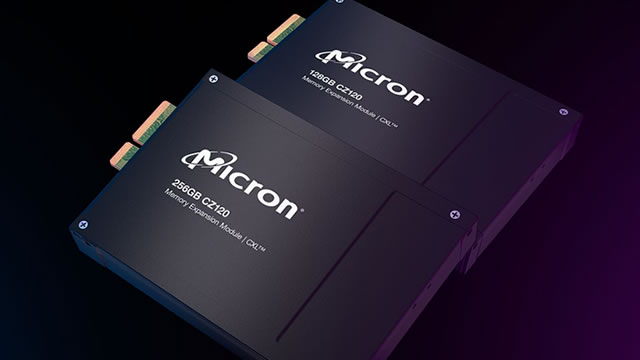
Core Insights - Micron Technology reported record NAND revenues of $8.5 billion in fiscal 2025, representing an 18% year-over-year increase [1] - In Q4 of fiscal 2025, NAND sales reached $2.3 billion, accounting for approximately 20% of total revenues, with a 5% growth compared to the previous quarter [1][9] - The company anticipates fiscal 2026 NAND revenues to be $10.42 billion, indicating a year-over-year growth of 22.5%, with total revenues projected to grow 43.4% to $53.61 billion [4][9] NAND Product Development - Micron is focusing on its new G9 NAND to enhance performance, ramping up production of both TLC and QLC NAND, with G9 QLC NAND now qualified for enterprise storage [2] - The addition of PCIe Gen6 SSDs aims to support high-performance data center workloads, including AI inference and large-scale storage [2] Market Demand and Trends - Demand in the data center storage market is being driven by AI applications such as vector database indexing and key-value cache tiering [3] - A shortage of hard disk drives (HDDs) is expected to further boost NAND demand [3] Competitive Landscape - Micron competes with Western Digital Corporation and Seagate Technology Holdings in the data storage market, with Western Digital having a broader portfolio that includes both traditional HDDs and NAND-based SSDs [5] - Seagate is a significant player in the HDD market, particularly for high-capacity storage solutions, and is expanding its presence in the SSD market [6] Financial Performance and Valuation - Micron's shares have increased by approximately 119.2% year-to-date, outperforming the Zacks Computer – Integrated Systems industry's growth of 50.2% [7] - The company trades at a forward price-to-sales ratio of 3.76, slightly below the industry average of 4.04 [11] - The Zacks Consensus Estimate for Micron's fiscal 2026 and 2027 earnings suggests a year-over-year increase of 100% and 12%, respectively, with upward revisions in the past 30 days [14]
Micron Technology(MU) - 2025 Q4 - Earnings Call Transcript
2025-09-23 21:32
Financial Data and Key Metrics Changes - Micron achieved record revenue of $37.4 billion in fiscal 2025, a nearly 50% increase year-over-year, with gross margins expanding by 17 percentage points to 41% [4][19] - Fiscal Q4 revenue was $11.3 billion, up 22% sequentially and 46% year-over-year, with DRAM revenue reaching a record $9 billion, up 69% year-over-year [19][20] - EPS for fiscal 2025 reached $8.29, reflecting a 538% increase compared to the prior year [19] Business Line Data and Key Metrics Changes - The combined revenue from HBM, high-capacity DIMMs, and LP server DRAM reached $10 billion, more than a five-fold increase compared to the prior fiscal year [5] - Cloud Memory Business Unit revenue was $4.5 billion, representing 40% of total company revenue, with gross margins of 59% [21] - Mobile Client Business Unit revenue was $3.8 billion, representing 33% of total company revenue, with gross margins of 36% [22] Market Data and Key Metrics Changes - Data center business accounted for a record 56% of total company revenue, with gross margins of 52% [10] - The calendar 2025 total server units are expected to grow approximately 10%, up from prior expectations of mid-single-digit growth [9] - Smartphone unit shipment expectations remain unchanged at low single-digit percentage range in calendar 2025, with an increasing mix of AI-ready smartphones [15] Company Strategy and Development Direction - Micron is positioned to benefit significantly from AI-driven demand, with a focus on advanced technologies like HBM and 1-gamma DRAM [5][6] - The company plans to continue investing in its Japan production capability and is making progress on its Singapore HBM assembly and test facility [9][8] - Micron aims to leverage its leadership in advanced technologies to maximize ROI and enhance product mix and profitability [5][10] Management's Comments on Operating Environment and Future Outlook - Management expressed confidence in strong demand for DRAM and NAND, driven by data center growth and AI applications [10][50] - The company anticipates further DRAM supply tightness in the industry and continued strengthening in NAND market conditions [18] - Management expects fiscal Q1 revenue to be a record $12.5 billion, with gross margins projected at 51.5% [27] Other Important Information - Micron invested $13.8 billion in CapEx in fiscal 2025, with expectations for higher CapEx in fiscal 2026 [18] - The company received a CHIPS Act grant disbursement for its new high-volume manufacturing fab in Idaho, with the first wafer output expected in the second half of calendar 2027 [8] - Micron's inventory levels improved, with ending inventory for fiscal Q4 at $8.4 billion, down $372 million sequentially [24][25] Q&A Session Summary Question: Guidance on revenue split between DRAM and NAND - Micron expects a heavier DRAM mix than NAND in the first quarter, with a projected sequential gross margin increase of 580 basis points [31] Question: Update on HBM total addressable market (TAM) - Micron anticipates the HBM TAM to reach $100 billion by 2030, with HBM bit CAGR expected to outgrow overall DRAM CAGR [34] Question: Transition from HBM3E to HBM4 - HBM4 production is expected to ramp in line with customer demand, with first shipments anticipated in the second quarter of 2026 [40] Question: Gross margin outlook - Micron expects gross margins to improve sequentially, driven by tight DRAM supply and improving NAND business [42] Question: DRAM inventory levels and customer orders - Micron expects DRAM inventories to remain tight, with healthy customer inventory levels and increased lead times for orders [58]
Micron Technology(MU) - 2025 Q4 - Earnings Call Transcript
2025-09-23 21:32
Financial Data and Key Metrics Changes - Micron Technology achieved record revenue of $37.4 billion in fiscal 2025, a nearly 50% increase year-over-year, with gross margins expanding by 17 percentage points to 41% [4][22] - Fiscal Q4 revenue was $11.3 billion, up 22% sequentially and 46% year-over-year, marking a quarterly record [22] - Earnings per share (EPS) reached $8.29, reflecting a 538% increase compared to the prior year [22] Business Line Data and Key Metrics Changes - DRAM revenue in fiscal Q4 was a record $9 billion, up 69% year-over-year, representing 79% of total revenue [22] - NAND revenue for fiscal Q4 was $2.3 billion, down 5% year-over-year but up 5% sequentially [23] - The Cloud Memory Business Unit (CMBU) generated $4.5 billion, accounting for 40% of total revenue, with gross margins of 59% [24] Market Data and Key Metrics Changes - Data center business reached a record 56% of total company revenue in fiscal 2025, with gross margins of 52% [11] - The total server units in the data center market are expected to grow approximately 10% in calendar 2025, up from previous expectations of mid-single-digit growth [10] - Smartphone unit shipment expectations remain unchanged at low single-digit percentage growth in calendar 2025, with an increasing mix of AI-ready smartphones [17] Company Strategy and Development Direction - Micron is positioned to benefit significantly from AI-driven demand, with a focus on advanced technologies such as HBM, 1-gamma DRAM, and G9 NAND [5][10] - The company plans to continue investing in its production capabilities in Japan and Singapore to meet future memory technology requirements [9][10] - Micron aims to leverage its leadership in advanced technologies to maximize ROI and enhance its product portfolio [5][10] Management's Comments on Operating Environment and Future Outlook - Management expressed confidence in the strong demand for DRAM and NAND products, driven by AI applications and traditional server growth [35][54] - The company anticipates continued tightness in the DRAM supply environment into calendar 2026, contributing to favorable pricing conditions [20][21] - Management highlighted the importance of AI in driving productivity and competitive positioning, with expectations of significant investments in memory related to AI [7][31] Other Important Information - Micron invested $13.8 billion in capital expenditures in fiscal 2025, with expectations for higher spending in fiscal 2026 [21] - The company received a CHIPS Act grant disbursement for its new manufacturing fab in Idaho, with the first wafer output expected in the second half of calendar 2027 [9] - Micron's 1-gamma DRAM node achieved mature yields 50% faster than the previous generation, demonstrating its technological leadership [8] Q&A Session Summary Question: Guidance on revenue split between DRAM and NAND - Micron expects a heavier DRAM mix in the first quarter, with a projected sequential gross margin increase of 580 basis points driven by pricing and strong execution [34][36] Question: Update on HBM total addressable market (TAM) - Management reiterated the expectation for HBM TAM to reach $100 billion by 2030, with HBM bit CAGR expected to outpace overall DRAM CAGR [38][39] Question: Transition from HBM3E to HBM4 - HBM4 production is set to ramp in line with customer demand, with expectations for increased market share in 2026 [44][45] Question: Gross margin outlook - Management anticipates sequential gross margin improvement in the first half of fiscal 2026, supported by tight DRAM supply and favorable pricing [46][48] Question: DRAM demand sustainability - Strong demand for AI applications is broadening the demand vector for DRAM across various markets, including data centers and smartphones [53][54] Question: CapEx breakdown for fiscal 2026 - Micron's fiscal 2026 CapEx will primarily focus on DRAM, with ongoing investments in construction and facilities [57][59]
Micron Technology(MU) - 2025 Q4 - Earnings Call Transcript
2025-09-23 21:30
Financial Data and Key Metrics Changes - Micron Technology achieved record revenue of $37.4 billion in fiscal 2025, a nearly 50% increase year-over-year, with gross margins expanding by 17 percentage points to 41% [4][20] - Fiscal Q4 revenue was $11.3 billion, up 22% sequentially and 46% year-over-year, marking a quarterly record [20] - Earnings per share (EPS) reached $8.29, reflecting a 538% increase compared to the prior year [20] Business Line Data and Key Metrics Changes - DRAM revenue in fiscal Q4 was a record $9 billion, up 69% year-over-year, representing 79% of total revenue [20] - NAND revenue for fiscal Q4 was $2.3 billion, down 5% year-over-year but up 5% sequentially [21] - The Cloud Memory Business Unit (CMBU) generated $4.5 billion, accounting for 40% of total revenue, with gross margins of 59% [22] Market Data and Key Metrics Changes - Data center business reached a record 56% of total company revenue in fiscal 2025, with gross margins of 52% [10] - The total server units in calendar 2025 are expected to grow approximately 10%, up from previous mid-single-digit growth expectations [9] - Smartphone unit shipment expectations remain unchanged at low single-digit percentage growth in calendar 2025, with an increasing mix of AI-ready smartphones [16] Company Strategy and Development Direction - Micron is positioned to benefit significantly from AI-driven demand, with a focus on advanced technologies like HBM and 1-gamma DRAM [5][29] - The company plans to continue investing in its manufacturing capabilities, including a new high-volume fab in Idaho and expansion in Japan and Singapore [8][9] - Micron aims to leverage its leadership in advanced technologies to maximize ROI and enhance product mix and profitability [5][10] Management's Comments on Operating Environment and Future Outlook - Management expressed confidence in strong demand across various end markets, including data centers, traditional servers, and AI applications [10][49] - The company anticipates continued tightness in DRAM supply and improving conditions in the NAND market [18][19] - Fiscal Q1 guidance reflects expectations for record revenue and EPS, with gross margins projected to strengthen [28] Other Important Information - Micron invested $13.8 billion in capital expenditures in fiscal 2025, with expectations for higher spending in fiscal 2026 [19] - The company achieved a significant increase in productivity through AI applications, with improvements in design and manufacturing processes [6] Q&A Session Summary Question: Guidance on revenue split between DRAM and NAND - Management indicated that the first quarter will have a heavier DRAM mix than NAND, with expectations for a 580 basis points sequential margin expansion driven by pricing and strong execution [32] Question: Update on HBM total addressable market (TAM) - Management reiterated the expectation for HBM TAM to reach $100 billion by 2030, with HBM bit CAGR expected to outgrow DRAM CAGR [36] Question: Transition from HBM3E to HBM4 - HBM4 production is expected to ramp in line with customer demand, with first shipments anticipated in the second quarter of 2026 [40] Question: DRAM demand sustainability - Management noted strong demand across AI applications, traditional servers, and smartphones, contributing to a healthy demand-supply environment [49] Question: CapEx breakdown for fiscal 2026 - Management stated that the majority of fiscal 2026 CapEx will be for DRAM-related construction and equipment, with a net CapEx guidance of around $18 billion [51]
Micron Technology(MU) - 2025 Q4 - Earnings Call Presentation
2025-09-23 20:30
Financial Performance - Micron's fiscal year 2025 revenue grew nearly 50% to a record $37.4 billion[8] - Gross margins expanded by 17 percentage points to 41% in fiscal year 2025[8] - Q4 2025 revenue was $11.3 billion, up 22% Q/Q and 46% Y/Y[50, 51] - Fiscal year 2025 revenue was $37.4 billion, up 49% Y/Y[52, 53] - Non-GAAP gross margin for FQ4 2025 was 45.7%[66] - Non-GAAP operating income for FQ4 2025 was $3.96 billion[66] - Non-GAAP diluted earnings per share for FQ4 2025 was $3.03[66] Data Center Business - Combined revenue from HBM, high-capacity DIMMs, and LP server DRAM reached $10 billion, a more than five-fold increase compared to the prior fiscal year[8] - Micron's data center business reached a record 56% of total company revenue in fiscal year 2025, with gross margins of 52%[24] - HBM revenue grew to nearly $2 billion in fiscal Q4, implying an annualized run rate of nearly $8 billion[24] Market Outlook - The industry expects calendar 2025 DRAM bit demand growth to be in the high-teens percentage range[45] - The industry expects calendar 2025 NAND bit demand growth to be in the low-to mid-teens percentage range[45] Guidance - Fiscal Q1 2026 revenue is guided at $12.50 billion ± $300 million[77] - Fiscal Q1 2026 gross margin is guided at 51.5% ± 1.0%[77] - Fiscal Q1 2026 diluted earnings per share are guided at $3.75 ± $0.15[77]