Galbot G1机器人

Search documents
从春晚高光绽放到上海滩聚势,宜宾以“AI三驾马车”擘画十五五数字产业新蓝图
第一财经· 2026-03-12 02:00
Core Viewpoint - Yibin is emerging as a new hub for artificial intelligence (AI) and intelligent manufacturing, leveraging its unique resources and strategic initiatives to attract top AI companies and investments, as highlighted during the Spring Festival Gala and subsequent promotional activities in Shanghai [1][3][16]. Group 1: AI Industry Development - Yibin hosted a promotional event in Shanghai, presenting a 2 billion yuan opportunity list and a 2 billion yuan industrial fund to attract global AI innovation [3][19]. - The city aims to leverage AI as a key driver for high-quality digital economic development, with a focus on intelligent manufacturing and data collection [8][20]. - By 2026, Yibin plans to establish a leading cluster for embodied intelligence manufacturing, targeting over 300 AI-related companies and achieving an output value of 10 billion to 15 billion yuan [11][26]. Group 2: Key Projects and Collaborations - The Southwest Embodied Intelligence Training Center in Yibin has deployed 70 data collection robots and aims to expand to over 250 robots by 2026, generating over 200,000 hours of high-quality interaction data [6][8]. - Major AI companies, including Galaxy General Robotics and MOVA, are establishing manufacturing bases in Yibin, with total investments exceeding 4.3 billion yuan for various projects [9][12]. - Yibin has signed 50 AI projects with a total investment of 22.15 billion yuan, with 21 projects already completed [14][26]. Group 3: Strategic Positioning and Future Goals - Yibin is positioning itself as a key player in the AI landscape, focusing on embodied intelligence, data infrastructure, and application scenarios, while recognizing its limitations in core innovation elements like algorithms and chips [29][32]. - The city aims to create a comprehensive AI ecosystem by integrating its existing industries, such as white wine and new energy, with AI applications [35][38]. - Yibin's strategy emphasizes collaboration with leading enterprises and capital investment to foster a robust AI industry, aiming for a sustainable and innovative economic future [20][21][33].


2026春晚机器人“天团”,幕后竟是他们!
Huan Qiu Wang Zi Xun· 2026-02-17 04:41
Core Insights - The 2026 Spring Festival Gala showcased a remarkable performance featuring humanoid robots, highlighting advancements in China's robotics industry and the integration of technology, art, and culture [1][2] Group 1: Performance Highlights - Four leading humanoid robot companies—Songyan Power, Galaxy General, Yushu Technology, and Magic Atom—collaborated to present distinct performances, showcasing their unique technological strengths and the diverse development paths of domestic humanoid robots [2][12] - Songyan Power demonstrated high dynamic motion control with continuous jumps and flips, while Galaxy General showcased the Galbot G1 robot in a new retail scenario, emphasizing the advantages of large embodied models [2][11] Group 2: Technical Preparation - The preparation for the performance was extensive, with Songyan Power creating a 1:1 stage environment for rigorous training, ensuring precision in movements and system reliability [11] - Galaxy General utilized a strong model generalization capability to adapt to complex stage lighting and accurately grasp various objects, with nearly two months spent on rehearsals and adjustments [11] Group 3: Industry Implications - The Spring Festival Gala is viewed as a critical platform for demonstrating the maturity and reliability of humanoid robot technologies, with 2026 expected to be a pivotal year for large-scale applications [12][13] - Songyan Power's robots are being integrated into educational settings, while Galaxy General is expanding its humanoid robot solutions in retail and logistics, indicating a shift from performance to practical applications [12][13] - The collaboration of these companies reflects China's diverse technological routes and rapid iteration capabilities in the humanoid robotics sector, moving from imitation to innovation in key areas [13]


洗牌前夜,机器人豪赌春晚背后,各藏续命突围算盘
3 6 Ke· 2026-01-30 13:08
Core Insights - The 2026 CCTV Spring Festival Gala has become a battleground for five robot companies, each investing heavily to secure a partnership, with costs for a single seat reportedly reaching up to 1 billion yuan [1][2] - The event represents a strategic positioning for these companies, aiming to leverage the gala's national credibility for various objectives, including market expansion, IPO preparation, and brand recognition [1][4] Group 1: Investment and Market Dynamics - The cost of a partnership seat at the Spring Festival Gala ranges from 60 million to 1 billion yuan, with exclusive rights potentially reaching 500 million yuan, effectively excluding most companies from participation [2] - The robot industry is at a critical juncture, with signs of both excitement from order acquisitions and IPO accelerations, as well as concerns over capital cooling and public skepticism regarding the practicality of robots [1][5] - The Spring Festival Gala serves as a unique economic engine, with previous participants like Wuliangye and Yushutech experiencing explosive growth in sales and brand visibility [4] Group 2: Strategic Objectives of Participating Companies - **Chasing Technology**: Chasing Technology aims to transform from a niche brand to a national-level technology brand, leveraging the gala for credibility and trust [7][9] - **Magic Atom**: Magic Atom, a startup focused on general-purpose robots, sees the gala as a platform to enhance market credibility and attract investment ahead of its IPO [13][15] - **Galaxy General**: Galaxy General seeks to bridge the gap between its industry expertise and public recognition, using the gala to elevate its profile and highlight its technological advancements [16][18] - **Yushutech**: Yushutech, already a recognized leader, aims to defend its market position and address public skepticism through its presence at the gala [20][25] - **Songyan Power**: Songyan Power focuses on showcasing its humanoid robot technology and expanding its market presence, particularly in North America and the Middle East [27][29] Group 3: Industry Challenges and Future Outlook - The robot industry faces significant challenges, including technological bottlenecks, unclear commercialization paths, and a fragile market confidence, leading to a complex environment of opportunities and risks [5][33] - The high costs associated with the gala have sparked debates about the sustainability of such marketing strategies versus practical R&D investments [32][34] - The industry is at a crossroads, with a clear divide emerging between companies focused on short-term visibility through performances and those committed to developing practical, intelligent solutions [36][37]

北京人工智能第一城“炼金术”
Bei Jing Shang Bao· 2026-01-05 15:10
Group 1 - The core viewpoint of the article highlights Beijing's rapid development as a leading hub for artificial intelligence (AI), showcasing significant advancements in AI technology, particularly in chip development and large model applications [1][2][3] - As of the first half of 2025, Beijing's AI core industry is projected to reach a scale of 215.2 billion yuan, with an expected annual growth rate of 25.3%, potentially reaching 450 billion yuan by the end of the year [1] - Beijing has established a "chip matrix" in the AI chip sector, featuring leading domestic products such as Kunlun, Cambricon, and Moore Threads, which are now integral to real business applications [3][8] Group 2 - The article emphasizes the importance of a cohesive ecosystem that integrates algorithms, chips, and data, enabling AI technologies to transition from laboratories to everyday applications [2] - The launch of the FlagOS 1.6 system software stack by Zhiyuan Research Institute aims to unify various AI chips and frameworks, addressing the compatibility challenges faced by large models [7][8] - Beijing is home to 209 registered large models, accounting for nearly 30% of the national total, with notable models like Doubao and Kimi being developed locally [9][10] Group 3 - The article discusses the innovative capabilities of Beijing's AI models, such as the GLM-4.7-flash, which enhances training efficiency while reducing resource consumption [10][11] - The MiniCPM-o 4.5 model, developed by Mianbi Intelligent, is highlighted for its unique features, including full-duplex and multimodal capabilities, showcasing advancements in human-computer interaction [12][13] - The "density law" of large models, which suggests that their capability density doubles approximately every 3.5 months, has been validated by recent research and is a key aspect of Beijing's AI development [13] Group 4 - Beijing plans to implement nine major actions to further establish itself as a global AI innovation hub, focusing on technology innovation, data quality, and application empowerment [14][19] - The RoboFinals platform, introduced by Guanglun Intelligent, represents a significant advancement in industrial-grade evaluation for embodied intelligence, creating a closed-loop system for data generation, model training, and capability assessment [18][19] - The article concludes by emphasizing the collaborative efforts of various stakeholders in Beijing's AI ecosystem, which have contributed to its sustainable growth and resilience [20]

资本高度集聚,44.4%融资流向人形机器人与具身智能!2025年12月机器人行业融资月报
机器人大讲堂· 2025-12-31 22:30
Core Insights - The Chinese robotics industry financing market is experiencing a continuous upward trend, with a total of 54 financing events in December 2025, an increase from November, and an estimated financing amount between 60.4 billion to 77.8 billion RMB [1] - The focus of capital is heavily concentrated on humanoid robots and embodied intelligence, with significant early-stage financing expansion, indicating strong support for quality projects [1][2] - The market shows a robust confidence in the long-term prospects of the robotics industry, driven by favorable policies and technological advancements [1][2] Financing Trends - In December, humanoid robots and embodied intelligence accounted for 24 financing events, representing 44.4% of the total, nearly doubling from 13 events in November [2] - The core components sector maintained a stable financing trend with 10 events, accounting for 18.5% of the total, while industrial robots saw a slight increase with 8 events [4][5] - Early-stage financing remains dominant, with 24 A-round events and 19 early-stage events, indicating a vibrant innovation landscape [5][7] Key Companies - Galaxy General Robotics completed a financing round of over 300 million USD (approximately 2.11 billion RMB), setting records for single and cumulative financing in the embodied intelligence sector [9][11] - Luming Robotics secured several hundred million RMB in Pre-A financing rounds, focusing on continued investment in embodied intelligence data and hardware [14][19] - Yundongchu Technology announced over 500 million RMB in C-round financing, with a cumulative financing exceeding 1 billion RMB, preparing for an IPO [20][23] Sector Analysis - The core components sector is characterized by a mature financing distribution, focusing on high-value, integrated solutions such as joint modules and new motors, reflecting a shift towards modular investment [24] - Zhongke Silicon Technology completed strategic financing to support the mass production of dexterous hands and the iteration of embodied intelligence models [25][27] - Inke Intelligent Technology raised nearly 200 million RMB, highlighting its position as a leading supplier of joint modules in the humanoid robotics sector [30][32]

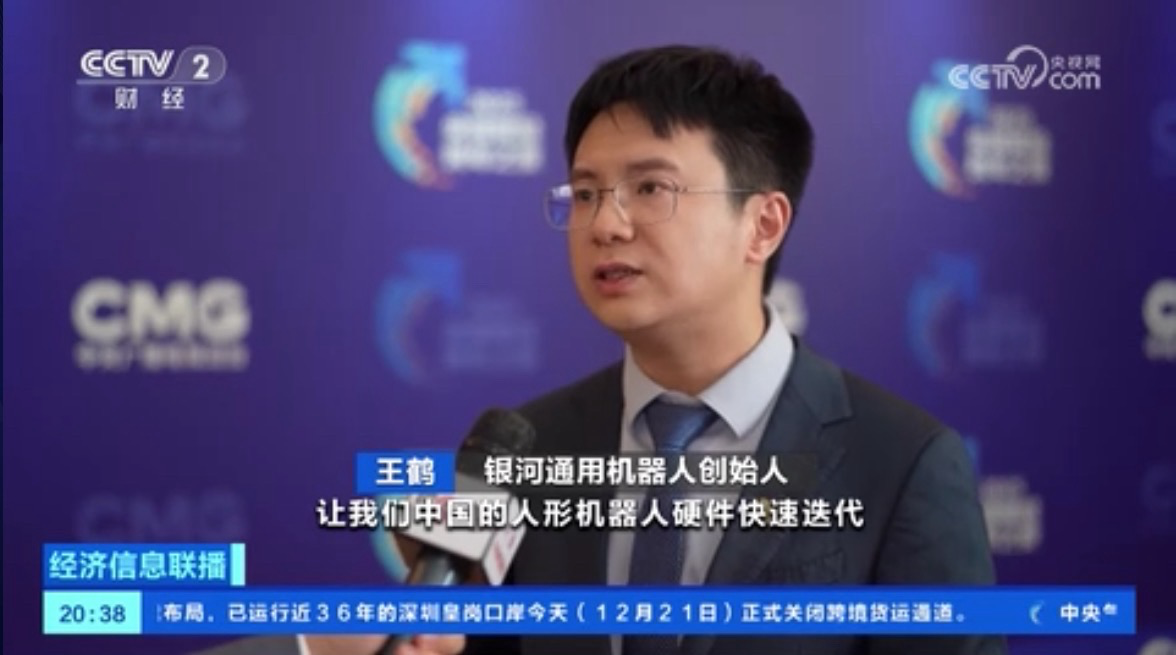
银河通用王鹤:重塑生产力 中国以具身智能引领产业发展
Yang Guang Wang· 2025-12-27 13:11
Core Insights - China is emerging as a leader in embodied intelligence, showcasing its industrial capabilities through advancements in humanoid robotics that can perform complex tasks in real-world scenarios [1][6] Group 1: Technological Advancements - Galaxy General Robotics has signed a strategic cooperation agreement with Baida Precision Manufacturing to deploy thousands of embodied intelligent robots in high-precision component manufacturing [3] - The Galbot G1 robot demonstrates a new productivity paradigm in industrial manufacturing, utilizing a "scene data closed loop" to enable continuous learning and adaptation in real environments [3] - Embodied intelligent robots achieve an autonomous closed loop from perception to execution, integrating deeply into the entire manufacturing process from raw material storage to precision processing [3] Group 2: Market Applications - Galaxy General has pioneered the world's first humanoid robot-operated autonomous warehouse model in the instant retail sector, successfully deploying it across numerous retail warehouses nationwide [4] - The collaboration with Aibo Medical aims to launch the first 24-hour smart medical warehouse in China, utilizing humanoid robots for fully autonomous operations, addressing labor shortages during night shifts [4] Group 3: Industry Ecosystem Development - The large-scale deployment of embodied intelligence is driving a profound collaborative evolution along the industrial chain, enhancing the development of related sectors such as chips, operating systems, and precision actuators [5] - Galaxy General Robotics has recently completed a financing round of 2.1 billion yuan, achieving a valuation exceeding 20 billion yuan, reflecting strong confidence in China's smart manufacturing prospects [5] Group 4: Global Competitive Landscape - The success of Galaxy General Robotics at the 2025 World Humanoid Robot Games signifies China's transition from following to leading in the AI sector [6] - China has the opportunity to leverage its complete manufacturing system and rich application scenarios to establish systemic advantages in global technology competition [6] Group 5: Supporting Pillars of Industry Growth - The confidence in China's embodied intelligence industry is supported by a combination of forward-looking macro policies, fundamental technological innovation, and a vast market providing diverse application scenarios [7] - The "14th Five-Year Plan" includes embodied intelligence as a future industry, with national support accelerating from research and development to application [8] Group 6: Future Outlook - Galaxy General Robotics is focused on accelerating the scale application of robots, with 2026 anticipated to be a pivotal year for widespread adoption [9] - The deep application of embodied intelligent robots in factories is driving significant changes in productivity structure and global competitive dynamics [9]
银河通用获3亿美元融资 机器人赛道拥挤
Xin Lang Cai Jing· 2025-12-26 21:02
Core Insights - Galaxy General Robotics has recently completed a financing round exceeding $300 million, led by China Mobile Chain Long Fund, with participation from various investment platforms and industry giants [1] - The company has a technological advantage in intelligent control and autonomous learning algorithms, utilizing advanced AI chips for superior processing capabilities [1][2] - Despite its strengths, Galaxy General Robotics needs to enhance its brand influence and market share compared to international peers, and improve high-end customization services [1][2] Company Overview - Founded in May 2023 by Dr. Wang He and Yao Tengzhou, Galaxy General Robotics focuses on the Galbot G1 robot, which is applied in retail, industrial, and medical sectors [2] - The Galbot robot can perform various tasks in home environments, such as cleaning and organizing, and in retail, it efficiently manages inventory and delivery [2] - The company has established deep collaborations with major enterprises like CATL, Bosch, and Toyota, with cumulative orders reaching thousands of units [2] Product Innovations - Galaxy General Robotics has introduced the NavFoM model, enabling robots to understand mobility and navigate complex environments autonomously [3] - The DexNDM model allows for dexterous hand control, enhancing the robot's ability to handle diverse and intricate tasks [3] - The company plans to launch a 24-hour smart medical store in collaboration with Aibo Medical, showcasing its robots' capabilities in real-time retail [3] Industry Challenges - The embodied intelligence sector faces challenges due to the conflict between investors' expectations for short-term results and the longer timelines required for technological implementation [4] - The number of startups in the embodied robotics space has exceeded 150, making differentiation a significant challenge for Galaxy General Robotics [3][4] Future Outlook - The demand for automation and intelligent devices is expected to grow with the advent of Industry 4.0, providing a favorable market outlook for Galaxy General Robotics [6] - The company is committed to increasing R&D investments and continuously innovating to maintain its industry leadership [6] - Successful implementation of scalable scenarios within the next three years will be crucial for the company's survival and growth in the market [6]
走进冠军企业银河通用:今年重点落地零售场景
Xin Jing Bao· 2025-08-31 08:58
Core Insights - The article discusses the advancements in the robotics industry, particularly focusing on the capabilities of the Galbot G1 robot developed by Galaxy General Robotics, which has achieved significant commercial applications in various sectors [1][5][6]. Group 1: Robotics Technology and Applications - The Galbot G1 robot is designed with a dual-arm, foldable wheel structure, standing 1.73 meters tall, with an arm reach of 1.9 meters, capable of reaching heights of up to 2.4 meters, and is priced around 700,000 yuan [5]. - The robot has been successfully deployed in industrial, retail, medical, and hospitality settings, with plans to expand its presence in commercial retail, aiming for 100 locations nationwide this year [6][7]. - The VLA (Vision-Language-Action) foundational model enables the robot to achieve over 95% success in generalized grasping tasks, showcasing its versatility across different scenarios [2][3]. Group 2: Data Challenges and Solutions - The robotics industry faces significant challenges due to a lack of data, which is crucial for training robots effectively. Galaxy General Robotics is addressing this by developing synthetic data generation pipelines, accumulating hundreds of millions of real application scenario data and billions of synthetic data [2][3]. - The company emphasizes the importance of both general education and vocational training for robots, utilizing vast amounts of synthetic data for general tasks and real machine data for specific skills [3][4]. - The transition from 2D video learning to 3D applications poses risks of data loss, which could degrade the quality of training data for robots [4]. Group 3: Industry Trends and Future Directions - The industry consensus is focused on finding practical applications and commercial viability for embodied intelligence, with events like the 2025 World Humanoid Robot Games showcasing the capabilities of robotics technology [7]. - Galaxy General Robotics aims to enhance its commercial footprint by introducing high-value products in retail and expanding its partnerships in the medical field, such as collaborations with hospitals [6][7]. - The company is also exploring international opportunities, having implemented welcoming and guiding applications in hotels in Abu Dhabi, UAE [6].
松延动力CFO韩深任:自研硬件本体和算法,已支持机器人高度集成和智能化
Xin Lang Ke Ji· 2025-08-29 08:43
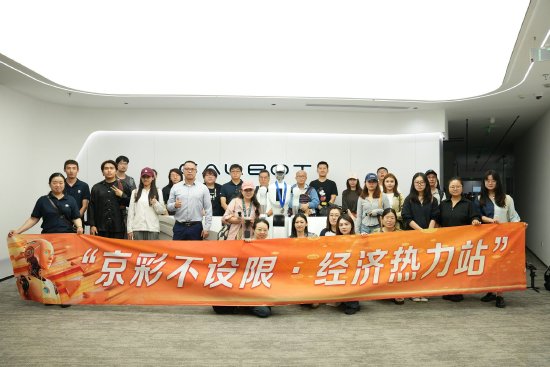
Group 1 - The event "New Quality Pioneer Future Beijing" showcased Beijing's innovation and development in the robotics industry, highlighting its position as a robotics hub [1] - The event featured visits to companies like Galaxy General, Accelerated Evolution, Songyan Power, and Cloud Trace Technology, demonstrating their achievements and contributions to the robotics sector [1] Group 2 - Galaxy General's Galbot G1 robot won the championship in the pharmaceutical sorting category at the 2025 World Humanoid Robot Games, and the company has received orders for 100 robot retail warehouse stores, with plans for nationwide deployment by the end of the year [2] - The company has established a humanoid robot smart pharmacy solution that can efficiently complete delivery tasks, with new store setups taking only two days [2] - Songyan Power's N2 robot won the free gymnastics championship, and the company emphasizes the importance of Beijing's supportive policies for its success, with a projected 50% revenue growth in the robotics industry for 2024 [3] - Accelerated Evolution's T1 robot helped win all medals in the football events at the competition, showcasing the integration of expertise from various fields to drive humanoid robot applications [4] Group 3 - Cloud Trace Technology has deployed its robots in over 30,000 locations globally, completing over 500 million services in 2024, demonstrating the scalability of its intelligent service ecosystem [4] - Beijing aims to become a global benchmark city for "robot + smart living" solutions, promoting the integration of robotics in public service sectors and enhancing industrial clusters [5]
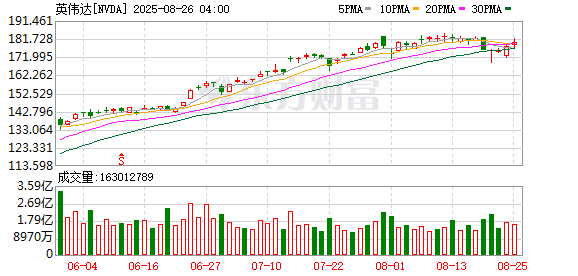
英伟达3499美元机器人“大脑”发售 宇树、优必选等已率先使用!关键财报前夕 华尔街急需新故事
Mei Ri Jing Ji Xin Wen· 2025-08-26 08:28
Core Insights - NVIDIA is extending its dominance in data centers to the physical world with the launch of the Jetson Thor robot computing platform, which features a significant performance leap of 7.5 times compared to its predecessor [2][3] - The release of Jetson Thor is seen as a critical move for NVIDIA to initiate its "second growth curve," with expectations of substantial growth in its automotive and robotics segments, projected to increase by 80% year-over-year [2][9] Product Launch - Jetson Thor, priced at $3,499, boasts an AI computing power of 2070 TFLOPS and is designed to run complex generative AI models locally on robots, enhancing their real-time perception and decision-making capabilities [2][3] - The platform introduces multi-instance GPU (MIG) technology, allowing for the safe operation of high-safety motion control tasks alongside non-critical AI applications, thereby improving reliability [3] Ecosystem Development - NVIDIA is building a comprehensive ecosystem around Jetson Thor, which includes a triad architecture: AI factories for training, digital twins for simulation, and the Jetson Thor for deployment in physical environments [4][5] - Major companies, including Boston Dynamics, Amazon Robotics, and OpenAI, are early adopters of Jetson Thor, signaling its importance in developing advanced robotics [5][6] Market Expectations - The upcoming Q2 earnings report is highly anticipated, with analysts predicting total revenue of approximately $45.8 billion, a year-over-year increase of about 52% [8][9] - The automotive and robotics sectors are expected to be the main highlights of the earnings report, with a projected acceleration in growth from 72% to 80% [9][10] Challenges Ahead - Despite the powerful capabilities of Jetson Thor, the broader robotics industry faces challenges in achieving human-like flexibility and functionality, which may delay widespread adoption [8] - The success of Jetson Thor as a growth engine depends on the scalability of robotics applications and the maturity of the physical environment [8][10]