Hopper GPU

Search documents
Nvidia and Advanced Micro Devices Have Sounded a $711 Billion Warning to Wall Street That AI Investors Simply Can't Ignore
Yahoo Finance· 2026-03-22 13:26
The advent and proliferation of the internet began altering corporate growth trajectories more than three decades ago. Since then, investors have been waiting (impatiently) for the next technological leap forward. While several other hyped trends followed in the footsteps of the internet, including nanotechnology, 3D printing, and blockchain technology, it's artificial intelligence (AI) that's truly stepped up. Analysts at PwC believe artificial intelligence can add $15.7 trillion to the global economy b ...


Nvidia's GTC will mark an AI chip pivot. Here's why the CPU is taking center stage
CNBC· 2026-03-13 19:00
Core Insights - Nvidia is set to reveal new details about its agentic-optimized CPUs at the upcoming GTC conference, highlighting the growing importance of CPUs in AI workflows as they become the bottleneck in processing [2][4] - The company has seen a significant increase in demand for its CPUs, with a multiyear deal with Meta marking the first large-scale deployment of its Grace CPUs, and plans for Vera CPUs in 2027 [3][4] - The CPU market is projected to grow from $27 billion in 2025 to $60 billion by 2030, driven by the shift towards agentic AI applications [4][10] Nvidia's CPU Strategy - Nvidia's CPUs, including the Grace and upcoming Vera, are designed specifically for data processing and agentic AI workflows, differing from traditional general-purpose CPUs [12][15] - The company utilizes Arm architecture for its CPUs, contrasting with the x86 architecture used by competitors Intel and AMD, which positions Nvidia's products as optimized for AI workloads [15][20] - Nvidia's CPUs are expected to enhance the performance of its GPUs, with a focus on single-threaded performance rather than maximizing core count [13][14] Market Dynamics - The CPU market is experiencing a "quiet supply crisis," with leading providers like AMD and Intel facing supply shortages and increased delivery lead times [10][11] - Nvidia's robust supply chain has managed to meet demand effectively, as many of its CPUs are sold alongside GPUs in integrated systems [12] - The server CPU market share as of late 2025 shows Intel leading at 60%, followed by AMD at 24.3%, and Nvidia at 6.2%, with a growing presence of in-house Arm-based CPUs from major hyperscalers [18] Competitive Landscape - Nvidia's strategy remains platform agnostic, supporting both Arm and x86 architectures, and has opened its NVLink technology for third-party licensing to facilitate integration with other CPUs [19][20] - The company is adapting to the competitive landscape by expanding its product offerings beyond GPUs to include CPUs and specialized hardware, addressing a diverse range of workloads [20]

英伟达要开源6G,有厂商该焦虑了
半导体行业观察· 2026-03-02 01:41
瓦西什塔似乎赞同这种观点。他在MWC前夕接受采访时表示:"如果你考虑一下整个技术栈,5G Advanced和6G的开源使得整个技术栈的代码都能被开发者使用。我认为,对于一些公司,尤其是规 模较小的公司来说,要达到这种程度的灵活性一直是一个相当大的挑战。" 他说,如果6G广泛采用开 源技术,那么拥有新的波束成形算法(一项5G时代的技术)的开发者,理论上就可以将其集成到更 大的平台中。 英伟达已经拥有一个名为 Aerial 的开源无线接入网 (RAN) 参考平台。这使得像 DeepSig 这样的开 发 者 能 够 实 现 Vasishta 所 描 述 的 功 能 , 即 在 Aerial 协 议 栈 中 插 入 AI 原 生 波 形 。 有 趣 的 是 , DeepSig 是为 OCUDU 构建参考平台的两家小型公司之一,另一家是总部位于爱尔兰的 SRS。英伟 达 AI-RAN 方案的一部分内容是,将人类经过数十年改进的 RAN 算法替换为 AI,以提高频谱效 率。 然而,Aerial 仍然要求开发者主要在 CUDA 框架内工作。CUDA 是英伟达的旗舰软件平台,通常被 视为该公司的防御屏障。在无线接入网 (RA ...
英伟达财报及电话会分析
傅里叶的猫· 2026-02-26 00:16
Core Viewpoint - Nvidia's Q4 FY26 revenue reached $68.1 billion, a 73% year-over-year increase, surpassing market expectations, indicating strong growth across various business segments [2][3] Financial Performance - Revenue for Q4 FY26 was $68.127 billion, up 20% quarter-over-quarter and 73% year-over-year [3] - Gross margin improved to 75.0%, operating income rose to $44.299 billion, and net income increased to $42.960 billion, reflecting strong operational efficiency [3] - Free cash flow generated in Q4 FY26 was nearly $35 billion, a significant increase of over $19 billion compared to the previous year [5] Business Segments - Data center business grew over 75%, while professional visualization revenue surged by 159% due to the Blackwell chip [2] - Gaming and AI PC business revenue increased by 47%, and automotive and robotics revenue grew by 6% [2] Future Guidance - Nvidia's management provided a revenue guidance of $78 billion for Q4 FY26, significantly above market expectations [4] - The guidance does not include revenue from the data center business in China, indicating potential for further growth [5] Strategic Initiatives - Nvidia's collaboration with Groq aims to enhance AI infrastructure performance by integrating low-latency inference technology [7] - The company is focusing on Agentic AI, which is expected to drive sustainable growth by expanding computational demand [6] Technological Developments - The roadmap includes the deployment of the Blackwell architecture and the upcoming Rubin platform, which is set to optimize model training efficiency [10] - Nvidia has already deployed Hopper GPUs in space for high-resolution imaging, indicating a forward-looking approach to technology [9] Key Partnerships - Nvidia is closely collaborating with OpenAI and Meta to advance AI model training and inference, embedding its architecture into core business processes of major clients [11][12] - The company's sovereign AI business is projected to exceed $30 billion in revenue for FY26, reflecting strong demand from various countries [12]

英伟达现在的情况不会持续太久
美股研究社· 2026-01-16 12:34
Core Viewpoint - Nvidia reported strong Q3 FY2026 earnings, exceeding market expectations with revenue of $57.01 billion, a 3.48% increase over forecasts, and adjusted EPS of $1.30, surpassing analyst estimates by 3.46% [1][4][6] Financial Performance - Revenue grew by 26% year-over-year, primarily driven by the data center segment, which contributed $51.2 billion, reflecting a 66% increase [4] - Gross profit increased by 60% to $41.8 billion, although gross margin decreased by 1.2 percentage points to 73.4% due to a shift from selling individual chips to complete systems [5][6] - Operating income rose by 65% to $36 billion, with net income also increasing by 65% to $31.9 billion, translating to basic EPS of $1.31 [6] - Cash and cash equivalents grew by 40% to $60.6 billion, with total assets at $161.1 billion and total liabilities at $42.3 billion, indicating a healthy balance sheet [6] - Operating cash flow increased by 40% to $66.5 billion, and free cash flow rose by 36% to $61.7 billion, showing improved efficiency in converting sales to cash [6] Future Outlook - Management expects Q4 revenue to be around $65 billion, indicating continued strong momentum, with gross margin projected at approximately 74.8% [6] - Analysts believe Nvidia's stock price is reasonable for long-term investors, despite potential short-term volatility due to market reactions to AI spending news [14] Growth Drivers - The reopening of the Chinese market is expected to drive growth, with over 2 million orders for H200 chips, each priced at approximately $27,000, potentially adding a full quarter's profit if successful [16] - The upcoming launch of the Rubin platform in H2 2026 is anticipated to significantly reduce AI model training costs, potentially leading to increased market share and profitability [18][19] Valuation Insights - Nvidia's current expected P/E ratio (GAAP) is around 40, which is approximately 26% higher than the industry average [12][13] - The expected price-to-book ratio is 29, significantly above the industry median, reflecting Nvidia's dominant position in the AI market [13] - Analysts note that traditional valuation metrics may not fully capture Nvidia's competitive advantages, such as its CUDA software platform, which creates high switching costs for customers [13][14] Risks - Analysts highlight potential risks, including the financial performance of OpenAI, which could impact the broader AI market and Nvidia's valuation if it fails to achieve profitability [20][21] - There are concerns about a potential "air pocket" scenario where significant investments in AI infrastructure do not yield expected returns, leading to a reevaluation of valuations across the sector [21]
过去四周,AI推理爆了,GPU在燃烧,英伟达依旧供不应求
硬AI· 2025-04-29 00:18
根据摩根士丹利Joseph Moore团队25日发布的报告, 这种强劲的需求主要驱动因素在于token生成量的 增长,自年初以来,token生成量增长了5倍以上 ,这给生态系统带来了巨大压力,并推动了对处理这些 工作负载的投资激增。 点击 上方 硬AI 关注我们 大摩指出,受益于大型语言模型对推理芯片的巨大需求,英伟达面临GPU供不应求局面。但在持续的供应限制、毛利率 压力等负面影响下,大摩轻微下调英伟达目标价至160美元。长期来看,公司增长轨迹依然强劲。 硬·AI 作者 | 张雅琦 编辑 | 硬 AI 过去四周,投资者情绪因宏观经济和供应链风险而恶化,但与此同时,对英伟达GPU核心的需求却因主要 大型语言模型(LLM)对推理芯片的巨大需求而飙升,且这种需求遍及所有地区。 多家AI公司报告用户数量呈爆炸式增长,例如,Open Router等API公司的数据显示,许多公司为满足推 理软件的巨量需求,被迫争抢GPU资源,甚至出现"最后一块GB200"在2025年仅剩一块的状况。 摩根士丹利认为, 这种对推理的需求是关键。 这是由使用模型并产生收入的部分驱动的,证明了推理模 型的扩展是真实存在的,这与仅依赖于风险投 ...
过去四周,AI推理爆了,GPU在燃烧,英伟达依旧供不应求
Hua Er Jie Jian Wen· 2025-04-27 10:38
Group 1 - Investor sentiment has deteriorated due to macroeconomic and supply chain risks, but demand for NVIDIA's GPUs has surged due to the significant need for inference chips driven by large language models (LLMs) [1] - Token generation has increased over five times since the beginning of the year, creating immense pressure on the ecosystem and driving a surge in investment to handle these workloads [1] - AI companies are experiencing explosive user growth, with many forced to compete for GPU resources to meet the massive demand for inference software [1] Group 2 - Morgan Stanley has lowered its target price for NVIDIA to $160 from $162, reflecting overall valuation declines in the peer group rather than changes in the company's fundamentals [2] - Despite strong demand, supply constraints for NVIDIA's Blackwell chips, particularly the GB200/300 models, are limiting the ability to meet the explosive growth in demand [2][4] - Morgan Stanley has raised its revenue forecast for fiscal year 2026 by 10.7% and adjusted earnings per share up by 11.9%, indicating that these figures may still be conservative [5]
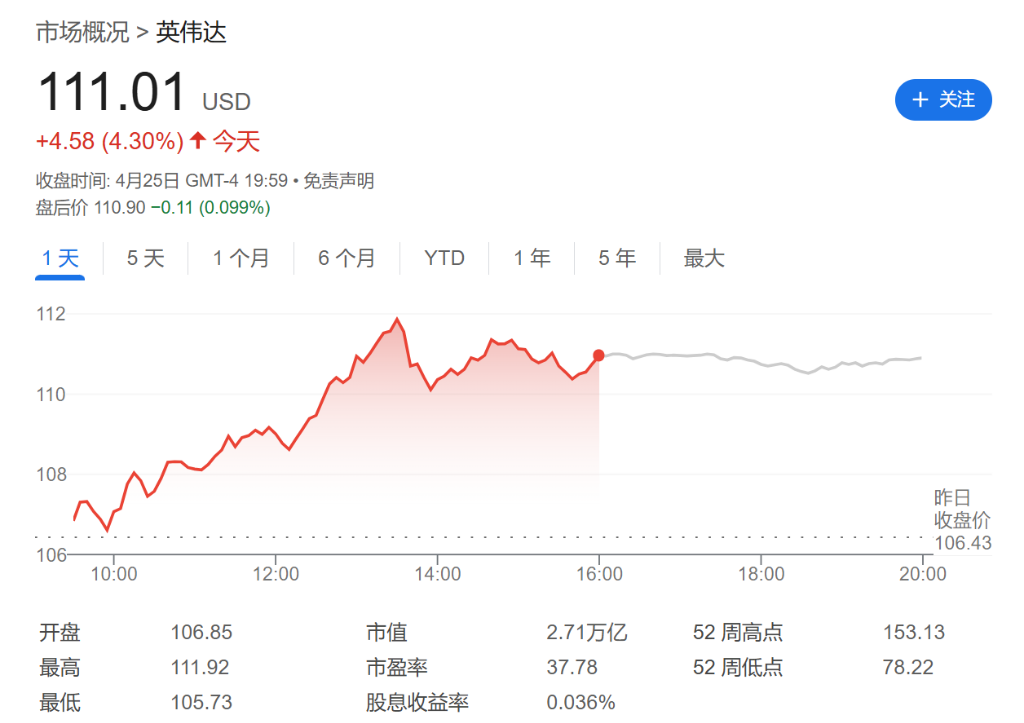
全球首个!“英伟达亲儿子”CoreWeave大规模上线GB200服务器
硬AI· 2025-04-16 09:52
点击 上方 硬AI 关注我们 测试结果显示,相比前代英伟达Hopper GPU,GB200 NVL72服务器能帮助Cohere在1000亿参数模型的训练实现高达3 倍的性能提升,此外,IBM和Mistral AI也已成为CoreWeave GB200云服务的首批用户。 "世界各地的企业和组织正在竞相将推理模型转化为代理型人工智能应用,这将改变人们的工作和娱 乐方式。" 硬·AI 作者 | 李笑寅 编辑 | 硬 AI CoreWeave再度抢占先机,率先部署英伟达GB200系统,AI巨头争相入局。 英伟达今日在其博客上宣布, AI云计算提供商CoreWeave已成为首批大规模部署英伟达GB200 NVL72 系统的云服务提供商之一。Cohere、IBM和Mistral AI已成为首批用户。 根据最新MLPerf基准测试,这些系统提供了前代H100芯片2-3倍的性能提升,将显著加速大模型训练和推 理能力。 CoreWeave首席执行官Michael Intrator表示,这一成就既展示了公司的工程实力和执行速度,也体现了 其对下一代AI发展的专注: "CoreWeave的设计就是为了更快速地行动——我们一次又一次 ...
【招商电子】英伟达GTC 2025跟踪报告:2028年全球万亿美金Capex可期,关注CPO、正交背板等新技术趋势
招商电子· 2025-03-20 02:51
Core Insights - The event highlighted the transformative shift in data centers towards AI-driven computing, with projected capital expenditures exceeding $1 trillion by 2028 for data center construction, primarily focused on accelerated computing chips [2][12][13] - NVIDIA's Blackwell architecture is fully operational, showcasing significant performance improvements and a roadmap for future products like Rubin and Feynman, which promise substantial enhancements in computational power and efficiency [3][42][45] - The introduction of the Quantum-X CPO switch and Spectrum-X technology aims to revolutionize networking capabilities, reducing energy consumption and increasing deployment efficiency [5][46] - The advancements in AI applications, particularly in autonomous driving and robotics, are supported by NVIDIA's new systems and frameworks, enhancing the development and training processes [6][26][24] Capital Expenditure and AI Infrastructure - Data center capital expenditures are expected to reach $1 trillion by 2028, with a significant portion allocated to accelerated computing chips [2][12] - NVIDIA plans to deliver 1.3 million Hopper GPUs to major cloud service providers in 2024, with an increase to 3.6 million Blackwell GPUs in 2025 [2][3] AI Model Training and Inference - The demand for computational power for AI training and inference has surged, with estimates suggesting a 100-fold increase in required computing resources compared to the previous year [10][11] - NVIDIA outlines three levels of AI: Generative AI, Agentic AI, and Physical AI, each representing a different stage of AI development and application [8][10] Product Development and Future Roadmap - Blackwell has been fully launched, with significant customer demand and performance improvements, including a 40-fold increase in inference performance compared to previous models [3][42] - Future products like Vera Rubin and Rubin Ultra are set to enhance computational capabilities further, with expected performance increases of up to 15 times [45][42] Networking Innovations - The Quantum-X CPO switch is anticipated to launch in late 2025, offering substantial energy savings and improved network efficiency [5][46] - Spectrum-X technology will provide high bandwidth and low latency, integrating seamlessly into NVIDIA's computing architecture [5][46] AI Applications in Autonomous Driving and Robotics - NVIDIA's Halos system aims to enhance safety in autonomous vehicles, while the open-source Isaac Groot N1 model supports robotics development [6][24] - The integration of Omniverse and Cosmos platforms accelerates the development of AI for autonomous driving, enabling end-to-end training capabilities [26][24] Data Center Evolution - The transition of data centers into AI factories is underway, focusing on processing, analyzing, and generating AI-driven applications [12][13] - NVIDIA's Dynamo operating system is designed to optimize AI factory operations, enhancing efficiency and performance [35][36]
台积电CoWoS“砍单”疑云?摩根大通:确实砍了但别慌,AI需求依旧坚挺
硬AI· 2025-03-03 14:37
Core Viewpoint - Morgan Stanley indicates that the reduction in CoWoS orders from clients like Nvidia, Marvell, and Amazon for 2025 is not due to demand issues but rather a correction of previously overly optimistic expectations [2][3]. Group 1: Order Adjustments - Clients have lowered their 2025 CoWoS order expectations by approximately 8-10%, with Nvidia's capacity forecast reduced by about 40,000 to 45,000 wafers [3][4]. - The adjustments are attributed to clients' initial forecasts exceeding TSMC's supply capabilities, leading to a need for more accurate predictions as delivery timelines approach [3][4]. Group 2: Supply Chain Dynamics - Changes in product offerings and order priorities may have influenced supply chain expectations, with Nvidia altering several product timelines and TSMC prioritizing CoWoS-L orders over CoWoS-S [4]. - Morgan Stanley's more conservative forecast for TSMC's 2025 monthly capacity is 75,000 wafers, totaling 725,000 wafers for the year, which is lower than previous aggressive estimates [4]. Group 3: Demand Outlook - Despite order reductions, overall demand remains strong, particularly for Nvidia's B200/B300 series and Amazon's Trainium 2 projects, indicating a positive trend in the AI chip market [5][6]. - Even with TSMC's capacity expansion, the CoWoS supply will still be tight in 2025, with strong front-end wafer orders and continued demand for critical components like HBM [6]. Group 4: Future Projections - Nvidia's demand for CoWoS-L wafers is projected to reach 390,000 wafers in 2025, sufficient for producing around 6 million Blackwell chips and nearly 1 million Hopper GPUs [7]. - Amazon's Trainium 2 is expected to be a significant growth driver for AI ASICs in 2025, with demand anticipated to exceed 1.5 million units [8].