
Kimi K2模型

Search documents
月之暗面,豪赌下一代AI范式
3 6 Ke· 2026-01-13 12:04
Core Viewpoint - The company "月之暗面" (Kimi) is focusing on advancing its AI technology while facing significant competition and challenges in the market, particularly from larger firms. The founder emphasizes the importance of maintaining a technological edge and finding a clear commercial path for sustainable growth [1][4][10]. Group 1: Company Strategy and Development - Kimi aims to enhance its models (K4, K5 to K100) over the next decade, indicating a long-term commitment to AI development [1]. - The company has shifted its focus to foundational technology for large models due to declining user engagement and competition from other AI applications [2][12]. - Kimi's strategy involves optimizing Token efficiency to achieve better performance with fewer resources, which is crucial for competing in the next generation of AI models [7][9]. Group 2: Market Position and Competition - Kimi's monthly active users have significantly decreased compared to last year, necessitating a strategic pivot to concentrate resources on core technology [2][12]. - The competitive landscape is intensifying, with major players like DeepSeek and Doubao gaining traction, leading to Kimi's reduced market presence [2][12]. - Kimi's past success included a peak monthly investment exceeding 100 million yuan, but it now faces challenges from larger companies that can afford aggressive marketing and free offerings [12][14]. Group 3: Financial and Investment Insights - Kimi has secured a $500 million Series C funding round, providing it with over 10 billion yuan in cash reserves, which supports its long-term research and development goals [5]. - The company is not in a rush to go public, allowing it to focus on long-term technological advancements without the pressure of short-term profitability [5][6]. - The capital market's perception of Kimi is positive, as indicated by its ability to attract significant investment, but the company must establish a sustainable business model to ensure long-term viability [11][14]. Group 4: Future Challenges and Opportunities - Kimi's strategy is seen as a "long-term gamble," with success dependent on achieving technological milestones and establishing a unique position in specific verticals [11]. - The AI industry is shifting from a focus on technology to results, emphasizing the need for Kimi to develop practical applications that can generate revenue [11][14]. - The competitive environment suggests that Kimi must adapt quickly to survive against larger firms that have substantial resources and market influence [10][14].

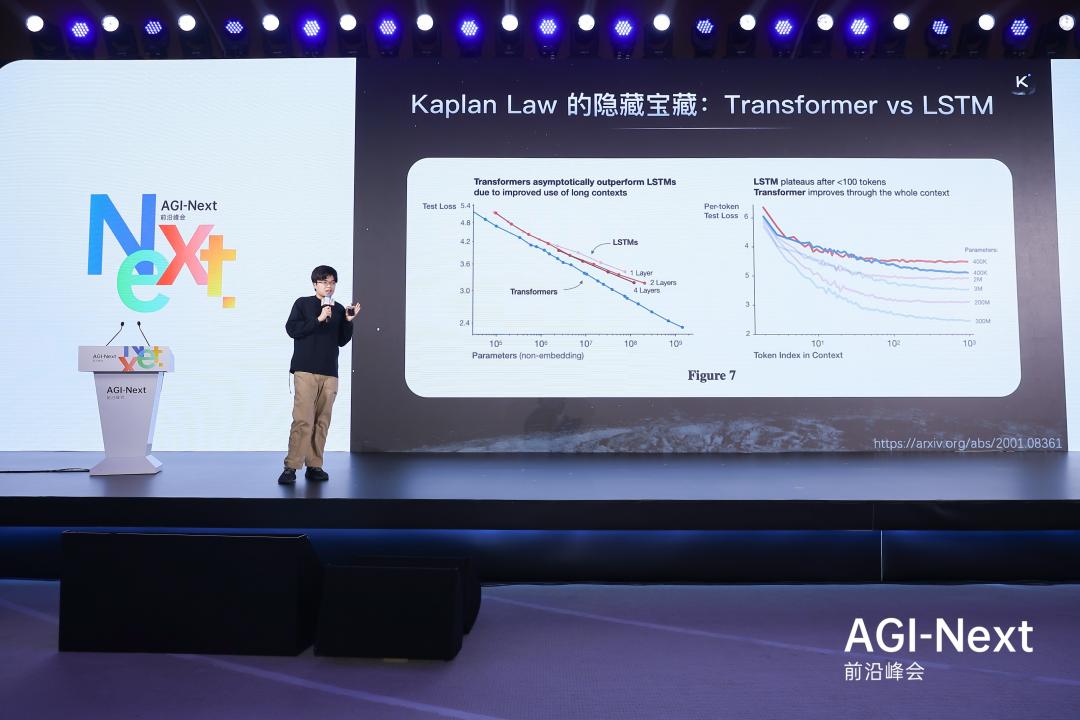
百亿在手“不上市”:月之暗面在“暗处”
Xin Lang Cai Jing· 2026-01-08 11:48
Core Insights - The company "月之暗面" (Kimi) has successfully completed a $500 million Series C funding round and has over 10 billion RMB in cash reserves, indicating a strong financial position that allows it to delay its IPO plans [1][16] - In contrast to its peers in the AI sector, such as 智谱 (Zhiyu) and MiniMax, which are moving towards IPOs, 月之暗面 is taking a different approach by leveraging its substantial cash reserves to support long-term growth and development [1][16] Funding History - 月之暗面 was founded in April 2023 and quickly raised over $200 million in angel funding, setting a record for AI startups at that time with a post-money valuation of $300 million [2][17] - The company experienced a significant funding surge in 2024, including a $1 billion A+ round led by Alibaba, raising its valuation to $2.5 billion, followed by a B round exceeding $300 million, bringing the valuation to $3.3 billion [3][17] - By the end of 2025, the total funding raised by 月之暗面 is estimated to be over $2 billion (approximately 143 billion RMB), showcasing its strong fundraising capabilities [3][17][18] Cash Reserves and Spending - As of the end of 2025, 月之暗面 has a minimum cash reserve of 10 billion RMB, which could sustain its operations for over six years at a conservative annual burn rate of 1.6 billion RMB [4][24] - The company has managed to maintain a high efficiency in its spending, with a minimum cash burn of approximately 4.3 billion RMB since its inception [4][5][18] Competitive Position - Compared to its competitors, MiniMax and 智谱, 月之暗面 holds a significant advantage in cash reserves, with MiniMax having approximately 7.3 billion RMB and 智谱 only 2.55 billion RMB as of mid-2025 [20][21] - The ongoing IPO efforts of MiniMax and 智谱 are expected to raise around 8 billion RMB combined, which still falls short of 月之暗面’s total funding raised [7][20] Strategic Direction - The CEO of 月之暗面 has indicated that the decision to delay the IPO is based on the current ample cash reserves and the ability to raise more funds in the primary market, allowing for strategic flexibility [10][24] - The company aims to focus on developing its K3 model and expanding its graphics card capabilities, with plans to enhance employee incentives, all of which require stable funding and a conducive development environment [28][29]
月之暗面5亿美元C轮融资落地:手握百亿现金,K2系列驱动商业化狂奔
Sou Hu Cai Jing· 2026-01-01 16:42
Core Insights - Moonshot AI has successfully completed a $500 million Series C funding round, significantly oversubscribed, with a post-funding valuation of $4.3 billion (approximately 30 billion RMB) [2] - The company has accumulated over 10 billion RMB in cash reserves, showcasing strong market confidence in its technological capabilities and commercialization potential [2] Funding Details - The Series C funding was led by IDG Capital with a $150 million investment, and existing shareholders including Alibaba, Tencent, and Wang Huiwen participated in the oversubscription [2] - The funding process was efficient, taking less than two months to complete, continuing the company's trend of rapid fundraising [2] Market Position and Strategy - Despite holding substantial cash reserves, Moonshot AI has stated it is not in a hurry to go public, believing it can raise more funds from the primary market [3] - The company views an IPO as a means to accelerate the development of Artificial General Intelligence (AGI) while maintaining control over the timing of its public offering [3] Technological Advancements - 2025 is marked as a year of technological breakthroughs for Moonshot AI, with the launch of the Kimi K2 model and the Kimi K2 Thinking model driving rapid commercial growth [3] - The Kimi K2 model, as China's first trillion-parameter foundational model, excels in autonomous programming, tool usage, and mathematical reasoning, achieving state-of-the-art (SOTA) results in various benchmark tests [3][4] Model Capabilities - The upgraded Kimi K2 Thinking model is the most advanced open-source thinking model from Moonshot AI, capable of 300 rounds of tool usage and continuous thinking without human intervention [4] - This model has set new SOTA scores in challenging benchmarks, outperforming human averages in tests like the Humanity's Last Exam and OpenAI BrowseComp [4]
张予彤出任月之暗面总裁,负责公司整体战略与商业化
Feng Huang Wang· 2025-12-08 12:34
Core Insights - Moonshot AI has appointed Zhang Yutong as the new president, indicating a significant leadership change within the company [1] - Zhang will oversee the overall strategic planning and commercialization of Moonshot AI, lead financing activities, and be deeply involved in new product development [1] Company Overview - Moonshot AI was established on April 17, 2023, with Yang Zhilin as the legal representative [1] - The company has launched several models, including Kimi Latest on February 18, 2025, Kimi-Dev-72B in June, and Kimi K2 on July 11, which also included the open-sourcing of two model versions [1] Leadership Background - Zhang Yutong holds a bachelor's degree in electronic engineering from Tsinghua University and a master's degree in management engineering from Stanford University [1] - Prior to joining Moonshot AI, Zhang worked at GSR Ventures since 2011, focusing on early-stage investments in the technology sector, and became a managing partner in 2020 [1]
藏师傅 Kimi K2 Thinking 首测!教你用 Kimi 编程全家桶
歸藏的AI工具箱· 2025-11-06 16:59
Core Insights - Kimi has released the K2-Thinking model, which enhances its previous K2 model by introducing reasoning capabilities and achieving state-of-the-art (SOTA) scores in various benchmarks [3][4][61] - The company has developed a comprehensive ecosystem around its models, including tools like Kimi CLI and subscription packages like KFC (Kimi For Coding) to facilitate programming tasks [6][54] Model Upgrades - The K2-Thinking model features an agent-based upgrade allowing for multi-turn reasoning and tool usage, with up to approximately 300 iterations [4] - It has achieved SOTA scores in HLE (44.9) and IMO (76.8), significantly improving complex retrieval and long-range planning capabilities [4] - Programming capabilities have been enhanced, with better stability in Agentic Coding and improved performance across various programming languages [4] Ecosystem Development - Kimi has introduced the Kimi CLI tool, which simplifies the installation and usage of the K2-Thinking model, making it accessible for developers [11][12] - The KFC subscription offers 7168 API calls per week for 199 yuan, providing a cost-effective solution for developers [6] Testing and Performance - The article discusses a series of tests conducted on the K2-Thinking model, focusing on its ability to handle iterative modifications and complex requirements in real-time coding scenarios [17][30] - The model successfully managed to adapt to increasing complexity in tasks, demonstrating its robustness and reliability [20][30] Strategic Insights - Kimi's approach addresses three major industry pain points: the "last mile" problem in API economics, the integration burden of open-source models, and the dependency issues of pure tool products [54][55] - The company emphasizes that in the AI era, developers prioritize "delivery certainty" over "freedom of choice," highlighting the need for reliable, end-to-end solutions [55][58]
中国AI的性价比 已成全球杀器
Feng Huang Wang· 2025-11-05 00:32
Core Insights - Airbnb's CEO Brian Chesky publicly stated that the company relies heavily on Alibaba's Qwen model due to its speed, efficiency, and cost-effectiveness, indicating a shift in preference towards Chinese AI models over established players like OpenAI [1][2] - The trend of adopting Chinese AI models is gaining momentum globally, driven by their open-source nature and competitive pricing [3][4] Group 1: Adoption of Chinese AI Models - Notable figures in Silicon Valley, such as Chamath Palihapitiya, have shifted their core business workloads from American AI models to China's Kimi K2 model, citing superior performance and significantly lower costs [4] - Research indicates that a substantial percentage of AI startups in Silicon Valley are now utilizing Chinese open-source models, a stark contrast to three years ago when OpenAI dominated the market [5] - Companies like HSBC and Saudi Aramco are testing or deploying Chinese models like DeepSeek, showcasing a broader trend of international firms moving towards these alternatives [5] Group 2: Competitive Landscape and Challenges - Major tech companies like Microsoft and Amazon are facing significant challenges related to computing power, leading to large-scale layoffs as they attempt to balance costs with the need for robust AI capabilities [7][8] - The high cost of advanced AI chips, primarily dominated by Nvidia, exacerbates the computing power anxiety among these companies, impacting their operational strategies [8][9] Group 3: Technological Innovations - Chinese AI companies are not solely competing on price; they are also making significant technological advancements, such as DeepSeek's new multi-modal model and Kimi's innovative linear attention architecture [10] - Nvidia's CEO highlighted the competitive nature of AI development, emphasizing the importance of maintaining an open ecosystem and the need for skilled professionals in the AI sector [10][11] Group 4: Market Dynamics - The rapid rise of Chinese AI models is reshaping the global AI landscape, moving towards a more diverse competitive environment that challenges the previous dominance of a few major players [9][12] - OpenAI is reportedly preparing for an IPO, which could become one of the largest financing events in history, reflecting the intense demand for computing resources in the AI sector [9]

中国AI的性价比,已成全球杀器
Feng Huang Wang· 2025-10-31 06:47
Core Insights - Chinese AI models are rapidly gaining traction in the global market due to their high cost-performance ratio, as highlighted by Airbnb's CEO Brian Chesky, who prefers Alibaba's Qwen model over OpenAI's offerings for practical applications [1][2] - The trend of international companies shifting to Chinese AI models is becoming more pronounced, with significant endorsements from notable investors and startups [2][3] - The open-source strategy and cost-effectiveness of Chinese AI models are reshaping the competitive landscape, as evidenced by the widespread adoption of models like Qwen and DeepSeek [3][4] Group 1: Chinese AI Models' Competitive Edge - Chinese AI models, such as Kimi K2 and Qwen, are noted for their superior performance and significantly lower costs compared to American counterparts like OpenAI and Anthropic [2][4] - Alibaba's Qwen3 series supports hybrid reasoning modes and has achieved over 300 million downloads globally, establishing itself as a leading open-source model family [4] - The trend of using Chinese models is not isolated; a significant percentage of AI startups in Silicon Valley are reportedly utilizing these models, indicating a shift in market dynamics [4][5] Group 2: Challenges Faced by Western Tech Giants - Major tech companies like Microsoft and Amazon are experiencing workforce reductions due to the high costs associated with AI infrastructure and the need to reallocate resources [5][6] - The high prices of advanced AI chips, such as Nvidia's H100, are contributing to the financial strain on these companies, leading to significant layoffs as a cost-control measure [6][7] - Nvidia's market valuation has surged, reflecting the increasing demand for AI capabilities, while OpenAI's operational costs are rising sharply, indicating a challenging financial landscape for AI development [7][8] Group 3: Future of AI Competition - The competition in AI is evolving beyond mere technological advancements to include factors like open ecosystems and refined services, as emphasized by Nvidia's CEO Jensen Huang [8][9] - The potential for the U.S. to lose its competitive edge in AI is acknowledged, with a call for more engineers and skilled workers to support the growth of AI infrastructure [9]



月之暗面将完成新一轮融资,引入海外投资机构
雷峰网· 2025-10-25 07:08
Core Insights - The article discusses the recent funding activities and market dynamics of AI startups, particularly focusing on the company "月之暗面" (Moon's Dark Side) and its competitive landscape within the AI industry [2][3]. Group 1: Funding and Valuation - 月之暗面 recently completed a new funding round amounting to several hundred million dollars, with new overseas investors participating [2]. - The company was founded in 2023 and has garnered significant attention, completing multiple funding rounds within two years, with notable investors including Sequoia Capital and Alibaba [2]. - In its previous funding round a year ago, 月之暗面 was valued at over $3.3 billion [2]. Group 2: Market Trends and Competition - The AI investment landscape has cooled down over the past year, prompting investors to reassess valuations of AI startups [3]. - Despite the cooling market, 月之暗面 launched its new Kimi K2 model in July, which received positive feedback, outperforming competitors like GPT-5 in benchmark tests [3]. - Another company, MiniMax, which was also part of the "AI Six Dragons," secured approximately $300 million in funding recently, raising its valuation to over $4 billion (around 30 billion RMB) [3].
腾讯研究院AI速递 20251013
腾讯研究院· 2025-10-12 20:56
Group 1 - Tao Zhexuan tested GPT-5 Pro, finding excellent performance in small-scale calculations and macro-level problem structuring, but limited assistance in mid-scale strategy selection and direction judgment [1] - Chamath Palihapitiya, a prominent Silicon Valley investor, has shifted significant workloads to the Chinese Kimi K2 model due to its strong performance and lower cost compared to OpenAI and Anthropic [2] - The State of AI Report 2025 has elevated China's AI status from "follower" to "parallel competitor" [2] Group 2 - David Fajgenbaum, a professor at the University of Pennsylvania, utilized blood sample analysis to discover an overactive mTOR pathway, successfully self-treating his disease with sirolimus [3] - Fajgenbaum founded the non-profit Every Cure to create the AI system MATRIX, which identifies treatment options among 75 million drug-disease combinations, significantly reducing the time for generating scores from 100 days to 17 hours [3] Group 3 - Andrew Tulloch, a legendary figure in AI, returned to Meta after previously rejecting a $1 billion offer, leaving his co-founded Thinking Machines Lab [4] - Thinking Machines Lab recently completed a $2 billion seed round led by a16z, with participation from Nvidia and AMD [4] Group 4 - The 2025 TIME Magazine Best Inventions list featured multiple Chinese products, including those from Huawei and DeepSeek, highlighting China's significant rise in global technological innovation [5][6] - The list included 300 inventions across 36 categories, showcasing advancements in AI, robotics, chips, and energy [6] Group 5 - Stanford University and other institutions introduced Agentic Context Engineering (ACE), allowing language models to self-improve without fine-tuning, reducing latency by 86.9% [7] - ACE's architecture enhances performance, with a 17.1% improvement on AppWorld benchmarks, bringing open-source models closer to top commercial systems [7] Group 6 - Rich Sutton, a Turing Award winner, warned of a potential $1 trillion AI bubble burst due to over-reliance on imitating limited human knowledge [8] - He emphasized that significant capital investments are influencing scientific research directions, with a risk of confidence collapse if technologies do not yield sufficient returns within three years [8] Group 7 - The State of AI Report 2025 declared 2025 as the "Year of AI Reasoning," but noted that most advancements fall within natural model fluctuations, indicating serious vulnerabilities [9] - NVIDIA's market capitalization surpassed $4 trillion, nearly monopolizing AI computing power, while Chinese open-source models like DeepSeek gained over 40% market share on Hugging Face [9] Group 8 - Geoffrey Hinton suggested that AI may already possess "subjective experience," which is not recognized due to human misunderstanding of consciousness [10] - Hinton highlighted the urgent need to address AI misuse and survival risks, advocating for international cooperation led by Europe and China [10]
Kimi发布全新Agent模式OK Computer
Xin Lang Cai Jing· 2025-09-25 08:04
Core Insights - The company "月之暗面" has launched a new Agent mode called "OK Computer" and initiated a gray testing phase [1] - "OK Computer" continues the philosophy of "model as agent" by enhancing the capabilities of the Kimi K2 model through end-to-end training [1] - Users can issue requests, allowing Kimi to operate its virtual computer to perform complex tasks such as multi-functional website development, massive data analysis, image and video generation, and high-quality PPT creation [1] - Users who have previously tipped Kimi will receive the first batch of experience qualifications [1]