LPU架构

Search documents
SemiAnalysis GTC深度解读:三款新系统背后,英伟达正在重新定义AI基础设施的边界
Hua Er Jie Jian Wen· 2026-03-24 13:01
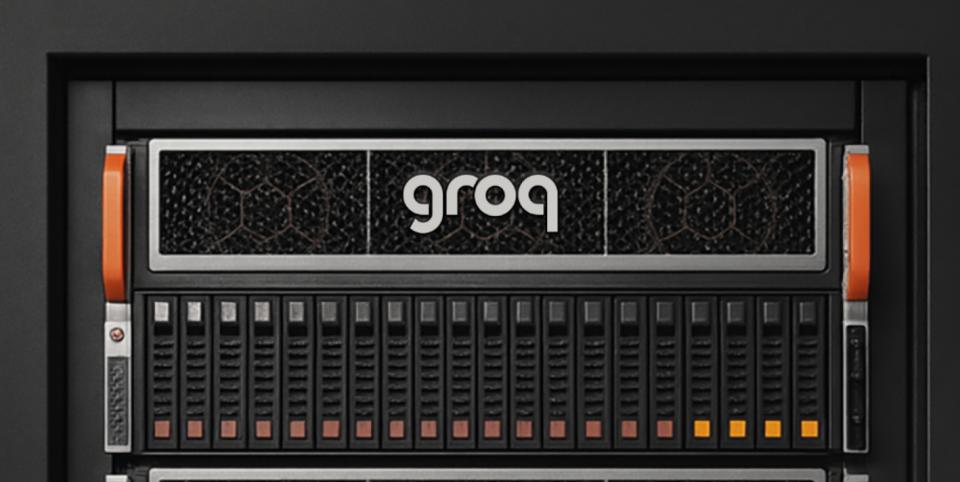
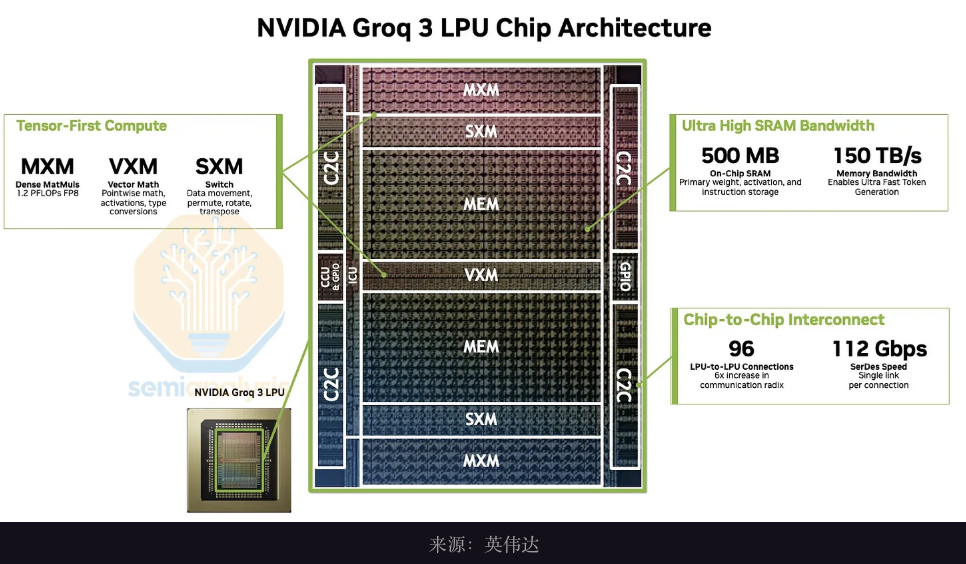
Core Insights - Nvidia is transitioning from being solely a GPU supplier to a full-stack AI infrastructure platform provider, expanding its reach into inference optimization, CPU density, and storage orchestration, which will significantly impact the AI hardware supply chain competition [2][16] Group 1: New Product Launches - At the GTC 2026 conference, Nvidia introduced three new systems: Groq LPX inference rack, Vera ETL256 CPU rack, and STX storage reference architecture, marking a comprehensive extension of its product offerings beyond GPU computing [1] - The Groq LPX system, Nvidia's first product following a $20 billion acquisition of Groq's intellectual property and core team, integrates Groq's LP30 chip with Nvidia GPUs and introduces the Attention FFN Disaggregation (AFD) technology to reduce decoding latency in high-interaction inference scenarios [1][3] - The Vera ETL256 system incorporates 256 CPUs into a single liquid-cooled rack, addressing the CPU supply bottleneck that has become more pronounced with the expansion of AI workloads [1][11] - The STX storage reference architecture extends Nvidia's control from computing and networking layers to storage infrastructure, establishing a complete layout for storage solutions [1][14] Group 2: Technical Specifications and Innovations - The LP30 chip, built on Samsung's SF4 process, features 500MB on-chip SRAM and delivers 1.2 PFLOPS of performance at FP8 precision, representing a significant improvement over Groq's first-generation LPU [3] - AFD technology separates attention and feedforward network computations across different hardware, allowing GPUs to handle attention calculations while LPUs manage FFN computations, optimizing system performance and reducing latency [7] - The LPX rack architecture consists of 32 LPU compute trays and 2 Spectrum-X switches, designed for high bandwidth and low latency, with a total bandwidth of approximately 640TB/s [9] Group 3: Market Implications - The introduction of these systems signals a strategic shift for Nvidia, indicating its intent to dominate not only the GPU market but also the broader AI infrastructure landscape, potentially leading to increased market share concentration within the AI hardware supply chain [2][16] - The Vera ETL256's design aims to eliminate the need for optical transceivers by ensuring all connections within the rack are copper-cable reachable, thus reducing costs while maintaining high performance [12] - Nvidia's collaboration with major storage vendors to support the STX standard reinforces its influence in establishing industry standards and enhancing its competitive position in the storage infrastructure market [14]


未知机构:从训练走向极致推理LPU架构重塑算力底座东北计算机范式转移-20260228
未知机构· 2026-02-28 02:55
Summary of Key Points from Conference Call Records Industry Overview - The discussion centers around the emerging LPU (Language Processing Unit) architecture in the computing industry, particularly in the context of large model applications and the transition from traditional GPU architectures to LPU for enhanced performance in inference tasks [1][2]. Core Insights and Arguments - **Shift in Computational Demand**: The demand for computational power is evolving from "brute force computing" to "extreme interaction," necessitating new architectures like LPU to address high latency issues faced by traditional GPU architectures during the Decode phase of LLM (Large Language Model) inference [1]. - **LPU Architecture Advantages**: LPU architecture utilizes large-scale on-chip SRAM for direct storage of model parameters, eliminating memory access delays. It also employs static timing scheduling to ensure precise computation paths within clock cycles, aiming for high throughput and low latency in inference tasks [1]. - **Hardware Reconfiguration**: The introduction of LPU architecture indicates a future where hardware specifications transition from "off-the-shelf" to "customized premium" due to the high demands for signal transmission determinism [2]. Hardware Requirements and Innovations - **Complex PCB Design**: The implementation of LPU requires advanced PCB designs with a higher number of layers (30-50 layers), significantly increasing the value of PCBs compared to traditional servers by 3-5 times [2]. - **Material Upgrades**: The industry is moving towards M9-level materials and quartz fiber cloth to meet the ultra-low latency signal requirements of LPU, as traditional materials have reached their physical limits [2]. - **Key Material Suppliers**: - Quartz fiber cloth: Philihua - High-end resins and additives: Dongcai Technology, Chenghe Technology - High-end electronic cloth: Honghe Technology - Copper foil: Defu Technology - CCL (Copper Clad Laminate): Huazheng New Materials, Yanjing Co. [2]. Additional Important Considerations - **Risk Factors**: There are potential risks associated with lower-than-expected downstream demand and regulatory or legal risks that could impact the industry [3].
英伟达收购Groq核心资产,补齐算力芯片架构版图 | 投研报告
Zhong Guo Neng Yuan Wang· 2025-12-29 04:02
Core Insights - Nvidia has announced a non-exclusive licensing agreement to acquire core assets from Groq for $20 billion, marking its largest investment to date [3] - The acquisition focuses on Groq's LPU architecture, which offers advantages in inference processing, enabling high-speed token generation that surpasses traditional GPUs [3] - Nvidia plans to begin exporting H200 chips to China in mid-February 2024, with an expected initial shipment of 5,000 to 10,000 modules, totaling approximately 40,000 to 80,000 H200 chips [4] Industry Performance - The electronic sector has seen significant recovery, with the Shenwan Electronics Secondary Index showing year-to-date performance: Semiconductors (+46.46%), Other Electronics II (+53.70%), Components (+106.98%), Optical Electronics (+9.42%), Consumer Electronics (+47.50%), and Electronic Chemicals II (+53.90%) [1] - Weekly performance for the electronic sector includes: Semiconductors (+4.84%), Other Electronics II (+7.46%), Components (+7.40%), Optical Electronics (+0.86%), Consumer Electronics (+5.14%), and Electronic Chemicals II (+6.19%) [1] Stock Performance - Notable stock movements in North America include: Apple (-0.10%), Tesla (-1.25%), Broadcom (+3.46%), Qualcomm (-0.25%), TSMC (+4.81%), Micron (+7.10%), Intel (-1.68%), Marvell Technology (+2.68%), Nvidia (+5.27%), Amazon (+2.27%), Oracle (+3.14%), Applied Optoelectronics (+18.68%), Google A (+2.07%), Meta (+0.69%), Microsoft (+0.37%), and AMD (+0.73%) [2]
从英伟达整合Groq看近存计算新路径
2025-12-29 01:04
Summary of Conference Call on NVIDIA's Acquisition of Groq and 3D Chip Technology Industry and Company Involved - **Company**: NVIDIA - **Acquired Company**: Groq - **Industry**: AI Chip Technology and Computing Key Points and Arguments NVIDIA's Acquisition of Groq - NVIDIA acquired Groq for $20 billion, focusing on Groq's physical assets without acquiring its intellectual property, allowing non-exclusive use of Groq's architecture [2] - The acquisition signifies NVIDIA's recognition of the differences between inference and training, indicating a shift towards specialized chip planning for inference [2] Groq's LPU Architecture - Groq's LPU (TensorStream Processor) architecture is designed specifically for inference, offering advantages such as low latency, deterministic execution time, high user concurrency, and extremely high bandwidth [1][3] - The LPU can achieve a bandwidth of 80TB/s, significantly outperforming the latest Blackwell B300 GPU's 8TB/s bandwidth, especially in large language model tasks [4] - However, the LPU has limitations, including high deployment costs and programming complexity, requiring manual pipeline arrangement for optimal performance [4] Integration with Existing Ecosystem - NVIDIA plans to maintain the CUDA ecosystem's universality while integrating LPU through NVFusion, ensuring software platform consistency [5][6] - The long-term goal is to achieve collaborative design at the architecture and compiler levels to meet high-performance requirements in inference scenarios [7] Domestic 3D Chip Development - Domestic companies like CloudWalk are actively developing 3D chips to significantly reduce total cost of ownership (TCO), particularly in single token costs [1][11] - The 3D DM solution offers greater capacity than SRAM and comparable bandwidth, but requires 2-3 years for large-scale deployment due to maturity issues [1][8] - 3D RAM is expected to support large model operations effectively, with applications in edge computing and cloud inference [10] Challenges and Bottlenecks - Key bottlenecks for 3D DL M deployment include yield rates and thermal management, with advanced stacking methods potentially reducing overall yield [8] - The development of 3D chip technology in China is progressing, with several companies in the early stages of research and testing, but large-scale production is still 2+ years away [9] Future Market Trends - The 3D architecture is projected to capture about 30% of the inference market, driven by the need for diverse computing capabilities [16] - The demand for low-cost solutions will accelerate the adoption of diverse architectures in inference, with 3D RAM being a significant component [20] - Domestic advancements in 3D technology may outpace international developments due to strong market demand and government support for AI applications [19][20] Customer Sentiment and Adoption - Customers are showing positive attitudes towards 3D chip solutions, particularly in smaller edge scenarios like AI PCs and mobile devices, with broader commercial adoption expected in 2-3 years [12][13] Conclusion - The integration of 3D technology represents a viable path for domestic companies to close the gap with international standards in inference capabilities, with a focus on reducing costs and enhancing performance [19][20]
英伟达收购Groq核心资产,补齐算力芯片架构版图
Xinda Securities· 2025-12-28 11:22
Investment Rating - The industry investment rating is "Positive" [2] Core Insights - The electronic sub-industry has seen a significant rebound, with the Shenwan Electronics Secondary Index showing year-to-date changes of: Semiconductors (+46.46%), Other Electronics II (+53.70%), Components (+106.98%), Optical Optoelectronics (+9.42%), Consumer Electronics (+47.50%), and Electronic Chemicals II (+53.90%) [9][10] - NVIDIA announced a $20 billion acquisition of Groq's core assets, focusing on the LPU architecture, which offers advantages in inference tasks. This acquisition is NVIDIA's largest investment to date and includes the absorption of Groq's key personnel to enhance the technology's scalability [2][3] - The NVIDIA H200 chip is expected to ship in February 2026, with an initial shipment of 50,000 to 80,000 units. The H200 is projected to have performance up to six times that of the H100, featuring 141GB of HBM3e memory and a memory bandwidth of 4.8TB/s [3][31] Summary by Sections Electronic Industry Performance - The electronic sub-industry has rebounded significantly, with weekly changes in the semiconductor sector (+4.84%), other electronics II (+7.46%), components (+7.40%), optical optoelectronics (+0.86%), consumer electronics (+5.14%), and electronic chemicals II (+6.19%) [9][10] Key Company Movements - Major North American stocks showed mixed performance, with notable changes including NVIDIA (+5.27%), TSMC (+4.81%), and Micron Technology (+7.10%) [10] NVIDIA's Acquisition and Technology - NVIDIA's acquisition of Groq includes all assets and technology licenses, excluding GroqCloud, which will operate independently. The LPU architecture is designed to eliminate memory bandwidth bottlenecks, achieving high performance in processing large language models [2][3][4] Future Product Launches - The H200 chip is anticipated to have a significant performance advantage, with a memory bandwidth of 4.8TB/s, and is expected to capture approximately 30% of the high-end AI chip market in China if not restricted [3][32] Investment Recommendations - Suggested companies to watch include: For overseas AI - Industrial Fulian, Huadian Co., Pengding Holdings, Shenghong Technology, and Shengyi Technology; For domestic AI - Cambricon, Chipone, Haiguang Information, SMIC, and Shenzhen South Circuit; For storage - Demingli, Jiangbolong, Zhaoyi Innovation, Jucheng Co., and Purun Co. [3]
POS机快刷爆了,200亿、50亿、10亿,黄仁勋用美金“爆买”一切
3 6 Ke· 2025-12-25 08:17
Core Insights - Nvidia is aggressively expanding its influence in the AI sector through strategic acquisitions and investments, including a $20 billion licensing agreement with Groq, which allows Nvidia to integrate Groq's core team and technology while Groq maintains operational independence [1][3][5] - The acquisition of Groq is seen as a strategic defense and capability enhancement, as Groq's LPU architecture poses a significant threat to Nvidia's dominance in AI inference markets [5][6] - Nvidia's investments in companies like Intel and Nokia, along with its commitment to OpenAI, illustrate a comprehensive strategy to control key nodes in the AI computing value chain [10][13][17] Group 1: Strategic Acquisitions - The $20 billion deal with Groq not only secures key technology but also eliminates a major competitor in the AI inference space [3][5] - Nvidia's investment in Synopsys for $2 billion aims to embed its accelerated computing capabilities into future chip design tools, shortening design cycles across various applications [10][12] - The $5 billion investment in Intel is intended to create a strategic alliance, allowing Nvidia to integrate its GPU technology into Intel's next-generation chips [13][15] Group 2: Financial Strength and Investment Strategy - Nvidia's cash reserves have surged to $606 billion, a 4.5-fold increase from early 2023, enabling significant strategic investments [24] - The company is expected to generate $968.5 billion in free cash flow in 2025, with total cash flow over the next three years potentially exceeding $5.76 trillion [24] - Nvidia prioritizes strategic investments over stock buybacks, viewing them as essential for building competitive barriers and securing key partnerships [24] Group 3: Long-term Vision and Ecosystem Development - Nvidia's investment strategy is designed to create a comprehensive network across the AI industry, ensuring that its hardware and software are integral to future AI applications [18][19] - The company is focusing on high-potential areas such as autonomous driving, robotics, and fusion energy, aiming to embed its standards and software ecosystem in these sectors [21][22] - Nvidia's approach reflects a shift from open ecosystems to internal capabilities that can be controlled and accumulated over time [8][18]