
Mate X7

Search documents
华为余承东演示Mate 80/X7智能停车导航功能
Xin Lang Cai Jing· 2025-12-31 16:00
Core Viewpoint - Huawei has introduced a smart parking feature for its Mate 80 and X7 series smartphones, which automatically records the parking location and provides indoor navigation to help users find their vehicles [2][3]. Group 1: Smart Parking Feature - The smart parking feature allows users to automatically record the floor and specific location of their parked vehicles, and provides navigation services to guide them back to their original parking spot [2][3]. - The operation path for this feature includes accessing the "My" section, selecting "Dynamic Management" from the menu, granting location permissions, and enabling the "Parking" function in "Service Dynamics" [2][3]. - This feature is applicable to all vehicle brands and is triggered automatically upon exiting the vehicle, eliminating the need for manual operation [2][3]. Group 2: Compatibility and Expansion - The smart parking feature is not only available for the Mate series but is also compatible with the Pura 80 series, including models such as Pura 80 Pro, Pro+, Ultra, Mate XTs, Mate 70 Pro+, and RS, provided they are upgraded to HarmonyOS version 6.0.130 [3][4]. - As of now, the service has been implemented in over 20,000 parking lots across the country and is continuously expanding [2][3].
鸿蒙押注新未来:用AI重写数字世界交互逻辑
量子位· 2025-12-27 07:08
Core Viewpoint - The year 2025 is anticipated to be a pivotal moment for the explosion of terminal AI, marking a significant transition in the industry akin to the shift from feature phones to smartphones. This transition represents a fundamental restructuring of business models and interaction logic, moving from a passive service model centered around apps to an active service model centered around AI agents [1]. Group 1: Industry Transition - The challenge of reconstructing the connection between humans and devices is a common issue faced by all manufacturers in this transition [2]. - There are two main factions in the industry: one that seeks to improve existing app ecosystems and another that advocates for a fundamental restructuring at the operating system level [3]. - Huawei, as a representative of the "reconstruction faction," has anchored its strategy at the foundational level, aiming to integrate AI capabilities into the native genes of the operating system [4]. Group 2: AI Terminal Classification - Huawei's terminal intelligence classification standard, developed in collaboration with Tsinghua University, categorizes AI terminals into levels L1 to L5, emphasizing the need for terminals to evolve beyond mere tools to achieve autonomous planning capabilities at L3 [5][10]. - Most current products remain trapped in outdated architectures, failing to progress beyond L1 and L2 stages, which are characterized by human-led, AI-assisted functionalities [8][16]. Group 3: Path Dependency in AI Applications - The industry exhibits three typical path dependencies that hinder true generational leaps in AI applications: 1. Major model vendors focus on B to C products, leading to "floating intelligence" that lacks integration with device-level operations [9]. 2. Internet giants with super apps tend to create "segmented intelligence," confining AI capabilities within their ecosystems and exacerbating data silos [11][13]. 3. Traditional terminal manufacturers adopt a "patchwork intelligence" approach, integrating AI features in a fragmented manner without a cohesive system-level strategy [14][15]. Group 4: System-Level Reconstruction - Huawei's HarmonyOS is pursuing a challenging path of system-level reconstruction, breaking down the rigid boundaries between applications and systems [21][22]. - The foundation of this reconstruction is the Harmony Intelligent Agent Framework (HMAF), which establishes a unique intent framework and user data map, transforming the operating system into a proactive service provider [25]. Group 5: User Experience Transformation - The bottom-level reconstruction allows for a shift from cumbersome operations to a dialogue-based interaction, where the system can autonomously identify user intentions and execute tasks seamlessly [27][28]. - This transformation enables a proactive response from services, exemplified by the Shenzhen Airlines intelligent agent that can handle complex booking processes through simple voice commands [29]. Group 6: Developer Ecosystem and Flow Distribution - HarmonyOS provides a platform for developers to create intelligent agents that can be easily integrated across various devices, enhancing the overall user experience [31][32]. - The new service distribution mechanism shifts the focus from app downloads to real-time user needs, allowing smaller developers to gain visibility and opportunities in the market [37]. Group 7: Market Growth and Developer Opportunities - Currently, over 32 million devices equipped with HarmonyOS 5/6 have been deployed, creating a robust foundation for the new flow of services [38][40]. - As the L3 intelligent experience is realized and the intent-service commercial loop is established, the Harmony AI ecosystem is entering a phase of substantial benefit release, presenting a prime opportunity for developers to engage with the next generation of service distribution [41][42].


消费电子ETF(561600)涨近1%,苹果计划未来两年大幅扩展智能手机产品线
Xin Lang Cai Jing· 2025-12-17 02:13
Core Viewpoint - The consumer electronics sector is experiencing growth driven by new technologies such as AI and foldable screens, with significant product launches expected from major companies like Apple and Samsung [1][2]. Group 1: Market Performance - As of December 17, 2025, the CSI Consumer Electronics Theme Index (931494) increased by 0.86%, with notable gains from companies such as Lianxu Precision (9.99%) and Zhaosheng Micro (7.91%) [1]. - The Consumer Electronics ETF (561600) rose by 0.61%, with the latest price reported at 1.15 yuan [1]. Group 2: Industry Developments - Apple plans to significantly expand its smartphone product line, potentially releasing at least seven new flagship models by fall 2027, including the first foldable iPhone expected in fall 2026 [1]. - Global smartphone shipments grew by 2.6% year-on-year in Q3 2025, despite a slight decline of 0.5% in the Chinese market, driven by innovations in AI and foldable technology [1]. - The global wearable watch market is showing a trend of stable volume and rising prices, with an average price increase of 9% year-on-year, indicating a deepening shift towards high-end products [1]. Group 3: Competitive Landscape - The competition in the consumer electronics industry is shifting from product-centric to ecosystem-building, with AI-enabled products accelerating the pace of innovation and providing companies with clear opportunities [1].
华为高端机再战迪拜
第一财经· 2025-12-12 15:27
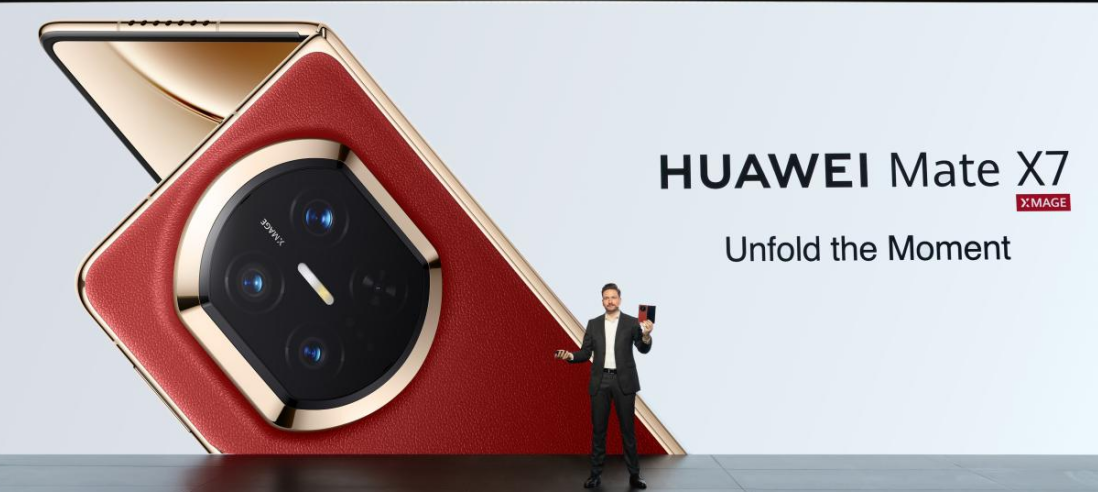
Core Viewpoint - Huawei is making significant efforts to penetrate the high-end smartphone market in the Middle East, traditionally dominated by Apple and Samsung, with recent product launches including the Mate X7 foldable phone and open TWS earphones [3][5]. Group 1: Market Dynamics - The Middle East smartphone market is projected to reach 15.1 million units in Q3 2025, reflecting a 23% year-on-year growth, with the UAE market growing by 13% [5]. - Apple and Samsung hold over 90% of the high-end market share in the region, with Apple accounting for approximately 46% and Samsung 45% of shipments priced at $500 and above [7]. Group 2: Strategic Importance of Dubai - Dubai serves as a strategic hub for the Middle East, North Africa, and South Asia, with a population exceeding 1 billion, making it a critical battleground for global smartphone brands [4]. - Huawei previously held a strong market position in Dubai before 2019, making it essential for the company to regain its foothold in this high-end market [5]. Group 3: Challenges and Opportunities - Huawei faces significant challenges in overcoming brand recognition and ecosystem barriers to compete effectively against Apple and Samsung in the high-end segment [7]. - The company is not only focusing on smartphone deployment but is also accelerating its market activities in the region, including partnerships with local firms to enhance its ecosystem and service offerings [9]. Group 4: Long-term Strategy - To succeed in the high-end market, Huawei must enhance its brand, ensure consistent ecosystem experiences, and develop comprehensive product trial and evaluation programs [10]. - The Middle East market presents growth opportunities for Chinese brands in both mid-range and high-end segments, but long-term commitment and strategic planning are essential for success [10].
华为高端机再战迪拜
Di Yi Cai Jing· 2025-12-12 09:25
Core Insights - Huawei is striving to regain market share in the high-end smartphone segment in the Middle East, which has been dominated by Apple and Samsung for a long time [1][4] - The Middle East market is becoming a crucial growth pillar for Chinese smartphone brands outside Asia, with Huawei launching multiple high-end products in a short span [1][6] Group 1: Market Dynamics - The Middle East smartphone market is projected to reach 15.1 million units by Q3 2025, reflecting a 23% year-on-year growth, with the UAE market growing by 13% [2] - Apple and Samsung dominate the high-end market, holding over 90% of the market share, with Apple accounting for approximately 46% and Samsung 45% in the $500 and above price segment [4] Group 2: Strategic Moves - Huawei's recent product launch in Dubai includes the Mate X7 foldable phone, targeting direct competition with Samsung's Galaxy Z Fold series [2] - Huawei is not only focusing on smartphone deployment but also accelerating its market actions in the Middle East by proposing a regional smart transformation strategy and collaborating with local companies [5] Group 3: Challenges and Opportunities - Huawei faces significant challenges in overcoming brand recognition and ecosystem barriers in the high-end market [4] - The Middle East market presents both growth opportunities in the mid-range segment and profit potential in the high-end and mid-high-end markets for Chinese brands [6]

行业周报:谷歌Gemini3增益生态,存储有望持续高景气-20251207
KAIYUAN SECURITIES· 2025-12-07 09:45
Investment Rating - The industry investment rating is "Positive" (maintained) [1] Core Viewpoints - The report highlights the continuous growth in AI demand, which is expected to enhance the demand for computing power [5][30] - The storage market is anticipated to experience price increases for at least 2-3 more quarters due to supply constraints [40][42] - Huawei's new product launches are expected to impact the supply chain positively, with significant market shares in the domestic smartphone market [43][44] Summary by Sections Internet - The rapid growth of the Qianwen app user base, with a monthly active user count reaching 18.34 million and a growth rate of 149.03% in November 2025 [18][19] - AI applications are primarily focused on programming and entertainment, with programming-related token consumption accounting for 50% [21][23] - The launch of the Doubao AI mobile assistant is expected to drive token usage further [29] Computing - The release of Google's Gemini 3 series is expected to extend the life of scaling laws and create a favorable ecological gain [30] - Data is identified as the core asset and barrier, with significant increases in training data for Gemini 3 compared to its predecessor [30] - Google's infrastructure allows researchers to focus on algorithms rather than technical issues, enhancing productivity [31][32] Storage - The supply of DRAM and NAND Flash is expected to be tight, with predictions of shortages in the first half of 2026 [40][41] - The price of storage contracts is projected to continue rising for at least 2-3 quarters, driven by limited new capacity [42] Electronics - Huawei's market share in the domestic smartphone market was 18.1% in Q2 2025 and 15.2% in Q3 2025, indicating strong performance [43][44] - The launch of new products, including the Mate 80 series and Mate X7, is expected to influence the supply chain positively [43] Tools - The report notes significant fluctuations in interest rate expectations, with a clear mid-term trend towards rate cuts [50][59] - The upcoming IPO of Zhongjian Technology is highlighted as a significant event in the capital market [60]
“国产GPU第一股”摩尔线程上市;任正非最新万字讲话公布;华为Mate X7开售...
Sou Hu Cai Jing· 2025-12-05 12:59
Group 1: Company Developments - "Mole Thread," the first domestic GPU stock, debuted on the Sci-Tech Innovation Board with a price increase of 468.78%, reaching a market value close to 300 billion yuan [1] - Huawei's Ren Zhengfei emphasized the importance of the younger generation in AI development and shared practical application cases in areas like autonomous driving [2] - Ford's CEO praised Xiaomi's SU7, comparing it to Apple and Porsche, indicating strong market positioning [4] Group 2: Market Performance - SellCell reported that the iPhone Air 1TB depreciated by 47.7% in ten weeks, marking the fastest decline in three years, while the iPhone 15 series remains the champion in value retention [3] - The animated film "Zootopia 2" achieved a global box office of 660 million USD, with China being the largest market, contributing 338 million USD [6] Group 3: Industry Insights - China's COMAC C909 aircraft has delivered 174 units, capturing over 60% of the domestic regional aircraft market and operating in 12 countries [11] - Li Auto announced cumulative deliveries exceeding 1.5 million vehicles, with a total driving distance of 54.5 billion kilometers [12]
688260,昨日涨停,今日跌停
Shang Hai Zheng Quan Bao· 2025-12-02 06:41
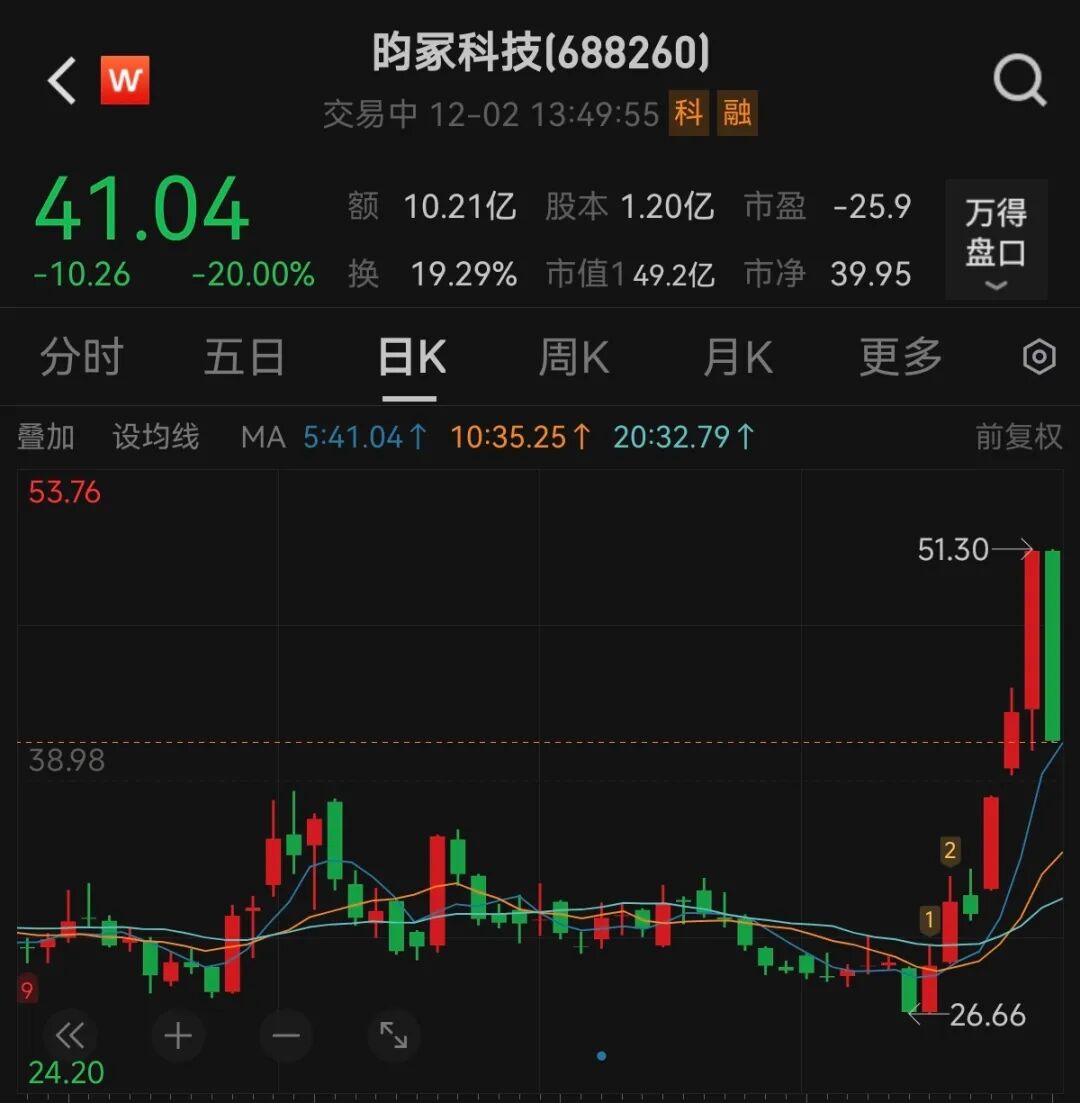
Core Viewpoint - The stock of Yunzhong Technology experienced significant volatility, with a recent drop of 20% after a previous surge of over 90% in six trading days, reflecting the active consumer electronics sector [1][3]. Company Overview - Yunzhong Technology primarily engages in the research, design, production, and sales of products in the consumer electronics, electronic ceramics, and automotive electronics sectors [3]. - The company's consumer electronics products are applied in major smartphone brands such as Huawei, Xiaomi, Honor, OPPO, and VIVO [3]. Market Activity - Recent product launches by major companies like Huawei and Alibaba have stimulated enthusiasm in the consumer electronics sector, contributing to market activity [3]. - The company reported that its daily operations are normal, with no significant changes in market conditions or policies affecting its stock price [3]. Financial Performance - For the first three quarters of 2025, Yunzhong Technology achieved revenue of 400 million yuan, a year-on-year decrease of 3.46%, and a net profit of -146 million yuan, down 82.94% year-on-year [4]. - The third quarter saw revenue of 154 million yuan, a year-on-year increase of 33.43%, primarily driven by the release of electronic ceramics production capacity [4]. Strategic Focus - The company is focusing on the development of consumer electronics, aiming to expand into new markets such as low-altitude consumer electronics and AI wearables by 2025 [4][5]. - The electronic ceramics business is expected to become a significant growth point due to the ongoing expansion of the domestic electronic ceramics market [5]. Profitability Improvement - Yunzhong Technology plans to concentrate on innovation and market expansion of optical precision components in consumer electronics, with a focus on increasing the usage of high-margin products in emerging markets [5]. - The company is optimizing its capital structure and improving its debt ratio through refinancing and subsidiary capital increases, aiming for profitability and stability [5].

华为新款手机开售 有款式溢价超千元
Zhong Guo Xin Wen Wang· 2025-11-29 11:21
Core Insights - Huawei's latest flagship smartphone series, Mate80, has been well-received in the market, with multiple models available at varying price points [1] - The starting price of the Mate80 standard version is lower than that of its predecessor, the Mate70 [1] - Performance improvements are notable, with the Mate80 showing a 35% increase in overall performance compared to the Mate70, and the Mate80 Pro Max 16GB version showing a 42% increase over the Mate70 Pro+ [1] - The Mate80 series is experiencing high demand, with several models already showing out-of-stock status on official sales platforms [1] - The Mate80 series is also being sold at a premium on secondary trading platforms, indicating strong market interest [1] Market Reception - Discussions on online forums regarding the Mate80's value and whether to upgrade from the Mate70 are prevalent, with mixed opinions on the necessity of upgrading [2] - Some users highlight the high cost-performance ratio of the Mate80, while others believe the Mate70 remains a strong device [2] Additional Product Launch - The recently launched Huawei foldable smartphone, Mate X7, priced at 12,999 yuan, is also gaining popularity [3]
Mate80不支持系统变更,华为:鸿蒙6已满足绝大多数场景
Guan Cha Zhe Wang· 2025-11-27 13:46
Group 1 - Huawei has launched the Mate 80 and Mate X7 series smartphones, both equipped with the latest HarmonyOS 6 system [1] - There are questions from users regarding why the Mate 80 and Mate X7 cannot upgrade from HarmonyOS 4.X, unlike the Pura 80 and Mate 70 [1] - Huawei's official statement indicates that HarmonyOS 6 meets the majority of daily usage scenarios and offers significant improvements in performance, functionality, experience, and application compatibility compared to HarmonyOS 4/5 [1] Group 2 - Huawei's Executive Director, Yu Chengdong, announced that devices running HarmonyOS 5 and HarmonyOS 6 have officially surpassed 27 million units, with an average of 100,000 new devices added daily [4]
