Micro OLED

Search documents
募资85亿元,惠科IPO即将上会
Sou Hu Cai Jing· 2026-02-26 06:13
Core Viewpoint - Huike Co., Ltd. is preparing for an IPO to raise approximately 8.5 billion yuan, focusing on the development and manufacturing of semiconductor display panels and smart display terminals, with funds allocated for various R&D projects and operational needs [3][5]. Fundraising Projects - The company plans to invest in four main projects: 1. Changsha New OLED R&D Upgrade Project: Total investment of 303.11 million yuan, with 250 million yuan from the IPO funds [4]. 2. Changsha Oxide R&D and Industrialization Project: Total investment of 300 million yuan, with 300 million yuan from the IPO funds [4]. 3. Mianyang Mini LED Intelligent Manufacturing Project: Total investment of 254.46 million yuan, with 200 million yuan from the IPO funds [4]. 4. Supplementing working capital and repaying bank loans: Total investment of 100 million yuan, with 100 million yuan from the IPO funds [4]. Financial Performance - From 2022 to June 30, 2025, Huike's revenue figures were 26.965 billion yuan, 35.824 billion yuan, 40.282 billion yuan, and 18.997 billion yuan, respectively, with net profits of -1.421 billion yuan, 2.582 billion yuan, 3.320 billion yuan, and 2.162 billion yuan [5]. - For the first quarter of 2026, the company expects revenue between 9.762 billion yuan and 10.362 billion yuan, a year-on-year increase of 0.68% to 6.87%, while net profit is projected to decline by 14.81% to 7.57% [5][7]. Industry Trends - The display industry is witnessing a surge in IPO activities, with several companies, including Huike, accelerating their listing processes to capitalize on market opportunities [10][13]. - The focus on new display technologies such as OLED, Mini LED, and Micro OLED indicates a robust growth trajectory for the industry, supported by advancements in technology and production capacity [11][13].

募资85亿元,惠科IPO即将上会
WitsView睿智显示· 2026-02-26 03:58
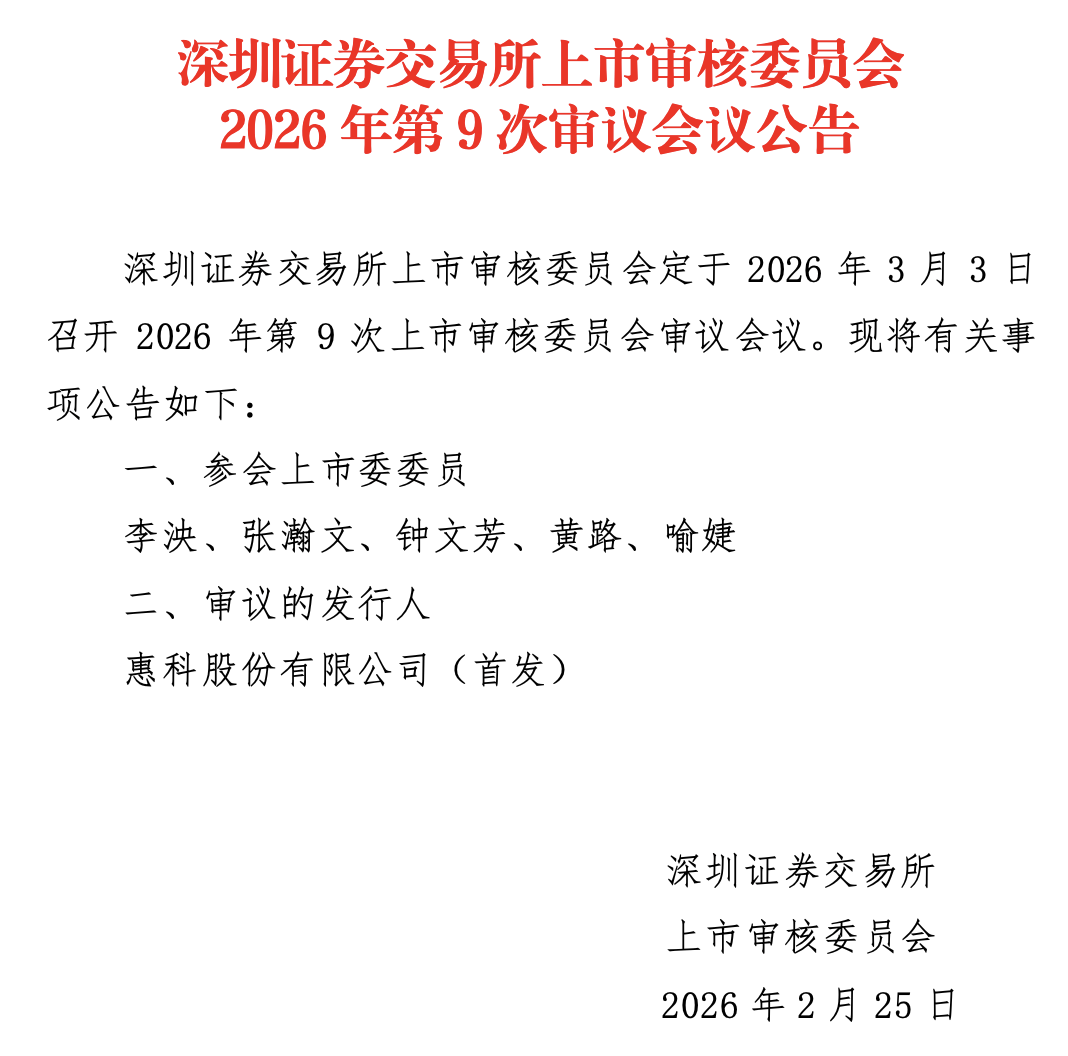
Core Viewpoint - Huike Co., Ltd. is approaching a critical milestone in its IPO process, with a planned fundraising of approximately 8.5 billion yuan for various projects, including OLED and Mini LED technology advancements [1][4][14]. Group 1: IPO and Fundraising - The Shenzhen Stock Exchange will hold a review meeting for Huike's IPO on March 3, 2026, marking a significant step in the company's public offering process [1]. - Huike aims to raise around 8.5 billion yuan, which will be allocated to projects such as the new OLED R&D upgrade in Changsha, Oxide R&D and industrialization, Mini LED smart manufacturing in Mianyang, and to supplement working capital and repay bank loans [4][6][14]. Group 2: Project Details - The total investment for the projects includes 303.11 million yuan for the Changsha new OLED R&D upgrade, 300 million yuan for the Changsha Oxide project, and 254.46 million yuan for the Mianyang Mini LED project, with a total project investment of approximately 957.58 million yuan [6]. - The Changsha new OLED project focuses on the development of OLED materials and devices, while the Mianyang Mini LED project has already commenced construction [6][14]. Group 3: Financial Performance - From 2022 to June 30, 2025, Huike's revenue increased from 26.97 billion yuan to 40.28 billion yuan, with net profits fluctuating from a loss of 1.42 billion yuan to a profit of 3.32 billion yuan [7]. - For the first quarter of 2026, Huike expects revenue between 9.76 billion and 10.36 billion yuan, representing a year-on-year growth of 0.68% to 6.87%, while net profit is projected to decline by 14.81% to 7.57% [8]. Group 4: Industry Trends - The display industry is witnessing a surge in IPO activities, with several companies, including Huike, accelerating their public offerings to capitalize on market opportunities [9][14]. - The trend indicates that the Hong Kong Stock Exchange is becoming a significant destination for display industry companies, reflecting a growing acceptance of high-tech firms and their financing needs [13]. Group 5: Future Outlook - The ongoing IPO actions of Huike and other companies in the display sector signify not just fundraising efforts but also the rapid development and promising future of OLED, Mini LED, and Micro OLED technologies [17]. - As technology and market conditions mature, the capital market is expected to play a crucial role in driving upgrades in the display industry [17].
2026年高世代IT OLED生产线投产加速 设备投资占比84%
Ju Chao Zi Xun· 2026-02-25 08:08
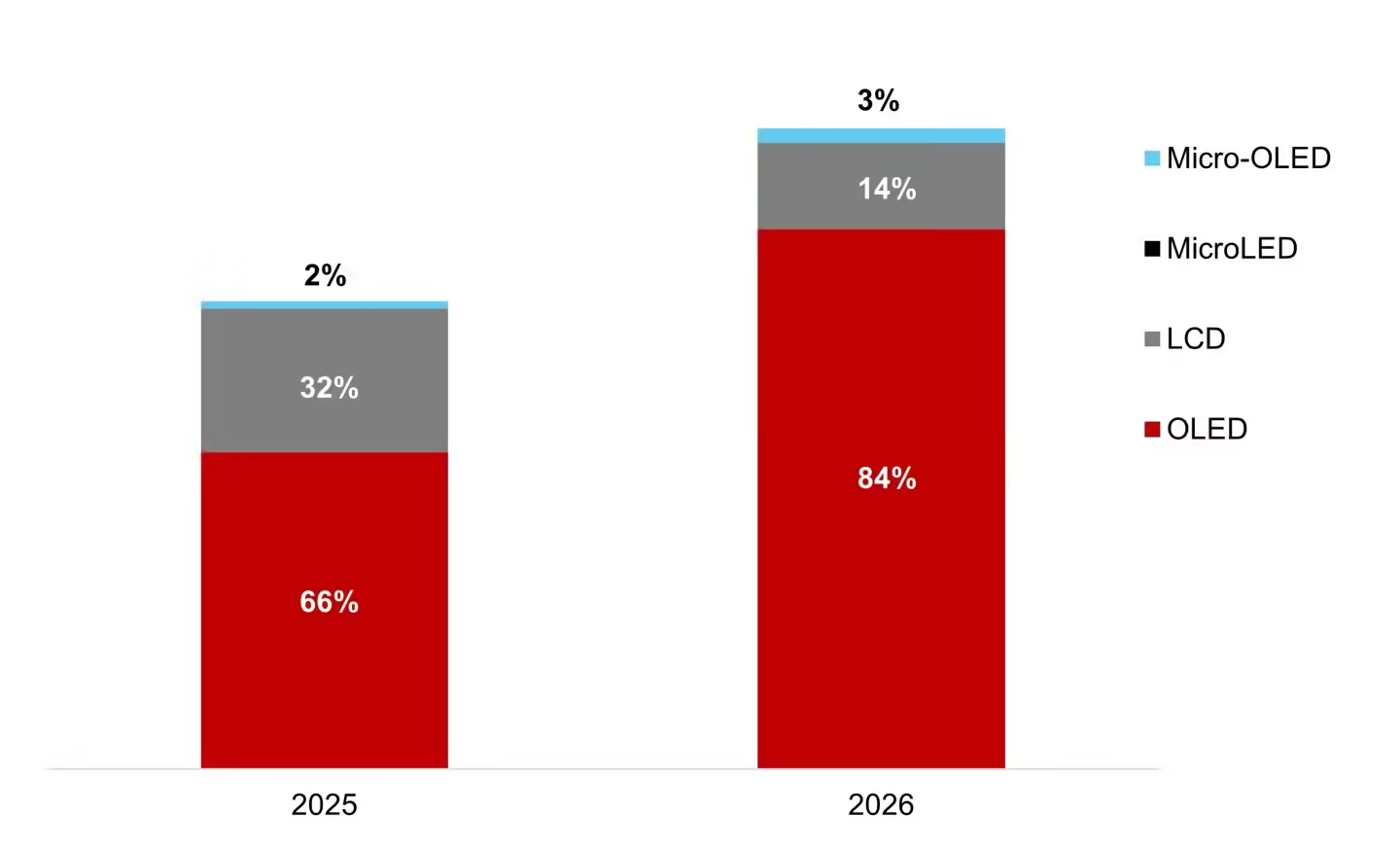
Group 1 - Counterpoint Research indicates that 2023 will be a pivotal year for the production lines of high-generation (G8.6 / G8.7) IT OLED, with major investments from Samsung Display, BOE, Visionox, and TCL Huaxing driving conventional OLED equipment capital expenditures to account for 84% of the industry total [1] - LG Display is expected to adopt a lithography patterning technology route for its unannounced high-generation IT OLED production line, similar to the approaches of Visionox ViP and JDI eLEAP [4] - The report forecasts that from 2023 to 2030, two-thirds of global display equipment capital expenditures will be allocated to conventional OLED, with Micro OLED receiving 2% and Micro LED not yet included in the statistics [4]
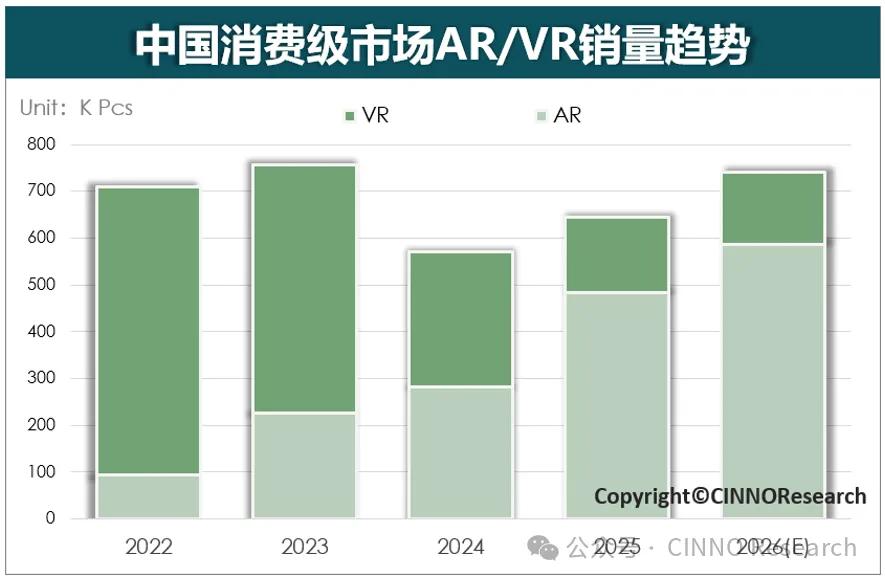
AR销量首超VR !2025年国内消费级XR销量64.5万台,同比增长13%
Xin Lang Cai Jing· 2026-02-09 10:10
Core Insights - The Chinese consumer-grade XR market is expected to achieve a structural leap by 2025, driven by domestic supply chain breakthroughs and deep restructuring of consumption scenarios, with total sales reaching 645,000 units, a year-on-year increase of 13%, and AR sales surpassing VR for the first time with 480,000 units sold [1][11]. Market Dynamics - The domestic consumer-grade market is undergoing a restructuring, with AR devices achieving historic breakthroughs, benefiting from upstream supply chain support and investment focus, leading to a 71% year-on-year increase in AR terminal sales to 484,000 units in 2025. By 2030, AR is expected to dominate the market with over 5 million units shipped [3][15]. - The VR market is experiencing a contraction, with 2025 sales projected at only 161,000 units, marking a historical low. Challenges include declining consumer enthusiasm and limited application scenarios, with predictions of continued market decline due to rising memory costs affecting high-end VR devices [4][15]. Technological Trends - AR display and optical solutions are evolving, with Micro OLED holding a 78% market share, and Sony leading with 60%. The partnership between Visionary and Thunderbird has increased their market share to 39%. The sales of green Micro LED in AR glasses have surged by 203% [5][16]. - In the VR segment, Fast LCD dominates with a 90% market share, while Micro OLED penetration in the above 5,000 yuan price segment has risen to 62%. Pancake technology accounts for 52% of sales, although its market share is expected to slightly decline due to high manufacturing costs [5][16]. Pricing and Consumer Behavior - AR is driving down prices through mass production, leading to the emergence of affordable products, while high-end AR headsets are also being developed [6][17]. - In the VR market, 33% of sales are in the 4,000 to 5,000 yuan price range, primarily driven by the PICO 4 Ultra. Despite overall sales decline, core users are willing to pay a premium for immersive technology, indicating a structural upgrade in the high-end market [6][17]. Brand Landscape - In the AR market, Thunderbird leads with a 32% market share and a 60% year-on-year growth, supported by a comprehensive product matrix. XREAL follows with an 18% share, focusing on advancements in field of view and computational power [7][18]. - In the VR market, PICO maintains a leading position with over 40% market share, while Meta's share has rapidly increased to over 30%, indicating a competitive landscape [7][18]. Investment and Ecosystem Development - In 2025, global VR/AR industry financing reached 54.9 billion yuan, with domestic financing at 5.08 billion yuan, an increase of 610 million yuan from the previous year. AR hardware and terminal manufacturers are the focus of this financing [8][18]. - The Chinese consumer-grade XR market is undergoing a structural transformation driven by policy guidance, technological breakthroughs, and ecosystem reconstruction, with AR achieving market dominance through portability and adaptability, while VR deepens its application value in professional fields [8][19].
涉及显示等领域,精测电子与5企达成深度合作
WitsView睿智显示· 2025-12-17 04:47
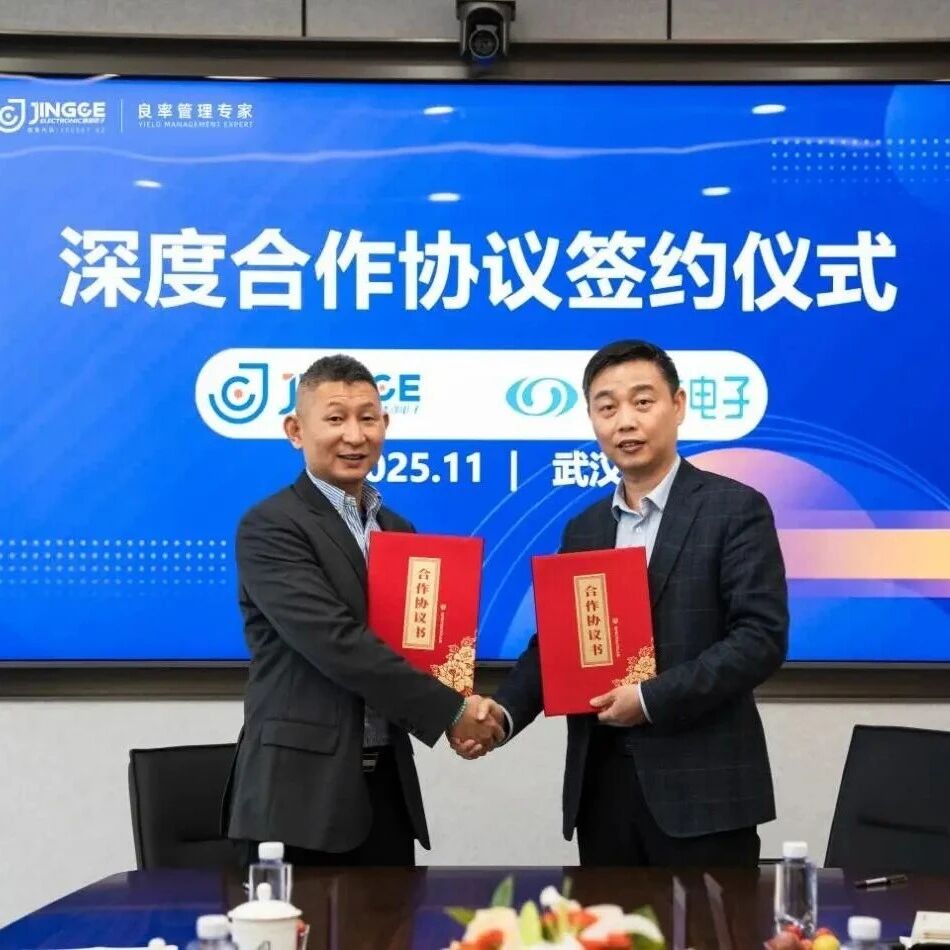
Group 1 - The core viewpoint of the article is that Jingce Electronics has signed deep cooperation agreements with five leading companies in various sectors, focusing on technology integration and resource sharing to enhance testing solutions for the semiconductor, display, and new energy industries [1][2][4]. Group 2 - The cooperation will cover the entire industry chain from materials, devices, and equipment to industry solutions, aiming to optimize systematic testing solutions through technological innovation and product iteration [2]. - The five partners include leading firms in their respective fields: - Shengbang Microelectronics specializes in high-performance analog and mixed-signal integrated circuits for industrial automation, new energy, and automotive electronics [2]. - Analog Devices provides data converters and sensor technologies, widely used in digital healthcare and industrial automation [2]. - Hefei Aiko Optoelectronics manufactures key components for industrial imaging, including industrial cameras and image acquisition cards [4]. - Inovance Technology operates in industrial automation control and new energy equipment, with a product line that includes servo systems and industrial robots [4]. - SMC Automation focuses on the development and manufacturing of pneumatic components, serving automation lines in the semiconductor, automotive, and electronics industries [4]. - Jingce Electronics aims to strengthen its core competitiveness and build an open industrial ecosystem through this collaboration, continuing its focus on the semiconductor and display sectors while empowering the new energy field [4].




【太平洋科技-每日观点&资讯】(2025-12-10)
远峰电子· 2025-12-09 11:59
Market Overview - The main board saw significant gains with companies like Bona Film Group (+10.02%), Tiantong Co., Ltd. (+10.02%), and Zhongci Electronics (+10.01%) leading the charge [1] - The ChiNext board also performed well, with Hengxin Oriental (+20.04%) and Online Offline (+20.00%) showing strong increases [1] - The Sci-Tech Innovation board was led by Dekeli (+20.00%) and Tengjing Technology (+10.54%) [1] - Active sub-industries included SW Printed Circuit Boards (+5.43%) and SW Communication Network Equipment (+3.68%) [1] Domestic News - Aibang ARAI announced that its 12-inch Micro OLED production line has successfully lit up, marking a new phase in silicon-based OLED product mass production [1] - Semiconductor Investment Alliance reported that Shengmei Shanghai has launched several devices compatible with HBM processes, including Ultra ECP 3D equipment for TSV copper filling [1] - United Microelectronics Corporation (UMC) signed a technology licensing agreement with imec for silicon photonics processes, aiming to target next-generation high-speed connectivity applications [1] - Baiwei Storage highlighted the increasing demand for high-bandwidth, low-latency storage chips in robotics, launching products suitable for embodied intelligence [1] Company Announcements - Shenzhou Information disclosed a plan for its controlling shareholder to reduce holdings by up to 28,827,300 shares between December 31, 2025, and March 30, 2026 [2] - Saiwei Microelectronics announced a share reduction plan by Shanghai Lingguan, intending to reduce up to 14,500 shares for personal funding needs [2] - Juguang Technology reported the completion of a share reduction by shareholder Wang Donghui, decreasing his stake from 6.6427% to 3.6427% with a total reduction amounting to 323 million yuan [2] - Zhangyue Technology received a cash dividend of 4.99 million yuan from its associate company, which will positively impact its 2025 financial performance [2] Overseas News - DNP successfully developed a nano-imprint lithography (NIL) template with a line width of 10nm, meeting the miniaturization needs for advanced logic semiconductors [2] - Omdia reported a 3% year-on-year increase in global wearable wristband shipments in Q3 2025, reaching 54.6 million units, with market value rising by 12% [2] - IBM announced an acquisition of Confluent for $11 billion, aiming to integrate it into its software division to enhance AI-driven data platforms [2] - The U.S. government allowed NVIDIA to export its H200 AI chips to China under certain conditions, including a 25% revenue share for the U.S. [2]

AI端侧最佳载体?一文看懂AI眼镜产业链
Hua Er Jie Jian Wen· 2025-11-27 09:08
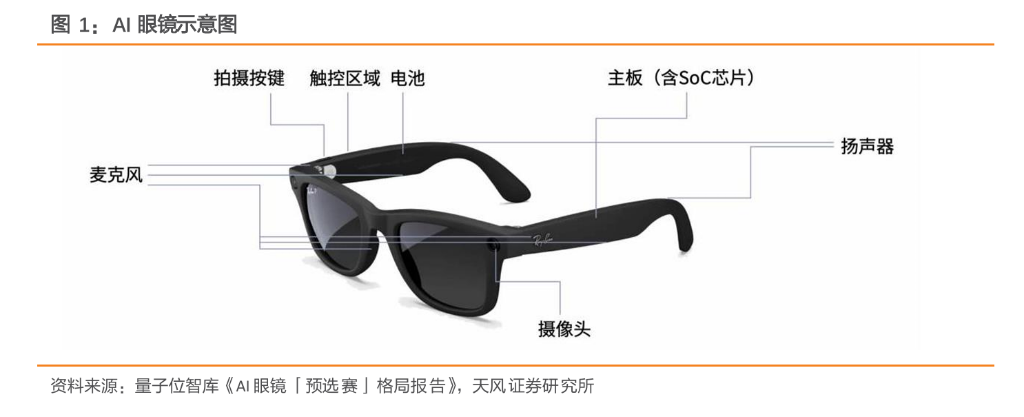
Core Insights - The AI glasses market is gaining attention due to its lightweight design and intuitive interaction, driven by a large existing user base and low AI penetration rates, indicating significant growth potential for the industry [1][5] - Major tech companies are entering the market, with Alibaba launching its first AI glasses powered by its self-developed model, and Meta's collaboration with Ray-Ban resulting in sold-out smart glasses [1][2] - IDC predicts that global smart glasses shipments will reach 12.8 million units by 2025, with a 26% year-on-year growth, and the Chinese market expected to grow by 107% [1] Market Potential - The growth of the AI glasses market is primarily driven by the replacement of a large existing market, particularly in China, where nearly 50% of the population is myopic, representing a potential user base of around 700 million [5] - The annual sales of prescription glasses in China are approximately 150 million units, with sunglasses also maintaining stable sales, indicating a robust market for AI glasses [5] - The report anticipates that as AI and AR technologies mature post-2030, AI+AR smart glasses will enter a high-growth phase, with global sales potentially reaching 1.4 billion units and a penetration rate of 70% [2][5] Cost Structure - The cost structure of AI glasses is dominated by chips and optics, which are the highest value segments in the supply chain [7] - Different AI glasses have varying cost focuses; for instance, Huawei's AR glasses have 78% of their costs in optical modules and screens, while Xiaomi's AI glasses have over 25% of costs in the main chip [7] - The report identifies that in the future, the main costs will be in computing chips, optical modules, and display screens, making them focal points for investment in the supply chain [7] Technology Pathways - The choice of technology in optical display significantly impacts product form and user experience, with current mainstream AR glasses using the Birdbath solution, which has limitations such as low transparency and bulkiness [9] - The waveguide solution is seen as a promising direction due to its high transparency and lightweight design, although its complex manufacturing process poses challenges for mass production [9] - Micro OLED is currently the mainstream display technology, but Micro LED is viewed as a more ideal solution for AR due to its high brightness and longevity, despite facing manufacturing challenges [12] Computing Power - The choice of computing unit directly affects the performance and battery life of AI glasses, with the "SoC+MCU" combination being identified as the optimal solution for balancing performance and power consumption [15][18] - The global SoC market is projected to grow from $161.9 billion in 2025 to $237.8 billion by 2030, driven by the expansion of the AI glasses market [15] Supply Chain Components - Besides chips and optics, other components like storage and batteries are crucial in the AI glasses industry [20] - ePOP and eMCP are the main storage solutions, with ePOP being favored for its compact size and low power consumption [20] - High-density steel shell batteries are key to overcoming the weight, endurance, and computing power challenges in AI glasses [20]
倒计时6天!与13位显示专家洞察产业未来
TrendForce集邦· 2025-10-24 03:49
Core Viewpoint - The article emphasizes the transformative impact of generative AI and spatial computing on various industries, with display technology at the forefront of this change, highlighting the acceleration of Micro LED commercialization and the establishment of Mini LED as a market leader, while OLED maintains its dominance in flagship smartphones and Micro OLED emerges as a prime solution for near-eye displays [2]. Industry Overview - The global display industry is at a crossroads of opportunities and challenges, with significant advancements in display technologies such as Micro LED, Mini LED, OLED, and Micro OLED [2]. - A conference titled "2025 Self-Luminous Display Industry Seminar" will be held on October 30, 2025, organized by TrendForce and its subsidiaries, featuring 13 industry experts discussing various display technologies [2]. Conference Agenda Highlights - The agenda includes topics such as the commercialization of Micro LED, innovations in MiP display technology, and the current status and future prospects of LED cinema screens [6][7]. - Key presentations will cover advancements in Micro LED technology, including the role of silicon substrate GaN technology and the exploration of new opportunities in AR glasses [7][8]. Supporting Organizations - The event is supported by various organizations including Absen, TCL Huaxing, and others, indicating a collaborative effort within the industry to address current trends and challenges [9].

最后席位速抢!2025自发光显示产业研讨会即将开幕
WitsView睿智显示· 2025-10-08 06:59
Core Insights - The article emphasizes the transformative impact of technology, particularly in display technology, with OLED and Micro OLED at the forefront of this revolution [1] - OLED has established itself as the dominant technology in flagship smartphones due to its flexibility, thinness, and superior color performance, symbolizing quality and experience [1] - Micro OLED is positioned as the "golden solution" for near-eye displays, crucial for spatial computing and immersive experiences, and is expected to play a key role in defining the boundaries between virtual and real worlds [1] - The article highlights the necessity for industry players to adapt and collaborate in response to the evolving display technology landscape, driven by the mature market ecosystem of OLED and the revolutionary applications of Micro OLED [1] Event Overview - The 2025 Self-Luminous Display Industry Seminar will be held on October 30, 2025, organized by TrendForce, LEDinside, and Display [4] - The seminar aims to share cutting-edge industry information and analyze development trends [1][4] - The agenda includes various presentations on topics such as commercialization of glass and silicon-based Micro LED, opportunities in ultra-high-definition display technologies, and the impact of AI on AR glasses [5][6]
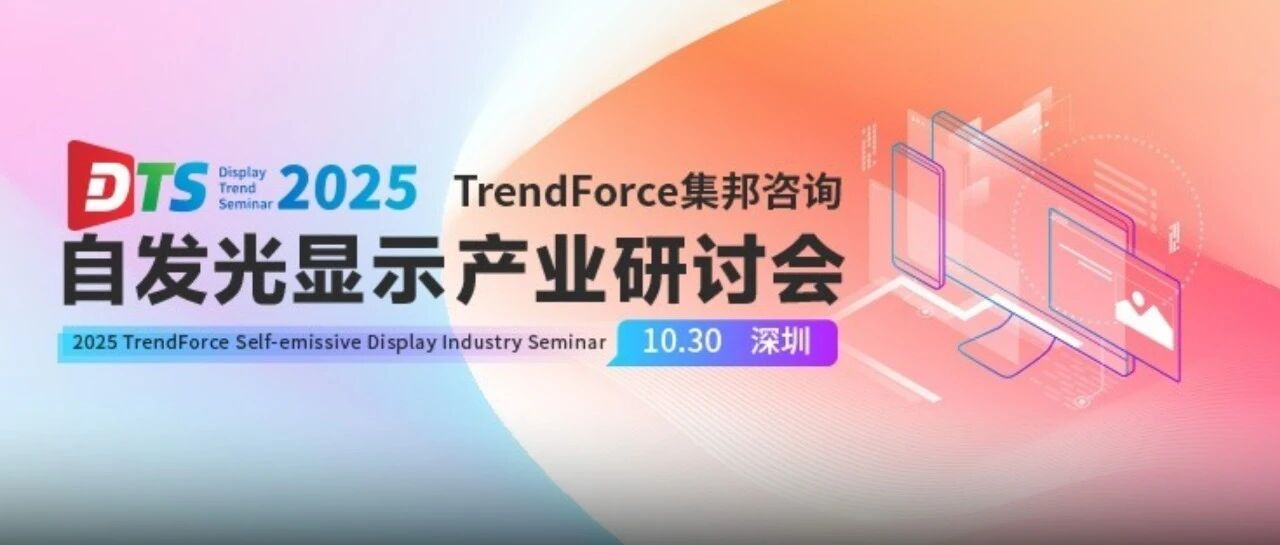
邀请函|2025自发光显示产业研讨会
WitsView睿智显示· 2025-09-25 09:51
Core Viewpoint - Since 2024, the technology wave represented by generative AI and spatial computing is reshaping various industries with unprecedented depth and breadth, placing display technology at the center of this transformation, presenting both opportunities and challenges [1]. Industry Evolution - The display industry has experienced significant internal evolution over the past year, with major technology routes competing fiercely and moving towards new development inflection points: - Micro LED's development path is becoming clearer, with accelerated industrialization [1]. - Mini LED has successfully transitioned from a "technology pioneer" to a "market mainstay" after market trials [1]. - OLED maintains its dominance in flagship smartphones due to its mature advantages in flexibility, thinness, and color performance [1]. - Micro OLED is currently regarded as the "golden solution" for near-eye displays and is expected to hold a significant market share for a long time [1]. Upcoming Event - The global display industry is at a crossroads of opportunities and challenges, necessitating a "compass" for guidance. The 2025 Self-Luminous Display Industry Seminar will be held on October 30, 2025, organized by TrendForce's LEDinside and Display divisions, inviting industry participants to engage in deep dialogue to calibrate direction and navigate challenges together [1].