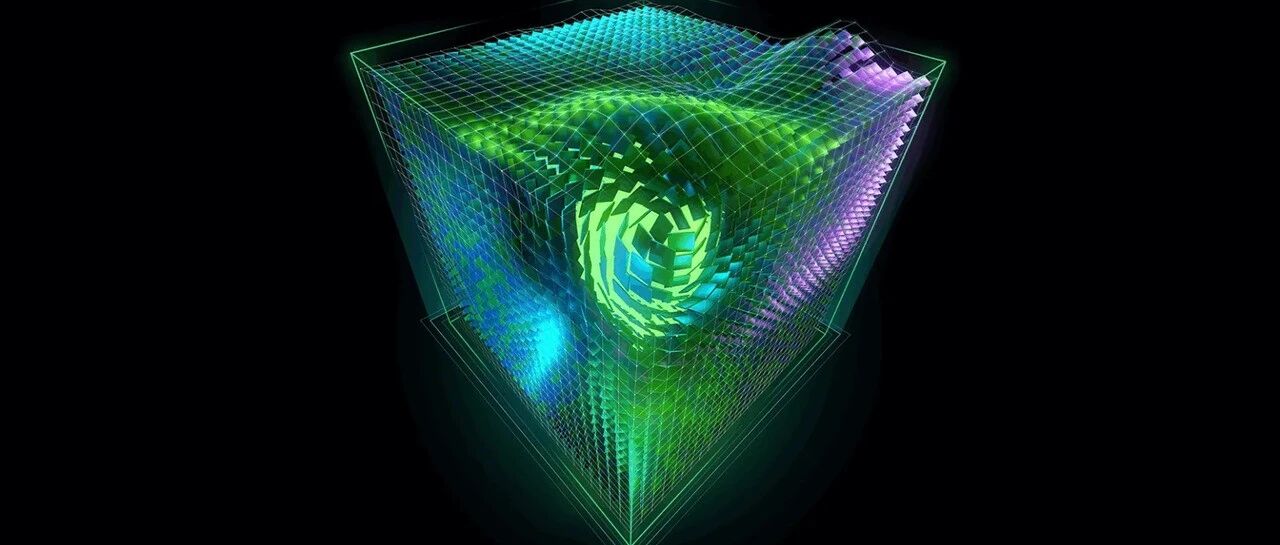
NVIDIA CUDA Toolkit 13.1

Search documents
苹果现高管离职潮;百度澄清昆仑芯上市消息丨科技风向标
2 1 Shi Ji Jing Ji Bao Dao· 2025-12-08 02:30
Group 1: SpaceX and Apple Developments - Elon Musk responded to the inaccurate valuation report of SpaceX at $800 billion, emphasizing that the company's valuation is tied to the progress of Starship and Starlink, and that NASA's contribution to revenue will be less than 5% next year [2] - Apple is experiencing significant management turnover, with four executives leaving in the past week and a push for increased recruitment and retention efforts amid concerns about CEO Tim Cook's health [2] Group 2: Technology and Product Updates - Tencent announced the release of its latest language models, Tencent HY2.0Think and Tencent HY2.0Instruct, featuring a total of 406 billion parameters and significant improvements over the previous version [5] - Nvidia released its largest update to the CUDA Toolkit in 20 years, introducing new programming models and resources for developers [10] Group 3: Market Movements and Acquisitions - PC manufacturers including Lenovo, Dell, and HP plan to raise prices by up to 20% due to rising storage costs, with Lenovo notifying customers of significant price increases effective January 1, 2026 [6] - Netflix announced a deal to acquire Warner Bros. for approximately $82.7 billion, with the transaction expected to close in Q3 2026 [8] - Guangqi Technology's subsidiary signed contracts worth 696 million yuan for the production of metamaterials, expected to impact the company's performance in 2026 [9] Group 4: Corporate Actions and Changes - Baidu clarified that it is evaluating the potential spin-off and independent listing of its subsidiary Kunlun Chip, which requires regulatory approval [14] - Jiahua Technology plans to acquire 90% of Shudun Technology through a combination of stock issuance and cash payment, aiming to enhance data security capabilities [15] - DiAo Microelectronics announced the termination of its plan to acquire 100% of Rongpai Semiconductor, following board approval [16]


苹果现高管离职潮;百度澄清昆仑芯上市消息丨新鲜早科技
2 1 Shi Ji Jing Ji Bao Dao· 2025-12-08 02:20
Group 1: SpaceX Valuation and Operations - Elon Musk stated that the reported valuation of SpaceX at $800 billion (approximately 5.7 trillion RMB) is "not accurate" and emphasized that the company's valuation depends on the progress of Starship and Starlink [2] - Musk clarified that SpaceX is a cash flow positive company and conducts stock buybacks twice a year, with commercial Starlink being the largest revenue contributor [2] Group 2: Apple Executive Departures - Apple is experiencing significant management turnover, with four executives announcing their departure in the past week, marking one of the most intense leadership changes in years [2] - The company has been instructed to enhance recruitment and retention efforts amid concerns regarding CEO Tim Cook's health, although sources indicate his condition is stable [2] Group 3: Price Increases by PC Manufacturers - Lenovo, Dell, and HP are planning to raise prices by up to 20% due to ongoing increases in storage costs, with Lenovo notifying customers of new pricing effective January 1, 2026 [5] - Dell is considering price hikes of at least 15%-20% for PCs and servers, potentially effective by mid-December [5] Group 4: Netflix Acquisition of Warner Bros - Netflix announced a definitive agreement to acquire Warner Bros. Discovery's film studio and streaming business for approximately $82.7 billion, with a per-share price of $27.75 [8] - The deal is expected to close in the third quarter of 2026, following the completion of Warner Bros. Discovery's global network business divestiture [8] Group 5: Lightwave Technology Contracts - Guangqi Technology's subsidiary signed contracts worth a total of 696 million RMB for the production of metamaterials, with deliveries expected by December 31, 2026 [9] Group 6: New Product Developments - Nvidia announced the release of its largest update to the CUDA Toolkit in 20 years, introducing new programming models and resources for developers [10] - Zhongji Xuchuang is currently developing a 3.2T optical module product, with ongoing enhancements based on industry trends and customer needs [12]
刚刚,英伟达CUDA迎来史上最大更新!
具身智能之心· 2025-12-08 01:11
Core Insights - NVIDIA has officially released CUDA Toolkit 13.1, marking it as the largest update in 20 years [2][4]. Group 1: CUDA Tile - CUDA Tile is the most significant update in NVIDIA CUDA Toolkit 13.1, introducing a tile-based programming model that allows developers to write algorithms at a higher abstraction level [4][5]. - The CUDA Tile model enables developers to specify data blocks called "Tiles" and define mathematical operations on them, allowing the compiler and runtime to optimally distribute workloads across threads [8][15]. - This model abstracts the details of specialized hardware like Tensor Cores, ensuring compatibility with future GPU architectures [9][15]. - CUDA 13.1 includes two components for Tile programming: CUDA Tile IR, a new virtual instruction set architecture, and cuTile Python, a domain-specific language for writing array and Tile-based kernel functions in Python [10]. Group 2: Green Context Support - The update introduces runtime support for Green Contexts, which are lightweight contexts that allow finer-grained GPU resource allocation [20][21]. - Green Contexts enable users to define and manage independent partitions of GPU resources, enhancing the ability to prioritize tasks based on latency sensitivity [21]. Group 3: Multi-Process Service (MPS) Updates - CUDA 13.1 brings several new features to MPS, including Memory Locality Optimization Partition (MLOPart), which allows users to create CUDA devices optimized for memory locality [24][25]. - MLOPart devices are derived from the same physical GPU but present as multiple independent devices with reduced computational resources [25][26]. - Static Streaming Multiprocessor (SM) partitioning is introduced as an alternative to dynamic resource provisioning, providing deterministic resource allocation for MPS clients [29]. Group 4: Developer Tools Enhancements - The release includes performance analysis tools for CUDA Tile kernel functions, enhancing the ability to analyze Tile statistics [33]. - NVIDIA Compute Sanitizer has been updated to support compile-time patching, improving memory error detection capabilities [34]. - New features in NVIDIA Nsight Systems include enhanced tracing capabilities for CUDA applications, allowing for better performance analysis [37]. Group 5: Core CUDA Libraries Updates - CUDA 13.1 introduces performance updates for cuBLAS on the Blackwell architecture, including support for block-scaled FP4 and FP8 matrix multiplication [40]. - The cuSOLVER library has been optimized for batch processing of eigenvalue problems, achieving significant performance improvements [42].

刚刚,英伟达CUDA迎来史上最大更新!
机器之心· 2025-12-06 04:08
Core Insights - NVIDIA has officially released CUDA Toolkit 13.1, marking the largest update in 20 years since the inception of the CUDA platform in 2006 [2] - The update introduces CUDA Tile, a new programming model that allows developers to write algorithms at a higher abstraction level, simplifying the use of specialized hardware like Tensor Cores [4][5] Summary by Sections CUDA Tile - CUDA Tile is the central update in NVIDIA CUDA Toolkit 13.1, enabling developers to abstract specialized hardware details and write GPU kernel functions at a higher level than the traditional SIMT (Single Instruction Multiple Threads) model [4][6] - The Tile model allows developers to specify data blocks called "Tiles" and the mathematical operations to be performed on them, with the compiler automatically managing workload distribution across threads [7][8] - CUDA 13.1 includes two components for Tile programming: CUDA Tile IR, a new virtual instruction set architecture, and cuTile Python, a domain-specific language for writing array and Tile-based kernel functions in Python [9] Software Updates - The update introduces support for Green Contexts, which are lightweight contexts that allow for finer-grained GPU resource allocation and management [19][20] - CUDA 13.1 also features a customizable split() API for building SM partitions and reducing false dependencies between different Green Contexts [21] - The Multi-Process Service (MPS) has been enhanced with memory locality optimization partitions (MLOPart) and static SM partitioning for improved resource allocation and isolation [23][28] Developer Tools - New developer tools include performance analysis tools for CUDA Tile kernel functions and enhancements to Nsight Compute for better analysis of Tile statistics [32] - The NVIDIA Compute Sanitizer has been updated to support compile-time patching for improved memory error detection [33] Mathematical Libraries - The core CUDA toolkit's mathematical libraries have received performance updates for the new Blackwell architecture, including enhancements to cuBLAS and cuSOLVER for better matrix operations [37][41] - New APIs have been introduced for cuBLAS and cuSPARSE, providing improved performance for specific operations [40][46]