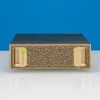
NVIDIA DGX Spark

Search documents
Microchip Releases Custom Firmware For NVIDIA DGX Spark For Its MEC1723 Embedded Controllers
Globenewswire· 2026-01-08 12:01
Core Insights - Microchip Technology has launched custom firmware for its MEC1723 Embedded Controller, designed specifically for NVIDIA DGX Spark personal AI supercomputers, enhancing system management for AI workloads [1][3] - The collaboration between Microchip and NVIDIA aims to provide secure and tailored firmware solutions that meet the complex demands of modern computing platforms [3] Company Overview - Microchip Technology Inc. is a semiconductor supplier focused on innovative design solutions that address challenges at the intersection of emerging technologies and durable end markets [4] - The company offers a comprehensive product portfolio and development tools that support customers throughout the design process, catering to various sectors including industrial, automotive, consumer, aerospace, and defense [4] Product Features - The MEC1723 Embedded Controller manages power sequencing, alerts, and system-level energy regulation, while also overseeing critical firmware operations [2][6] - Key features of the MEC1723 firmware include secure firmware authentication, root of trust for system boot, advanced power management, system control for user input, new host interface support, and value-added integration for improved performance [6]


Microchip Releases Custom Firmware For NVIDIA DGX Spark For Its MEC1723 Embedded Controllers
Globenewswire· 2026-01-08 12:01
Core Insights - Microchip Technology has released custom firmware for its MEC1723 Embedded Controller to enhance NVIDIA DGX Spark personal AI supercomputers, focusing on optimizing system management for AI workloads [1][3] Group 1: Product Features - The MEC1723 EC manages power sequencing, alerts, and system-level energy regulation, while also overseeing critical firmware operations [2] - The firmware provides secure authentication through digital signing by NVIDIA, ensuring platform integrity [6] - It establishes a root of trust for system boot using Elliptic Curve Cryptography (ECC-P384), which is essential for secure system startup [6] Group 2: Collaboration and Market Impact - The partnership between Microchip and NVIDIA aims to deliver tailored firmware solutions that meet the complex demands of modern computing platforms [3] - Microchip's MEC embedded controllers are designed for next-generation applications across various markets, including industrial, data center, and consumer sectors [3] Group 3: Advanced Functionalities - The firmware includes advanced power management features that optimize energy efficiency by handling battery charging and system power state transitions [6] - It supports new host interface commands specific to the NVIDIA DGX interface, moving beyond traditional data transfer methods [6] - The integration of Electromagnetic Interference (EMI) and Static Random-Access Memory (SRAM) interfaces enhances overall system performance [6]

CES 2026:全新产品亮相 Arm聚焦搭建AI算力基础设施
Huan Qiu Wang· 2026-01-07 09:33
Core Insights - The integration of physical AI and edge AI is a central theme at CES 2026, showcasing advancements in various devices from autonomous vehicles to personal computers and wearables [1][3]. Group 1: Automotive Industry - The automotive sector is transitioning from "software-defined" to "AI-defined," with multiple companies implementing high-performance computing platforms based on Arm architecture for real-time vehicle perception, prediction, and decision-making [3]. - Tesla's new AI5 chip, built on Arm, reportedly enhances AI performance by 40 times compared to its predecessor [3]. - Rivian's self-developed autonomous driving platform also utilizes customized Arm chips, while NVIDIA DRIVE Thor supports L4-level autonomous taxi operations [3]. Group 2: Robotics - Robotics technology is moving from laboratory experiments to large-scale commercial applications, demonstrating the practical implementation of physical AI [3]. - Various robots, including wheeled robots, cleaning delivery robots, and humanoid robots, showcased their autonomous operation capabilities in complex environments, relying on Arm's high-efficiency computing platforms [3]. Group 3: Consumer Electronics - Edge AI has become a standard feature in PCs, laptops, and tablets, with the Windows on Arm ecosystem rapidly expanding, expecting over 100 related models to launch by 2026 [4]. - Devices like Apple MacBook, Google Chromebook, and Xiaomi tablets, based on Arm architecture, demonstrate the feasibility of efficiently performing AI tasks locally while achieving high performance and long battery life [4]. - The compact AI workstation NVIDIA DGX Spark, powered by Arm cores, can support local inference for models with 120 billion parameters [4]. Group 4: Wearables and Smart Home - The smart upgrade of wearables and smart home devices reflects the deep penetration of edge AI into daily scenarios, with new smart glasses and health rings utilizing low-power Arm chips for continuous local perception and inference, ensuring user privacy [4]. - Smart home systems are increasingly shifting AI processing tasks to local hubs to address energy efficiency, privacy, and reliability needs [4]. Group 5: Industry Trends - CES 2026 clearly illustrates the trend of intelligent technology integrating into transportation, mobile devices, smart homes, professional workstations, and various robotic applications [4]. - Despite the varying forms of AI across different devices, their reliable operation depends on a high-efficiency and scalable computing foundation [4].

物理AI迎“ChatGPT时刻”!黄仁勋开源“超级大脑”扩大机器人朋友圈
Jin Rong Jie· 2026-01-06 14:40
Core Insights - The "ChatGPT moment" for Physical AI has arrived, marking a significant shift of AI technology from virtual screens to the physical world, leading to a transformative phase in the robotics industry [1][2] Group 1: Physical AI Development - Huang emphasized the four stages of AI evolution: Perception, Generation, Agentic, and Physical AI, with the latter enabling models to understand real-world physical laws [2] - The introduction of three core open-source models aims to lower the development barrier for Physical AI, creating a closed-loop technology from environmental cognition to action execution [2][4] - The NVIDIA Cosmos Transfer 2.5 and Cosmos Predict 2.5 models can generate synthetic data that adheres to physical laws, providing a safe virtual testing environment for developers [2] Group 2: Cognitive Reasoning and Robotics - The NVIDIA Cosmos Reason 2 visual language model enhances machines' human-like visual reasoning and decision-making capabilities [3] - The NVIDIA Isaac GR00T N1.6 model achieves a 40% increase in task success rates and reduces training time from three months to 36 hours, improving data efficiency by 60 times [3] Group 3: Open-source Ecosystem - NVIDIA's collaboration with Hugging Face integrates GR00T models and Isaac Lab-Arena into the LeRobot open-source library, connecting 2 million NVIDIA developers with 13 million Hugging Face AI builders [5] - NVIDIA has contributed 650 open-source models and 250 datasets to Hugging Face, leading in resource download volume within the open-source community [5] Group 4: Hardware Upgrades - The new Jetson T4000 module, based on the Blackwell architecture, offers a fourfold performance increase over its predecessor, while the Jetson Thor robot computer is becoming a focal point for industry collaboration [6] - The IGX Thor platform is set to launch, catering to various computational needs in industrial edge scenarios [6] Group 5: Industry Collaboration and Applications - A diverse range of robots, including humanoid, wheeled, and surgical assistance robots, showcased the cross-domain adaptability of Physical AI technology [7] - Major industry players like Franka Robotics and Mercedes-Benz are leveraging NVIDIA's technology to enhance robot training and develop AI-driven products for smart transportation [7]

CES 2026 Opens: Samsung, Nvidia and AI Giants Reveal Tech That Changes Daily Life
International Business Times· 2026-01-05 12:22
Core Insights - CES 2026, the largest technology event, officially launches on January 6, 2026, in Las Vegas, featuring over 4,000 exhibitors and more than 100,000 participants [1][2]. Group 1: Event Overview - CES 2026 is set to showcase major global tech firms like Samsung, LG, Nvidia, and others, focusing on integrating artificial intelligence (AI) into consumer technology [2][3]. - The event marks a significant shift towards AI as a foundational element in consumer technology, moving beyond being a niche [3]. Group 2: Key Company Announcements - Samsung's event on January 5, 2026, introduced its vision of 'AI as a Daily Companion,' emphasizing a connected ecosystem that enhances daily life through AI [5][6]. - Samsung unveiled the world's first 130-inch Micro RGB TV and highlighted its AI-enhanced displays and next-gen audio products, aiming for a unified user experience across devices [6][11]. - Nvidia's participation focuses on AI computing and robotics, with a keynote by CEO Jensen Huang discussing advanced AI infrastructure and generative AI [8][9]. Group 3: Innovations and Trends - CES 2026 features a range of AI innovations, including robot house helpers, interactive eyewear, and health monitoring technologies, indicating a redefined role for AI in daily routines [11]. - Other notable announcements include Pebble's new round watch, Clicks' phone, Dreame's electric supercar, and Dell's revival of the XPS laptop line, showcasing diverse technological advancements [12].

难怪高通急了
半导体行业观察· 2025-12-18 01:02
Core Insights - Media reports indicate that MediaTek is set to become a focal point in the semiconductor industry due to its collaboration with Google on the TPU v7e, which is expected to enter risk trial production by the end of Q1 2026, with explosive growth in order volume anticipated [1] - The estimated shipment of TPU v7e from 2026 to 2027 could contribute over two times MediaTek's equity in profits, suggesting that the company's revenue targets may be conservative [1] - MediaTek's core competitiveness in the cloud ASIC market is attributed to its SerDes technology, which has been showcased in collaboration with NVIDIA, indicating a strong position in high-speed data transmission [4][5] MediaTek's ASIC Business - MediaTek's annual production capacity for CoWoS is projected to increase from approximately 10,000 units in 2026 to over 150,000 units by 2027, a sevenfold increase [1] - The company has also secured a significant order from Meta for a 2nm ASIC, indicating its growing influence in the cloud service provider market [4] - MediaTek's strategy focuses on deep collaboration with major clients like Google and Meta, emphasizing a targeted approach rather than broad expansion [19] Qualcomm's Challenges - Qualcomm is experiencing anxiety due to its reliance on a single business model, particularly as the smartphone market growth slows and competition intensifies [7] - Despite reporting a 10% year-over-year revenue growth to $112.7 billion, Qualcomm's smartphone business still accounts for over 62% of its revenue, raising concerns about its long-term sustainability [8] - The decline in Qualcomm's high-margin licensing revenue and the slow progress in its AI chip initiatives highlight the company's vulnerabilities in adapting to the evolving market landscape [9][10] Acquisition Strategy - Qualcomm has accelerated its acquisition strategy to address its AI business shortcomings, acquiring several companies to enhance its capabilities, including Edge Impulse and Alphawave Semi [11][12] - However, the effectiveness of these acquisitions in generating immediate revenue remains uncertain, as they primarily address long-term strategic needs rather than short-term financial relief [13] - The comparison with Intel's past acquisition strategy reveals potential pitfalls for Qualcomm, as both companies face strategic clarity issues while attempting to diversify their business models [15][16] Conclusion - The contrasting paths of MediaTek and Qualcomm illustrate the changing dynamics of competition in the AI semiconductor market, where specialization and deep customer relationships are becoming more critical than broad diversification [19][20] - MediaTek's focused approach on ASIC design services and its collaboration with leading tech companies position it favorably, while Qualcomm's scattered strategy may hinder its ability to capitalize on emerging opportunities in the AI space [19][20]


黄仁勋送马斯克的3万块个人超算,要借Mac Studio才能流畅运行?首批真实体验来了
Sou Hu Cai Jing· 2025-11-22 07:19
Core Insights - The NVIDIA DGX Spark is marketed as a personal AI supercomputer, designed for researchers, data scientists, and students, offering high-performance desktop-level AI computing capabilities [8][10][11] - It features 200 billion parameters, 128GB of memory, and a price point of 30,000 RMB, raising questions about its value compared to renting more powerful GPUs [10][11][31] - The device excels in running lightweight models and can handle large models with 120 billion parameters, but its memory bandwidth of 273 GB/s is a significant limitation [11][31] Performance Evaluation - Performance positioning indicates that DGX Spark operates between the RTX 5070 and RTX 5070 Ti levels, with strong capabilities in processing large tasks [11][29] - The device's prefill phase shows high efficiency, but its decoding phase suffers due to bandwidth limitations, resulting in slower output generation [31][19] - Comparisons with other devices, such as the Mac Mini M4 Pro, show that while DGX Spark has advantages in prefill speed, its decoding speed is less impressive [17][21] Application Scenarios - DGX Spark supports over 20 pre-configured applications, including video generation and multi-agent chatbots, showcasing its versatility [36][47] - Users have successfully utilized the device for local AI video generation and building knowledge graph systems, indicating its potential beyond just running large models [37][48] - Innovative solutions, such as pairing DGX Spark with a Mac Studio for enhanced bandwidth, have been explored to maximize its performance [32][34] Market Positioning - The pricing strategy of 30,000 RMB positions DGX Spark as a premium product, but its performance relative to rental options for more powerful GPUs raises questions about its market competitiveness [10][31] - The device's unique features, such as its large memory and desktop design, may appeal to specific user segments, including those in academia and research [36][47] - The ongoing discussions and user experiences shared on platforms like Reddit highlight a growing interest and experimentation with DGX Spark, indicating a potential niche market [53][56]

AI需求爆棚!Q3英伟达数据中心营收破500亿美元
Sou Hu Cai Jing· 2025-11-20 10:54
Core Insights - Nvidia reported a record revenue of $57.01 billion for Q3 2025, exceeding market expectations of approximately $55 billion, with a year-over-year growth of 62% and a quarter-over-quarter increase of 22% [2][3] - The data center revenue reached $51.2 billion, marking a 66% increase year-over-year [2][3] - Nvidia's GAAP and non-GAAP gross margins were 73.4% and 73.6%, respectively, with diluted earnings per share of $1.30 [2][3] Financial Performance - Revenue for Q3 2025 was $57,006 million, compared to $46,743 million in Q2 2025 and $35,082 million in Q3 2024, reflecting a 22% quarter-over-quarter and 62% year-over-year growth [3] - Operating expenses were $5,839 million, up 8% from the previous quarter and 36% from the same quarter last year [3] - Net income for the quarter was $31,910 million, a 21% increase from Q2 2025 and a 65% increase from Q3 2024 [3] - Diluted earnings per share increased by 20% quarter-over-quarter and 67% year-over-year [3] Business Segments - Data Center: Nvidia's Blackwell showed significant performance improvements, with throughput per megawatt reaching ten times that of the previous generation [4] - Gaming: Q3 gaming revenue was $4.3 billion, down 1% from the previous quarter but up 30% year-over-year [5] - Professional Visualization: Revenue reached $760 million, a 26% increase from the previous quarter and a 56% increase year-over-year [5] - Automotive: Revenue was $592 million, up 1% from the previous quarter and 32% year-over-year [5] Market Position and Investor Sentiment - Nvidia is viewed as a bellwether for the AI investment landscape, with its performance reflecting the returns of significant investments in AI by major tech companies [6] - Despite a recent sell-off, Nvidia's stock price has increased by 35% this year, significantly outperforming the Nasdaq 100 index [7] - Some institutional investors have reduced or liquidated their positions in Nvidia, citing concerns over the sustainability of AI capital expenditures [6]
NVIDIA, MediaTek Co-Design GB10 Superchip for New DGX Spark Personal AI Supercomputer
Yahoo Finance· 2025-10-21 09:37
Core Insights - NVIDIA Corporation is highlighted as a top investment opportunity in the tech sector, particularly due to its collaboration with MediaTek on the GB10 Grace Blackwell Superchip, which powers the new DGX Spark personal AI supercomputer [1][3] Company Overview - NVIDIA Corporation operates as a computing infrastructure company, providing graphics, compute, and networking solutions across various regions including the US, Singapore, Taiwan, China, and Hong Kong [4] Product Details - The GB10 Grace Blackwell Superchip integrates the latest Blackwell GPU and a 20-core Grace Arm CPU, leveraging MediaTek's expertise in power-efficient and high-performance designs [2] - The superchip configuration includes 128GB of unified memory and can deliver up to 1 PFLOP of AI performance, enhancing model tuning and real-time inferencing capabilities [2] - The DGX Spark allows developers to work with large AI models of up to 200 billion parameters locally, and can connect two systems for inference on models up to 405 billion parameters [3] - The system is designed to be power-efficient, operable from a standard electrical outlet, and features a compact design suitable for desktop use [3]
NVIDIA DGX Spark 评测:首款PC太酷了
半导体行业观察· 2025-10-15 02:48
Core Viewpoint - Nvidia's DGX Spark is marketed as the "world's smallest AI supercomputer," priced between $3,000 and $4,000, but it does not outperform higher-end GPUs like the RTX 5090 in speed for large language model (LLM) inference and image generation [2][3]. Hardware Overview - DGX Spark features 128 GB of LPDDR5x memory, the largest among Nvidia's workstation GPUs, allowing it to handle models with up to 200 billion parameters for inference and 70 billion for fine-tuning, albeit at reduced precision [3][4]. - The system is built on the GB10 architecture, which shares similarities with Nvidia's existing GPU lineup, leveraging nearly 20 years of CUDA development experience [3][4]. - The compact size of DGX Spark is 150mm x 150mm x 50.5mm, making it a visually appealing mini-computer [6]. Performance - The GB10 system is designed for various machine learning and AI workloads, with Nvidia providing extensive documentation and tutorials to facilitate user onboarding [30]. - In fine-tuning tests, DGX Spark demonstrated the ability to handle models like Mistral 7B effectively, completing tasks in approximately 1.5 minutes, although it lagged behind the RTX 6000 Ada in speed [36][38]. - For image generation, DGX Spark required about 97 seconds to generate images using a 12 billion parameter model, again slower than the RTX 6000 Ada [40][41]. LLM Inference - The system's performance in LLM inference was tested using popular Nvidia hardware model runners, with results indicating that Llama.cpp achieved the highest token generation performance [43]. - As input lengths increased, the generation throughput decreased, showcasing the system's limitations in handling larger contexts [49]. Competitive Landscape - DGX Spark's main competitors are not consumer-grade GPUs but rather systems like Apple's M4 Mac Mini and AMD Ryzen AI Max+ 395, which offer similar memory architectures and performance capabilities [62]. - The pricing of DGX Spark appears reasonable compared to its competitors, although systems like Nvidia's Jetson Thor may offer better value for certain applications [64]. Conclusion - DGX Spark is suitable for users focused on machine learning and AI workloads, but those seeking a versatile system for productivity or gaming may find better options in AMD or Apple products [66].