
OSMO

Search documents
X @Crypto.com
Crypto.com· 2026-01-29 10:00
$OSMO Flash Rewards is now live!🎉 10% p.a. in rewards for OSMO with Crypto EarnJoin Now 👉 https://t.co/FXihYzro22Crypto.com (@cryptocom):⚡ OSMO Flash Rewards ⚡Allocate up to 94,000 OSMO and don’t miss your chance to get high rewards 😱💸 10% p.a.🗓️ 14-day lockup⚡ Limited to the first 1,880,000 OSMO worth of allocations⏳ 29 January to 12 February 2026Click here to learn more 👉 https://t.co/FXihYzro22 https://t.co/1jE1YZRBJj ...
X @Crypto.com
Crypto.com· 2026-01-27 10:00
⚡ OSMO Flash Rewards ⚡Allocate up to 94,000 OSMO and don’t miss your chance to get high rewards 😱💸 10% p.a.🗓️ 14-day lockup⚡ Limited to the first 1,880,000 OSMO worth of allocations⏳ 29 January to 12 February 2026Click here to learn more 👉 https://t.co/FXihYzro22 https://t.co/1jE1YZRBJj ...
午评:深成指、创业板指均涨超1% AI应用板块集体走强
Xin Hua Cai Jing· 2026-01-12 06:18
Market Performance - A-shares experienced a strong rebound on January 12, with the Shanghai Composite Index rising by 0.75% to 4151.14 points and the Shenzhen Component Index increasing by 1.31% to 14305.10 points, while the ChiNext Index rose by 1.17% to 3366.71 points [1] - The total trading volume in the Shanghai and Shenzhen markets reached 2.31 trillion yuan, an increase of 245.5 billion yuan compared to the previous trading day [1] Sector Highlights - AI applications continued to surge, with stocks like Worth Buying and Guangyun Technology hitting the daily limit [1] - The commercial aerospace sector remained strong, with companies like Luxin Investment achieving 10 consecutive trading limits [1] - The photovoltaic sector was active, with Dongfang Risheng reaching a 20% limit up [1] - Retail concepts also saw gains, with Maoye Commercial and Sanjiang Shopping both hitting the daily limit [1] - In contrast, sectors such as oil and gas, and coal experienced significant declines [2] Institutional Insights - Huatai Securities noted that the A-share market continued to rise with increased trading volume, indicating a spring rally driven by heightened risk appetite [3] - The report suggested focusing on high-cost performance sectors, particularly in gaming, duty-free, batteries, engineering machinery, and agricultural chemicals [3] - CITIC Construction emphasized the rapid development of the AI industry, highlighting the potential for new application waves driven by advancements in model capabilities [3][4] Government Policy - The National Development and Reform Commission issued guidelines for government investment funds, marking the first systematic regulation on fund allocation and investment direction [5] - The guidelines emphasize supporting major strategic areas and fostering new pillar industries while avoiding investments in restricted or obsolete sectors [5] Storage Market Outlook - Counterpoint Research reported that the storage market has entered a "super bull market," with prices expected to rise by 40%-50% in Q1 2026 and an additional 20% in Q2 2026 due to surging demand from AI and server capacities [6][7]

黄仁勋:机器人将创造就业机会
3 6 Ke· 2026-01-08 08:15
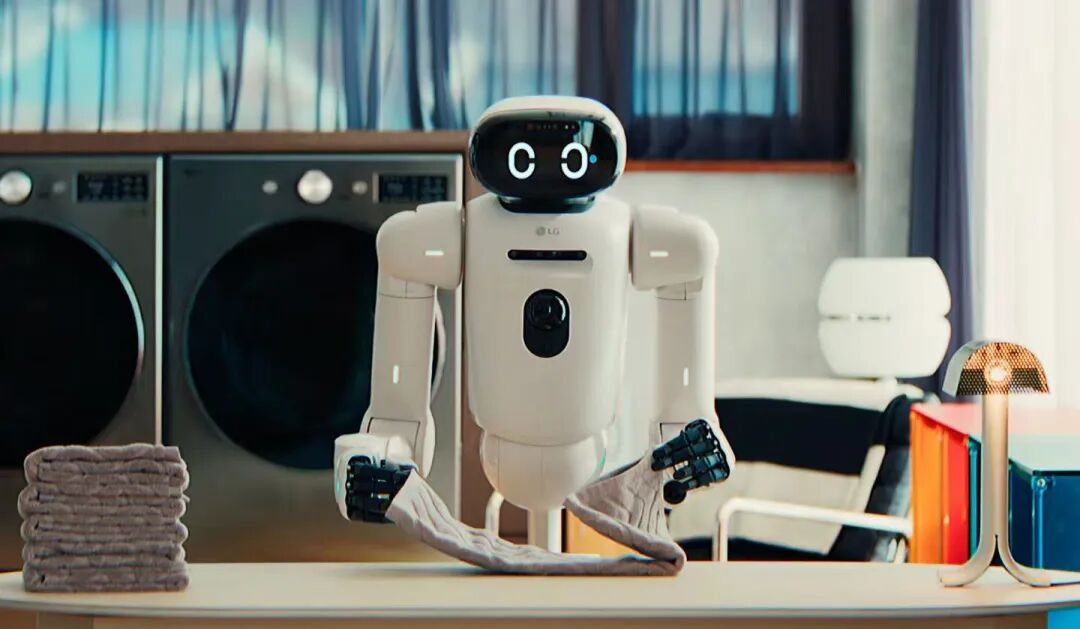
Group 1 - The rise of robotics is a contentious topic regarding its impact on the job market, with pessimists fearing mass unemployment and optimists believing it will create new jobs [1] - NVIDIA's CEO Jensen Huang views robots as "AI immigrants" that can address the global labor shortage affecting manufacturing [1] - Huang argues that a "robot revolution" will fill the labor gap caused by aging populations and will further drive economic growth, stating that the global labor shortage is in the "tens of millions" [1] Group 2 - Huang's perspective aligns with other Silicon Valley tech leaders, including Elon Musk, who advocates for automation due to declining population and aging workforce [2] - AMD's CEO Lisa Su believes AI will not replace humans but will change hiring practices, emphasizing the importance of candidates who can effectively utilize AI technology [2] Group 3 - The CES exhibition features robotics as a key highlight, with around 130,000 attendees expected, showcasing the industry's shift towards practical applications [3] - NVIDIA introduced new models and frameworks for robot learning and evaluation, aiming to streamline robot training workflows [3] - LG unveiled its AI robot CLOiD, designed for household tasks such as folding clothes and cleaning dishes [3] Group 4 - Hyundai showcased the mass production version of the Atlas humanoid robot developed by Boston Dynamics at CES, with plans to deploy humanoid robots in its Georgia manufacturing plant starting in 2028 [5]


黄仁勋点赞三款中国大模型,英伟达押宝物理AI
Guan Cha Zhe Wang· 2026-01-06 11:22
Core Insights - The CES 2026 showcased NVIDIA's strategic focus on next-generation computing platforms and advancements in physical AI, marking the first time in five years that NVIDIA did not release a new GPU at the event [2][3]. Group 1: Open Source Ecosystem - NVIDIA's CEO highlighted the significant investment of approximately $10 trillion in computing resources over the past decade, emphasizing a shift in software paradigms rather than just hardware upgrades [3]. - The presentation acknowledged the rapid development of Chinese open-source models, specifically naming Kimi K2, DeepSeek V3.2, and Qwen, which are leading the open-source ecosystem alongside OpenAI's GPT-OSS [5]. - Despite being approximately six months behind the top models, the open-source models are expected to see new iterations every six months, attracting interest from startups, giants, and researchers alike [5]. Group 2: Next-Generation Computing Platform - NVIDIA introduced the Vera Rubin computing platform, designed to accelerate AI training speeds and facilitate the development of next-generation models [7]. - The platform features a complete redesign of six chips, including Vera CPU and Rubin GPU, with the Rubin GPU achieving a performance of 50 PFLOPS, five times that of its predecessor [7][8]. - The engineering design of Vera Rubin simplifies assembly, reducing the number of cables from 43 to just six liquid cooling pipes, allowing for quicker setup times [8]. Group 3: Advancements in Physical AI - NVIDIA's CEO announced the launch of the Alpamayo open-source AI model aimed at enhancing autonomous driving capabilities, addressing complex driving scenarios through a new reasoning model [10][11]. - The Alpamayo series incorporates a "thinking chain" reasoning model, improving decision-making processes in autonomous vehicles and enhancing user trust in the technology [11]. - The first vehicles utilizing NVIDIA's technology are expected to hit the roads in the U.S. in Q1, Europe in Q2, and Asia later in the year, with interest from companies like Jaguar Land Rover and Uber [11]. Group 4: Robotics Development - NVIDIA unveiled two new open-source models for robotics, NVIDIA Cosmos and GR00T, along with a performance evaluation tool, Isaac Lab-Arena, aimed at simplifying robot training processes [12]. - The collaboration with Hugging Face integrates NVIDIA's Isaac open-source models into the LeRobot project, accelerating the development of the open-source robotics community [12]. - Companies such as Boston Dynamics and Caterpillar are developing new robots and autonomous devices based on NVIDIA's technology, indicating a significant advancement in the robotics sector [13].

机器人,突传重磅!黄仁勋:ChatGPT时刻已来!英伟达放大招,波士顿动力、卡特彼勒、NEURA、LG......
券商中国· 2026-01-06 06:41
Core Viewpoint - The robotics industry is entering a transformative phase, akin to the "ChatGPT moment," as highlighted by NVIDIA's CEO Jensen Huang during the 2026 CES, emphasizing advancements in AI and robotics technology [1][4]. Group 1: NVIDIA's Innovations - NVIDIA announced new open models and frameworks for physical AI, accelerating the robotics development lifecycle and enabling the creation of versatile professional robots capable of learning multiple tasks [3][4]. - The introduction of NVIDIA Cosmos and GR00T models, along with the Isaac Lab-Arena for robot evaluation, aims to simplify the training workflow for robots [1][3]. Group 2: Industry Collaboration - Major industry players such as Boston Dynamics, Caterpillar, and LG Electronics are leveraging NVIDIA's technology to launch new AI-driven robots, indicating a shift from experimental prototypes to commercially viable products [4][6]. - Caterpillar is expanding its collaboration with NVIDIA to integrate advanced AI and autonomy into construction and mining equipment [6]. Group 3: Commercialization and Market Potential - The humanoid robot sector is rapidly moving towards commercialization, with companies like UBTECH and Tesla already deploying small batches, projecting a demand of 736,400 units in the automotive sector by 2028 [8]. - The logistics industry is also seeing advancements, with companies like Hangcha Group and Jingsong Intelligent introducing high-load, multi-scenario adaptable products, expecting a demand of 59,100 units by 2028 [8]. Group 4: Market Strategy and Technological Evolution - The humanoid robot market is adopting a dual strategy focusing on both B2B and B2C, with products evolving towards high cost-performance, modular, and platform-based designs [9]. - The integration of AI large models with embodied intelligence is becoming mainstream, with applications expanding from industrial to home and healthcare sectors [9].

黄仁勋二代上位了
投资界· 2025-12-22 08:27
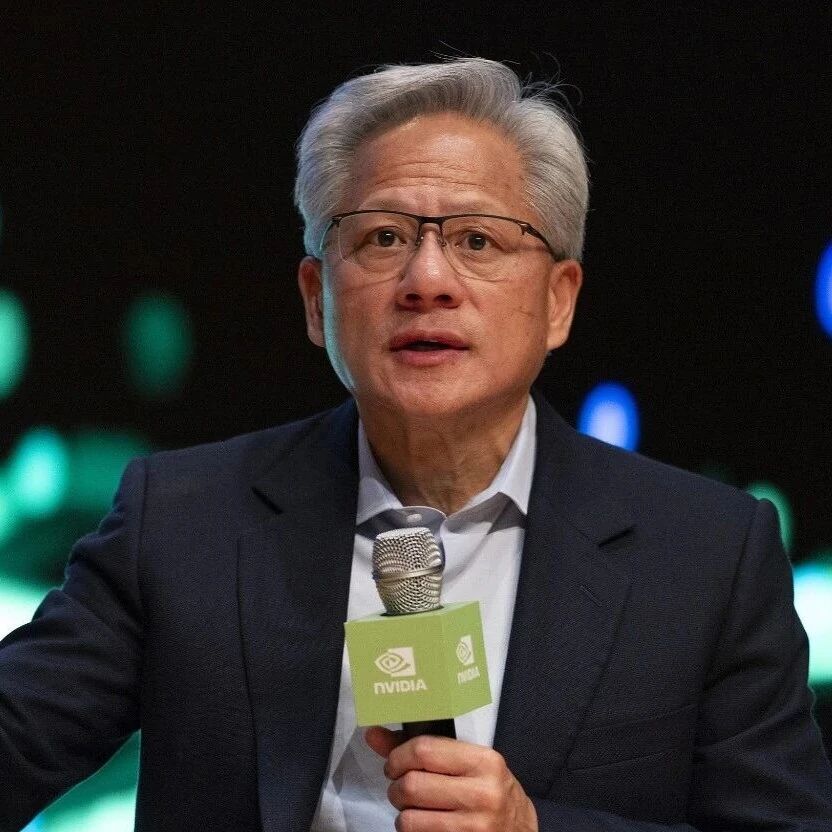
Core Viewpoint - The article discusses the significant roles of Huang Renxun's children, Huang Shengbin and Huang Minshan, in NVIDIA, highlighting their contributions to the company's strategic focus on artificial intelligence and robotics, as well as the unique approach of Huang Renxun in nurturing his children within the family business [5][6][21]. Group 1: Company Performance and Market Position - NVIDIA's net profit is projected to soar from $4.368 billion in the fiscal year 2023 to $72.88 billion in the fiscal year 2025, with its stock price increasing 12 times since the beginning of 2023 [5]. - As of December 15, NVIDIA's total market capitalization reached $4.25 trillion (30 trillion RMB), making it the highest among global listed companies, surpassing Apple and Google [5]. - Huang Renxun's wealth has reached $152 billion (1.07 trillion RMB), placing him as the eighth richest person globally, significantly ahead of Li Ka-shing, whose wealth is less than one-third of Huang's [5]. Group 2: Family Involvement in Business - Huang Renxun's children, Huang Shengbin and Huang Minshan, both work at NVIDIA, which is atypical for Silicon Valley tech billionaires, who often do not involve their children in their companies [6][7]. - Huang Shengbin serves as the product line manager for NVIDIA's robotics business, indicating a strategic focus on AI applications, particularly in robotics [9]. - Huang Minshan is the senior product marketing director for NVIDIA's Omniverse and robotics business, responsible for marketing strategies and developer support [9][15]. Group 3: Career Paths of Huang Shengbin and Huang Minshan - Huang Shengbin, after studying marketing and cultural studies, initially worked in Taiwan before returning to the U.S. to pursue an MBA at NYU Stern, where he graduated in April 2022 and joined NVIDIA shortly after [11][13]. - Huang Minshan has been with NVIDIA for over five years, starting as an intern while pursuing her MBA in London, and has held multiple positions, eventually becoming the senior product marketing director [15][17]. Group 4: Unique Parenting Approach - Huang Renxun's parenting style involves allowing his children to explore their interests before joining the family business, which is seen as a unique approach among Chinese entrepreneurs [21][22]. - During a company meeting, Huang Renxun addressed concerns about nepotism, stating that he believes no parent would recommend a child who could embarrass them, and noted that many second-generation employees outperform their parents [21].
头号富二代上位了
创业家· 2025-12-18 10:15
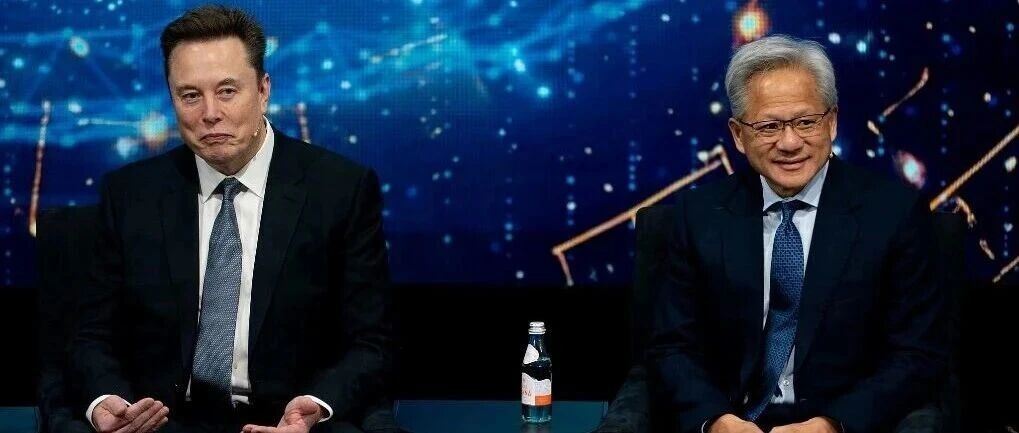
Core Viewpoint - The article discusses the unique career paths of Huang Renxun's children, highlighting their roles at NVIDIA and the strategic focus on AI and robotics, reflecting the company's future direction in the tech industry [5][6][7]. Group 1: NVIDIA's Business and Market Position - NVIDIA's net profit skyrocketed from $4.368 billion in FY2023 to $72.88 billion in FY2025, with its stock price increasing twelvefold since the beginning of 2023 [6]. - As of December 15, NVIDIA's market capitalization reached $4.25 trillion, making it the highest among global listed companies, surpassing Apple and Google [6]. - Huang Renxun's wealth has reached $152 billion, placing him as the richest Chinese and the eighth richest person globally [6]. Group 2: Family Involvement in NVIDIA - Huang Renxun's children, Spencer Huang and Madison Huang, both work at NVIDIA, which is atypical for children of tech billionaires in Silicon Valley [7]. - Spencer Huang is the Product Line Manager for NVIDIA's robotics business, indicating a strategic focus on AI applications, particularly in robotics [14]. - Madison Huang serves as the Senior Product Marketing Director for both the Omniverse and robotics divisions, emphasizing the importance of these areas in NVIDIA's strategy [14]. Group 3: Career Backgrounds of Huang's Children - Spencer Huang studied marketing and cultural studies at Columbia College and initially worked in a bar before returning to NVIDIA in 2021 after completing an MBA [18][20]. - Madison Huang has a background in culinary arts and luxury brand marketing, having worked at LVMH before joining NVIDIA in 2020 [24][26]. Group 4: Strategic Focus on AI and Robotics - Spencer Huang's role involves overseeing the entire lifecycle of NVIDIA's robotics products, including AI models and development tools, showcasing the company's ambition in this sector [14]. - Madison Huang's responsibilities include marketing strategies for the Omniverse and robotics, which are central to NVIDIA's future growth [14]. Group 5: Huang Renxun's Perspective on Family Business - Huang Renxun acknowledges the presence of family members in the company but believes in their capabilities, stating that many "second-generation" employees perform even better than their parents [30][31].
X @Crypto.com
Crypto.com· 2025-08-05 10:00
⚡ OSMO Flash Rewards ⚡Allocate up to 30,000 OSMO and don’t miss your chance to get high rewards 😱💸 10% p.a.🗓️ 14-day lockup⚡ Limited to the first 600,000 OSMO worth of allocations⏳ 7 August to 21 August 2025Click here to learn more 👉 https://t.co/FXihYzro22 https://t.co/tbpRd453QX ...