Osmo 360

Search documents
大疆起诉影石:六件专利权属之争
经济观察报· 2026-03-26 04:36
Core Viewpoint - The legal dispute between DJI and Yingshi revolves around six patent ownership issues, marking a significant escalation in their competitive rivalry in the drone market [3][11]. Group 1: Patent Dispute Details - DJI has filed a lawsuit against Yingshi in the Shenzhen Intermediate People's Court concerning six patents, which include three invention patent applications and three authorized utility model patents, focusing on drone flight control, structural design, and image processing [1][6]. - The patents in question involve inventors who previously worked in DJI's R&D department, directly contributing to the relevant technologies [3][7]. - The lawsuit highlights a critical issue regarding patent ownership, as DJI claims that the inventors listed in Yingshi's patent applications were former employees who developed these technologies while at DJI [4][9]. Group 2: Market Context and Company Performance - DJI has maintained a dominant position in the consumer drone market for over a decade, with a global market share exceeding 70%, while Yingshi recently announced its entry into this market with the launch of its drone brand "Yingling" [11][12]. - In 2025, DJI's revenue is projected to be between 85 billion to 90 billion yuan, with approximately 50 billion yuan coming from its drone business, while Yingshi's revenue for the same year is expected to reach 9.858 billion yuan, reflecting a year-on-year growth of 76.85% [11][12]. - The competitive landscape is intensifying as both companies are now targeting each other's core markets, with DJI quickly responding to Yingshi's product launches [12][13].


影石创新股价跳水,大疆起诉影石已立案
第一财经· 2026-03-23 05:28
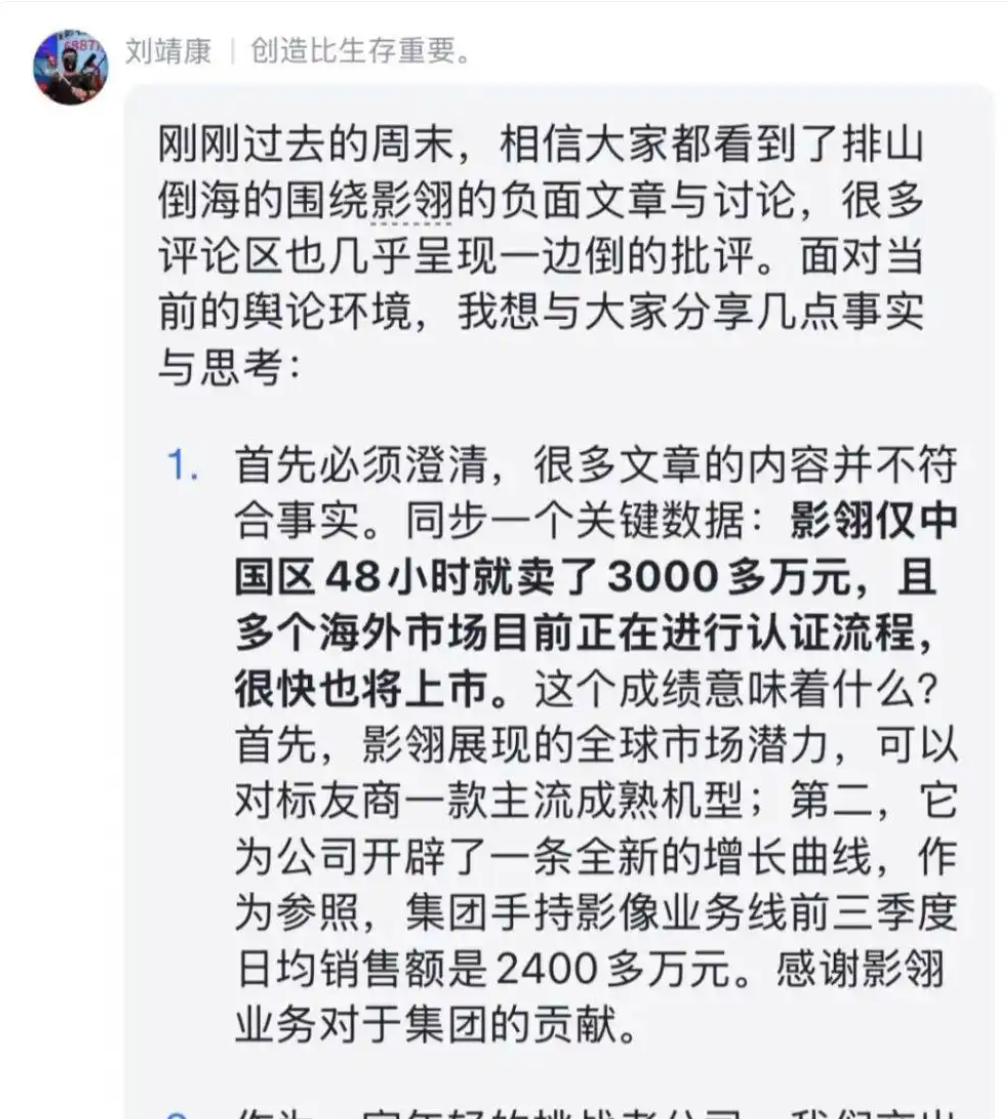
Core Viewpoint - The article discusses a legal dispute between YingShi Innovation (影石创新) and DJI Innovation (大疆创新) regarding six patent ownership issues, which has led to a 4.5% drop in YingShi's stock price. The patents in question are related to drone flight control and structural design, with implications for the competitive landscape in the drone industry [3][4]. Group 1: Legal Dispute Details - DJI has filed a lawsuit against YingShi in the Shenzhen Intermediate People's Court, claiming that the patents were developed by former employees within a year of their departure from DJI, closely related to their work at DJI [3][4]. - Two of the disputed patents involve critical details about drone technology, with discrepancies noted in the identification of inventors between domestic and international patent applications [4]. - The legal framework surrounding the dispute is based on China's Patent Law, which stipulates that inventions made during employment or within a year after leaving the company, related to the original employer's tasks, belong to the employer [5]. Group 2: Competitive Landscape - The dispute is set against the backdrop of competition in the drone sector, particularly following the launch of YingShi's panoramic drone, YingLing A1, which reportedly achieved sales of 30 million yuan within 48 hours of its release [6]. - YingShi's founder emphasized the company's commitment to innovation and market creation, indicating ongoing development of several related projects despite initial sales challenges [6]. - Both companies are also competing in the handheld imaging device market, with DJI having launched its first panoramic camera, Osmo 360, which directly competes with YingShi's previously dominant position in this segment [6].

大疆越是被「挖」,怎么越强了
雷峰网· 2026-03-12 13:41
Core Viewpoint - DJI is experiencing significant revenue growth, with projections indicating that its revenue will exceed 100 billion yuan by 2026, while also facing challenges related to talent retention and organizational structure [2][10]. Group 1: Revenue Growth and Organizational Evolution - DJI's revenue is reported to be approaching 80 billion yuan in 2025, indicating a strong trajectory towards the 100 billion yuan milestone [2]. - The company has undergone a transformation from a "herbaceous" organization, characterized by individual interests, to a "woody" structure that emphasizes responsibility and collaboration [7][12]. - The internal reforms initiated in 2018 were necessary for overcoming the challenges associated with rapid expansion and organizational complexity, similar to those faced by other tech giants like Apple and Intel [8][11]. Group 2: Talent Dynamics - Despite rumors of talent loss, DJI maintains a high density of top-tier talent, attributed to its rigorous selection processes and a culture that values excellence [14][15]. - The company is perceived as a "living reservoir" of talent, continuously attracting high-caliber individuals who prioritize the company's values and vision over mere financial incentives [15][16]. - Former employees express a sense of value gained from their time at DJI, indicating that the company enhances the worth of its talent even after they leave [19]. Group 3: Market Position and Product Innovation - DJI has successfully redefined its market presence, particularly in the smart imaging sector, achieving a 66% global market share in handheld imaging, significantly surpassing competitors like GoPro [18]. - The company has expanded its product offerings beyond drones, establishing itself as a dominant player in the smart imaging landscape [18]. - DJI's ability to maintain a strong organizational framework and innovative product development is seen as a key factor in its resilience and growth in a competitive environment [12][13].

广东90后富豪“硬刚”大疆,干出285亿身家
创业家· 2026-03-12 10:40
Core Viewpoint - The article discusses the challenges faced by YingShi Innovation in the domestic market despite its strong performance in the panoramic camera sector, highlighting the company's financial results and competitive landscape [4][5][20]. Financial Performance - In 2025, YingShi Innovation reported revenue of approximately 9.858 billion yuan, a 76.85% increase from about 5.574 billion yuan in the previous year [5][6]. - The net profit for the same period was approximately 964 million yuan, a decrease of 3.08% from about 995 million yuan year-on-year [5][6]. - The company's non-recurring net profit was approximately 882 million yuan, down 6.74% from about 946 million yuan in the previous year [5][6]. - The financial report indicates a decline in operating profit and total profit, with operating profit at approximately 883 million yuan, down 16.49% from the previous year [6]. Market Position and Challenges - YingShi Innovation's stock price has dropped over 40% since reaching a peak in September of the previous year, resulting in a market capitalization loss of over 65 billion yuan, with the current market cap at approximately 84.89 billion yuan [7]. - Despite the stock price decline, the founder Liu Jingkang's wealth has increased, ranking him 1123rd on the 2026 Hurun Global Rich List with a net worth of 28.5 billion yuan [7][8]. - The company holds a dominant market share in the global panoramic camera market, with a 67.2% share as of 2023, and is expected to exceed 85% in the first three quarters of 2025 [16][20]. Competitive Landscape - YingShi Innovation faces intense competition from major players like GoPro and DJI, particularly in the areas of pricing and supply chain pressures [21][22]. - The launch of DJI's Osmo 360 camera at a lower price point has intensified the price war, prompting YingShi to reduce the price of its flagship product, the X5 [21][22]. - The company is exploring new growth avenues, particularly in the drone market, with the launch of its first drone product, Antigravity A1, which achieved over 30,000 units sold in its first month [22]

“千亿”大疆与它的人才“磁场”
创业邦· 2026-03-12 06:04
Core Viewpoint - DJI is experiencing significant growth despite ongoing talent turnover, with projected revenues nearing 80 billion yuan in 2025 and expectations to surpass 100 billion yuan in 2026, indicating a paradox where talent outflow does not negatively impact performance [5][6][22]. Group 1: Talent Dynamics - The perception of talent loss at DJI is misleading, as the company continues to attract high-caliber professionals, leading to an increase in internal talent density [9][10]. - Many candidates who initially had no intention to change jobs become interested when they learn about opportunities at DJI, reflecting the company's strong reputation [11]. - DJI's internal culture is characterized by a low-profile approach, with many employees being reserved and focused on their work rather than seeking public recognition [14][15]. Group 2: Organizational Evolution - DJI's organizational structure has evolved from a "herbaceous plant" that grows rapidly to a "woody plant" that can withstand challenges, emphasizing the need for both innovation and management capabilities [23][29]. - The company has undergone significant organizational reforms since around 2018 to strengthen its structural foundation, allowing for sustainable growth as it expands its product lines and revenue [29][31]. - DJI's talent philosophy views employee movement as a natural process that contributes to industry progress, fostering a cycle of talent development rather than strict retention [35][41]. Group 3: Cultural Philosophy - DJI's approach to former employees is characterized by a sense of continuity, as evidenced by sending gifts to ex-employees, reinforcing the idea that leaving the company does not sever ties [37][40]. - The company believes in the importance of a dynamic workforce, where continuous inflow of talent is crucial for organizational vitality, contrasting with companies that suffer from talent loss [41][42].

大疆,影石,战争全面升级
盐财经· 2025-12-29 10:00
Core Viewpoint - The article discusses the intense competition between DJI and Insta360, highlighting their contrasting technological philosophies and strategies in the consumer electronics market, particularly in the drone and camera sectors [5][12][25]. Group 1: Competitive Landscape - DJI holds over 70% of the global consumer drone market, establishing a strong technical barrier through vertical integration [8]. - Insta360, on the other hand, has carved out a niche in the panoramic camera market, surpassing GoPro to become the global leader in action cameras [10]. - The competition has escalated from product pricing wars to supply chain "choose one" strategies, forcing suppliers to align with either company [5][29]. Group 2: Product Strategies - DJI launched its first panoramic action camera, Osmo 360, at a price of 2999 yuan, undercutting Insta360's flagship product by 800 yuan [15]. - Insta360's upcoming product, the Antigravity A1, aims to differentiate itself with features like panoramic shooting and VR compatibility, positioning it as a revolutionary solution in the market [16][17]. - Both companies are engaging in aggressive pricing strategies, with Insta360 reducing prices on its products to counter DJI's market entry [20]. Group 3: Financial Performance - Insta360 reported a significant increase in sales expenses, reaching 1.13 billion yuan in the first three quarters of 2025, a 102.6% increase year-over-year, which outpaced revenue growth [20][21]. - The company's total revenue for the first three quarters of 2025 was approximately 6.61 billion yuan, compared to 3.95 billion yuan in the same period of 2024 [21]. - DJI has also initiated price cuts on several products, including the Osmo Pocket 3, to maintain competitive pressure on Insta360 [20]. Group 4: Supply Chain Dynamics - Insta360's CEO, Liu Jingkang, revealed that many core suppliers faced "exclusivity" pressures from DJI, complicating their operational decisions [27][29]. - The supply chain is critical for hardware products, and DJI's established network provides it with a significant advantage in cost control and technological development [30][33]. - Liu Jingkang expressed concerns about the rising costs of innovation due to supply chain restrictions imposed by DJI [32]. Group 5: Future Outlook - The competition between DJI and Insta360 is seen as beneficial for the industry, driving technological advancements and exploring new directions for integration [36]. - The article suggests that both companies may coexist with their distinct narrative styles, potentially leading to a new hybrid form in the future [37]. - The ongoing rivalry reflects the broader challenges in the consumer electronics sector, where companies must navigate market pressures while innovating [40].


影石刘靖康,拒绝失败者叙事
Tai Mei Ti A P P· 2025-12-11 02:54
Core Viewpoint - The release of the Yingling A1 drone by Yingshi has faced significant criticism and skepticism regarding its sales performance, leading to a notable decline in the company's stock price following the launch [1][2][4]. Group 1: Product Launch and Market Response - Yingshi launched the Yingling A1, the world's first 8K panoramic drone, with a starting price of 7,999 yuan, which can be reduced to 6,799 yuan with government subsidies [1]. - Following the launch, Yingshi's stock price fell over 6% the next day, accumulating a decline of more than 8% by December 9, attributed to concerns over disappointing sales figures [1][2]. - In the first three days post-launch, the Yingling sold over 1,500 units, generating approximately 10 million yuan in revenue, which is significantly below the company's annual sales target of 300,000 units [6][9]. Group 2: Competitive Landscape - The ongoing competition between Yingshi and DJI has intensified, particularly with DJI's recent entry into the panoramic camera market and aggressive pricing strategies [2][10]. - Yingshi's internal communications suggest that the company is facing external pressures from industry giants, with claims of supply chain disruptions and negative media coverage impacting their sales [2][8]. - Despite the challenges, Yingshi reported that the Yingling sold over 500 units in its first week, outperforming DJI's Neo 2 model, which sold only 100 units [2]. Group 3: Financial Performance and Strategic Direction - Yingshi's revenue from consumer imaging products was 3.159 billion yuan in the first half of the year, accounting for 86.06% of total revenue, with panoramic cameras being the main product line [8]. - The company has invested heavily in research and development, with R&D expenses reaching 524 million yuan in Q3, a year-on-year increase of 164.81%, representing 17.81% of total revenue [11]. - Yingshi's management emphasizes the importance of these investments for long-term growth, despite a reported decline in net profit of 5.95% year-on-year [11].

与大疆正面对决,新款无人机刚上市却遭密集批评,影石90后创始人回击
Mei Ri Jing Ji Xin Wen· 2025-12-09 12:45
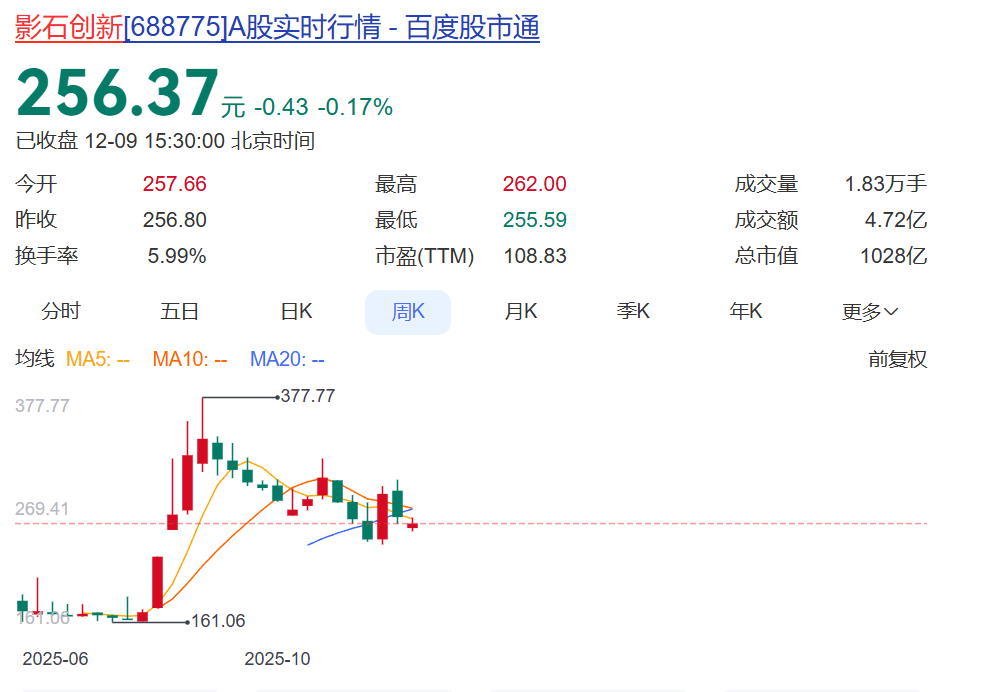
Core Viewpoint - The launch of the "影翎A1" drone by影石创新 has faced significant criticism regarding its sales performance, with rumors suggesting poor sales figures and rapid resale on second-hand platforms. However, the company's founder, Liu Jingkang, has countered these claims, asserting strong initial sales and positioning the product as a new growth avenue for the company [1][3]. Group 1: Product Launch and Market Response - The影翎A1, marketed as the world's first 8K panoramic drone, was launched with a price of 6,799 yuan after subsidies, and it weighs 249 grams, allowing for simplified flight regulations in many regions [3][4]. - Initial sales figures reported by Liu indicate that the影翎A1 generated over 30 million yuan in sales within 48 hours in China, with additional markets undergoing certification [1][3]. - Despite the positive sales figures, the product faced immediate resale on second-hand platforms at discounts ranging from 400 to 1,000 yuan, leading to a 6.01% drop in影石's stock price on the day following the launch [3][4]. Group 2: Competitive Landscape -影石 and DJI are engaged in fierce competition, with影石 having dominated the global consumer panoramic camera market for six consecutive years, while DJI holds over 70% of the global consumer drone market [2][6]. - Both companies have begun to encroach on each other's core markets, with DJI launching new products targeting影石's successful lines, while影石 introduced the影翎A1 to compete in the drone sector [7]. Group 3: Financial Performance and Investment -影石 reported a revenue of 6.611 billion yuan for the first three quarters of the year, a year-on-year increase of 67.18%, but the net profit attributable to shareholders decreased by 5.95% to 792 million yuan [8]. - The company has significantly increased its investment in research and development, with R&D expenditures reaching 1.085 billion yuan in the first three quarters, a 127.02% increase year-on-year [8]. - Despite the pressure from competition and the need for substantial investment,影石's stock has seen a remarkable increase of over 440% since its IPO, although it has dropped more than 30% from its peak in September [8].
与大疆正面对决,新款无人机刚上市却遭密集批评,有人质疑“卖不动”,影石90后创始人回击:攻击越猛,方向越对
Mei Ri Jing Ji Xin Wen· 2025-12-09 10:45
Core Viewpoint - The launch of the "影翎A1" drone by影石创新 has faced significant criticism regarding its sales performance, with claims of low sales and rapid resale on second-hand platforms, prompting a strong response from the company's founder, Liu Jingkang [1][4]. Group 1: Product Launch and Sales Performance - The影翎A1, the world's first 8K panoramic drone, was officially released on December 4, with a standard price of 6,799 yuan after subsidies [3]. - Within 48 hours of its launch in China, the影翎A1 reportedly generated over 30 million yuan in sales [1][2]. - Despite initial sales figures, there were rumors of only a few hundred units sold, leading to concerns about the product's market acceptance [1][4]. Group 2: Competitive Landscape -影石 and DJI are engaged in fierce competition, with影石 aiming to penetrate DJI's stronghold in the consumer drone market [2][6]. - DJI holds over 70% of the global consumer drone market, while影石 has been the leader in the consumer panoramic camera market for six consecutive years [2][6]. - Both companies have recently launched products targeting each other's core markets, leading to a price war [7]. Group 3: Financial Performance and Investment -影石 reported a revenue of 6.611 billion yuan for the first three quarters of the year, a year-on-year increase of 67.18%, but a net profit decline of 5.95% to 792 million yuan [8]. - The company has significantly increased its R&D investment, reaching 1.085 billion yuan in the first three quarters, a 127.02% increase year-on-year [8]. - Despite the pressure from competition,影石's stock price has seen a significant increase of over 440% since its IPO, although it has dropped more than 30% from its peak in September [9].
与大疆正面对决,新款无人机刚上市却遭密集批评,有人质疑“卖不动”!影石90后创始人回击:攻击越猛,方向越对
Mei Ri Jing Ji Xin Wen· 2025-12-09 10:32
Core Viewpoint - The launch of the world's first panoramic drone, "Yingling A1," by Ying Shi Innovation has faced criticism regarding its sales performance, prompting the founder to clarify the situation and assert the product's potential for growth [1][2]. Sales Performance - The "Yingling A1" generated over 30 million yuan in sales within 48 hours in China, with ongoing certification processes for multiple overseas markets [1][2]. - Despite initial sales success, rumors of low sales figures and price drops on second-hand platforms emerged shortly after the launch, leading to a 6.01% drop in the company's stock price [4][8]. Competitive Landscape - Ying Shi Innovation has faced aggressive competition from DJI, which dominates the consumer drone market with over 70% market share. Both companies have begun encroaching on each other's core product lines [2][7]. - The competition has intensified, with DJI launching new products targeting Ying Shi's successful lines, while Ying Shi has introduced the "Yingling A1" to challenge DJI's dominance in the drone market [7]. Product Features and Market Positioning - The "Yingling A1" is marketed as an 8K panoramic drone, offering unique features such as immersive flying experiences and the ability to capture 360-degree images, distinguishing it from traditional drones [5][6]. - The pricing strategy places the "Yingling A1" in the professional drone category, although some users have noted that its performance may not align with its high-end positioning [5][6]. Financial Performance - Ying Shi Innovation reported a revenue of 6.611 billion yuan for the first three quarters of the year, a 67.18% increase year-on-year, but net profit decreased by 5.95% to 792 million yuan [8]. - The company has significantly increased its R&D investment, reaching 1.085 billion yuan in the first three quarters, a 127.02% increase, indicating a focus on innovation to compete with DJI [8].