消费级无人机

Search documents
新春第一会,信号强烈!
Xin Lang Cai Jing· 2026-02-24 09:04
Core Viewpoint - Guangdong is focusing on "high-quality development" with an emphasis on the "coordinated development of manufacturing and service industries" as a key theme for 2023, marking the fourth consecutive year of this focus [1][2]. Group 1: Economic Significance - Guangdong is the most populous province in China, with the largest economic output, highest export volume, and the greatest contribution to national finances, making it a critical region for economic development [1]. - The province has maintained its position as the top economic region in China for 37 consecutive years, positioning itself as a leader in "high-quality development" [1]. Group 2: Manufacturing and Service Industries - Manufacturing and service industries are the two foundational pillars of Guangdong's economy, collectively supporting its status as the largest province [2]. - By 2025, the secondary industry is expected to account for 37.7% of GDP, with manufacturing contributing approximately 30% [3]. - Guangdong leads the nation in the production of around 160 industrial products, with over 30 categories ranking first globally, including smartphones (over 40% of national production) and industrial robots (44% of national production) [3]. Group 3: Employment and Economic Growth - The coordinated development of manufacturing and service industries is essential for creating more job opportunities and improving living standards, especially as automation reduces job growth in manufacturing [9]. - From 2018 to 2023, manufacturing employment increased by only 2%, while service industry jobs grew by 25.6%, adding 54 million positions [9]. - Guangdong's ability to create jobs through the synergy of these industries has made it an attractive destination for migrants, with nearly 25% of interprovincial migrants choosing to settle in Guangdong [9]. Group 4: Future Goals - Guangdong aims to attract over 1 million college graduates for employment and entrepreneurship through the "Million Talents Gather in South Guangdong" initiative, having successfully attracted 1.1 million last year [11]. - The province has set a long-term goal to double its economic output to approximately 25.8 trillion yuan by 2032, and to achieve a per capita GDP comparable to that of moderately developed countries by 2030 [11].
“新广货”亮相国家博物馆,广东将启动“广货行天下”春季行动
2 1 Shi Ji Jing Ji Bao Dao· 2026-01-13 07:47
Group 1: Core Insights - The "Building a Strong Nation Road - Achievements of China's Manufacturing during the 14th Five-Year Plan" exhibition showcases Gree Electric's significant breakthroughs in high-end manufacturing and independent innovation, highlighting its role as a representative of "New Guangdong Goods" [1] - Gree's "Full Value Chain Gree Collaborative Air Conditioning Smart Factory" project was selected as one of the first "Leading" smart factories in China, with a production efficiency increase of 200% and 100% digital coverage, setting a benchmark for digital transformation in the global home appliance manufacturing industry [1] - The Gree High-Speed Dual Five-Axis Gantry Machining Center model demonstrates a production efficiency improvement of over 30% compared to traditional methods, facilitating the application of domestic high-end five-axis machine tools in key sectors [2] Group 2: Industry Developments - Gree's precision glue dispensing workstation integrates high-precision industrial robots and intelligent vision systems, achieving a positioning accuracy of ±0.6mm and over 99% glue consistency, widely used in new energy vehicles and home appliances [2] - Guangdong province accounts for one-third of China's home appliance production, with leading companies like Midea, Gree, and TCL driving the global home appliance industry landscape through a "technology + brand" dual strategy [2] - The "Guangdong Goods Going Global" initiative aims to enhance brand value and market recognition of Guangdong products, facilitating their sales across China and globally, supported by promotional policies and increased traffic [4]
影石刘靖康,拒绝失败者叙事
Tai Mei Ti A P P· 2025-12-11 02:54
Core Viewpoint - The release of the Yingling A1 drone by Yingshi has faced significant criticism and skepticism regarding its sales performance, leading to a notable decline in the company's stock price following the launch [1][2][4]. Group 1: Product Launch and Market Response - Yingshi launched the Yingling A1, the world's first 8K panoramic drone, with a starting price of 7,999 yuan, which can be reduced to 6,799 yuan with government subsidies [1]. - Following the launch, Yingshi's stock price fell over 6% the next day, accumulating a decline of more than 8% by December 9, attributed to concerns over disappointing sales figures [1][2]. - In the first three days post-launch, the Yingling sold over 1,500 units, generating approximately 10 million yuan in revenue, which is significantly below the company's annual sales target of 300,000 units [6][9]. Group 2: Competitive Landscape - The ongoing competition between Yingshi and DJI has intensified, particularly with DJI's recent entry into the panoramic camera market and aggressive pricing strategies [2][10]. - Yingshi's internal communications suggest that the company is facing external pressures from industry giants, with claims of supply chain disruptions and negative media coverage impacting their sales [2][8]. - Despite the challenges, Yingshi reported that the Yingling sold over 500 units in its first week, outperforming DJI's Neo 2 model, which sold only 100 units [2]. Group 3: Financial Performance and Strategic Direction - Yingshi's revenue from consumer imaging products was 3.159 billion yuan in the first half of the year, accounting for 86.06% of total revenue, with panoramic cameras being the main product line [8]. - The company has invested heavily in research and development, with R&D expenses reaching 524 million yuan in Q3, a year-on-year increase of 164.81%, representing 17.81% of total revenue [11]. - Yingshi's management emphasizes the importance of these investments for long-term growth, despite a reported decline in net profit of 5.95% year-on-year [11].

持续优化供给侧结构 加大资源投入力度推动消费品供需实现更高水平动态均衡
Zhong Yang Ji Wei Guo Jia Jian Wei Wang Zhan· 2025-11-27 10:25
Core Viewpoint - The implementation plan aims to enhance the adaptability of supply and demand in consumer goods, with specific targets set for 2027 and 2030 to promote high-quality development and increase consumption's contribution to economic growth [1][3]. Group 1: Development Goals - By 2027, the plan targets the formation of three trillion-level consumption sectors and ten hundred-billion-level consumption hotspots [1]. - By 2030, the goal is to establish a high-quality development pattern characterized by a positive interaction between supply and consumption [1]. Group 2: Current State of Consumer Goods - China's consumer goods variety has reached 230 million, with over 100 categories, including home appliances and furniture, leading global production [1][2]. - Innovative products such as smart home devices and drones have seen significant supply growth, with smart drone manufacturing increasing by 59.9% and smart vehicle equipment by 25.1% in the first three quarters of 2025 [1]. Group 3: Manufacturing and Quality - Chinese consumer goods companies can rapidly respond to technological upgrades and consumer demand changes, leading to iterative product innovations [2]. - The overall pass rate for quality inspections of daily consumer goods remains high, with over 96% consistency in domestic and international standards [2]. Group 4: Challenges and Structural Issues - Despite advancements, there are still structural mismatches in supply and demand, with some products experiencing oversupply while others face a shortage of quality supply [2][3]. - The plan identifies five key measures to address these mismatches, including expanding new technology applications and optimizing the supply-side structure [3].
拓竹创始人“炮轰”大疆汪滔背后:大疆重要人才纷纷“出走”?
Sou Hu Cai Jing· 2025-11-24 10:45
Core Insights - The competition between Tuozhu and DJI is intensifying, with both companies targeting the consumer-grade 3D printing market, which is projected to reach a scale of 41 billion USD in 2024 [5][10] - Tuozhu is expected to achieve a revenue of 55-60 billion RMB in 2024, with a net profit nearing 20 billion RMB, while DJI aims for its subsidiary, Smart派, to exceed 50 billion RMB in revenue over the next three years [2][9] - The talent drain from DJI is a significant concern, with at least eight key employees leaving in 2025, which could impact its competitive edge [18][19] Company Performance - Tuozhu's revenue for 2024 is projected to be between 55-60 billion RMB, with a net profit close to 20 billion RMB [2][7] - DJI's revenue for 2024 is estimated at around 800 billion RMB, with a net profit of approximately 120 billion RMB [3][9] - Smart派, backed by DJI, is expected to generate 16 billion RMB in revenue in 2024 and surpass 25 billion RMB in 2025 [9] Market Dynamics - The consumer-grade 3D printing market is experiencing rapid growth, with a compound annual growth rate of nearly 30%, and the shipment of 3D printers is expected to increase significantly over the next five years [5][6] - Tuozhu has captured a 29% market share globally, with an expected shipment of over 1.2 million units in 2024 [7][8] Talent Management Issues - There is a notable talent exodus from DJI, with former employees founding over 18 companies, including competitors and partners [3][12] - Concerns have been raised about DJI's management style under founder Wang Tao, which may contribute to employee dissatisfaction and turnover [12][20] Competitive Strategies - Tuozhu employs a business model and marketing strategy similar to DJI, leveraging technology from its founders' backgrounds in the drone industry [6][10] - The company has established a community ecosystem and incentivized creators to lower the barriers to 3D printing, enhancing user engagement [7][10] Investment Landscape - Tuozhu is nearing completion of a new financing round with Tencent's participation, which will elevate its valuation to 10 billion USD [8][10] - DJI's investment in Smart派 includes specific revenue targets, indicating a strategic focus on competing directly with Tuozhu [9][10]


世界湾区的中国答案:从阅尽四海到心归此湾
21世纪经济报道· 2025-10-15 00:14
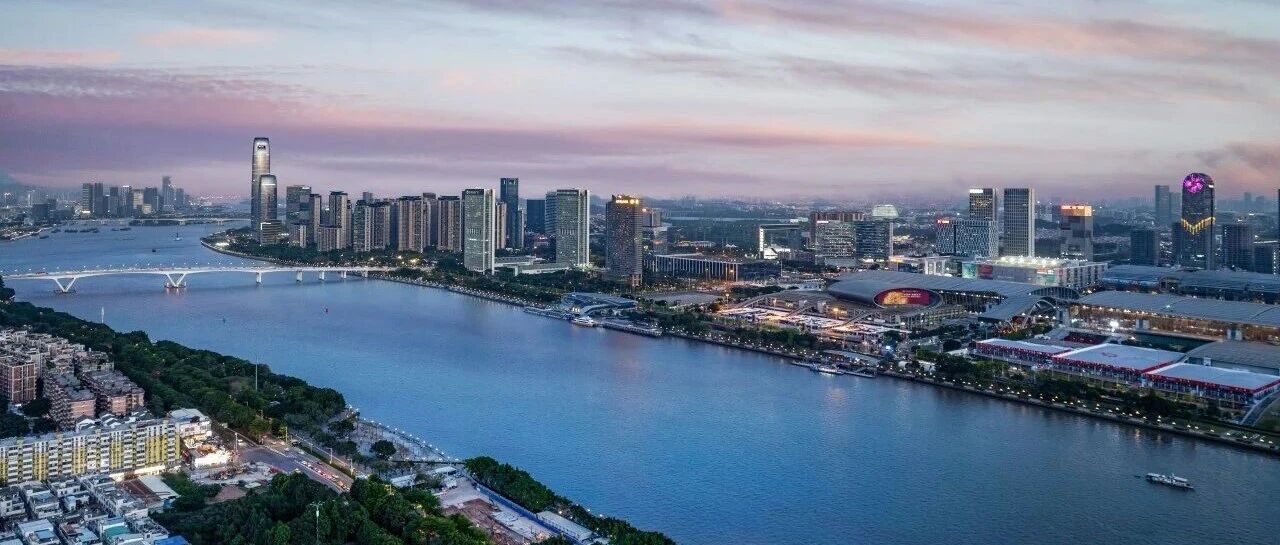
Core Viewpoint - The article emphasizes the significant rise of the Guangdong-Hong Kong-Macao Greater Bay Area (GBA) as a global economic powerhouse, driven by technological innovation and financial support, positioning it alongside major global bay areas like New York and San Francisco [1][7]. Economic Scale and Growth - In 2024, the GBA is projected to achieve an economic total of 14.79 trillion yuan, surpassing both New York and San Francisco, and ranking alongside Tokyo as part of the world's top economic tier [1]. - The GBA's economic model is characterized by a highly open economic structure, extensive transportation infrastructure, and a favorable business environment, distinguishing it from other regional economic forms [4][5]. Technological and Financial Integration - The GBA has established a high-level cycle of "technology-industry-finance," which drives industrial upgrades through technological innovation and reinforces financial support for sustainable growth [8][10]. - The region is home to numerous global tech giants and unicorns, with the number of unicorn companies expected to double from 34 in 2020 to 72 by 2025 [7][8]. Infrastructure and Investment - The GBA's infrastructure integration, free flow of factors, and collaborative industrial division are essential for its success, with a focus on creating a favorable business environment [5][10]. - Significant investments are being made in financial hubs like Guangzhou International Financial City and the Guangdong Financial High-tech Zone, enhancing the region's financial ecosystem [10][15]. Future Prospects - Scholars predict that the GBA will become the world's largest economic and innovation center within the next decade, supported by its robust research institutions, capable enterprises, and strong financial services [11]. - The strategic location of the "Golden Triangle" formed by Zhujiang New Town, Pazhou, and the International Financial City is highlighted as a key area for future investment and development [12][18].
世界湾区的中国答案:从阅尽四海到心归此湾
2 1 Shi Ji Jing Ji Bao Dao· 2025-10-14 16:16
Group 1: Economic Overview - The Guangdong-Hong Kong-Macao Greater Bay Area (GBA) is projected to surpass New York and San Francisco in economic output, reaching 14.79 trillion yuan in 2024, positioning it alongside Tokyo as part of the world's top economic tier [1] - The GBA's development model is being closely watched as it may lead future global economic trends, particularly in technology and finance [1][6] Group 2: Bay Area Economic Characteristics - Bay area economies are characterized by open economic structures, extensive transportation infrastructure, and a favorable business environment, distinguishing them from other regional economies [4] - The GBA combines high-end manufacturing and modern finance, with its industries evolving towards higher value chains as economic development progresses [5] Group 3: Innovation and Technology - The GBA has become a hub for global tech giants and unicorns, with the number of unicorn companies expected to double from 34 in 2020 to 72 by 2025 [8] - The region is recognized for its "technology-industry-finance" cycle, which drives innovation and supports industrial upgrades [8][10] Group 4: Financial Support for Innovation - The GBA's technological advancements are heavily supported by a robust financial system, which is crucial for fostering innovation [10][11] - Key financial platforms are being developed in the GBA, creating a network of financial services that support technological growth [10] Group 5: Strategic Development Areas - The "Golden Triangle" formed by Zhujiang New Town, the International Financial City, and Pazhou is emerging as a critical area for future development, attracting major tech and financial firms [14][15][17] - The area is expected to become a new urban landmark, showcasing advanced living standards and economic potential [17]
影石推出首款全景无人机,有望带动行业扩容
Huaan Securities· 2025-08-17 06:26
Investment Rating - Industry Rating: Overweight [1] Core Insights - The launch of the first panoramic drone by Yingshi, the Yingshi A1, is expected to drive industry expansion [1][10] - The consumer drone market in China is projected to exceed 50 billion yuan in 2024, with a compound annual growth rate of approximately 15% from 2025 to 2030, potentially reaching over 120 billion yuan by 2030 [5] - The competitive landscape is dominated by DJI, holding a 70% market share in the global consumer drone market, while the growth rate of the consumer drone industry has slowed from 45% in 2020 to 18% in 2024, indicating a shift towards "stock competition + scenario innovation" [5] Summary by Sections Product Launch - On August 14, Yingshi launched the Yingshi A1 panoramic drone, emphasizing user experience over technical specifications, allowing users to achieve special effects without advanced skills [4][10] - The Yingshi A1 is set to be officially released in January 2026, with its pricing yet to be disclosed [4] Market Dynamics - The entry of new players like Yingshi into the consumer drone market opens new possibilities, addressing existing pain points such as high operational thresholds and limited shooting perspectives [5][10] - The Yingshi A1 aims to fill a gap in the market and stimulate demand, potentially catalyzing further development in the consumer drone sector and the broader intelligent imaging equipment supply chain [10] Competitive Analysis - DJI has established a comprehensive product range with multiple series catering to different market segments, showcasing continuous improvements in key parameters such as sensors, battery life, and obstacle avoidance systems [6] - The Yingshi A1 is designed to compete with DJI's offerings, featuring a lightweight design and innovative functionalities that enhance user engagement and creativity [6][10]
宗庆后成功的秘诀,就藏在他的名字里
Sou Hu Cai Jing· 2025-08-15 02:53
Core Insights - The core strategy of Wahaha, led by Zong Qinghou, is to adopt a "latecomer" approach, allowing the company to learn from competitors' successes and failures before entering the market with optimized products [1][18]. Group 1: Innovation and Market Strategy - Zong Qinghou humorously acknowledges that his success comes from being a follower rather than a pioneer, emphasizing the importance of observing the market before innovating [1][18]. - Many business philosophies stress the need for innovation, but those without practical market experience may be misled into prioritizing innovation at the risk of becoming "pioneering sacrifices" [3]. - Wahaha's success with products like AD Calcium Milk demonstrates the effectiveness of waiting to enter the market until the company has thoroughly analyzed competitors and consumer feedback [5][18]. Group 2: Case Studies of Latecomer Success - The introduction of instant Eight Treasure Porridge by Wahaha followed a similar strategy, where the company identified market opportunities and leveraged its strengths to develop a competitive product [6][18]. - Xiaomi's entry into the electric vehicle market exemplifies the benefits of a latecomer strategy, as the company capitalized on the groundwork laid by earlier entrants, avoiding initial market education costs [11][18]. - DJI's rise in the consumer drone market showcases the effectiveness of a latecomer approach, where the company focused on R&D and product optimization before launching its successful Phantom series [14][18]. Group 3: Key Factors for Success - Successful latecomers possess unique advantages, such as exceptional channel management, strong technical capabilities, and precise consumer insights, which enable them to effectively capture market opportunities [16][18]. - Zong Qinghou's business wisdom lies in the latecomer strategy, which is not merely conservative but a calculated approach to minimize trial-and-error costs while maximizing market impact [16][18].

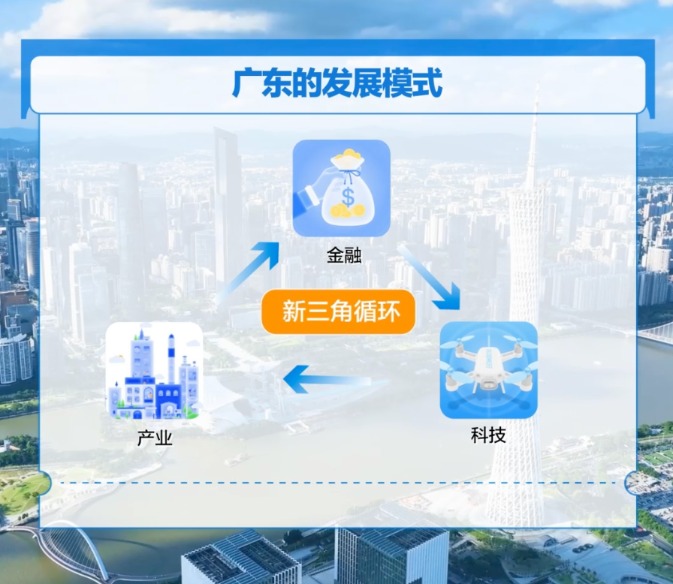
斩断旧三角循环,迈进新三角循环,看透广东经济发展深层逻辑
2 1 Shi Ji Jing Ji Bao Dao· 2025-08-04 06:22
Core Viewpoint - Guangdong's development model is transitioning towards a "technology-industry-finance" new triangular cycle [1] Economic Performance - Guangdong has maintained zero hidden debt for four consecutive years since 2021, following the dismantling of the old triangular cycle of "real estate-finance-local government infrastructure" [3] - As of the first half of 2025, Guangdong's GDP growth rate is 4.2%, which, although lower than the national average, has shown a recovery over three consecutive quarters, increasing by a total of 0.8 percentage points [3] Economic Resilience - Despite uncertainties in foreign trade and pressures in the real estate sector, Guangdong's economy demonstrates strong resilience with clear signs of recovery [5] - Guangdong's general public budget revenue growth outpaces the national average, the urban survey unemployment rate is lower than the national level, and the manufacturing PMI is above the national average, indicating positive adjustments [5] Investment Dynamics - Investment is identified as a key tool for counter-cyclical economic adjustment, with industrial investment in Guangdong surpassing 1.5 trillion yuan, becoming the main force in investment [8] - The province has shifted focus from declining real estate development investment to industrial investment, activating effective investment through new projects and human capital [8] Industrial Strength - Guangdong accounts for a quarter of the national output in new energy vehicles, 40% of global smartphone production, 70% of consumer drones, and 44% of industrial robots [10] Innovation and R&D - In 2024, Guangdong's R&D expenditure is projected to reach approximately 510 billion yuan, 2.8 times that of 2015, with an R&D intensity of 3.6%, surpassing Japan and Germany [13] - The region has maintained the highest innovation capability in the country for eight consecutive years, indicating a shift from investment-driven growth to an "innovation-driven + strong industry" long-term strategy [13] Systemic Transformation - The recovery of Guangdong's economy is attributed to a systematic restructuring from the old triangular cycle to the new triangular cycle, showcasing significant adaptability [15] - The anticipated stability in the first half of 2025 is expected to support a positive economic outlook for the entire year, potentially leading to a new chapter in Guangdong's economic development [15]