TPU(Tensor Processing Unit)

Search documents
电子季度策略一国产化大年,AI驱动下的半导体双轨突破(25Q4)
2025-12-04 02:21
Summary of Conference Call Records Industry Overview - The semiconductor industry is experiencing significant capital expenditure growth, with expectations for 2026 to exceed $600 billion, driven primarily by AI investments which account for nearly 40% of semiconductor demand [1][2] - Despite weak performance in consumer electronics and industrial sectors, AI investments are maintaining high overall industry sentiment, with no clear turning point observed yet [2] Key Companies and Developments - **OpenAI and Meta** are facing commercialization challenges; OpenAI's revenue does not match its costs, while Meta lacks cloud business support, leading to financial pressure [1][2] - **Google** has made notable advancements in model and computing chip areas, with increased demand for its TPU (Tensor Processing Unit), enhancing its competitive edge in cloud services [1][4] - **Broadcom** is benefiting from the demand for customized chips, showing accelerated growth since Q2 2025 [1][4][5] - **Alibaba** is positioned as a potential counterpart to Google in the Chinese market, leading in cloud services and chip capabilities [1][5] Market Dynamics - The global AI computing investment is focusing on commercialization, with increasing demand for inference leading to a turning point for customized chips [1][5] - The storage chip market has seen significant price increases since the National Day of 2025, reflecting supply-demand imbalances due to production control and seasonal demand spikes [1][6] Domestic Semiconductor Industry - The domestic semiconductor industry is expanding its mature capacity and ramping up advanced production, with companies like **SMIC** and **Huahong** achieving high capacity utilization [3][7] - Domestic semiconductor equipment companies are expected to see increased market share, with a projected rise in the domestic production ratio [3][9] - The semiconductor equipment market is valued at approximately $170-180 billion, with mature processes accounting for about $90 billion [8] Future Trends and Opportunities - The domestic semiconductor industry is anticipated to experience a significant capacity release and production ramp-up in 2026, supported by national funding [13] - The power semiconductor market is expected to grow due to increasing power demands in data center construction, with a focus on silicon carbide and gallium nitride technologies [12] - The expansion of domestic semiconductor equipment companies is expected to continue, with small-cap companies in packaging and testing showing high growth potential [9][10] Conclusion - The semiconductor industry is poised for substantial growth driven by AI investments, with key players like Google and Alibaba leading the charge. The domestic market is also set for significant developments, particularly in equipment and capacity expansion, creating numerous investment opportunities.
大摩大幅上调谷歌TPU产量预测:2027年达500万块,每50万块“外销”或增收130亿美元
美股IPO· 2025-12-01 10:38
Core Viewpoint - Morgan Stanley predicts that Google's TPU production will reach 5 million and 7 million units in 2027 and 2028, respectively, representing increases of 67% and 120% from previous estimates, indicating a potential shift towards direct external sales of TPU chips [1][4][6] Group 1: Production Forecast - The forecast for TPU production in 2027 has been raised from approximately 3 million to about 5 million units, an increase of around 67% [5] - The 2028 production forecast has surged from about 3.2 million to approximately 7 million units, marking an astonishing increase of 120% [6] - This suggests that Google is expected to produce a total of 12 million TPUs over the two years, compared to only 7.9 million units produced in the past four years [7] Group 2: Market Strategy Implications - The significant increase in TPU production may indicate that Google is preparing to sell TPUs to third parties on a large scale, moving away from a self-use model [9][11] - If Google implements this strategy, it could transition from being a consumer and service provider of AI chips to a direct hardware seller, competing with established AI chip giants [11] Group 3: Financial Impact - Morgan Stanley estimates that for every 500,000 TPUs sold externally, Google could generate an additional $13 billion in revenue and $0.40 in earnings per share (EPS) in 2027 [12][13] - This potential revenue model provides a clear financial incentive for Google to pursue external sales, which could significantly reshape market valuations and the competitive landscape of the AI chip market [13]


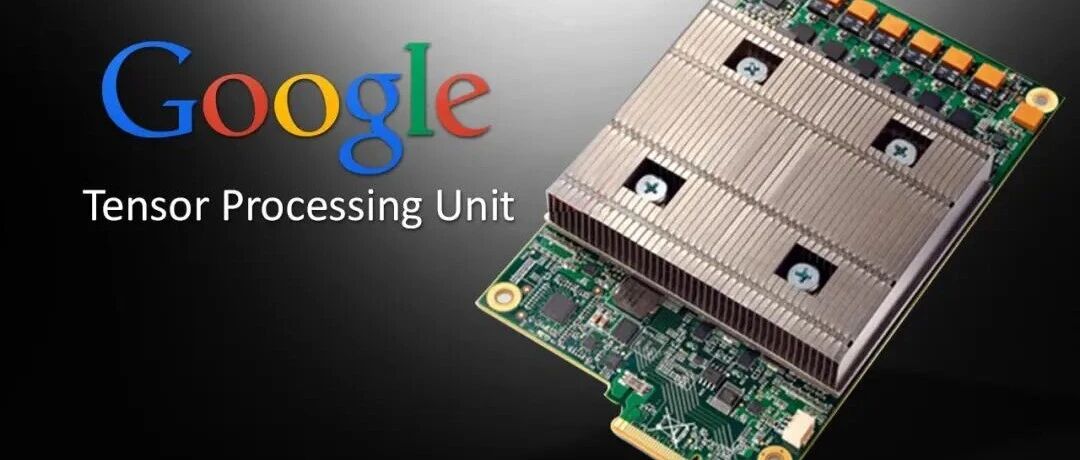
盘前下跌超3%!英伟达遭史上最强阻击?谷歌TPU获Meta数十亿美元洽购!深度重磅拆解:性能硬刚Blackwell、能效怼GPU
美股IPO· 2025-11-25 10:17
Core Insights - The primary value of Google's TPU lies not only in its speed but also in its profit margins, allowing the company to bypass the "Nvidia tax" and significantly reduce computing costs [1][17][18] - Google's TPU v7 is positioned as a formidable competitor in the AI chip market, showcasing substantial advancements in performance and efficiency compared to Nvidia's offerings [5][14][20] Background and Development - The inception of TPU was driven by a critical need for enhanced computational capacity to support Google's services, leading to the decision to develop a custom ASIC chip tailored for TensorFlow [6][7][8] - The rapid development cycle of TPU, from concept to deployment in just 15 months, highlights Google's commitment to innovation in AI technology [8] Architectural Advantages - TPU's architecture is designed for efficiency, utilizing a "Systolic Array" that minimizes data movement and overcomes the "von Neumann bottleneck," resulting in superior energy efficiency compared to traditional GPUs [10][11][12] - The TPU v7 demonstrates a significant leap in performance metrics, achieving a BF16 computing power of 4,614 TFLOPS, a tenfold increase from its predecessor [15] Competitive Landscape - The TPU v7's specifications, including a single-chip HBM capacity of 192GB and a memory bandwidth of 7,370 GB/s, position it competitively against Nvidia's Blackwell series [16] - Google's strategic control over TPU design allows it to escape the high costs associated with Nvidia's GPUs, restoring higher profit margins for cloud services [17][18] Market Implications - As AI workloads shift from training to inference, the importance of Nvidia's CUDA may diminish, potentially benefiting Google's TPU ecosystem [19] - Analysts suggest that Google's dominance in large-scale computing and the performance of TPU v7 could redefine the competitive dynamics in the AI chip market, positioning Google as a key player capable of controlling its own destiny [20]


Anthropic宣布斥资500 亿美元,在美国自建AI数据中心
Sou Hu Cai Jing· 2025-11-13 06:52
Core Insights - Anthropic plans to invest $50 billion in AI infrastructure in the U.S., starting with data centers in Texas and New York [2] - The company has served over 300,000 enterprise clients, with "large accounts" increasing nearly sevenfold in the past year, becoming a primary revenue source [2] - Anthropic expects to reach breakeven by 2028, earlier than OpenAI's projected $74 billion operating loss in the same year [2] Group 1 - The first sites are expected to be operational by 2026, creating 800 long-term jobs and 2,400 construction positions [3] - This initiative supports the U.S. AI Action Plan, aiming to maintain the country's leadership in AI and enhance local infrastructure [3] - Anthropic's CEO emphasized that the new sites will enable the development of more powerful AI systems and create job opportunities in the U.S. [3] Group 2 - Anthropic has deepened collaborations with investors Google and Amazon, expanding the use of Google Cloud's TPU technology to 1 million units [3] - Amazon's Project Rainier will provide nearly 500,000 Trainium2 chips exclusively for Anthropic, enhancing its computational resources [3] - Competitor OpenAI is also expanding its AI infrastructure with over $1.4 trillion in investments from various cloud providers [4] Group 3 - The large-scale investment in AI infrastructure has raised concerns about the U.S.'s capacity to meet energy and industrial commitments [4] - The role of the U.S. government in funding AI infrastructure has become a focal point of discussion [4]