
Ren Min Ri Bao Hai Wai Ban

Search documents
锐财经丨国家财政实力持续增强
Ren Min Ri Bao Hai Wai Ban· 2025-09-13 06:38
Core Viewpoint - The "14th Five-Year Plan" period has seen significant enhancements in China's fiscal strength and effectiveness, with fiscal policy playing a crucial role in national governance and economic stability [1][2]. Fiscal Strength and Revenue Growth - During the "14th Five-Year Plan," the national general public budget revenue is expected to reach 106 trillion yuan, an increase of 17 trillion yuan or approximately 19% compared to the "13th Five-Year Plan" [2]. - Local fiscal strength has steadily grown, with 16 provinces projected to have fiscal revenue growth of over 20% compared to 2020, and 7 provinces exceeding 500 billion yuan, including 2 provinces surpassing 1 trillion yuan [2]. Expenditure and Structural Optimization - The total general public budget expenditure is projected to exceed 136 trillion yuan, an increase of 26 trillion yuan or 24% compared to the "13th Five-Year Plan" [2]. - The expenditure structure has been optimized, with more funds directed towards significant development and livelihood projects [2]. Macroeconomic Policy and Economic Growth - Fiscal policy has become more proactive and precise, supporting stable and healthy economic development [2][3]. - The average economic growth rate over the past four years has been 5.5%, contributing approximately 30% to global economic growth [3]. Social Welfare and Public Services - The general public budget has allocated 20.5 trillion yuan for education, 19.6 trillion yuan for social security and employment, 10.6 trillion yuan for health, and 4 trillion yuan for housing security, totaling nearly 100 trillion yuan for social welfare [4]. - Over 70% of the general public budget expenditure has been directed towards social welfare, benefiting the populace directly [4]. Healthcare and Education Initiatives - The per capita financial subsidy for residents' medical insurance has increased from 580 yuan to 700 yuan, with rural and urban minimum living standards raised by approximately 20% [4][5]. - All compulsory education students are exempt from miscellaneous fees and receive free textbooks, with around 20 million economically disadvantaged students receiving living subsidies [5]. Domestic Demand Expansion Strategies - The Ministry of Finance has implemented a series of policies to stimulate domestic demand, including employment subsidies and support for consumption [6]. - Central fiscal employment support funds have reached 318.6 billion yuan, a 29% increase from the "13th Five-Year Plan," resulting in over 50 million new urban jobs [6]. Investment and Infrastructure Development - Over the past five years, 19.4 trillion yuan in local government special bonds have been allocated to support 150,000 construction projects [7]. - The Ministry of Finance plans to innovate fiscal and tax policy tools to stimulate consumption and expand effective investment, tapping into the vast potential of domestic demand [7].
这些“好习惯”,其实不健康
Ren Min Ri Bao Hai Wai Ban· 2025-09-13 03:37
Core Viewpoint - The article discusses common health misconceptions and emphasizes the importance of balanced nutrition and proper health practices to maintain overall well-being [1] Misconceptions Summary - Misconception 1: A light diet means eating vegetarian all the time. A truly light diet focuses on cooking methods and seasoning, emphasizing balanced nutrition rather than strict vegetarianism [2] - Misconception 2: Walking 10,000 steps daily is essential for health. The quality of exercise is more important than the quantity of steps, and starting with 3,000 to 5,000 steps is recommended [3] - Misconception 3: Hot water for foot soaking is better. Water temperature should be around 40 degrees Celsius to avoid burns and other health risks [4] - Misconception 4: Longer brushing time means cleaner teeth. Proper technique is more important than duration, with a recommended brushing time of 2 minutes [5] - Misconception 5: Sleeping on a hard bed alleviates back pain. A medium-firm mattress is ideal for supporting the natural curve of the spine [6] - Misconception 6: Regular ear cleaning is necessary. Earwax serves a protective function, and excessive cleaning can lead to damage [7] - Misconception 7: Drinking yogurt after meals aids digestion. Yogurt's probiotics are more effective when consumed between meals rather than immediately after [8] - Misconception 8: Disinfecting underwear is essential for cleanliness. Overuse of disinfectants can harm beneficial bacteria and irritate the skin [9] - Misconception 9: Drinking cleansing tea regularly improves constipation. Long-term reliance on such teas can harm the intestines; dietary fiber and hydration are better solutions [10] - Misconception 10: Eating hot food is healthier. Consuming food at temperatures above 65 degrees Celsius can increase cancer risk [11] - Misconception 11: Regular vitamin supplements are beneficial. Most people do not need them, and excessive intake can lead to health issues [12] - Misconception 12: Sugar substitutes can be consumed freely. They can disrupt natural taste preferences and should be used in moderation [13] - Misconception 13: Avoiding carbohydrates aids weight loss. Carbohydrates are essential for energy, and a balanced approach is necessary for sustainable weight management [14][15]
“十四五”时期,财政收入“蛋糕”更大,财政民生投入近100万亿元——国家财政实力持续增强
Ren Min Ri Bao Hai Wai Ban· 2025-09-13 01:30
Core Viewpoint - The "14th Five-Year Plan" period has seen significant enhancements in China's fiscal strength and efficiency, emphasizing the role of finance as a fundamental pillar of national governance [1] Fiscal Strength and Revenue Growth - During the "14th Five-Year Plan," national public budget revenue is expected to reach 106 trillion yuan, an increase of 17 trillion yuan or approximately 19% compared to the "13th Five-Year Plan" [2] - Local fiscal strength has steadily grown, with 16 provinces projected to have fiscal revenue growth of over 20% compared to 2020, and 7 provinces exceeding 500 billion yuan, including 2 provinces surpassing 1 trillion yuan [2] Expenditure and Structural Optimization - National public budget expenditure is projected to exceed 136 trillion yuan over five years, an increase of 26 trillion yuan or 24% compared to the "13th Five-Year Plan" [2] - The expenditure structure has been optimized, with more funds directed towards significant development and livelihood projects [2] Macroeconomic Regulation - Fiscal macro-control has become more proactive, enhancing adaptability to economic conditions, and has played a crucial role in supporting stable and healthy economic development [3] - The government has implemented counter-cyclical adjustments to smooth short-term fluctuations, with a package of policies introduced in late September last year to stabilize the economy [3] Social Welfare and Public Services - Total fiscal investment in the livelihood sector during the "14th Five-Year Plan" is nearly 100 trillion yuan, with over 70% of national public budget expenditure allocated to this area [4] - Education spending is projected at 20.5 trillion yuan, social security and employment at 19.6 trillion yuan, and health care at 10.6 trillion yuan [4] Enhancements in Public Services - The standard for resident medical insurance subsidies has increased from 580 yuan to 700 yuan per person per year, and both rural and urban minimum living standards have risen by approximately 20% [4] - The scale of equalization transfer payments is expected to grow from 1.9 trillion yuan in 2021 to 2.7 trillion yuan by 2025, averaging a 9.6% annual increase [4] Support for Employment and Consumption - The central government has allocated 318.6 billion yuan for employment support, a 29% increase from the "13th Five-Year Plan," resulting in over 50 million new urban jobs [7] - Fiscal support for consumption has included approximately 420 billion yuan for trade-in programs, leading to over 2.9 trillion yuan in sales [7] Investment in Infrastructure - Over the past five years, 19.4 trillion yuan in local government special bonds have been allocated to support 150,000 construction projects, alongside 3.33 trillion yuan for central budget investments in infrastructure [8] - The government aims to stimulate effective investment and consumption through innovative fiscal and tax policy tools, tapping into the vast potential of domestic demand [8]
当花粉遇上雷暴,敲响哪些健康警钟?
Ren Min Ri Bao Hai Wai Ban· 2025-09-13 00:30
Group 1 - The term "thunderstorm asthma" has gained public attention following recent severe weather events, particularly in Shanxi and Chongqing, where hospitals reported a surge in patients exhibiting symptoms such as severe coughing and difficulty breathing, predominantly among children, pregnant women, and young adults [1][2] - Thunderstorm asthma occurs when lightning causes pollen particles to break into smaller fragments, making them easier to inhale and potentially triggering acute asthma attacks, with symptoms including coughing, wheezing, and severe respiratory distress [1][2] - The interplay between thunderstorms and pollen highlights the complex relationship between climate change and public health risks, as extreme weather events can exacerbate respiratory and cardiovascular diseases, particularly in urban areas [1][2] Group 2 - Addressing health risks from extreme weather requires a multidisciplinary and interdepartmental approach, including enhanced monitoring of allergens by meteorological departments and improved emergency response capabilities within healthcare systems [2] - Public awareness of new health risks like thunderstorm asthma is insufficient, indicating a need for increased education and preventive measures, as evidenced by past incidents in places like Melbourne, Australia [2] - Long-term prevention of health risks associated with extreme weather necessitates ongoing improvements in the overall ecological environment, emphasizing the importance of individual actions towards sustainable living and environmental protection [3]
台湾青少年山城竞逐“创新梦”
Ren Min Ri Bao Hai Wai Ban· 2025-09-12 22:16
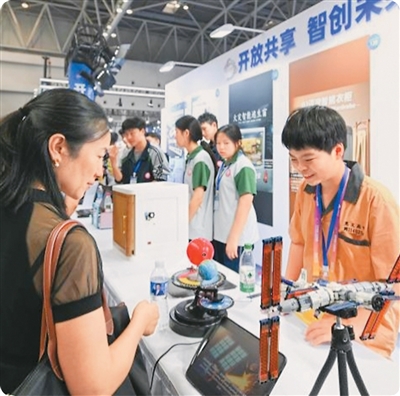
台湾青少年的发明创意吸引民众围观。 何蓬磊摄 本报电(钟欣)"你好,'智慧书包'是一款可以帮助同学们记得每日所需的创新设计……" 13岁的陈羿璇带着"声控单杠"创意亮相。单杠的基座上有一个轨道,透过声音控制,可以使活动臂沿着 轨道上下移动,依据使用者身高适当调整。陈羿璇说,生活实践是滋养创意的丰厚土壤。发明产品在操 作简单、广泛适用人群的同时,还可以更有趣味性。 台湾学生张芮甄从观察家人晒衣服入手,发明了一款可以依据空间大小灵活调整长度、适用多元场景 的"伸缩衣架"。"2024年我第一次到大陆,在重庆的曾家岩小学交流,交到了不少朋友。"张芮甄说,创 意成型后,她将作品通过网络分享给大陆朋友,收获了大家的支持与鼓励。"我们常常联系,交流彼此 的兴趣爱好、奇思妙想。"她说。 彰化师范大学附属高级工业职业学校学生杨钧嘉是一名"老将",参赛足迹涉及海峡两岸多个城市。此行 他与合作伙伴陈羿亨带来"跑道起跑线超线显示器"装置,"可实现公平起跑与精准计时,具备市场潜 力"。在杨钧嘉看来,参展参赛不仅是展现自己的创意,更重要的是结识更多朋友,拓宽眼界。 (责编:岳弘彬、牛镛) 近日在重庆举办的第四届青少年专利孵化展暨发明展上 ...

回家(人民家书)
Ren Min Ri Bao Hai Wai Ban· 2025-09-12 22:16
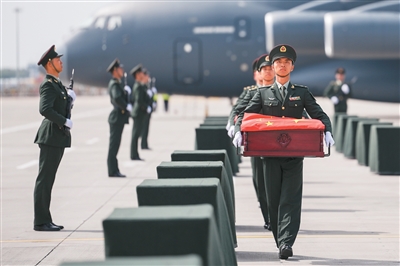
Core Points - The article commemorates the return of the twelfth batch of remains of Chinese People's Volunteer Army martyrs from Korea, marking a significant moment in honoring their sacrifices during the Korean War [9][10] - It highlights the emotional connection between the soldiers and their families through letters written during the war, showcasing their dedication and longing for their loved ones [9][10] Group 1 - The article mentions that over 2 million Chinese soldiers participated in the Korean War, with 197,653 losing their lives [9] - The remains of the martyrs were returned to China after more than 70 years, with a solemn burial ceremony held in Shenyang [9][10] - The publication features excerpts from five letters written by soldiers to their families, reflecting their thoughts and feelings during the war [9][10] Group 2 - The letters reveal the hardships faced by the soldiers, such as reduced food intake and the physical toll of war, while expressing pride in their mission to defend the country [10][11] - The correspondence also illustrates the soldiers' encouragement for their families to work hard and contribute to the new China, emphasizing a spirit of sacrifice and dedication [15][21] - The article concludes with a focus on the legacy of these soldiers, their bravery, and the emotional impact of their letters on future generations [9][10][24]
穿越历史,感受宝岛铁道风情
Ren Min Ri Bao Hai Wai Ban· 2025-09-12 22:16
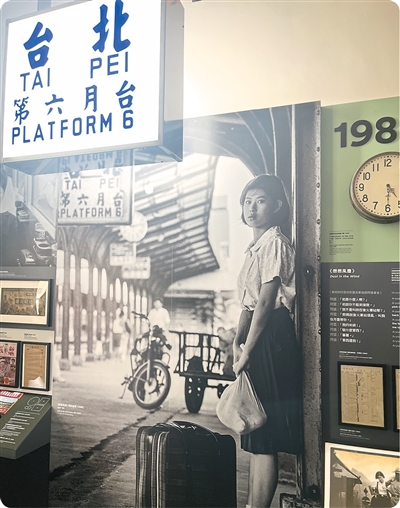
台湾铁道博物馆展厅的"台北 第六月台"展区。 游客在台湾铁道博物馆参观。 观看展览了解台湾铁道建设的发展变化、乘坐园区火车实地感受列车运行的欢快、探访车辆维修车间观 摩不同时代台湾使用的列车及维修方式……不久前,位于台北的台湾铁道博物馆正式开馆。老少铁道迷 们兴致勃勃,不亦乐乎地在各个展区之间参观、体验。 台湾铁路修筑历史悠久。19世纪末,在清代台湾巡抚刘铭传的主导下,台湾修建了第一条铁路,奠定了 宝岛近代化的基础。1945年台湾光复后,当地铁路事业也获得快速发展,是岛内交通与产业发展的重要 基础设施,也成为许多台湾民众日常生活中不可或缺的一部分。 为了让更多岛内民众更好地了解铁路运作、唤起火车记忆,台湾相关部门和各县市利用与铁道相关的园 区、老建筑,建设铁道博物馆或铁道文化园区,让大家近距离感受宝岛的铁道风情。 不一样的列车展示 不只是车辆种类丰富,柴电工场还结合车间内原有的机械设备和现代数字技术,为观众呈现火车引擎的 内部构造和检修场景。比如现场陈列的S212号油电混合火车引擎旁设有大型数字屏幕,展现的画面像 电脑断层扫描一样,让观众可以透视火车引擎里面的零部件组成和运作原理。 对于周先生5岁的儿子沐沐来 ...
暖心软餐点亮香港长者暮年生活
Ren Min Ri Bao Hai Wai Ban· 2025-09-12 22:16
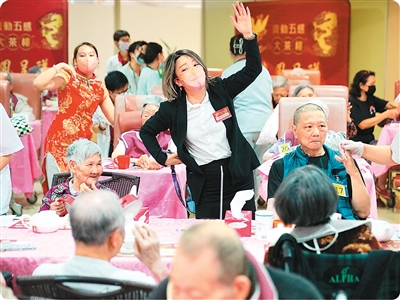
王 申摄(新华社发) 一日食三餐本是常事,可对于有吞咽困难的长者而言,进食却可能意味着发生呛咳甚至引发吸入性肺炎 的危险。在香港,适合吞咽困难人士食用的软餐逐渐出现在养老院和一些餐厅,让用餐不便的长者也能 尝到好滋味。 前不久,在位于香港新界的松悦园耆和护养院,30多位长者又吃到了久违的港式味道。怀旧的点心车、 热气腾腾的蒸笼、色香味形俱全的广式软餐点心,仿佛让他们来到了茶楼。身穿白衫的伙计在"茶楼"穿 梭忙碌,长者们则在热闹欢快的氛围中用餐。有的老人家品尝了软餐,先是有些惊讶,随后开心地竖起 大拇指。"现场气氛很热闹,像在茶楼喝茶。"护养院罗护士说,"老人家说点心跟茶楼的味道一样,真 的好开心。" 长者们品尝的软餐点心,是将煮熟的食材放入料理机搅匀,再加入软餐酵素粉和水,加热后倒入模具中 凝固成型,取出即可食用。食物既柔软易于吞咽,有助于降低吞咽风险,还保留了原本的味道,帮助改 善长者食欲。 这项名为"流动五感大茶楼"的沉浸式餐厅饮食体验活动,由香港乐龄社企"软餐侠"推出。从2019年至今 已举办145场活动,共有4000多位脑退化症和吞咽困难人士参与。"我们把茶楼'搬进'养老院,呈现真实 的聚会用餐场景, ...
听苏联空军总司令后代讲在华抗战故事
Ren Min Ri Bao Hai Wai Ban· 2025-09-12 22:16
Core Points - The article highlights the historical significance of Soviet Air Force Marshal Dmitry Dzhigalev's contributions to the Chinese resistance during World War II, particularly through the experiences shared by his granddaughter, Elena Dzhigaleva, and her family [1][2][3][4]. Group 1 - Elena Dzhigaleva's grandson, Fyodor, wrote an award-winning essay about his great-grandfather's experiences in aiding China during the war, showcasing the family's pride in their heritage [1][2]. - Dzhigalev volunteered to serve in China during the Second Sino-Japanese War, leading the Soviet Volunteer Air Force and participating in key battles such as the defense of Nanjing and Wuhan [2][3]. - Over 200 Soviet pilots lost their lives in China, and their sacrifices are remembered in both Russian and Chinese histories [3]. Group 2 - The article emphasizes the crucial role China played in World War II by tying down Japanese forces, which allowed the Soviet Union to redirect troops to the European front [3]. - Fyodor expressed a desire to learn Chinese and visit the memorials dedicated to the Soviet pilots who fought in China, indicating a strong connection to his family's legacy [3][4]. - Elena Dzhigaleva stressed the importance of remembering the shared struggles and the need to pass on the values of justice and friendship to future generations [4].
“溜达”与“遛弯儿”(杜老师语文信箱)
Ren Min Ri Bao Hai Wai Ban· 2025-09-12 22:16
杜老师: 我在写作时,经常混淆"溜"和"遛",不知道"liū达""liù弯儿"这两个词,分别该选用"溜"还是"遛"。请问 该如何区分两词写法? 江苏读者 吴先生 "溜达"跟"遛弯儿"都表示"散步",但侧重点有所不同。"溜达"侧重于"闲走"。例如: (1)别看我人粗,可爱花,一清早晨,便到木荷树下去闲溜达。(杨朔《晚凉天》) (2)阴雨雪天,无事在集上溜达的人更少。(陈登科《风雷》第一部第一章) (3)吃过晚饭,到街上溜达溜达。(《现代汉语词典》) (4)顺着湖边溜达。(《现代汉语应用规范词典》) (5)晚饭后到公园去溜达溜达。(《现代汉语大词典》) (1)饭后遛个弯儿,消消食儿。(《现代汉语学习词典》) (2)每天晚饭后他们出去遛弯儿。(《北京话词典》) (3)这时天大亮了,喊嗓的、遛弯(儿)的越来越多。(邓友梅《那五》) "遛"字的本义是"暂时停留不前行",后来也指"慢走"。例如下面句子中的"遛"含"慢走"义: (1)敌哨兵东张西望,大模大样地遛着。(丁洪、赵寰《董存瑞》) (2)把马交给老乡去遛去饮。(孙犁《风云初记》十七) (3)几位老人正在马路上遛鸟。(《现代汉语大词典》) (4)晚餐后几个人在竹林里 ...