2 1 Shi Ji Jing Ji Bao Dao

Search documents
黄金饰品价格同比涨超7成!1月PPI环比连续4个月上涨
2 1 Shi Ji Jing Ji Bao Dao· 2026-02-11 07:58
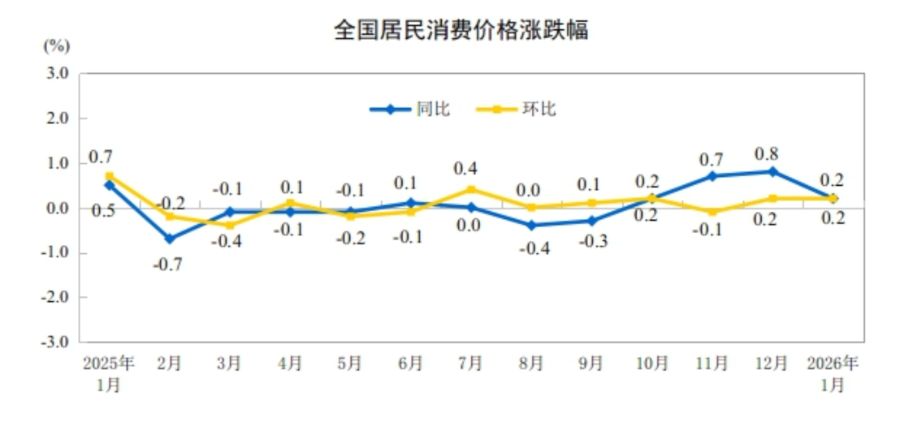
Group 1: Consumer Price Index (CPI) Insights - In January, the Consumer Price Index (CPI) increased by 0.2% month-on-month and year-on-year, with the core CPI (excluding food and energy) rising by 0.8% year-on-year, marking a six-month high [1][4][8] - The decline in food prices by 0.7% contributed to a decrease in the CPI's year-on-year growth, with the previous year's high base due to the Spring Festival affecting the current comparison [5][6] - The core CPI's month-on-month increase of 0.3% indicates a sustained recovery in consumer demand, with significant price increases in services such as air tickets and travel agency fees [7][8] Group 2: Producer Price Index (PPI) Insights - The Producer Price Index (PPI) rose by 0.4% month-on-month in January, marking the fourth consecutive month of increase, with a growth rate expansion of 0.2 percentage points compared to the previous month [1][9] - Year-on-year, the PPI decreased by 1.4%, but the decline was less severe than in the previous month, indicating a potential stabilization in industrial pricing [11] - Various sectors, including non-ferrous metal mining and manufacturing, showed significant price increases, while energy-related industries continued to experience price declines [10][11] Group 3: Economic Outlook - Analysts expect a potential rebound in CPI growth in February due to the timing of the Spring Festival, which may influence consumer spending patterns [6][11] - The overall inflation trend is anticipated to align with the central bank's goal of a "moderate recovery," with PPI growth expected to steadily rise while CPI remains relatively stable [11][12]

跨境医疗图谱:中国市场如何接招?
2 1 Shi Ji Jing Ji Bao Dao· 2026-02-11 07:57
Core Insights - The global cross-border medical market is experiencing significant growth, driven by diverse patient needs and preferences for higher quality or cost-effective healthcare options [2][4][7] Group 1: Market Trends - The global cross-border medical tourism market is projected to grow from $114.2 billion in 2024 to $250 billion by 2032, with a compound annual growth rate (CAGR) of approximately 10.29% [2] - There are two main patient flows: high-net-worth individuals from developing countries seeking advanced medical care in developed nations, and lower-income groups from developed countries looking for more affordable healthcare options abroad [1][4] Group 2: Regional Insights - Switzerland's Montreux is recognized as a premier destination for high-end medical wellness, combining healthcare with tourism, which has led to significant regional economic growth [3] - India stands out in the cross-border medical market due to its cost and efficiency advantages, with an estimated medical tourism valuation of $9 billion in 2020, expected to reach $13 billion by 2026 [4][6] - South Korea has developed a strong identity in cross-border medical services, particularly in cosmetic surgery and dental care, attracting 248,000 international patients in 2022 [6][5] Group 3: China's Position - China has the potential to attract patients from neighboring emerging markets and high-cost countries, particularly those seeking efficiency and cost-effectiveness in healthcare [7][8] - Recent cases show that Chinese hospitals are beginning to receive international patients, indicating a growing trend in cross-border healthcare services [8] - The establishment of a clear public-private division in healthcare services is essential to balance the needs of international patients and local public services [9][10] Group 4: Policy and Infrastructure - The development of a comprehensive cross-border medical service requires improvements in medical visa facilitation, cross-border payment systems, and international marketing [12] - Hainan Boao Lecheng is emerging as a leading area for cross-border medical services in China, benefiting from favorable policies and a focus on innovative healthcare solutions [12]
国博电子:2025年净利润同比增长4.72%
2 1 Shi Ji Jing Ji Bao Dao· 2026-02-11 07:49
南财智讯2月11日电,国博电子发布2025年度业绩快报,报告期内公司实现营业收入23.86亿元,同比下 降7.92%;归属于上市公司股东的净利润5.08亿元,同比增长4.72%;基本每股收益0.85元,同比增长 4.94%。 ...

豆包、蚂蚁阿福加入春节红包大战
2 1 Shi Ji Jing Ji Bao Dao· 2026-02-11 07:15
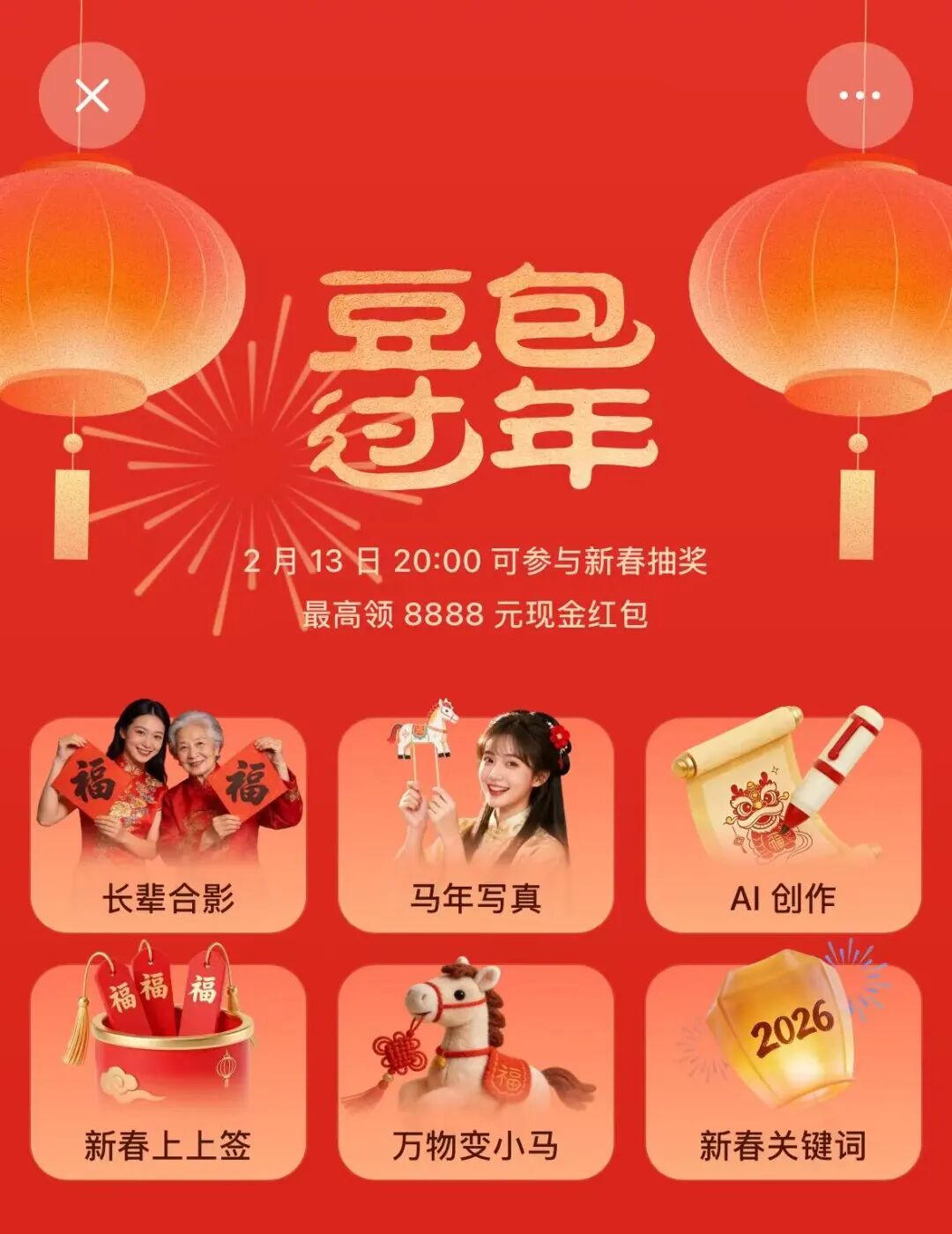
Group 1 - Doubao will join the Spring Festival red envelope competition, offering a chance to win up to 8,888 yuan in cash on February 13 at 20:00 [1] - On New Year's Eve, Doubao will distribute over 100,000 technology gifts and cash red envelopes during the Spring Festival Gala, with prizes including advanced tech products and smart consumer goods [4] - The technology gifts will feature 17 popular products, including robots and 3D printers, as well as electric vehicles from Audi and Mercedes-Benz [4] Group 2 - Ant Group's Alipay will also launch a red envelope activity, providing new registered users with a 16.8 yuan red envelope from February 11 to February 12 [5]
从资金提供到生态共建 张江278亿科创融资占上海1/4
2 1 Shi Ji Jing Ji Bao Dao· 2026-02-11 07:11
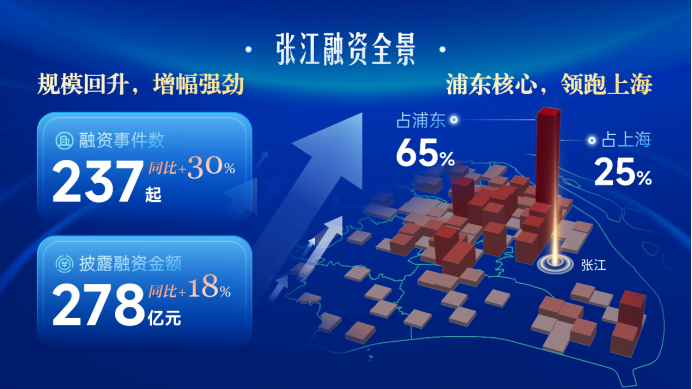
21世纪经济报道记者杨梦雪 上海每4起科创融资中,就有1起发生在张江。 《2025年张江企业融资榜单》显示,2025年,张江共有210家科创企业完成融资,全年发生237起融资事 件,披露融资金额278亿元,融资事件数同比增长30%,披露融资金额同比增长18%。 从行业投向来看,2025年,张江科创融资的行业投向更趋集中,生物医药、人工智能及集成电路三大先 导产业的融资合计占比达到91%,较2024年的82%进一步提升。 其中,生物医药领域依然是张江最活跃、最具全球竞争力的融资赛道。2025年,张江生物医药产业共发 生融资事件85起,占比36%,持续位居各行业首位。 此外,2025年张江人工智能产业共发生融资事件69起,占比29%,推动人工智能由"能力构建"加快迈 向"生产力释放";集成电路产业共发生融资事件61起,占比26%,资本持续向核心技术和关键环节集 聚。 张江科创融资的规模与活跃度双双实现两位数增长,勾勒出一条逆势上扬的"修复曲线"。然而,数据跃 升的背后,一个更深层次的转变正在发生:驱动融资活力的金融力量,已悄然重塑自身的角色与逻辑。 比如,银行不再仅仅是幕后的资金提供方,而是以"全生命周期合伙人" ...
专访杨扬:期待更多中国品牌通过奥运会走向世界
2 1 Shi Ji Jing Ji Bao Dao· 2026-02-11 07:02
Group 1: Core Insights - The Milan Winter Olympics showcases Chinese brands and technology, with Li Ning and Anta providing uniforms and equipment for multiple national teams, highlighting China's growing influence in global sports [1] - The event is seen as a platform for Chinese brands to gain international recognition, with expectations for increased global acceptance of Chinese products [1][6] - The integration of sports with regional economic development is emphasized, particularly with the upcoming 15th National Games in the Greater Bay Area, which is expected to drive growth in tourism and related industries [1] Group 2: Ice and Snow Economy - The ice and snow economy is experiencing long-term effects post-Beijing Winter Olympics, with increased participation in winter sports and related activities [2] - The establishment of ice hockey and short track speed skating programs in cities like Hong Kong and Shenzhen indicates a growing integration of winter sports into urban life [2][16] Group 3: Athlete Career Management - The importance of early career planning for athletes is highlighted, suggesting that athletes should prepare for life after sports during their active years [4][5] - The management of athletes' careers should include considerations for post-retirement opportunities, emphasizing the need for education and skill development during their training [4][5] Group 4: China's Role in International Sports - China's participation in international sports organizations has expanded, with more Chinese representatives involved in decision-making processes, enhancing China's influence in global sports [7][11] - The recognition of China's anti-doping efforts by international sports leaders reflects the country's commitment to maintaining integrity in sports [12] Group 5: Commercialization of Sports - The commercialization of sports is identified as a key factor for sustainable development, with the need for star athletes to drive interest and engagement in sports [18][19] - The growth of commercial ice rinks and related facilities in regions like Hong Kong and Shenzhen demonstrates the potential for sports to become a significant economic driver [17][19]
雷军:小米正为新一代SU7做准备!港股科技ETF天弘(159128)标的指数盘中涨超1%
2 1 Shi Ji Jing Ji Bao Dao· 2026-02-11 06:56
Group 1 - The Hong Kong stock market showed a strong rebound on February 11, with the Hang Seng Tech Index rising nearly 1% and the Guozheng Hong Kong Stock Connect Tech Index increasing over 1% [1] - Notable performers among constituent stocks included Bilibili-W and Xiaomi Group-W, both rising over 5%, while BYD Company Limited saw an increase of nearly 4% [1] - The Tianhong Hong Kong Tech ETF (159128) has attracted significant capital, with a net subscription of 10 million units and a total inflow exceeding 720 million yuan over the past 20 trading days [1] Group 2 - Xiaomi Group's founder and CEO Lei Jun announced the completion of the first-generation Xiaomi SU7 production, with over 360,000 units delivered [2] - The production line is currently being modified to prepare for the next generation of the SU7 [2] - According to招商证券, the recent downturn in the Hong Kong tech sector presents significant investment opportunities, as the current market volatility is seen as a temporary liquidity shock [2]


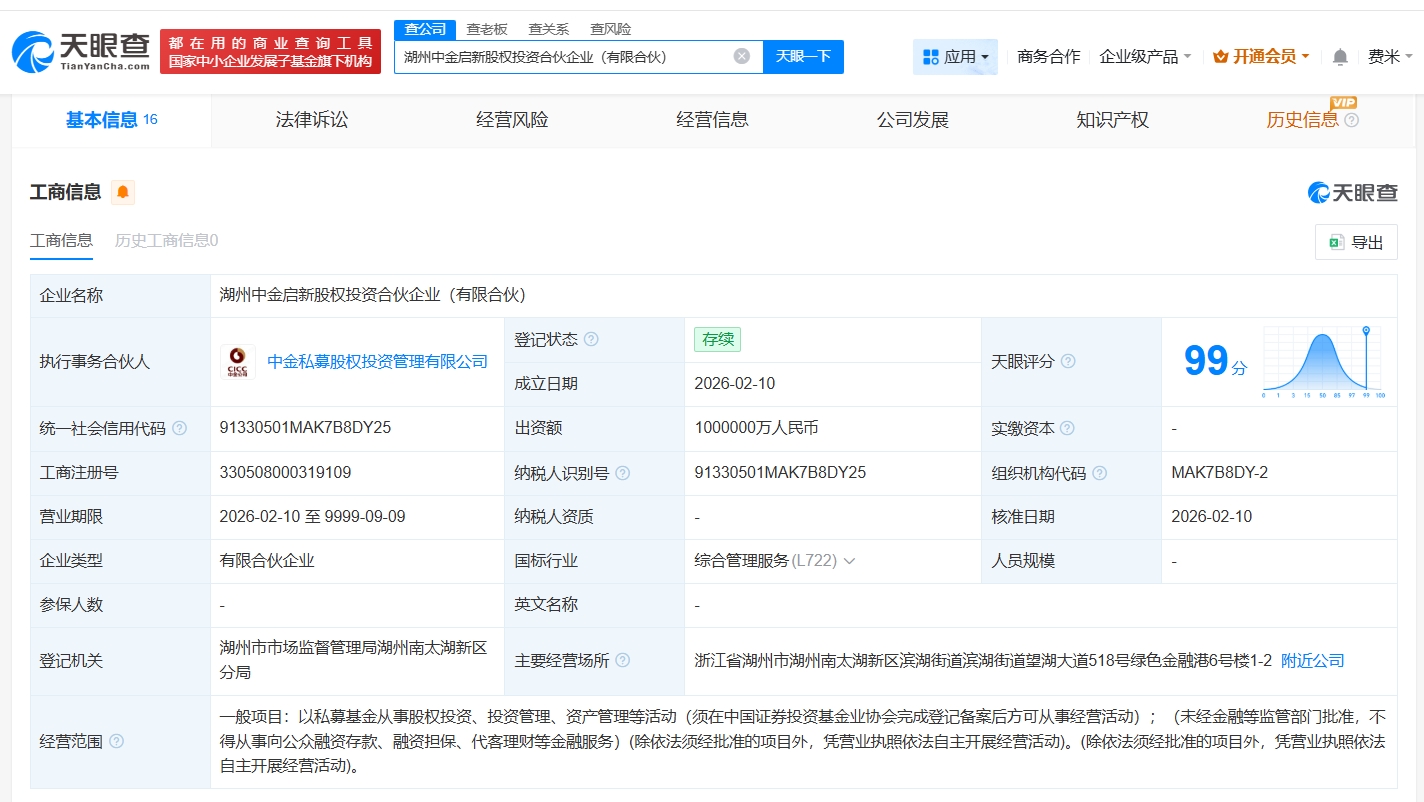
中金公司等在湖州成立股权投资合伙企业
2 1 Shi Ji Jing Ji Bao Dao· 2026-02-11 06:56
Group 1 - The core point of the article is the establishment of Huzhou Zhongjin Qixin Equity Investment Partnership (Limited Partnership) with a capital contribution of 10 billion RMB, focusing on private equity investment and asset management activities [1][2]. - The executing partner of the newly established firm is Zhongjin Private Equity Investment Management Co., Ltd., indicating a strong backing from a reputable investment management company [1][2]. - The partnership is funded by several local entities, including Huzhou Industrial Fund Investment Co., Ltd., Huzhou Innovation and Entrepreneurship Investment Co., Ltd., and Huzhou Transportation Investment Group Co., Ltd., showcasing a collaborative effort in regional investment [1][2]. Group 2 - The registered capital of the partnership is 10 billion RMB, which is equivalent to 1,000 million RMB, indicating significant financial resources for investment activities [2]. - The business scope includes private equity investment, investment management, and asset management, which requires registration with the Asset Management Association of China before commencing operations [2]. - The partnership is registered with the Huzhou Market Supervision Administration, reflecting compliance with local regulatory requirements [2].

对话毕盛资产创始人王国辉:中国AI应用或比美国更有优势
2 1 Shi Ji Jing Ji Bao Dao· 2026-02-11 06:52
Core Viewpoint - The article emphasizes the importance of investing in Chinese assets, highlighting that neglecting this market has become a significant risk for global investment portfolios. The founder of APS Asset Management, Wang Guohui, believes that the long-term growth narrative in China remains strong despite short-term market fluctuations [1][2]. Group 1: Investment Perspective - Wang Guohui predicts that China has a 70% chance of becoming the world's largest economy by around 2027, making it a critical market for global asset managers [2]. - The current underallocation of Chinese assets by international investors presents a significant opportunity, as many global funds have underperformed due to insufficient exposure to China [3]. - The expected strong earnings growth for Chinese companies, driven by sectors like semiconductors and AI, supports the case for increased investment in China [3]. Group 2: Market Valuation - Despite recent market rebounds, the overall valuation of the Chinese stock market remains significantly lower than its historical peak in early 2021, providing a safety margin for investors [3]. - Dividend yields for some stocks are around 3%-4%, which is notably higher than bank deposit rates, indicating a potential investment opportunity as this discrepancy is expected to correct [3]. Group 3: Financial Market Development - Wang Guohui notes that the modernization of China's financial market is lagging behind its manufacturing sector, presenting future growth potential [4]. - Effective communication between regulators and international investors is crucial to bridge the understanding gap regarding China's financial policies [5]. Group 4: AI Investment Landscape - The AI sector is viewed as a hot investment theme, but concerns about potential bubbles exist. Wang Guohui emphasizes the need to analyze value distribution across different segments of the AI industry [6]. - Hardware suppliers, such as GPU and ASIC chip manufacturers, are identified as clear beneficiaries in the AI value chain due to their essential role in supporting AI companies [7]. - China is seen as having a unique advantage in AI applications, driven by its large manufacturing base that requires AI tools to enhance productivity [7]. Group 5: Global AI Competition - The global AI landscape is expected to be dominated by a dual power structure between China and the U.S., with both governments encouraging substantial investments in AI [8]. - Wang Guohui expresses caution regarding the development of Artificial General Intelligence (AGI), suggesting that current AI advancements will likely remain focused on specific applications that yield economic benefits [9].
超50家银行宣布暂停各类无卡业务
2 1 Shi Ji Jing Ji Bao Dao· 2026-02-11 06:34
Core Viewpoint - Several banks in China are tightening their no-card deposit and withdrawal services, with over 50 banks having announced the suspension of various no-card services in the past year, citing reasons such as optimizing financial services, risk management, and cost efficiency [1][2]. Group 1: Bank Actions - China Merchants Bank will stop its ATM QR code deposit service starting April 9, requiring customers to use bank cards for deposits [1]. - Major state-owned banks, including Industrial and Commercial Bank of China, have already suspended no-card cash withdrawal services since April 2022, with other banks like Bank of Communications following suit [3]. - In the second half of last year, several joint-stock banks and leading city commercial banks, such as Minsheng Bank and Industrial Bank, also announced the cessation of no-card withdrawal functionalities [4]. Group 2: Reasons for Changes - The shift away from no-card services is attributed to the low security of identity verification methods used in these transactions, as well as the limited demand from customers for such services [6]. - The rise of mobile payments has led to a decrease in cash usage, prompting banks to close ATM QR code deposit functions to enhance customer fund security and streamline service processes [5]. Group 3: Industry Implications - The adjustments in no-card services are expected to have a minimal impact on banks, as customers can still utilize other methods for deposits and withdrawals [6]. - The changes are seen as a way for banks to improve risk management and reduce operational costs, while also exploring digital technology to enhance service levels and optimize ATM functionalities [6].