2 1 Shi Ji Jing Ji Bao Dao

Search documents
34股获推荐,福耀玻璃等目标价涨幅超40%
2 1 Shi Ji Jing Ji Bao Dao· 2026-03-19 01:25
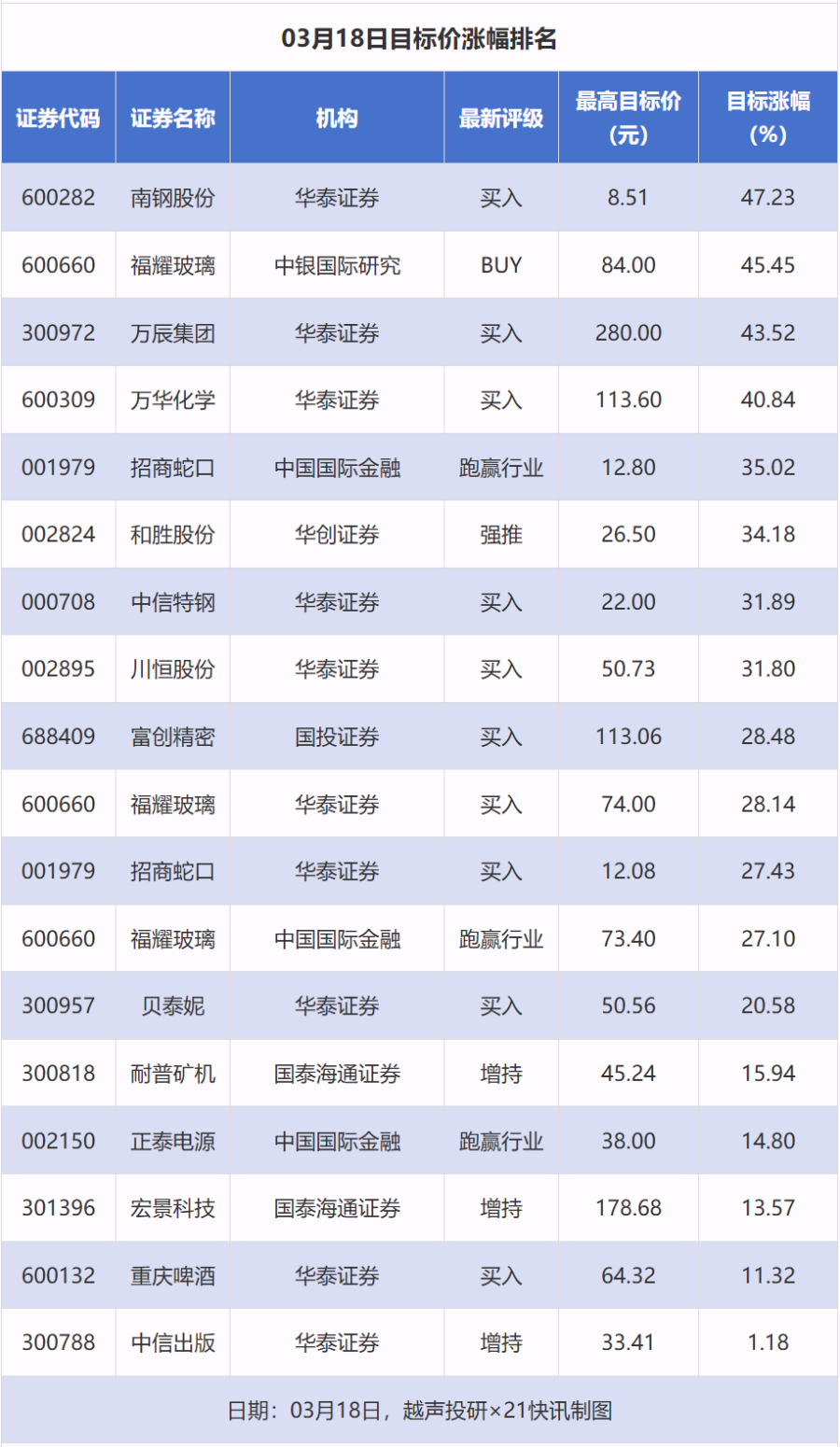
Core Viewpoint - On March 18, brokerages provided target prices for listed companies, with notable increases for Nanjing Steel, Fuyao Glass, and Wancheng Group, showing target price increases of 47.23%, 45.45%, and 43.52% respectively, across the steel, automotive parts, and retail sectors [1][2]. Group 1: Target Price Increases - Nanjing Steel (600282) received a target price of 8.51 yuan, reflecting a target price increase of 47.23% [2] - Fuyao Glass (600660) has a target price of 84.00 yuan, with a target price increase of 45.45% [2] - Wancheng Group (300972) was assigned a target price of 280.00 yuan, indicating a target price increase of 43.52% [2] - Wanhua Chemical (600309) has a target price of 113.60 yuan, with a target price increase of 40.84% [2] - China Merchants Shekou (001979) received a target price of 12.80 yuan, reflecting a target price increase of 35.02% [2] Group 2: Brokerage Recommendations - A total of 34 listed companies received brokerage recommendations on March 18, with China Merchants Shekou, CITIC Publishing, Fuyao Glass, and Wancheng Group each receiving recommendations from three brokerages [3][4] - China Merchants Shekou (001979) closed at 9.48 yuan with three brokerage recommendations [4] - Fuyao Glass (600660) closed at 57.75 yuan, also receiving three brokerage recommendations [4] - Wancheng Group (300972) closed at 195.09 yuan, with three brokerages recommending it [4] Group 3: Rating Adjustments - On March 18, one company had its rating upgraded, with Zhongtai Securities raising Shanghai Bank's rating from "Hold" to "Buy" [5] - Shanghai Bank (601229) is now rated "Buy" by Zhongtai Securities [5] Group 4: First Coverage - Eight companies received initial coverage on March 18, with Hesheng Co. receiving a "Strong Buy" rating from Huachuang Securities [6] - Tian Gong Co. was given an "Add" rating by Dongwu Securities [6] - Neipu Mining (300818) received an "Add" rating from Guotai Junan Securities [6] - Bozhong Precision (688097) was rated "Add" by Northeast Securities [6] - Bojie Co. (002975) received a "Buy" rating from Zhongyou Securities [6]


AI制药打响算力竞赛:罗氏布局AI工厂,行业痛点仍存
2 1 Shi Ji Jing Ji Bao Dao· 2026-03-18 23:11
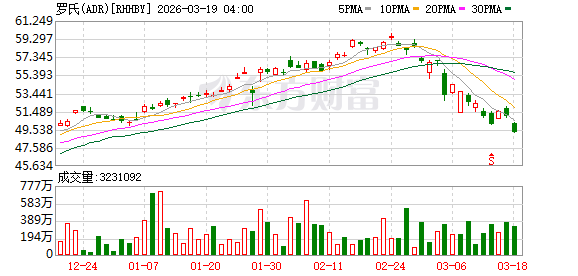
Core Insights - The pharmaceutical giants are investing heavily in AI infrastructure, with Roche and Eli Lilly leading the charge by deploying significant GPU resources to enhance their drug development processes [1][2][3] - AI is transitioning from a supplementary tool to a fundamental infrastructure that supports the entire value chain in drug development, manufacturing, and commercialization [2][4] Investment and Infrastructure - Roche has deployed 2,176 high-performance GPUs, bringing its total GPU capacity to over 3,500 Blackwell GPUs, claiming the largest GPU scale available among pharmaceutical companies [1][3] - Eli Lilly has launched its AI factory "LillyPod," equipped with 1,016 NVIDIA Blackwell Ultra GPUs, achieving a computing power of 9,000 Petaflops [1][3] - The competition among top pharmaceutical companies is intensifying as they build proprietary AI infrastructures to create high data barriers and optimize their drug development processes [4][17] Market Dynamics - The AI pharmaceutical sector is experiencing a paradox of rapid expansion and a return to rational capital investment, with over 350 AI pharmaceutical companies globally, including more than 100 in China [2][6] - The funding landscape is shifting, with a notable trend of companies transitioning from high-risk "gold diggers" to more stable "water sellers" (CRO/technical service models) [20][21] Commercialization Challenges - Despite the increasing efficiency of AI in preclinical research, significant bottlenecks remain in transitioning from preclinical to late-stage clinical trials, with no AI-designed drugs yet approved [21][22] - Investors are becoming more cautious, focusing on companies that can demonstrate cash flow within two to three years, indicating a shift in funding strategies towards firms with tangible deliverables [21][22] Future Directions - Key breakthroughs in AI pharmaceutical development are expected to focus on creating closed-loop systems that integrate algorithm design, automated experiments, and data feedback [22][24] - The industry is predicted to undergo a valuation restructuring by 2026, with leading companies like Crystal Technology and Tempus AI expected to achieve positive EBITDA for the first time [24][25]



AI制药打响算力竞赛:罗氏布局AI工厂 行业痛点仍存
2 1 Shi Ji Jing Ji Bao Dao· 2026-03-18 23:10
Core Insights - The pharmaceutical industry is increasingly adopting AI technologies, with major companies like Roche and Eli Lilly investing heavily in AI infrastructure to enhance drug development processes [2][3] - Roche has deployed the largest GPU scale in the pharmaceutical sector, with over 3,500 Blackwell GPUs, indicating a shift towards in-house AI capabilities [3][5] - The AI pharmaceutical sector is experiencing a paradox of rapid expansion and cautious capital investment, as companies seek to integrate AI across the entire value chain [3][6] Investment and Infrastructure - Roche's AI factory represents a high-performance supercomputing platform that integrates AI into research, manufacturing, and diagnostics [5] - Eli Lilly's AI factory, "LillyPod," features 1,016 GPUs and aims to enhance drug discovery efficiency, reflecting a broader trend among pharmaceutical giants to build proprietary AI capabilities [3][5] - The global AI pharmaceutical landscape includes over 350 companies, with significant growth in China, where more than 100 AI pharmaceutical firms are emerging [4][7] Market Dynamics - The investment landscape is shifting from broad-based funding to a focus on companies with clear deliverables and measurable outcomes in AI drug development [8][9] - Despite significant funding in the AI pharmaceutical sector, many companies are transitioning from high-risk ventures to more stable service-oriented models [7][9] - The industry is witnessing a consolidation trend, with larger firms acquiring smaller companies to enhance their AI capabilities and market position [12] Future Outlook - The key challenges for AI in pharmaceuticals include the transition from preclinical to clinical phases, with no AI-designed drugs yet approved for market [9][11] - Analysts predict that 2026 will be a critical year for AI pharmaceuticals, as the success of AI-driven drugs in clinical trials will determine the future viability of AI in drug development [11][12] - The industry is expected to see a bifurcation in capital allocation, with early-stage investments focusing on disruptive technologies and later-stage investments favoring companies with proven clinical data [12]
阿迪达斯、ZARA、H&M、拉夫劳伦等,被点名通报
2 1 Shi Ji Jing Ji Bao Dao· 2026-03-18 14:34
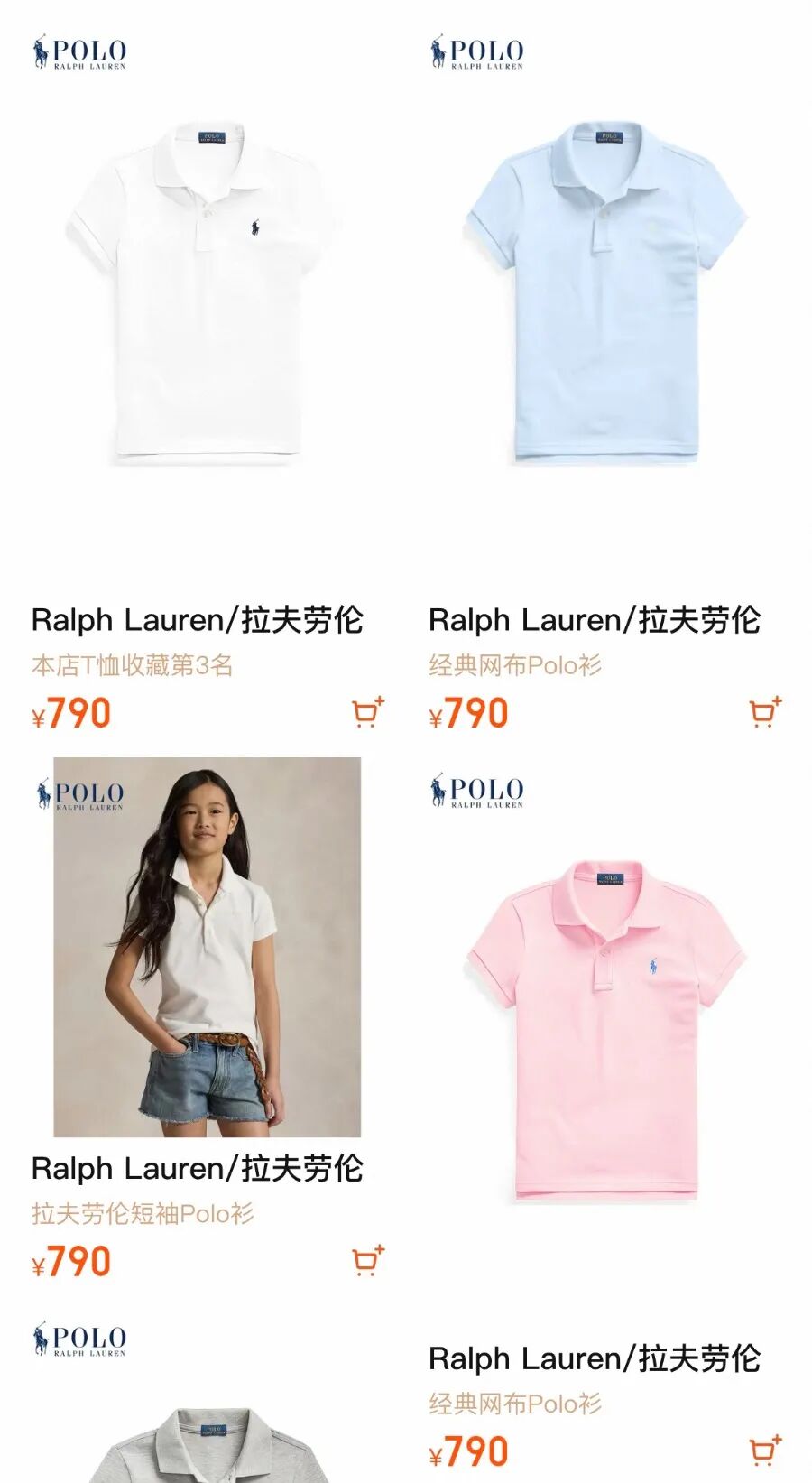
Core Viewpoint - The General Administration of Customs has reported 100 typical cases of quality and safety non-compliance for imported consumer goods in 2025, highlighting brands such as Adidas, ZARA, H&M, and Ralph Lauren for various violations related to product safety standards [1][5][8]. Group 1: Non-compliance Cases - ZARA was cited for five batches of non-compliant imported clothing, including issues with formaldehyde levels exceeding standards, discrepancies in fiber content labeling, and sharp attachments [1][5]. - Ralph Lauren's products, including various children's clothing items, were found to have non-compliant pH levels, which can pose health risks [1][5][6]. - The report indicates that both ZARA and Ralph Lauren have a history of being flagged for quality issues, particularly concerning children's clothing [5][6]. Group 2: Health Implications - Formaldehyde is classified as a carcinogen, with long-term exposure linked to skin allergies, respiratory inflammation, and increased risks of certain cancers [5]. - Non-compliant pH levels can disrupt the skin's acid-base balance, leading to dryness, itching, dermatitis, and increased infection risks, especially in infants [5]. - The prevalence of formaldehyde and pH level violations is noted as a common issue in the clothing safety sector, with potential cumulative health impacts from prolonged wear [5]. Group 3: Legal and Regulatory Context - Importers are primarily responsible for ensuring product compliance with Chinese safety standards, facing potential economic losses and fines if non-compliant products are seized by customs [9]. - ZARA's importer, Zara Commercial (Shanghai) Co., Ltd., and Ralph Lauren's importer, Ralph Lauren Trading (Shanghai) Co., Ltd., have both faced multiple administrative penalties for past violations [9]. - The customs report references previous instances of non-compliance for both brands, indicating a pattern of quality control issues [6][9].



深高速:拟使用不超2.00亿元部分闲置募集资金进行现金管理
2 1 Shi Ji Jing Ji Bao Dao· 2026-03-18 09:23
Core Viewpoint - The company plans to utilize up to 200 million yuan of temporarily idle raised funds for cash management through structured deposits, which will not affect the progress of investment projects or normal operations [1] Group 1 - The company will hold the 59th meeting of the 9th Board of Directors on February 10, 2026, to review the proposal [1] - The proposed use of idle funds is aimed at purchasing principal-protected floating income structured deposits [1] - The effective period for this cash management strategy is 12 months from the date of board approval [1] Group 2 - The funds can be used on a rolling basis within the approved limit [1] - The decision is expected to enhance the management of idle funds without impacting ongoing projects [1]

我们乘坐了一次滴滴Robotaxi,这是全程实录
2 1 Shi Ji Jing Ji Bao Dao· 2026-03-18 08:51
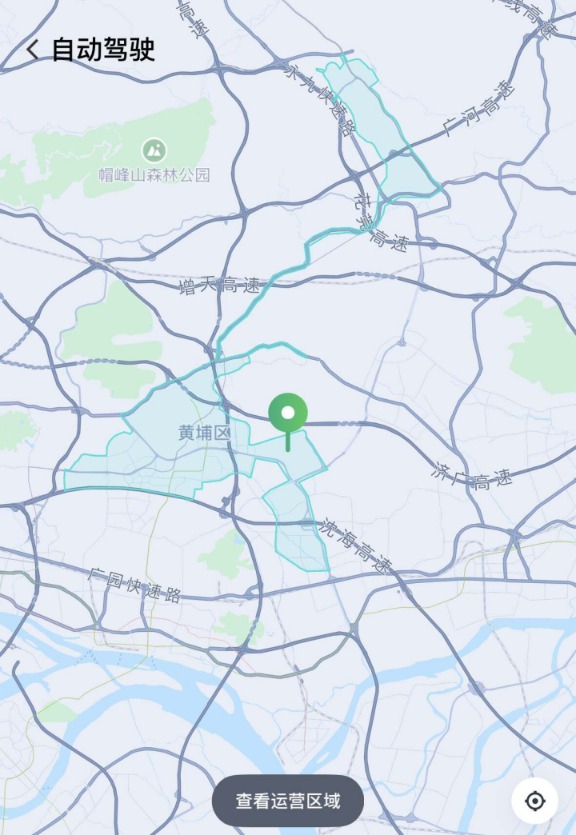
Core Insights - Didi Autonomous Driving and GAC Aion have jointly developed the new generation Robotaxi R2, which has officially received a road testing license in Beijing, following its earlier approval in Guangzhou. This marks a significant step in validating the autonomous driving capabilities in complex urban environments [1] - The Robotaxi R2 is set to begin delivery in January 2026, with plans for phased demonstration operations in cities like Guangzhou and Beijing, integrating into broader urban transportation networks [1] - The autonomous driving sector is transitioning from technology development to large-scale implementation, with several companies beginning passenger operations in major cities [1] Company Operations - Didi's Robotaxi service in Guangzhou covers a designated area in Huangpu District, providing all-day service [1] - Users can request a Robotaxi through the Didi app via two methods: directly from the "autonomous driving" section or by entering a destination within the operational area, which allows for mixed orders with regular ride-hailing services [2][5] - The app displays recommended pick-up points, typically located near residential areas, subway stations, or shopping centers, with estimated wait times of 5 to 10 minutes [6][8] User Experience - The Robotaxi features a clean interior and includes a screen for passengers to input their phone number to start the ride, as well as real-time displays of the vehicle's surroundings [11][12] - Passengers can modify their destination within the app during the ride, with a limit of two changes per trip [13] - The vehicle's driving style is characterized as smooth and cautious, effectively handling complex traffic situations, such as avoiding pedestrians and cyclists [14][18] Industry Outlook - Didi has been developing autonomous driving technology since 2016, and the service has been operational in select areas of Beijing, Guangzhou, and Shanghai for over 2000 days without safety incidents [20] - According to Frost & Sullivan, the number of Robotaxis in China's first and second-tier cities is expected to reach 1.01 million by 2030, with a market penetration rate of approximately 25%. The market size is projected to reach 242.4 billion yuan [20] - The operational scope of Level 4 autonomous driving is expanding beyond closed testing areas to more complex urban environments, indicating a maturation of the technology [20][21]

碧桂园回应大规模召回离职员工
2 1 Shi Ji Jing Ji Bao Dao· 2026-03-18 06:48
Core Viewpoint - Country Garden has initiated a large-scale "Veteran Recall Plan" to enhance its workforce and support business recovery, although the related policy was not newly introduced but revised earlier this year [1][7]. Group 1: Employee Management and Workforce Changes - The company has released a "Rehiring Management Policy" to ensure effective human resource allocation during its recovery phase and new project development [1][7]. - Employee numbers have significantly decreased, from approximately 131,400 at the end of 2018 to an expected 17,900 by mid-2025 [2][8]. Group 2: Business Recovery and Debt Restructuring - Country Garden has completed its debt restructuring and is in a phase of restarting operations, with a new issuance of approximately 14.233 billion shares, nearly 51% of the pre-restructuring share capital [2][8]. - Following the restructuring effective from December 30, 2025, the company has paid around $398 million to creditors within the first week [3][9]. Group 3: Strategic Direction and Sales Performance - The company aims to transition from ensuring housing delivery to normal operations in 2026, marking it as a critical year for growth [3][9]. - In early 2026, Country Garden ranked among the top ten in sales rights amount and operational area among Chinese real estate companies [4][10]. Group 4: Future Development and Innovation - The strategic focus for the next 3-5 years will be on building core competitiveness, with an emphasis on customer-oriented product design and integrating various service aspects [4][10]. - The company is pursuing organizational transformation through the integration of technology and management innovation, aiming to create a modern, data-driven organization [5][11].

碧桂园回应离职人员返聘管理办法,称人才任用围绕业务需求
2 1 Shi Ji Jing Ji Bao Dao· 2026-03-18 06:27
【#碧桂园回应人才召回计划#】一则碧桂园启动最大规模"老兵召回计划的消息在网络上流传。这则消 息被炒作的缘由是,碧桂园对内部发布《离职人员返聘管理办法》。据@21世纪经济报道 记者了解, 这份文件并非近期新发,最新的修订版本早在今年1月26日就已经发布。碧桂园称,优秀人才是公司可 持续发展的源动力。公司的人才任用始终围绕业务实际需求,从内部三好人才、优秀员工返聘、外部人 才社招等多渠道综合选拔。 ...
碧桂园回应“人才召回”计划:是已有制度修订,并非新出台办法
2 1 Shi Ji Jing Ji Bao Dao· 2026-03-18 06:07
Core Insights - Country Garden has initiated a large-scale "Veteran Recall Plan" to ensure business continuity and support new project development, emphasizing the importance of talent for sustainable growth [1] - The company has completed its debt restructuring and is in a phase of restarting operations, with a significant issuance of new shares [2] - The company aims to transition from ensuring housing delivery to normal operations in 2026, outlining a strategic framework for the next 3-5 years [3] Group 1: Talent Management - The "Return to Work Management Measures" for former employees is a routine update rather than a new policy, aimed at optimizing human resource allocation [1] - The number of employees has decreased significantly, from approximately 131,400 at the end of 2018 to only 17,900 by mid-2025 [1] Group 2: Business Development - Country Garden has issued approximately 14.233 billion new shares as part of its restructuring, nearly 51% of the pre-restructuring share capital [2] - The company has made cash payments of about $398 million to creditors within the first week following the restructuring [3] Group 3: Sales and Market Position - In February, Country Garden achieved significant sales during the "Spring Festival" period, with daily average subscriptions showing a notable year-on-year increase [3] - According to data from CRIC, Country Garden ranked among the top ten in sales rights amount and operational area for Chinese real estate companies in January-February 2026 [4] Group 4: Strategic Focus - The strategic core for the next 3-5 years will focus on building core competitiveness, enhancing customer-oriented product design, and integrating various service aspects [4] - The company is committed to transforming into a modern, data-driven organization that is sensitive to market changes and fosters innovation [5]
英伟达塑造“Token经济学”
2 1 Shi Ji Jing Ji Bao Dao· 2026-03-17 23:10
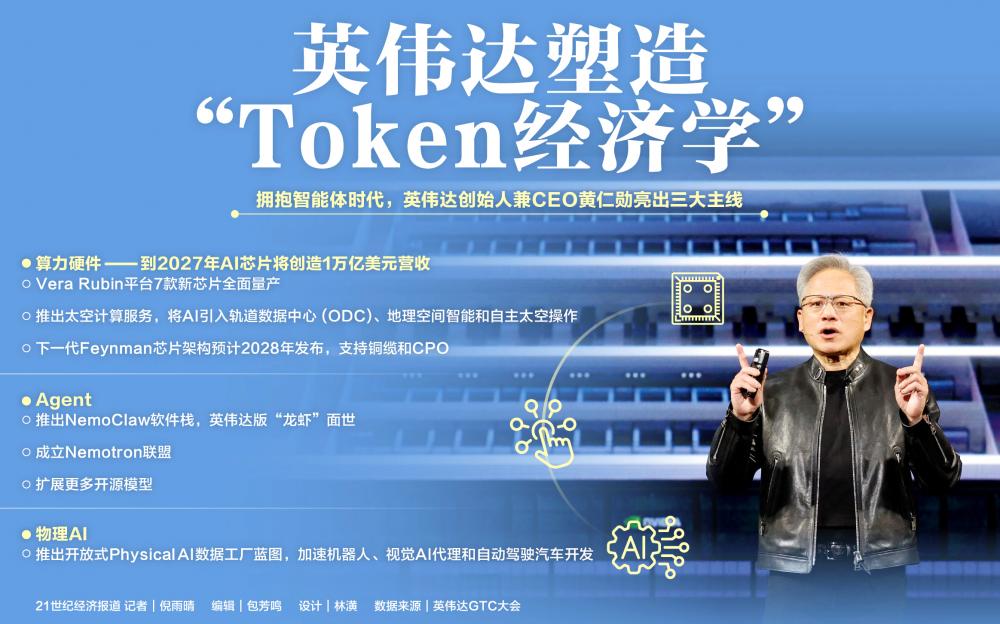
Core Insights - NVIDIA's GTC event showcased the launch of the Vera Rubin architecture, marking a significant leap in AI technology with seven new chips entering production, aimed at establishing the largest AI factory globally [1][14] - The introduction of Vera Rubin is expected to double the revenue forecast for AI chips from $500 billion to $1 trillion by the end of 2027 [2][16] - The event emphasized a shift from individual chip competition to a comprehensive system-level competition among tech giants, highlighting the importance of "Token" economics and the AI "five-layer cake" theory [2][16] Chip Architecture and Performance - The Vera Rubin architecture will utilize TSMC's 3nm process and features a tightly integrated design that enhances performance, achieving 50 PFlops for inference and 35 PFlops for training, with a fivefold increase in efficiency compared to the previous Blackwell architecture [4][18] - The architecture includes various chips such as NVIDIA Vera CPU, Rubin GPU, NVLink 6, and Groq 3 LPU, which can be configured into five different racks for data center operations [1][15] Application and Infrastructure - Vera Rubin is designed specifically for "Agentic AI" and long-context reasoning, featuring advanced components like the Transformer Engine 3.0 and Inference Context Memory, enabling AI agents to manage extensive token contexts and perform multi-step reasoning [5][19] - The infrastructure supports high-density liquid cooling and is built on NVIDIA's MGX framework, integrating 256 Vera CPUs to provide scalable and energy-efficient capacity [5][20] Collaborations and Market Impact - Key partners deploying the Vera CPU include Alibaba, ByteDance, Meta, and Oracle Cloud Infrastructure, with full production expected in the second half of the year [6][20] - NVIDIA is positioning itself as a leader in AI infrastructure, with the Vera Rubin DSX AI Factory reference design aimed at maximizing productivity and energy efficiency in AI token generation [6][20] Groq LPU and Real-Time Processing - The Groq LPU architecture, set to be integrated by the end of 2025, is designed for low-latency, real-time interactions, featuring 256 LPU processors with high bandwidth capabilities [21][22] - The LPU's deterministic pipeline architecture eliminates traditional GPU complexities, ensuring consistent execution times critical for applications like autonomous driving and high-frequency trading [22][23] AI Agent and Open Model Ecosystem - NVIDIA introduced the NemoClaw software stack for AI agents, which allows for continuous operation and complex task management, marking a significant development in the open-source AI landscape [11][24] - The company is also expanding its open model ecosystem, launching the Nemotron Coalition to foster collaboration among leading AI labs and model developers [12][24] Real-World Applications - New models for robotics and autonomous driving were unveiled, including the NVIDIA Isaac GR00T for humanoid robots and the NVIDIA Alpamayo for enhanced vehicle reasoning capabilities [13][25] - NVIDIA aims to create a comprehensive AI technology framework that bridges digital and physical worlds, promoting innovation and application across various sectors [13][25]