2 1 Shi Ji Jing Ji Bao Dao

Search documents
黄金突破3000美元/盎司之后 三家银行上调积存金起点
2 1 Shi Ji Jing Ji Bao Dao· 2026-02-11 06:34
(原标题:黄金突破3000美元/盎司之后 三家银行上调积存金起点) 21世纪经济报道记者叶麦穗广州报道 短短一周时间,三家银行提升黄金积存金的投资起点。 3月26日晚间,建设银行接力招商银行和宁波银行发布关于调整个人黄金积存业务定期积存起点金额的公告。建设银行表示自北京时间2025年3月 31日9:10起,该行个人黄金积存业务定期积存起点金额(包括日均积存及自选日积存)由700元上调至800元。 事实上,3月14日现货黄金突破3000美元/盎司大关后, 3月18日上期所黄金主力合约突破700元大关,再创历史新高,国内银行随即纷纷上调积存 金起投基点,目前最高起点为800元。 未来或有更多银行上调积存金起点 积存金是实物黄金的账户化形式,该业务指的是银行为境内个人客户提供的以人民币为交易结算货币的实物黄金投资业务。客户在银行开立个人 结算账户,通过柜面或网银渠道购入以黄金资产为标的份额,并可进行份额赎回、实物兑换,交易方式包括定期积存和主动积存。 现货黄金价格大涨,黄金零售公司压力不小。此前,在社交平台上,有多位网友发帖称,周大福"一口价"黄金饰品将要涨价,部分款式涨价超千 元。 近日,周大福珠宝集团发言人终于 ...

商业银行扩张放缓:16家非上市中小银行盈利负增长
2 1 Shi Ji Jing Ji Bao Dao· 2026-02-11 06:34
Core Insights - The expansion of commercial banks, particularly small and medium-sized banks, is slowing down due to macroeconomic factors such as reduced credit demand and financial regulation [1][2] Group 1: Industry Overview - As of June, the total assets of banking financial institutions reached 42.51 trillion yuan, with a year-on-year growth rate of 6.6%, the lowest this year [1] - The growth rates for city commercial banks and rural commercial banks have also been declining, with city banks at 9.4% and rural banks at 6.6% [1] - A total of 61 small and medium-sized banks have disclosed their 2024 semi-annual reports, with most located in Zhejiang province [2] Group 2: Financial Performance - Among the 61 small and medium-sized banks, 43 reported positive revenue growth while 12 experienced negative growth, with the highest and lowest growth rates at 38.27% and -24.72% respectively [2][7] - For net profit, 42 banks reported positive growth and 16 reported negative growth, with the highest and lowest growth rates at 240.33% and -120.27% respectively [2][9] - Interest income remains the primary revenue source, with 32 banks reporting positive growth and 22 reporting negative growth, the highest growth being 165.86% and the lowest -25.18% [3][9] Group 3: Loan and Deposit Trends - Of the 24 banks that disclosed loan data, 14 had growth rates exceeding 10%, while 3 reported negative growth [2] - In terms of deposits, 23 banks reported growth rates above 10%, while 2 banks had negative growth [2][6] - The loan-to-deposit ratio for some banks has decreased due to slower loan growth, with one bank's ratio dropping to 84.42% [6] Group 4: Challenges and Risks - The net interest margin has been declining, affecting revenue growth for many banks, with some banks reporting margins below 1% [9] - The performance of small and medium-sized banks is highly variable, with significant disparities in profitability and growth rates [7][8] - The reliance on interest income and the impact of reduced fees on commission income have been highlighted as challenges for these banks [10][11]
多地披露再融资专项债置换隐性债务发行计划 市场降准预期升温
2 1 Shi Ji Jing Ji Bao Dao· 2026-02-11 06:34
Core Viewpoint - The issuance of special refinancing bonds to replace hidden debts has been disclosed by multiple regions, leading to increased market expectations for a reserve requirement ratio (RRR) cut [2] Group 1: Special Refinancing Bonds - As of November 18, five provinces and cities, including Henan, Guizhou, Jiangsu, Dalian, and Qingdao, have announced plans to issue special refinancing bonds totaling approximately 220 billion yuan [2] - The Henan Provincial Finance Department plans to issue 31.8169 billion yuan of refinancing bonds on November 15, with a 10-year maturity aimed at replacing existing hidden debts [2] - The Ministry of Finance has approved a debt limit of 60 billion yuan for replacing local government hidden debts, to be allocated over three years from 2024 to 2026, with 20 billion yuan each year [2] Group 2: Impact on Financial Institutions - State-owned banks and joint-stock banks are the main entities responsible for absorbing local debts, which may constrain their short-term financial capacity during the special refinancing bond issuance phase [3] - Recent data shows that the average daily net financing by major banks has decreased to 4.3 trillion yuan, down from 5.2 trillion yuan at the beginning of November [3] - Analysts suggest that the issuance of special refinancing bonds may limit the long-term and ultra-long-term bond allocation capabilities of banks due to increased risks associated with interest rate gaps [3] Group 3: Monetary Policy Expectations - Analysts believe that while the supply of government bonds has created short-term pressure on funds, the current pressure is relatively lower compared to previous levels [4] - The People's Bank of China (PBOC) is expected to increase liquidity support in response to the bond supply, with potential RRR cuts anticipated in November and December [4][5] - The PBOC has indicated that it may further lower the RRR by 0.25-0.5 percentage points before the end of the year, with a recent cut of 0.5 percentage points already implemented [5] Group 4: Market Dynamics - The upcoming maturity of 1.45 trillion yuan in Medium-term Lending Facility (MLF) on November 15 has prompted the PBOC to increase reverse repo operations [6] - The PBOC aims to enhance macro policy consistency, aligning monetary, financial, fiscal, industrial, and employment policies to support stable economic growth [6]
助贷新规出台在即 规范三大助贷模式 要求银行加强自主风控
2 1 Shi Ji Jing Ji Bao Dao· 2026-02-11 06:33
Core Viewpoint - The upcoming "Loan Assistance Regulations" aim to enhance banks' risk control capabilities and standardize three main loan assistance models, while encouraging banks to diversify their risk sources through third-party guarantee institutions [1][2]. Group 1: Loan Assistance Models - The three main models for internet loans through commercial banks include: Joint Loan Model, Financing Guarantee Model, and Profit Sharing Model [2]. - In the Joint Loan Model, the lending bank and the platform's licensed institutions jointly provide loans, with the bank's contribution not exceeding 70% [2]. - The Financing Guarantee Model involves the assistance platform providing guarantees for borrowers, with the platform conducting initial risk assessments and recommending clients to banks [2]. - The Profit Sharing Model allows the assistance platform to provide customer acquisition and data analysis services, with banks handling funding and risk control independently, thus being referred to as a "light asset model" [2]. Group 2: Regulatory Context - The introduction of the Loan Assistance Regulations reflects a broader trend of stringent regulation in the internet loan sector [5]. - Since the 2020 issuance of the "Interim Measures for the Management of Internet Loans by Commercial Banks," a series of regulatory documents have been released to standardize the roles of all parties involved in internet loans [6]. - These regulations aim to enhance the self-capacity of banks and other financial institutions, thereby reducing risks associated with collaborative entities [6]. Group 3: Market Dynamics - The regulatory changes are expected to increase the operational costs for third-party platforms and push down financing rates [6]. - The industry is witnessing a growing divide, with weaker banks facing consolidation pressures, as evidenced by nearly 200 small banks ceasing operations in 2024 [7]. - The number of small loan companies has decreased from 5,500 at the end of 2023 to 5,385 by September 2024, indicating a trend of market exit among non-compliant entities [7].

4000亿元大单!央行与韩国银行续签双边本币互换协议
2 1 Shi Ji Jing Ji Bao Dao· 2026-02-11 06:33
Core Viewpoint - The People's Bank of China (PBOC) has renewed a bilateral currency swap agreement with the Bank of Korea, with a swap scale of 400 billion RMB / 70 trillion KRW, effective for five years, which can be extended by mutual agreement [1][3]. Group 1: Agreement Details - The renewed agreement aims to deepen monetary and financial cooperation between China and South Korea, facilitate bilateral trade, and maintain financial market stability [3]. - The currency swap arrangement allows one central bank to exchange its currency for another, providing liquidity and supporting financial market stability [3]. Group 2: Positive Impacts of Currency Swap - The bilateral currency swap has become an important part of the global financial safety net, enhancing market confidence and maintaining regional and global financial stability [4]. - The swap funds can support bilateral trade and investment activities, helping market participants save on exchange costs and reduce exchange rate risks [4]. - It provides necessary liquidity to offshore markets, optimizing the currency usage environment, such as the arrangement with the Hong Kong Monetary Authority to support the offshore RMB business [4]. Group 3: Recent Developments in Currency Cooperation - In 2023, the PBOC has been actively deepening currency cooperation with foreign central banks, including renewing a swap agreement with the Central Bank of Turkey for 35 billion RMB / 189 billion Turkish Lira [5]. - The PBOC also signed a currency swap agreement with the Bank of Thailand for 70 billion RMB / 370 billion Thai Baht, and agreements with the European Central Bank, Swiss National Bank, and Hungarian National Bank [5].
接力!开年7家银行获股东、高管大力增持
2 1 Shi Ji Jing Ji Bao Dao· 2026-02-11 06:33
Core Viewpoint - The banking sector continues to attract significant investment, with major banks' stock prices reaching new highs, driven by shareholder and executive buybacks [1][5]. Group 1: Shareholder Buybacks - Seven banks have seen their shareholders and executives increase their stakes in their own companies this year [1]. - Shanghai International Group's subsidiary increased its stake in Shanghai Pudong Development Bank by 93,999,979 shares, representing 0.32% of the total share capital [2]. - Ping An Life increased its holdings in China Merchants Bank by 12.48 million H-shares, investing approximately HKD 572 million, raising its total holdings to 368 million H-shares, which is over 8% of the total [2]. - Lanzhou Bank's major shareholder increased its stake by 419,120 shares, amounting to approximately RMB 1 million [3]. - Everbright Bank and other banks have also seen significant shareholder buybacks, with Everbright Group planning to increase its stake by up to RMB 800 million [4]. Group 2: Bank Performance and Growth - In 2024, 30 listed banks received shareholder buybacks, indicating strong investor confidence [5]. - Major state-owned banks, including ICBC and ABC, received substantial increases in their shareholdings, totaling over 1 billion shares [5]. - Eight banks reported a net profit growth exceeding 10%, reflecting positive financial performance [7]. Group 3: Regulatory and Economic Factors - Regulatory requirements for managing the market value of banks with low price-to-book ratios have prompted shareholder buybacks [7]. - The upcoming maturity of convertible bonds and low conversion rates have made shareholder buybacks a strategic move to enhance core tier one capital [7]. - The recent National People's Congress meeting highlighted economic growth targets and supportive fiscal policies, which are expected to improve the banking environment [8].
京东方等在上海成立显示技术公司
2 1 Shi Ji Jing Ji Bao Dao· 2026-02-11 06:21
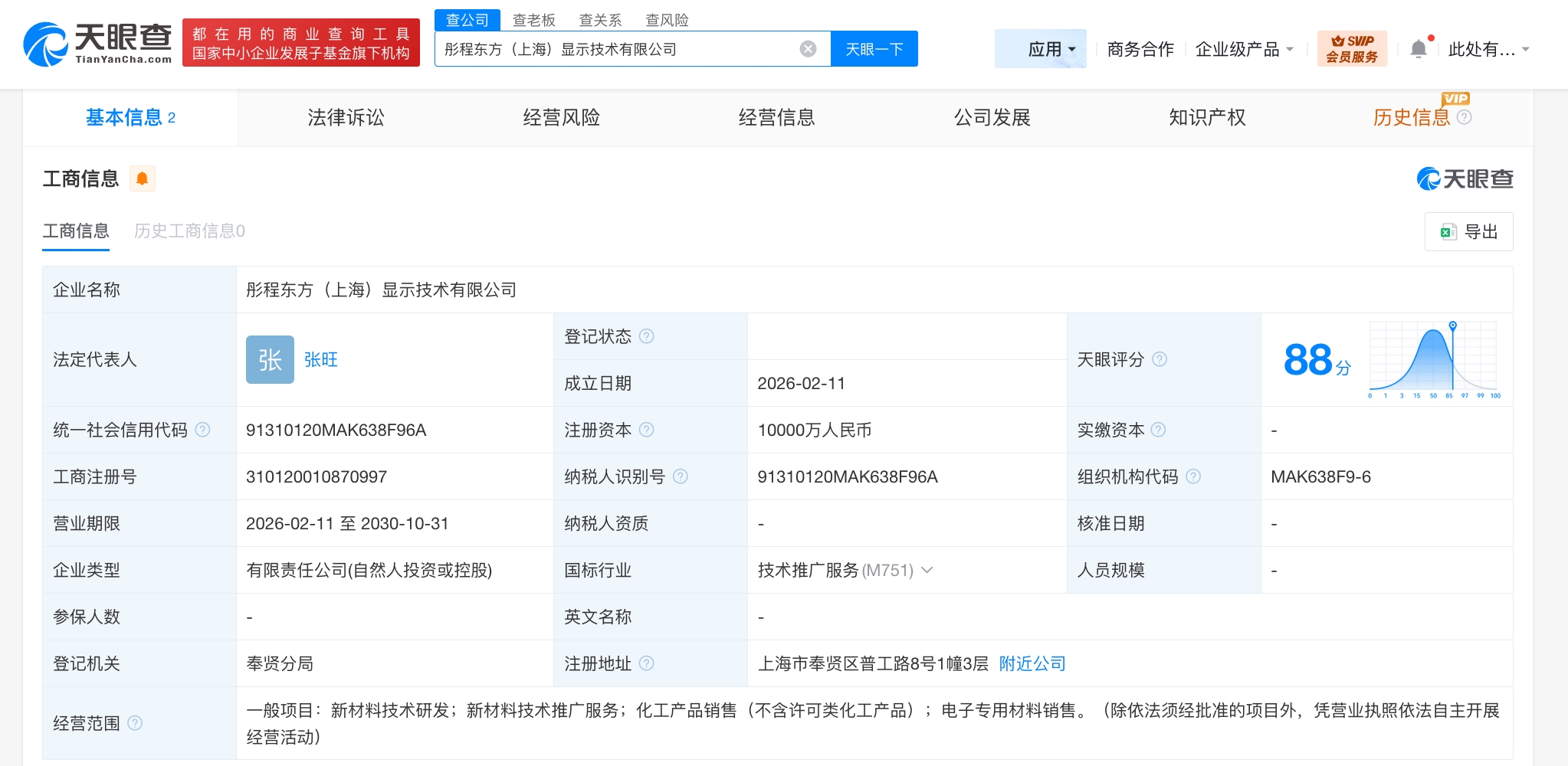
Core Insights - Tongcheng Dongfang (Shanghai) Display Technology Co., Ltd. has been established with a registered capital of 100 million RMB, focusing on new material technology research and promotion, chemical product sales, and electronic materials sales [1][2]. Company Information - The legal representative of the company is Zhang Wang, and it is co-owned by Beijing BOE Materials Technology Co., Ltd. and Shanghai Tongcheng Electronic Materials Co., Ltd. [1][3]. - The company is registered in Shanghai and has a business duration from February 11, 2026, to October 31, 2030 [2]. Business Scope - The operational scope includes general projects such as new material technology research and promotion services, as well as sales of chemical products (excluding licensed activities) [2].

煤炭概念午后活跃 山西焦化涨停
2 1 Shi Ji Jing Ji Bao Dao· 2026-02-11 06:16
Group 1 - The coal sector is experiencing increased activity, with Shanxi Coking Coal reaching its daily limit, and Lu'an Huanneng, Shaanxi Black Cat, and Yunnan Coal Energy also seeing gains [1] - Since the start of the 14th Five-Year Plan, China has been promoting the deep integration of new-generation information technology with the coal industry [1] - By the end of 2025, a total of 1,066 intelligent coal mines are expected to be established nationwide, with intelligent production capacity accounting for over 65% [1]

重大违法强制退市在即 *ST立方复牌再大涨
2 1 Shi Ji Jing Ji Bao Dao· 2026-02-11 06:12
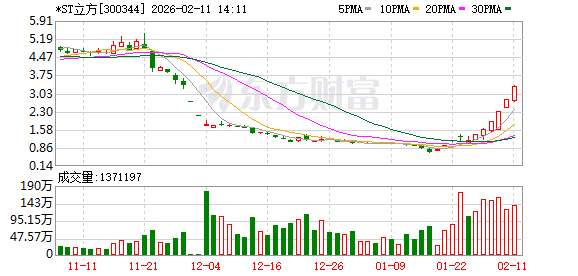
Core Viewpoint - *ST Lifan has experienced a significant stock price surge despite facing severe financial misconduct allegations and the imminent risk of forced delisting, with a remarkable increase of 314.93% over a 10-day period [2][4]. Group 1: Stock Performance and Market Reaction - On February 10, *ST Lifan announced the completion of a stock suspension review, leading to its stock resuming trading on February 11 [2]. - The stock price has deviated significantly from the company's fundamentals, indicating a risk of irrational speculation and market overheating [2]. - Following the resumption of trading, *ST Lifan's stock opened sharply higher, reaching a maximum increase of over 17% and closing with a 15.11% gain at 3.20 CNY per share [2]. Group 2: Regulatory Actions and Financial Misconduct - On November 28, 2025, *ST Lifan received a notice from the Anhui Securities Regulatory Bureau regarding administrative penalties and market entry bans, citing that the company inflated revenues by 638 million CNY and costs by 628 million CNY from 2021 to 2023 through various fraudulent activities [3]. - The stock price subsequently plummeted, falling below 1 CNY per share in January 2026 [3]. - The actual controller of *ST Lifan issued a public letter to shareholders, claiming normal operations and ongoing communication with regulatory authorities, while also indicating potential delisting if penalties were confirmed [3]. Group 3: Financial Performance and Future Outlook - For 2025, *ST Lifan expects a net loss attributable to shareholders of between 180 million CNY and 210 million CNY, compared to a loss of approximately 125 million CNY in the previous year, indicating a widening loss [4]. - The decline in performance is attributed to strategic adjustments, with a more than 80% drop in the company's smart hardware and digital services business compared to the previous year [5]. - Additionally, the company has recognized 82 million CNY in impairment provisions for goodwill and intangible assets, further exacerbating the loss [5].

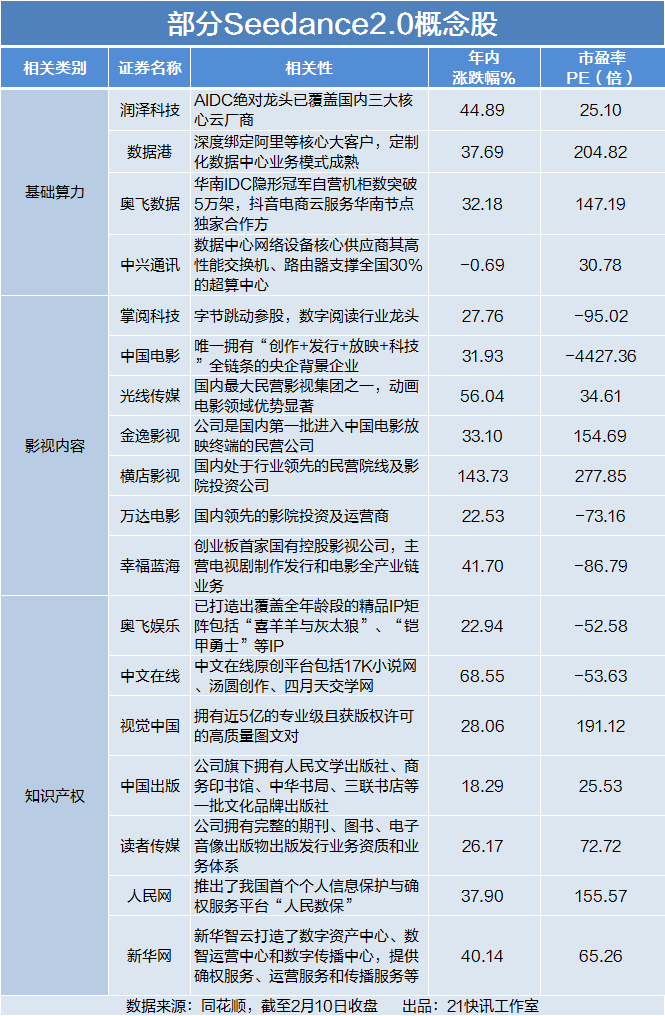
Seedance概念多股跳水,3股逆势涨停,相关股名单梳理
2 1 Shi Ji Jing Ji Bao Dao· 2026-02-11 06:08
Group 1: Market Reaction to Seedance2.0 - Following the launch of Seedance2.0, related concept stocks experienced a mixed performance, with companies like掌阅科技 (Zhangyue Technology) and欢瑞世纪 (Huanrui Century) seeing significant gains, while others in the AI and film sectors faced sharp declines [1] - The cultural media sector saw a notable increase, with a 4.79% rise on February 9, leading to multiple stocks hitting their daily limit up [3] Group 2: Seedance2.0 Technology Overview - Seedance2.0 is described as a revolutionary AI video generation model, capable of producing videos with original audio from just a single image or detailed prompt within 60 seconds, marking a significant upgrade from its predecessor [3] - The model features a unique multi-shot narrative capability that maintains consistency in character, visual style, and atmosphere during scene transitions, making it suitable for various applications including smart long videos and e-commerce [3] Group 3: Controversies and Adjustments - Despite its technological advancements, Seedance2.0 faced criticism regarding privacy and ethical concerns, leading to the suspension of its feature that uses real human materials as reference [4] - The operational team announced adjustments to ensure a sustainable creative environment in response to user feedback [4] Group 4: Industry Implications and Forecasts - Analysts from various securities firms view Seedance2.0 as a catalyst for the acceleration of the AI multi-modal industry chain, predicting a shift from manual to automated content production [5] - The model is expected to significantly reduce production costs in the animation industry, with estimates suggesting a 50% decrease in AI video generation frequency and a 37% reduction in costs per second generated [5] - The launch of Seedance2.0 is seen as a sign that the AI application industry is entering a growth phase, benefiting sectors such as AI animation, film IP, and data elements [5]