2 1 Shi Ji Jing Ji Bao Dao

Search documents
87亿欧元重注,落子湛江:巴斯夫160年最大投资项目全面投产
2 1 Shi Ji Jing Ji Bao Dao· 2026-03-27 00:33
Group 1 - BASF has inaugurated its new integrated production site in Zhanjiang, Guangdong, marking the largest single investment in its 160-year history, with a total investment of approximately €8.7 billion [1] - The Zhanjiang site covers an area of about 4 square kilometers and is designed to supply most of its products directly to the Chinese market, aligning with BASF's strategy of "local production for local markets" [1] - Dr. Martin Brudermüller, Chairman of BASF's Board of Executive Directors, emphasized the commitment and determination of the BASF team in completing this large-scale and complex project on time and within budget [1] Group 2 - The investment reflects BASF's long-term confidence in the world's largest chemical market and is a key component of its corporate strategy "Winning with Purpose" [1]

蓝月亮集团2025年实现收益84.09亿港元,期内亏损大幅收窄56.1%
2 1 Shi Ji Jing Ji Bao Dao· 2026-03-26 21:09
Core Insights - The company reported a revenue of approximately HKD 84.09 billion for 2025, remaining stable compared to the previous year, while significantly reducing its loss by 56.1% to about HKD 3.29 billion, indicating substantial progress in strategic adjustments [2][3] - The company achieved notable revenue growth in its product categories, with clothing care products generating HKD 74.01 billion, personal care products at HKD 5.78 billion (up 12.8%), and home care products at HKD 4.30 billion (up 3.3%) [2] - The company successfully optimized its overall cost structure, with sales and distribution expenses and general and administrative expenses decreasing by 11.5% and 12.8%, respectively [2] Strategic Developments - The company has been focusing on lean management and cost control, which has led to a significant improvement in its competitive position and operational resilience [2] - Continuous investment in research and innovation has been a priority, with new product launches such as the moisturizing foam shower gel and clothing stain remover enhancing the product matrix to meet diverse consumer cleaning needs [2] - The company plans to maintain a user-centric approach, emphasizing innovation, sustainability, and market trend alignment while increasing R&D investment to develop high-quality products that cater to consumer demands and environmental considerations [2]
南财V快评:德国巴斯夫的中国故事
2 1 Shi Ji Jing Ji Bao Dao· 2026-03-26 13:27
Core Insights - BASF's integrated base in Zhanjiang, with an investment of nearly 100 billion euros, has officially commenced full production, significantly impacting daily life through the supply of essential materials for various consumer products [1][2] - The establishment of this facility enhances supply chain stability and product quality, while also promoting environmental sustainability through the use of advanced renewable energy technologies [1][2] Industry Impact - The successful launch of BASF's largest wholly-owned overseas project in the current complex international environment signals strong confidence in the Chinese market and Guangdong's business climate [2] - The facility is expected to generate one million tons of ethylene annually and attract numerous upstream and downstream enterprises, potentially leading to the development of a world-class green petrochemical industry cluster in the Guangdong region [2] - This development will bolster strategic industries in Guangdong, such as new energy vehicles, electronic information, and biomedicine, enhancing the resilience and autonomy of the manufacturing sector [2]
英伟达AI“帝国”B面:20年收购史的“克制和清醒”
2 1 Shi Ji Jing Ji Bao Dao· 2026-03-26 12:49
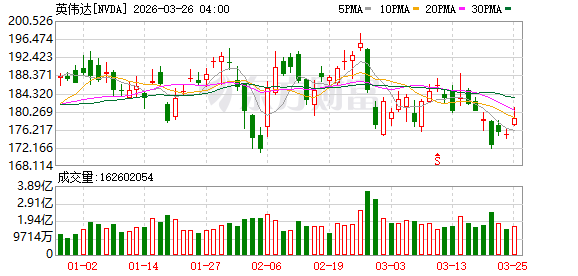
Core Insights - Nvidia's strategy has evolved from being a GPU manufacturer to becoming a comprehensive AI infrastructure architect, focusing on a complete ecosystem around computing power, networking, and software platforms [2][12] - Recent investments, including $2 billion each in Lumentum and Coherent, highlight Nvidia's proactive positioning in critical segments of AI infrastructure [2] - The company's acquisition strategy has been characterized by a disciplined approach, targeting key technological nodes and industry transitions rather than merely expanding scale [2][12] Acquisition Strategy Evolution - Nvidia's early acquisitions were aimed at consolidating its GPU dominance, starting with the $70 million acquisition of 3dfx in 2000, which eliminated a major competitor and established its leadership in the GPU market [3] - Between 2004 and 2009, Nvidia expanded its GPU capabilities through various acquisitions, including PortalPlayer for mobile computing and Mental Images for ray tracing technology [3][4] - A shift occurred post-2010, where Nvidia's acquisition strategy became more aggressive and diversified, attempting to enter the mobile communication market with the $367 million acquisition of Icera, which ultimately failed [5][6] Data Center and Regulatory Challenges - The acquisition of Mellanox for $6.9 billion in 2019 marked a pivotal moment, transitioning Nvidia from a GPU manufacturer to a provider of complete data center solutions, significantly enhancing its networking capabilities [6][8] - The failed $40 billion acquisition of Arm in 2020 due to regulatory hurdles led Nvidia to adjust its strategy towards more flexible capability enhancement and ecosystem binding [7][8] - From 2019 to 2022, Nvidia solidified its data center capabilities while pivoting towards a full-stack AI infrastructure platform, making data center business a core growth engine [8][10] AI Ecosystem Focus - In recent years, Nvidia has accelerated its acquisition strategy, focusing on AI software and computing orchestration, with 83 investment actions involving 76 companies by December 2025 [10][12] - Key acquisitions include OmniML for model inference efficiency and Run:ai for AI workload scheduling, which enhance Nvidia's capabilities across the AI development lifecycle [10][11] - The company has adopted a "class acquisition" model, integrating technology and teams without traditional full acquisitions, effectively managing regulatory pressures while enhancing its technological edge [11][12] Future Outlook - Nvidia's future acquisitions will continue to focus on AI ecosystems, particularly in AI inference, computing orchestration, data security, and foundational software [13] - The company aims to optimize its "class acquisition" model to further solidify its leadership in AI computing power amidst regulatory and competitive challenges [13]


营运利润增10%,中国平安拟派发488.91亿元现金分红
2 1 Shi Ji Jing Ji Bao Dao· 2026-03-26 12:48
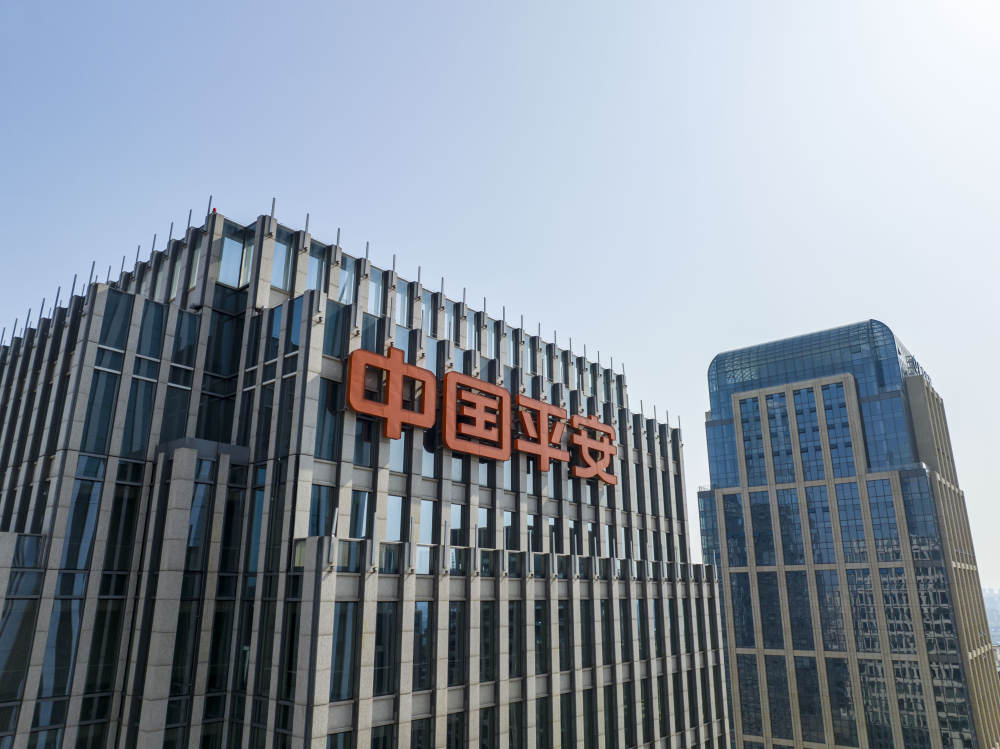
Core Insights - China Ping An Insurance (Group) Co., Ltd. reported a 10.3% year-on-year increase in operating profit to CNY 134.415 billion for the year 2025, with a 22.5% increase in net profit attributable to shareholders, reaching CNY 143.773 billion [1][3] - The company announced a final dividend of CNY 1.75 per share, totaling CNY 48.891 billion in cash dividends, marking 14 consecutive years of dividend growth [1] Life and Health Insurance Business - The new business value for life and health insurance grew by 29.3% to CNY 36.897 billion in 2025, with agent channel new business value increasing by 10.4% and bank insurance channel new business value soaring by 138.0% [3] - The contribution from bank insurance, community financial services, and other channels to new business value increased by 12.1 percentage points year-on-year [3] - The number of customers using medical and elderly care services reached 18.298 million, with a 13-month policy continuation rate of 97.4%, up by 1.0 percentage points [3] Property and Casualty Insurance - The property and casualty insurance segment reported a premium income of CNY 343.168 billion, a 6.6% increase, while insurance service income rose by 3.3% to CNY 338.912 billion [3] - The overall combined cost ratio improved by 1.5 percentage points to 96.8%, with the auto insurance combined cost ratio improving by 2.3% to 95.8% [3] - The segment provided risk protection for 2.93 million small and micro enterprises, covering CNY 37.304 trillion in risks [3] Investment Performance - As of the end of 2025, the investment portfolio of insurance funds reached CNY 6.49 trillion, a 13.2% increase from the beginning of the year, with a comprehensive investment return rate of 6.3%, up by 0.5 percentage points [4] - The asset allocation included 55.0% in bonds, 14.8% in stocks, and 4.4% in equity funds, with 99.9% of corporate bonds rated AAA or above [4] Healthcare and Elderly Care Strategy - The company has been intensifying its healthcare and elderly care strategy, aiming to create an upgraded version of a managed healthcare model and become a leading operator in the elderly care ecosystem in China [5] Health Insurance and Technology Integration - In 2025, health insurance premium income reached CNY 159 billion, with medical insurance premium income close to CNY 73.4 billion, reflecting a 2.7% year-on-year growth [6] - The company launched various AI-driven products, including digital health assistants and AI doctors, covering over 11,300 diseases with a diagnostic accuracy rate of 95.1% [6]

87亿欧元湛江基地全面投产,巴斯夫重仓中国
2 1 Shi Ji Jing Ji Bao Dao· 2026-03-26 12:36
Core Viewpoint - BASF's Zhanjiang integrated base has officially commenced full production, marking a significant milestone as the first wholly foreign-owned large-scale petrochemical project in China, with a total investment of €8.7 billion, setting a record for BASF's single investment [1][10]. Group 1: Project Overview - The Zhanjiang integrated base was announced in 2018, began construction in 2019, and saw its first production unit launched in 2022, with core units expected to start producing by 2025-2026 [1]. - The base has successfully launched 18 units and 32 production lines, capable of producing over 70 products, serving various essential industries [5]. Group 2: Sustainability and Innovation - The Zhanjiang base is redefining green chemistry standards, achieving a 50% reduction in CO2 emissions compared to traditional petrochemical bases through integrated processes and renewable energy applications [3]. - The facility operates on 100% renewable energy, supported by long-term green electricity purchase agreements and investments in offshore wind farms [3][4]. Group 3: Strategic Importance - The Zhanjiang base serves as a critical platform for BASF's future development in China, aligning with the company's strategy of "local production for local markets" [7]. - By 2025, BASF's sales in Greater China are projected to reach €8.2 billion, with total investments exceeding €15 billion, highlighting the region's growing importance to the company [7][8]. Group 4: Competitive Advantage - BASF's integrated approach at the Zhanjiang base enhances its cost structure and reduces carbon emissions, providing a competitive edge in the market [6]. - The facility's flexibility in raw material processing allows it to adapt to market fluctuations, ensuring stable product output amidst geopolitical and economic uncertainties [4][9].
中国生物制药净利增长31.4%,创新药成产业升级核心引擎
2 1 Shi Ji Jing Ji Bao Dao· 2026-03-26 11:24
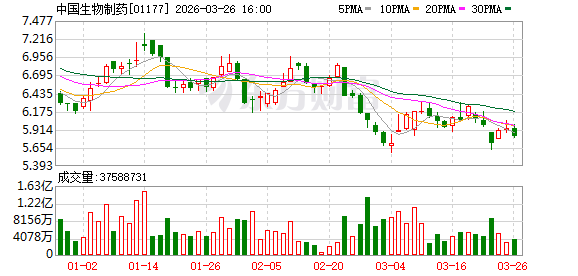
Core Viewpoint - The company has demonstrated significant growth in revenue and net profit for 2025, with a notable increase in innovative product revenue, indicating a strategic shift towards becoming a platform-based innovative pharmaceutical enterprise [1][3]. Financial Performance - In 2025, the company achieved a total revenue of 31.83 billion yuan, representing a year-on-year growth of 10.3%, and an adjusted net profit of 4.54 billion yuan, up 31.4% year-on-year [1]. - Innovative product revenue surpassed 15.22 billion yuan, accounting for nearly 48% of total revenue, with a year-on-year growth of 26.2% [1]. Product Development - The company expanded its innovative product matrix in 2025, with four new products approved by NMPA, including significant drugs for cancer treatment [2]. - The core product, Anlotinib, received approvals for three new first-line indications, bringing the total to ten, solidifying its market position as a leading anti-angiogenic drug [2]. Research and Development - R&D investment reached 5.87 billion yuan in 2025, a year-on-year increase of over 15%, constituting 18.4% of total revenue [4]. - The company has established ten core technology platforms and a professional R&D team of over 2,900 members, advancing more than 130 clinical studies [4]. Strategic Acquisitions - In early 2026, the company acquired the domestic siRNA innovator Hejia for 1.2 billion yuan, enhancing its capabilities in the small nucleic acid field [4][5]. - The company also entered a global licensing agreement with Sanofi for the innovative drug Roflumilast, valued at over 1.53 billion USD, marking a significant milestone in its international strategy [5]. Market Position and Future Outlook - The company is positioned to leverage its innovative pipeline for future growth, with over 20 innovative drugs or new indications expected to be launched between 2026 and 2028 [9]. - The recent government emphasis on biopharmaceuticals as a pillar industry is expected to enhance the market potential for innovative drugs, with a notable increase in outbound licensing deals [6][7]. Industry Trends - The biopharmaceutical sector is undergoing a structural adjustment, transitioning from capital-driven expansion to a focus on clinical value and quality improvement [7]. - The total value of outbound licensing deals for Chinese innovative drugs reached 135.66 billion USD in 2025, making China the leader in this area [7][8].

美团:2025年营收3648.5亿元,同比增长8.1%
2 1 Shi Ji Jing Ji Bao Dao· 2026-03-26 11:00
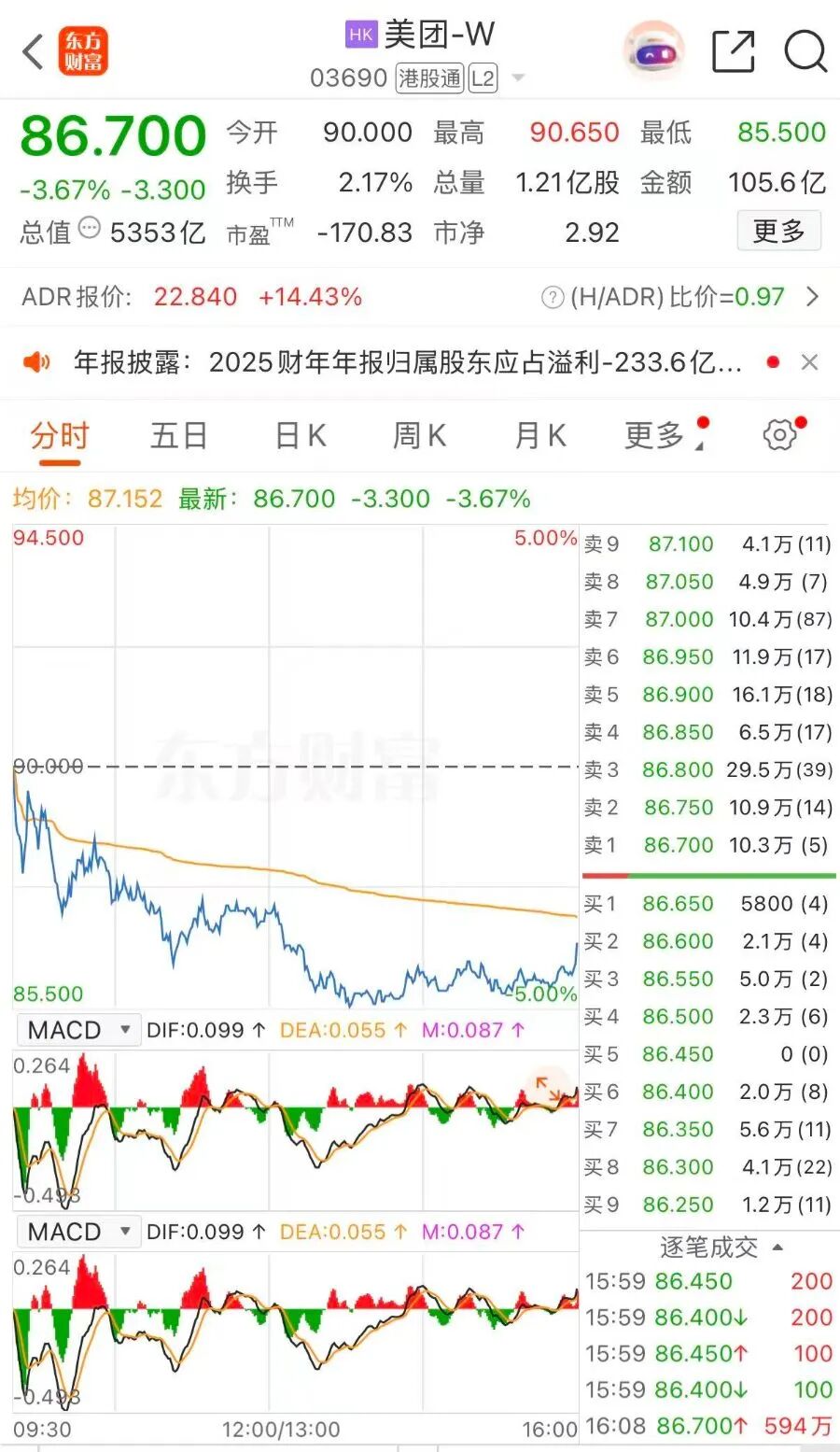
记者|王泽坤 编辑|叶映橙 美团公告,第四季度营收921.0亿元,同比增长4.1%,预估920.8亿元;第四季度调整后净亏损150.8亿元,去年同期盈利98亿 元。美团全年营收3,648.5亿元,同比增长8%,预估3,661.3亿元;全年净亏损233.6亿元,预估亏损241.1亿元。调整后净亏损 186.5亿元人民币,预估亏损168.6亿元人民币。 3月26日,美团港股股价下跌3.67%至86.7港元,总市值5353亿港元。 | HK = オーW ( ) | | | | | | --- | --- | --- | --- | --- | | 03690 港股通 L2 ▼ | | | | | | 90.650 最低 86.700 37 | 90.000 最高 | | | 85.500 | | 1.21亿股 金额 -367% -3 300 代丁 | 2.17% 总量 | | | 105.6 亿 | | 总值 5353亿 市盈 -170.83 市净 2.92 | | | | 申示 | | ADR报价: 22.840 +14.43% 2 (H/ADR) 比价=0.97 > | | | | | | ◀ 年报披露:202 ...

一拖股份:2025年净利润8.12亿元,同比减少11.94%
2 1 Shi Ji Jing Ji Bao Dao· 2026-03-26 09:47
Core Viewpoint - The company, Yituo Co., Ltd., reported a decline in revenue and net profit for the year 2025, indicating potential challenges in its financial performance [1] Financial Performance - The company achieved an operating revenue of 10.823 billion yuan in 2025, a year-on-year decrease of 9.09% [1] - The net profit attributable to shareholders was 812 million yuan, down 11.94% year-on-year [1] - Basic earnings per share were 0.72 yuan, reflecting a decline of 11.94% compared to the previous year [1] - The net cash flow from operating activities was 916 million yuan, which represents a significant decrease of 24.70% year-on-year [1] Dividend Distribution - The company plans to distribute a cash dividend of 1.9746 yuan per 10 shares (including tax), totaling 222 million yuan (including tax) [1] - In addition to the planned dividend, the company has already distributed 76.9023 million yuan in dividends for the first half of 2025, bringing the total expected cash dividend for the year to 299 million yuan (including tax) [1]

亚太主要股指飘绿,港股科网股重挫,快手大跌14%,油气股逆势领涨
2 1 Shi Ji Jing Ji Bao Dao· 2026-03-26 07:54
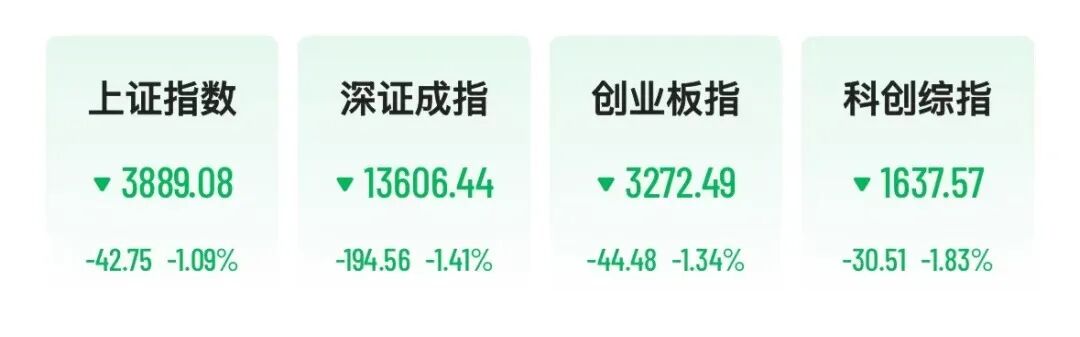
Group 1 - The Asia-Pacific stock markets experienced a widespread decline, with Japan's Nikkei 225 index falling by 0.27% and South Korea's KOSPI index dropping by 3.22% [1] - The A-share market saw a pullback, with all four major indices declining over 1%, and the Shanghai Composite Index falling below 3900 points, with nearly 4500 stocks declining across the market [1] Group 2 - Oil and gas stocks showed strength in the afternoon, with Blue Flame Holdings surging to the limit, and Shouhua Gas rising over 6%. International oil prices increased by approximately 2% for both New York and Brent crude [5] - Coal and chemical stocks experienced short-term gains, with Jinmei Technology hitting the limit and Haixing Co. rising over 8% [5] - The power sector was active, with Huadian Energy achieving four limits in six days, and Hunan Development achieving three consecutive limits [5] - Lithium battery material stocks showed repeated strength, with Rongjie Co. achieving three consecutive limits [5] - The commercial aerospace concept saw renewed activity, with Shenjian Co. and Zhongchao Holdings hitting the limit, and Xice Testing rising over 16% [5] Group 3 - The photovoltaic sector continued to weaken, with Guosheng Technology hitting the limit down, and Yubang New Materials and Shouhang New Energy both declining over 9% [6] - The Hong Kong stock market also faced declines, with the Hang Seng Index dropping over 2% and the Hang Seng Technology Index falling by 3.4% [6] Group 4 - Technology stocks collectively fell, with Kuaishou dropping over 14%, and major companies like Huahong Semiconductor and SMIC declining over 6% [7] - The consumer sector led the declines, with Pop Mart falling 11% [7] - Oil and gas stocks rose against the trend, with Baijin Oil Services increasing over 9% [7]