
Zhong Guo Qing Nian Bao

Search documents
“升级”月球车 00后大学生提出月球跳跃探测方案
Zhong Guo Qing Nian Bao· 2025-06-23 03:05
Core Viewpoint - The article highlights a team of university students from Northwestern Polytechnical University who have developed an innovative lunar jumping detection scheme, aiming to enhance lunar exploration capabilities in the context of China's ongoing lunar exploration projects [1][5]. Group 1: Team Background and Motivation - The team, led by Ouyang Chenhao, is composed of students from various disciplines, united by a shared passion for aerospace technology and lunar exploration [1]. - The inspiration for the project stems from the challenges posed by the lunar environment, particularly the complex terrain of the lunar south pole, which traditional lunar rovers cannot effectively navigate [1][3]. Group 2: Technical Innovations - The team has created a new type of detector capable of continuous and stable jumping in simulated lunar conditions, overcoming challenges related to structure design and control algorithms through extensive experimentation [3]. - The design incorporates a pneumatic soft-bodied robot that utilizes a dual-stable design, allowing for explosive power generation and effective jumping capabilities in low gravity [3][5]. - By using compressed gas as a power source, the team has mitigated the overheating issues associated with traditional electric motors in vacuum conditions [3]. Group 3: Proposed System and Future Directions - The proposed system consists of a mother vehicle and multiple sub-body pneumatic robots, enhancing exploration efficiency and providing new possibilities for future lunar research station construction and operation [5]. - The team aims to continue advancing in deep space exploration, transforming innovative ideas into practical engineering solutions [5].


南极罗斯海科考 揭开秋季生态神秘面纱
Zhong Guo Qing Nian Bao· 2025-06-23 03:05
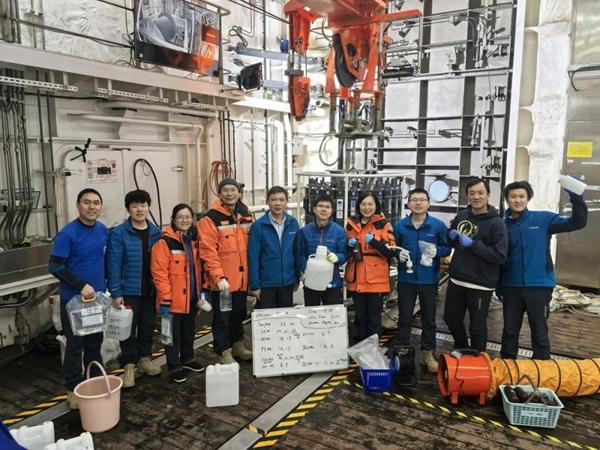
Group 1 - The core viewpoint of the article highlights the successful completion of China's 41st Antarctic expedition, which focused on the autumn ecosystem of the Ross Sea, marking a significant international collaborative research effort in a previously underexplored area [1][2]. - The expedition involved approximately 50 researchers from nine countries, with over 30% being Chinese scientists, showcasing a strong international collaboration in marine science [1][2]. - The Ross Sea is identified as a critical area for global ocean circulation and climate, making the research conducted there vital for understanding climate change and marine biodiversity [2][4]. Group 2 - The expedition faced extreme conditions, including temperatures ranging from -20°C to -28°C, and successfully collected over 6,000 chemical and biological samples over 20 days [1][8]. - The research team was well-prepared, with a diverse group of experts from various fields, including marine ecology, physical oceanography, and biogeochemistry, contributing to a comprehensive study of the Ross Sea ecosystem [6][8]. - The findings revealed an active dark ecosystem in the Antarctic autumn, with significant changes in phytoplankton populations compared to summer, indicating the importance of seasonal studies in understanding marine life dynamics [4][5].
“学术买卖”新交易背后 学术评估痛点依旧
Zhong Guo Qing Nian Bao· 2025-06-23 03:05
Core Viewpoint - The National Natural Science Foundation of China has issued a warning against illegal activities related to the sale and modification of project application documents, highlighting a significant issue of academic misconduct in the research community [1] Group 1: Academic Misconduct and Market Dynamics - A substantial portion of academic misconduct cases, nearly 30%, involves the buying and selling of research data and papers [1] - There is a growing trend of academic "transactions," with individuals openly advertising services for paper publication and project application modifications on social media and e-commerce platforms [2] - A study indicated that over 50% of 163 analyzed medical papers with misconduct issues involved paper buying or ghostwriting [2] Group 2: Underlying Causes of Academic Transactions - The lack of personal research integrity is identified as a primary reason for the prevalence of academic transactions [3] - High-quality papers and key projects are critical for career advancement, leading some researchers to compromise their integrity for personal gain [3][4] - The deep entanglement of research projects and personal benefits creates a high demand for academic transactions [3][4] Group 3: Evaluation and Assessment Challenges - The narrow advancement pathways for ordinary researchers and the limited recognition of high-level projects contribute to the temptation to engage in academic misconduct [5][6] - The pressure from institutional evaluations and the need for quantifiable metrics in research performance drive individuals towards academic "buying" [7][8] - Recent reforms aim to address the overemphasis on quantitative metrics in evaluating research performance, but challenges remain in shifting the evaluation paradigm [7][8] Group 4: Recommendations for Improvement - A dual approach of "blocking" and "guiding" is suggested to address academic misconduct, emphasizing the need for better evaluation systems [9][10] - Establishing a more scientific and reasonable evaluation framework is crucial for fostering a supportive research environment [10][11] - There is a consensus on the necessity of zero tolerance for academic misconduct, with calls for stricter regulations and a better research culture [12]
职业教育贯通培养:既要“面子”又要“里子”
Zhong Guo Qing Nian Bao· 2025-06-23 02:52
湖南省教育科学研究院职业教育与成人教育研究所所长毕树沙介绍,2024年,湖南中高本贯通培养,共 有61所高职、138所中职参与,招生1.4万人;2023年开始实施"湖湘工匠燎原计划",已有7所本科院校 共免试招收技能竞赛获奖高职毕业生439人,单独编班教学。 "我们选择岗位技术含量高、技能训练周期长、建设基础好的专业来实行贯通培养。"毕树沙说,贯通培 养可以畅通技能成才通道,增强职业教育吸引力,还能使高职带中职,坚守了中职的基础地位。 "在上海,中本贯通覆盖66%的中职学校和18所本科(含1所职业本科)院校。中职学校贯通培养学生的 分数线逐年攀升,普遍高于公办高中最低控制线,2024年最高达670分。"上海市教师教育学院高教职教 教师部副部长曾海霞介绍,对中高本贯通培养,上海要求专业设置要围绕上海重点产业发展,聚焦行业 企业对高素质技术技能人才的需求。2025年上海将增设28个中高职教育贯通培养模式专业。 普通高校有本硕博连读,职业院校有中高本贯通培养。 自20世纪80年代起,一些地方和学校开展职业教育贯通培养探索,已经形成了贯通培养的多种模式,包 括中高职贯通、中本贯通和高本贯通三类,具体形成了"五年一贯制 ...
心理拔刺:从校内小课堂走向校外“云课堂”
Zhong Guo Qing Nian Bao· 2025-06-23 02:45
Core Insights - The article discusses the implementation of online psychological health education initiatives in Yingshou District, Anhui Province, aimed at addressing the mental health challenges faced by students and their parents [2][3][5] Group 1: Online Psychological Health Education - Since April, the Yingshou District Education Bureau and local media have supported psychological health teachers and counselors in conducting online live sessions to address students' mental health issues [2][3] - The first eight live sessions attracted a total of 192,000 real-time viewers and 239,000 cumulative views, with over 7,000 responses to inquiries from parents and students [2] Group 2: Identified Challenges - Common issues identified include academic anxiety, life pressures, and self-criticism among students, which can hinder their growth if not addressed promptly [3][4] - Students often feel uncomfortable discussing personal issues with older counselors due to perceived generational gaps, leading to a reluctance to seek help [3][4] Group 3: Parental Involvement and Misconceptions - Many parents express confusion regarding their children's behavior and often hold misconceptions about effective parenting, which can exacerbate children's psychological issues [6][7] - The article highlights the need for parents to understand their children's psychological needs and to foster open communication [6][7] Group 4: Future Plans and Initiatives - The Yingshou District Education Bureau plans to develop targeted courses addressing specific educational needs and to establish a family education lecturer team to guide schools in managing students' psychological health [9][10] - The ongoing efforts aim to create a supportive environment for both students and parents, ensuring timely recognition and intervention for mental health issues [10]
六年探索路,职业本科闯出了一条怎样的赛道
Zhong Guo Qing Nian Bao· 2025-06-23 02:41
Core Insights - The article discusses the development and challenges of vocational undergraduate education in China, highlighting the establishment of 51 vocational undergraduate institutions that have successfully enrolled students as of 2024 [2][4]. Group 1: Development of Vocational Undergraduate Education - The Chinese government initiated vocational undergraduate education trials in 2019, leading to the establishment of 51 vocational undergraduate institutions by 2024, marking a stable development phase [2][3]. - The first "Vocational Undergraduate Frontier Forum" was held to discuss the positioning, quality, and future development of vocational undergraduate education [1][2]. Group 2: Quality and Challenges of Vocational Undergraduate Institutions - The quality of education in the 51 vocational undergraduate institutions is under scrutiny, with challenges in funding, resource distribution, and practical training facilities [3][4]. - Despite a growing number of enrollments, the institutions face pressure from traditional views on vocational education and competition from prestigious universities [4][5]. Group 3: Employment Outcomes and Industry Alignment - Graduates from vocational undergraduate programs are expected to meet industry demands, with specific training tailored to sectors like pharmaceuticals and oil [8][10]. - The initial employment rate for graduates from Zhejiang Pharmaceutical Vocational University reached 98.01%, indicating strong industry alignment [8]. Group 4: Future Directions and Industry Collaboration - The article emphasizes the need for deeper collaboration between vocational institutions and industries to address the "hot school, cold enterprise" issue, ensuring that educational programs meet real-world needs [9][11]. - Companies like Huawei are increasingly involved in vocational education, indicating a shift towards a dual approach where schools adapt to industry requirements [11].
“新”式毕业礼物,高考生与大学生一起在音乐会中治愈
Zhong Guo Qing Nian Bao· 2025-06-23 02:18
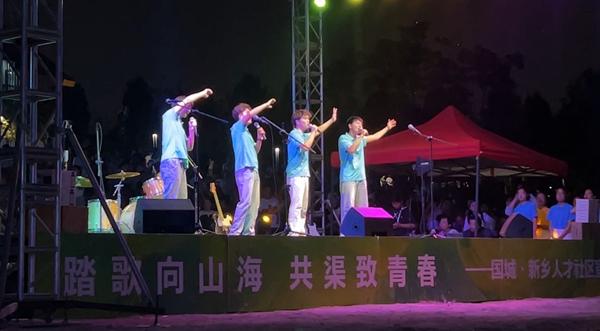
Core Points - The event "Towards the Future - Weekend Together Singing New Xiang Graduation Season" was held in Xinxiang City, aimed at celebrating high school and university graduates with a vibrant music festival [4][5] - The music festival featured performances from students of various universities and high schools, creating a lively atmosphere filled with youth and energy [4][6] - The event served as a gift from local authorities to graduates, emphasizing the importance of youth in revitalizing the city [4][5] Group 1 - The music festival was organized by the Xinxiang Youth League Committee in collaboration with local media and cultural departments, showcasing a collective effort to honor graduates [4][5] - Graduates were allowed entry without tickets, only needing to wear their school uniforms, which fostered a sense of community and celebration [4][5] - The event included surprise guests such as parents and teachers who offered blessings to the graduates, enhancing the emotional significance of the occasion [4][5] Group 2 - The festival provided a platform for students to express their emotions after the intense pressure of the college entrance examination, allowing them to celebrate their achievements [5][6] - Performances included popular songs that resonated with the students, creating a shared experience that highlighted their journey through high school [5][6] - The event concluded with heartfelt messages from teachers, encouraging students to embrace their future and pursue their dreams [7][8]
抗日英烈佟麟阁:卢沟烽火铸忠魂
Zhong Guo Qing Nian Bao· 2025-06-23 02:11
Core Viewpoint - The article highlights the historical significance of General Tong Linge and the legacy of the 29th Army during the Second Sino-Japanese War, emphasizing the importance of remembering history through education and commemoration efforts by youth volunteers like Zhang Cuiguanrong [1][2][4]. Group 1: Historical Context - Zhang Cuiguanrong, a high school student, serves as a volunteer guide at the Tong Linge Memorial Hall, reflecting on the heroism of General Tong Linge during the Lugou Bridge Incident in 1937 [1]. - The 29th Army, under General Tong, was known for its fierce resistance against Japanese forces, particularly during the Battle of Xifengkou in 1933, which was marked by significant bravery and sacrifice [1][2]. - The memorial hall features a symbolic large knife donated by Tong's family, representing the 29th Army's iconic weaponry [1]. Group 2: Commemoration and Legacy - The article describes how the legacy of General Tong Linge is preserved through various commemorative activities, including annual memorials by his descendants and youth volunteers [3]. - The memorial hall serves as a site for education, where young volunteers like Zhang Cuiguanrong strive to accurately convey the history and significance of the events to visitors [4]. - The ongoing cultivation of historical awareness is evident in the community's efforts to maintain the memorial site and engage in educational activities [2][4].
一枚印章见证山东安陵88年乡村蝶变
Zhong Guo Qing Nian Bao· 2025-06-23 02:11
Core Viewpoint - The article highlights the transformation of Anling Village in Shandong Province, which has leveraged its rich revolutionary history to drive rural revitalization and economic development through red tourism and diversified industries [1][2][3] Group 1: Historical Significance - Anling Village is historically significant as it was the birthplace of the first rural Party branch in Heze and served as a strategic location during the Anti-Japanese War, hosting key military leaders [1] - The village's historical sites, including the Anling Revolutionary History Museum, serve as a testament to the revolutionary spirit and are pivotal in educating future generations [2] Group 2: Red Tourism Development - Anling Village has activated its rural economy by transforming red resources into development momentum, attracting over 4,000 visitors annually through various educational activities and documentaries [2] - The village has established a series of red education activities, including "Seeking Red Memories" and "Retracing the Dayang Lake Battle Route," to engage the community and promote historical awareness [2] Group 3: Economic Diversification - Anling Village is implementing a "one village, one product" model, focusing on a technology-driven specialty breeding chain and integrating 156 acres of forest land for sustainable practices [3] - The village has developed 15 wood processing factories, producing furniture and leveraging e-commerce for sales both domestically and internationally [3] Group 4: Recognition and Cultural Heritage - Anling Village has been recognized as a red cultural characteristic village in Shandong Province and has received multiple honors for its contributions to party history education and national defense education [3] - The village's initiatives have led to the establishment of "Red Anling" as a non-material cultural heritage at the district level, emphasizing the importance of cultural preservation alongside economic development [3]
刘方竞:把每一名少先队员都放在心里
Zhong Guo Qing Nian Bao· 2025-06-23 02:04
Core Viewpoint - The article highlights the dedication and innovative approaches of Liu Fangjing, a youth team counselor, in promoting political education and personal development among young students through engaging activities and emotional support [1][2][3][4][5][6] Group 1: Political Education Initiatives - Liu Fangjing emphasizes the importance of political education for children, aiming to cultivate a sense of responsibility and mission among them [2] - She has established the "Red Scarf Propaganda Team" and "Red Scarf Lecturers" to make political education more engaging and relatable for students [2] - Weekly activities, termed "Red Dates," allow students to learn about revolutionary heroes and the history of the Communist Party in an immersive manner [2] Group 2: Practical Development Activities - Liu Fangjing encourages students to participate in practical activities that foster their autonomy and creativity, aligning with the school's philosophy of making children happy [3] - She organizes various social activities, such as the "Book Fragrance Youth" reading forum and "Red March" activities, to enhance students' understanding of their values and ideals [3] - The establishment of a campus video channel, "Xuejun Youth," documents the growth and achievements of the students [3] Group 3: Environmental Awareness - Liu Fangjing leads initiatives like the "Little River Chief" program, where students learn about environmental protection and engage in water quality monitoring [4] - The program includes hands-on activities that promote awareness and responsibility towards local water bodies [4] Group 4: Emotional Support and Personal Growth - Liu Fangjing prioritizes understanding and supporting students' emotional needs, fostering a nurturing environment [5] - She has built strong relationships with over 1,000 students, helping them recognize their strengths and potential [5][6] - Through personalized encouragement, she has successfully motivated students like Xiaomeng to develop confidence and self-worth [6]