
Zhong Guo Qing Nian Bao

Search documents
新春走基层|春节保供:天津多部门联动,保障LNG船高效通关接卸
Zhong Guo Qing Nian Bao· 2026-02-10 10:31
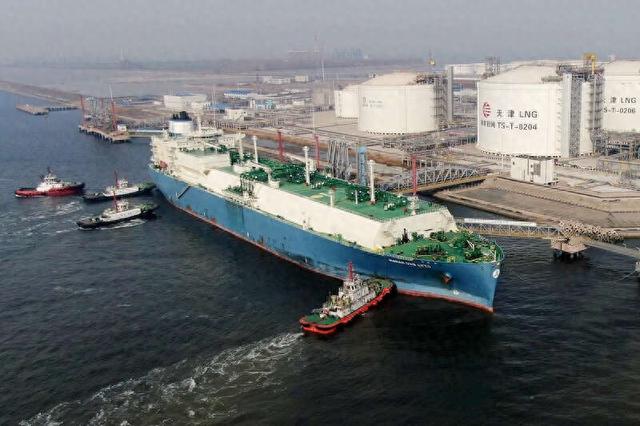
中国青年报客户端讯(中青报·中青网记者 高荣建 周浩 通讯员 崔鑫)临近春节,民生用气迎来高峰, 也是一年一度天然气冬季输气保供的关键阶段。 2月9日,希腊籍"勒托"号大型LNG(液化天然气,简称LNG)运输船缓缓靠泊国家管网集团天津LNG接 收站并顺利开展装卸作业。天津南疆海事局、天津南疆边检站、天津南疆海关采取"一次登轮、联合查 验"服务举措,对该轮进行联合登临检查,30分钟内完成通关联检手续。这也是该码头在进入春节保供 关键期后迎来的首艘LNG船舶。 三家单位主动作为、靠前服务,以"南疆口岸政务服务联盟"为依托成立工作组,启动"护航暖冬"春节能 源保供专项保障方案,全力保障重要民生能源物资"随到随卸",为节日期间千家万户温暖过冬注入充 足"底气"。 登临检查中,海事部门依托海上交通安全网格化治理模式,通过CCTV远程监控系统实时跟踪作业动 态,结合现场巡查对船舶作业情况及系泊安全进行监督;边检民警现场与船舶代理和码头作业人员进行 对接,提前对船舶船员入境申报信息进行预检审核;海关工作人员精准掌握卸载进度及输送管线情况, 紧密衔接现场查验、样品取样、送检检测等监管环节,确保重要能源通关接卸外输的全链条安全 ...

以青春之力破238米高塔建设难题
Zhong Guo Qing Nian Bao· 2026-02-10 07:23
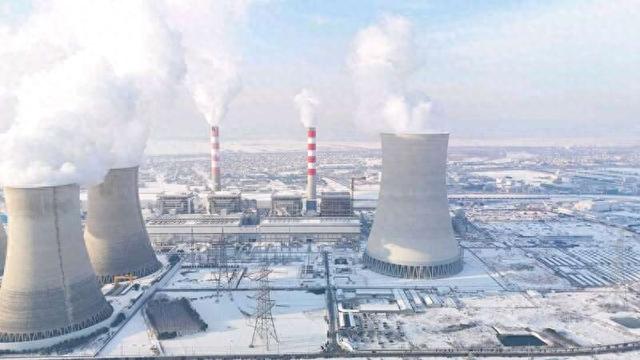
Core Viewpoint - The Huainan Pingwei Power Plant Phase IV, a 2×1000 MW ultra-supercritical coal-fired power project, has officially commenced commercial operation after a successful 168-hour full-load trial run, showcasing the commitment to quality and safety through the establishment of youth technical teams [1][7]. Group 1: Project Overview - The project is located in Huainan City, Anhui Province, known as the "hometown of tofu and energy capital," and is the largest pithead power station in East China [1]. - The Phase IV project includes the construction of two 1000 MW ultra-supercritical reheat coal-fired generating units, along with efficient denitrification, desulfurization, and dust removal facilities [1]. Group 2: Technical Innovations - The project features the world's tallest and largest all-concrete cooling tower, standing at 238.9 meters high and 181.7 meters in diameter, with a water surface area of 21,200 square meters [2]. - The cooling tower employs a three-vertical-shaft water distribution system, allowing flexible operation based on the number of running units, load, and temperature conditions, which helps reduce outlet water temperature and unit operating back pressure [5]. Group 3: Youth Involvement and Efficiency - A youth task force, with an average age of 28, has been established to tackle key challenges in the project, focusing on precision control and high-altitude operations [1][2]. - The team has integrated 31 smart construction modules and deeply applied BIM (Building Information Modeling) technology across 14 scenarios, enhancing construction visualization and traceability, thereby improving work efficiency [5][7]. - The youth team comprises 92% members under 30 years old, who view challenging tasks as opportunities for growth and practical experience [7]. Group 4: Economic Impact - Upon completion, the project will have a total installed capacity of 6.54 million kW, making it the largest power plant in Anhui Province, with an annual electricity generation exceeding 33 billion kWh, sufficient to meet the annual electricity needs of 12 million households [7].

为大地“听诊” 为祖国找矿——跟着地质队员一起探索大地矿藏的“信号”
Zhong Guo Qing Nian Bao· 2026-02-10 05:39
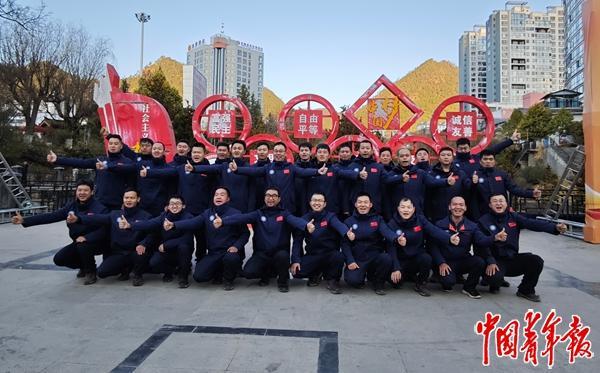
Core Viewpoint - The article highlights the ongoing geological exploration efforts in the Lanping area of Yunnan Province, focusing on the dedication and challenges faced by geological teams in discovering mineral resources, particularly in the context of China's growing mineral wealth and resource base [1][5][8]. Group 1: Geological Exploration Efforts - The geological team, consisting of members with an average age of 30, is actively engaged in fieldwork in the remote and temperature-variable regions of northwest Yunnan, collecting over 6,000 samples from the vicinity of the Jin Ding lead-zinc mine [3][4]. - The team utilizes traditional geological tools alongside modern technology, including GNSS positioning systems and handheld computers, to conduct their work effectively in challenging terrains [4][10]. - The exploration is part of a broader initiative to assess and evaluate mineral resources, with significant findings reported in various regions, including the discovery of new mineral bases and the extension of service life for existing mines [5][6]. Group 2: Mineral Resource Statistics - As of now, China boasts 174 mineral types and over 70,000 mineral sites, including 1,034 super-large mineral deposits and 4,997 large deposits, a significant increase from the records of 30 mineral types and 1,203 sites 120 years ago [6][8]. - The "14th Five-Year Plan" period has seen revitalization in old resource bases and the emergence of new ones, with notable discoveries in provinces like Shanxi, Shandong, and Tibet, contributing to the country's mineral resource portfolio [5][6]. Group 3: Team Dynamics and Personal Stories - The geological teams often face harsh conditions and long hours, with many members expressing gratitude for family support, which is crucial for their demanding work schedules [14][15]. - The article emphasizes the personal sacrifices made by team members, including time away from family, and their commitment to the geological profession, which is often seen as a calling [15][16]. - The camaraderie and shared experiences among team members are highlighted, showcasing their dedication to the mission of resource exploration and the importance of their work for national interests [12][14].
越南青年来华“红色研学之旅”之“沿着胡伯伯的足迹”研学营在广西举办
Zhong Guo Qing Nian Bao· 2026-02-10 01:23
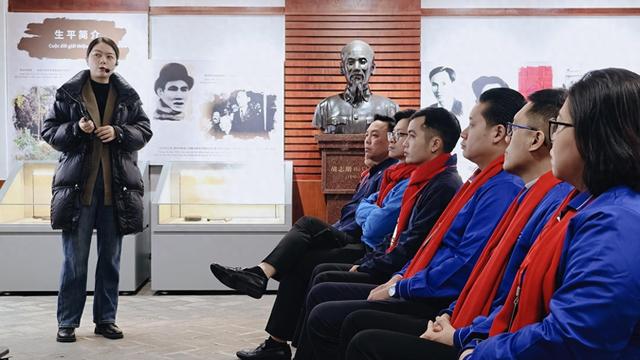
Core Viewpoint - The article highlights a "Red Study Tour" for Vietnamese youth in China, emphasizing the importance of strengthening Sino-Vietnamese youth exchanges as per Xi Jinping's directives [4]. Group 1: Event Overview - The "Red Study Tour" took place from February 8 to 12, involving 150 Vietnamese youth representatives visiting various cities in Guangxi, including Nanning, Liuzhou, Guilin, Chongzuo, and Fangchenggang [4]. - The theme of the study camp is "Following Revolutionary Ideals, Working Together to Create the Future" [4]. Group 2: Activities and Engagements - Participants visited historical sites related to revolutionary history, such as Ho Chi Minh's former residence and various memorials, to understand the significance of Sino-Vietnamese revolutionary friendship [5]. - The program included lectures on Xi Jinping's thoughts on youth work and Ho Chi Minh's influence in China, as well as interactive activities like speeches, book sharing sessions, and project meetings focusing on youth work, technological innovation, and cultural development [5]. - The study group comprised youth leaders, civil servants, entrepreneurs, media representatives, and university students from various provinces in Vietnam [5].
短剧风口下,演职人员权益如何保障?
Zhong Guo Qing Nian Bao· 2026-02-10 01:07
Core Viewpoint - The short drama industry requires the establishment of a transparent and standardized protection mechanism to safeguard the rights and interests of creators, as many actors face issues with unpaid wages and lack of formal contracts [1] Group 1: Industry Challenges - Many actors in the short drama sector, especially supporting roles, often work based on verbal agreements without written contracts, leading to disputes over payment [1] - A recent case highlighted that an actor was denied a third of their payment due to a lack of prior agreement on additional work, emphasizing the need for clear contractual terms [2] Group 2: Legal Framework - The Civil Code allows for contracts to be formed in various forms, including verbal agreements, as long as the terms are clear, such as payment amounts and work content [2] - The court ruled that additional tasks like dubbing must be explicitly agreed upon in advance, and companies cannot withhold payment without such agreements [2] Group 3: Labor Relations - The distinction between labor and service contracts is crucial, with labor relations being more stringent and requiring ongoing management by the company, while service contracts are typically project-based [3] - Actors can claim payments and damages under service contracts through civil litigation, while labor relations fall under labor law, allowing for arbitration and complaints to labor authorities [3] Group 4: Contractual Issues - The lack of formal contracts in the industry raises concerns about the validity of certain clauses that may infringe on actors' rights, such as waiving rest rights or imposing high penalties for breaches [4][5] - Courts may deem unfair clauses as invalid, and they will consider factors like payment amounts and actual losses when assessing penalties to ensure judicial fairness [5]
多式联运 跨越山海 年货班列“速递”全球年味
Zhong Guo Qing Nian Bao· 2026-02-09 22:14
Core Viewpoint - The news highlights the efficiency and growth of the Guangxi Beibu Gulf Port's automated container terminal and the Western Land-Sea New Corridor, which significantly enhances cross-border logistics and trade, particularly for seasonal goods during the Spring Festival [2][4][6]. Group 1: Logistics Efficiency - The Western Land-Sea New Corridor has drastically reduced logistics time, allowing for fresh goods like cassava flour from Vietnam to be transported efficiently, benefiting both local farmers and the processing industry [2][4]. - The customs at Qinzhou Port have implemented tailored clearance measures, enabling rapid inspections and facilitating a smooth flow of goods, with some inspections completed in under three hours [3][4]. - The integration of rail and port operations has improved efficiency, with the elimination of barriers allowing for direct transfer from ship to train, thus enhancing operational speed [4][5]. Group 2: Growth Metrics - Since its inception in 2017, the annual transport volume of the Western Land-Sea New Corridor has surged from 3,382 TEUs to 1.425 million TEUs by 2025, marking an increase of approximately 420 times [4][5]. - The variety of goods transported via this corridor has expanded to over 1,300 types, reaching 18 provinces and 75 cities in China, and connecting to 584 ports in 127 countries and regions globally [5]. - In January alone, the corridor transported 114,000 TEUs, reflecting a year-on-year growth of 9% [5]. Group 3: Infrastructure Development - The completion of the Ma Huang Station upgrade has enhanced the railway capacity, transitioning from a single track to a double track, which improves the overall efficiency of the Western Land-Sea New Corridor [5]. - The establishment of modern logistics bases, such as Nanning International Railway Port and Qinzhou Railway Container Center, has further bolstered freight capacity and operational capabilities [4][5]. Group 4: Economic Impact - The operations at the Qinzhou automated container terminal not only facilitate the import of goods like Thai coconuts and Cambodian rice but also support local employment in Vietnam through the establishment of subsidiaries [2][6]. - The corridor plays a crucial role in the dual-directional trade strategy, enhancing both imports and exports, thereby contributing to the broader "Belt and Road" initiative [6].
学者预测今年中俄关系有五大看点值得关注
Zhong Guo Qing Nian Bao· 2026-02-09 13:29
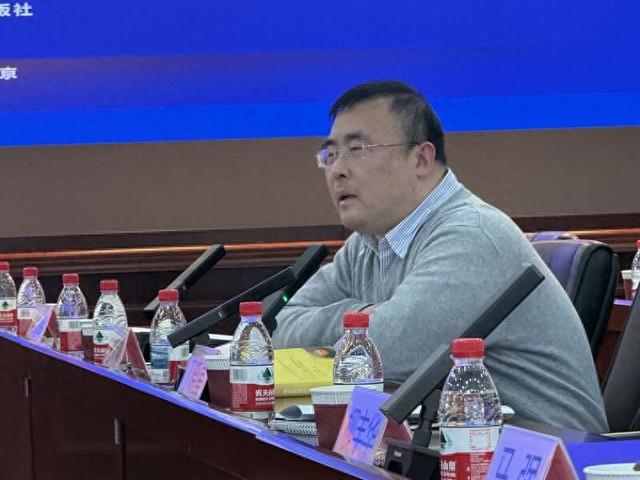
Group 1 - The core viewpoint of the article highlights five key developments in China-Russia relations to watch in 2023, as predicted by Pang Dapeng, Deputy Director of the Institute of Russian, Eastern European and Central Asian Studies at the Chinese Academy of Social Sciences [1] Group 2 - This year marks the 25th anniversary of the signing of the China-Russia Treaty of Good-Neighborliness and Friendly Cooperation, which was established in 2001 to formalize the peaceful ideology of "eternal friendship, never enemies" and the diplomatic principle of "non-alignment, non-confrontation, and not targeting third countries" [2] - In 2025, China and Russia will jointly launch the "China-Russia Education Year," which will include various cultural exchange projects such as student visits, joint research, youth summer camps, and competitions [2] - The year also marks the 25th anniversary of the Shanghai Cooperation Organization, raising interest in how China and Russia will enhance cooperation within this multilateral framework [2] - In November, China will host the 33rd informal meeting of APEC leaders in Shenzhen, with Russia expressing support for this event during a video meeting between the Chinese and Russian leaders [2] Group 3 - Pang Dapeng emphasized that the current dynamics of the China-U.S.-Russia triangular relationship differ significantly from the Cold War era, with a focus on normal bilateral relations rather than alliances against one another [4] - The report titled "Russia Development Report (2025)" indicates that Russia aims to break international isolation and enhance its global influence through cooperation within frameworks like the Shanghai Cooperation Organization and BRICS [4][6] - The report also notes that despite challenges such as the prolonged Russia-Ukraine conflict and increasing Western sanctions, Russia is focused on maintaining sovereignty, breaking international isolation, and solidifying its status as a major power [6]
二十载磨一剑 让AI成为临床“超级助手”
Zhong Guo Qing Nian Bao· 2026-02-09 07:37
Core Insights - The article highlights the transformative impact of AI technology in the field of medical imaging, particularly in the diagnosis and treatment of tumors, enhancing efficiency and accuracy in clinical settings [1][2][3] Group 1: AI in Tumor Diagnosis and Treatment - AI technology significantly reduces the time required for tumor imaging analysis from over 20 minutes to under 2 minutes, improving the accuracy of tumor delineation by 20% and increasing the speed of the process by 6-8 times compared to manual methods [2][3] - The developed system, known as the "Adaptive Intelligent Radiotherapy Target Area Drawing System," allows for precise identification of tumor boundaries and critical structures, ensuring effective surgical approaches while preserving organ function [3] - The team plans to implement this system in major hospitals to accelerate its practical application in clinical settings [3] Group 2: Preventive Health Management - The focus is also on disease prevention, with the development of a "Non-Intrusive Normalized Intelligent Sports Rehabilitation Assessment System" aimed at quantifying rehabilitation outcomes and improving efficiency by over 10 times compared to traditional methods [4] - This system acts as a personalized coach, providing targeted feedback on exercise techniques to prevent injuries [5][6] Group 3: Early Detection of Acute Myocardial Infarction - The introduction of the "Smart Monitoring System for Cardiac and Sleep Quality" aims to identify high-risk individuals for acute myocardial infarction, facilitating early intervention and reducing healthcare costs [7] - This system utilizes smart mattress technology to monitor heart conditions and sleep quality, promoting a proactive approach to health management [7] Group 4: Talent Development in AI and Healthcare - The article emphasizes the need for skilled professionals who can bridge the gap between clinical medicine and AI, highlighting the importance of interdisciplinary communication and the ability to translate clinical needs into actionable technical tasks [8]
上海市政协委员任捷建议:引入“学术年龄”作为科研人才评价新标准
Zhong Guo Qing Nian Bao· 2026-02-09 07:37
Core Viewpoint - The discussion at the Shanghai Two Sessions focuses on whether the "cold bench" of scientific research can be more stable, emphasizing the shift from tracking research to original innovation and breakthroughs [1] Group 1: Current Research Environment - The current research ecosystem has rigid age thresholds for talent evaluation, which may pressure researchers to pursue quick results rather than long-term projects [1][2] - The concept of "academic age," which measures research experience from the time of obtaining a doctoral degree, is proposed to better reflect a researcher's growth stage rather than their biological age [2] Group 2: Proposed Changes - The introduction of an academic age system aims to provide clear and stable development expectations for researchers at different stages, allowing for a more diverse evaluation system [2][3] - A dual qualification system is suggested, where both academic age and biological age criteria are considered, potentially expanding the age limit for eligibility [3] Group 3: Flexibility in Evaluation - The proposal includes a flexible recognition mechanism for academic age, allowing for deductions based on verified interruptions such as industry experience, military service, or parental leave [3] - The goal of the evaluation system is to alleviate anxiety among researchers and encourage them to engage in long-term research without the pressure of age-related constraints [3]
新春走基层 | 灾后新家园年味正浓
Zhong Guo Qing Nian Bao· 2026-02-09 02:47
Core Viewpoint - The article highlights the successful post-disaster reconstruction efforts in Malian Tan Village, Gansu Province, where residents are transitioning from temporary housing to newly built homes, fostering a sense of community and hope for the future after a devastating flood in August 2025 [1][2][3]. Group 1: Disaster Impact and Response - A severe flood in August 2025 affected 88 out of 417 households in Malian Tan Village, leading to significant property damage and the need for concentrated housing solutions [1][2]. - The local government and construction companies, such as China Railway 21st Bureau, mobilized quickly to provide emergency housing, with over 2,000 workers involved in the reconstruction efforts [2][3]. Group 2: Reconstruction Efforts - The reconstruction involved complex logistics, including simultaneous surveying, designing, and constructing homes, with a focus on building durable structures that can withstand future disasters [2][3]. - The new homes feature modern amenities such as independent bathrooms and biomass heating systems, significantly improving living conditions compared to the previous mud houses [2][3]. Group 3: Community Involvement and Future Plans - Local residents actively participated in the reconstruction, with some, like Zhang De'en, contributing labor to the construction efforts, which fostered a sense of ownership and community spirit [2][3]. - Plans for future economic development include the establishment of mushroom cultivation greenhouses and cold storage facilities to enhance agricultural productivity and market access for villagers [4][5].