Zhong Guo Qing Nian Bao

Search documents
“考研村”里的日与夜
Zhong Guo Qing Nian Bao· 2025-12-10 22:36
8月14日晚,江西省南昌市经开区上风景村,备考生在阳台上复习,远处的山下是繁华的南昌市区。上风景村位于南昌市西北郊的梅 岭国家森林公园中,距南昌市区十几公里,是当地小有名气的"考研村"。安静的环境是不少备考生选择这里的原因。 9月9日,江西省南昌市南昌县一家自助自习室,"心愿墙"上的便利贴写满了备考生的期盼。 为了远离干扰、专心学习,不少打算考研、考公的年轻人选择到专门提供"吃住学"一体化服务的寄宿考研 基地备考,多地形成相关产业,一些因远离市区而被称为"考研村"。2026年全国硕士研究生招生考试的脚 步越来越近,考研村里,备考生们正争分夺秒地投入最后的冲刺,期盼着"上岸"的那一刻。 12月1日,江西省南昌市经开区蛟桥街道上风景村——一个坐落于梅岭山区深处的自然村,在冬季显得格外 安静。与夏季相比,这里少了些喧嚣,多见的是留守老人、埋头备考的考生,以及他们集体收养的流浪 猫。这个村子因聚集了多家提供食宿的考研自习室,逐渐被称为"考研村"。一排排书桌整齐排列,每个隔 断里堆满复习资料,俯身其间的是一个又一个埋头读书的身影。 12月2日,江西省南昌市青山湖大道,一所独栋独院的备考中心,一块倒计时牌上的"国考"倒计 ...


“校园引才大使”搭建青年人才返乡桥梁
Zhong Guo Qing Nian Bao· 2025-12-10 22:36
Core Viewpoint - The "Campus Talent Ambassador" initiative in Chongqing's Zhongxian County aims to attract young talent by leveraging local university students to promote job opportunities and policies in their hometown [1][2]. Group 1: Initiative Overview - The "Campus Talent Ambassador" program was launched in 2023 to connect local university students with job opportunities in Zhongxian County, enhancing the county's talent recruitment efforts [1]. - The program is part of a broader strategy to develop a youth-oriented county and includes a management guideline to provide institutional support for the initiative [1][2]. Group 2: Talent Recruitment Challenges - Previous talent recruitment efforts faced challenges such as difficulty in reaching local university graduates and low retention rates of graduates in Zhongxian [2]. - The initiative aims to bridge the communication gap between the county and potential returning graduates, addressing issues of information asymmetry regarding job opportunities [2]. Group 3: Role and Responsibilities of Ambassadors - "Campus Talent Ambassadors" will promote Zhongxian's talent policies, assist in job recruitment, and facilitate school-enterprise cooperation [2][3]. - The ambassadors are selected based on their organizational and communication skills and can serve for a maximum of four years, with opportunities for renewal based on performance [2]. Group 4: Activities and Funding - Ambassadors can apply for activity funding up to 1,000 yuan to support their initiatives in promoting Zhongxian [3]. - They will organize events to enhance awareness of Zhongxian's policies and facilitate internships and practical experiences for students, thereby fostering a better understanding of the county [3].
中国卓越工程师培养联合体解读工程教育新标:“四共四通”重塑卓越工程师培养体系
Zhong Guo Qing Nian Bao· 2025-12-10 14:02
Core Viewpoint - The establishment of the "Excellence Engineer Education Certification Standards" aims to enhance the collaboration between universities and enterprises in engineering talent cultivation, addressing the disconnect between education and industry practices [1]. Group 1: Standards and Mechanisms - The new standards emphasize a "Four Collaborations" and "Four Connections" mechanism, requiring joint recruitment, training, topic selection, and sharing of outcomes between universities and enterprises [1]. - The standards also call for mutual access to faculty, integration of curricula, shared platforms, and streamlined policies to resolve the challenges in engineering talent development [1]. Group 2: Policy Context and Goals - The "14th Five-Year Plan" highlights the need for a modern industrial system centered on advanced manufacturing, which raises the bar for the knowledge structure, capabilities, scale, and training paradigms of engineering talent [1]. - The Ministry of Education stresses the importance of deep integration of industry and education as a key reform breakthrough, aiming to mobilize both universities and enterprises to explore and establish a unique Chinese model of collaboration [1]. Group 3: Implementation and Requirements - The "Four Collaborations" and "Four Connections" mechanism is identified as a core initiative for deepening the integration of industry and education, leveraging China's systemic advantages [1]. - The standards mandate that engineering master's students must engage in at least one year of practical experience in enterprises, while engineering doctoral students must have at least two years, ensuring close alignment between talent training and industry needs [1].
“黑土优品”进京 以“龙江品质”对接“首都需求”
Zhong Guo Qing Nian Bao· 2025-12-10 12:04
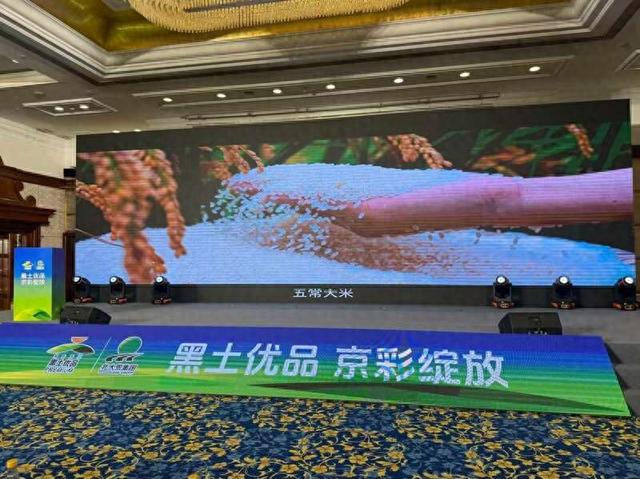
Group 1 - The event "Heilongjiang Quality Products - Beijing Colorful Bloom" was launched in Beijing, showcasing over 200 products from more than 30 enterprises, including edible soybean oil, organic black beans, and organic pure milk, aimed at connecting "Heilongjiang quality" with "capital demand" [1][3] - Heilongjiang, as a major agricultural province in China, plays a crucial role in ensuring national food and ecological security, with the "Heilongjiang Quality Products" brand focusing on ten key categories such as rice, soybeans, and fresh corn [3] - The event marks a new starting point for resource complementarity and collaborative development between Heilongjiang and Beijing's catering industry, facilitating the entry of more high-quality "Long" branded agricultural products into the capital market [3] Group 2 - Several companies, including Wandashan Linhai Liquid Milk Co., Ltd. and Beidahuang Food Group Beijing Food Co., Ltd., successfully signed contracts during the event, with a total signing amount of 316 million yuan [3] - The event was guided by the Heilongjiang Provincial Government's Beijing Office and the Heilongjiang Provincial Department of Agriculture and Rural Affairs, and was hosted by Jiusan Grain and Oil Industrial Group Co., Ltd. [3] - Representatives from Beijing's culinary associations, supermarkets, catering, and supply chain enterprises, along with various media outlets, participated in the event [3]
网课骗局 “围攻”老年人
Zhong Guo Qing Nian Bao· 2025-12-10 08:11
Core Viewpoint - The article highlights the increasing prevalence of online scams targeting the elderly, particularly through deceptive training programs that promise high returns with low risk, emphasizing the need for better protective measures and awareness in society [2][5][8]. Group 1: Nature of Scams - Many elderly individuals are lured into scams by promises of high earnings from online courses, such as short video training, which often turn out to be fraudulent [2][3]. - Scammers have shifted from traditional in-person scams to online platforms, using attractive marketing tactics to entice seniors into signing up for courses that are often of poor quality [2][5]. - The scams often involve a cycle of initial free or low-cost courses that lead to expensive follow-up classes, creating a false sense of success and investment [4][5]. Group 2: Challenges in Reporting and Recovery - Victims often face difficulties in reporting scams due to a lack of understanding of the fraud and a reluctance to admit being scammed, complicating law enforcement's ability to take action [6][7]. - Many scams are operated by groups based overseas, making it challenging to recover lost funds quickly [6]. - Elderly victims frequently deny their victimization, which hinders their ability to seek help and complicates the recovery process [6][8]. Group 3: Vulnerability Factors - The elderly are particularly vulnerable due to their limited access to information and a lack of familiarity with technology, making them easy targets for scams that younger individuals can easily identify [7][8]. - Emotional needs, such as the desire for companionship and social engagement, often drive elderly individuals to seek out online interactions, increasing their susceptibility to scams [9][10]. - The absence of a trusted confidant or "first consultant" in their lives can lead to poor decision-making and increased risk of falling victim to scams [9][10]. Group 4: Recommendations for Prevention - Community initiatives should focus on creating engaging and relatable educational content to raise awareness about scams among the elderly [10][11]. - Family members are encouraged to maintain open lines of communication with elderly relatives, providing emotional support and guidance to help them navigate potential scams [11]. - Law enforcement and community organizations are advised to enhance outreach efforts to educate seniors about common scams and improve their ability to recognize and report fraudulent activities [11].
起底直播间里的“窃密者”
Zhong Guo Qing Nian Bao· 2025-12-10 08:11
Core Insights - The article highlights the rise of "violent customer acquisition" software that illegally captures user data from live streaming platforms, leading to scams and privacy violations [1][2][7]. Group 1: Incidents of Fraud - Victims like Wang Hua and Zhang Tian experienced scams after being lured by fake accounts claiming to be live streamers, leading them to download a fraudulent app and charge money [1]. - The software "KeduoDuo" was identified as a tool that breaches security measures of short video platforms to collect personal information of users [1][4]. Group 2: Legal Actions - The Haimen District People's Procuratorate in Nantong has prosecuted six individuals for providing software that invades computer information systems, resulting in prison sentences and fines [2]. - The criminal network involved in the production and sale of this software was uncovered, revealing a total illegal income of 750,000 yuan from sales across 18 provinces [6][4]. Group 3: Software Development and Distribution - The software was developed by individuals like Wei Chun and Tan Qiang, who created tools to capture user data from live streaming platforms, forming a distribution network with multiple levels of agents [5][6]. - The software was sold in various subscription formats, allowing users to access stolen data for malicious purposes [6]. Group 4: Impact on Users and Industry - The illegal acquisition of user data has led to significant privacy concerns, with users receiving unsolicited marketing calls and being targeted for scams [8]. - The article emphasizes the need for enhanced security measures on platforms to protect user data and prevent such illegal activities [8].
沉迷电子产品无法自拔?66.0%受访孩子希望“学玩两不误”
Zhong Guo Qing Nian Bao· 2025-12-10 08:11
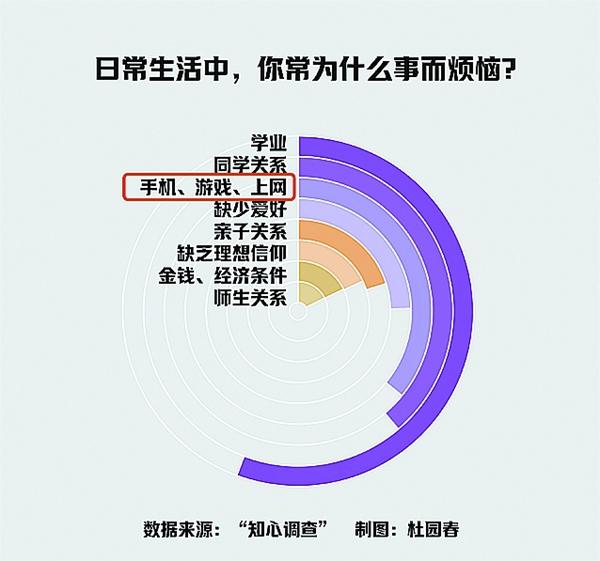
Core Insights - The survey conducted by "Zhixin Sister" magazine reveals that over 40% of parents attribute their children's worries to mobile phones, games, and the internet, indicating a significant concern regarding digital device usage among families [2][3] Group 1: Children's Concerns - 42.3% of surveyed children admit they are easily distracted by online content, leading to excessive usage without realizing it [3] - 32.2% of children feel that their parents are too strict in managing their media usage, resulting in conflicts [3] - 21.4% of children express that their gaming and short video habits negatively impact their studies and rest [3] Group 2: Parental Perspectives - 23.9% of parents believe that not supporting children's interests in online activities creates barriers in parent-child relationships [4] - 40.5% of parents attribute their children's poor academic performance to excessive engagement with digital devices [5] Group 3: Children's Coping Mechanisms - 18.9% of children resort to online activities like watching videos or playing games to alleviate their worries [6] - 35.0% of children wish to spend their free time on the internet or playing games [6] Group 4: Parental Guidance and Consensus - 91.3% of parents agree that guiding children in using mobile devices is more effective than prohibiting them [6] - 58.9% of parents believe in calm communication with children regarding device usage, while 49.5% prefer to establish and enforce usage rules together [6]
AI直播带货,哪个是真的你
Zhong Guo Qing Nian Bao· 2025-12-10 08:11
Core Viewpoint - The rise of AI-generated content has led to the unauthorized use of celebrity images and voices for marketing, creating confusion and potential legal issues regarding consumer rights and intellectual property protection [1][2][3]. Group 1: AI and Celebrity Impersonation - Multiple instances of AI impersonating celebrities like Wen Zhengrong have been reported, leading to confusion among consumers regarding authenticity [1]. - Platforms like WeChat and Douyin have taken action against AI impersonation, with WeChat removing 12,000 pieces of content and Douyin taking down over 10,000 infringing accounts and 6,700 products [1][2]. Group 2: Legal Framework and Consumer Rights - The legal framework in China, including the Civil Code, protects individuals' rights against unauthorized use of their likeness and voice, emphasizing the need for consent [2][3]. - Misleading AI-generated endorsements violate advertising laws and consumer rights, impacting both individual celebrities and the broader consumer market [3]. Group 3: Challenges in AI Regulation - The complexity of AI technology presents regulatory challenges, as it encompasses various applications beyond impersonation, such as personalized recommendations and pricing discrimination [3]. - There is a need for enhanced protection for vulnerable groups, particularly minors and the elderly, to prevent exploitation in online transactions [4]. Group 4: Consumer Protection Initiatives - New technologies are being developed to assist consumers in protecting their rights, such as the "DeepSeek" guide in Chengdu, which provides resources for legal consultation and consumer rights [5]. - The application of AI in consumer protection can lower barriers to legal action and improve the efficiency of the claims process [5].
有年轻人沉溺“捕鱼机”追悔莫及
Zhong Guo Qing Nian Bao· 2025-12-10 08:11
Core Viewpoint - The resurgence of "fishing machines" in various entertainment venues is attracting young people, leading to significant financial losses due to addictive gameplay and misleading promises of rewards [1][9]. Group 1: User Experiences - A young individual, Sun Huichao, reported losing all his money within four days after initially having over 70,000 yuan in his WeChat wallet due to playing "fishing machines" [2][4]. - Another player, Zhang Binbin, spent over 30,000 yuan, with losses exceeding 10,000 yuan in a single day, highlighting the addictive nature of the game [3][5]. - Players often recharge their accounts multiple times, with some spending around 30,000 yuan in just a few days, indicating a pattern of compulsive gambling behavior [5][6]. Group 2: Game Mechanics and Operations - "Fishing machines" require players to recharge cards to play, with 1 yuan equating to 500 points, and players can win points by hitting virtual fish [4][10]. - The machines are often located in places like pool halls and internet cafes, where they are marketed as entertainment devices, despite the gambling-like nature of the gameplay [9][10]. - Players can exchange points for small prizes, but cash redemption is typically not allowed, which raises concerns about the legality of these operations [10][11]. Group 3: Regulatory Environment - The operation of "fishing machines" is subject to strict regulations, requiring operators to register with local cultural and tourism authorities and adhere to guidelines regarding cash redemption and prize limits [11][12]. - Reports of illegal activities related to these machines have prompted local authorities to conduct inspections, although some venues may still operate outside the law [11][12]. - Legal experts emphasize the need for stricter oversight to prevent young individuals from becoming addicted to these machines and incurring significant financial losses [12].
储能新时代 共赴能源转型新未来
Zhong Guo Qing Nian Bao· 2025-12-10 07:28
Core Insights - The new energy storage sector is expected to experience rapid growth during the "14th Five-Year Plan" period, with experts predicting it could become a trillion-dollar market [4][5] - The younger generation, particularly Generation Z, is actively participating in the energy transition, shaping a new era in the industry [3][5] Industry Growth and Trends - By the end of 2024, the cumulative installed capacity of new energy storage projects in China is projected to reach approximately 20 times that of the end of 2020, reflecting a growth of over 130% compared to the end of 2023 [4] - The average energy storage duration in China is expected to increase to 2.3 hours by 2024, up by about 0.2 hours from the end of 2023, indicating a rising trend since the "14th Five-Year Plan" [4] Talent Development and Educational Initiatives - The establishment of new energy storage-related academic programs has surged, with 105 universities in China now offering such courses, highlighting the growing demand for skilled professionals in this field [8] - Experts predict a talent gap of over 500,000 in the energy storage industry from 2020 to 2030, with an average annual demand of about 50,500 professionals [8] Policy and Market Dynamics - The release of the "136 Document" marks a significant shift in the energy storage industry, transitioning from a policy-driven model to a market-driven approach, allowing for more dynamic pricing and trading in the electricity market [10][11] - This policy change is expected to enhance the profitability of energy storage projects, positioning them as active assets rather than passive compliance measures [11][12] Future Outlook - The energy storage sector is increasingly recognized as a critical component of the renewable energy landscape, evolving from experimental technologies to essential infrastructure within the energy grid [17] - The younger generation is motivated by the opportunity to contribute to national strategic industries, with many aspiring to engage in the development of innovative energy solutions [18]