Zhong Guo Qing Nian Bao

Search documents
中国AI走出差异化务实之路
Zhong Guo Qing Nian Bao· 2025-12-10 07:28
Core Viewpoint - The article discusses the contrasting approaches of the United States and China in the field of artificial intelligence (AI), highlighting concerns about a potential AI bubble in the U.S. and China's focus on practical applications and cost-effectiveness [1][3]. Group 1: AI Bubble Concerns - There are rising voices in the U.S. regarding the possibility of an AI bubble, with Goldman Sachs reporting five warning signs similar to those before the internet bubble burst [1]. - Lin Yifu, a prominent economist, predicts that the U.S. may experience an AI bubble burst during the 14th Five-Year Plan period, potentially leading to a financial crisis similar to the 2008 housing market collapse [1]. Group 2: China's Practical Approach - Chinese AI development emphasizes "cost-effectiveness, industrial application, and practical results," focusing on foundational innovation rather than speculative concepts [2][3]. - The Chinese strategy is characterized by a "low-cost, high-adaptability, strong implementation" path, contrasting with the U.S. approach of massive investments in AGI [3]. Group 3: Technological Innovations - Breakthroughs in embodied intelligence are highlighted, with teams in China achieving significant advancements in robot dexterity and data accuracy through innovative techniques [4][6]. - The development of AI-driven optimization solvers is expected to capture a significant share of the global optimization market, projected to reach $107 billion by 2025, with a compound annual growth rate of about 10% from 2026 to 2033 [4]. Group 4: Industrial Integration and Ecosystem Building - The integration of AI with hardware is emphasized as a key advantage for China, leveraging its robust industrial base to create a unique "AI + hardware" path [7]. - The article notes the importance of overcoming data fragmentation and building a cohesive ecosystem to ensure the successful commercialization of AI technologies [8]. Group 5: Funding and Innovation Challenges - There is a call for more patient capital and larger investments in disruptive innovation, particularly in fields like quantum computing and controlled nuclear fusion [9]. - The article suggests that the current financing models may not be suitable for groundbreaking innovations, advocating for a shift towards supporting long-term goals in AI development [9].
“果蔬杀手”有了完整的基因组图谱
Zhong Guo Qing Nian Bao· 2025-12-10 07:28
Core Viewpoint - The research focuses on decoding the genetic blueprint of the fruit fly pest, Bactrocera dorsalis, to develop new green pest control methods as traditional pesticides become less effective [1][2]. Group 1: Research Findings - The research team successfully constructed the most complete genomic map of the highly heterozygous pest, Bactrocera dorsalis, which is crucial for identifying potential targets for green pesticides [1][4]. - Previous genomic versions of Bactrocera dorsalis were based on mixed individuals, leading to significant gaps in the genome, particularly in repetitive DNA regions [2][3]. - The new assembly strategy utilized sequencing data from individual male flies, resulting in a nearly complete genome of approximately 600Mb, including the Y chromosome [3][4]. Group 2: Implications for Pest Control - The high-resolution genomic map revealed that the centromere region consists of three different types of satellite DNA, and identified a gene on the Y chromosome related to the energy demands of male flies [4]. - The discovery of new olfactory receptor genes and Y chromosome-specific genes provides valuable targets for the development and optimization of green pest control technologies [4].
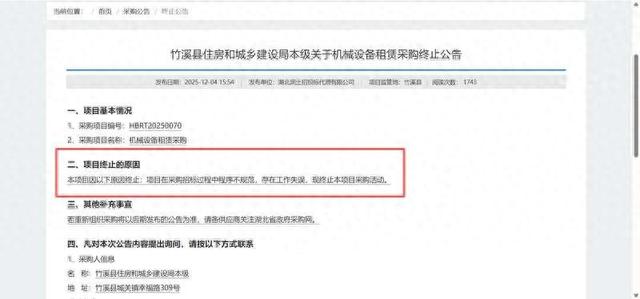
湖北竹溪一些政府采购项目涉嫌造假,有关部门正在调查
Zhong Guo Qing Nian Bao· 2025-12-10 06:39
Core Points - A government procurement scandal has emerged in Zhuxi County, Hubei Province, involving multiple government departments and dozens of evaluation experts whose names match those from an online name database, with total project bid amounts exceeding 1 billion yuan [2][10] - An investigation has been initiated by the local disciplinary inspection and supervision commission, focusing on the procurement processes of various government departments [2][8] - The procurement agency, Hubei Runtu Bidding Agency Co., Ltd., has been implicated, with allegations of using fictitious evaluation experts in multiple projects [3][10] Group 1: Investigation and Findings - The investigation was prompted by the discovery of five evaluation experts whose names were identical to the first five names listed in an online name database, linked to a project worth 31.88 million yuan [3][10] - The local finance bureau confirmed that the names of evaluation experts in the involved projects were indeed fabricated [6][10] - A total of 57 bid result announcements from Runtu Company were reviewed, revealing that many evaluation experts' names were likely copied from the online name database [10][11] Group 2: Legal and Regulatory Issues - The actions of the involved parties violate the Government Procurement Law, which mandates that evaluation experts must be randomly selected from a government-established expert pool [6][13] - The procurement process has been criticized for lacking transparency and fairness, with allegations of not forming proper evaluation committees and missing evaluation processes [13][14] - Legal experts highlighted that the number of evaluation committee members was insufficient for projects exceeding 10 million yuan, which should have at least seven members [14][15] Group 3: Responses from Authorities - Local government departments are cooperating with the investigation, and the results will be publicly disclosed [8][15] - The investigation is examining all aspects of the procurement process, including the procurement agency and winning suppliers [8][12] - The local government has acknowledged the need for stricter adherence to procurement laws and regulations to prevent future occurrences [15]

“真问题”撬动高校“真活力”
Zhong Guo Qing Nian Bao· 2025-12-10 06:01
一边工作码字,另一边告诉手机"帮我买一款低糖、低GI、拥有蒙古包造型的蛋糕,预算158元,下午5 点送到某地";一种可以像飞机起落架一样,随时可以隐藏收纳但在需要时可以伸出头来破冰的船艏破 冰装置;一种可以实时监测分析冲击式水轮机组核心部件磨损腐蚀情况的新技术……这些,在2025年度 中国青年科技创新"揭榜挂帅"擂台赛上,都从遐想变成了现实。 一道题,就是一个打破专业壁垒的支点 上海是我国高校最集中的省市之一,这里聚集了包括复旦大学、上海交通大学等顶尖大学在内的约40所 高校。"揭榜挂帅"擂台赛中的许多放榜题目,都能在上海高校的科研系统内找到相关或者类似研究方向 的研究团队。 拿到"真问题",很兴奋 上海交通大学是这次"揭榜挂帅"擂台赛的大赢家,有18支团队的项目拿到了特等奖,其中8个项目是特 等奖中的第一名,成为"擂主"。此外还有一等奖项目17个,二等奖项目7个,三等奖项目6个,共计48个 项目获奖。 上海交通大学团委书记巢睿祺告诉记者,组委会发布赛题后,学校团委第一时间与学校相关部门一起研 究,排摸哪些题目可能由哪些学院的哪些团队解题,做一个初步匹配。 巢睿祺说,刚刚发布的"十五五"规划建议明确要建设现代 ...
国货航承运85吨援助物资顺利运抵斯里兰卡
Zhong Guo Qing Nian Bao· 2025-12-10 00:25
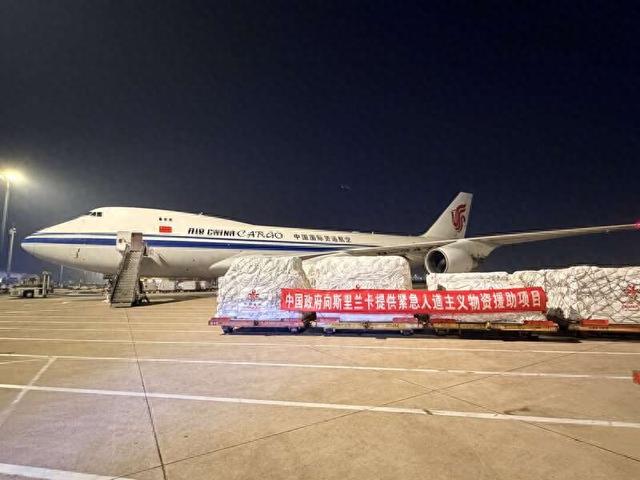
Core Viewpoint - China International Cargo Airlines successfully completed an emergency transport mission by delivering 85 tons of relief supplies to Sri Lanka, which has been affected by severe weather conditions due to Tropical Cyclone "Dithwa" [2]. Group 1: Emergency Response - The cargo flight CA1095 took off from Shanghai Pudong International Airport and arrived at Colombo Airport, fulfilling the international emergency transport task [2]. - The relief supplies included blankets, life jackets, bed sheets, and tents, addressing the needs of those affected by flooding and landslides [2]. Group 2: Operational Coordination - The company activated an emergency response mechanism immediately upon receiving the task notification, which included route planning, air rights application, and schedule arrangement [2]. - Multiple departments, including operations control, flight monitoring, and maintenance, collaborated to provide real-time technical support and monitor flight status and weather changes [2]. - Ground support involved coordination with customs and cargo stations to optimize the processes of material entry, security checks, and loading, ensuring smooth transitions at each stage [2]. - All relief supplies were loaded within 80 minutes, ensuring the flight's timely departure [2].
福建晋江:优化消防服务“软环境” 助力民营经济“硬发展”
Zhong Guo Qing Nian Bao· 2025-12-09 23:12
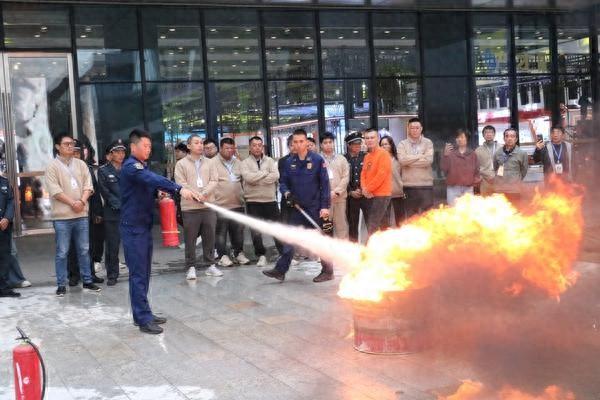
Core Viewpoint - The local fire departments in Fujian and Jiangsu are integrating fire rescue services into high-quality development strategies, aiming to enhance the intelligence, convenience, and public benefit of fire services, thereby improving the business environment and supporting the high-quality development of the private economy [2]. Group 1: Fire Safety Innovations - The "Jinjiang Experience" showcases the rapid response capabilities of local fire departments, exemplified by a leather factory fire that was extinguished within 10 minutes, protecting both property and employee safety [3]. - The establishment of the "Fujian Province Smart Fire Comprehensive Service Platform" allows for comprehensive risk assessments and effective management of fire safety, training personnel to understand fire safety risks and providing real-time safety alerts [4]. Group 2: Community Engagement and Education - Fire safety personnel actively engage with local businesses, as demonstrated by a fire safety officer's efforts to educate a restaurant owner about fire risks and safety measures, emphasizing the importance of compliance and proactive risk management [5][9]. - Companies are encouraged to conduct self-inspections and report hazards through the "Smart Fire" system, fostering a culture of safety awareness among employees [10]. Group 3: Flexible Regulatory Approaches - The "first violation not penalized" policy allows for a more lenient approach to minor infractions, promoting education over punishment and enhancing the relationship between fire departments and businesses [15]. - The Jinjiang fire department employs a flexible enforcement strategy, focusing on education and support to ensure compliance while minimizing disruption to business operations [19]. Group 4: Economic Impact and Fire Safety Statistics - The implementation of these fire safety measures has contributed to a significant reduction in fire incidents, with a 67% decrease in major fires and a 41% decrease in fatalities during the "14th Five-Year Plan" period compared to the previous five years [21].
“小阵地”释放服务青年“大能量” 江西宜春实施“青苗计划”聚才留才
Zhong Guo Qing Nian Bao· 2025-12-09 22:43
今年10月,宜春市委人才办、团宜春市委联合中南大学共建的长沙青苗驿站正式揭牌。中南大学、湖南 大学等高校的20余名青苗学子齐聚一堂,了解家乡发展变化,了解宜春人才政策。 不久前,一场特别的"云端相聚",再次拉近江西宜春籍在外学子和家乡的距离。新一届宜春籍在外学子 团工委班子围绕"青苗计划"推进等主题畅所欲言。 建立宜春在外青学联、学子团工委交流群,指导"青苗驿站"开展线下团建,协助开展宜春重点产业人才 引进专场对接会,筹备宜春市"青苗讲堂"第六讲……新一轮的"青苗计划"活动,逐一写进宜春籍在外学 子团工委的工作安排。 团宜春市委书记田周鹏说,宜春籍在外学子团工委是团宜春市委派出的工作机构,班子成员选的都是优 秀学生代表,充分发挥他们的作用,能更好地凝聚和服务宜春籍在外学子。 2022年宜春开始实施"青苗计划",通过建立和完善"青苗驿站、青苗讲堂、青苗先锋、青苗建功、青苗 关怀"五位一体工作格局,为宜春籍学子求学、实习见习和就业创业等阶段提供全方位、全周期支持和 服务。 目前,宜春"青苗计划"已覆盖全国1200余所高校两万余名宜春籍学子。 宜春设立"青苗驿站"坚持实体化方向,按照有阵地依托、有人员运作、有制度规 ...
让学生有敢于揭榜的底气
Zhong Guo Qing Nian Bao· 2025-12-09 22:43
武汉光电国家研究中心团队学生负责人王星儿正在安装样品进行激光纳米3D打印。武汉光电国家研究中心供图 在不久前落幕的2025年度中国青年科技创新"揭榜挂帅"擂台赛上,一支由华中科技大学6名学生组成的团 队,揭下了由武汉多家企业联合发布的"面向信号处理的凌久GPU高性能数学库算子优化技术"榜题,一举 夺得赛事"擂主"。 现代舰艇在巡航中搭载的雷达与声呐系统,被誉为舰艇的"眼睛"与"耳朵",关乎国家万里海疆的安全。GPU (图形处理器)作为核心计算加速器,对释放雷达、声呐的探测潜力至关重要。该团队所攻克的,正是国 产芯片研发中公认的生态适配难题。 "国产GPU的理论算力已可比肩国际旗舰产品,但缺乏适配生态——就好比拥有了强劲的发动机,却找不到 合适的燃油与道路,导致算力无法充分释放。"该校集成电路学院学生团队负责人覃民如是解读。 华中科技大学(以下简称"华科大")党委副书记张耀表示,学校坚持为党育人、为国育才,将组织开展"揭 榜挂帅"赛事转化为服务"国之大者"的具体行动,引导大学生聚焦国家战略需求开展创新实践,培养了学生 敢于揭榜、勤于学习、善于创新的能力,提升了突破关键核心技术的底气,持续擦亮学校创新创业教育的 ...

山海同心 中越青年共赴“追光之旅”
Zhong Guo Qing Nian Bao· 2025-12-09 11:35
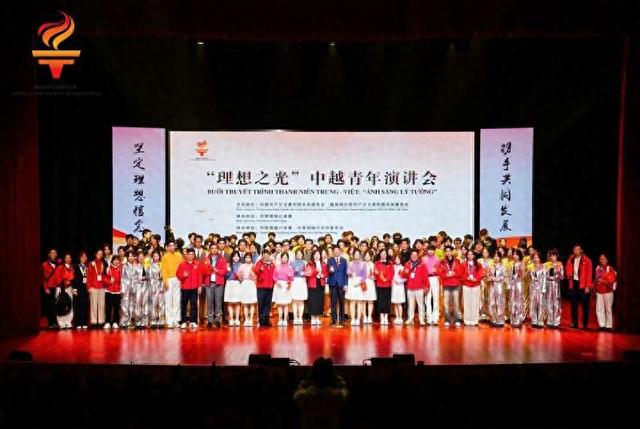
Core Viewpoint - The article highlights the significance of the "Light of Ideals" study tour for Vietnamese youth in China, emphasizing the shared revolutionary history and aspirations between China and Vietnam, fostering deeper understanding and cooperation among the youth of both nations [1][3][8]. Group 1: Event Overview - The "Light of Ideals" study camp took place from November 30 to December 7, involving 200 Vietnamese youth representatives visiting various locations in China to strengthen youth exchanges as per Xi Jinping's directives [1][3]. - The event included a series of activities such as speeches, visits to historical sites, and discussions on shared revolutionary experiences, showcasing the cultural and historical ties between the two countries [4][7][10]. Group 2: Historical and Cultural Significance - The speeches at the event emphasized the parallel revolutionary journeys of China and Vietnam, highlighting key historical moments such as the founding of the Communist Parties in both countries and their struggles against foreign invasions [4][5][7]. - The shared revolutionary spirit was celebrated through cultural expressions, including singing the "Internationale" in both languages, symbolizing unity despite linguistic differences [3][7]. Group 3: Modernization and Innovation - Vietnamese youth observed China's advancements in various sectors, including agriculture, technology, and automotive industries, gaining insights into modern practices that could be applied in Vietnam [10][12][14]. - The study tour included visits to innovative companies and exhibitions, where participants learned about the integration of technology in traditional industries, inspiring them to explore similar paths in Vietnam [12][14]. Group 4: Environmental and Rural Development - The tour also focused on China's rural revitalization efforts, particularly the "Two Mountains" concept, which emphasizes the balance between ecological preservation and economic development [16][18]. - Vietnamese participants expressed interest in adopting similar policies to attract youth back to rural areas and promote sustainable development, recognizing the importance of supportive government policies in achieving these goals [18][19].
走近天然气冬供一线:“数字哨兵”上岗 智慧守护能源动脉
Zhong Guo Qing Nian Bao· 2025-12-09 05:20
Core Viewpoint - The article highlights the advancements in digital transformation and smart technology integration in China's natural gas sector, particularly focusing on the operations at the Jiangsu Rudong LNG receiving station and its role in ensuring energy security during the winter supply season [5][6]. Group 1: LNG Operations - A ship from Papua New Guinea carrying 150,000 cubic meters of LNG docked at the Jiangsu Rudong LNG receiving station in early December [2][4]. - Since the beginning of the winter supply season, the LNG receiving stations operated by China National Petroleum Corporation (CNPC) have unloaded a total of 20 LNG vessels, achieving a record high in gas output [6]. Group 2: Smart Technology Integration - The Jiangsu Rudong LNG receiving station employs smart inspection robots and other advanced technologies to enhance operational efficiency and safety, ensuring stable operations of the energy hub with an annual unloading capacity exceeding 10 million tons [5]. - The integration of big data, IoT, and simulation technologies into the natural gas supply chain is aimed at providing digital support for national energy security and winter gas supply [5]. Group 3: Energy Supply Impact - The energy supply from the LNG receiving stations supports 17 key sectors, including agriculture, electricity, industrial manufacturing, and transportation, benefiting over 500 million urban and rural residents across the country [6]. - The main gas source for the Changshu gas station comes from the "North Gas Southward" energy corridor, which connects with local gas companies to ensure stable gas supply for residents during winter [5].