
Zhong Guo Chan Ye Jing Ji Xin Xi Wang

Search documents
金融壹账通携手浪潮企业云、浪潮计算机科技 共推AI算力与金融科技全球化落地
Zhong Guo Chan Ye Jing Ji Xin Xi Wang· 2025-08-05 07:57
Group 1 - Financial One Account, Inspur Enterprise Cloud, and Inspur Computer Technology signed a strategic cooperation agreement to explore the construction of a new AI computing power ecosystem [1] - The collaboration aims to provide safer and more reliable support for global financial, government, and enterprise clients who face strict data privacy requirements while having urgent needs for generative AI capabilities [1][2] - Financial One Account has over 12 AI-driven business application suites for the financial industry and plays a significant role in Hong Kong's financial ecosystem, with over 50% of retail banks utilizing its AI image recognition fraud prevention technology [1] Group 2 - Financial One Account's wealth management solutions based on AI have generated significant market demand, leveraging its local delivery capabilities and cross-border data reference authorization in Hong Kong [2] - Inspur Enterprise Cloud is one of China's earliest cloud service providers and a leader in the industry cloud sector, offering full-stack cloud computing services across various industries [2] - Inspur Computer holds a 14% market share in the innovative technology server sector, providing a comprehensive product range that serves multiple industries including government and finance [2] Group 3 - The partnership aims to integrate expertise in AI and financial technology, develop customized AI solutions, and promote benchmark projects globally, following the "Belt and Road" initiative [3] - This collaboration represents a commitment to shaping the future of AI computing power and global digital transformation, potentially serving as a model for Chinese tech companies to collaborate internationally [3]
迈威生物携手齐鲁制药,引领生物医药行业“研发+商业化”新趋势
Zhong Guo Chan Ye Jing Ji Xin Xi Wang· 2025-08-05 07:52
Core Viewpoint - The collaboration between Maiwei Biopharma and Qilu Pharmaceutical reflects a new trend in the biopharmaceutical industry, where innovative drug companies focus on R&D while traditional pharmaceutical companies handle commercialization through technology licensing [1][2] Company Summary - Maiwei Biopharma has signed a technology licensing agreement with Qilu Pharmaceutical for the injectable drug Aggrastat α (trade name: Mai Li Sheng), granting exclusive rights for development, production, improvement, utilization, and commercialization in Greater China [1] - The agreement includes an upfront payment and milestone payments totaling up to 500 million RMB, along with royalties based on net sales of the licensed product [1] Product Summary - Aggrastat α is a recombinant human serum albumin-granulocyte colony-stimulating factor (G-CSF) fusion protein, designed to reduce the incidence of infections in adult patients undergoing chemotherapy that causes febrile neutropenia [1][2] - This product is the first approved drug in China utilizing albumin fusion technology, which enhances the drug's half-life and reduces dosing frequency, thereby improving patient compliance [2] - The production process utilizes a Pichia pastoris expression system, simplifying manufacturing and improving product uniformity compared to chemically modified long-acting products [2] Industry Trend - The partnership exemplifies a model that allows innovative drugs to reach patients more quickly and cost-effectively, contributing to a biopharmaceutical ecosystem characterized by specialized R&D, large-scale production, and refined commercialization [2]

比亚迪、宁德时代纷纷下场两轮车业务,谁更胜一筹?
Zhong Guo Chan Ye Jing Ji Xin Xi Wang· 2025-08-05 07:50
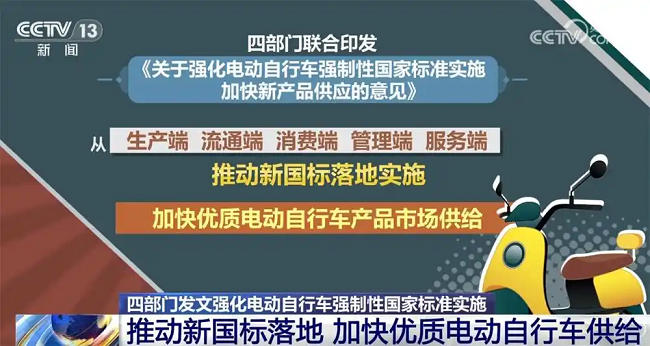
当超3亿辆的存量车替换需求,撞上加速高质量锂电化的趋势,一场由政策与消费升级共同驱动的产业 风暴,正在重塑两轮出行市场。 多个锂电巨头跨界布局"抢赛道" 政策之余,两轮锂电也在用户需求转变的背景下,从"大众供给"转向精准定制,实现从"能用"到"好 用"的价值跃迁。 这其中,尤以18-35岁区间内的年轻用户为主,他们对两轮车的需求早已经超越基础代步,而是裂变为 多元化的细分场景。追求极致性能体验的用户群体,对车辆"推背感"的乐此不疲;长距离通勤人群则关 注100km+真实续航解决里程焦虑;同时也有部分用户依赖-20℃至50℃的宽温域电池应对极端环境;同 时还有外卖配送、共享出行等企业级用户,对高安全与极速补能的需求。 *电摩公社收集整理 9月1日,电动自行车新国标即将正式实施。以安全与合规为双刃剑,新标准一方面严控非法改装与超标 电池,另一方面也通过重量限制倒逼技术升级。 业界观点表示,纵然传统铅酸电池在新国标体系下依旧有着比较广阔的使用前景,但同等重量下的锂电 能量密度优势依旧巨大,比如车辆搭载48V30Ah锂电池实现100公里以上续航,是同等重量下铅酸电池 的几乎两倍,这也将驱使更多人转向锂电池。 而市场数 ...



连续三年蝉联亚洲品牌500强丨洲明科技以创新与全球化领跑行业
Zhong Guo Chan Ye Jing Ji Xin Xi Wang· 2025-08-05 07:30
Core Insights - In 2024, the company achieved a total revenue of 7.774 billion yuan, securing the top position in the LED display industry [1] - The company has been recognized for its brand value, with a valuation of 2.208 billion USD, making it the only LED display company in the Asian Brand 500 for three consecutive years [1] - The company emphasizes a dual technology approach with COB and MIP, achieving a MIP yield rate of 99.995% and leading the industry in module direct pass rate [2] Group 1: Technology and Innovation - The company focuses on "AI + Light Display" as its core strategy, investing 4.84% of its revenue in R&D, with over 1,000 R&D personnel [2] - The company has developed innovative products such as the AI quality engine and AI emotional companion cabin, marking a new era of interactive LED screens [2] - The company holds a total of 3,231 authorized patents and has received a level three certificate for innovation and intellectual property management, the first of its kind in the LED display industry [2] Group 2: Global Expansion and Market Integration - In 2024, the company's overseas revenue reached 4.777 billion yuan, representing an 18.33% year-on-year growth [4] - The company provides localized solutions to over 160 countries and regions, ensuring a "three-hour rapid response" service circle [5] - The company is involved in major international projects, including the 2024 Paris Olympics and the 2025 Osaka Expo, providing comprehensive light display solutions [5] Group 3: Design and Recognition - The company has achieved global recognition in industrial design, winning multiple prestigious awards including the iF Design Gold Award and the Red Dot Supreme Award [3] - The company's commitment to original design has led to a full sweep of top global design awards, enhancing the perception of Chinese design [3] Group 4: Long-term Vision and Values - The company adheres to a value system of "mindfulness and altruism, innovation and progress," which has contributed to its sustained success in the Asian Brand 500 [6] - The company aims to continue driving its growth through technological innovation and localized strategies, aspiring to create long-term value in the LED display sector [6]

硚口烟草:数智转型正当时 赋能高质量发展新图景
Zhong Guo Chan Ye Jing Ji Xin Xi Wang· 2025-08-05 05:51
Group 1 - The core viewpoint of the articles emphasizes the integration of "digital intelligence empowerment" into various operations of the Wuhan Qiaokou District Tobacco Monopoly Bureau to drive high-quality development for enterprises [1] Group 2 - The district bureau is promoting the "Zhiyin Tong" store management system to facilitate a shift from traditional retail practices to data-driven marketing, with 248 retail outlets benefiting from this system [2] - Retailers are experiencing improved inventory and sales visibility, moving away from traditional bookkeeping methods [2] - The bureau is enhancing digital application scenarios to convert "screen traffic" into "market increment" and improve customer repurchase rates through targeted marketing [2] Group 3 - The bureau is implementing a digital regulatory framework to enhance market protection, utilizing digital tools for real-time monitoring and targeted inspections [3] - The "APCD closed-loop regulatory model" is being deepened, integrating various data sources to combat illegal tobacco sales effectively [3] - Digital tools are significantly increasing the efficiency of market inspections [3] Group 4 - The bureau is exploring low-code platform technology for public vehicle management, aiming to create a "digital intelligence" management model [4] - The system is currently in trial operation, focusing on streamlining vehicle application, approval, and management processes [4] - The bureau is committed to continuous breakthroughs in market regulation, customer service, and comprehensive management through technology and talent integration [4]
低代码赋能 硚口烟草零售终端智慧巡检应用正式上线
Zhong Guo Chan Ye Jing Ji Xin Xi Wang· 2025-08-05 05:49
Core Viewpoint - The company has successfully developed and launched a "Smart Inspection and Assessment Platform for Retail Terminals" using low-code technology to enhance efficiency and standardization in the tobacco industry's digital transformation strategy [1] Group 1: Platform Features - The platform integrates existing retail terminal data, allowing for intelligent matching and automatic extraction of customer terminal types and information collection types based on various identifiers, ensuring precise implementation of inspection standards [2] - It establishes an end-to-end visual monitoring chain from inspection planning to result confirmation, creating a complete digital record and enabling real-time tracking of rectification tasks for any identified anomalies [3] Group 2: Data Utilization and Management - The platform features a dynamic data dashboard for real-time aggregation and multi-dimensional analysis of inspection data, helping to identify common weaknesses and improvement directions, thus supporting resource allocation and strategic planning [4] - The internal development of the platform has significantly shortened the application development cycle, facilitating a shift from experience-driven to data-driven quality enhancement in retail terminal operations [4]
上半年北京金融“成绩单”出炉 量增价稳助力首都经济高质量发展
Zhong Guo Chan Ye Jing Ji Xin Xi Wang· 2025-08-05 00:58
Core Insights - The overall credit volume in Beijing has shown stable growth in the first half of the year, with a significant increase in various loan categories, indicating strong support for the capital's economic high-quality development [1][2] Group 1: Loan Growth and Structure - As of the end of June, the balance of RMB loans reached 12.08 trillion yuan, a year-on-year increase of 7.3%, marking the highest growth rate in nearly 10 months [1] - The balance of inclusive small and micro loans grew by 13.9% year-on-year, while medium and long-term loans in the manufacturing sector increased by 15.3% [1] - Loans in the information transmission, software, and IT services sector saw a remarkable year-on-year growth of 41.1% [1] Group 2: Financing Costs and Direct Financing - The average weighted interest rate for general loans in Beijing was 3.29% in June, down 34 basis points year-on-year, while the average interest rate for corporate loans was 2.52%, a decrease of 40 basis points [2] - Direct financing accounted for a significant portion of Beijing's financial total, with net financing from corporate bonds reaching 714.79 billion yuan, representing 50.4% of the incremental social financing scale [2] Group 3: Support for Service Consumption and Elderly Care - The People's Bank of China has established a re-lending program for service consumption and elderly care, with over 80 million yuan in new loans issued to support key areas such as accommodation, dining, and education [2][3] - The average interest rate for loans in the service consumption sector is around 3%, lower than the general loan average [3] Group 4: National Debt Sales - Beijing has the highest national debt sales in the country, with approximately 130,000 bank outlets available for transactions [3] - The issuance of savings bonds is characterized by high credit ratings and low risk, making them suitable for ordinary residents' investment and asset allocation [3][4]
山西推出10条举措优化信用修复服务助力经营主体发展
Zhong Guo Chan Ye Jing Ji Xin Xi Wang· 2025-08-05 00:54
Core Viewpoint - The Shanxi Provincial Market Supervision Administration has issued a notice aimed at optimizing credit repair services to support the development of business entities, introducing ten groundbreaking reform measures to enhance credit levels and stimulate economic growth [1]. Group 1: New Mechanisms for Credit Repair - The notice proposes three measures to reshape enterprise credit, including centralized classification and disposal of credit issues, support for enterprise restructuring, and encouragement for enterprises to enhance creditworthiness by legally halting public disclosure of negative information [1]. - Enterprises listed as severely untrustworthy for over three years will undergo centralized cleanup, with those on the list for five years being removed and their information no longer publicly disclosed [1]. - During the execution of restructuring plans, enterprises can apply for credit repair to temporarily shield negative information and lift penalties, aiding in their recovery [1]. Group 2: Enhanced Service Efficiency - Four measures are introduced to improve service efficiency, such as adding online channels for easier application, reducing required documentation, shortening processing times, and providing precise compliance reminders [2]. - Business entities can submit credit repair applications through various online platforms, maximizing convenience [2]. - The time to remove entities from the abnormal business list is reduced to four working days, while stopping the public disclosure of administrative penalties is cut to seven working days [2]. Group 3: Building a New Repair Ecosystem - Three measures are outlined to create a new ecosystem for credit repair, including a one-click application system for cross-province repairs, mutual recognition of results, and exploration of pilot projects to release reform dividends [3]. - A unified national platform will allow business entities to access their own negative information and apply for credit repair seamlessly across provinces [3]. - Innovative models such as concurrent repair for annual report defaults and "credit commitment + lenient acceptance" mechanisms are being tested in pilot areas to establish replicable "Shanxi experience" [3].
黑龙江绥芬河上半年外贸进出口货值达134.2亿元 同比增长16%
Zhong Guo Chan Ye Jing Ji Xin Xi Wang· 2025-08-05 00:45
Core Insights - The total import and export value of Suifenhe City reached 13.42 billion yuan in the first half of the year, marking a 16% year-on-year increase, indicating simultaneous growth in scale and quality [1] Group 1: Customs and Trade Facilitation - Suifenhe Customs has leveraged smart supervision to enhance the quality and efficiency of foreign trade, addressing customs clearance bottlenecks through problem-oriented approaches [1] - The implementation of intelligent logistics systems and smart sampling equipment for coal at railway ports has optimized the supervision of bulk commodities [1] - The "Customs Chief Reception Day" system has been established to assist enterprises in the Suifenhe Comprehensive Bonded Zone with simplified domestic procurement processes, effectively reducing customs clearance costs [1] Group 2: Infrastructure and Technology Upgrades - The customs authority is advancing the upgrade of smart ports, reducing vehicle verification time to 45 seconds through the use of intelligent logistics checkpoints [1] - Efficient operation of the China-Europe freight trains is supported by rapid customs clearance business models, promoting appointment-based clearance and priority review measures [1] - A comprehensive risk prevention system integrating information analysis, site inspections, and mobile checks has been established to facilitate the rapid development of cross-border e-commerce [1] Group 3: Future Plans - Suifenhe Customs aims to continue expanding the application scenarios of smart customs to contribute significantly to the establishment of a new highland for opening up in the northern region [1]
山东好品闪耀济南 共绘品牌发展新蓝图
Zhong Guo Chan Ye Jing Ji Xin Xi Wang· 2025-08-04 23:35
Group 1: Core Insights - The press conference focused on showcasing the achievements and innovations of high-quality products from Shandong, aiming to enhance the brand's presence nationally and globally [1] - The Shandong government emphasizes brand development through the "Good Products Shandong" strategy, which aims to cultivate competitive brands to increase product value and market share [1] Group 2: Company Highlights - Furuida (600223) has developed a comprehensive supply chain in the cosmetics industry, achieving multiple industry firsts and holding over 170 patents, with its flagship product, the Yilian spray, selling over 50 million bottles annually [2] - Hisense Group has transformed from a small local factory to a multinational corporation, ranking second globally in TV shipments for three consecutive years and leading in several countries, while also expanding into high-tech industries [3] - Huaguang National Porcelain Technology Co., Ltd. has pioneered advanced ceramic materials and technologies, achieving international standards that surpass British bone china, and has been involved in significant national diplomatic events [4] - Lubao Group has innovated in the edible oil sector with its patented 5S physical pressing technology, enhancing peanut oil quality and developing high oleic peanut varieties, contributing to a green circular economy [5] Group 3: Brand Development Strategies - The conference served as a platform for discussing new paths and trends in brand development, emphasizing the need for continuous technological innovation and quality enhancement to maintain competitiveness [6] - Experts agreed on the importance of brand promotion and international cooperation to elevate the global presence of Shandong products [6] - The Shandong government plans to enhance the brand cultivation system and provide policy support to create a favorable environment for brand development [7]