Zhong Guo Chan Ye Jing Ji Xin Xi Wang

Search documents
IEA称随着欧佩克+增产石油市场将供应过剩
Zhong Guo Chan Ye Jing Ji Xin Xi Wang· 2025-11-07 00:12
Core Viewpoint - The International Energy Agency (IEA) has raised its oil supply growth forecast for this year and expects this trend to continue into next year, indicating a potential oversupply in the oil market despite low demand [1] Supply Forecast - The IEA predicts that oil supply will increase by 3 million barrels per day (bpd) by 2025, up from a previous forecast of 2.7 million bpd [1] - The IEA also forecasts that global oil demand will grow by 710,000 bpd in 2025, which is a downward revision of 30,000 bpd from earlier estimates [1] - For 2026, global oil demand is expected to increase by 2.4 million bpd [1] Demand Outlook - The IEA indicates that oil consumption will remain subdued in the latter part of 2025 and into 2026 due to a challenging macroeconomic environment and the electrification of transportation [1] - The pace of energy transition is anticipated to be faster than previously predicted by OPEC and other institutions [1] OPEC's Perspective - OPEC's recent monthly report predicts that oil demand growth for this year will reach 1.3 million bpd, nearly double the IEA's forecast [1] Current Market Conditions - The IEA acknowledges that the global oil market is currently experiencing an oversupply, with September's global oil supply increasing by 5.6 million bpd year-on-year, including a 3.1 million bpd increase from OPEC+ [1] - The IEA now expects next year's supply to exceed demand by approximately 4 million bpd, an increase from the previous estimate of 3.3 million bpd [1]
IP趣玩食品成休闲食品赛道增长新引擎
Zhong Guo Chan Ye Jing Ji Xin Xi Wang· 2025-11-07 00:10
Core Insights - The core viewpoint of the articles is that the IP play food sector is emerging as a new growth engine in China's snack food market, which has surpassed a trillion yuan in scale, driven by evolving consumer demands for nutrition, health, novelty, and emotional value [1][3]. Market Overview - The overall market size of IP food in China reached 35.4 billion yuan last year and is expected to grow to 84.9 billion yuan by 2029, with the IP play food segment growing from 5.6 billion yuan in 2020 to 11.5 billion yuan last year, reflecting a compound annual growth rate (CAGR) of 19.6% [3]. - The IP play food market is projected to continue expanding at a CAGR of 20.9% from this year to 2029, potentially reaching 30.5 billion yuan [3]. Consumer Trends - The consumer demographic for IP play food is becoming increasingly "age-inclusive," attracting not only children but also young adults and older consumers [2][3]. - Many young consumers share and recommend various products on social media, creating a unique community culture around IP play food [3]. Product Innovation and Development - The industry is transitioning from a model focused on low-age audiences and single product categories to a more systematic development path that includes all-age coverage, diverse products, refined designs, and healthier formulations [6]. - Health trends are pushing the industry towards "sugar-free" options, with many products now prominently featuring "sugar-free/0 sugar" labels [6]. Emotional Consumption - The rise of emotional consumption has led to a significant market for products that provide emotional companionship, with 72% of consumers indicating that their purchasing behavior is driven by the desire for emotional connection [7]. - IP play food effectively captures this demand by integrating elements of surprise, interaction, and collectability into snack products, transforming consumption from merely satisfying hunger to providing emotional comfort [7]. Competitive Landscape - The increasing number of entrants in the IP play food market has led to a growing concern over product homogenization, prompting companies to innovate continuously in product forms and enhance toy quality [5][9]. - Companies are encouraged to focus on original IP incubation and cross-industry collaborations to build unique content advantages [8]. Investment and Market Dynamics - The IP play food sector is attracting more investor attention, with increased financing events and deeper integration across the industry chain, from IP licensing to product design and marketing [4]. - The market is characterized by a shift towards enhancing emotional value and consumer experience rather than competing solely on price [8].
消费新场景活力强劲 借助物流业“含金量”十足 数据解锁经济新动力
Zhong Guo Chan Ye Jing Ji Xin Xi Wang· 2025-11-06 23:47
Core Viewpoint - The logistics industry in China continues to show expansion in October, with the logistics prosperity index at 50.7%, despite a slight month-on-month decline of 0.5 percentage points [1] Group 1: Logistics Industry Performance - The logistics business volume index and new order index remain in the prosperity range, indicating sustained demand expansion [1] - Consumer logistics growth is highlighted as a key area, driven by increased offline and online shopping activities during the National Day and Mid-Autumn Festival [1] - The postal and express delivery business volume index reached 70.5%, reflecting a month-on-month increase of 0.4 percentage points, indicating robust e-commerce activity [1] Group 2: Investment Outlook - Logistics infrastructure investment remains stable, with the fixed asset investment completion index at 55.2%, indicating ongoing expansion [2] - The business activity expectation index stands at 55.3%, remaining above 55% for eight consecutive months, suggesting optimistic outlooks for the year [2] - The expectation for steady growth in logistics demand is anticipated in the fourth quarter, providing support for broader economic goals [2]

比亚迪推进全球化布局海外市场业绩亮眼
Zhong Guo Chan Ye Jing Ji Xin Xi Wang· 2025-11-06 22:07
Core Insights - BYD's overseas sales reached 701,600 units from January to September, marking a 132% year-on-year increase [6] - Despite a 3.05% year-on-year decline in Q3 revenue to 194.985 billion yuan, BYD's market performance remains resilient [1] - The company's net profit for the first three quarters was 23.33 billion yuan, down 7.55% year-on-year, with a notable decline in September's sales [2] Sales Performance - BYD's total vehicle sales from January to September amounted to 3.2601 million units, an 18.64% increase compared to 2.7479 million units in the same period last year [3] - In September, BYD's new energy vehicle sales were 396,300 units, reflecting a 5.52% year-on-year decline, marking the first drop in sales for the year [2] Financial Metrics - For the first three quarters, BYD's revenue was 566.27 billion yuan, a 13% year-on-year increase, while net profit was 23.33 billion yuan, down 7.55% [2] - R&D expenses for the first three quarters reached 43.748 billion yuan, a 31.3% increase year-on-year, exceeding the net profit for the same period [4] - Operating cash flow for the first three quarters was 40.845 billion yuan, down 27.42% year-on-year [4] Product and Technology Development - BYD's intelligent models have become a core competitive factor across its product range, with over 1.7 million units sold featuring advanced driving assistance systems [5] - The company has launched models tailored for the Japanese market, including the K-EV BYD RACCO, and introduced its first plug-in hybrid model, the Sea Lion 06DM-i [6] Market Expansion - BYD's products are now available in 117 countries and regions, showcasing strong market expansion capabilities [6] - The overseas market is becoming a significant growth area for BYD, with a diverse portfolio that includes both commercial and passenger vehicles [6]

持续创新产品 不断完善服务 中国农机全球市场赢美誉
Zhong Guo Chan Ye Jing Ji Xin Xi Wang· 2025-11-06 02:16
Core Insights - Chinese agricultural machinery companies are making significant breakthroughs in the global market, showcasing their innovative capabilities in non-traditional applications [1] - The export of Chinese agricultural machinery products has shown a positive trend, with a total export value of $13.86 billion in the first nine months of the year, marking a year-on-year increase of 26.5% [2] - The demand for Chinese agricultural machinery is expanding in various markets, including grain processing and poultry farming, with exports reaching $1.07 billion, a 40% increase year-on-year [3] Group 1: Export Performance - In the first nine months, the export value of agricultural machinery equipment reached $9.83 billion, up 34.4% year-on-year, accounting for 70.9% of total exports [2] - The export value of horticultural and forage machinery was $3.44 billion, reflecting a 37% increase, with significant growth in markets such as Germany, the Netherlands, and India [2] - The export of agricultural vehicles reached $3.08 billion, a 23.5% increase, with strong demand from South America and Oceania [3] Group 2: Market Expansion Strategies - Chinese agricultural machinery companies are actively expanding their international markets through product innovation, collaboration, and improved after-sales service [4] - The YTO tractor was optimized for beach cleaning tasks in Saudi Arabia, demonstrating its capability in challenging environments [4] - In the UK, Zoomlion adapted its equipment to meet local market demands, enhancing comfort and operational efficiency [4] Group 3: Collaborative Efforts - Collaboration between companies, such as the partnership between YTO and Sinomach, has led to successful international market expansion, delivering over 400 YTO tractors to users in various regions [5] - Strengthening partnerships has resulted in complementary advantages and enhanced overall competitiveness in the global market [5] Group 4: After-Sales Service and Training - Comprehensive after-sales service and technical training have been crucial for Chinese agricultural machinery companies in expanding their international presence [6] - YTO has sent service teams abroad for training dealers in countries like Nigeria and Uzbekistan, enhancing customer satisfaction and loyalty [6] - Innovative training methods for cotton picker operators in Uzbekistan have improved local skills and contributed to the competitiveness of Chinese agricultural machinery [6]


我国AI大模型呈“金字塔”型分布特征
Zhong Guo Chan Ye Jing Ji Xin Xi Wang· 2025-11-06 01:29
Core Insights - The report indicates that domestic generative AI models have become the preferred choice for over 90% of users, reflecting China's market dominance in AI core technologies [1][7] - The number of AI companies and the scale of the industry in China continue to grow during the 14th Five-Year Plan, with significant innovations emerging [1][3] Industry Development - As of August 2025, China has registered 538 generative AI services and 263 applications, with widespread use in various sectors including smart search, content creation, and industrial manufacturing [3] - The generative AI industry in China is characterized by a "pyramid" distribution, with Beijing and Shanghai leading in the number of registered models, accounting for 48.5% of the total [4][6] Regional Characteristics - The Beijing-Tianjin-Hebei region focuses on "technology sourcing and regional collaboration," while the Yangtze River Delta emphasizes "ecosystem building and industrial empowerment" [5][6] - The Pearl River Delta is characterized by "industry application and robust support," leveraging a complete industrial chain and active market for AI technology applications [6] User Preference and Market Dynamics - Over 90% of users prefer domestic models due to their stable advantages in experience, cost-effectiveness, and adaptability to local needs [7] - The preference for domestic models is expected to accelerate a positive cycle of application, feedback, and iteration, enhancing the ecosystem [7] Challenges and Future Directions - Despite the rapid development, challenges such as the inherent opacity of models, "hallucination" issues, and potential security risks hinder deeper applications in critical fields [8] - Future efforts should focus on establishing data governance mechanisms, enhancing vertical scene applications, and promoting collaboration across the AI value chain to lower the barriers for deploying specialized models [8]
高危煤矿岗位迎来“机器替人”重大突破
Zhong Guo Chan Ye Jing Ji Xin Xi Wang· 2025-11-06 01:04
Core Insights - The coal industry is undergoing a transformation towards automation and safety, with the introduction of the world's first explosion-proof 220kg six-joint industrial robotic arm, marking a significant milestone in underground intelligent operations [1][2]. Industry Demand for Intelligent Transformation - The National Mine Safety Administration has released a key research and development directory for mining robots, encouraging collaboration among mining enterprises, equipment manufacturers, and research institutions to enhance safety and efficiency in harsh environments [2]. - The industry faces a bottleneck in the development of robust robotic solutions capable of performing heavy tasks in extreme conditions, emphasizing the need for "machine replacing human" initiatives to improve safety levels [2]. Technological Innovations - The six-joint robotic arm features a unique explosion-proof design integrated into the motor, reducing weight by 50% and size by 30%, enabling effective operation in narrow mining tunnels [3]. - The robotic arm has achieved significant breakthroughs in explosion-proof standards and degrees of freedom, meeting the highest industry certifications [4]. Practical Applications and Benefits - The robotic arm has demonstrated its value in three major operational scenarios: - In intelligent spraying, it reduced rebound rates from 30% to below 15%, saving approximately 200,000 yuan annually in concrete costs [5]. - In 3D printing of sealed walls, it improved construction efficiency by 60% and achieved a 100% acceptance rate on the first attempt [5]. - In AI visual identification of gangue, it achieved a recognition rate of 98%, enhancing coal quality and reducing transportation costs [6]. Future Development and Ecosystem - The collaboration between China Coal Science and Technology and Huichuan Technology aims to leverage decades of experience in explosion-proof technology to create a sustainable technological foundation for the industry's intelligent transformation [6]. - The future of coal mining will focus on integrating more reliable and efficient hardware and software, expanding intelligent devices into traditionally challenging areas, and adapting to specific mining conditions [7]. - The ultimate goal is to achieve "less human" and eventually "no human" operations in coal mining, supported by advancements in 5G and AI technologies [7].

光伏产业仍处深度调整期--产业链价格短期企稳 四季度供需博弈加剧
Zhong Guo Chan Ye Jing Ji Xin Xi Wang· 2025-11-06 00:14
Core Insights - The photovoltaic industry in China is undergoing a deep adjustment period due to the dual pressures of capacity expansion and slowing terminal demand, with no fundamental change in the overall supply-demand pattern [1] - Despite some price recovery in certain segments of the industry chain, the overall market demand has not formed a strong support [1] - The fourth quarter is expected to see price fluctuations in photovoltaic products, with potential stabilization in some segments due to production cuts and policy support [1] Summary by Sections Polysilicon Market - Polysilicon is facing challenges of oversupply and high inventory, with social inventory expected to reach 440,000-450,000 tons in September [2] - Despite some companies planning production cuts, overall output remains high due to new capacity ramp-up and the resumption of production by second and third-tier manufacturers [2] - The average transaction price for n-type polysilicon is stable at 53,200 yuan/ton, with overall production expected to reach a peak in October [2][3] Silicon Wafer and Cell Prices - Silicon wafer manufacturers have attempted price increases since September, with some sizes turning profitable, while others are covering cash costs [4] - The production of silicon wafers increased by 5.37% month-on-month, but price increases have not fully transmitted to the downstream cell segment [4] - The cell segment is experiencing pressure from the module side, leading to a planned production adjustment in October [4] Module Demand and Production - Module demand has declined, with orders decreasing and production expected to drop by 3.19% month-on-month in October [5] - Mainstream module prices remain stable, but high-power models have seen price increases due to better supply-demand dynamics [5] - The overall industry chain is still under price pressure due to high inventory and insufficient terminal demand, with expectations of continued downward price risks [6]
美的集团第三季度营收再破千亿元
Zhong Guo Chan Ye Jing Ji Xin Xi Wang· 2025-11-05 22:19
Core Insights - Midea Group reported a significant increase in revenue and net profit for Q3 2025, with total revenue surpassing 111.9 billion yuan and a net profit of approximately 11.87 billion yuan, marking a nearly 9% year-on-year growth [1] - For the first three quarters of the year, Midea achieved a total revenue of 363.06 billion yuan, reflecting a year-on-year increase of 13.82%, and a net profit of 37.88 billion yuan, up 19.51% [1] - The growth in revenue is attributed to the steady rise of the "second engine" To B business, with significant contributions from sectors such as new energy, industrial technology, and robotics [1] Business Performance - In Q3, Midea's revenue grew by approximately 10% year-on-year [1] - The revenue from new energy and industrial technology, smart building technology, and robotics and automation for the first three quarters reached 30.6 billion yuan, 28.1 billion yuan, and 22.6 billion yuan, respectively, with year-on-year growth rates of 21%, 25%, and 9% [1] Robotics and AI Development - Midea launched the first trillion-level data AI agent in the home appliance industry, "COLMO AI Butler," which integrates various advanced models and multi-dimensional perception capabilities for smart home coordination [2] - The company is advancing in the field of humanoid robots with products like "Mei Luo" for industrial applications and "Mei La," a humanoid robot showcased at the Berlin International Consumer Electronics Show [2] Strategic Transformation - Midea's strategic transformation also targets energy and healthcare sectors, while its traditional smart home business continues to show resilience, with a 13% year-on-year revenue increase in the first three quarters [3] - The overseas OBM (Own Brand Manufacturing) revenue has significantly increased, now accounting for over 45% of the TO C business, with notable market share growth in Japan [3] - Midea's manufacturing capabilities and brand development have been pivotal in enhancing overseas OBM revenue, with its Thailand air conditioning factory recognized as a resilient supply chain lighthouse factory by the World Economic Forum [3]

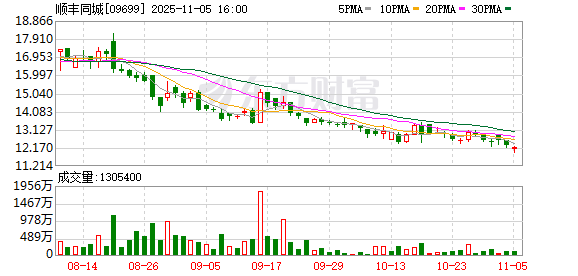
“中国新增长年度榜单”揭晓 顺丰同城、比亚迪、京东等共同入选“ESG创新实践榜”
Zhong Guo Chan Ye Jing Ji Xin Xi Wang· 2025-11-05 09:04
Core Insights - The "2025 New Growth ESG Innovation Practice List" was officially released at the Harvard Business Review Management Annual Conference 2025, recognizing companies that effectively integrate environmental, social, and governance (ESG) issues into their operations [2][6] - SF Express's instant delivery platform, SF Same City, was highlighted for its "people-oriented, intelligent protection" approach in ESG practices, alongside other notable companies like BYD and JD Group [2][6] ESG Practices - SF Same City has established a low-carbon operational network by integrating AI scheduling, green energy, unmanned vehicles, and recyclable packaging, while also ensuring rider rights and participating in industry standardization [6][9] - In 2024, SF Same City achieved over 82.5 billion kilometers in total delivery distance, with over 98% of that using green transportation, resulting in a carbon reduction of 2.42 million tons [7] - The company has implemented a comprehensive rider rights system, focusing on safety training, career development, and welfare initiatives, including the establishment of over 4,000 rider stations [9] Financial Performance - SF Same City reported a revenue of 10.236 billion yuan in the first half of 2025, marking a year-on-year growth of 48.8%, with net profit increasing by 120.4% to 137 million yuan, achieving a historical high [12] - The company's strong ESG performance has led to recognition from authoritative institutions, with a 53% increase in its S&P Global ESG score, placing it in the top 25% of its industry [10][12] - SF Same City has been included in several major stock indices, reflecting the capital market's recognition of its long-term value [10]