Jing Ji Guan Cha Wang

Search documents
成飞集成发布2025年业绩预告,预计亏损收窄
Jing Ji Guan Cha Wang· 2026-02-13 06:17
经济观察网成飞集成(002190)近期发布业绩预告,预计2025年全年归属净利润亏损3700万元至5000万 元,同比减亏幅度为33.41%至50.73%。业绩变动主要源于资产减值损失减少和营业外支出下降。 业绩经营情况 具体财务数据需以后续披露的2025年年度报告为准。年度报告预计将在2026年初发布,这将提供最终业 绩确认,可能影响市场情绪。 公司状况 根据公司投资者关系平台回复,截至2026年2月10日,成飞集成股东人数为98,104户,反映了股权结构 的最新变化。公司于2026年1月20日召开了第一次临时股东会,审议了2026年度日常关联交易预计及董 事补选等事项,相关决议已落地。 以上内容基于公开资料整理,不构成投资建议。 ...

绿通科技业绩大幅下滑 一致行动人拟增持股份
Jing Ji Guan Cha Wang· 2026-02-13 06:17
2026年2月6日,公司召开第四届第八次董事会会议,审议了《关于广东绿通产业投资基金合伙企业(有 限合伙)对外投资暨关联交易的议案》等文件。这类会议通常涉及战略决策,可能影响未来业务布局。 业绩经营情况 公司于2026年1月30日发布2025年度业绩预告,预计归母净利润为4000万元至5000万元,同比下降 64.82%至71.86%;扣非净利润仅为200万元至300万元,同比下降97.16%至98.11%。业绩下滑主要受美 国市场高额关税政策导致收入锐减,以及计提大额资产减值准备(如存货跌价和应收账款坏账)影响。 业务与技术发展 绿通科技在2025年9月完成对江苏大摩半导体科技有限公司51%股权的收购,切入半导体量检测设备领 域。2025年全年营业收入因并表增至约9.98亿元,同比增长20%,但短期难掩主业疲软。公司称此举旨 在形成第二增长曲线,后续整合进展值得关注。 经济观察网绿通科技(301322)控股股东一致行动人计划增持公司股份,同时公司2025年业绩预告显示 净利润同比大幅下滑。 近期受关注事件 根据绿通科技公告,公司控股股东的一致行动人骆笑英计划自2026年1月30日起6个月内,通过二级市场 增 ...
锡南科技资金连续流入,三季报盈利改善
Jing Ji Guan Cha Wang· 2026-02-13 06:17
经济观察网 近期锡南科技(301170)(301170)资金关注度提升,2月11日主力资金净流入96.94万元, 2月12日进一步净流入238.97万元,连续两个交易日呈现资金流入态势。股价方面,2月12日报收30.55 元,微涨0.16%,近5日累计涨幅0.93%,短期呈现震荡趋势,区间振幅1.72%。交易活跃度方面,2月12 日换手率3.58%,成交额3681.07万元,市场参与意愿一般。业务层面,公司作为汽车轻量化领域铝合金 零部件供应商,近期在新能源汽车及氢燃料电池项目上有所布局,包括与博世、盖瑞特等企业的合作, 或受相关概念板块活跃催化。 业绩经营情况 2025年三季报数据显示,公司前三季度主营收入8.41亿元,同比增长5.12%;归母净利润8003.79万元, 同比增长3.39%。其中第三季度单季度扣非净利润2627.87万元,同比大幅上升43.27%,显示盈利能力改 善。负债率保持低位(9.34%),毛利率19.02%,财务结构稳健。 机构观点 机构观点整合显示,该股市场关注度一般,舆情偏中性,东方财富(300059)网综合评价得分66.50 分,近期消息面平淡,主力资金虽有介入迹象但整体机构调 ...
纳芯微股东减持与股份回购进展引关注
Jing Ji Guan Cha Wang· 2026-02-13 06:15
Group 1 - The company faces shareholder reductions, share buybacks, and the appointment of H-share auditing institutions in 2026 [1] - Shareholders Suzhou Guorun Ruiqi Venture Capital and Shenzhen Huiyue Growth Investment Fund plan to reduce their holdings by up to 0.36% and 1.39% respectively between March 2, 2026, and June 1, 2026, due to personal funding needs [2] - The company has been executing a share buyback plan initiated in November 2025, having repurchased 1,255,642 shares for approximately 200 million yuan as of January 31, 2026, intended for employee stock ownership plans or equity incentives, with a buyback period of 12 months [3] Group 2 - The company held a temporary shareholders' meeting on January 26, 2026, where the appointment of the H-share auditing institution for the 2025 fiscal year was approved, with subsequent audit results potentially impacting financial disclosures [4]

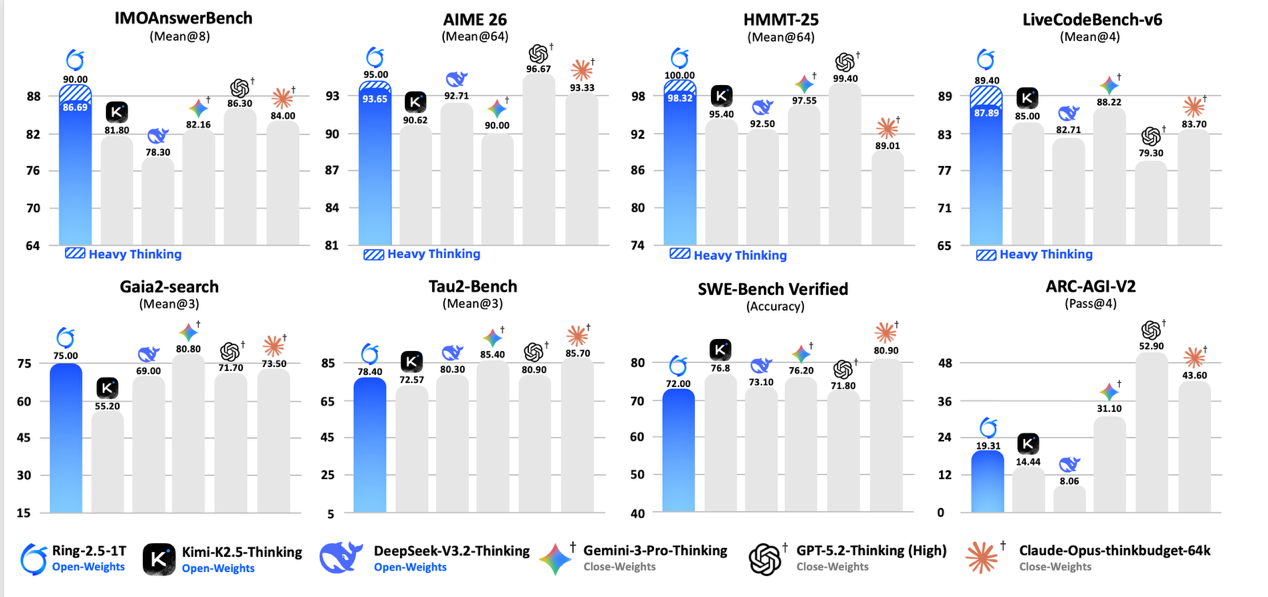
蚂蚁开源万亿思考模型Ring-2.5-1T:超强代码与Agent能力,适配Claude Code、OpenClaw
Jing Ji Guan Cha Wang· 2026-02-13 06:13
Ring-2.5-1T在数学、代码、逻辑等高难推理任务和智能体搜索、软件工程、工具调用等长程任务执行上均达到开源领先水平 在多项权威基准测试中,Ring-2.5-1T 与 DeepSeek-v3.2-Thinking、Kimi-K2.5-Thinking、GPT-5.2-thinking-high、Gemini-3.0-Pro-preview-thinking-high、Claude- Opus-4.5-Extended-Thinking 等主流开源与闭源模型进行了系统对比,在数学推理、代码生成、逻辑推理和智能体任务执行等高难场景中达到开源领先水 平。尤其在深度思考(Heavy Thinking)模式下,该模型在IMOAnswerBench、HMMT-25等数学竞赛推理基准和LiveCodeBench-v6代码生成基准中超越所有 对比模型,展现了强大的复杂推理与跨任务泛化能力。 经济观察网 2月13日,蚂蚁集团开源发布全球首个基于混合线性架构的万亿参数思考模型 Ring-2.5-1T,在长文本生成、数学推理与智能体任务执行上达到开 源领先水平,为智能体(Agent)时代的复杂任务处理提供高性能基础支撑。 Ri ...

又一上市公司“蹭”商业航天概念被监管警示
Jing Ji Guan Cha Wang· 2026-02-13 06:13
Core Viewpoint - The company Shuangliang Energy (600481) misled investors by announcing overseas orders related to SpaceX, leading to a rapid stock price increase, followed by regulatory warnings for inaccurate disclosures [1][2][3]. Group 1: Company Actions and Regulatory Response - On February 12, Shuangliang Energy announced three overseas orders for 12 heat exchanger units intended for SpaceX's fuel production system, which caused the stock to hit the daily limit [1][2]. - After regulatory intervention, the company clarified that the orders were signed on October 25, 2025, and January 9, 2026, totaling approximately RMB 13.92 million, representing about 0.11% of the audited revenue for 2024, indicating no significant impact on operations [2][3]. - The Shanghai Stock Exchange issued a regulatory warning to Shuangliang Energy for violating disclosure rules, emphasizing the need for accurate and complete information to avoid misleading investors [3][4]. Group 2: Market Context and Implications - The commercial space sector is currently a hot topic in the market, with significant investor interest, and companies must disclose information carefully to avoid misleading claims [3][5]. - Shuangliang Energy's main business includes energy-saving products and renewable energy equipment, with commercial space not being a primary application area [4]. - The company is projected to incur losses between RMB 780 million and RMB 1.06 billion in 2025, following a previous loss of RMB 2.134 billion, indicating ongoing challenges in the renewable energy sector [4]. Group 3: Industry Trends - The commercial space industry is experiencing rapid growth, with companies like SpaceX leading advancements in launch capabilities and supply chain opportunities [6][7]. - The commercial space index saw a peak increase of 62.08% within 20 days, reflecting strong market interest, although some recent corrections have occurred [7].

中触媒项目延期及技术进展引关注,股价小幅波动
Jing Ji Guan Cha Wang· 2026-02-13 06:13
Group 1 - The core viewpoint of the article highlights that Zhong Chumai has announced a delay in its "Environmental New Materials and Intermediates Project" to 2028, citing industry technology trends, market demand changes, and optimization of approval processes as reasons for the delay [1] - The company has confirmed that it has mastered the complete production process for artificial high-purity quartz sand and completed pilot testing, but there are still risks related to technological scaling and market competition in the industrialization process [1] - Zhong Chumai clarified that the construction of its iron-molybdenum catalyst production line is funded by its own capital, not through raised investment funds, to avoid overcapacity [1] Group 2 - In the recent stock performance, Zhong Chumai's share price experienced slight fluctuations, with a cumulative increase of 0.94% over the past week, closing at 29.00 yuan on February 9, 2026 [2] - The main capital flow showed a net outflow of funds over the past five days, with notable outflows on February 10 and February 11, while there was a net inflow on February 12 [2] - Institutional ratings indicate that in the past 90 days, three institutions have covered Zhong Chumai, with two giving a "Buy" rating and one an "Add" rating, reflecting market recognition of its business prospects [3]

瑞晨环保2025年预亏,机构持仓现调整
Jing Ji Guan Cha Wang· 2026-02-13 06:13
截至2025年9月30日,机构持仓显示诺安多策略混合A增持至57.69万股,中信保诚多策略混合等新进十 大流通股东,而华夏磐泰混合退出。股东变化可能暗示机构对细分领域的配置调整。 此外,公司处于节能环保行业,长期受"双碳"政策支持,但需关注其盈利改善进度和行业竞争态势。 以上内容基于公开资料整理,不构成投资建议。 资金动向 2026年1月9日,公司出现主力资金净流入30.99万元,同期股价上涨2.61%,反映短期市场情绪受中小盘 题材活跃和政策预期推动。资金面变化可能对股价稳定性产生影响。 机构持仓分析 经济观察网瑞晨环保(301273)(301273.SZ)近期发布2025年业绩预告,预计归母净利润亏损5500万元 至7500万元,主要受行业竞争加剧、毛利率下降及期间费用增加影响。该预告是评估公司盈利修复进展 的关键节点。 ...
润贝航科股东拟减持股份,股票交易异常波动
Jing Ji Guan Cha Wang· 2026-02-13 06:13
以上内容基于公开资料整理,不构成投资建议。 经济观察网润贝航科(001316)股东刘俊锋及嘉仑(海南)投资发展有限公司拟减持股份不超过345.35万 股,减持比例不超过公司总股本的3%。该计划尚待实施,可能对未来股价产生影响。公司股票在2026 年2月3日、2月4日及2月5日连续三个交易日收盘价格涨幅偏离值累计超过20%,属于异常波动情况。公 司表示经营情况正常,无未披露重大事项。公司预告2025年归母净利润预计为1.65亿元至2.10亿元,同 比增长86.39%至137.22%。 ...
ST清研2025年年报披露在即,退市风险引关注
Jing Ji Guan Cha Wang· 2026-02-13 06:13
经济观察网ST清研(301288)2025年年度报告预约于2026年4月21日披露,其最终财务数据将决定公司是 否触及退市条件。根据业绩预告,公司预计2025年归属净利润亏损2000万至2700万元,但扣除后的营业 收入预计为1.47亿至1.85亿元,需关注是否避免财务类退市指标。 由于公司股票已被实施退市风险警示,若2025年年报显示触及《深圳证券交易所创业板股票上市规则》 第10.3.11条情形(如净利润为负且营业收入低于1亿元),股票可能被终止上市。公司将在年报披露前每 十个交易日发布一次风险提示公告。 监管情况 2025年年度审计工作的最终结果将影响退市风险。投资者需关注审计意见是否出现非标事项,以及监管 机构对ST类公司的常态化退市审查。 以上内容基于公开资料整理,不构成投资建议。 业绩经营情况 公司预约在2026年4月21日披露经审计的2025年年度报告。这份报告将关键决定公司是否触及退市条 件。根据业绩预告,公司预计2025年全年归属净利润亏损2000万元至2700万元,但扣除后的营业收入预 计为1.47亿元至1.85亿元,需关注最终数据是否避免财务类退市指标。 未来发展 ...