
Huan Qiu Wang Zi Xun

Search documents
生产成本高昂,台积电美国厂毛利率几乎缩水到1/8
Huan Qiu Wang Zi Xun· 2026-01-05 23:05
Core Viewpoint - TSMC's expansion in the U.S. is significantly impacting its profitability due to high production costs, leading to a stark contrast in profit margins between its U.S. and Taiwan facilities [1][2]. Cost Comparison - The labor cost per wafer at TSMC's Taiwan facility is approximately $1,800, while in the U.S., it reaches $3,600, effectively doubling the cost [1]. - The depreciation cost per wafer is even more pronounced, with Taiwan's cost at about $1,500 compared to $7,289 in the U.S., making the U.S. cost over four times higher [1]. - The gross margin for a wafer produced in Taiwan is around 62%, whereas in the U.S., it plummets to about 8%, which is roughly one-eighth of the Taiwan margin [1]. Production Capacity and Utilization - TSMC's U.S. facilities have lower production capacity and utilization rates, producing only about one-fourth of the output compared to its Taiwan plants, which increases the per-wafer cost significantly [1]. Labor Challenges - TSMC faces challenges in labor costs, with two options for staffing its U.S. facilities: hiring local employees or sending Taiwanese engineers, with the latter being more cost-effective [2]. - Cultural differences in work practices also pose challenges, as highlighted by TSMC's founder, who noted that response times to equipment failures differ significantly between the U.S. and Taiwan [2]. Long-term Strategy and Investment - Despite the high costs, TSMC views its U.S. expansion as a long-term strategy, planning to invest up to $300 billion in the U.S. supply chain, which is perceived as a "political investment" [2]. - The rising operational costs are becoming a significant sustainability challenge for TSMC's overseas expansion, impacting its ability to balance profit margins with customer demands in the U.S. [2].

提升危险应对能力,锤炼心理抗压素质,我国首次航天员洞穴训练圆满完成
Huan Qiu Wang Zi Xun· 2026-01-05 22:58
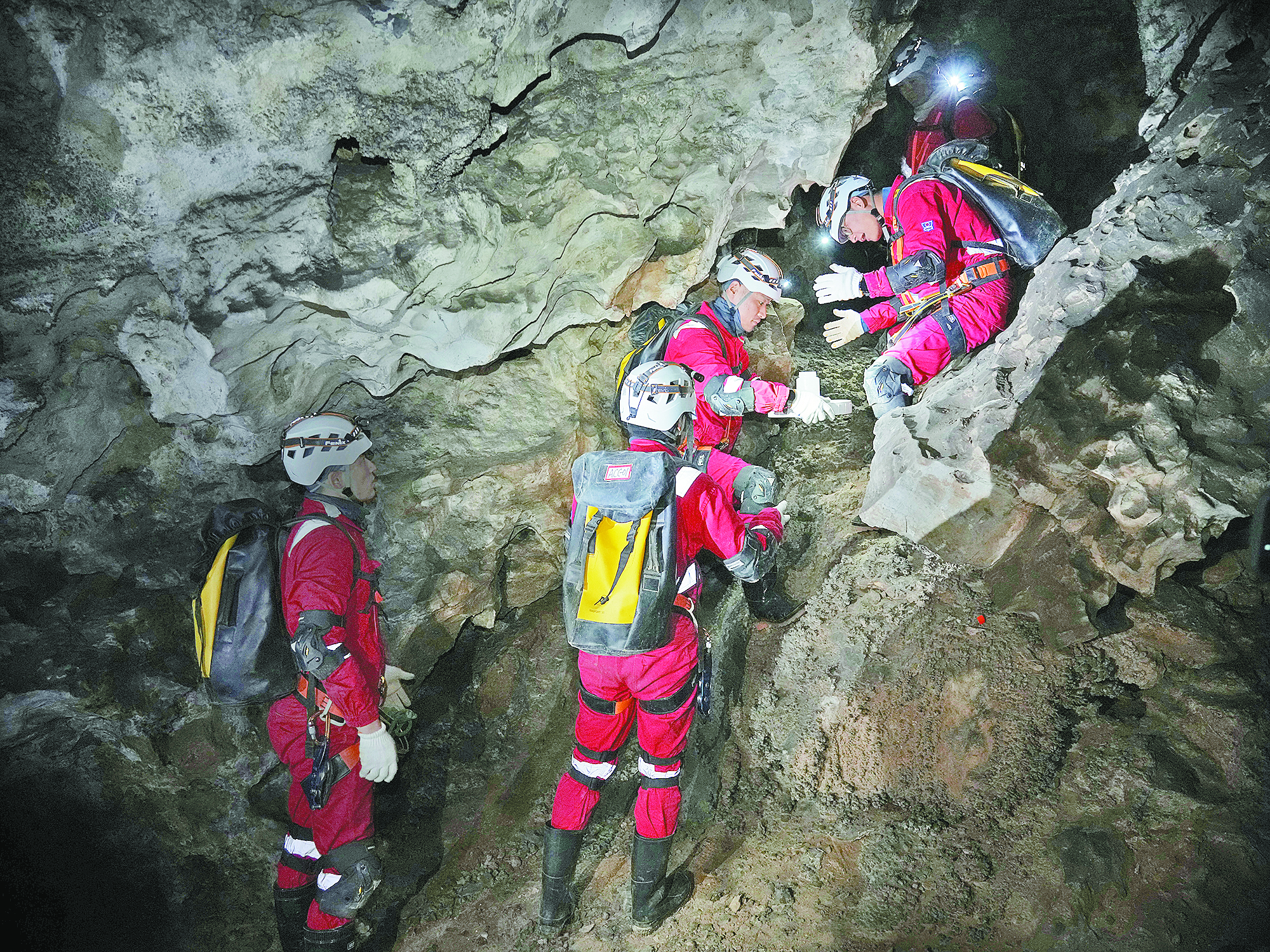
Core Viewpoint - China's first astronaut cave training has been successfully completed, enhancing astronauts' capabilities to cope with extreme environments for future space missions [1][2] Group 1: Training Overview - The cave training involved 28 astronauts divided into 4 groups, completing a 6-day, 5-night program designed to simulate extreme conditions similar to those in space [1][2] - The training included tasks such as cave exploration, scientific research, resource management, and life support, focusing on various challenges like narrow passages and psychological stress [2][6] Group 2: Training Environment and Methodology - The training site was selected after extensive surveys of over ten caves across seven provinces, ensuring safety and challenge [2] - The program incorporated innovative elements, including environmental monitoring, cave mapping, and psychological behavior training, alongside scientific research on human-environment interactions [2][6] Group 3: Psychological and Physical Challenges - The training aimed to enhance astronauts' emergency response, teamwork, decision-making, and psychological resilience in extreme conditions [6][7] - Psychological challenges included sensory deprivation and social isolation, with a focus on tracking and supporting mental health during the training [6][7] Group 4: Continuous Development and Future Implications - The astronaut training center is continuously optimizing training methods and expanding programs to meet the evolving needs of manned space missions [7] - New training technologies and methods are being developed, including mixed-reality training devices and psychological endurance systems, to better prepare astronauts for deep space exploration [7]

TCL李东生出席中韩商务论坛,建言新兴领域合作
Huan Qiu Wang Zi Xun· 2026-01-05 10:49
Group 1 - The core viewpoint emphasizes the significant potential for cooperation between China and South Korea in emerging fields such as artificial intelligence, semiconductor displays, new energy vehicles, and biotechnology, driven by technological research and innovation [1][3] - The China-South Korea Business Forum was co-hosted by the China Council for the Promotion of International Trade and the Korea Chamber of Commerce and Industry, with over 200 business leaders from South Korea, including prominent figures from Samsung, SK Group, Hyundai, and LG attending [3] - TCL has established deep competitive and cooperative relationships with South Korean companies across its three core industries, including a multi-category presence in the smart terminal market and strategic partnerships in semiconductor displays and new energy photovoltaic sectors [3][4] Group 2 - TCL's collaboration with South Korean firms includes leveraging the China-South Korea Free Trade Agreement to deepen bilateral economic cooperation, utilizing industrial advantages to promote technological innovation, and optimizing regional supply chain layouts to enhance industrial resilience [5] - The upcoming 2026 Milan Winter Olympics will see TCL and Samsung collaborate as global partners, aiming to enhance the experience for athletes and global audiences through advanced technology and products [3][4]


我国首次!航天员钻入地下深洞……
Huan Qiu Wang Zi Xun· 2026-01-05 09:40
Core Insights - The article discusses China's first organized astronaut cave training, which successfully concluded, simulating a "space mission" in a cave environment [1][10] - The training involved 28 astronauts who underwent a rigorous program designed to replicate the extreme conditions of space [1][10] Group 1: Training Environment and Structure - The training took place in a deep cave in Wulong District, Chongqing, with an average temperature of 8°C and humidity reaching 99% [1] - Astronauts were divided into four groups and spent 6 days and 5 nights in the cave, facing challenges such as narrow passages, cliff climbing, and extreme physical tests [1][3] Group 2: Training Activities - Daily activities included several hours of cave exploration, scientific research, and resource management, akin to high-intensity extravehicular activities [3] - Astronauts were required to independently conduct cave mapping, monitor environmental parameters, and collect samples, while also responding to simulated emergencies [3] Group 3: Psychological Training - A core objective of the cave training was to address psychological challenges such as sensory deprivation and social isolation [5] - Continuous psychological observation and assessment were conducted to gather data on astronauts' mental states in extreme environments, which will support future long-duration missions [6] Group 4: Skills Development - The training aimed to enhance astronauts' capabilities in risk management, teamwork, scientific research, emergency decision-making, physical endurance, and psychological resilience [8] - The successful implementation of this training marks a significant step towards a more comprehensive and practical astronaut training system, supporting longer missions and future lunar exploration [10]

CES 2026:Withings推出全新智能体重秤,可评估高血压风险等60余项指标
Huan Qiu Wang Zi Xun· 2026-01-05 08:14
Core Viewpoint - Withings has launched the Body Scan 2 smart scale at CES 2026, which offers a more comprehensive view of users' health by measuring upper body data in addition to standard metrics [1] Group 1: Product Features - The Body Scan 2 scale includes a handle that enhances measurement accuracy compared to typical smart scales, which only use foot electrodes to infer body composition from lower body data [1] - In addition to weight, heart rate, and body composition, the scale can measure over 60 biological markers, including cardiac function, hypertension risk, and blood sugar regulation [1] - Users will receive a simplified health trajectory score that visually presents their health status, making it easier to manage the numerous indicators [1] Group 2: Company Insights - Antoine Joussain, the product management director at Withings, emphasized the goal of simplifying the process for users to understand the metrics they can track daily, weekly, or monthly [1] - The company aims to provide interpretations of the 60 biological markers, allowing users to focus on their health without being overwhelmed by data [1]
台媒:在美扩厂成本居高不下,台积电美国厂“毛利率缩水近87%”
Huan Qiu Wang Zi Xun· 2026-01-05 07:21
Group 1 - TSMC's expansion in Arizona has significantly harmed its profitability, with gross margins for 5nm chips in the U.S. shrinking by nearly 87% compared to Taiwan due to high labor costs and increased wafer depreciation expenses [1] - The depreciation costs for the Arizona facility are approximately four times higher than those in Taiwan, as the U.S. plant's output is only a quarter of Taiwan's, leading to substantial cost pressures [1] - The high costs have resulted in the largest quarterly profit decline for TSMC's Arizona plant, raising concerns about the sustainability of chip manufacturing outside Taiwan [1] Group 2 - TSMC's efforts to establish a semiconductor hub in Phoenix, Arizona, face numerous challenges, including complex regulations, labor shortages, and high costs [2] - The construction of the plant is perceived as influenced by political pressures rather than purely commercial interests, with implications for Taiwan's semiconductor industry [2] - Concerns have been raised by Taiwanese officials regarding the long-term impact of TSMC's U.S. operations on the local semiconductor industry and the potential exploitation of Taiwan's resources [2]
爱茉莉太平洋创新技术亮相CES 2026
Huan Qiu Wang Zi Xun· 2026-01-05 07:08
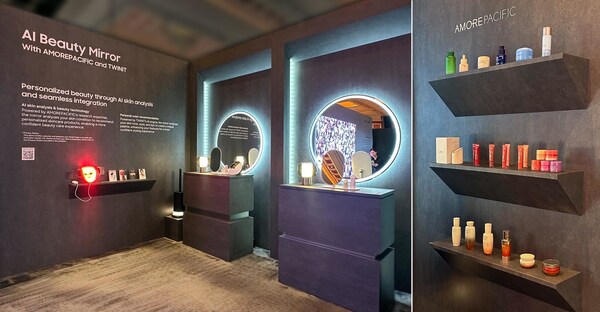
Core Insights - Amorepacific will participate in CES 2026, showcasing its innovative beauty technology and solutions [1][3] Group 1: Innovation and Technology - Amorepacific will present the award-winning technology "Skinsight™," developed in collaboration with MIT, which analyzes skin aging in real-time and provides personalized solutions [3] - The "Skinsight™" platform consists of a thin sensor patch, a mini Bluetooth module, and an AI mobile application, capable of detecting micro-level skin movements and key aging factors [3] - The company will also showcase AI skin analysis technology used in Samsung's "AI Beauty Mirror," which offers personalized skincare solutions based on extensive data analysis [4] Group 2: Strategic Goals - Amorepacific aims to lead the global beauty and health industry with comprehensive longevity solutions, enhancing customer experiences through innovative technologies and products [4]

CES 2026:Ludens AI展示系列陪伴机器人 拥抱后会“升温”
Huan Qiu Wang Zi Xun· 2026-01-05 03:45
Core Viewpoint - Ludens AI showcased two companion robots, Cocomo and Inu, at CES 2026, emphasizing their interactive and affectionate designs aimed at building relationships with users [1] Group 1: Cocomo - Cocomo is a robotic pet designed to follow its owner around the house and respond to voice and touch [1] - The robot features a fluffy egg-shaped body and moves on a wheeled base, with its outer shell temperature close to human body temperature [1] - Cocomo's temperature increases during high-contact interactions, such as hugging, and it communicates through buzzing sounds and other noises [1] - The design intent of Cocomo is to establish a close relationship with its owner over time, learning what makes them laugh, feel comforted, and when to surprise them [1] Group 2: Inu - Inu is a smaller, cute robot described as a "desktop alien toy," intended to remain on the user's desk rather than move between rooms [1] - It interacts with users through audio and motion, with its small tail responding to sound and touch, and its single eye capable of "blinking" [1]

谷歌工程师:Claude Code仅用一小时就完成了其团队一年才能完成的工作
Huan Qiu Wang Zi Xun· 2026-01-05 03:39
Core Insights - Google's chief engineer Jaana Dogan highlighted the rapid development of AI-assisted coding capabilities, as demonstrated by Anthropic's Claude Code, which generated a distributed agent orchestration system in just one hour, a task that Google's team had been working on for a year [1] Group 1: AI Development - Claude Code produced results that aligned with functionalities Google had been developing, showcasing the swift advancements in AI coding assistance [1] - Dogan acknowledged that while the output from Claude Code is not perfect and requires improvements, it still reflects significant progress in the field [1] Group 2: Industry Perspective - Dogan emphasized the importance of recognizing competitors in the industry, stating that the field is not a zero-sum game and that acknowledging the achievements of others is reasonable [1] - The impressive output from Claude Code has inspired Dogan and her team to continue pushing forward in their own developments [1]

脑机接口产业迎来“黄金发展期”
Huan Qiu Wang Zi Xun· 2026-01-05 01:28
Core Insights - The article highlights the rapid advancements in brain-computer interface (BCI) technology in China, showcasing significant clinical achievements and the emergence of a collaborative ecosystem for innovation in this field [1][5][10] Group 1: Clinical Breakthroughs - Patients with paralysis have shown remarkable recovery, such as playing games like "Snake" and "Mario Kart" through thought control, demonstrating the potential of BCI technology [1] - In 2025, several pioneering clinical trials were conducted, including the world's first intervention-assisted BCI for restoring limb function and the first clinical implantation of domestically developed BCI chips [2][3] - Invasive, semi-invasive, and non-invasive BCI technologies are developing concurrently, with invasive methods providing high signal accuracy and non-invasive methods expanding into broader markets due to lower costs [3][4] Group 2: Technological Advancements - The semi-invasive BCI system NEO has been developed, requiring only a small hole in the skull for implantation, allowing patients to control movements through thought [4] - Significant breakthroughs in core components and decoding algorithms have been achieved, enhancing the stability and precision of BCI devices [4] Group 3: Industry Development - The establishment of pricing regulations for BCI services by the National Medical Insurance Administration marks a significant step towards integrating this technology into healthcare [5] - A national BCI industrial cluster is forming, with various regions, including Shanghai and Jiangxi, actively promoting BCI innovation and development [6][7] Group 4: Future Prospects - Experts predict that 2026 will be a pivotal year for the BCI industry, characterized by multi-disciplinary integration and diverse application scenarios [8] - Recent innovations, such as a visual reconstruction system for visually impaired patients and a fully implanted wireless BCI, indicate a trend towards practical applications of BCI technology [9][10]