
Chang Jiang Shang Bao

Search documents
优必选拟掏16.65亿买壳回A 剑指人形机器人“H+A第一股”
Chang Jiang Shang Bao· 2025-12-26 00:13
Core Viewpoint - The A-share market is set to welcome the humanoid robot "H+A first stock" as the Hong Kong company UBTECH plans to acquire a controlling stake in the A-share company Fenglong Co., Ltd. through a share transfer and tender offer, aiming for a return to the A-share market [1][4]. Group 1: Acquisition Details - UBTECH will acquire approximately 43% of Fenglong's shares for a total consideration of about 1.665 billion yuan [1][4]. - The acquisition involves a two-step process: an agreement to transfer 65.53 million shares (29.99% of total shares) at a price of 17.72 yuan per share, followed by a tender offer for an additional 28.45 million shares (13.02% of total shares) at the same price [3][4]. - After the transaction, UBTECH will become the controlling shareholder of Fenglong, with its founder Zhou Jian as the actual controller [1][4]. Group 2: Company Performance - As of September 2025, Fenglong's total assets are 1.13 billion yuan, with a low debt ratio of 15.92% [6]. - Fenglong's profitability has been weak, with a net profit of only 21.52 million yuan in the first three quarters of 2025, despite a 1714.99% year-on-year increase [5][6]. - The company has experienced fluctuating performance, with a net profit of only 459,290 yuan in 2024, following three years of consecutive growth from 2019 to 2021 [4]. Group 3: UBTECH's Business Overview - UBTECH, established in 2012, focuses on AI and humanoid robot development, with a market capitalization of 55.1 billion HKD despite not yet being profitable [7][9]. - The company has raised approximately 8.6 billion HKD through various financing rounds since its IPO, with significant orders totaling nearly 1.4 billion yuan in humanoid robot business [8][10]. - UBTECH's revenue for 2022 to 2024 was 1.008 billion yuan, 1.056 billion yuan, and 1.305 billion yuan, with continuous losses reported [7][8]. Group 4: Market Reaction - Following the announcement of the acquisition, Fenglong's stock hit the daily limit up on December 25, indicating positive market sentiment [11][12]. - The market is closely watching how UBTECH will manage and optimize Fenglong's operations post-acquisition [12].


德力股份易主生变新疆国资退场 翼元航空拟8.85亿入场引借壳猜想
Chang Jiang Shang Bao· 2025-12-26 00:13
长江商报消息 ●长江商报记者 徐佳 短短两个月时间,德力股份(002571.SZ)易主发生巨变。 日前,德力股份披露,公司拟向辽宁翼元航空科技有限公司(以下简称"翼元航空")定增募资不超过 8.85亿元。以本次发行成功为前提,德力股份控股股东、实控人施卫东拟放弃其持有上市公司全部股份 对应的表决权。 以本次发行成功为前提,德力股份的控股股东、实控人施卫东拟放弃其持有上市公司全部股份对应的表 决权。 不仅如此,为巩固翼元航空控制权地位,在股票登记完成之日起18个月内,施卫东拟通过集中竞价交 易、大宗交易或者协议转让等方式调整其持股结构,使施卫东及其一致行动人(如有)合计持股比例低 于翼元航空,确保翼元航空取得第一大股东地位。 此后,施卫东将继续根据市场情况及相关法律法规,进一步调整持股结构,协助翼元航空巩固其对上市 公司的控制地位。 本次发行前,施卫东直接持有上市公司31.68%股份。发行完成之后,施卫东的持股比例下降至 24.37%,拥有表决权比例为0。翼元航空则将持有上市公司23.08%股份,且拥有表决权的比例为 23.08%。 至此,德力股份的控股股东将变更为翼元航空,实际控制人将变更为王天重、徐庆华。 ...

2025年版鼓励外商投资产业目录出炉
Chang Jiang Shang Bao· 2025-12-25 06:52
Core Viewpoint - The release of the "Encouragement Directory for Foreign Investment Industries (2025 Edition)" by the National Development and Reform Commission and the Ministry of Commerce reflects China's commitment to expanding high-level opening-up and optimizing foreign investment direction and regional layout [1][2]. Group 1: Key Changes in the Encouragement Directory - The new directory includes a total of 1,679 entries, with a net increase of 205 entries and 303 modifications compared to the 2022 version [2]. - The national encouragement directory has 619 entries, with an increase of 100 entries and 131 modifications, while the regional directory for the central and western regions has 1,060 entries, with an increase of 105 entries and 172 modifications [2]. - The three main changes include: 1. Encouraging foreign investment in advanced manufacturing by adding or expanding entries related to terminal products, components, and raw materials to enhance the development level of the industrial and supply chains [2]. 2. Promoting foreign investment in modern services by adding or expanding entries related to business services, technical services, scientific research, and service consumption to foster high-quality development in the service sector [2]. 3. Encouraging foreign investment in the central and western regions, northeastern regions, and Hainan Province by expanding the scope of the regional directory based on local resource endowments and industrial development realities [2]. Group 2: Implementation and Support Measures - The National Development and Reform Commission will strengthen guidance and coordination to ensure the implementation of policy measures [3]. - Efforts will be made to create a market-oriented, law-based, and international first-class business environment for foreign investment in China [3]. - The commission will facilitate the inflow of foreign capital by leveraging major foreign investment projects and addressing issues related to land use, marine use, environmental assessments, and energy consumption [3]. - A special action will be launched to improve the satisfaction of foreign enterprises by addressing their investment and operational challenges [3]. - Platforms for investment cooperation between Chinese and foreign enterprises will be established to promote project negotiations and signings [3].
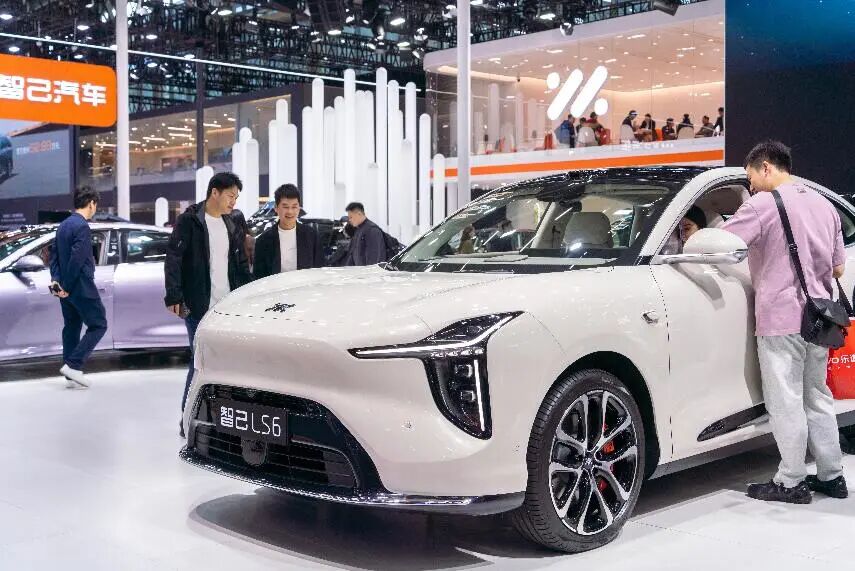
智己汽车前11月销量仅完成目标70% 上汽集团直接持股59.5%
Chang Jiang Shang Bao· 2025-12-25 04:50
点击蓝字关注我们 长江商报记者 黄聪 智己汽车的股权结构将更加清晰明了。 12月23日,上汽集团(600104.SH)发布公告称,为简化公司持股智己汽车的股权结构,对于原先通过元界基金持有的智己汽车份额部分,拟变更为由公 司直接持有智己汽车的股权,公司对智己汽车的持股比例没有变化。 2025年半年报显示,上汽集团直接持有智己汽车股份为7.19%,间接持有股份为52.34%,合计达59.53%。 然而,智己汽车当前销量虽在增长,但远低于公司的目标。 这也意味着,前11月,智己汽车完成销量目标近70%,要在2025年最后一个月销量超3万辆才能完成年度目标,显然难度很大。 虽然智己汽车销量不及预期,但上汽集团整体销量大幅回暖,公司前11月售车410.81万辆,同比增长16.38%。 视觉中国图 上汽集团从元界基金中退出 12月23日,上汽集团发布公告称,为简化公司持股智己汽车的股权结构,对于原先通过元界基金持有的智己汽车份额部分,拟变更为由公司直接持有智己 汽车的股权。 因此,元界基金拟将其持有智己汽车的注册资本人民币53.99亿元对上汽集团进行定向的实物分配,实物分配基准日定于2025年1月31日。 分配后,上述 ...


建龙微纳2亿参股汉兴能源加速转型 单季扣非增110%推进海外产能布局
Chang Jiang Shang Bao· 2025-12-25 01:59
Core Viewpoint - Jianlong Micro-Nano has shifted its investment strategy from acquiring a controlling stake in Hanxing Energy to taking a 40% equity stake, reflecting a strategic pivot towards becoming a comprehensive technology service provider [1][2][3] Investment Strategy - Jianlong Micro-Nano's wholly-owned subsidiary, Shanghai Jianlong Micro-Nano New Materials Technology Co., plans to invest 200 million yuan to acquire a 40% stake in Hanxing Energy, which will become an associate company [1][3] - The initial plan to acquire a controlling stake was terminated due to the immaturity of conditions for a major asset restructuring [2][3] Financial Performance - For the first nine months of 2025, Jianlong Micro-Nano reported revenues of 590 million yuan, a year-on-year increase of 4.34%, and a net profit attributable to shareholders of 72.73 million yuan, up 20.15% [1][6] - In Q3 2025, the company achieved a net profit growth of 70.22% and a non-recurring net profit growth of 110.88% compared to the same period last year [1][6] Hanxing Energy's Performance - Hanxing Energy reported revenues of 618 million yuan and a net profit of 76.93 million yuan for 2024, with fluctuations in performance noted for the first nine months of 2025 due to project execution timing [3][4] - The company specializes in providing comprehensive services in the petrochemical and industrial gas preparation sectors, which are project-based and can lead to revenue volatility [3][5] Strategic Importance - The investment in Hanxing Energy is seen as a crucial step for Jianlong Micro-Nano to transition from a materials manufacturer to a comprehensive technology service provider, enhancing its capabilities in process engineering and system integration [5][6] - The collaboration aims to leverage both companies' resources and expertise, focusing on market expansion and new product development in the petrochemical and oil refining sectors [2][5] International Expansion - Jianlong Micro-Nano's overseas sales reached 155 million yuan in the first three quarters of 2025, accounting for 26.21% of total revenue, with significant growth from its Thailand subsidiary [6][7] - The company is actively expanding its customer base in key regions such as India, Europe, and North America, enhancing its local delivery and brand influence [7]

震裕科技加速扩产拟募资18.8亿 9个月大赚4.12亿超2024年全年
Chang Jiang Shang Bao· 2025-12-24 23:23
Core Viewpoint - Zhenyu Technology is accelerating its layout in humanoid robots and new energy sectors by issuing convertible bonds to raise up to 1.88 billion yuan for expansion projects in lithium battery precision components and humanoid robot modules [1][2] Group 1: Fundraising and Investment Projects - The company plans to issue convertible bonds totaling no more than 1.88 billion yuan, with net proceeds intended for lithium battery precision component expansion, humanoid robot module industrialization, and motor core expansion projects [2][3] - The lithium battery precision component expansion project has a total investment of 1.038 billion yuan, with 752 million yuan from the bond proceeds, aiming for an annual production capacity of 659 million pieces [2] - The humanoid robot module project has a total investment of 567 million yuan, with 282 million yuan from the bond proceeds, targeting an annual production capacity of 210,000 sets of humanoid robot linear modules and other components [2] - The motor core expansion project has a total investment of 413 million yuan, with 282 million yuan from the bond proceeds, aiming for an annual production capacity of 2.4 million motor cores [2] Group 2: Financial Performance and Growth - Zhenyu Technology reported a net profit of 412 million yuan for the first three quarters of 2025, a year-on-year increase of approximately 138.93%, with a total revenue of 6.593 billion yuan, up about 31.47% [5][6] - The company's total assets grew from 7.807 billion yuan in 2022 to 12.03 billion yuan by September 2025, with a debt-to-asset ratio of 64.43% in the first three quarters of 2025 [4][5] - The company has maintained a strong cash flow, with a net cash flow from operating activities of 240 million yuan in the first three quarters of 2025, turning positive from a negative position [6] Group 3: Strategic Developments - Zhenyu Technology is pursuing two major investment projects in Suzhou and Ningbo, each with an investment scale exceeding 1 billion yuan, focusing on core components for new energy vehicles, low-altitude aircraft, and humanoid robots [3] - The company has signed a strategic cooperation agreement to invest no less than 1 billion yuan in Suzhou for core components of new energy vehicle drives and humanoid robots [3] - The company has also signed an investment agreement in Ningbo for the industrialization of humanoid robot modules, with a planned investment of 1 billion yuan [3] Group 4: Market Performance - Since the beginning of 2025, Zhenyu Technology's stock price has shown a volatile upward trend, closing at 142.9 yuan on December 24, 2025, representing a cumulative increase of approximately 187% from 49.84 yuan at the start of the year [7]
新强联拟定增15亿扩产补流 上市五年已募42亿加码风电
Chang Jiang Shang Bao· 2025-12-24 23:23
Core Viewpoint - The company, Xinqianglian, plans to raise up to 1.5 billion yuan through a private placement to expand its production capacity for large wind turbine components and supplement working capital [1][2]. Fundraising and Investment Plans - Xinqianglian announced a fundraising plan to raise no more than 1.5 billion yuan, with 1.1 billion yuan allocated for projects related to 6MW and above large power wind turbine main bearings and pitch bearings [2][3]. - The total investment for the 6MW and above large power wind turbine bearing project is 1.42 billion yuan, indicating a significant commitment to expanding production capacity [2]. - Since its listing, Xinqianglian has raised over 4.2 billion yuan through multiple fundraising efforts, primarily directed towards wind power-related businesses [1][3]. Financial Performance - For the first three quarters of 2025, Xinqianglian reported revenue of 3.618 billion yuan, a year-on-year increase of 84.1%, and a net profit of 664 million yuan, marking a return to profitability [5]. - As of September 2025, the company had cash and cash equivalents of 762 million yuan and a debt structure that includes short-term loans of 867 million yuan and long-term loans of 603 million yuan, reflecting a debt ratio of 38.37% [3]. Market Trends and Demand - The wind power industry is experiencing a trend towards larger turbine capacities, with the market for 10MW and above offshore wind power expected to account for 58% of new installations in 2024, an increase of 11.6 percentage points year-on-year [4]. - Xinqianglian has established strong partnerships with major wind turbine manufacturers, indicating a growing demand for large power wind turbine components [5]. Research and Development - The company has consistently invested in R&D, with expenditures exceeding 100 million yuan annually from 2021 to 2024, and a reported R&D expense of 131 million yuan for the first three quarters of 2025, a 69.78% increase year-on-year [5]. - Xinqianglian holds 148 patents, including 31 invention patents, showcasing its commitment to innovation in the wind power sector [5].
海博思创拟斥资20亿投建储能工厂 货币资金超30亿近四年累赚20.3亿
Chang Jiang Shang Bao· 2025-12-24 23:21
Core Viewpoint - Company HaiBoSiChuang plans to expand its production capacity by investing 2 billion yuan in a new smart green energy storage factory project, responding to the rapid development of the energy storage market and the national "dual carbon" strategy [1][2]. Group 1: Project Details - The project will be located in Beijing's Fangshan District and will focus on the research, manufacturing, and testing of energy storage integration systems [2]. - The construction period is approximately 36 months, with an expected completion and production start date in December 2028 [2]. - Funding for the project will come from the company's own or self-raised funds, with cash as the investment method, and it will not involve fundraising [2]. Group 2: Financial Performance - As of the end of Q3 2025, the company had cash and cash equivalents amounting to 3.03 billion yuan, with 1.43 billion yuan in cash [3]. - The company has achieved a cumulative net profit of 2.03 billion yuan from 2022 to 2025 [5]. - Revenue growth has been significant, with operating income increasing from 838 million yuan in 2021 to 8.27 billion yuan in 2024, and a 52.23% year-on-year increase in the first three quarters of 2025 [4][6]. Group 3: Market Position - HaiBoSiChuang ranks among the top three globally for new energy storage installations in 2023, being second in power scale and third in energy scale [4]. - The company holds a leading position in the domestic market, with a revenue share of 93.41% from domestic sales in the first half of 2025 [6]. - The company has also expanded its international presence, with overseas revenue reaching 298 million yuan, accounting for 6.59% of total revenue [6]. Group 4: Stock Performance - Since its listing on January 27, 2025, at an issue price of 19.38 yuan per share, the company's stock price has surged to 275.99 yuan per share by December 24, 2025, representing an increase of over 13 times [7].
莱茵生物增收减利获新主注入6亿资产 秦本军6.5亿脱手控制权质押率超65%
Chang Jiang Shang Bao· 2025-12-24 23:21
Core Viewpoint - The transfer of control and asset injection into Rhine Biotech is seen as a crucial move to address the company's operational challenges and enhance its market position following the departure of its founder due to regulatory penalties [1][2]. Group 1: Control Change and Asset Injection - Rhine Biotech's controlling shareholder, Qin Benjun, plans to transfer 8.09% of shares to Guangzhou Defu Nutrition for 645.6 million yuan, relinquishing 25.5% of voting rights [1][3]. - After the transfer, Guangzhou Defu Nutrition will become the controlling shareholder, with Hou Ming and Li Zhenfu as joint actual controllers [1][3]. - The company will also acquire an 80% stake in Beijing Jinkangpu Food Technology through a share issuance, marking a significant asset injection [1][5]. Group 2: Financial Performance and Challenges - For the first three quarters of 2025, Rhine Biotech reported revenues of 1.272 billion yuan, an increase of 8.73%, but a net profit of 70.4 million yuan, down 30.73% year-on-year [1][8]. - Qin Benjun faces significant financial pressure, with over 65% of his shares pledged and a financing balance of 207 million yuan due within six months [1][8]. Group 3: New Business Direction - The acquisition of Beijing Jinkangpu, a leader in food nutrition fortifiers, allows Rhine Biotech to enter the nutrition health sector, expanding its business model [7][10]. - Beijing Jinkangpu's revenue for 2023 to the first nine months of 2025 was 370 million yuan, 432 million yuan, and 338 million yuan, respectively [9]. - The transaction is expected to create a closed-loop industry chain from raw materials to formulation solutions, enhancing operational stability and risk resilience for Rhine Biotech [10]. Group 4: Market Reaction - Following the announcement of the control change and restructuring plan, Rhine Biotech's stock price hit the daily limit, closing at 9.57 yuan per share, a 10% increase [11].

九丰能源牵手长征火箭服务航天发射 三大业务融合发展年盈利超10亿
Chang Jiang Shang Bao· 2025-12-24 23:21
Core Viewpoint - The company Jiufeng Energy is actively participating in the growing commercial aerospace sector, focusing on the production and supply of specialized gases for rocket launches, with significant investments planned for expansion projects [1][4][6]. Group 1: Business Development - Jiufeng Energy has completed the first phase of its special gas project at the Hainan commercial aerospace launch site, with a total investment of approximately 300 million yuan planned for the second phase to meet the increasing demand for specialized fuels [1][5]. - The company has signed agreements with China Long March Rocket Co., ensuring annual supply guarantees for products like liquid nitrogen and helium [1][4]. - The special gas business is a key focus area for Jiufeng Energy, with projected revenue of 235 million yuan in 2024, accounting for about 1.07% of total revenue, reflecting a growth of 46.61% compared to 2023 [7][8]. Group 2: Financial Performance - Jiufeng Energy has consistently achieved annual profits exceeding 1 billion yuan from 2022 to 2024, with a net profit of 1.241 billion yuan reported for the first three quarters of 2025 [2][8]. - The company's financial health is stable, with a debt-to-asset ratio of 32.31% as of September 2025, and sufficient liquidity to cover its liabilities [3][8]. - The company has a strong asset base, including a 50,000-ton LNG and LPG receiving station, which is the first privately operated LNG receiving station in China [8]. Group 3: Market Position and Strategy - Jiufeng Energy aims to enhance its market competitiveness by integrating its three main business segments: clean energy, energy services, and specialized gases, creating a synergistic development model [2][7]. - The company is positioning itself to meet the substantial demand for specialized fuels in the commercial aerospace sector over the next decade, focusing on building a professional brand in aerospace gases [6]. - Jiufeng Energy is expanding its operations to other commercial launch sites, including Shandong and Gansu, indicating a strategic move to broaden its market reach [5].
