Qian Zhan Wang

Search documents
【行业深度】洞察2025:中国功能性护肤品行业竞争格局及市场份额(附市场集中度、企业竞争力分析等)
Qian Zhan Wang· 2025-08-18 08:09
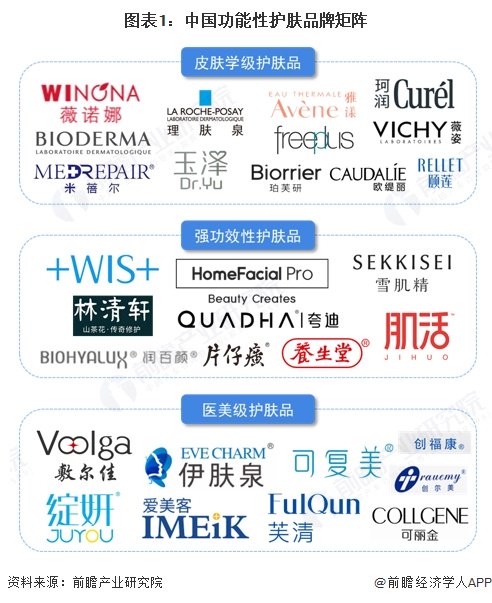
Core Insights - The article discusses the competitive landscape and market dynamics of the functional skincare industry in China, highlighting key players, market share, and industry concentration levels [1][9][11]. Group 1: Brand Ranking - The functional skincare market in China is segmented into three main categories: dermatological skincare, strong efficacy skincare, and medical aesthetic skincare, with leading brands in each category [1]. - Notable brands in dermatological skincare include Winona, La Roche-Posay, and Avene; strong efficacy brands include WIS and HFP; medical aesthetic brands include Fulejia and Aimeike [1]. Group 2: Revenue and Market Position - The functional skincare industry is divided into three tiers based on revenue: - Tier 1: Betaini with revenue exceeding 5 billion CNY, leading the market [3][12]. - Tier 2: Companies like Giant Biological, Shanghai Jahwa, and Fulejia, which have significant revenue and brand recognition [3]. - Tier 3: Companies such as Proya and Furuida, which are publicly listed but have lower revenue from functional skincare [4]. Group 3: Market Share - The projected market size for functional skincare in China for 2024 is approximately 48.743 billion CNY, with Betaini holding a market share of 11.71% [9]. - Other significant players include Huaxi Biological at 5.27%, Fulejia at 4.14%, Shanghai Jahwa at 2.15%, and Giant Biological at 2.44% [9]. Group 4: Market Concentration - The market concentration for domestic functional skincare brands is relatively low, with the top three companies accounting for 21.12% of revenue and the top six for 26.47% [11]. - There is a trend of increasing market concentration, with leading players establishing brand and research barriers [11]. Group 5: Competitive Landscape - The industry shows a strong reliance on imported raw materials, with suppliers having significant bargaining power [16]. - Domestic brands are gaining market share, and competition is intensifying, with high profit margins and potential threats from new entrants and alternative products [16].


【干货】中硼硅玻璃产业链全景梳理及区域热力地图
Qian Zhan Wang· 2025-08-18 07:16
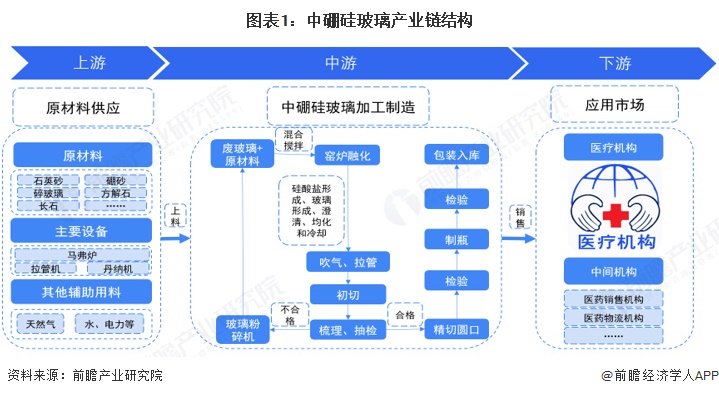
Core Insights - The Chinese borosilicate glass industry is primarily focused on the midstream manufacturing segment, with key applications in medical institutions and pharmaceutical logistics [1][2]. Industry Overview - The upstream raw materials for the borosilicate glass industry include quartz sand, borax, cullet, calcite, and feldspar, with major production equipment being muffle furnaces and draw machines [1]. - Key upstream suppliers include quartz sand leader Quartz Corporation and international institutions like Corning for glass raw materials [2]. Regional Distribution - The borosilicate glass industry is concentrated in the eastern coastal regions of China, particularly in Jiangsu Province, indicating a regional heat map of production [6]. Company Performance - In 2024, Shandong Pharmaceutical Glass and Zhengchuan Co. have nearly 100% sales rates, while Linuo Pharmaceutical's sales rate is below 90% [8]. - Shandong Pharmaceutical Glass has a high overall business gross margin, while Linuo Pharmaceutical and Zhengchuan Co. have gross margins around 22%-23% [8]. Company Developments - Shandong Pharmaceutical Glass plans to achieve an annual production capacity of 2.4-2.5 billion borosilicate molded bottles by mid-2025, with an expected total capacity exceeding 5 billion by the end of 2025 [10]. - Linuo Pharmaceutical announced the acquisition of a 51% stake in an Egyptian pharmaceutical glass manufacturer, aiming to establish a production base in North Africa [10]. - Qibin Group is set to start trial production of two 50 tons/day borosilicate pharmaceutical glass tube production lines in Luzhou, Sichuan, by October 2024 [10]. - Weigao Co. aims to increase its pre-filled syringe production capacity from 800 million units in 2023 to 1.2 billion units by 2025, targeting a global market share of 35% [10]. - Zhengchuan Co. plans to launch a 300 million unit pre-filled syringe production line in early 2025, with a second phase project to start by the end of 2025 [10].



前瞻全球产业早报:宇树科技摘得首届世界人形机器人运动会首金
Qian Zhan Wang· 2025-08-17 23:16
Group 1 - The national authorities are planning to develop policies to encourage the participation of state-owned enterprises and social capital in the marine economy [2] - There will be a focus on establishing national marine economic development demonstration zones and supporting marine strong provinces [2] - Financial support for marine economic development will be enhanced, and updates to investment guidance for marine industries will be promoted [2] Group 2 - Douyin e-commerce will integrate instant retail with e-commerce operations to improve merchant capabilities and user fulfillment efficiency [3] - The internal adjustment will not affect existing business operations or merchant and user experiences [3] Group 3 - The first World Humanoid Robot Games commenced in Beijing, featuring 280 teams and over 500 robots competing in 538 events [4][5] - State-owned enterprises are intensifying their investment in the artificial intelligence sector, with 800+ scenarios across 16 key industries identified [4] Group 4 - Nebula800, the first standardized super-intelligent integrated computing power platform in China, was launched by Sugon [8] - The platform has been implemented in over 30 industries, aiding innovation in AI applications [8] Group 5 - A new automotive business line has been established by Mianbi Intelligent to promote the MiniCPM model in vehicles [9] - The first mass-produced model featuring the new technology is expected to launch this quarter [9] Group 6 - XPeng Motors and Volkswagen Group have expanded their strategic cooperation on electronic and electrical architecture technology [10] - The collaboration will integrate technology into both electric and hybrid vehicle platforms in the Chinese market [10] Group 7 - The domestic film market has seen a total box office exceeding 9 billion yuan during the summer season [11] - The top three films include "Nanjing Photo Studio," "Wang Wang Mountain Little Monster," and "Lychee of Chang'an" [11] Group 8 - The Trump administration is negotiating a potential government stake in Intel to support domestic manufacturing [12] - This move aims to assist Intel's plans for a manufacturing center in Ohio [12] Group 9 - South Korea plans to invest approximately $500 million in developing advanced air mobility vehicles for urban and regional transport [12] - The government aims to create a low-noise, environmentally friendly aircraft by 2027-2031 [12] Group 10 - Samsung's market share in DRAM memory and smartphone display panels has declined, with DRAM dropping from 41.5% to 32.7% and display panels from 50.1% to 39.9% [13] Group 11 - Google is collaborating with NASA to develop an AI medical assistant for space missions [14] - The AI will provide real-time health diagnostics for astronauts when remote medical support is unavailable [14] Group 12 - National Grid is selling the UK's largest LNG receiving terminal to a consortium for approximately $2.04 billion [15] - The transaction is expected to be completed in the fourth quarter [15] Group 13 - Eli Lilly is investing $1.3 billion in AI pharmaceutical company Superluminal to accelerate drug development for obesity and metabolic diseases [16] - Superluminal is a Boston-based startup that has received investments from major firms including NVIDIA [16]


水下机器人产业招商清单:天海防务、亚星锚链、鳍源科技等最新投资动向【附关键企业名录】
Qian Zhan Wang· 2025-08-17 06:59
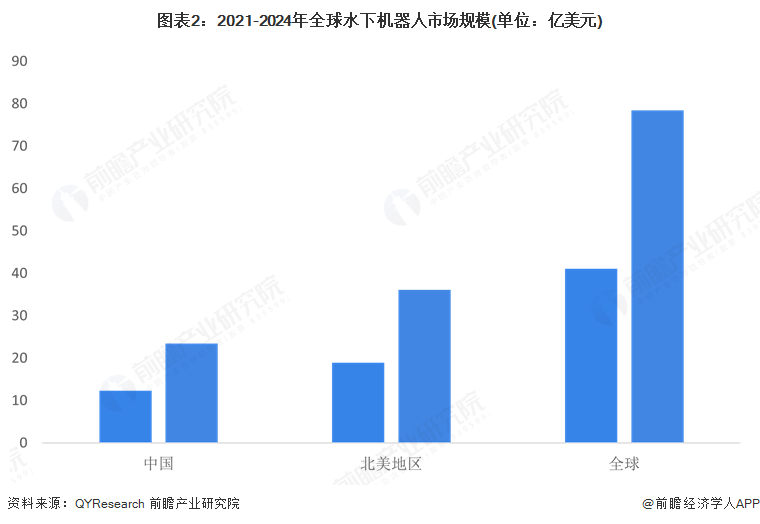
Core Viewpoint - The underwater robotics market is experiencing explosive growth, with the global market expected to reach $7.85 billion by 2024, driven by advancements in technology and increasing applications in various sectors [1][3]. Market Overview - The underwater robotics market in China is projected to grow at a compound annual growth rate (CAGR) of 28.3%, surpassing the global average, and is expected to exceed $10.33 billion by 2030 [3]. - North America leads the global market with a size of $3 billion, while China follows closely with a market size of $2.35 billion, accounting for 30% of the global market [1]. Product Segmentation - Underwater robots can be categorized into consumer-grade and industrial/military-grade robots, with industrial and military products dominating the high-end market [5]. - Applications include marine exploration, underwater rescue, resource development, and ecological protection, with notable implementations in various sectors such as marine ranching and oil and gas [5][8]. Industry Chain - China's underwater robotics industry chain has formed a complete closed loop from hardware research and development to complete machine manufacturing and application scenarios [5]. - The upstream includes core hardware and technology system development, while the midstream focuses on complete machine manufacturing, and the downstream encompasses applications in marine engineering, aquaculture, scientific research, and environmental monitoring [8]. Technological Advancements - Domestic components such as microcontrollers, high-precision thrusters, and multi-beam sonar are gradually replacing imports, enhancing efficiency by 40% [8]. - Companies like Tianhai Defense have established modular production systems, achieving significant operational records in the South China Sea [8]. Policy Support - The Chinese government emphasizes the development of the underwater robotics industry through policies like the "14th Five-Year Plan," which includes setting up special funds and providing tax incentives [10][11]. - Local governments are actively attracting investment in underwater robotics, which is seen as a key area for upgrading local manufacturing and enhancing regional competitiveness [11]. Leading Companies - Tianhai Defense is a leading player in the underwater robotics sector, with a reported revenue of 3.945 billion yuan in 2024, showcasing strong technical research and market application capabilities [15][20]. - The company has a significant market share in the civil sector, with its "Haixun" series AUV and 3000-meter ROV leading in operational capabilities [19][20]. Market Demand Structure - The marine engineering sector represents the highest demand for underwater robots, accounting for 35% of the market, driven by increasing activities in deep-sea mining [21]. - The aquaculture sector follows with a 20% share, where underwater robots monitor water quality parameters to ensure healthy growth of aquatic organisms [21][23]. Regional Insights - As of May 2025, there are over 200 active companies in China's underwater robotics sector, with Guangdong province having the highest concentration of approximately 49 companies [26]. Future Outlook - Experts predict that underwater robots will accelerate the digital transformation of the marine development industry, with significant opportunities in deep-sea mining, environmental monitoring, and marine scientific research [29].

声呐产业招商清单:中国重工、中国海防、海兰信等最新投资动向【附关键企业名录】
Qian Zhan Wang· 2025-08-16 07:15
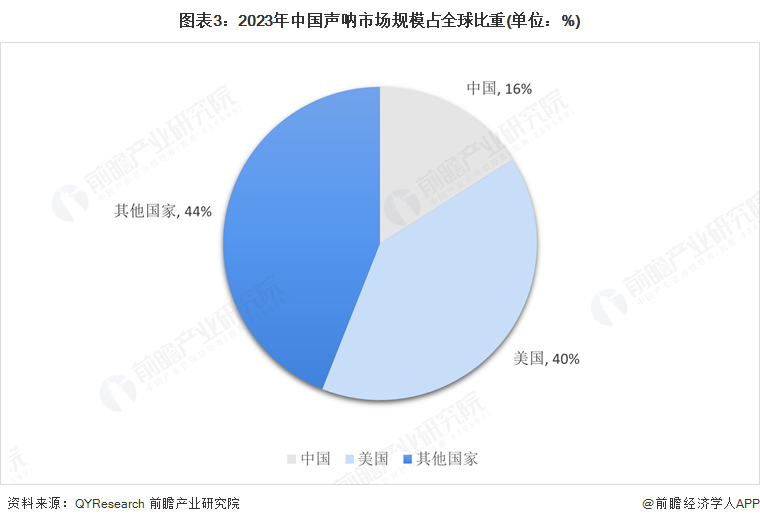
Industry Overview - The sonar industry is a crucial component of modern marine technology, military navigation, and underwater detection, serving as a key tool for ocean exploration, security, and resource development [1] - Sonar technology enables underwater target detection, depth measurement, and communication navigation, with applications in military defense, marine scientific research, resource development, underwater engineering, and precision fishing [1] - The Chinese sonar industry is experiencing unprecedented development opportunities driven by national strategies and technological integration, with government support for research and application [1][2] Market Dynamics - The global sonar market is characterized by a "one strong, many strong" pattern, with the United States holding a 40% market share, followed by China at 16%, making it the second-largest sonar market globally [2] - The growth of China's sonar market is attributed to the booming marine economy, with increasing demand in deep-sea exploration, offshore wind power, and fishing [2] Industry Structure - China's sonar industry encompasses a complete supply chain covering upstream raw materials, midstream manufacturing and integration, and downstream applications [3] - The upstream includes suppliers of electronic components, sensors, and special materials, while midstream companies focus on system design, research, and production [3] Regional Distribution - In 2024, China's sonar industry shows significant regional clustering, with North China accounting for 52% of the market share, benefiting from research resources and policy support in Beijing and Tianjin [5] - East China holds a 35.29% share, leveraging the manufacturing base in Shanghai and Nanjing [5] Competitive Landscape - The industry has seen the emergence of several internationally competitive leading companies, with notable players including China Shipbuilding Industry Corporation and Guangzhou Zhonghaida Satellite Navigation Technology Co., Ltd. [6][9] - China Shipbuilding Industry Corporation, established in 2008 with a registered capital of 2,280,203.5 million RMB, is a major player in marine defense equipment [11] Technological Advancements - The sonar industry is advancing towards intelligent development, integrating artificial intelligence and big data to enhance sonar signal processing and underwater target recognition [1][18] - The market is expected to maintain rapid growth, driven by increasing demand for military and civilian applications, including resource exploration and environmental monitoring [21] Future Outlook - The Chinese sonar market is projected to reach 17 billion RMB by 2024, reflecting continuous growth driven by defense needs and technological advancements [17] - The industry is expected to embrace low-frequency, high-power, and large-array sonar technologies for improved detection capabilities [21]


【干货】地产物流产业链全景梳理及区域热力地图
Qian Zhan Wang· 2025-08-16 03:09
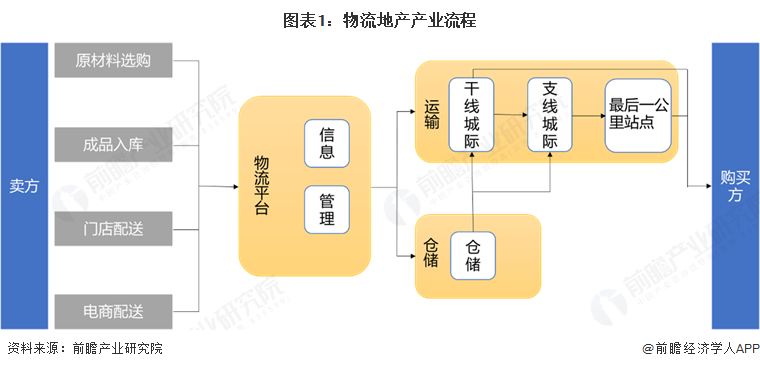
Core Insights - The logistics real estate industry is characterized by significant regional concentration in China, with upstream supply concentrated in coastal and central regions, while the development and operation segments are primarily located in the Yangtze River Delta, Pearl River Delta, and Beijing-Tianjin-Hebei regions [5] Industry Overview - Logistics real estate serves as a platform for modern logistics facilities, where developers invest in and construct specialized logistics infrastructure based on the needs of logistics enterprises [1] - The main operational activities in logistics real estate include site selection, land acquisition, development, management, and fund operations [1] Competitive Landscape - According to Michael Porter's value chain theory, logistics real estate companies must focus on developing core competencies in strategic segments of the value chain to maintain competitive advantages [2] Company Performance - In 2024, the performance of logistics real estate companies in China shows significant divergence, with Kerry Properties reporting revenue of 19.5 billion yuan and a gross margin of 32.8%, while R&F Properties faced a loss with a revenue of 18.77 billion yuan and a gross margin of -4.7% [7] - Other companies like Joy City maintained stable performance with a revenue of 35.79 billion yuan and a gross margin of 21.8% [7] Investment Trends - Kerry Properties has been divesting logistics assets, including the sale of warehouses in Hong Kong for 4.62 billion HKD in 2022, while R&F Properties has exited the logistics real estate sector by selling its entire stake in Guangzhou Airport Logistics Park to Blackstone for a total of 5.295 billion yuan [10] - SF Holding is actively expanding its logistics footprint, planning to list REITs and investing in multiple industrial parks [10] - Other companies like Transfar Zhilian and Nanshan Holdings are also expanding their logistics networks and pursuing REIT listings [10]



前瞻全球产业早报:全国首台国产商业电子束光刻机在杭“出炉”
Qian Zhan Wang· 2025-08-15 11:39
Group 1 - The first domestically produced commercial electron beam lithography machine "Xizhi" has entered application testing, marking a significant advancement in quantum chip research in China [2] - Chinese researchers have developed lithium batteries with energy densities exceeding 600 Wh/kg for soft-pack cells and 480 Wh/kg for module batteries, improving performance by 2 to 3 times compared to mainstream lithium-ion batteries [3] - Apple is making progress towards a six-sided glass shell design for its devices, as revealed in a recent patent application [4] Group 2 - The number of devices in the HarmonyOS ecosystem has surpassed 1.19 billion, indicating rapid growth in domestic operating systems [4] - The number of artificial intelligence patents in China accounts for 60% of the global total, showcasing the country's advancements in AI technology [4] - The internal structure of TaoTian Group has been clarified, rebranding as the China E-commerce Group - TaoTian Group, aligning with Ele.me and Fliggy [5] Group 3 - Douyin is testing a "My Express" service for users to track their delivery information, currently in a gray testing phase and not related to e-commerce platforms [6][7] - Several listed automotive companies have committed to a "60-day payment term" for suppliers, with companies like GAC Group and Xpeng actively implementing this commitment [8] - BYD has opened its second racetrack in Zhengzhou, which is the first all-terrain experience center for new energy vehicles in China [9] Group 4 - GAC Group has launched the Huawang Automotive City Recruitment Plan, prioritizing recruitment in 40 cities including Beijing and Shanghai [10] - DeepSeek's next-generation model DeepSeek-R2 is not expected to be released in August, according to insiders [11] - BYD's customer profile reveals that over 64% of its million car owners are young people, with nearly 40% being unmarried [12] Group 5 - Tencent's headquarters park is 30% completed and will begin trial operations in October, with 11 Penguin Apartments available for young employees [13] - Xiaomi has regained the top position in the Southeast Asian smartphone market with a 19% market share, driven by the success of its REDMI series [14] - AliExpress has launched an "Overseas Custody" service in Mexico, allowing local merchants to stock products and gain promotional benefits [15] Group 6 - Elon Musk acknowledged Google's current lead in AI but hinted that his startup xAI will catch up [16][17] - Oracle is reportedly laying off employees in its cloud computing division while maintaining high investments in AI [18] - SpaceX has unveiled a new design for its third-generation Starship's grid fins, aimed at enhancing rocket performance [19] Group 7 - Samsung is planning to release its first AI glasses without a screen by the end of next year, competing directly with Meta [20] - Amazon has launched same-day delivery for fresh food in over 1,000 U.S. cities, with plans to expand to over 2,300 cities by the end of the year [21]
京东完成收购香港佳宝超市,正式进军香港实体零售领域,为香港市民提供“又好又便宜”商品【附超市行业市场分析】
Qian Zhan Wang· 2025-08-15 10:46
Group 1 - JD Group has officially completed the acquisition of Hong Kong's Jia Bao Supermarket, marking its entry into the Hong Kong physical retail market [2] - Following the acquisition, JD has established an Innovation Retail-Jia Bao Business Unit, appointing Jia Bao's founder, Lin Xiaoyi, as the head [2] - JD plans to enhance the product diversity and price competitiveness in the Hong Kong retail market by integrating Jia Bao's offline store network [2] Group 2 - Jia Bao, founded in 1991, is a well-known supermarket chain in Hong Kong with over 90 stores and more than 1,000 employees, specializing in frozen poultry, seafood, groceries, and fresh produce [2] - JD's acquisition aims to leverage its supply chain advantages to improve Jia Bao's omnichannel business expansion and enrich the quality product offerings in the Hong Kong retail market [2] - JD previously announced an investment of 1.5 billion RMB in September 2024 to enhance its presence in the Hong Kong market through price subsidies, logistics system development, and service optimization [2] Group 3 - JD's founder, Liu Qiangdong, emphasized that all of JD's business operations are centered around supply chain management, with the acquisition of Jia Bao being a key move to strengthen this strategy [3] Group 4 - The supermarket chain's regional expansion models can be categorized into penetration and leapfrogging strategies, each with distinct advantages and risks [4][6] - Penetration strategy focuses on concentrated resource allocation within a region, while leapfrogging strategy allows for simultaneous expansion in multiple low-competition areas [4][6] - Future supermarket operations are expected to shift towards a model of diverse products in smaller quantities, increasing demands on supply chains and logistics [6]


杀入行业第三!小米空调销量暴增53.9%,卢伟冰:高增速来自能力坚实提升【附白色家电行业市场分析】
Qian Zhan Wang· 2025-08-15 07:12
Core Insights - The latest data indicates that in July 2025, the top five air conditioning brands in China will be Midea, Gree, Xiaomi, Haier, and Aux, with Xiaomi achieving a remarkable year-on-year sales growth of 53.9%, making it the only brand among the top three to experience such rapid growth [2][4]. Group 1: Market Performance - Xiaomi ranks third in the Chinese air conditioning market with a sales share of 13.7% as of July 2025 [2]. - The overall market for household air conditioners in China is projected to reach approximately 300 billion yuan in 2024, with China accounting for over 80% of global production [4][6]. Group 2: Company Strategy and Innovation - Xiaomi's rapid growth in the air conditioning sector is attributed to significant improvements in its capabilities, including full-stack self-research and mastery of key technologies [4]. - Over 70% of Xiaomi air conditioner users utilize connected features, showcasing a substantial technological advantage over competitors [4]. Group 3: Industry Trends and Challenges - The air conditioning industry in China is experiencing a downward trend in average retail prices, with a 3.53% year-on-year decline in 2024, leading to increased pressure on the industry [6]. - The competition in the air conditioning market has shifted from product-centric to a comprehensive battle of ecosystems and technologies, highlighting the importance of innovation and user demand insights [8].


低空物流产业招商清单:顺丰、美团、中信海直等最新投资动向【附关键企业名录】
Qian Zhan Wang· 2025-08-15 04:29
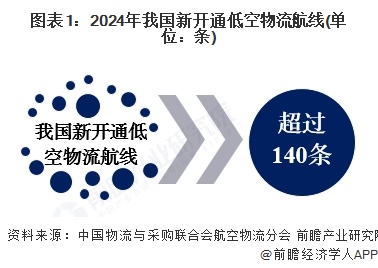
Core Insights - The Chinese government has officially included "low-altitude economy" in its national strategy, aiming to develop it as a new engine for economic growth, with low-altitude logistics as a key application area [1] - The low-altitude logistics sector is experiencing explosive growth, with over 140 new low-altitude logistics routes opened in 2024, primarily focused on urban last-mile delivery [1][2] - Local governments are actively promoting low-altitude logistics development through various initiatives, including infrastructure improvements and favorable policies to attract industry players [2][3] Industry Growth and Trends - The traditional ground transportation system is nearing its capacity limits, while low-altitude resource utilization is below 10%, creating a demand for innovative logistics solutions [1] - New business models such as instant retail and fresh e-commerce are driving the need for minute-level delivery services, highlighting the tactical value of drone logistics in emergency response and remote area supply [1] - The "air corridor + ground grid" delivery model has effectively alleviated urban traffic congestion and improved last-mile delivery efficiency by over 30% [1] Government Initiatives - Guangdong Province has established a "node + route + platform" system, creating five drone logistics hubs and opening intercity transport routes in the Pearl River Delta [2] - Shenzhen has introduced the country's first "Low Altitude Economy Industry Promotion Regulations," streamlining route approval processes by reducing approval times by 70% [2] - Local governments are also collaborating with universities and research institutions to provide technical support and talent for the low-altitude logistics industry [3] Key Players and Market Dynamics - Major companies in the low-altitude logistics sector include SF Express, JD.com, and Meituan, which are expanding their operations and enhancing logistics efficiency through technological innovations [21][22] - SF Express has emerged as a leading player in the low-altitude logistics industry, having opened over 600 routes and transported more than 620 million items as of 2024 [10][11] - The company has developed a comprehensive qualification barrier covering research, airworthiness, and operations, ensuring compliance and operational efficiency [8][10] Application Areas - Low-altitude logistics is being applied in various fields, including express delivery, agricultural product transportation, and medical supply delivery, becoming an important direction for the logistics industry [14][17] - The use of drones for urgent medical supply delivery in remote areas demonstrates the potential of low-altitude logistics to enhance service efficiency and response times [18] Future Outlook - The low-altitude logistics industry is expected to continue evolving, with companies focusing on technological upgrades, such as battery life improvements and AI applications, to meet complex logistical demands [21][22] - The establishment of integrated logistics centers, such as the Fengyi Baoan Low-altitude Smart Logistics Operation Center, marks a significant step towards a coordinated logistics network combining traditional and low-altitude delivery methods [12][13]