Qian Zhan Wang

Search documents
【投资视角】启示2023:中国土壤修复行业投融资及兼并重组分析(附投融资汇总、兼并重组等)
Qian Zhan Wang· 2025-08-20 04:47
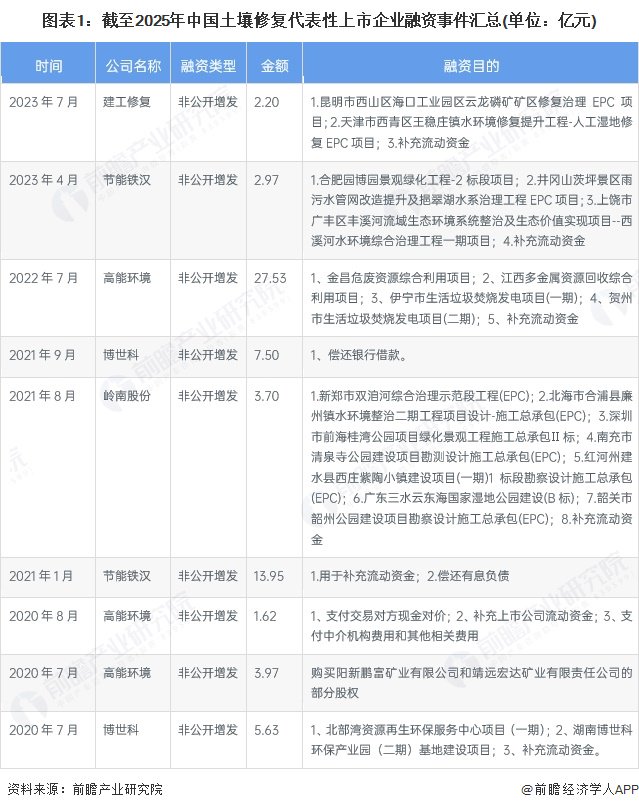
Core Insights - The article discusses the financing and investment trends in China's soil remediation industry, highlighting the primary financing methods and purposes of listed companies in this sector [1][2][3]. Financing Overview - Listed companies in the soil remediation industry primarily use private placements for financing, focusing on environmental project development and working capital supplementation [1]. - Key financing events for representative listed companies in the soil remediation sector are projected until 2025, with significant amounts raised for various projects [2][3]. Investment Activities - Representative companies in the soil remediation sector are diversifying their business through external investments, primarily by establishing subsidiaries [3][4]. - Specific investment amounts and purposes include: - Beijing High Energy's investment in various resource utilization companies totaling 150 million RMB [4]. - Construction Repair's investment in environmental technology companies [4]. - Sen Te's investments in renewable energy and environmental technology [5]. Industry Trends - The soil remediation industry is experiencing a trend of mergers and acquisitions, with companies diversifying their portfolios through the acquisition of environmental and remediation firms [12][16]. - The investment landscape shows a high frequency of strategic financing and equity transfers, with a notable concentration of events occurring between 2017 and 2018 [9][10]. Summary of Investment Events - A summary of investment events in the soil remediation industry indicates a mix of strategic investments and equity transfers, with a focus on expanding business operations and enhancing technological capabilities [8][9][10].


预见2025:《2025年中国智慧交通行业全景图谱》(附市场规模、竞争格局、细分市场发展现状等)
Qian Zhan Wang· 2025-08-20 04:42
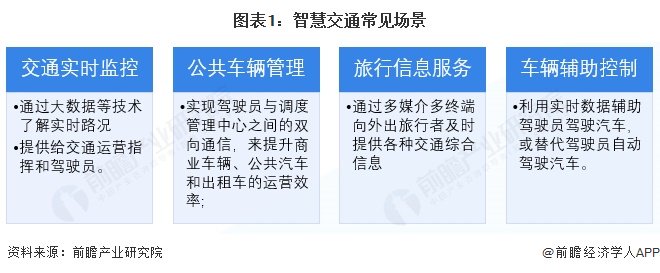
Industry Overview - The concept of smart transportation has evolved from intelligent transportation systems (ITS) to incorporate advanced technologies such as IoT, cloud computing, and big data, enhancing real-time traffic data services [1][2] - Smart transportation aims to improve traffic efficiency through integrated applications of information technology, data communication, and control systems [1][2] Industry Chain Analysis - The smart transportation industry chain includes upstream components like algorithm design, chip parts, data centers, and sensing devices; midstream focuses on infrastructure and services; and downstream applications cover smart highways, public transport, and smart ports [5][7] - Key players in the industry include traditional security companies, internet firms, and algorithm providers, with notable companies like Hikvision, Tencent, and Baidu involved in various segments [7] Industry Development Status - Transportation fixed asset investment in China reached 3.9 trillion yuan in 2023, with expectations to maintain high levels in 2024 [17] - The market size for urban intelligent transportation projects (excluding parking) is projected to be approximately 5.46 billion yuan in 2024, with a slight decrease from 2023 [19][20] Market Size and Growth - The smart transportation market in China has grown from 97.3 billion yuan in 2016 to 236.7 billion yuan in 2023, with projections to exceed 240 billion yuan in 2024 [25][26] - The average project size for urban intelligent transportation projects has remained stable between 200 million to 250 million yuan in recent years [20] Competitive Landscape - Major players in the smart transportation sector include telecommunications and internet companies, with China Mobile and China Telecom leading in project bids, accounting for over 22% of the total bid amounts [27][29] - The competitive landscape is characterized by a mix of regional players, with pilot projects concentrated in coastal areas like East China and South China [31][33] Future Trends - The smart transportation market is expected to grow significantly, driven by policy support, technological integration, and increasing urbanization, with projections indicating the market could exceed 300 billion yuan by 2030 [34]
净利润暴增71.3%!美图靠AI半年狂赚4亿,CFO颜劲良:未来增长战略是AI驱动生产力与全球化【附生成式AI行业发展趋势】
Qian Zhan Wang· 2025-08-20 04:23
Core Insights - Meitu has successfully transformed its business model by leveraging generative AI, leading to significant financial growth and a shift towards subscription-based services [2][3] - The company's total revenue for the first half of 2025 reached 1.8 billion yuan, a year-on-year increase of 12.3%, with adjusted net profit soaring by 71.3% to 467 million yuan [2] - The growth in revenue and profit is primarily attributed to breakthroughs in AI applications and an increase in global paid subscription users, which surpassed 15.4 million, marking a 42% year-on-year growth [2][3] Financial Performance - Meitu's imaging and design business generated 1.35 billion yuan in revenue, accounting for 75% of total revenue, with a growth rate of 45.2% [2] - Advertising revenue reached 430 million yuan, reflecting a 5% year-on-year increase, while revenue from beauty industry solutions was 30.1 million yuan and other business revenue was 6.2 million yuan [2] Industry Trends - The generative AI sector is rapidly evolving, with significant potential across various industries, including customer operations, marketing, and software engineering, contributing to 75% of industry value [4] - The market size for generative AI in China is estimated to be approximately 14.4 trillion yuan in 2023, with projections to exceed 30 trillion yuan by 2035, representing over 35% of the global market [5] Strategic Insights - Meitu's transition from traditional software sales to a smart creation platform exemplifies the value of generative AI in addressing real user pain points and establishing a technology-driven competitive barrier [3] - The shift towards an "AI+" era indicates a significant opportunity for China to excel in the global generative AI competition [7]

小米7月空调线上销量超过格力,行业排名第二!王化感叹:没想到新时代这么快就来了【附白色家电行业市场分析】
Qian Zhan Wang· 2025-08-19 12:04
近日,奥维云发布7月中国空调线上份额数据。美的在当月市占比为18.61%,排名第一。其中,小米则以 16.71%的占比超越格力(15.22%),首次跃居第二。 对此,小米集团公关部王化转发了相关微博并评论,"没想到新时代这么快就来了。" (图片来源:摄图网) 而不久前,第三方权威调研机构发布最新数据显示,2025年7月中国空调市场销量排名前五的品牌依次为美 的、格力、小米、海尔和奥克斯。小米以13.7%的销量占比位列第三,以53.9%的同比增速,成为前三大品 牌中唯一实现高速增长的企业。小米集团合伙人、总裁卢伟冰认为,小米空调的高增速源于"能力的坚实提 升"。 8月18日晚,格力电器市场总监朱磊在微博回应"小米空调线上销量超越格力"传闻。他表示:"我们也去奥维 云网查了下,公开的数据和那几张截图并不一样。按照同样的查询条件,7月线上市场格力仍然保持领 先。"朱磊还表示,市场的成功来自每一位消费者的认可,经中国标准化研究院评定,格力空调已经连续16 年顾客满意度第一。 | 19:29 | | | | HI & B) | | 2025年7月中国空调市场排名 | | | --- | --- | --- | --- ...




前瞻全球产业早报:ChatGPT移动应用已创造20亿美元收入
Qian Zhan Wang· 2025-08-19 11:59
Group 1 - China holds 60% of the global artificial intelligence patent count, establishing itself as a leader in AI innovation [2] - As of June 30, over 35,000 high-quality datasets have been created in China, providing a substantial data foundation for AI training, equivalent to 140 times the digital resources of the National Library of China [2] - The proportion of Chinese data used in domestic model training has exceeded 60%, with some models reaching 80% [2] Group 2 - The first low-altitude flight route connecting Kunshan, Jiangsu, and downtown Shanghai has officially commenced, allowing for a 20-minute aerial journey [3] - This route is notable for supporting night flights, distinguishing it from other low-altitude routes [3] Group 3 - China's first offshore booster station equipped with a meteorological radar has been installed, enhancing marine weather monitoring and the efficient operation of offshore wind farms [4] Group 4 - China successfully launched the low Earth orbit satellite internet group 09 on August 17, with the satellite entering its designated orbit [5] - Hainan Province is developing a "low-altitude + marine" tourism model, aiming to create a new "land-sea linkage" pattern through various marine tourism initiatives [5] Group 5 - The first batch of autonomous smart connected taxis in Shanghai's Lingang area has officially started operations, covering 58 locations in the main urban area [6][7] - The service operates daily from 8 AM to 8 PM, with a fare structure that includes a base fare of 16 yuan for distances under 5 kilometers and 4 yuan per kilometer thereafter [7] Group 6 - Huawei's executive Yu Chengdong stated that the HarmonyOS framework aims to help more Chinese applications expand internationally, with user numbers rapidly increasing [8] Group 7 - The ChatGPT mobile application has generated $2 billion in revenue since its launch in May 2023, significantly outperforming its competitors [12] Group 8 - Advent International has proposed a $1.3 billion acquisition of Swiss chip manufacturer U-blox, with a cash offer of 135 Swiss francs per share, representing a 53% premium over the past six months' average [18]

2025年中国果汁行业细分市场现状及发展趋势,苹果汁产量稳步增长(组图)
Qian Zhan Wang· 2025-08-19 08:57
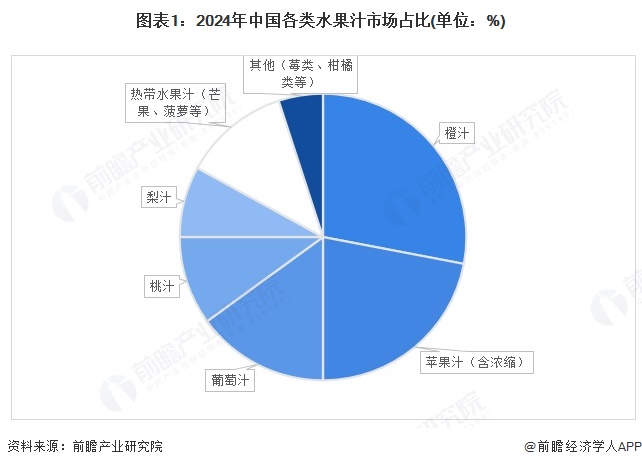
Core Insights - The Chinese apple juice market is experiencing steady growth, with production increasing from 180,000 tons in 2019 to a projected 504,000 tons by 2024, driven by stable demand and improved processing technology [5][2]. - The market size for apple juice is expected to rise from 8.5 billion yuan in 2019 to 12.8 billion yuan by 2024, reflecting a recovery in consumer demand and external market conditions [8]. - Major players like Andeli and Nongfu Spring are leading the market, focusing on high-quality and diversified products, while also expanding their global presence [8][9]. Industry Overview - The juice industry in China is characterized by a multi-category coexistence, with orange juice holding a 28% market share and apple juice (including concentrate) at 22%, together dominating the market [1]. - Tropical fruit juices, such as mango and pineapple, account for 12% of the market, indicating potential for growth [1]. Supply Chain Dynamics - The supply of apple juice is heavily influenced by upstream raw material availability, with apple production expected to grow from 42.4 million tons in 2019 to 50.4 million tons in 2024, maintaining a growth rate of 3% to 4.3% [2]. - Key production regions include the Bohai Bay and the Northwest Loess Plateau, with Shaanxi being a significant area for high-quality apple production [2]. Production Trends - Apple juice production in China is projected to recover from a dip in 2020 due to the pandemic, with a steady increase anticipated from 2021 to 2024 as supply and demand balance out [5]. Market Dynamics - The apple juice market is witnessing a trend towards consolidation, with leading companies like Andeli and Guotou Zhonglu expanding their market share through mergers and acquisitions [9]. - There is a growing preference for high-quality organic products in mature markets, while emerging markets show higher growth rates in demand [9].


【行业深度】洞察2025:中国AI玩具行业竞争格局(附竞争梯队、企业竞争力评价等)
Qian Zhan Wang· 2025-08-19 07:16
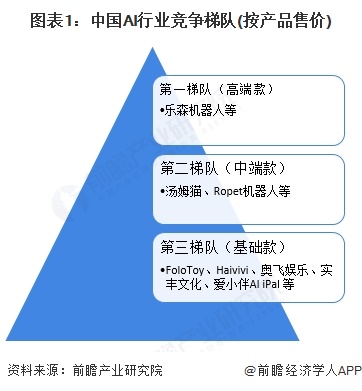
Core Insights - The Chinese AI toy industry is characterized by a diverse competitive landscape, with various types of companies participating, including traditional toy manufacturers, tech startups, internet companies, and IP-rich firms [4][11]. Group 1: Competitive Landscape - The AI toy market features a wide price range, from basic models priced around 300-400 yuan to high-end products exceeding 10,000 yuan, reflecting significant performance differences among brands [1][9]. - Major players include traditional toy companies like Aofei Entertainment and Shifeng Culture, which leverage manufacturing capabilities and IP resources to enhance their AI toy offerings [4][11]. - Tech startups such as Haivivi and FoloToy focus on niche markets, creating differentiated products through the integration of software and hardware [4][11]. Group 2: Product Types - AI toys are categorized into three main types: AI smart dolls, AI robot toys, and AI leisure toys, each utilizing advanced technologies like voice recognition and natural language processing [6][9]. - AI smart dolls combine traditional plush toys with AI capabilities, while AI robot toys are highly anthropomorphized robots, and AI leisure toys incorporate AI into traditional puzzle games [6][9]. Group 3: Market Dynamics - The industry has a low concentration of participants, with a diverse competitive structure driven by technological advancements and IP competition [11]. - Key suppliers include chip manufacturers and AI technology providers, with a reliance on imported components, although domestic alternatives are emerging [11]. - The high-end market shows a strong acceptance of premium pricing, and companies are enhancing user engagement through private channels like brand apps and subscription models [11].






2025年中国连接器市场现状分析 贸易顺差持续扩张【组图】
Qian Zhan Wang· 2025-08-19 03:26
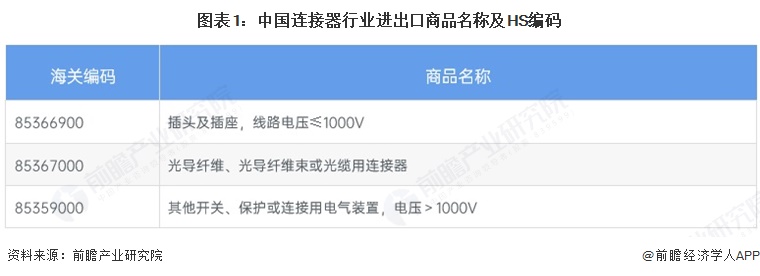
Group 1 - The core viewpoint of the article highlights the trends in China's connector industry, focusing on import and export statistics [1] - The article provides specific HS codes for the connector industry, including plugs and sockets, optical fiber connectors, and other electrical devices [3] Group 2 - From 2018 to 2024, China's total trade volume for connectors shows a fluctuating trend, reaching $5.545 billion in 2024, with a year-on-year growth of 0.90% [4] - The export total for connectors has shown a rising trend, reaching $4.768 billion in 2024, with a year-on-year increase of 2.71% [7] - Conversely, the import total for connectors has been on a continuous decline, amounting to $777 million in 2024, reflecting a year-on-year decrease of 8.99% [8] - The trade surplus in the connector sector has been consistently expanding, reaching $3.991 billion in 2024, with a year-on-year increase of 5.32% [9]



历史新高!零跑朱江明:周末两天净锁单均超3000台,博主称做好零跑周交付破万准备【附新能源汽车行业市场分析】
Qian Zhan Wang· 2025-08-18 10:28
Group 1 - The core viewpoint is that Leap Motor is experiencing a surge in sales during a traditionally slow season for the automotive market, with record order numbers reported [2] - In July, Leap Motor achieved a total delivery of 50,129 vehicles, marking a year-on-year increase of over 126%, and it is on track to become the second new energy vehicle company in China to surpass one million deliveries by the end of the year [5] - The company's strategy focuses on high cost-performance and full self-research capabilities, allowing it to target the mainstream market priced between 100,000 to 200,000 yuan, thereby avoiding direct competition with leading automakers [5] Group 2 - The Chinese new energy vehicle market is rapidly growing, with a penetration rate reaching 31.6% in 2023 and expected to rise to 40.3% in 2024, indicating that new energy vehicles are becoming mainstream choices in the domestic market [5] - The market concentration is high, with the top ten companies accounting for 85.6% of total sales, leaving only 14.4% of the market for other manufacturers [7] - The competitive landscape is described as overcrowded, with over 200 new energy vehicle manufacturers competing for limited market space, leading to predictions of a significant reduction in the number of viable companies in the coming years [8]


2025年中国阿胶行业发展现状 阿胶块供给需求量不断扩大【组图】
Qian Zhan Wang· 2025-08-18 09:09
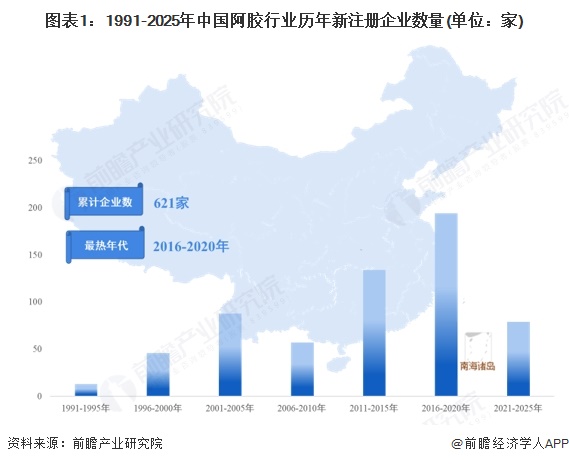
Industry Overview - The number of registered companies in China's Ejiao industry has shown a growth trend, with over 600 companies registered as of June 2025, and nearly 200 new companies added between 2016 and 2020 [1][3] - The production of Ejiao blocks in China is projected to increase, with an estimated production of 4,379 tons in 2024 [3] Supply Situation - The sales-to-production ratio of Dong'e Ejiao has been declining over the past three years, dropping from 100.9% in 2022 to 97.9% in 2024, indicating increased inventory pressure [5] Demand Scale - The market size of the Ejiao industry in China is expected to reach approximately 29.1 billion yuan in 2024, driven by rising disposable income and increased health awareness among consumers [7] Price Trends - The prices of Ejiao products from major brands like Dong'e Ejiao and Fupai Ejiao have remained stable, with Dong'e Ejiao priced at 2,700 yuan per kilogram and Fupai Ejiao at approximately 1,260 yuan per kilogram [9]