Qian Zhan Wang

Search documents
2025年中国阿胶行业销售渠道及销售现状 近年来零售终端销售额波动较大【组图】
Qian Zhan Wang· 2025-08-08 08:12
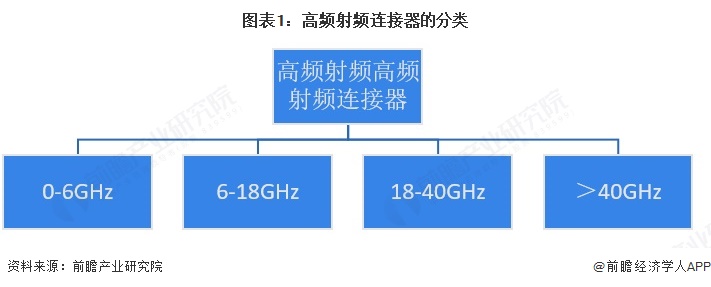
Core Insights - The Chinese ejiao industry has experienced significant fluctuations in retail terminal sales, with a notable increase in 2023 followed by a projected decline in 2024 [3][5] - Major ejiao manufacturers are rapidly expanding their online sales channels to adapt to the growing e-commerce landscape and changing consumer behaviors [6][9] Sales Performance - In 2023, the retail terminal sales of ejiao reached approximately 6.5 billion yuan, marking an 11.8% year-on-year increase, the highest growth rate in six years [3] - The retail terminal sales of compound ejiao paste in 2023 were 2.017 billion yuan, reflecting a 41.3% year-on-year growth, but are expected to decline to 1.7 billion yuan in 2024 [5] Sales Channels - The primary sales channels for ejiao products include hospitals, supermarkets, retail pharmacies, direct specialty stores, and online e-commerce platforms [1] - East Ejiao has focused on building and maintaining online sales channels, achieving over 30% year-on-year growth in sales GMV for its products in the first half of 2024 [1][9] - Other manufacturers, such as Fupai Ejiao, are also leveraging online sales strategies, including live streaming and community marketing, to enhance their market presence [9] Manufacturer Strategies - East Ejiao emphasizes a multi-channel approach, integrating online and offline sales to reach a broader consumer base, particularly younger demographics [9] - Fupai Ejiao has developed a comprehensive online and offline strategy, including partnerships with live streaming influencers and community marketing initiatives [9] - Tongrentang has expanded its offline presence with 1,270 stores across 190 cities and is actively engaging in online platforms like Tmall and JD Health [10] Market Outlook - The overall outlook for the ejiao market indicates a challenging environment in 2024, with expected declines in sales due to weaker consumer demand and a sluggish retail pharmacy sector [3][5]


2025年中国供应链金融行业金融科技现状 技术和场景创新有利于供应链企业高质量发展【组图】
Qian Zhan Wang· 2025-08-08 04:11
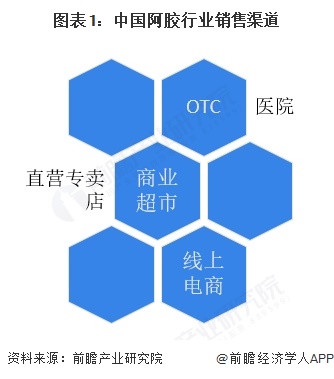
Core Viewpoint - The supply chain finance industry is undergoing continuous innovation in its ecological model, driven by digital technology, platform support, and policy incentives, which are essential for high-quality development and service model innovation in supply chain finance [1][2]. Group 1: Current Challenges and Innovations - The innovation capability of supply chain finance enterprises needs to be strengthened, with 57% of companies showing low levels of innovation in 2023, and 13% having almost no technological innovation in supply chain finance [2]. - Digital technologies such as IoT and blockchain are becoming crucial tools for supply chain finance, integrating financial services into supply chain trade to support small and medium-sized enterprises [4][5]. Group 2: Technological Impact - Various technologies play significant roles in enhancing supply chain finance, including IoT for asset tracking, blockchain for establishing digital trust, big data for data processing, and cloud computing for cost-effective service delivery [5]. - The innovation in financial products is ongoing, aimed at improving the financing capacity and cost management of the entire supply chain, thereby enhancing payment efficiency and stabilizing the supply chain [7]. Group 3: Service Expansion and Ecosystem Development - Scene innovation is essential for expanding supply chain finance services to more industries and scenarios, requiring the development of a resilient ecosystem that promotes resource sharing and complementary advantages [9].
预见2025:《2025年中国功能性护肤品行业全景图谱》(附市场现状、竞争格局和发展趋势等)
Qian Zhan Wang· 2025-08-08 02:08
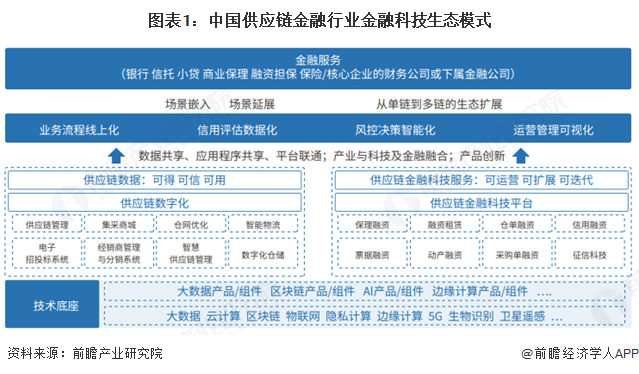
Core Insights - The functional skincare industry in China is experiencing a rise of domestic brands, with a focus on products that address specific skin issues and provide therapeutic benefits [1][8] - The market size for functional skincare products is projected to exceed 480 billion yuan by 2024, driven by increasing consumer demand for safety and efficacy [25][31] Industry Overview - Functional skincare products are defined as cosmetics or medical devices that target specific skin problems and possess pharmacological effects [1] - The industry is currently in a phase of domestic brand emergence, with significant growth in market share for local brands like Winona and Huaxi Biological [8] Industry Chain Analysis - The functional skincare industry chain consists of upstream raw material suppliers, midstream manufacturers, and downstream sales channels [4][6] - Key raw materials include collagen, hyaluronic acid, and peptides, while packaging materials range from paper to glass [4] Market Development History - The industry has gone through three stages: initiation (1998-2008), transformation (2009-2014), and the current rise of domestic brands (2015-present) [8] - The entry of brands like Vichy and Avene marked the beginning of the functional skincare market in China [8] Policy Background - The industry is governed by regulations applicable to both cosmetics and medical devices, focusing on efficacy claims and labeling management [11][13] Current Market Status - The market is characterized by three main segments: dermatological skincare, high-efficacy skincare, and medical-grade skincare [14] - Consumers are increasingly focused on product efficacy, safety, and ingredient transparency, particularly for sensitive skin [15][16] Sales Channels - Online sales channels dominate the market, with companies like Proya achieving significant revenue from e-commerce [20] - The sales strategy often includes a combination of online and offline channels to maximize reach [19] Profitability - The gross profit margins for most listed companies in the functional skincare sector exceed 70%, with some companies like Jinbo Biological reaching 92.02% due to their focus on medical devices [24] Market Size and Growth - The functional skincare market in China has grown from 10.25 billion yuan in 2017 to an estimated 48.743 billion yuan in 2024 [25][28] - The market is expected to reach 86 billion yuan by 2030, with a compound annual growth rate of approximately 9.0% [33] Competitive Landscape - The competitive landscape is led by companies like Betaini, which holds an 11.71% market share, followed by Huaxi Biological and others [31] - The industry is concentrated in coastal regions, particularly Shanghai and Guangdong [28] Future Trends - The penetration rate of functional skincare products is expected to increase, with a focus on product innovation and medical endorsements [35] - The industry is likely to see intensified competition as consumer preferences evolve towards more personalized and effective solutions [33]


前瞻全球产业早报:《上海市具身智能产业发展实施方案》发布
Qian Zhan Wang· 2025-08-07 12:12
Group 1 - Anhui has surpassed Guangdong to become China's top automotive province, with a production of 1.4995 million vehicles in the first half of the year, marking a historic breakthrough [2] - The 2025 Future Science Prize winners were announced, recognizing significant contributions in life sciences, material sciences, and mathematics/computer science [2] Group 2 - Nvidia stated that its chips do not contain backdoors, kill switches, or monitoring software, addressing security concerns [3] - Shanghai's government released a plan to develop the embodied intelligence industry, aiming for breakthroughs in core technologies and a market scale exceeding 50 billion yuan by 2027 [3] Group 3 - Zhiyuan Robotics announced a breakthrough in research on data diversity in robot learning, challenging the traditional belief that more diverse data is always better [4] - Fourier launched the Care-bot GR-3, a humanoid robot designed for interactive companionship, standing 1.65m tall and weighing 71kg [6] Group 4 - A new rare earth permanent magnet motor with a thickness of only 6mm has been developed in Inner Mongolia, marking a significant advancement in high-end rare earth permanent magnet motor technology [6] - Taobao launched a new membership system that integrates various Alibaba resources, covering multiple lifestyle scenarios [6] Group 5 - Huawei's newly published patent for a vehicle formation method aims to reduce latency and enhance safety in intelligent driving [6] - *ST Songfa announced a board reshuffle due to significant changes in its business structure following a major asset swap [7] Group 6 - Microsoft announced the integration of OpenAI's gpt-oss model into Azure AI Foundry, allowing users to optimize performance and costs through flexible model combinations [7] - Apple is expected to hold the iPhone 17 series launch event on September 9, aligning with previous predictions [8] Group 7 - Elon Musk's xAI plans to open-source the Grok 2 chatbot next week, expanding its AI offerings [9] - NASA is accelerating plans to build a nuclear reactor on the Moon, which is seen as crucial for winning the next space race [11] Group 8 - Boeing successfully completed the first test flight of its 777-9 aircraft, validating its handling and performance [11] - The UK Civil Aviation Authority issued a launch license to a local company, marking the first such approval for a UK rocket company [11] Group 9 - Honda raised its full-year operating profit forecast to 700 billion yen, although this remains below market expectations [12] - Sibo Holding submitted an IPO application to raise up to 7 million USD, while Hansa Technology debuted on the Shenzhen Stock Exchange with a significant opening price increase [13]

【干货】超硬材料产业链全景梳理及区域热力地图
Qian Zhan Wang· 2025-08-07 07:45
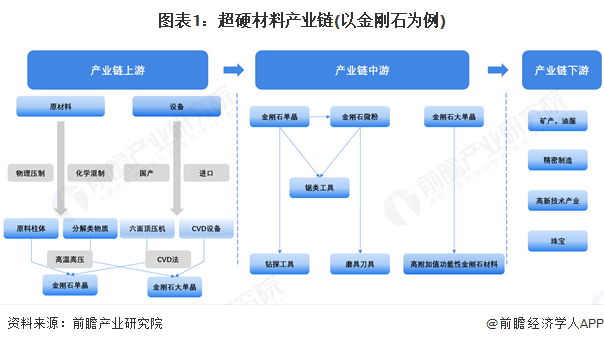
Core Insights - The article provides a comprehensive overview of the superhard materials industry in China, detailing the production processes, applications, and regional distribution of companies involved in this sector [1][3][4]. Industry Overview - The superhard materials industry chain includes upstream raw material processing and chemical processing, leading to the production of diamond single crystals, which are then crushed into diamond powder for tools like saw blades and drill bits [1]. - The downstream applications of superhard materials are categorized into four main sectors: mineral oil services, precision manufacturing, high-tech industries, and jewelry [3]. Regional Distribution - The majority of superhard materials companies are concentrated in Henan province, followed by the Yangtze River Delta region, with fewer companies in Guangdong, Shaanxi, Beijing, and Shandong [4]. - The Henan cluster has the most companies and encompasses the most complete industry chain, focusing on industrial diamonds and cultivated diamonds, while the Yangtze River Delta is known for its technological research capabilities [8]. Industrial Parks - There are currently eight major superhard materials industrial parks in China, primarily located in Henan, Jiangsu, Guangdong, Shandong, and Inner Mongolia, with Henan having the highest concentration of three parks [9]. Company Capacity and Production - The superhard materials industry features a wide distribution across various segments, with upstream competition, a dense midstream, and a dispersed downstream market. Key companies and their production capacities include: - China Graphite: Approximately 1.23 million tons of natural graphite, accounting for about 76.9% of global production [13]. - Zhongbing Hongjian: The largest domestic producer of synthetic diamonds, with a production share of about 50% of the global total [13]. - Huanghe Xuanfeng: Approximately 2,000 six-sided top-press machines, with cultivated diamond revenue around 600 million yuan [13]. - Liliang Diamond: Industrial diamond production of 150.66 billion carats and cultivated diamond production of 2.772 million carats, expected to gradually reach capacity from 2024 to 2026 [13]. Investment Trends - Since 2020, representative companies in the superhard materials sector have shown various investment trends, reflecting strategic planning and competitive dynamics within the industry. For example: - Hengxing Technology has invested in expanding diamond wire production capacity to meet the needs of photovoltaic silicon wafer cutting [14]. - ST Xinye has gradually exited the superhard materials business, integrating into the national machine system [14]. - Sifangda has established a semiconductor division to enter the CVD cultivated diamond market, indicating a shift towards high-value applications [14].


重磅!2025年中国及31省市中硼硅玻璃行业政策汇总及解读(全)
Qian Zhan Wang· 2025-08-07 07:20
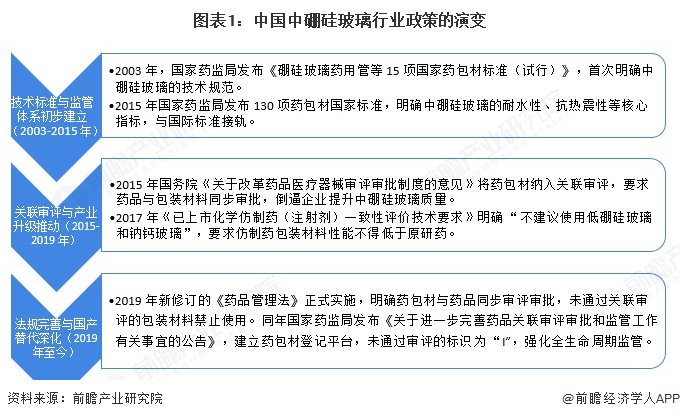
Core Insights - The article outlines the evolution of policies in China's borosilicate glass industry, emphasizing a clear trajectory from standard establishment to regulatory enhancement, domestic substitution, and innovation upgrades [1][3]. National Policy Summary and Interpretation - Recent years have seen increased emphasis on the quality and selection of pharmaceutical packaging materials and containers, with the National Medical Products Administration reiterating that the quality and performance of packaging materials for injectable drugs must meet or exceed that of reference formulations [3][4]. - The "14th Five-Year" Pharmaceutical Industry Development Plan, issued by multiple government departments, aims to establish a robust standard system and quality specifications for pharmaceutical excipients and packaging materials, facilitating compliance with consistency evaluation and internationalization requirements for formulations [3][4]. - Although the consistency evaluation policy does not mandate the use of borosilicate glass for injectable drug generics, domestic companies are inclined to adopt similar materials due to the prevalence of borosilicate glass in reference formulations used by foreign original drug manufacturers, thus promoting the domestic substitution process [3][4]. Key Development Policies and Plans (2012-2025) - A comprehensive table outlines significant policies and regulations from 2012 to 2025, detailing the publication dates, issuing bodies, and main content of each policy, which collectively support the development of the borosilicate glass industry [4][5][6]. - Policies include optimizing drug supplementary application review processes, enhancing the resilience and modernization of the pharmaceutical industry, and establishing quality management systems for pharmaceutical packaging materials [5][6]. Provincial Policy Summary and Interpretation - Various provinces have implemented policies focusing on improving the quality of pharmaceutical excipients and packaging materials, encouraging the use of new materials and technologies, and enhancing quality supervision [17][18]. - Specific initiatives include the promotion of research and development in pharmaceutical packaging materials, the introduction of advanced technologies, and the establishment of quality standards for drug packaging [18][21]. - The policies aim to support the development of the borosilicate glass industry while addressing environmental standards and promoting technological upgrades [18][21].
2025年中国生猪养殖行业上游种猪育种市场分析 2024年TOP20种猪企业合计超205万头【组图】
Qian Zhan Wang· 2025-08-07 06:46
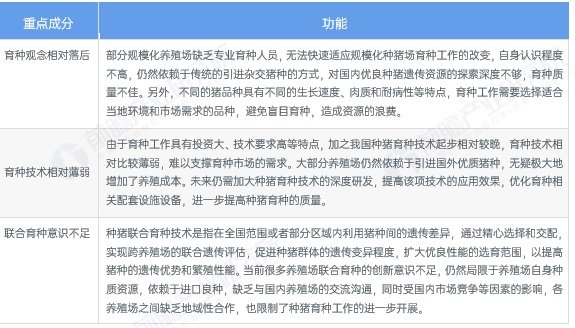
Market Overview - The breeding of breeding pigs is a crucial aspect of the livestock industry, significantly impacting pig production and quality, as well as the sustainable development of pig farming [1] - Although China has made progress in breeding technology, the overall level remains low, with insufficient independent innovation capabilities and limited investment in research and development compared to leading international breeding companies [1] Challenges in Breeding - Breeding concepts are relatively outdated, with some large-scale farms lacking professional breeding personnel, leading to reliance on traditional methods and insufficient exploration of domestic genetic resources [2] - Breeding technology is relatively weak, with high investment and technical requirements, resulting in a reliance on imported high-quality pig breeds, which increases farming costs [2] - There is a lack of awareness regarding joint breeding, limiting the genetic assessment and collaboration among farms, which hinders the advancement of breeding work [2] Sales Data of Breeding Pig Enterprises - In 2024, four companies sold over 200,000 breeding pigs: Muyuan, Zhongxin Seed Industry, Chia Tai, and Jiad, with Muyuan leading at 465,000 pigs sold [2] Breeding Pig Breed Distribution - Among the top 20 breeding pig companies, those raising American and French breeds are equal in number, each accounting for 28%, followed by Canadian, Danish, and Taiwanese breeds at 13%, 12%, and 12% respectively [3] Core Breeding Farms by Province - In 2024, there are 101 national core breeding farms for lean meat and local breeds, primarily located in major pig-producing provinces, with Guangdong having the highest number at 11 [5] Market Trends in Breeding Pig Industry - The Chinese breeding pig industry is expected to improve with advancements in production technology, leading to larger individual companies and a reduction in overall scale [6] - Breeding technology will become more specialized and differentiated as the market matures, reflecting the varying needs of target customers [6] - The industry will exhibit a diverse and competitive landscape, with multiple operational models and levels of competition [6] - The focus of competition will shift with the changing key survival and development points in the pig farming industry [6] - The supply of breeding boars and semen will become increasingly professional and high-end, with clearer and more precise applications [6]



【最全】2025年生物医用材料行业上市公司全方位对比(附业务布局汇总、业绩对比、业务规划等)
Qian Zhan Wang· 2025-08-07 04:09
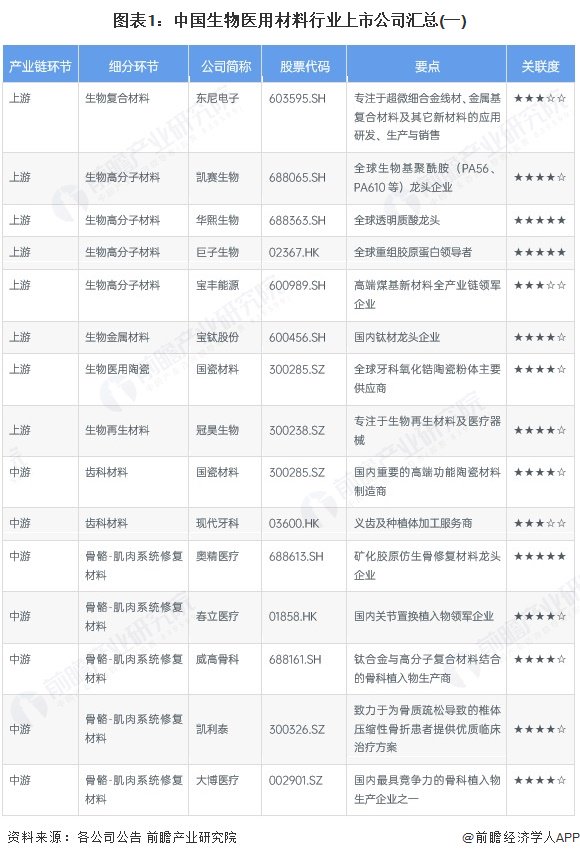
Core Viewpoint - The article provides a comprehensive overview of the Chinese biomedical materials industry, highlighting key listed companies, their business segments, revenue projections, and strategic planning for future growth. Group 1: Overview of Listed Companies - The A-share listed companies in the biomedical materials sector include Guocera Materials, Weigao Orthopedics, Haohai Biological Technology, Lepu Medical, Lanfang Medical, and Xinmai Medical [1] - The industry is characterized by a diverse range of companies focusing on various segments such as biocomposite materials, biopolymers, and biometals [2][3] Group 2: Revenue Projections - For 2024, key revenue figures for selected companies include: - Guocera Materials: 40.47 billion CNY from dental ceramics and biomedical materials [4] - Weigao Orthopedics: 14.51 billion CNY from orthopedic implants [10] - Lepu Medical: 61.03 billion CNY from cardiovascular materials [5] - The overall revenue for the biomedical materials sector is projected to grow, driven by increasing demand for advanced medical solutions [11] Group 3: Business Layout and Performance - Companies like Aojing Medical, Weigao Orthopedics, and Dabo Medical derive nearly 100% of their revenue from biomedical materials, indicating a focused business strategy [9] - The production and sales rates for biomedical materials are generally below 100%, with companies like Aojing Medical and Weigao Orthopedics showing lower production efficiency [11] Group 4: Strategic Planning and Innovation - Leading companies are focusing on technological innovation, market expansion, and integration of the supply chain to maintain competitive advantages [13] - Companies such as Guocera Materials and Weigao Orthopedics are investing in R&D and international market penetration to enhance their product offerings and market share [14][15]





前瞻全球产业早报:盒马会员店即将全部停业
Qian Zhan Wang· 2025-08-06 12:13
Group 1 - The State Council of China has issued an opinion to gradually implement free preschool education, starting from the autumn semester of 2025, which will exempt public kindergartens from charging care and education fees for the final year of preschool [2] - The exemption will follow the fee standards approved by local governments and relevant departments, excluding meal, accommodation, and miscellaneous fees [2] Group 2 - Seven departments, including the People's Bank of China, have jointly issued guidelines to support new industrialization, encouraging banks to provide medium- and long-term financing for key manufacturing industries such as integrated circuits and advanced materials [2] Group 3 - Hema X's membership stores will cease operations, marking the closure of all 10 stores nationwide, as the brand exits the membership warehouse market [3] - Shanghai plans to have all new energy projects, including concentrated solar and wind power, participate in market trading by the end of 2025 [3] Group 4 - The humanoid robot Ling Shu, developed by Hefei Youai Zhihui and Xi'an Jiaotong University, was unveiled, featuring a unique "one brain multiple forms" architecture for complex tasks in semiconductor manufacturing and energy sectors [4][5] - Unitree Technology launched a new quadruped robot, Unitree A2, weighing approximately 37 kg with a maximum running speed of 5 m/s and a range of 20 km [5] Group 5 - Huawei announced the full open-source of its CANN software, emphasizing the importance of computing power in its AI strategy [5] Group 6 - The second domestically produced large cruise ship, "Aida Huacheng," has entered the equipment debugging phase, with its first main generator successfully generating power [6] Group 7 - Geely is undergoing significant adjustments in its autonomous driving teams, with plans to merge various teams into a new entity, though details are still being finalized [7] Group 8 - TSMC reported a potential leak of its 2nm chip manufacturing technology, leading to the dismissal of several employees involved in the incident [8] Group 9 - VinFast has officially opened its electric vehicle assembly plant in India, with an initial capacity of 50,000 units per year, potentially increasing to 150,000 units [12] Group 10 - Naver, a South Korean internet giant, plans to acquire 70.5% of Spain's largest C2C second-hand trading platform, Wallapop, for €377 million [13] Group 11 - Google has agreed to reduce electricity consumption at its AI data centers during peak demand periods to alleviate pressure on the US power grid [14]





2025年全球高频射频连接器市场现状分析 2024年全球市场规模约54.6亿美元【组图】
Qian Zhan Wang· 2025-08-06 09:10
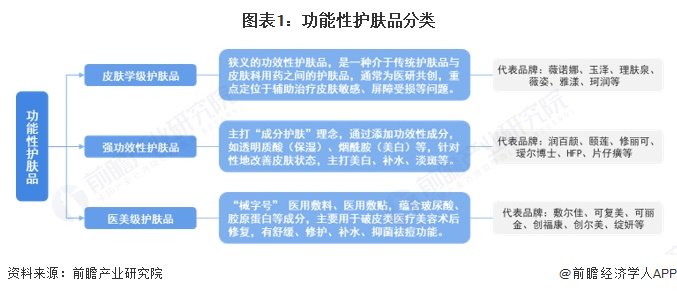
Group 1 - The global high-frequency RF connector market is projected to reach approximately $5.46 billion in 2024, with a year-on-year growth of 6.4% driven by the expansion of wireless technology, 5G networks, and advancements in aerospace and defense electronics [3] - In terms of product structure, connectors operating in the 0-6GHz frequency range hold a significant market share, accounting for nearly 50% of the global high-frequency RF connector market [5] - North America is the largest demand region for high-frequency RF connectors, representing about 33% of the global market share, followed by Europe with a 27% share [7] Group 2 - The industry trend indicates a continuous demand for higher frequency and transmission speed due to the rapid development of 5G, 6G communication technologies, satellite communications, and millimeter-wave radar, necessitating innovations in materials, structural design, and manufacturing processes [11] - There is a trend towards miniaturization and integration in high-frequency RF connectors, driven by the ongoing demand for smaller, lighter electronic products and the need for multifunctional, high-reliability designs [11]