Qian Zhan Wang

Search documents
2025年中国中硼硅玻璃关联评审现状 “A”类评审结果占优【组图】
Qian Zhan Wang· 2025-08-12 09:27
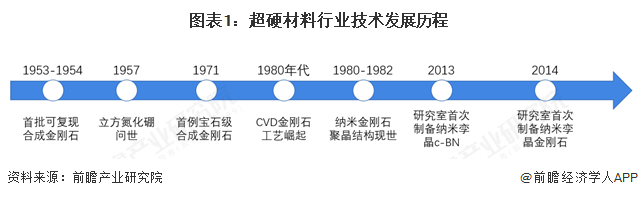
Core Insights - The revised Drug Administration Law in China mandates that the State Council's drug supervision department reviews chemical raw materials, excipients, and packaging materials together with drug approvals, ensuring comprehensive quality standards and production processes are evaluated [1] Group 1: Review Process - The new law specifies that the approval process for drugs will include a joint review of raw materials, excipients, and packaging materials [1] - The registration platform will now indicate two types of review results: "A" for approved materials and "I" for those not yet approved [1] Group 2: Review Results Distribution - As of 2025, the distribution of review results for Chinese borosilicate glass packaging shows that "A" class results total 239, accounting for 47%, while "I" class results account for 53% [2] - In the "A" class results, there are 164 domestic products and 75 imported products, while the "I" class results include 203 domestic and 65 imported products [4] Group 3: Product Categories - The "A" class results for injection bottles show a significant number, with 116 for injection bottles, 77 for ampoules, 3 for infusion bottles, and 43 for others [4] - Conversely, the "I" class results for injection bottles are also substantial, with 164 for injection bottles, 85 for ampoules, 14 for infusion bottles, and 5 for others [7]



2025年全球超硬材料行业技术发展与分析——拥抱产能,迎接创新
Qian Zhan Wang· 2025-08-12 08:56
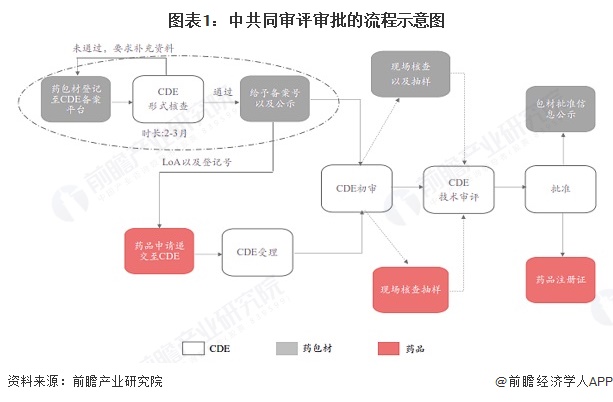
Core Viewpoint - By 2025, the global superhard materials industry will exhibit a development pattern characterized by "dual-track technological competition and diversified application expansion," with the research and development of nanocrystalline diamond and new superhard compounds becoming the technological high ground. The industry is accelerating its transition towards emerging fields such as semiconductors and quantum computing [1]. Technological Development - The technological development of superhard materials dates back to the 1950s, beginning with the successful synthesis of diamonds using high-pressure high-temperature (HPHT) techniques. The first controllable synthetic diamonds were produced by ASEA in Sweden and GE in the USA in 1953 and 1954, respectively [2]. - The introduction of chemical vapor deposition (CVD) technology in the 1980s allowed for the low-pressure synthesis of diamond films, expanding material options for electronic devices, thermal management, and precision machining [2]. - Recent advancements in nanocrystalline structures have significantly enhanced the performance of superhard materials, with nanocrystalline diamonds achieving Vickers hardness levels of 180-200 GPa, making them one of the hardest known synthetic materials [4]. Research Trends - Between 2020 and 2025, a total of 1,758 effective documents were collected, with 1,078 focusing on diamonds and 687 on cubic boron nitride (cBN), indicating a significantly higher research interest in diamonds compared to cBN [7]. - The core technologies in the superhard materials industry are concentrated in material synthesis processes, structural optimization methods, and multifunctional composites [8]. Industry Dynamics - The main synthesis technologies in the superhard materials industry are HPHT and CVD, each suited for different applications. HPHT focuses on yield and cost control, while CVD offers unique advantages in electronics, optics, and high-end cutting tools [8]. - The industry is moving towards a collaborative evolution of high strength, high toughness, multifunctionality, and low cost, supporting the deep expansion of superhard materials in aerospace, precision machining, and electronic devices [10]. Emerging Applications - The development trend indicates that CVD technology is advancing towards larger sizes, higher quality, and lower costs, particularly in the production of single crystal diamonds. New unconventional synthesis methods, such as liquid-phase and microwave plasma methods, are also emerging [11]. - Research on diamond applications in emerging fields such as semiconductors, quantum computing, high-power optics, and water treatment is rapidly growing, becoming a new frontier in research [11]. Competitive Landscape - While Western countries maintain a lead in high-pressure equipment and the stability of HPHT/CVD processes, China is quickly narrowing the gap. In the field of nanocrystalline cBN and diamonds, foreign achievements are more pronounced, but breakthroughs are expected from Chinese teams by 2025 [11][12]. - China has strong global competitiveness in supply chains and raw materials, although it may face risks related to low-end product exports due to supply chain concentration [12].


预见2025:《2025年中国果汁行业全景图谱》(附市场规模、竞争格局和发展趋势等)
Qian Zhan Wang· 2025-08-12 04:20
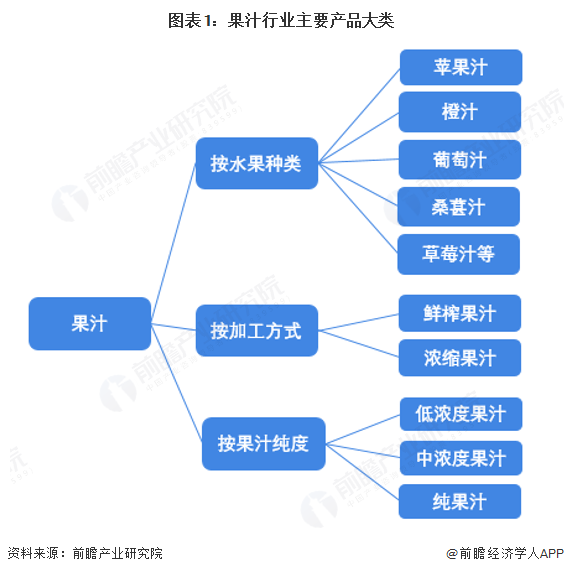
Industry Overview - The juice industry in China is defined as the production of juice products made from fresh or refrigerated fruits, with a minimum juice content of 10% [1] - The industry is categorized under beverage manufacturing, specifically soft drink manufacturing [1] Industry Chain Analysis - The juice industry chain consists of upstream (raw materials and equipment suppliers), midstream (juice processing companies), and downstream (distribution and sales channels) [2][5] - Upstream includes fruit planting bases and packaging material suppliers, while midstream focuses on juice processing and product manufacturing [2][5] Industry Development History - The juice industry in China has evolved over 30 years, shifting from an export-oriented model to a domestic demand-driven and technology-led market [8] - Key milestones include the establishment of Huiyuan in 1992, the rise of low-concentration juice in 2001, and the emergence of NFC juice post-2008 [8][11] Policy Background - Multiple policies have been introduced to regulate and support the juice industry, focusing on food safety, resource conservation, and market standardization [12] - Policies aim to enhance the competitiveness of the juice industry and promote healthy product development [12] Current Market Status - The juice market in China is steadily growing, with sales increasing from 120 billion to 156 billion yuan from 2019 to 2024 [13] - High-end juice products, particularly those produced using NFC and HPP technologies, are driving market growth, with their sales share rising from 12% in 2019 to 23% in 2024 [13] Competitive Landscape - The juice market features a tiered competitive structure, with leading companies like Coca-Cola, Master Kong, and Nongfu Spring dominating the market [17][21] - Emerging brands are also gaining traction, particularly in the high-end segment, with significant growth rates [15][21] Regional Competition - The juice industry exhibits regional competition, with Shandong leading in the number of listed companies, followed by Hebei, Zhejiang, and Guangdong [19] - Each region has its unique focus, such as concentrated juice production or high-end juice products [19] Future Trends and Predictions - The demand for high-end, health-oriented juice products is expected to continue driving innovation and market upgrades [23] - The market is diversifying, with younger consumers and new consumption scenarios emerging, leading to new growth opportunities [23]


质保期仅为8年!蔚来李斌:电动车电池寿命与车的寿命不匹配,解决电池寿命刻不容缓【附电动车电池行业市场分析】
Qian Zhan Wang· 2025-08-11 11:05
Group 1 - The core issue highlighted is the mismatch between the lifespan of electric vehicle batteries and the vehicles themselves, with a call for the industry to address battery longevity urgently [2] - Current warranty periods for new energy vehicle batteries are typically 8 years, while vehicles can last over 15 years, leading to potential battery health issues after significant mileage [2] - By 2025 to 2032, nearly 20 million new energy vehicles are expected to face battery warranty expiration, emphasizing the need for long-life batteries and planning for post-warranty services [2] Group 2 - The battery is considered the heart of new energy vehicles, with performance directly impacting range, acceleration, charging speed, and overall vehicle lifespan [2][3] - Battery costs account for 40%-50% of the total vehicle cost, making battery lifespan critical for the overall lifecycle cost of the vehicle [5] - Current lithium-ion battery technology has a limited cycle life of 1000-2000 cycles, which does not meet the long-term usage demands of vehicles [5] Group 3 - NIO is actively developing long-life batteries and ensuring battery safety through its battery swap stations, which conduct comprehensive health checks on batteries during swaps [7] - NIO has established over 8,100 charging and battery swap stations nationwide, with more than 3,400 battery swap stations, leading the industry in infrastructure [8] - The battery swap process is efficient, taking as little as 2 minutes and 24 seconds, providing convenience and reliability for users [8]


【投资视角】启示2025:中国演唱会行业投融资及兼并重组分析(附投融资事件、产业基金和兼并重组等)
Qian Zhan Wang· 2025-08-11 04:11
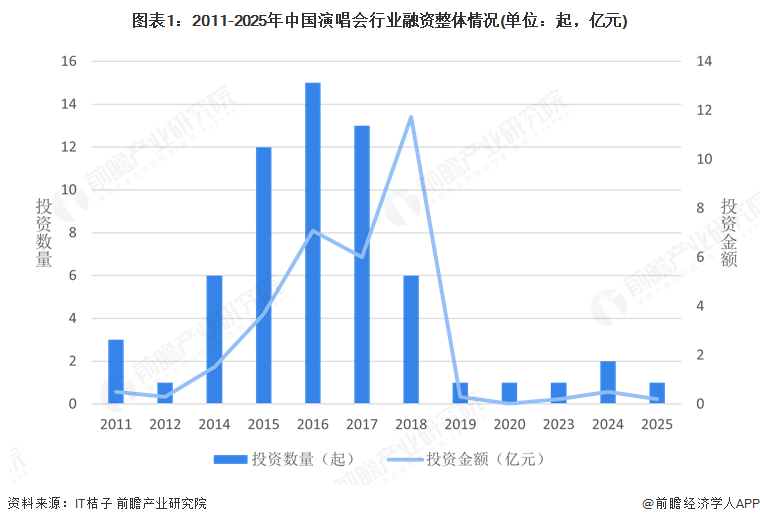
Group 1 - The domestic concert industry has experienced a significant decline in investment and financing since 2018, with annual financing events dropping to fewer than 2 and amounts not exceeding 50 million yuan [1][2][4] - The majority of financing events are concentrated in early-stage rounds, particularly angel and A rounds, indicating that many companies are still in the startup phase [4][16] - Beijing is the leading region for concert industry financing, accounting for over 50% of total events, followed by Shanghai and Guangdong [7][16] Group 2 - The average single financing amount in the concert industry has been low, with most recent events not exceeding 30 million yuan, reflecting a relatively low demand for capital [2][4] - The primary focus of investment in the concert industry is on event planning and production, with 35% of investment events targeting this area [18][21] - The concert industry has seen very few merger and acquisition events, with only two notable transactions since 2017, indicating a lack of consolidation in the market [21][22]
2025年中国医药流通行业区域现状 长江经济带是全国主要的医药流通地区
Qian Zhan Wang· 2025-08-09 04:32
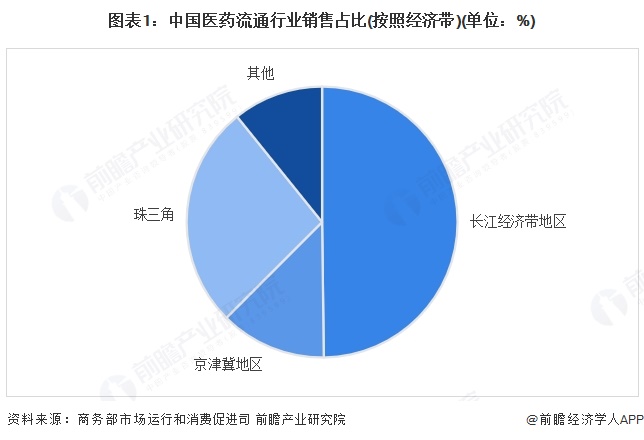
Core Insights - The pharmaceutical distribution industry in China is heavily concentrated in regions with convenient transportation, with the Yangtze River Economic Belt accounting for nearly half of the total sales in 2023, at 49.8% of the national sales [1] - The East China region remains a major pharmaceutical distribution market, contributing 36.2% to the national sales, although this represents a decrease of 0.2 percentage points year-on-year [3] - In the distribution of Western medicine, Guangdong province holds the highest share at 10%, followed by other provinces primarily in East China [7] - For Traditional Chinese Medicine distribution, Beijing leads with a 10.7% share, with other significant contributions from provinces like Zhejiang and Henan [8] - In the medical device distribution sector, Guangdong again ranks first with a 16.8% share, followed by provinces such as Henan and Beijing [10] Regional Distribution Analysis - The sales distribution across six major regions in China for 2023 is as follows: East China 36.2% (down 0.2 percentage points), Central South 27.0% (down 0.2 percentage points), North China 15.2% (up 0.3 percentage points), and Southwest 13.4% (unchanged) [3] - The Yangtze River Economic Belt's dominance in sales highlights the importance of transportation infrastructure in the pharmaceutical distribution sector [1] Market Opportunities - The report indicates potential investment opportunities in the pharmaceutical distribution sector, particularly in regions with high sales concentrations and growth potential [12]

追随马斯克脚步?何小鹏:视觉辅助驾驶上限远超激光雷达,过去表现不佳是因为算力不足【附智能网联汽车行业前景】
Qian Zhan Wang· 2025-08-08 12:49
Core Viewpoint - The ongoing debate between pure vision and LiDAR technology in the autonomous driving sector is highlighted, with Xiaopeng Motors firmly supporting the pure vision approach, believing it will outperform LiDAR in complex scenarios in the future [2][3]. Group 1: Company Perspectives - Xiaopeng Motors' chairman, He Xiaopeng, stated that the company will adhere to a pure vision route for its autonomous driving technology, emphasizing that advancements in computing power have resolved previous limitations of visual systems [2][3]. - The AI Eagle Eye driving solution from Xiaopeng Motors utilizes 8 million pixel cameras and Lofic technology, achieving a 125% increase in perception distance and a 40% improvement in recognition speed [2]. - Tesla's CEO, Elon Musk, is a strong advocate for the pure vision approach, arguing that it better simulates human driving and is more adaptable to existing traffic environments [3][4]. Group 2: Technical Comparisons - Pure vision systems rely on cameras and deep learning algorithms, offering advantages such as lower costs and greater data volume, but are sensitive to lighting and weather conditions [3]. - LiDAR technology provides high precision and all-weather functionality, but comes with higher hardware costs and complex data processing requirements [3][5]. - The Chinese LiDAR industry has gained significant competitiveness, with domestic manufacturers holding over 80% of the global market share, and the average cost of LiDAR for ADAS is expected to decrease by 15.56% to 3,800 yuan in 2024 [5][7]. Group 3: Market Trends - The rapid growth of the smart connected vehicle market in China is creating a testing ground for the technology route debate, with expectations that the penetration rate of smart connected new energy vehicles will exceed 40% by 2025 [7]. - By 2030, smart connected vehicles are projected to become mainstream, with the industry scale potentially exceeding 2 trillion yuan by 2029 [7]. - Current autonomous driving technologies, whether multi-sensor systems including LiDAR or pure vision systems, are still in the early stages of development and face various challenges [10].



前瞻全球产业早报:OpenAI或在周五凌晨发布GPT-5
Qian Zhan Wang· 2025-08-08 12:39
Group 1 - The Chinese government, through seven departments including the Ministry of Industry and Information Technology, has issued implementation opinions to promote the innovation and development of the brain-computer interface industry, focusing on cultivating leading enterprises and supporting the establishment of industrial innovation consortia [2] - The initiative aims to enhance the innovation supply from small and medium-sized enterprises in the brain-computer interface sector and accelerate the cultivation of technology-driven SMEs, high-tech enterprises, and specialized "little giant" companies [2] Group 2 - OpenAI is expected to release GPT-5, which is anticipated to significantly outperform existing models, as hinted by the CEO [4] - The Guangdong-Hong Kong-Macao Greater Bay Area's import and export value reached 5.2 trillion yuan in the first seven months of this year, marking a 4.7% increase [4] - Alibaba's Tongyi Qianwen has launched a new smaller model, Qwen3-4B, which reportedly surpasses the closed-source GPT4.1-Nano in non-inference tasks [5] Group 3 - BMW's design chief, Kai Langer, has joined Xiaomi, highlighting the company's rapid growth and expansion into the automotive sector [6] - XPeng Motors' chairman, He Xiaopeng, stated that the future of pure vision technology will exceed that of LiDAR, attributing past limitations to insufficient computing power [7] - JD.com has acquired a stake in Shenzhen Zhujidongli Technology, a company focused on embodied intelligent robotics [7] Group 4 - WeChat has reiterated that it has never had a read receipt feature and will not implement one in the future, emphasizing the platform's goal to reduce social pressure [8] - Hema's CEO announced plans to open 100 new stores this year, expanding into 50 additional cities [9] - OpenAI has reached an agreement to provide ChatGPT enterprise services to U.S. federal agencies for $1 per agency [9] Group 5 - Apple plans to invest an additional $100 billion in the U.S. for domestic manufacturing, including a new manufacturing plan to shift more supply chain operations to the U.S. [10] - Apple suppliers are advancing plans for large-scale iPhone production in India, anticipating exemption from tariffs imposed by the U.S. [11] - Applied Materials announced plans to invest over $200 million in a factory in Arizona to produce key semiconductor equipment components [12] Group 6 - Novartis is reportedly considering a takeover bid for the biotechnology company Avidity Biosciences [13] - South Korean trade representatives confirmed that Samsung Electronics and SK Hynix will not face 100% tariffs on chips imposed by the U.S. [14] - Amazon's autonomous driving subsidiary, Zoox, has received regulatory approval to test vehicles without traditional driving controls [15] Group 7 - Vitas Power has completed its angel round financing with investments from various venture capital firms [16] - Liv Biotech has secured several hundred million yuan in Series B financing led by a major group [16] - Huayan Robotics is seeking to raise over $200 million through an IPO in Hong Kong [17]
需求不足!中国移动董事长杨杰:手机换机周期已经延长到三年,但AI和信息技术带来新机遇【附智能手机行业市场分析】
Qian Zhan Wang· 2025-08-08 12:16
Core Viewpoint - China Mobile reported strong financial results for the first half of 2025, with revenue of 543.8 billion RMB and a net profit of 84.2 billion RMB, but faces challenges in the second half due to slowing growth in communication services and declining demand in the smartphone market [2] Financial Performance - China Mobile's total revenue for the first half of 2025 was 543.8 billion RMB, with a main business revenue of 467 billion RMB, reflecting a year-on-year growth of 0.7% [2] - The net profit for the same period was 84.2 billion RMB, showing a year-on-year increase of 5.0%, equivalent to a daily profit of 4.65 million RMB [2] Market Challenges - The chairman of China Mobile, Yang Jie, indicated that the company faces pressures in the second half, with potential negative growth in revenue and declines in personal market and ARPU [2] - The smartphone market is experiencing a negative growth trend, with extended replacement cycles now averaging around three years, compared to the previous 18 to 24 months [2] Industry Trends - The Chinese smartphone market is becoming saturated, with a market size exceeding 900 billion RMB in 2023, but a compound annual growth rate of only 2.7% over the past four years [2] - The arrival of 5G technology is seen as a turning point for the industry, with 5G smartphones becoming the preferred choice for replacements [4] - In 2023, domestic 5G smartphone shipments reached 240 million units, a year-on-year increase of 11.9% [4] Pricing Dynamics - The high-end smartphone market in China is growing, with devices priced over 600 USD (approximately 4000 RMB) accounting for over 27% of the market share in 2023, an increase of 3.7 percentage points from 2022 [5] AI Technology Integration - The application of AI technology is viewed as a new growth point in the saturated smartphone market, with features such as efficient resource utilization and strong self-learning capabilities being emphasized [8] - AI smartphones are expected to replace traditional applications with AI agents, enhancing user experience and connectivity with other devices and services [8]


最高售价3.2万元!董明珠回应玫瑰空调争议:你不喜欢有人喜欢,我就是要坚持去创新【附白色家电行业市场分析】
Qian Zhan Wang· 2025-08-08 11:56
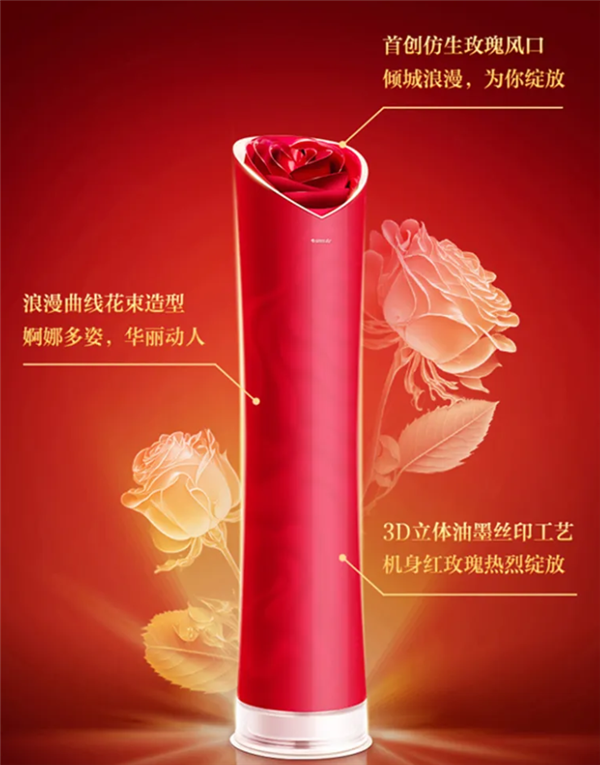
Group 1 - Gree Electric's Rose Air Conditioner, priced at 32,999 yuan, features a unique rose design and advanced smart technologies, including self-cleaning and intelligent temperature control [1][3] - The product has faced criticism for its aesthetics, with some consumers describing it as outdated and overpriced, yet Gree's chairman emphasizes the importance of innovation over mere cost-cutting in the industry [3][4] - Gree Electric has received numerous awards for its innovation, including 99 significant national and industry-level awards and over 49,549 invention patents, making it a leader in the air conditioning sector [4] Group 2 - The high-end white goods market in China is experiencing growth, with significant increases in retail sales proportions for refrigerators, dryers, and dishwashers, indicating a rising consumer demand for quality and performance [6] - The white goods industry in China has transitioned from merely increasing production capacity to focusing on green, intelligent, and high-end development in line with dual carbon goals and smart manufacturing trends [8]