Zhong Guo Zi Ran Zi Yuan Bao

Search documents
北冰洋关键区域内潮动力学研究获进展
Zhong Guo Zi Ran Zi Yuan Bao· 2026-01-20 03:55
中国极地研究中心自然资源部极地科学重点实验室极地气—冰—海相互作用研究团队一项对北冰洋 巴伦支海—喀拉海区域内潮动力学的研究,打破了学界对喀拉海峡附近海洋动力过程的传统认知,为深 入理解北极潮汐混合机制提供了全新视角。该研究成果近日在国际期刊发表。 巴伦支海—喀拉海区域是北极海冰变化的敏感核心区域,也是北冰洋大西洋化的前哨区域,同时还 是影响东亚乃至北半球气候变化的关键区域之一。其中,喀拉海峡不仅是该区域海冰输运与能量传递的 核心枢纽,更是北极东北航道的重要节点,具有突出的科研价值与意义。喀拉海峡由于地形复杂且潮汐 活动强盛,成为海洋内波的活跃区域。海洋内波可通过驱动海水垂向混合,调控海洋热收支平衡,进而 影响海冰变化,还能通过改变海—气热量交换过程作用于大气环流,最终对欧亚中高纬度的天气与气候 产生影响。此外,内潮分裂所激发的大振幅内孤立波,还可能对北极航道的通航环境构成潜在威胁。当 前,针对喀拉海峡内波的研究仍较为匮乏,这制约了北极航道的安全规划与运营。 该团队的研究结果显示,该海区中瓦伊加奇岛的陆坡区域是另一处重要的内潮生成源,且其能量强 度甚至超过了海峡中部区域。背景环流将内潮限制在瓦伊加奇岛陆坡外侧 ...
在南大洋埋下海底“听诊器”
Zhong Guo Zi Ran Zi Yuan Bao· 2026-01-20 03:55
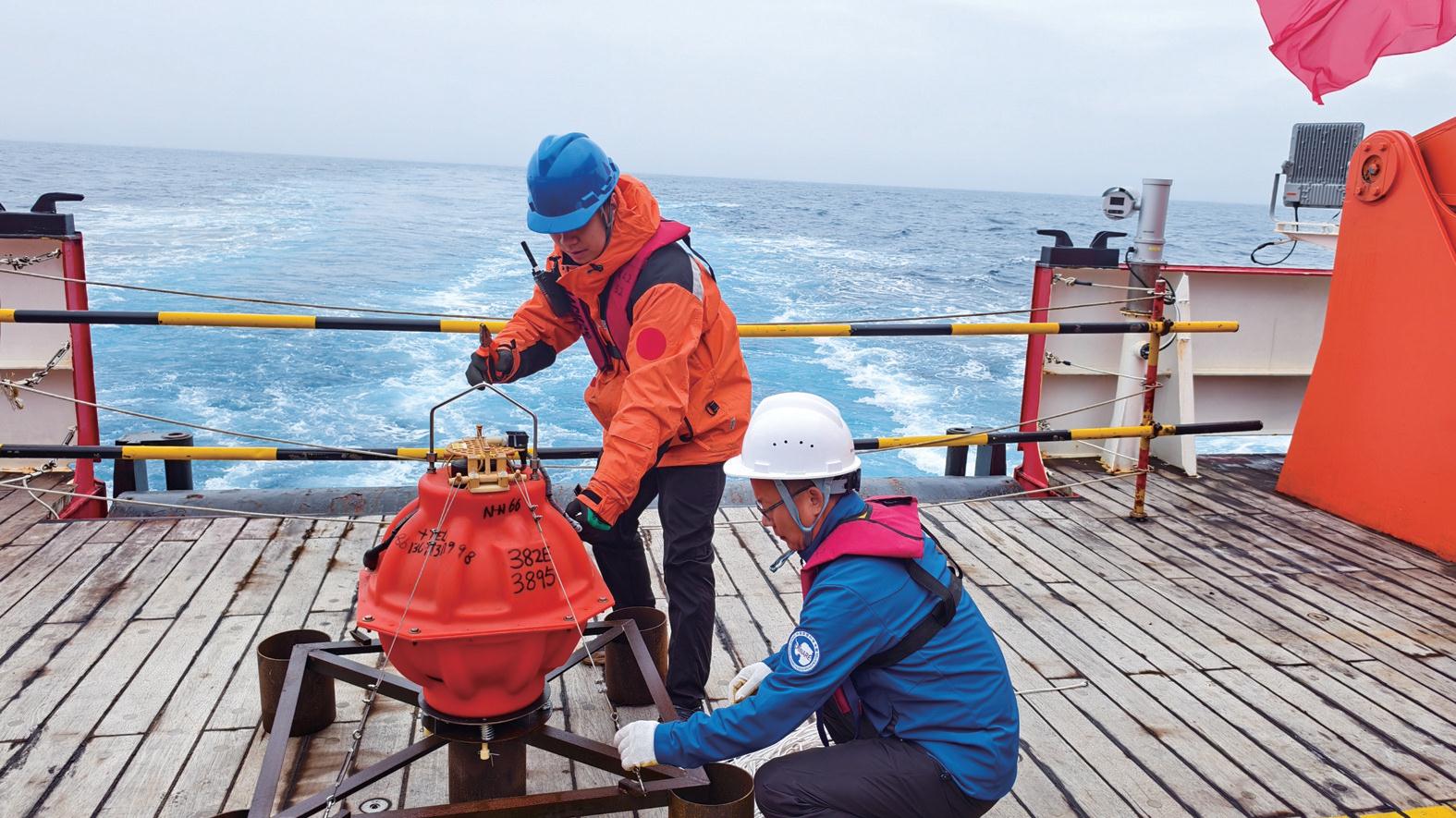
"实验室请注意,距离最后一个目标站位还有1.5海里。"当地时间1月14日早上8点半,"雪龙2"号船大副祝鹏涛逐渐降低船速,用对讲机通知实验室人员 去艉部甲板准备投放海底地震仪。 海底地震仪是一种海洋地球物理仪器,就像海底"听诊器"一样,可以通过记录海底地震波动信号,对海底地层进行地震波成像,为认识地球内部结构、 掌握大型地震孕震机制提供依据。本次大洋考察计划将16台海底地震仪按一定的间距布放在南极半岛邻近海域,将在后续考察航次回收并进行数据分析。 "实验室收到!"接到驾驶台发出的指令后,中国第42次南极考察队员任安楠、丁奕博迅速到达甲板作业位置,检查完设备编号和状态后,将海底地震仪 用吊钩与船上的吊车连接。水手赵俊峰操作吊车,将海底地震仪缓缓吊至甲板外悬空等待指令。 "实验室,可以释放了!"收到投放指令,负责操作脱钩器的实验员任中杰迅速释放,海底地震仪瞬间入水,在海面上溅起一片水花。 海底地震仪投放是本次大洋考察首个作业项目,考察队临时党委非常重视,在大洋队上船后,第一时间组织驾驶台、实验室、大洋队等部门相关人员, 召开项目实施协调会,与现场执行人一起优化方案。团结、协作是极地考察工作开展的基调,在环境多变、 ...

河南构建矿产资源全链条监管机制
Zhong Guo Zi Ran Zi Yuan Bao· 2026-01-20 01:50
二是坚持协调联动、部门互联。河南厅持续深化行刑衔接、行纪衔接、府检联动机制,联合发展改革、 公安、财政、农业农村等九部门印发《关于完善自然资源行政执法体制机制促进执法监管长效常治的实 施意见》,着力破解矿产资源违法案件移交难、移送难、执行难问题;建立常态化联席会议制度,健 全"信息共享、线索互移、联合执法、协同追责"制度机制,打破部门监管壁垒。2025年以来,该厅向省 公安厅、省检察院移交涉矿案件线索55条,向纪检监察部门移送违纪线索30条,凝聚打击违法采矿合 力。 三是坚持综合惩戒,强化刚性约束。河南厅建立遏制新增违法违规问题综合评价机制,对新增违法、问 题整改等情况进行量化评估,对违法问题多发频发、管理秩序混乱地区,精准实施函询提醒、警示约 谈、动态限批、挂牌督办等递进式惩戒措施,倒逼地方落实监管责任、从严规范管理。2025年,该厅公 开挂牌督办5起非法采矿典型案件,对5个市、县开展警示约谈。 近日,从河南省自然资源厅获悉,该厅立足严守资源安全底线、维护资源资产权益职能定位,以"零容 忍"态度坚决遏制非法采矿,多措并举推进专项整治行动,2025年公开挂牌督办非法采矿典型案件5起, 查处矿产资源违法案件25 ...
新疆喀什地区两个玉石矿探矿权成功出让
Zhong Guo Zi Ran Zi Yuan Bao· 2026-01-20 01:50
今年以来,新疆维吾尔自治区喀什地区自然资源局以"开局即决战,起步即冲刺"的理念,全力推动矿业 权出让工作良好开局。1月9日成功出让两个玉石矿普查探矿权,实现年度矿业权出让"开门红"。 此次出让的两个矿业权为叶城县西合休乡叶开拉合希2号玉石矿普查探矿权、塔什库尔干县大同乡3号东 陵玉石矿普查探矿权。经多轮激烈竞价,叶城县玉石矿普查探矿权起拍价14.24万元,最终以5019.24万 元的高价成交;塔什库尔干县东陵玉石矿普查探矿权起拍价13.79万元,最终以1758.79万元高价成交。 据悉,两宗矿业权均实现大幅溢价,溢价率分别为352倍、127倍,彰显了喀什地区玉石矿产资源的独特 价值与强劲市场吸引力,也体现了喀什地区矿业权出让工作的规范化、市场化运作水平。 下一步,喀什地区自然资源局将继续秉持公开、公平、公正的原则,持续优化矿业权出让流程,不断提 升服务保障能力,积极引导矿产资源合理开发与高效利用,为推动区域经济社会高质量发展注入新动 能。 ...
四川“十四五”成功避让240起地灾
Zhong Guo Zi Ran Zi Yuan Bao· 2026-01-20 01:50
"十四五"期间,四川省先后发生4次6级以上地震,极端天气频发,加上人类工程活动广度与强度持续增 加,地灾防治形势复杂严峻。为此,四川省先后出台《四川省地质灾害防治条例》《关于将地质灾害风 险调查评价成果纳入国土空间规划的通知》等制度,按照"自上而下、逐级精细"模式,将地灾风险调查 评价成果纳入省市县乡四级国土空间规划管控,明确风险区分级管控规则,从源头防范地灾风险,严格 控制工程建设新增风险。推动地灾全域综合整治三年行动(2021—2023年)和避险搬迁总体规划(2023 —2027年),创新使用政府一般债券、增发国债、贴息贷款支持避险搬迁、落实受益主体筹资责任等多 元筹资治理模式,建立搬迁激励机制并强化法治保障。 同时,四川省聚焦"主动防、源头防、科学防",深入推进地灾风险调查和点面双控,全面完成省市县3 级地灾风险调查评价,科学划定全省地灾易发程度和风险分区;逐年完成全省地灾全覆盖隐患遥感识别 和10轮次以上动态隐患排查,及时将1.29万处新增地灾点纳入管控。持续强化监测预警和"喊醒叫应"机 制实施,完成4968处地灾综合治理和5.02万户受地灾威胁群众避险搬迁安置,切实保障了群众生命财产 安全。 近日, ...
“雪龙 2”号抵达南极长城站
Zhong Guo Zi Ran Zi Yuan Bao· 2026-01-19 07:31
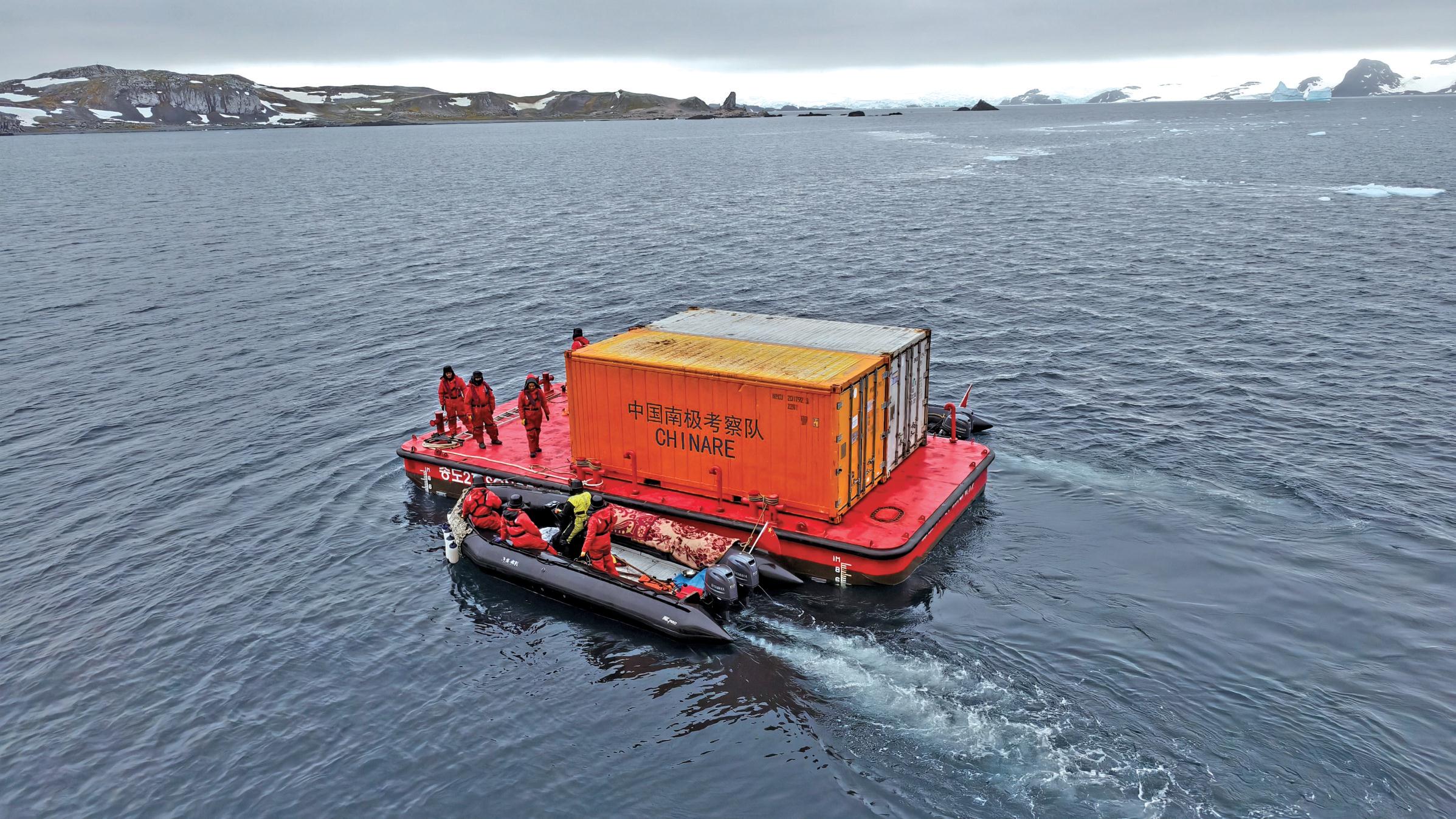
"雪龙2"号于2025年12月14日从南极中山站出发,航程共5675海里,航时665小时,跨越9个时区到达长城站,计划利用驳船为长城站卸运补给物资及燃 油共计300吨左右,并装运部分物资回国。为确保卸货作业安全、顺利完成,考察队制定了卸货实施方案,明确了任务分工,力争在5天内完成任务。 1月15日上午,考察队副领队吴佳雯带队上站慰问长城站考察队队员,送去新鲜水果蔬菜,并与长城站队员代表座谈交流。长城站目前在站47人,其中 13名越冬队员,34名度夏队员,正在按计划开展极地生物、生态环境、气象学、空间物理学等方面的观测和研究。 图为驳船载着集装箱驶向长城站。 当地时间1月14日,执行中国第42次南极考察任务的"雪龙2"号抵达南极长城站,开始卸货作业。 ...
福建力促海洋经济“开门红”
Zhong Guo Zi Ran Zi Yuan Bao· 2026-01-19 07:31
Core Insights - The Fujian Provincial Ocean and Fisheries Bureau held a meeting to outline key tasks for the first quarter of 2026, aiming to ensure that the province's marine production value growth rate exceeds the overall provincial GDP growth rate during the critical period of the 14th Five-Year Plan [1] Group 1: Policy and Strategic Initiatives - The meeting emphasized the need to enhance policy empowerment, aligning with national strategic deployments and the marine development needs of Fujian [1] - A detailed work list for special policies supporting the construction of "Marine Fujian" will be created, focusing on optimizing existing policies and creating new ones to improve the efficiency of financial resource allocation and usage [1] - The meeting called for the optimization of the business environment in the marine sector, promoting policies that are easily accessible and quickly enjoyed by stakeholders [1] Group 2: Project Development and Innovation - There is a strong focus on driving project implementation, with plans to initiate significant projects that lay a foundation for long-term benefits and improve livelihoods [1] - Key projects include the Marine Fujian platform, deep-sea aquaculture, modern ocean fisheries, fishing port economic zones, deep processing of aquatic products, marine biomedicine, and beautiful fishing villages [1] - The meeting highlighted the importance of pilot demonstrations and innovation-driven initiatives to promote high-quality development in marine and fisheries sectors [1] Group 3: Environmental and Cultural Integration - The meeting called for strengthening marine carbon sink pilot demonstrations and innovating mechanisms for blue carbon judicial protection and ecological restoration [2] - There is an initiative to leverage the Spring Festival promotional opportunities to enhance the "Fuhai Grain Warehouse" brand matrix [2] - The integration of marine culture with the marine economy is encouraged, along with the coordination of the construction of the China Ocean Museum [2]
科技领航现代化海洋产业体系构建
Zhong Guo Zi Ran Zi Yuan Bao· 2026-01-19 07:31
Core Viewpoint - The article emphasizes the importance of advancing China's marine economy through high-quality development and technological innovation, highlighting the country's achievements in marine science and technology as a foundation for building a modern marine industry system [2][4]. Group 1: Technological Innovation in Marine Industry - Technological innovation is identified as the core driving force for upgrading the marine industry, with breakthroughs in deep-sea exploration, marine equipment manufacturing, marine renewable energy, and marine biomedicine [4]. - Significant advancements include the successful trials of deep-sea equipment like "Jiaolong" and "Fendouzhe," and the development of intelligent systems for deep-sea resource extraction [4]. - The establishment of a comprehensive marine observation network utilizing satellites, drones, and underwater gliders enhances marine monitoring capabilities [4]. Group 2: Growth and Structure of Marine Economy - China's marine economy continues to grow, with the marine production value expected to exceed 10 trillion RMB in 2024, and the added value of emerging marine industries increasing by 7.2% year-on-year [7]. - Traditional marine industries are transitioning towards high-end development, with modern facilities like deep-sea cages and intelligent fishing vessels reducing environmental pressure [7]. - The marine transportation sector maintains a global leadership position, with major ports like Shanghai and Ningbo-Zhoushan consistently ranking among the world's top ports [7]. Group 3: Emerging Marine Industries - New marine industries are becoming significant growth points, with the oil and gas sector advancing into deep-sea exploration, exemplified by the successful production of the "Deep Sea No. 1" gas field [8]. - The marine engineering equipment manufacturing sector has achieved a 60% global market share, with significant advancements in the design and construction of deep-water drilling platforms [8]. - The desalination industry is expanding, with increasing self-sufficiency in technology and equipment [9]. Group 4: Policy and Ecosystem Support - Strong policy support at both national and local levels, including the "14th Five-Year Plan for Marine Economic Development," provides strategic guidance for technological research and development [5]. - Collaborative ecosystems involving academicians, platforms, and technologies are being established in regions like Shandong and Guangdong to foster innovation [5]. Group 5: Challenges and Future Directions - Despite progress, challenges remain, including reliance on foreign technology in key areas and the need for improved coordination within the marine industry [11]. - Future strategies should focus on enhancing core technologies, promoting the integration of innovation, industry, and finance, and fostering international cooperation in marine science and sustainable development [12][13].
宁波海洋场景无人机物流航线开通
Zhong Guo Zi Ran Zi Yuan Bao· 2026-01-19 07:31
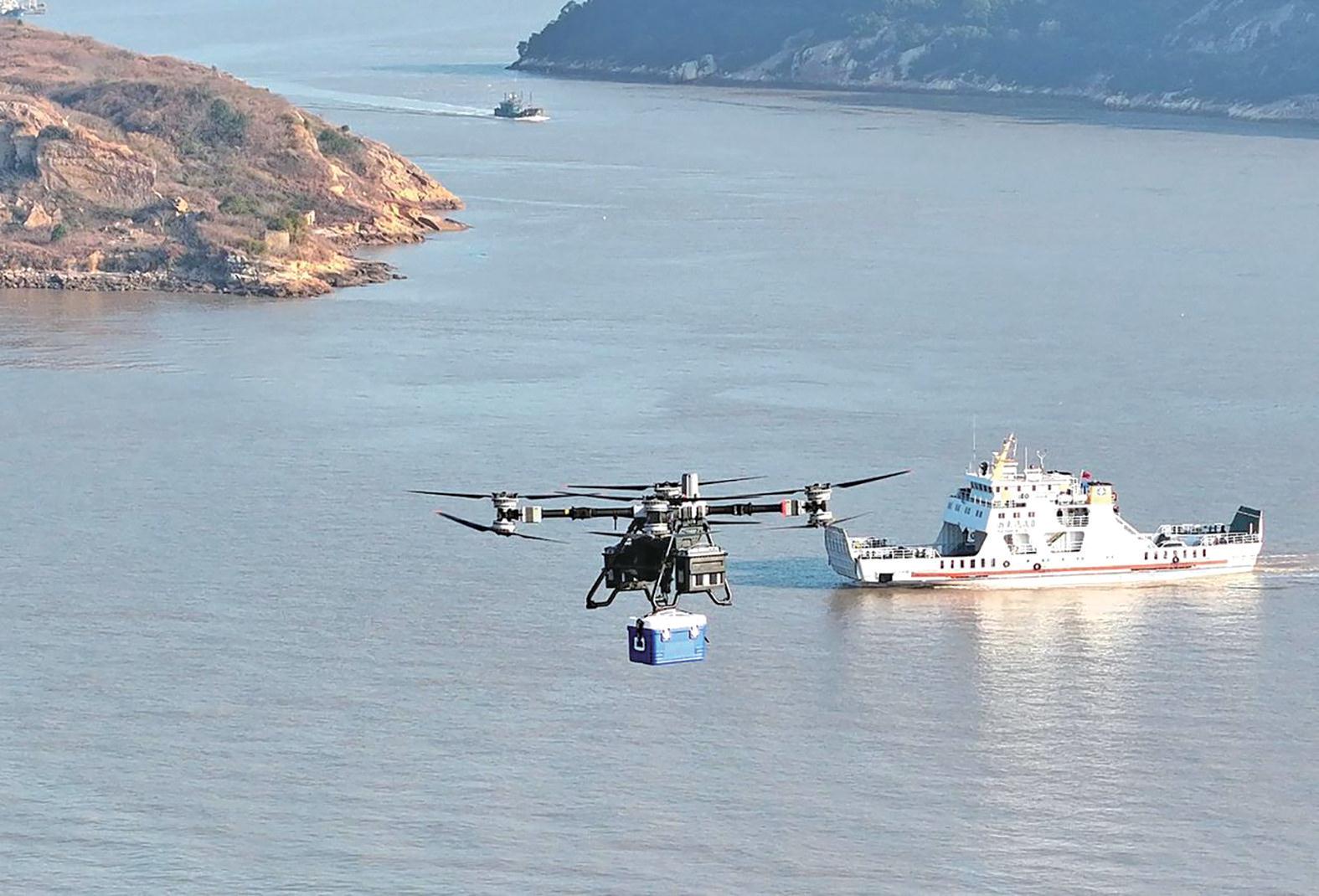
Core Insights - The first drone logistics route in Ningbo, Zhejiang Province, has been launched, aimed at addressing logistics bottlenecks for island economies [3] - The inaugural flight demonstrated the efficiency of drone delivery for seafood and packages, significantly reducing delivery times [3] Group 1: Drone Logistics Implementation - Two drones successfully completed their first flights, delivering fresh seafood and packages, with one round trip of approximately 6 kilometers taking only 6 minutes [3] - Another drone delivered a package to Huai'an Island, covering a distance of 18 kilometers in under 20 minutes, showcasing the potential for rapid logistics solutions [3] - The drones have a maximum payload of 80 kilograms and an empty range of 26 kilometers, equipped with multiple sensing systems and emergency parachutes to adapt to complex marine environments [3] Group 2: Economic Development and Infrastructure - Xiangshan County, rich in marine and island resources, faces high logistics costs and inefficiencies, which hinder economic development [4] - The county has introduced a low-altitude economy plan called "Hundred Islands, Thousand Routes" for 2025-2030, focusing on creating a collaborative low-altitude ecosystem to solve logistics and emergency challenges [4] - Infrastructure developments include the establishment of G-class airspace, a county-level aviation service center, a low-altitude service platform, and five drone takeoff and landing points, aiming for a comprehensive breakthrough from infrastructure to industrial application [4]
深圳实现二十四小时海洋“碳”测
Zhong Guo Zi Ran Zi Yuan Bao· 2026-01-16 06:57
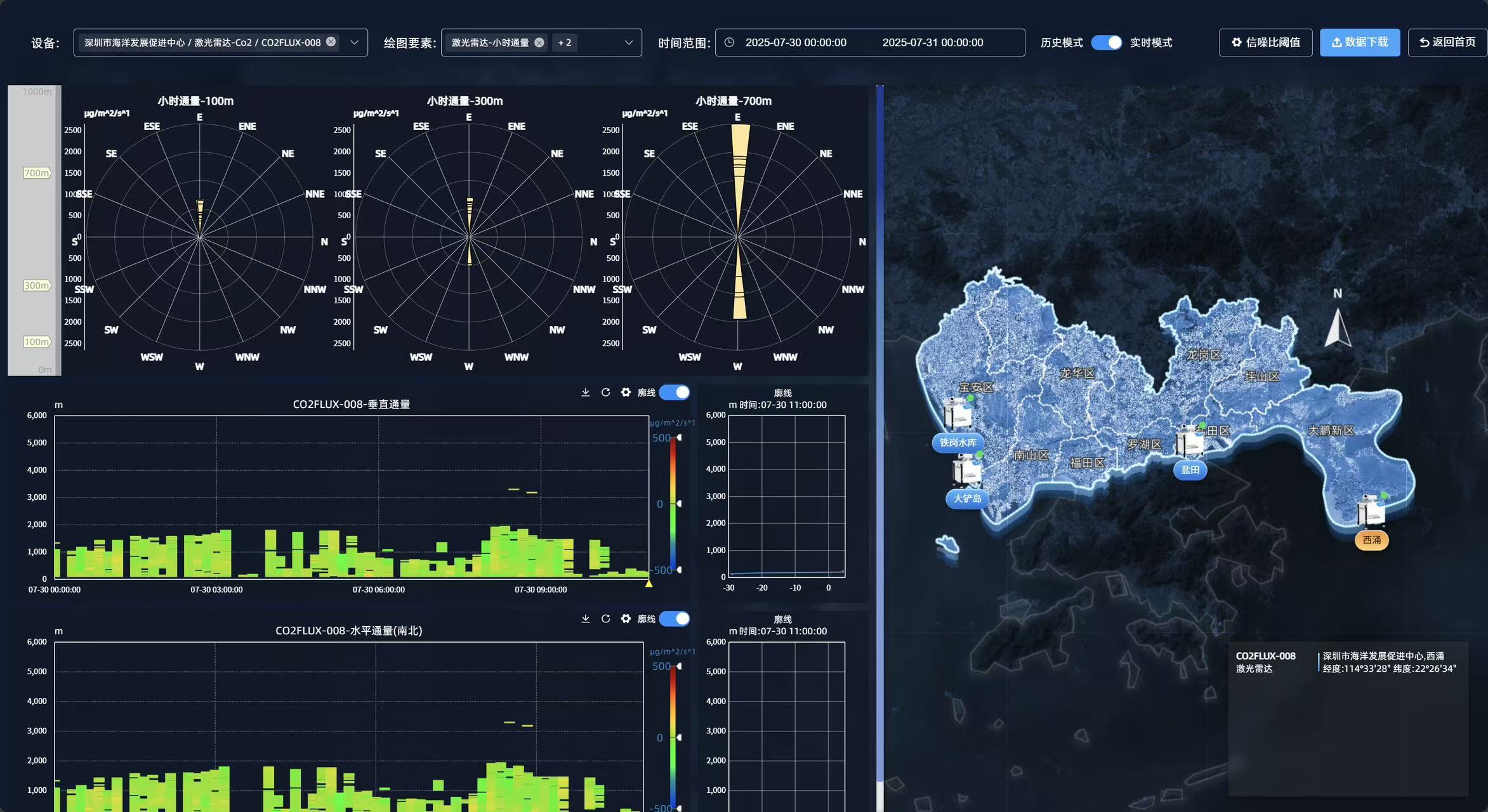
Core Insights - Shenzhen has implemented four sets of coastal carbon dioxide laser radar monitoring systems around coastal islands and nearshore areas, creating a comprehensive marine carbon sink monitoring network [1] - The system operates 24/7, providing real-time data on carbon dioxide concentrations along with meteorological and hydrological data, enabling synchronized analysis and visualization [1] - The monitoring system is managed by the Shenzhen Marine Development Promotion Center and aims to assess the health of related ecosystems, acting like a "stethoscope" for the ocean [1] - The system is currently in trial operation, with stable real-time data transmission [1] - Shenzhen plans to upgrade this intelligent monitoring network to enhance the measurement, verification, and transformation of marine carbon sinks, supporting the city's goal of achieving high-quality carbon neutrality [1] Industry Implications - The real-time data on "blue carbon" dynamics will empower the city's carbon emission accounting and trading system, contributing to climate change mitigation efforts [1] - The initiative reflects Shenzhen's commitment to integrating advanced technology in environmental monitoring and management, potentially setting a precedent for other cities [1]