CNBC

Search documents
Top Wall Street analysts recommend these dividend stocks for consistent income
CNBC· 2026-01-11 13:18
Group 1: Permian Resources - Permian Resources (PR) is an independent oil and natural gas company with a base dividend of 15 cents per share, resulting in an annualized dividend of 60 cents per share and a yield of 4.3% [3][5] - Analyst Gabriele Sorbara from Siebert Williams has a buy rating on PR with a price forecast of $19, highlighting operational execution and a focus on 4Q25 production guidance of approximately 187.4 Mbbls/d [4][6] - The company has a $1 billion buyback authorization with no end date and is expected to raise its dividend next year, supported by a strong balance sheet and cash reserves of $500 million to $1 billion [5][7] Group 2: IBM - IBM has returned $1.6 billion in dividends to shareholders in Q3 2025, with a quarterly dividend of $1.68 per share, leading to an annualized dividend of $6.72 per share and a yield of 2.2% [9] - Jefferies analyst Brent Thill upgraded IBM to buy with a price target increase to $360, citing improved fundamentals and a clearer path to software acceleration [10][14] - The company is expected to benefit from synergies from recent acquisitions and a growing software mix, with projected pretax margins increasing from 19% in 2025 to 21% in 2027 [12][13] Group 3: Kinetik Holdings - Kinetik Holdings (KNTK) offers a quarterly cash dividend of 78 cents per share, resulting in an annualized dividend of $3.12 per share and a yield of 8.5% [15] - Analyst Justin Jenkins upgraded KNTK to buy with a price target of $46, noting that the stock is down approximately 38% TTM, which reflects a reset in investor focus towards 2026-27 [16][17] - KNTK is trading at about 8x 2027 EV/EBITDA, which is at the low end of the midstream peer group valuation range, and the company may be a potential buyout target for midstream firms [19][20]


Lawmakers are preparing to try again on major crypto bill. Why it matters and what happens next
CNBC· 2026-01-11 13:17
Core Viewpoint - Lawmakers in the U.S. are reviving efforts to pass a market structure bill that will significantly impact the future of the crypto industry, with hearings scheduled to discuss revisions to the bill [1][2]. Group 1: Bill Objectives - The Clarity Act aims to establish legislative guardrails for the multitrillion-dollar crypto market, potentially accelerating the adoption of blockchain technology and cryptocurrencies in the U.S. [3]. - The bill seeks to clarify the roles of the Securities and Exchange Commission (SEC) and the Commodities Futures Trading Commission (CFTC) in regulating cryptocurrencies, as well as to create well-defined token classifications and outline registration and compliance standards for crypto brokerages and exchanges [4]. Group 2: Economic Implications - The proposed guardrails could attract more digital asset companies to operate in the U.S., stimulating the economy and enhancing the crypto market, according to industry leaders [5]. - The bill's final language will determine its implications for digital asset companies, crypto holders, and investors [5]. Group 3: Key Issues Under Discussion - Lawmakers are focusing on three main issues: stablecoin-linked rewards, the treatment of decentralized finance (DeFi) platforms and their developers, and preventing elected officials from profiting off crypto ventures [6]. - The stablecoin issue is considered the most significant outstanding issue, with both parties recognizing the need to address stablecoin rewards and yields in the bill [7]. Group 4: DeFi Considerations - Advocates for DeFi are pushing to ensure that developers are not held liable for illicit activities associated with their technology and want to include provisions for self-custody of crypto [9]. - There is a call for exemptions for software developers and blockchain service providers who do not control customer funds from being classified as money-transmitting businesses [9]. Group 5: Legislative Process and Timeline - The Senate Agriculture and Banking Committees are expected to release new drafts of the market structure bill, with discussions and revisions planned [10]. - The goal is to finalize the draft and move it to the Senate floor for further discussion, with proponents aiming for passage before the 2026 midterm elections to maintain momentum [11][12].


Boeing's airplane deliveries are the highest in 7 years. Now it's about to pick up the pace
CNBC· 2026-01-11 12:00
Core Viewpoint - Boeing is expected to report its highest airplane deliveries since 2018, indicating a significant turnaround after years of safety issues and production challenges [1][5]. Production and Delivery - Boeing delivered 537 aircraft in the first 11 months of last year, with an estimated 61 commercial jets delivered in December, including 44 of the 737 Max [11][12]. - The company aims to ramp up production of the 737 Max and 787 Dreamliners, with expectations to reach a production rate of 42 737 Max aircraft per month by early 2026 [12][13]. - Boeing's commercial aircraft business accounted for approximately 46% of sales in the first nine months of last year [7]. Financial Outlook - Analysts predict that Boeing could return to profitability this year after seven years of losses, as the company focuses on increasing production and stabilizing operations [5][8]. - Boeing shares have increased by 36% over the last 12 months, outperforming the S&P 500's nearly 20% gain [7]. Regulatory Environment - The Federal Aviation Administration (FAA) has shown increased confidence in Boeing, allowing the company to issue its own airworthiness certificates for some aircraft [6]. Market Demand - Demand for both Boeing and Airbus jets remains strong, with Boeing securing 1,000 gross orders through November, compared to 797 from Airbus [19]. - The wide-body aircraft market is gaining momentum, with airlines looking to acquire long-haul jets like Boeing's Dreamliner [22]. Industry Trends - International travel demand has surged post-pandemic, with airlines seeking to replace older jets and expand their fleets [23]. - Alaska Airlines recently ordered 105 Boeing 737 Max 10 jets, reflecting confidence in Boeing's turnaround and production capabilities [20].


Inside GM's new world headquarters: Modernized midcentury designs with artifacts, surprises from the American icon
CNBC· 2026-01-11 09:00
Core Insights - General Motors (GM) has moved to a new headquarters in Detroit, symbolizing a blend of its historical legacy and modern innovation [2][3][5] Group 1: Headquarters Overview - The new headquarters occupies four of six office floors, totaling approximately 200,000 square feet, significantly reducing the space from the previous Renaissance Center [7][10] - The building is located less than a mile from the former headquarters, which has been a symbol of the city since the 1970s [8][9] - The design of the new headquarters aims to foster collaboration and adapt to post-pandemic work culture, with flexible office arrangements for employees [5][10] Group 2: Design and Cultural Elements - The interior features artifacts and design elements that reflect GM's history, including a wall showcasing 300 patented technologies and a decorative wall of cassette tapes referencing GM's cultural impact [3][18] - The design incorporates influences from GM's Global Technical Center, with a focus on modern aesthetics and functionality [17][19] - Notable features include a McCormick Speed Form model, artwork, and references to Detroit streets, enhancing the cultural connection [4][6] Group 3: Amenities and Future Plans - The headquarters will include semi-public spaces for product displays and events, along with social gathering areas, lounges, and recreational facilities like a pickleball court [13][14] - GM's new headquarters is part of a broader trend in the automotive industry, as seen with Ford's recent establishment of a new global headquarters [14][16] - The company has not disclosed the expected number of employees working at the new headquarters or financial details regarding its 15-year lease [12]


Trump seeks to stop courts, creditors from seizing Venezuelan oil revenue in the U.S.
CNBC· 2026-01-10 20:32
Group 1 - The executive order signed by U.S. President Donald Trump aims to block the seizure of Venezuelan oil revenue held in U.S. Treasury accounts, declaring it as sovereign property of Venezuela [2][3] - The order states that any judicial attempts to seize these funds would harm U.S. national security and foreign policy, and interfere with efforts to stabilize Venezuela economically and politically [2][3] - Trump indicated that U.S. oil companies are expected to invest at least $100 billion in Venezuela's oil and gas infrastructure following the military operation that captured Venezuelan leader Nicolás Maduro [4] Group 2 - Major oil executives, including ExxonMobil's CEO, expressed concerns about Venezuela being "uninvestable" due to past nationalization of the oil sector and ongoing legal disputes for compensation [5] - Chevron remains the only major U.S. oil company currently operating in Venezuela, facilitated by a special license from the Trump administration [6] - The legal basis for the executive order includes the 1977 International Emergency Economic Powers Act and the 1976 National Emergencies Act [6]



How we navigated the market’s winning week amid Trump's Truth Social surprises
CNBC· 2026-01-10 19:13
Market Overview - Wall Street experienced a strong first full trading week of 2026, with the S&P 500 reaching a record high close on Friday, gaining 1.6% for the week [1] - The Nasdaq advanced nearly 2% but did not reach its record high [1] Economic Indicators - The U.S. nonfarm payrolls increased by 50,000 in December, falling short of the forecasted 73,000, which supports the case for more Federal Reserve interest rate cuts [1] Company-Specific Developments - BlackRock shares were offloaded as the financial name saw a jump since the start of the year, capitalizing on its strength [1] - Nvidia's stock declined over 2% despite positive developments, including bullish remarks from CEO Jensen Huang and a larger sales guide for 2025 and 2026 [1] - CrowdStrike's stock fell more than 3% after announcing a $740 million acquisition of identity management startup SGNL, although the stock rose nearly 3.8% for the week overall [1] Strategic Insights - Jim Cramer advised against making sudden moves in the market, noting that the first weeks of the year often display "strange patterns" [1] - The acquisition by CrowdStrike is seen as a significant opportunity to disrupt the identity security market, which is rapidly growing due to increasing online threats [1]

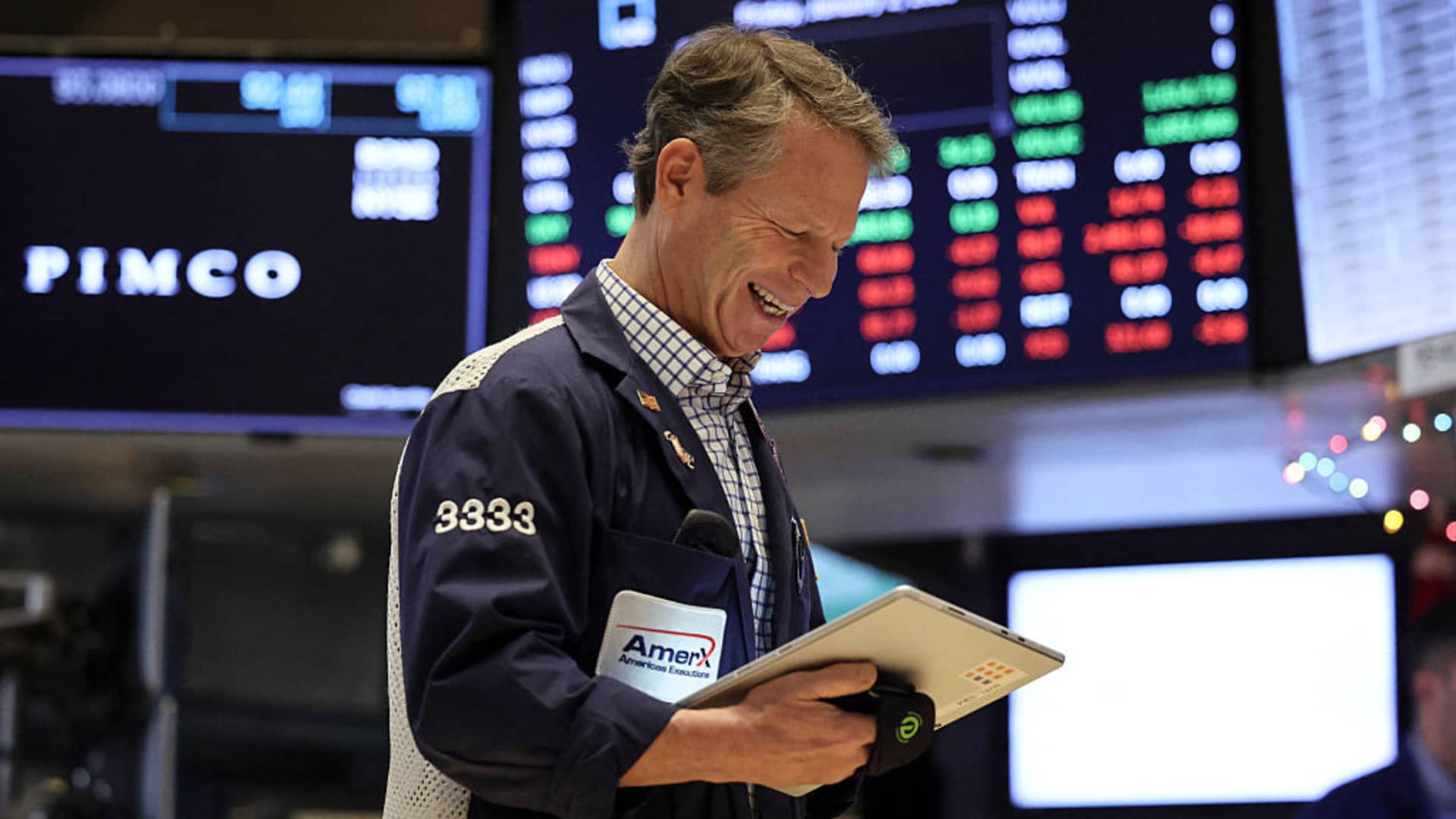
How BlackRock, world's largest asset manager, is fine-tuning market portfolios for 2026
CNBC· 2026-01-10 15:07
Core Viewpoint - BlackRock emphasizes the long-term potential of AI investments, viewing them as a capital-intensive cycle with sustained infrastructure spending and productivity gains, indicating that the AI theme is not nearing exhaustion [1]. Group 1: AI Investment Focus - BlackRock's iShares A.I. Innovation and Tech Active ETF (BAI) has attracted over $8 billion in assets, highlighting the growing interest in AI-focused funds [1]. - The firm’s 2026 annual outlook identifies AI as a significant growth opportunity, urging investors to focus on targeted exposures in this area [2]. - The concentration of returns in the U.S. equity market, particularly among the "Magnificent Seven" stocks, which account for over 40% of the S&P 500 Index, necessitates a more deliberate approach to equity exposure [3]. Group 2: Income Generation Strategy - The current interest-rate environment, with expectations of Federal Reserve rate cuts, prompts a shift towards income generation as yields on cash investments decline [4]. - Investors are encouraged to seek new sources of income to diversify their portfolios in light of falling interest rates [4]. Group 3: Diversification Approach - BlackRock's strategy includes diversification as a key pillar, especially as market volatility increases and traditional 60-40 portfolios become less reliable [5]. - Investors are advised to look for assets that behave differently from stocks and bonds to enhance portfolio diversification [5]. - The S&P 500's annualized return of 13.5% over the past decade may not be sustainable, indicating a need for cautious expectations moving forward [5]. Group 4: Other AI ETF Options - Several other AI-focused ETFs have also gained traction, each surpassing $1 billion in assets, including Roundhill Generative AI & Technology ETF (CHAT) and Global X Robotics and Artificial Intelligence ETF (BOTZ) [6].


Activist Elliott shakes up leadership at Lululemon. How the firm can help reinvigorate the athleisure giant
CNBC· 2026-01-10 13:01
Company Overview - Lululemon Athletica is a global company specializing in technical athletic apparel, footwear, and accessories, operating in four regional markets: the Americas, China Mainland, Asia Pacific (APAC), and Europe and the Middle East (EMEA) [1] - The company generates revenue through various channels, including company-operated stores, e-commerce, temporary locations, wholesale, outlets, and a re-commerce program [1] Recent Developments - Elliott Investment Management has taken a position of over $1 billion in Lululemon and is considering Jane Nielsen, former CFO and COO of Ralph Lauren, as a potential CEO candidate [3][7] - Lululemon's revenue has grown from $8 billion in 2023 to $11.9 billion, with significant growth in APAC (33% CAGR) and Europe (22% CAGR) [4] Market Challenges - North America, which accounts for approximately 70% of Lululemon's revenue, has seen growth slow to low single digits and comparable sales decline by 5% in the most recent quarter [4] - The company's share price has dropped from over $500 to below $220, indicating investor concerns about the North American market [4] Strategic Missteps - Since Calvin McDonald became CEO in 2018, Lululemon has faced challenges due to strategic missteps, including a $500 million acquisition of Mirror and the launch of new product lines that have not generated significant shareholder value [5] - The focus on new business lines has distracted management from the core North American market, leading to a decline in brand perception and loss of market share to competitors [5][6] Leadership Transition - The upcoming leadership transition, with McDonald stepping down as CEO effective January 31, 2026, has created an opportunity for Elliott to influence the company's direction [6][7] - Jane Nielsen is seen as a candidate who can bring operational discipline and a focus on core business areas, drawing from her experience at Coach and Ralph Lauren [7] Activist Investor Influence - Elliott's involvement is expected to add urgency to the leadership selection process and provide external credibility to the board's decisions, especially in light of criticism from founder Chip Wilson [8][9] - The firm has a history of successfully influencing company strategies, as seen in its recent campaign at Starbucks, which led to the appointment of a new CEO [9]


Are we in an AI bubble? What 40 tech leaders and analysts are saying, in one chart
CNBC· 2026-01-10 13:00
Group 1 - The article discusses the phenomenon of economic bubbles, particularly in the context of the AI industry, where rapid asset price increases are followed by potential crashes due to overenthusiasm and speculation [1] - Major AI companies like OpenAI and Nvidia are engaging in significant deals with cloud infrastructure firms, while hyperscalers such as Amazon, Microsoft, and Google are investing billions in data center expansions, contributing to record valuations in the AI sector [2] - Concerns about a potential AI bubble have been raised, with notable figures like Nvidia CEO Jensen Huang and investor Michael Burry expressing differing views on the stability of the current AI surge [3][4] Group 2 - Michael Burry has drawn parallels between the current AI spending frenzy and the dot-com bubble of the late 1990s, suggesting that the market may be experiencing a similar overexcitement [4] - OpenAI CEO Sam Altman acknowledges the duality of the situation, agreeing that while there is overexcitement about AI, it is also a significant technological advancement [5] - CNBC conducted a survey of 40 tech executives and analysts regarding their perspectives on the AI market, revealing a spectrum of opinions on whether the market is in a bubble and the level of concern surrounding it [6][7]

2026 is the year of obesity pills. Here's how they could reshape the GLP-1 market
CNBC· 2026-01-10 13:00
Core Insights - The GLP-1 market is transitioning from weekly injections to daily oral pills, with Novo Nordisk's Wegovy pill already available and Eli Lilly's expected soon, indicating a significant shift in obesity treatment options [1][7][30] Market Dynamics - The introduction of oral GLP-1 pills is expected to attract new patients, particularly those who prefer pills over injections, potentially expanding the obesity treatment market significantly [4][8] - Goldman Sachs analysts project that oral pills could capture approximately 24% of the global weight-loss drug market by 2030, equating to about $22 billion [7][30] Pricing and Accessibility - Novo Nordisk's Wegovy pill is priced between $149 and $299 per month, making it a more affordable option compared to the cash prices of injections, which have been reduced to around $349 per month [2][13][15] - Patients with insurance may pay as little as $25 per month for the oral drug, although overall insurance coverage for GLP-1s remains uncertain [16][18] Patient Preferences - Many patients may prefer pills due to convenience and lower costs, with some expressing interest in switching from injections to oral medications [5][12][24] - The convenience of oral medications may appeal to those who are needle-averse or do not perceive their condition as severe enough to warrant injections [4][10] Competitive Landscape - Eli Lilly's oral GLP-1 is anticipated to be more convenient due to its absorption characteristics and lack of dietary restrictions compared to Novo Nordisk's pill [25][30] - Other pharmaceutical companies, including Pfizer and AstraZeneca, are also developing oral GLP-1 options, indicating a competitive race in the market [31][33] Efficacy and Treatment Options - Clinical trials suggest that while pills may not provide greater weight loss than injections, they could still be effective for patients seeking modest weight loss [3][21] - The highest dose of Novo Nordisk's Wegovy pill resulted in an average weight loss of 16.6% over 64 weeks, comparable to its injectable form [28]