Forbes

Search documents
Can Palantir Stock Jump 30%?
Forbes· 2026-01-20 17:50
Core Viewpoint - Adding to PLTR stock may be sensible at this stage, with a target price of $223 achievable if execution remains strong, though the stock's very high valuation suggests potential volatility [1][3] Valuation - PLTR's valuation appears very high compared to the broader market, indicating limited margin for error [5][4] Growth - The company has experienced an average growth rate of 29.3% over the past three years, with revenues increasing by 47% from $2.6 billion to $3.9 billion in the last 12 months [7] - Quarterly revenues rose by 62.8% to $1.2 billion from $726 million a year earlier [7] Profitability - PLTR's operating income over the last 12 months was $850 million, reflecting an operating margin of 21.8% [7] - The company generated nearly $1.8 billion in operating cash flow, with a cash flow margin of 46.6% [7] - Net income for the same period was almost $1.1 billion, indicating a net margin of approximately 28.1% [7] Financial Stability - PLTR's debt stood at $235 million, resulting in a debt-to-equity ratio of 0.06% [8] - The company has $6.4 billion in cash, comprising 79.3% of its total assets of $8.1 billion [8] Downturn Resilience - PLTR experienced a greater impact than the S&P 500 during economic downturns, with significant declines and recovery times noted [9] - The stock decreased by 84.6% from a peak of $39.00 on January 27, 2021, to $6.00 on December 27, 2022, while the S&P 500 saw a peak-to-trough drop of 25.4% [11] - PLTR fully rebounded to its pre-crisis peak by October 3, 2024, and reached a high of $207.18 on November 3, 2025, currently trading at $170.96 [11]



How AMD Stock Can Surge In 2026
Forbes· 2026-01-20 17:11
Core Viewpoint - AMD has a history of rapid stock rallies, with increases over 50% in short periods, suggesting potential for future growth driven by upcoming catalysts [1] Group 1: Catalysts for Growth - Catalyst 1: AI Accelerator Market Share Shift, with potential acquisition of up to 20% market share by 2027 [4][11] - Catalyst 2: Activating OpenAI Strategic Revenue, with a definitive agreement to utilize AMD GPUs for OpenAI infrastructure [5][11] - Catalyst 3: Broadening Enterprise and Edge AI Presence, including new revenue pathways in AI PCs and Automotive through strategic partnerships [6][11] Group 2: Financial Performance - Revenue Growth: 31.8% for the last twelve months (LTM) and a three-year average of 12.9% [12] - Cash Generation: Nearly 17.0% free cash flow margin and 9.4% operating margin LTM [12] - Valuation: AMD stock trades at a P/E multiple of 114.0 [12]


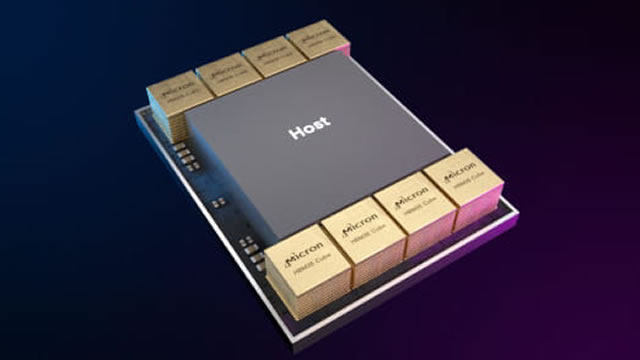
What Is Happening With Micron Stock?
Forbes· 2026-01-20 16:40
Core Viewpoint - Micron Technology has seen a significant increase in trading volume due to the groundbreaking of its New York megafab, alongside strong insider purchases and a positive outlook on an AI-driven memory cycle [1][3]. Group 1: Company Developments - The official groundbreaking of the $100 billion New York megafab is set for January 16, 2026, and is viewed as a major de-risking event that symbolizes anticipated growth [3]. - Insider purchases, including over 23,000 shares acquired by Director Mark Liu, indicate strong internal confidence in the company's future trajectory [11]. - Positive feedback from major clients like Meta, Google, and Apple during the groundbreaking reinforces the long-term demand narrative for Micron's products [11]. Group 2: Market Performance - Micron's stock experienced a 7.8% increase, reflecting a strengthening fundamental story rather than just a reaction to a single event [3]. - The stock closed at $362.75, approaching its 52-week high of $365.81, with trading volume approximately 41% higher than the average daily volume, indicating strong institutional engagement [12]. - The stock's decisive price action surpassed recent consolidation levels, suggesting an aggressive accumulation phase by institutional investors [5][6]. Group 3: Future Outlook - The next critical level to monitor is the $400 threshold; a consolidation above recent peaks and a breakthrough of this level would confirm the start of a new sustained uptrend [8]. - The combination of a tangible growth catalyst (megafab), strong insider purchases, and a favorable industry cycle positions Micron as a high-conviction long investment [8]. - Micron's high institutional ownership of approximately 80% suggests that the recent movement reflects additional accumulation by these large investors [13].

AI Is A Distraction. This 7.2% Dividend Is The Real Deal For 2026
Forbes· 2026-01-20 16:02
Core Viewpoint - The financial sector is presenting attractive investment opportunities with a growing 7.2% dividend, despite being overshadowed by technology news [3][5][10]. Financial Sector Performance - The financial sector returned 15% in 2025, making it the fourth-best performer among sectors, trailing behind technology, industrials, and communication services [3][4]. - Financials have not outperformed the broader S&P 500, which returned 17.7% last year, indicating that the sector is not overcrowded [6]. Future Outlook - Industry insiders predict a "supercycle" in which banks could invest over $182 billion, suggesting a robust pipeline for potential deals and increased profits in 2026 [7][8]. - The financial sector is starting to close the performance gap with the S&P 500, indicating potential for future growth [6]. Investment Opportunities - The John Hancock Financial Opportunities Fund (BTO) is highlighted as a strong investment option, offering a 7.2% dividend and focusing on regional banks and investment-bank specialists [10]. - BTO has raised its payout by 75.6% over the last decade, demonstrating resilience and consistent income generation [12]. - BTO has outperformed the Financial Select Sector SPDR Fund (XLF) significantly, returning over 800% since the late 1990s compared to XLF's less than 400% [13]. Valuation and Market Position - BTO has historically traded at a premium to net asset value (NAV), but this premium has recently turned into a discount, presenting a contrarian investment opportunity [14]. - The expectation is that the discount will not last as investors shift focus from high-priced tech stocks to more undervalued sectors like financials [14].

Why Rocket Lab Stock Jumped 50%?
Forbes· 2026-01-20 16:02
Core Insights - Rocket Lab's stock surged 45% over the past three months, driven by a 10% increase in revenue and a 36% uplift in valuation [2][4]. Financial Performance - Q3 2025 earnings report showed an EPS of -$0.03, exceeding the estimated -$0.05, with revenue of $155 million, surpassing the expected $152.45 million [9]. - The company secured a major $816 million contract from the Space Development Agency, nearly doubling its backlog [9]. Key Developments - Progress on the Neutron Rocket is notable, with the first launch anticipated in Q1 2026 and R&D expenses nearing peak levels [9]. - Analyst ratings have seen changes, with Morgan Stanley upgrading to 'Overweight' while KeyBanc downgraded due to valuation concerns [9]. Market Sentiment - Speculation regarding a potential SpaceX IPO has led to a sector-wide re-evaluation, positively impacting Rocket Lab's stock performance [9].


Gold And Silver Hit Record Highs Amid U.S.-Europe Tension Over Greenland
Forbes· 2026-01-20 15:45
Core Insights - The prices of gold and silver have reached new highs, driven by geopolitical tensions, particularly related to President Trump's push to acquire Greenland [1][2][3] Price Movements - As of 10 a.m. EST, silver is priced at approximately $94.57, reflecting a nearly 7% increase, although it is slightly below its all-time high of $95.78 [1] - Gold is priced at 4,742.60, up more than 3%, and just below its morning high of 4,756.60 [2] Geopolitical Influences - The recent surge in gold and silver prices is attributed to increased demand for safe-haven assets amid international uncertainty, particularly due to Trump's Greenland acquisition demands [2][4] - Trump's threats to impose tariffs on European nations opposing his Greenland acquisition have further fueled the rally in precious metals [3][4] Future Projections - Analysts predict that gold could exceed $5,000 per ounce and silver could surpass $100 by 2026, driven by rising demand in technological industries and ongoing global uncertainties [5] - Concerns regarding the independence of the Federal Reserve, highlighted by an investigation into its chair, may also contribute to the upward trend in gold and silver prices as they are viewed as safe-haven assets [5]

Wall Street's ‘Fear Gauge' Spikes To Highest Level Since November As Trump Escalates Greenland Threats
Forbes· 2026-01-20 15:40
Core Viewpoint - The Cboe Volatility Index (VIX) surged nearly 28% to around 20.30, indicating heightened market fear due to President Trump's tariff threats against European countries and his push for U.S. control over Greenland [2][3]. Market Reactions - The S&P 500 index fell approximately 1.5%, losing 107 points to around 6,869, despite nearing the 7,000-point milestone in recent sessions [3]. - The Dow Jones Industrial Average dropped 737 points (1.4%) to 48,648, with significant losses from major companies such as 3M (down 5.5%), Amazon (2.8%), and Amgen (2.4%) [4]. - The tech-heavy Nasdaq also fell 1.4%, with declines from companies like Shopify (3.2%), Broadcom (2.6%), and Tesla (2.4%) [4]. - European markets reacted negatively, with the STOXX Europe 50 down 1.3%, the FTSE 100 declining 1%, Germany's DAX falling 1.4%, and France's CAC 40 decreasing 1.1% [4]. Tariff Details - Trump's proposed tariffs will affect Denmark, Norway, Sweden, France, Germany, the UK, the Netherlands, and Finland, starting at 10% on February 1 and increasing to 25% by June 1 [5]. - The tariffs are a response to these countries deploying military personnel to Greenland, with Trump asserting that China and Russia are seeking control over the territory [5].

Google Stock Delivers $350 Billion To Shareholders
Forbes· 2026-01-20 15:35
Core Insights - Alphabet Inc. (GOOGL) has returned an impressive $357 billion to investors over the past decade through dividends and stock buybacks, showcasing its strong free cash flow and commitment to shareholder value [2][3]. Capital Distribution - The level of capital distribution reflects the company's financial health and ability to generate sustainable cash flows, marking a decade of dominance in market capitalization and shareholder returns [3][4]. - GOOGL stock ranks as the 3rd largest contributor to shareholders in history, indicating significant direct returns to investors [4]. Comparison with Peers - Companies like Meta (META) and Microsoft (MSFT) are growing at a faster pace but have returned a smaller proportion of their market valuations to shareholders, suggesting a potential trade-off between capital returns and growth opportunities [5]. Financial Performance - GOOGL has demonstrated strong financial fundamentals with a revenue growth of 13.4% over the last twelve months and an average of 11.0% over the past three years [9]. - The company has a free cash flow margin of approximately 19.1% and an operating margin of 32.2% for the last twelve months [9]. - Alphabet stock is currently trading at a P/E ratio of 32.1, reflecting its valuation in the market [9].


MO Stock At $62: Time To Take Profits Or Ride The Momentum?
Forbes· 2026-01-20 15:05
Core Insights - Altria's stock has increased by 8% in 2025, driven by analyst optimism regarding its smoke-free products, raising questions about whether the stock is now overvalued [2] Valuation Metrics - Altria appears inexpensive with a P/E ratio of 11.8 compared to 24.6 for the S&P 500, a P/S ratio of 5.1 versus 3.3 for the market, and a P/FCF ratio of 11.9 relative to 21.7 for the S&P [3] - Investors are paying about half of what they would typically pay for an average stock, indicating a potential undervaluation [4] Revenue and Margins - Revenue has decreased by 0.9% annually over the past three years, with the most recent quarter showing virtually no change, indicating a business in secular decline [4] - Despite declining volumes, Altria maintains robust margins, generating cash and increasing prices to offset volume losses due to customer addiction [5] Balance Sheet Analysis - Altria's balance sheet shows a manageable debt-to-equity ratio of 23.8%, slightly higher than the S&P's 19.7%, but cash constitutes only 4.0% of assets compared to 7.2% for the benchmark [7] Market Behavior - Historically, Altria has faced severe declines during market downturns, as sin stocks are often liquidated indiscriminately during panics, and recession fears lead to reduced discretionary spending [8] Investment Conclusion - The recommendation is to buy Altria stock, recognizing the exceptional profitability at an attractive valuation, with a P/E of 11.8 and net margins of 43% [9] - The uncertainty lies in the success of smoke-free products; if successful, it represents a transformation story at distressed prices, while failure still leaves investors with a cash-generating machine [10]


MSTR Stock: Is The 62% Drop A Buying Opportunity Or A Warning Sign
Forbes· 2026-01-20 15:00
Core Viewpoint - Strategy, formerly known as MicroStrategy, has seen its stock value decline by 62% since its peak last June, primarily due to falling Bitcoin prices and investor concerns about its financial structure [2][9]. Company Overview - Strategy went public in June 1998 at $10 per share, reaching a peak of approximately $320 before experiencing significant declines due to the dot-com bubble and accounting issues [3]. - The company rebranded to Strategy last year, focusing on Bitcoin development and holding about 3.2% of the total Bitcoin supply, equating to over 672,000 BTC [4]. Financial Performance - The value of Strategy's Bitcoin holdings surged from $1.9 billion in March 2021 to $23.9 billion by the end of 2024 [4]. - In the first half of 2025, $8.1 billion of the company's earnings were attributed to Bitcoin price appreciation, but the value of its Bitcoin holdings dropped by $17 billion in the fourth quarter [5][6]. Debt and Liabilities - The company has significant financial obligations, owing $21 billion to lenders and preferred shareholders, with over $844 million due to investors in the next year [6]. - The stock's decline reflects a loss of premium over its Bitcoin holdings, with the multiplier-to-net asset value decreasing from over 2.4 in late 2024 to around 1.1 in January 2026 [6]. Market Sentiment and Stock Valuation - The stock's performance is closely tied to Bitcoin's price movements, with analysts suggesting a potential upside of 153% if Bitcoin appreciates [8]. - Investor fear has led to a significant drop in the company's net asset value multiplier, contributing to the stock's decline [14]. Future Scenarios - Three potential scenarios for Strategy's stock are outlined: - Status Quo: If Bitcoin remains between $85,000 and $100,000, the stock could trade between $150 and $250 [15]. - Optimistic: If Bitcoin rises to between $100,000 and $150,000, price targets could reach between $450 and $474 [15]. - Pessimistic: If Bitcoin falls below $80,000, the stock could drop below $100 due to financial constraints [15].