
起点锂电

Search documents
宁德时代枧下窝锂矿进入首次环评信息公示阶段!
起点锂电· 2025-12-23 10:40
北京市京师律师事务所矿产资源法律事务部主任曹旭升告诉记者,这是众多办证流程中的正常审批环节之一, 若想正常开采,后续还需办理 一系列申请、审查、备案、审批等手续。 据悉,枧下窝矿区是宜春地区重要的锂云母矿,采矿许可证8月9日到期后已暂停了开采作业,正按相关规定尽快办理采矿证延续申请。当 前,宁德时代已向江西省宜春市自然资源局提交了采矿权延续申请。 宁德时代宜春枧下窝锂矿复产又有新的进展! 日前,江西省宜春招标网发布《江西省宜丰县圳口里-奉新县枧下窝锂矿采矿项目环境影响评价第一次环评信息公示》(下称《公示》),对 宜春时代新能源矿业有限公司的江西省宜丰县圳口里-奉新县枧下窝锂矿采矿项目进行第一次环评信息公示。 资料显示,宁德时代旗下宜春时代新能源矿业有限公司,拥有的宜丰县圳口里—奉新县枧下窝矿区陶瓷土(含锂)采矿权始于2022年8月9 日,于2025年8月9日到期。 在2022年旧《矿产资源法实施细则》下,锂云母矿未单独列名,常归类为"其他有色金属矿原矿"或"陶瓷土矿伴生资源"。枧下窝矿区以"陶 瓷土(含锂)"名称出让探矿权,开发时锂作为伴生矿,影响资源税计算。若按陶瓷土矿申报,税率仅3.25%-6.5%(低品 ...



已有两家上市!宁德时代供应商接连IPO
起点锂电· 2025-12-23 10:40
今年 IPO 通道开始放宽,多家有实力的企业重新开启上市之路。 起点锂电获悉, 宁德时代供应商纳百川宣布今日在深交所创业板上市,公开发行 2791.74 万股,发行价格 22.63 元 ,上市首日开盘价 60 元。 纳百川自成立以来 一直深耕 热管理技术 2011 年 切入 动力电池热管理产品研发,逐步成长 为该赛道 TOP 级别企业, 核心产品电池液冷 板收入占比 约八成 , 随着锂电池行业的爆发, 公司 也依靠锂电池行业实现 年复合增长率 18.17% ,相关的 研发费用 也逐渐提升。 纳百川是今年继宏工科技后第二家上市的宁德时代供应商, 起点锂电经过不完全统计,有以下宁德时代供应商在今年寻求资本协助。 宏工科技 面对如今火爆的储能行业, 公司 也 精准切入储能热管理 赛道,其 液冷方案成功进入宁德时代、阳光电源等企业供应链。 01 今年宁德时代多家供应商 IPO 更新 今年 4 月 17 日宏工科技登陆创业板,发行价 26.6 元 / 股,股份数量为 2000 万股,上市首日 以 72.20 元 / 股高开,涨幅 171.43% , 公司 于 2022 年 6 月获受理, 2023 年 5 月 12 日 ...

深耕圆柱电池二十载,创明新能源以技术创新赋能小动力小储能新生态
起点锂电· 2025-12-23 10:40
2025年12月18-19日,由起点锂电、起点储能、起点研究院主办的2025(第十届)起点锂 电行业年会暨锂电金鼎奖颁奖典礼在深圳圆满举办。创明新能源受邀参会,不仅凭借硬核技 术实力斩获多项荣誉,更在行业论坛中分享前沿思考,与同仁共探行业发展新路径。 作为中国科学院物理所早期参与孵化的国内首家锂电池企业,创明新能源深耕圆柱电池研发制造二十余年,已形成湾区、长三角、西南、烟台四大生产基 地布局,目前 32140-15Ah 大圆柱产品满产交付,46120-25Ah、60140-50Ah 新品也将于 2026 年下半年推向市场。 在本次锂电金鼎奖评选中,创明新能源凭借在细分领域的深耕与突破,荣获 "2025年度户储电池技术创新奖" 与 "2025年度轻型动力电池技术创新奖" 两 项奖项,这是行业对我们技术实力与产品价值的认可。 会上,创明新能源总经理田秀君在圆柱电池技术专场发表主题演讲,深入解析小动力小储能市场的新格局与发展机遇。当前,动力电池市场格局趋于稳 定,而小动力、小储能市场正迎来强劲增长,低空经济、智能机器人等新兴领域的崛起,对电池性能提出了更高要求。 面对市场需求,创明新能源聚焦大 圆柱电池赛道,其高能 ...

超12亿!房地产上市公司收购锂矿企业!
起点锂电· 2025-12-23 10:40
Core Viewpoint - Hualian Holdings is acquiring 100% of Argentum for approximately $175 million (RMB 1.235 billion), gaining an 80% stake in the Arizaro lithium project in Argentina, marking its entry into the lithium resource development sector [2][3]. Group 1: Transaction Details - The acquisition will allow Hualian Holdings to indirectly hold 80% of the Arizaro salt lake project, which is located in the Salta province of Argentina and is considered the largest undeveloped salt lake in South America's "lithium triangle" [3][4]. - The Arizaro project includes six mining rights covering an area of approximately 205 square kilometers [3]. - Hualian Holdings aims to diversify its business due to the stagnation in the domestic real estate market, adopting a strategy of "stabilizing real estate while promoting transformation" [3][4]. Group 2: Strategic Intent - The company plans to maintain its existing real estate operations while adding overseas lithium salt lake mining assets, which aligns with the broader trend of developing the new energy industry [4]. - This acquisition is seen as a significant step in the company's industrial transformation and a way to reduce reliance on the real estate market [4]. Group 3: Financial Position and Previous Investments - Hualian Holdings has a strong financial position, with cash flow exceeding total liabilities, indicating robust capability to fulfill the acquisition without impacting normal operations [5]. - The company has previously invested in lithium-related ventures through industrial funds, including Shenzhen Juneng and Zhuhai Juneng, which focus on lithium extraction and production [5]. Group 4: Challenges and Risks - The acquisition faces potential risks, including local legal and regulatory challenges in Argentina, which could increase operational costs and uncertainty [6][7]. - As a new entrant in the lithium sector, the company may lack the necessary technical expertise and experience in lithium extraction, which could affect production efficiency and project timelines [6][7]. - The competitive landscape in lithium mining is intense, with existing players already established in Argentina, posing additional challenges for Hualian Holdings [7].


聚焦起点锂电盛会|日联科技荣获双项大奖,彰显硬核实力
起点锂电· 2025-12-23 10:40
本次活动由起点锂电、起点储能、起点研究院SPIR联合主办,以"新周期 新技 术 新生态"为主题,既是对锂电行业过去十年发展成就的总结,更是对未来十 年发展方向的展望。 第十届锂电金鼎奖由起点研究院联合国内外100+行业技术专家、研究机构推 出,旨在鼓励新能源电池行业创新发展,表彰为行业发展作出突出贡献的企 业。 2025年12月18-19日,2025起点用户侧储能及电池技术论坛、起点研究十 周年晚宴庆典暨第十届锂电金鼎奖颁奖典礼在深圳维纳斯皇家酒店圆满举办。 这场连续举办十届的行业标杆盛会,吸引了1200+线下嘉宾、30000+线上观 众参与,各大龙头企业齐聚一堂,共话行业发展新机遇。 · 日联新能源X射线检测 工业X射线CT检测专家 日联科技凭借深厚的技术积累、持续的创新能力以及对锂电行业高质量发展的 卓越贡献,一举将 " 2025年度锂电设备技术创新奖 "" 2025年度锂电行业 贡献奖 "两大奖项收入囊中,充分彰显了行业对其技术实力与行业价值的高度 认可。 深耕锂电检测领域多年,日联科技始终以技术创新为核心驱动力,构建了坚实 的技术壁垒。公司打造的锂电结构缺陷检测系统、快速3D/CT智能全检系统等 核心 ...


百亿级锂盐订单落地!碳酸锂冲击12万元/吨
起点锂电· 2025-12-23 10:40
靴子落地, 盛新锂能与 中创新航合作持续推进! 12月19日, 盛新锂能发布公告称, 公司与中创新航就锂盐产品业务合作拟签署《2026—2030年合作框架协议》, 中创新航在2026年至 2030年期间向公司采购锂盐产品20万吨 ,具体年度采购量将在双方签订的子订单中进行约定。 据了解, 盛新锂能 主要业务为锂矿采选、基础锂盐和金属锂产品的生产与销售,2025半年报显示,公司 已建成 锂盐产能13.7万吨/年 (碳 酸锂、氢氧化锂、 氯化锂等 )和金属锂产能500吨/年。 在与中创新航的合作中, 若采购产品全部为碳酸锂,以当前11万元/吨价格计算,合作规模将达到220亿元; 若采购产品全部为 氢氧化锂, 以当前8.7万元/吨价格计算,合作金额也将达到170亿元以上。 可以作为对比的是,2024年 盛新锂能实现营收为45.8亿元,这一新订单规模大约是其 2024年全年营收的3.7-4.8倍,为期业绩奠定增长趋 势。 事实上,今年以来,动力及储能市场保持高速增长,尤其在储能端,海内外市场持续爆发,储能电池供不应求,为保证产品交付,动储电池企 业早已通过入股或长单合同进行中上游材料的锁定。 在此市场高增、中游抢单的 ...


逸飞激光:整线智能装备持续创新 赋能全极耳圆柱电池规模化制造
起点锂电· 2025-12-23 07:57
Core Viewpoint - The cylindrical battery market is experiencing rapid growth and has entered a phase of large-scale intelligent manufacturing, with Yifei Laser providing innovative solutions for packaging and module production, achieving a maximum single-line capacity of over 25 GWh [1][4]. Group 1: Market Trends and Innovations - The cylindrical battery has entered a stage of large-scale production, with applications expanding beyond traditional fields to include lightweight power, engineering machinery, electric ships, humanoid robots, and AIDC [4][5]. - The market has shifted from policy-driven to market-driven, which is beneficial for industry development and brings more vitality to the sector [4][5]. - Data indicates that cylindrical battery production is experiencing long-term stable growth after a period of technological uncertainty [4][5]. Group 2: Technological Advancements - Yifei Laser has been involved in the innovation and development of equipment and processes for cylindrical battery manufacturing since 2009, achieving key breakthroughs in processes such as ear formation and current collector welding [5][8]. - The company has accumulated over 400 patents and intellectual property rights in the cylindrical battery field, indicating a strong technological foundation [11][12]. Group 3: Product Solutions and Customization - Yifei Laser offers a range of solutions for cylindrical batteries, including various sizes and structures, and has developed products for both large and small cylindrical batteries [11][12]. - The company provides customized solutions based on client needs, including three main types of production lines: linear, flexible turret, and magnetic levitation, each suited for different production requirements [14][16]. Group 4: Efficiency and Sustainability - The new generation of production lines has achieved a 16% reduction in floor space and a 30% decrease in the number of personnel required for line inspection, enhancing operational efficiency [20][21]. - The company has implemented designs that reduce equipment size by up to 46% and overall energy consumption by 20%, supporting the transition to green factories and sustainable development [21][22]. Group 5: Research and Development Platform - Yifei Laser has established a collaborative innovation platform to support continuous innovation in technology, processes, and equipment, involving upstream suppliers and downstream customers [25][26]. - The company’s engineering technology research institute has invested in over 200 sets of equipment and has undertaken nearly 200 innovation projects, focusing on the development and testing of new products [25][26][29].
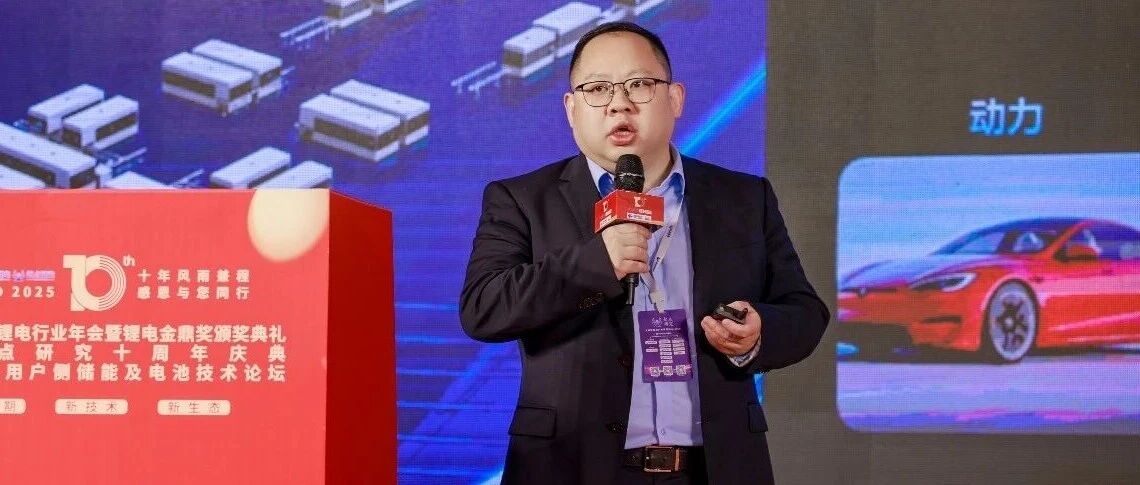
多氟多新能源:2025年全极耳大圆柱电芯出货超10GWh 引领行业发展!
起点锂电· 2025-12-23 03:11
Core Viewpoint - The large cylindrical battery is positioned as a leading choice in the industry, showcasing significant advantages in safety and economic efficiency, with a projected shipment volume of 10 GWh by 2025 for the company, leading the market development [1][3]. Group 1: Technology and Market Trends - The evolution of large cylindrical batteries began with the 18450 model, advancing to the 21700, and the introduction of the 4680 full-tab battery by Tesla in 2020, culminating in a total shipment volume of 100 GWh, with lithium iron phosphate contributing 50 GWh [3]. - From 2020 to 2025, the shipment volume of lithium iron phosphate large cylindrical batteries is expected to grow from 0.5 GWh to 60 GWh, with an annual growth rate exceeding 400% [3]. - The company aims to enhance battery performance through technological integration, improving thermal stability, reducing manufacturing costs, and ensuring long life [3][5]. Group 2: Manufacturing and Cost Efficiency - The manufacturing process of large cylindrical batteries is optimized for reliability, with a focus on reducing risks associated with cutting and dust contamination, which can lead to short circuits [5]. - The cost of manufacturing cylindrical batteries is currently between 0.025 to 0.03 per GWh, making it the most cost-effective option in the industry [5]. - The company has achieved a production yield exceeding 98% over a six-month period, reflecting improvements in manufacturing efficiency [7]. Group 3: Application and Market Expansion - The large cylindrical batteries are versatile, suitable for various applications including passenger vehicles (EVs and PHEVs), with compatibility for 15 different vehicle models [9]. - The new national standards require batteries to last at least 10 years or 250,000 kilometers, with a minimum of 80% capacity retention after 3,000 cycles [10]. - The company is expanding its product offerings to include home storage and portable power solutions, with specific models designed for outdoor use [11]. Group 4: Future Market Outlook - The global market for large cylindrical batteries is projected to exceed 50 billion by 2025 and reach 200 billion by 2027 [16]. - The company operates with a strategic focus on developing new materials and orderly growth in lithium batteries, with production bases established both domestically and internationally [19]. - The company aims to become the number one provider of full-tab large cylindrical batteries in the market [21].

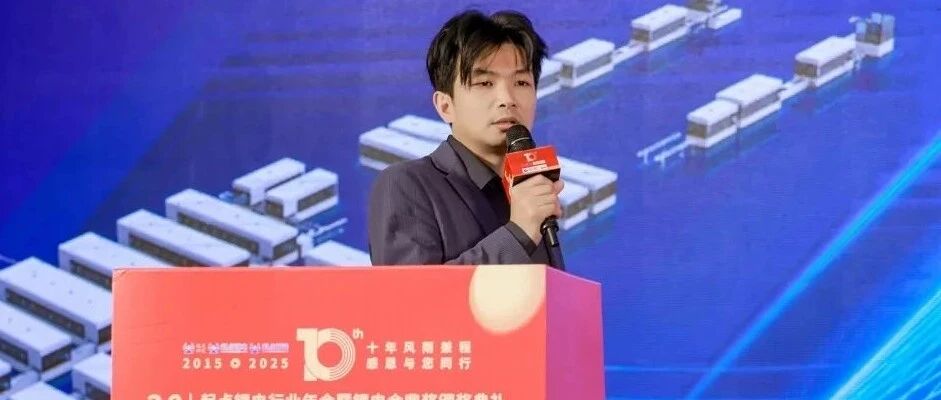
绵阳创明 总经理 田秀君:小动力小储能市场的新格局,定义大圆柱电池新标准
起点锂电· 2025-12-23 02:25
Market Outlook - The power battery market is dominated by three major players (C, B, L) holding 60% market share, with little expected change in the near future [3] - The small power market is projected to experience strong growth from 2024 to 2025, driven by national policy support and emerging industries such as low-altitude economy and smart robotics [3] - The energy storage market is also showing significant growth, with small energy storage expected to account for 20% to 30% of the total energy storage market, creating new demands for batteries [3] Industry Trends - The upgrade of small power and small energy storage industries will impose higher requirements on battery performance, particularly for long endurance in small power applications and higher voltage demands in home storage [4] - The market for small power and small energy storage remains diverse, allowing for technological competition rather than price competition [4] - The square battery format is gaining traction due to lower costs associated with larger sizes, while soft-pack batteries are becoming less favorable in small power and small energy storage markets [4] Battery Technology - The cylindrical battery format has five key advantages: high energy density, cost-effectiveness, strong structural integrity, flexibility in application, and better consistency compared to square and soft-pack batteries [5] - The company emphasizes the importance of precision and refined product design to enhance competitiveness, focusing on product positioning, design optimization, and quality control [8][10] Product Development - The company has defined several standard models for cylindrical batteries, aiming to meet diverse market needs with a focus on high capacity and low internal resistance [11] - The product lineup includes various series (32, 40, 46, 60) with capacities ranging from 15Ah to 50Ah, covering all application scenarios between 0 to 10 degrees of electricity [11] - The company is also exploring solid-state battery technology, utilizing layered oxides to enhance safety and performance, while acknowledging that pure solid-state solutions will take time to develop [11][12] Production Efficiency - The company is implementing full-chain optimization to improve cost-effectiveness, focusing on integrated design and automated production processes to enhance battery consistency and reduce quality costs [10][13] - Advanced automation and digitalization are being employed to ensure high production efficiency and stringent environmental control, minimizing contamination risks during battery manufacturing [13] Company Overview - The company, established in collaboration with the Chinese Academy of Sciences, has over 20 years of experience in cylindrical battery research and manufacturing, ranking among the top five in the new power and large cylindrical battery sectors [14] - The company operates three main business segments and four production bases, focusing on high-capacity products and small power/small energy storage solutions [14]
450亿动力电池大单告吹“背后”
起点锂电· 2025-12-22 09:39
Core Viewpoint - LG Energy Solution has received a termination notice from Ford regarding a battery supply order worth 9.6 trillion KRW (approximately 45.84 billion RMB), primarily due to changes in market conditions and electric vehicle demand forecasts [3][4]. Group 1: Order Termination Details - The terminated order was originally planned to start supplying in 2027 and is valued at approximately 54.5% of LG Energy Solution's total revenue for the first three quarters of this year, which is about 17.6 trillion KRW [3][4]. - The canceled order represents about 30% of LG Energy Solution's projected total revenue of 25.6 trillion KRW for 2024 [3][4]. - The contract termination affects a 75GWh order, while a separate 34GWh contract remains active [9]. Group 2: Ford's Strategic Adjustments - Ford announced a strategic shift, planning to write down approximately $19.5 billion in assets due to restructuring its electric vehicle business, which includes halting production of several electric vehicle models [10]. - The decision to cancel certain electric vehicle models is attributed to changes in U.S. policies, which have diminished the competitiveness of electric vehicles in the market [11][12]. - Ford's electric vehicle sales in November dropped by 42.6% year-on-year, reflecting a broader decline in the U.S. electric vehicle market [12][13]. Group 3: Focus on Energy Storage - Ford is reallocating investments from unprofitable electric vehicle projects to more lucrative areas, particularly energy storage [15]. - The company plans to invest approximately $2 billion over the next two years to expand its energy storage business, targeting a production capacity of 20GWh by 2027 [18]. - Ford aims to produce lithium iron phosphate batteries and energy storage systems, leveraging its existing manufacturing facilities [19]. Group 4: Industry Trends - Other automakers, such as Tesla and General Motors, are also expanding their energy storage offerings, indicating a shift in focus within the automotive industry towards energy solutions [20][21]. - The automotive sector is increasingly recognizing the importance of energy storage as a significant growth area, especially in light of rising electricity demands in the U.S. and Europe [22].

