中关村储能产业技术联盟

Search documents
事关储能,国家能源局答复
中关村储能产业技术联盟· 2025-10-16 06:46
文 | 中国电力报 截至10月1 5日,国家能源局已对十四届全国人大三次会议建议中关于储能高质量发展的 建议进行一系列答复。答复内容包含 整治储能行业"内卷式"恶性竞争、推动新型储能市 场化发展、支持民营企业创新联合体打造国家级储能高质量发展样板 等方面。现整理相 关内容分享如下: 一是印发《能源碳达峰碳中和标准化提升行动计划》,明确加快完善新型储能技术标 准的重点任务。二是联合国家标准委印发《新型储能标准体系建设指南》,明确了覆 盖基础通用、规划设计、设备试验、施工验收、并网运行、检修监测、运行维护、安 全应急等8个方面的新型储能标准体系,加强标准布局规划。三是加快新型储能电站 向上滑动阅览 对十四届全国人大三次会议第6281号建议的答复摘要 您提出的 关于支持民营企业创新联合体打造国家级储能高质量发展样板的建议 收 悉。经研究并商国家发展改革委、财政部、商务部、税务总局,现答复如下。 在"双碳"目标引领下,我国加快构建清洁低碳安全高效的能源体系,积极发展清洁能 源,推进新型电力系统建设。新型储能作为支撑新能源发展的关键技术,是促进大规 模新能源开发消纳的重要支撑,是实现电力系统安全稳定运行的重要保障,是促 ...


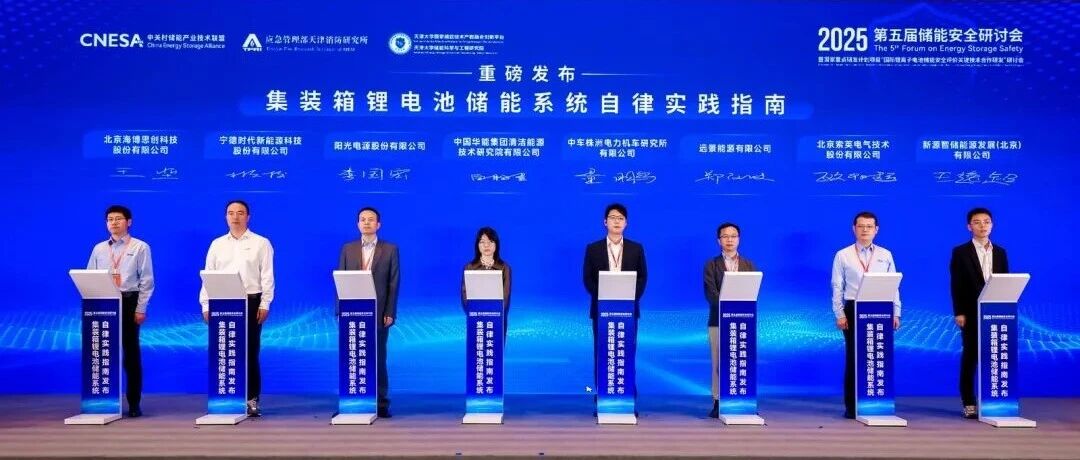
储能行业《自律实践指南》重磅发布!行业首部储能系统安全底线自律实践规范
中关村储能产业技术联盟· 2025-10-16 06:46
Core Viewpoint - The release of the "Self-Regulatory Practice Guidelines for Container Lithium Battery Energy Storage" marks a significant milestone for the future development of the energy storage industry, aiming to enhance safety and promote sustainable growth [2][5]. Summary by Sections Industry Guidelines - The "Self-Regulatory Practice Guidelines" is the first normative guidance document specifically for container lithium battery energy storage systems, developed by the Zhongguancun Energy Storage Industry Technology Alliance in collaboration with 25 leading enterprises [2][5]. - The guidelines emphasize core principles such as "safety first, risk controllable, green and low carbon, compatibility and interoperability, and quality traceability" for future energy storage system designs [5]. Safety and Performance - The guidelines set baseline requirements for system parameters, key subsystems, and components, addressing industry concerns regarding large-scale fire tests, fire effectiveness assessments, system reliability evaluations, information security, battery thermal management, and maintainability [5]. - Recommendations are provided for the production quality management of energy storage system integration and battery manufacturing [5]. Industry Collaboration - The guidelines will be promoted to energy storage users to become a widely recognized best practice within the industry, contributing to the healthy and sustainable development of the energy storage sector [5]. - The Zhongguancun Energy Storage Industry Technology Alliance will publicly display the guidelines for two weeks, inviting more industry chain enterprises to participate in the development process [5]. Event Support - The fifth Energy Storage Safety Seminar was organized by the Zhongguancun Energy Storage Industry Technology Alliance, with support from various institutions, including the Tianjin Fire Research Institute and Tianjin University [6].
风光0.1954元/kWh!甘肃机制电价均为竞价下限出清
中关村储能产业技术联盟· 2025-10-16 06:46
Core Insights - The Gansu mechanism electricity price bidding results were announced, with 61 projects selected, all clearing at a price of 0.1954 yuan per kilowatt-hour [2] - The bidding process included both wind and solar projects, with a total electricity volume of 830 million kilowatt-hours [2] Summary by Category Bidding Results - Gansu adopted a competitive bidding approach for wind and solar projects, resulting in a clearing price of 0.1954 yuan per kilowatt-hour, which is the lower limit for this bidding [2] - The bidding was organized by the State Grid Gansu Electric Power Company in two batches, covering projects that are either already operational or planned for operation between June 1, 2025, and December 31, 2025 [2] Project Breakdown - Wind Power: 8 projects with a mechanism electricity volume of 346.4 million kilowatt-hours and an estimated capacity of approximately 235.6 thousand kilowatts [2] - Centralized Solar Power: 10 projects with a mechanism electricity volume of 482.8 million kilowatt-hours and an estimated capacity of approximately 434.8 thousand kilowatts [2] - Distributed Solar Power: 43 projects with a mechanism electricity volume of 774.6 thousand kilowatt-hours and an estimated capacity of approximately 0.07 thousand kilowatts [2]

浙江分时电价征求意见:夏冬高峰时段收缩,全年午间低谷3h
中关村储能产业技术联盟· 2025-10-15 12:24
Core Viewpoint - The Zhejiang Provincial Development and Reform Commission has released a draft notice for optimizing the time-of-use electricity pricing policy, aiming to better align electricity pricing with seasonal supply and demand characteristics, thereby promoting energy conservation and stability in electricity supply [2][10]. Group 1: Optimization of Time Periods - The time periods for commercial and industrial users will be adjusted based on seasonal electricity supply and demand. The peak period will now be from 16:00 to 23:00, while the low valley period will be extended by one hour [2][10]. - Specific time periods for different seasons are defined: - Spring and Autumn (February to June, September to November): - Peak: 16:00-23:00 - Low Valley: 0:00-7:00, 11:00-14:00 - Summer and Winter (January, July, August, December): - Peak: 16:00-18:00, 22:00-23:00 - Low Valley: 0:00-7:00, 11:00-14:00 [3][15]. Group 2: Holiday Pricing Adjustments - During major holidays such as Labor Day and National Day, the first three days will have a low valley period from 0:00 to 9:00 and a deep valley period from 9:00 to 15:00 [5][10]. Group 3: Pricing Structure and Floating Ratios - The pricing base for commercial and industrial users will be adjusted to include the grid electricity price, line loss costs, and system operation costs. The floating ratios for peak, high peak, flat, low valley, and deep valley periods are set at 2.05:1.85:1:0.4:0.2 [16][10]. Group 4: Electric Vehicle Charging Policies - Electric vehicle charging facilities will follow the same peak and valley periods and pricing structures as commercial electricity users. The low valley period will be adjusted to 10:30-13:30, while the low valley period for residential users will be from 23:00 to 8:00 the next day [18][10]. Group 5: Dynamic Adjustment Mechanism - A dynamic adjustment mechanism will be established to respond to changes in electricity supply and demand, allowing for timely adjustments to peak and valley periods and floating ratios based on the electricity market conditions [19][10]. Group 6: Implementation and Communication - The new policy will be communicated to users in advance, and the provincial electricity company will be responsible for monitoring the impact of the time-of-use pricing policy and ensuring its smooth implementation [20][10].

2027年2800万个充电设施!促进电动汽车购置使用!六部门重磅发布
中关村储能产业技术联盟· 2025-10-15 12:24
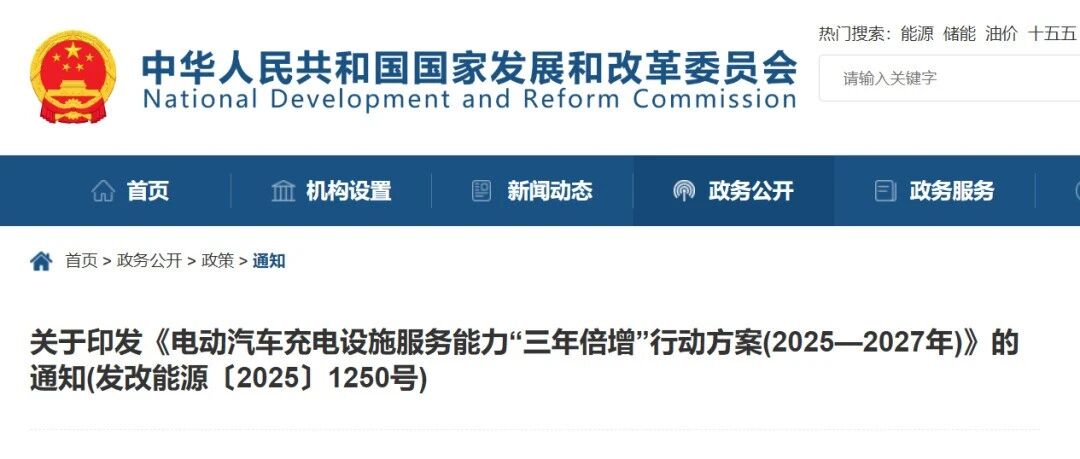
Core Viewpoint - The article outlines the "Three-Year Doubling Action Plan for Electric Vehicle Charging Facility Service Capacity (2025-2027)", aiming to enhance the charging network, improve charging efficiency, and boost consumer confidence to promote wider adoption of electric vehicles. By the end of 2027, the plan targets the establishment of 28 million charging facilities, providing over 300 million kilowatts of public charging capacity to meet the charging needs of more than 80 million electric vehicles, effectively doubling the charging service capacity [7]. Summary by Sections Main Goals - The plan aims to establish 28 million charging facilities nationwide by the end of 2027, providing over 300 million kilowatts of public charging capacity and meeting the charging needs of over 80 million electric vehicles, achieving a doubling of service capacity [7]. Public Charging Facility Quality Upgrade Actions - Strengthening urban fast charging networks with a focus on fast charging and supplementing with slow charging, targeting the addition of 1.6 million direct current charging guns in cities by 2027, including 100,000 high-power charging guns [8]. - Accelerating the renovation of charging facilities in highway service areas, with plans to build or renovate 40,000 "super-fast combination" charging guns of 60 kilowatts or more by 2027 [9]. - Expanding charging facilities in rural areas, aiming to add at least 14,000 direct current charging guns in townships without public charging stations by 2027 [9]. Residential Charging Condition Optimization Actions - Increasing the scale of private charging facility construction in new residential areas, ensuring all fixed parking spaces are equipped with charging facilities or pre-installed conditions [10]. - Promoting a "unified construction and service" model for residential charging facilities, with a goal of establishing 1,000 pilot communities by 2027 to enhance the management and safety of private charging piles [10]. Vehicle-Grid Interaction Large-Scale Application Promotion Actions - Expanding the pilot scope of vehicle-grid interaction, with plans to add over 5,000 bidirectional charging and discharging (V2G) facilities and achieve a reverse discharge volume of over 20 million kilowatt-hours by 2027 [12]. Power Supply Capacity and Service Improvement Actions - Accelerating the upgrade and renovation of the distribution network to accommodate charging facility demands, focusing on urban core areas, highway service areas, and old residential communities [13]. - Enhancing the efficiency of electricity connection services for electric vehicle charging facilities, promoting online application channels and simplifying application processes [13]. Charging Operation Service Quality Improvement Actions - Improving the service quality of public charging stations by upgrading old equipment and optimizing station environments, pricing standards, and operational methods to enhance user experience [14]. Guarantee Mechanism - Strengthening organizational leadership for the implementation of the action plan, with various departments responsible for different aspects of charging facility development and ensuring effective execution of the "doubling action" [16].
零碳园区等节能降碳项目,将获中央专项资金支持!
中关村储能产业技术联盟· 2025-10-15 09:14
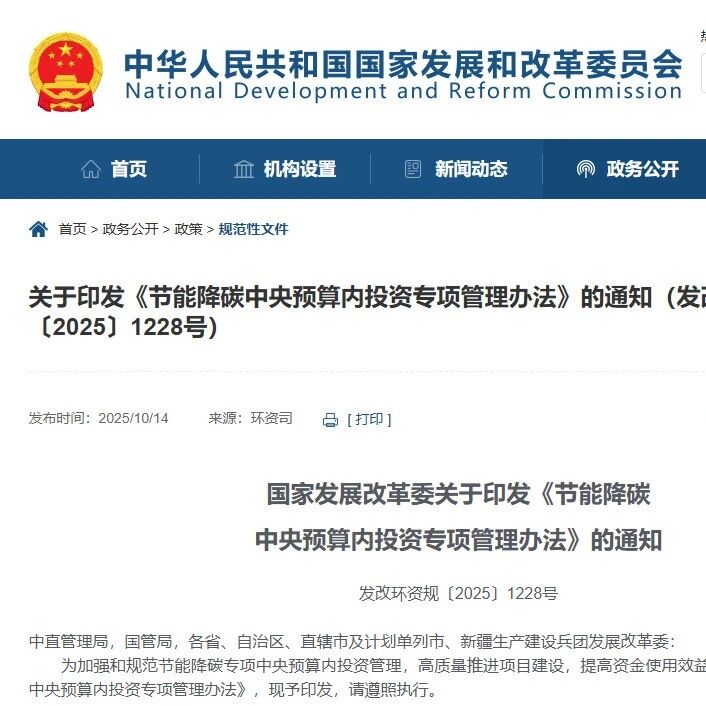
Core Viewpoint - The article discusses the issuance of the "Special Management Measures for Central Budget Investment in Energy Conservation and Carbon Reduction," aimed at supporting projects that align with the goals of carbon peak and carbon neutrality, promoting a comprehensive green transformation of economic and social development [2][4]. Summary by Sections Special Support Areas - The special support focuses on key industry energy conservation and carbon reduction projects, clean substitution of coal consumption, circular economy initiatives, low-carbon, zero-carbon, and negative-carbon demonstration projects, and foundational capacity building for carbon peak and carbon neutrality [2][3][11]. Investment Proportions - The support ratio for key industry energy conservation and carbon reduction projects, clean coal substitution projects, circular economy projects, and low-carbon demonstration projects is set at 20% of the approved total investment. For local government projects related to carbon peak and carbon neutrality, the support ratios vary by region: 60% for the East, 70% for the Central, and 80% for the West and Northeast regions. Central and national agency projects are generally fully funded [3][14]. Funding Mechanisms - The central budget investment funds will be allocated through direct investment, capital injection, and investment subsidies based on actual conditions [3][8]. Project Eligibility and Requirements - Projects must be new or under construction with complete preliminary procedures and cannot be used for completed projects. The focus is on projects that can effectively contribute to energy conservation and carbon reduction [8][12]. Application and Approval Process - Provincial development and reform departments are responsible for project application and must establish a dynamic reserve mechanism for projects. They will select eligible projects from the national major construction project database for annual investment plan submissions [16][21]. Performance Monitoring and Evaluation - The National Development and Reform Commission will strengthen performance target reviews and monitoring of investment plans, ensuring that projects are supervised throughout their lifecycle. Any issues identified during evaluations will be addressed promptly, and performance evaluation results will influence future investment allocations [35][36].
电力交易时代,EMS 企业如何实现价值突围?
中关村储能产业技术联盟· 2025-10-15 09:14
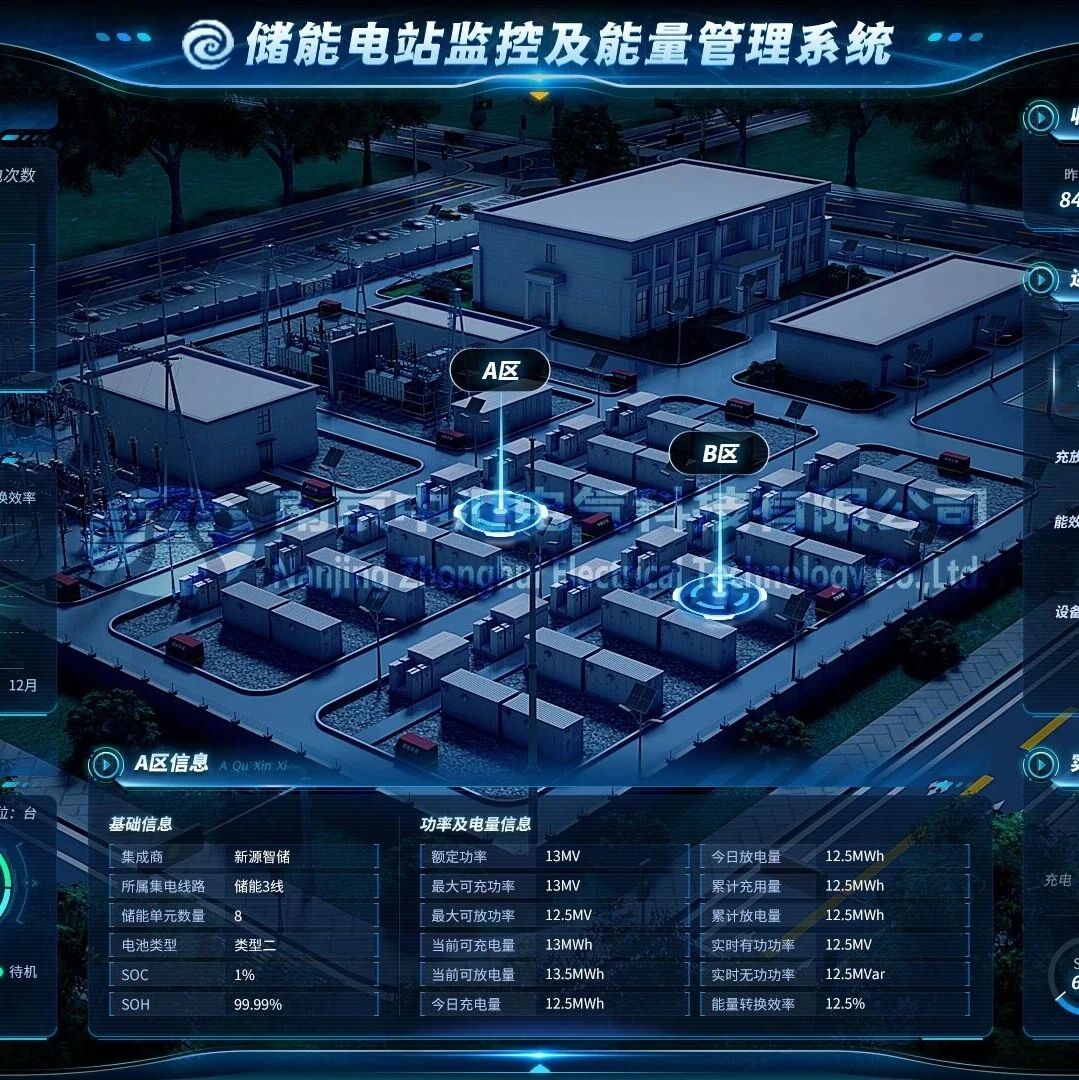
文 | 南京中汇电气 随着社会全面迈向智能化时代,人工智能已成为推动产业升级的关键力量。在能源领域,构 建以新能源为主体的新型电力系统,更是离不开科技创新的有力支撑。 作 为 储 能 EMS 领 域 的 领 跑 者 , 南 京 中 汇 电 气 深 知 技 术 创 新 对 于 新 型 电 力 系 统 建 设 的 重 要 性,持续加大研发投入, 以先进的AI技术全面赋能电力系统各环节 。 一、故障诊断与智能录波分析系统 在新能源场站复杂电气运行环境中,传统故障检测手段依赖人工巡检和事后分析,存在响应 滞后、定位不精准问题。 AI技术在场站关键节点部署智能故障录波装置 ,实时采集多维度 电气参数,构建高频数据采集网络,采样频率可达每周波1 2 8点以上,能捕捉毫秒级暂态电 气量变化, 为故障分析提供高精度数据 。 储能EMS能量管理系统集成深度学习算法模型 ,经海量历史故障样本训练,可自动识别数 十种典型故障模式。检测到异常信号时,AI算法可完成百毫秒级的多项分析任务,自动生成 故障报告和处置建议, 将人工分析时间从数小时压缩至秒级 。 三、源网荷储协同的智能调度优化 在电力市场化改革推进的背景下,新能源场站成为需 ...
保加利亚规模最大混合储能项目首期启动!海辰储能、科华数能提供储能技术
中关村储能产业技术联盟· 2025-10-15 09:14
Core Viewpoint - The article discusses the launch of a large-scale battery energy storage system in Bulgaria by Renalfa IPP, which is part of a mixed renewable energy project with a total capacity of 315MW/760MWh [2][3]. Group 1: Project Overview - The initial phase of the energy storage system has a capacity of 65MW/260MWh and is now operational [2]. - The overall Te ne vo mixed renewable energy project will include a 238MW solar power plant, a 315MW/760MWh energy storage system, and 250MW of wind turbines, making it the largest and most complex hybrid energy storage project in Bulgaria [2]. - The project is a joint development between Renalfa IPP and Danish developer EuroWind Energy, with technology provided by Haicheng Storage and Kehua, and project management by Bulgarian developer Solarpro [2]. Group 2: Financial and Operational Aspects - The project is financed by the European Bank for Reconstruction and Development (EBRD) and Raiffeisen Bank International AG [3]. - Renalfa is active in Bulgaria, Hungary, North Macedonia, and Romania, with a total project scale exceeding 1GW and over 4GW of energy storage and renewable energy projects in reserve [3]. - The newly constructed energy storage system has become one of the largest combined battery storage systems in Europe, increasing Renalfa's total operational storage capacity to over 1GWh [3].

新疆增量机制电价竞价结果:风电0.252元/kWh,光伏0.235元/kWh
中关村储能产业技术联盟· 2025-10-15 09:14
Core Insights - The article discusses the results of the bidding for the mechanism electricity prices for new energy projects in Xinjiang, highlighting the competitive pricing and the number of projects involved [2][3]. Summary by Sections Mechanism Electricity Price Bidding Results - A total of 67 projects were announced, with wind power and photovoltaic mechanism electricity prices set at 185.4 billion kWh and 36.1 billion kWh respectively [2]. - The mechanism electricity price for wind projects is 0.252 yuan per kWh, with a total mechanism electricity volume of 18,539,219,756 kWh across 36 projects [3]. - The mechanism electricity price for photovoltaic projects is 0.235 yuan per kWh, with a total mechanism electricity volume of 3,608,399,178 kWh across 31 projects [3]. Project Details - The projects include a mix of centralized and distributed photovoltaic and wind power projects, with significant investments from various companies [2][4]. - Notable projects include the 1.8 million kW integrated wind-solar-hydrogen storage project in Qitai County and various other solar and wind projects across Xinjiang [2][4][5].

直播预告 | 第五届储能安全研讨会倒计时1天
中关村储能产业技术联盟· 2025-10-15 09:14
Core Viewpoint - The article discusses the upcoming 5th Forum on Energy Storage Safety, focusing on key technologies and safety evaluations for lithium-ion battery energy storage systems, highlighting the importance of safety in energy storage applications [1][2]. Event Overview - The forum will take place on October 16-17, 2025, in Tianjin, China, and will feature various expert presentations and discussions on energy storage safety [7][8]. - The event is organized by the China Energy Storage Alliance and other key institutions, emphasizing collaboration in the field of energy storage safety [5][14]. Agenda Highlights - The opening ceremony includes speeches from leaders and several academic reports on topics such as underground energy storage safety, fire prevention in electrochemical storage, and lithium battery thermal runaway strategies [8]. - The forum will have multiple sub-forums focusing on safety technology innovations, fault diagnosis, and AI applications in energy storage systems [9][10][11]. Key Presentations - Notable presentations include: - "Deep Underground Space Energy Storage Safety and Emergency Assurance Technology" by Zhang Laibin [8]. - "Fire Prevention Basics and Technical Research Progress in Electrochemical Energy Storage" by Sun Jinhua [8]. - "Intelligent Battery Technology for Essential Safety" by Chen Haosen [8]. Roundtable Discussions - The forum will feature roundtable discussions addressing large-scale fire testing, safety evaluations, and the impact of different testing standards on energy storage companies [9][10]. - Experts will discuss the reliability assessment of energy storage systems and the application of AI in enhancing safety features [11][12]. Participation and Collaboration - The event will gather participants from various sectors, including energy regulatory bodies, research institutions, and companies across the energy storage industry, fostering collaboration and knowledge sharing [14][15][16]. Registration Information - Pre-registration is required for attendance, with no fees for participation, although accommodation and meals will be self-managed by attendees [17][18].