中关村储能产业技术联盟

Search documents
澳大利亚启动5亿澳元“电池突破计划”,全力支持本土电池制造
中关村储能产业技术联盟· 2025-08-21 04:02
Core Viewpoint - The Australian government has launched a significant $500 million Battery Breakthrough Initiative (BBI) to enhance the country's battery manufacturing capabilities and position Australia as a key player in the global battery manufacturing sector [2][3]. Group 1: Program Overview - The BBI is the largest investment by the Australian federal government in battery manufacturing to date, aimed at addressing critical gaps in local manufacturing capabilities [2]. - The initiative is part of the broader "Future Made in Australia" plan, which has a total investment of AUD 22.7 billion, focusing on re-industrialization and clean energy technologies [3]. Group 2: Funding Mechanism - The BBI will provide targeted funding across three strategic areas of the battery value chain where Australia has competitive advantages: battery materials manufacturing, cell production, and system assembly [5][6]. - Funding will be tailored to project needs, including capital grants for infrastructure and production incentives for ongoing operations [9]. Group 3: Specific Areas of Focus - In battery materials manufacturing, the initiative will support the processing and production of advanced battery materials using Australia's abundant key mineral resources such as lithium, nickel, cobalt, and graphite [7]. - The program aims to transform Australia from a component exporter to a high-value cell production country by promoting the establishment and expansion of cell manufacturing facilities [8]. - BBI will also encourage the development of assembly capacities to serve both domestic and export markets, particularly in fixed energy storage applications [9]. Group 4: Application Process - A simplified approval process has been established for projects seeking AUD 50 million or less, allowing direct approval by the ARENA board [10]. - This mechanism is designed to expedite the deployment of medium-sized manufacturing enterprises while ensuring appropriate governance for larger investments [11]. Group 5: Technical Requirements - The initiative has set clear technical thresholds for project applications, requiring a technology readiness level (TRL) of 6 or higher, ensuring that funding supports projects with realistic commercialization pathways [14]. - Project evaluations will consider potential contributions to local manufacturing capabilities, innovation value, commercial viability, and alignment with broader clean energy transition goals [15].

容量补偿范围适时拓展至新型储能!山西“136号文”征求意见
中关村储能产业技术联盟· 2025-08-21 04:02
Core Viewpoint - The article discusses the implementation of a market-oriented pricing mechanism for renewable energy in Shanxi Province, aimed at promoting high-quality development of the renewable energy sector and enhancing market efficiency [22][23]. Group 1: Reform Measures - The plan encourages all renewable energy projects (wind and solar) to participate in market transactions, with a focus on "reporting quantity and pricing" to form grid connection prices [26]. - A sustainable pricing settlement mechanism for renewable energy is established, where the difference between market transaction prices and the mechanism price will be settled by grid companies [27]. - The mechanism pricing for existing projects will be linked to the current coal-fired power benchmark price, set at 0.332 yuan/kWh (including tax) [7][29]. Group 2: Mechanism Pricing and Quantity - For existing projects, the mechanism quantity will be determined based on the proportion of non-market electricity from July 2022 to May 2025 [5][28]. - New projects starting from June 1, 2025, will have their mechanism quantity determined through competitive bidding, with the total annual mechanism quantity calculated based on expected production scale and reasonable utilization hours [11][12][15]. - The mechanism price for new projects will be determined through competitive bidding, with a price ceiling set at 0.332 yuan/kWh and a floor at 0.199 yuan/kWh [15][29]. Group 3: Execution Period and Lifecycle - The mechanism price will take effect from January 1, 2026, and will be determined based on the remaining lifecycle utilization hours of the projects [8][63]. - The reasonable utilization hours for wind projects are set at 36,000 hours, while solar projects vary between 22,000 to 26,000 hours depending on the resource zone [9][24]. Group 4: Competitive Bidding and Constraints - Competitive bidding for new projects will be organized annually, with a requirement that the total declared mechanism quantity must be at least 1.2 times the approved total scale to ensure effective competition [20][31]. - Projects that do not meet the declared production date will have their mechanism quantity automatically invalidated prior to actual production [19][32]. Group 5: Supporting Measures - The article outlines various supporting measures, including the establishment of a price monitoring system for the electricity market and the optimization of trading mechanisms for renewable energy [35][45]. - It emphasizes the need for a comprehensive approach to ensure that renewable energy can participate fairly in the electricity market, including adjustments to auxiliary service market mechanisms [40][42].
储能电站资产经济性显著提升!海博思创率先布局“储能+金融”
中关村储能产业技术联盟· 2025-08-21 04:02
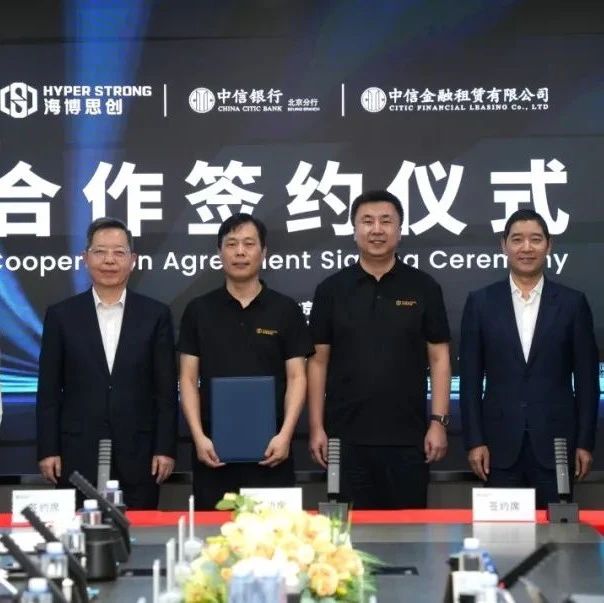
Core Viewpoint - The collaboration between Haibo Sichuang, CITIC Bank, and CITIC Financial Leasing aims to explore opportunities in the "energy storage + finance" sector, leveraging their respective strengths to create innovative financing models for the energy storage industry [2][4]. Group 1: Collaboration Details - On August 20, Haibo Sichuang signed a cooperation agreement with CITIC Bank and CITIC Financial Leasing to engage in comprehensive collaboration in the energy storage and financial sectors [2]. - The partnership will focus on integrated financial services, financing leasing, operational leasing, and financing credit, aiming to synergize green finance with the energy storage industry [4]. Group 2: Industry Context - The energy storage industry is transitioning from policy-driven to market-led growth, with reduced construction costs for energy storage stations and improved economic viability due to the opening of the electricity spot market and supportive policies [4]. - The collaboration is positioned to set a new benchmark for the integration of production and finance in the energy storage sector, emphasizing the importance of financial innovation in this evolving market [4].


0.389元/Wh!中天储能预中标内蒙古200MW/800MWh储能设备采购
中关村储能产业技术联盟· 2025-08-21 04:02
Core Viewpoint - The article discusses the procurement results for a large-scale energy storage project in Inner Mongolia, highlighting the competitive bidding process and the selected candidates for the supply of energy storage equipment [2][3]. Group 1: Procurement Details - The first candidate for the procurement is Zhongtian Energy Technology Co., Ltd., with a bid price of 31,131.6400 million yuan, equivalent to a unit price of 0.389 yuan/Wh [3][5]. - The second candidate is CRRC Zhuzhou Electric Locomotive Research Institute Co., Ltd., with a bid price of 32,408 million yuan, translating to a unit price of 0.405 yuan/Wh [3][5]. - The third candidate is BYD Auto Industry Co., Ltd., with a bid price of 32,000 million yuan, which corresponds to a unit price of 0.400 yuan/Wh [3][5]. Group 2: Project Specifications - The project involves a 200MW/800MWh electrochemical energy storage system, including related technical services and a five-year warranty period [3]. - The project is located in Ulanqab City, Inner Mongolia, and is funded through corporate self-financing, with plans for completion and operation by 2025 [3][5]. Group 3: Market Context - The article references a significant decline in the new energy storage bidding market, with a reported 88.8% decrease in July [6]. - Upcoming industry events include the Fourth Sodium-Ion Battery Industry Chain and Standard Development Forum and the Fifth Energy Storage Safety Seminar scheduled for October in Tianjin [6].



两院院士增选候选人名单公布!宁德时代吴凯、西安交大别朝红、大连化物所李先锋等
中关村储能产业技术联盟· 2025-08-20 16:05
Core Points - The article discusses the announcement of valid candidates for the 2025 academician election by the Chinese Academy of Sciences (CAS) and the Chinese Academy of Engineering (CAE), with a total of 639 candidates from CAS and 660 from CAE [2][3]. Group 1: Chinese Academy of Sciences (CAS) - The CAS has a total of 639 valid candidates for the 2025 academician election, categorized by various fields [3]. - The distribution of candidates by department includes: Mathematics and Physics (98), Chemistry (105), Life Sciences and Medicine (125), Earth Sciences (96), Information Technology (61), and Engineering Technology (104), along with 50 special recommendation candidates [2][3]. Group 2: Chinese Academy of Engineering (CAE) - The CAE has announced 660 valid candidates for the 2025 academician election [3].

两院院士增选候选人名单公布!宁德时代吴凯、西安交大别朝红等入选
中关村储能产业技术联盟· 2025-08-20 15:02
Core Points - The article discusses the announcement of the effective candidates for the 2025 academician election by the Chinese Academy of Sciences (CAS) and the Chinese Academy of Engineering (CAE), with a total of 639 candidates from CAS and 660 from CAE [2][3]. Group 1: Chinese Academy of Sciences (CAS) - The CAS has 639 effective candidates for the 2025 academician election, categorized by various fields [3]. - The distribution of candidates by department includes: - Mathematics and Physics: 98 candidates - Chemistry: 105 candidates - Life Sciences and Medicine: 125 candidates - Earth Sciences: 96 candidates - Information Technology: 61 candidates - Engineering Technology: 104 candidates - Specially recommended fields: 50 candidates [2][4]. Group 2: Chinese Academy of Engineering (CAE) - The CAE has 660 effective candidates for the 2025 academician election [3].

破局后强制配储时代!第十届储能西部论坛在内蒙古成功举办
中关村储能产业技术联盟· 2025-08-20 10:08
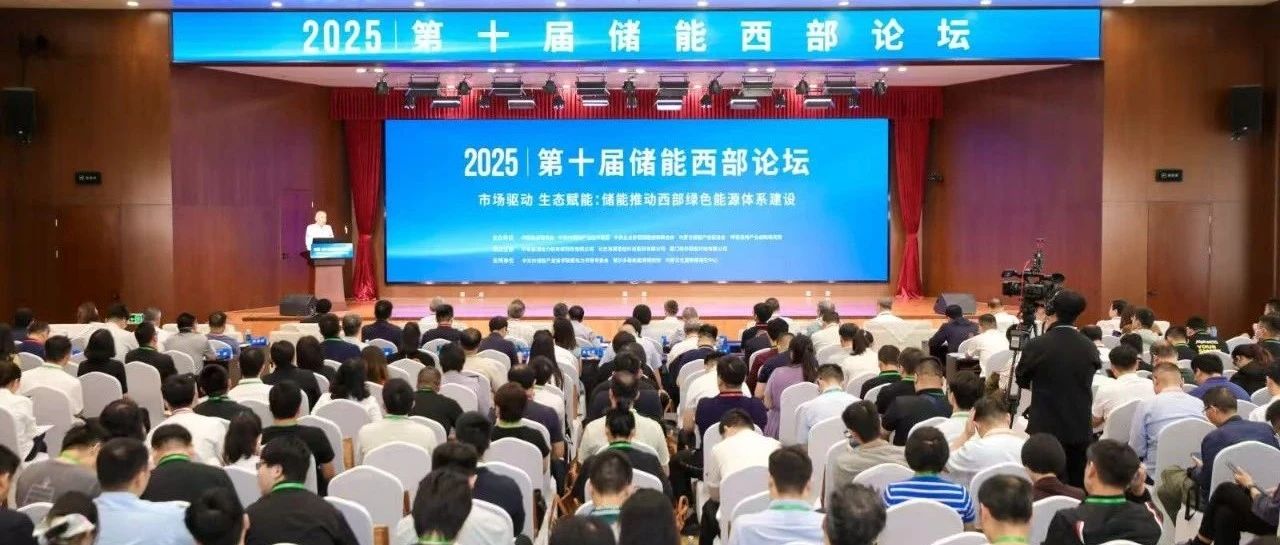
Core Viewpoint - The forum emphasized the collaborative development of new energy and energy storage, particularly in the context of the cancellation of mandatory energy storage requirements, highlighting the need for market-driven approaches and ecological empowerment in building a green energy system in the western regions of China [1][28]. Group 1: Forum Overview - The 10th Energy Storage Western Forum was held in Hohhot, Inner Mongolia, with over 500 representatives from government, academia, and industry discussing the synergy between new energy and energy storage [1]. - The forum was co-hosted by several organizations, including the China Energy Research Society and the Zhongguancun Energy Storage Industry Technology Alliance [1]. Group 2: Key Speakers and Insights - Key figures included Shi Yubo, Chairman of the China Energy Research Society, who highlighted the unique advantages of the western region for large-scale energy storage applications due to abundant wind and solar resources [6]. - Xu Ziming from the National Energy Administration emphasized the rapid development of new energy storage since the 14th Five-Year Plan and outlined three focus areas for the 15th Five-Year Plan: top-level design, market mechanism improvement, and high-quality development [9]. Group 3: Technological Directions - Academician Ouyang Minggao proposed three major directions for energy storage technology: battery storage, vehicle-to-grid (V2G) systems, and green hydrogen storage, emphasizing the need for multi-disciplinary innovation [12]. - The focus on battery storage includes breakthroughs in safety and cost reduction, aiming for a storage cost of 0.1 yuan/Wh [12]. Group 4: Industry Practices - Wang Lixin from Inner Mongolia Power Group discussed the establishment of a long-term compensation mechanism for energy storage, which provides stability for project revenues [15]. - Zheng Yaodong from Southern Power Grid highlighted the operational efficiency of their energy storage stations, with some achieving over 3,150 operational hours annually [17]. Group 5: Industry Data and Trends - Chen Haisheng reported that by mid-2025, China's new energy storage capacity reached 101.3 GW, marking a significant increase from previous years, with expectations for further growth to 236.1-291.2 GW by 2030 [20]. - The forum also saw the release of a book on compressed air energy storage, showcasing two decades of research in the field [22]. Group 6: Strategic Insights - Wen Yuliang from CRRC Zhuzhou Institute emphasized the importance of innovation in energy storage value, focusing on diverse application scenarios and technological breakthroughs [25]. - Si Zheng from Beijing Haibo Technology highlighted the opportunities arising from the cancellation of mandatory energy storage, suggesting that energy storage will play a crucial role in stabilizing the grid and enhancing the profitability of renewable energy projects [28]. Group 7: Forum Discussions - The forum included discussions on market mechanisms and business models, addressing challenges in energy storage commercialization and integration into the power market [30]. - Specialized workshops focused on zero-carbon park development, innovative storage technologies, and the integration of energy storage with data centers [31].



PPT分享 | 新型储能产业发展现状及趋势
中关村储能产业技术联盟· 2025-08-20 10:08
Core Viewpoint - The new energy storage industry in China has experienced significant growth, with the cumulative installed capacity surpassing 100GW for the first time by mid-2025, reflecting a year-on-year increase of 110% and a 32-fold increase compared to the end of the 13th Five-Year Plan period [11][12][22]. Group 1: New Energy Storage Project Scale - As of mid-2025, China's cumulative installed capacity of new energy storage reached 101.3GW, with a year-on-year growth of 110% [11]. - The total installed capacity of electric power storage in China reached 164.3GW, showing a year-on-year increase of 59% [12]. - The market share of pumped storage has dropped below 40% for the first time, while lithium-ion batteries have seen exponential growth, indicating a shift towards diversification in technology routes [12][22]. Group 2: New Energy Storage Bidding Market - The bidding market for new energy storage has shown remarkable growth, particularly in the storage system bidding scale, which increased by 264% year-on-year to reach 86.2GWh [34]. - The collective procurement and framework procurement bidding scale surged by 618%, accounting for a significant portion of the total bidding market [34][44]. - The number of new energy storage projects added in the first half of 2025 was 2,797, with a total capacity of 193.5GW [16]. Group 3: New Energy Storage Industry Development - The application structure has shifted from user-side storage (35%) to independent storage (55%), with a notable decline in frequency regulation and user-side applications [13]. - The number of newly operational new energy storage projects increased by 55% year-on-year, with significant growth in projects over 100MW, which rose by 75% [17]. - The first gigawatt-level all-vanadium flow battery storage project has been put into operation, marking a breakthrough in non-lithium storage technology [23]. Group 4: New Energy Storage Policies and Returns - In the first half of 2025, the number of newly released policies remained high, with a focus on power market policies and an increase in management regulations, reflecting a heightened emphasis on safety [85]. - The introduction of the 136 document by the National Development and Reform Commission aims to promote market-driven development of new energy storage, impacting the revenue of independent storage significantly [87][88]. - The policy environment is being shaped to foster a sustainable pricing mechanism and encourage technological and industrial upgrades in the storage sector [91][92]. Group 5: New Energy Storage Market Outlook - The market for new energy storage is expected to continue its rapid growth, with projections indicating that the cumulative installed capacity could exceed 200GW by 2030 [108]. - The industry is anticipated to shift towards high-quality development driven by market demands, with a focus on innovative business models and applications in zero-carbon parks and green electricity connections [91][92]. - The competitive landscape is evolving, with a growing emphasis on the value of storage capacity and collaboration with other regulatory resources [92].
聚焦储能前沿:首部压缩空气储能学术专著在第十届储能西部论坛正式发布
中关村储能产业技术联盟· 2025-08-20 10:08
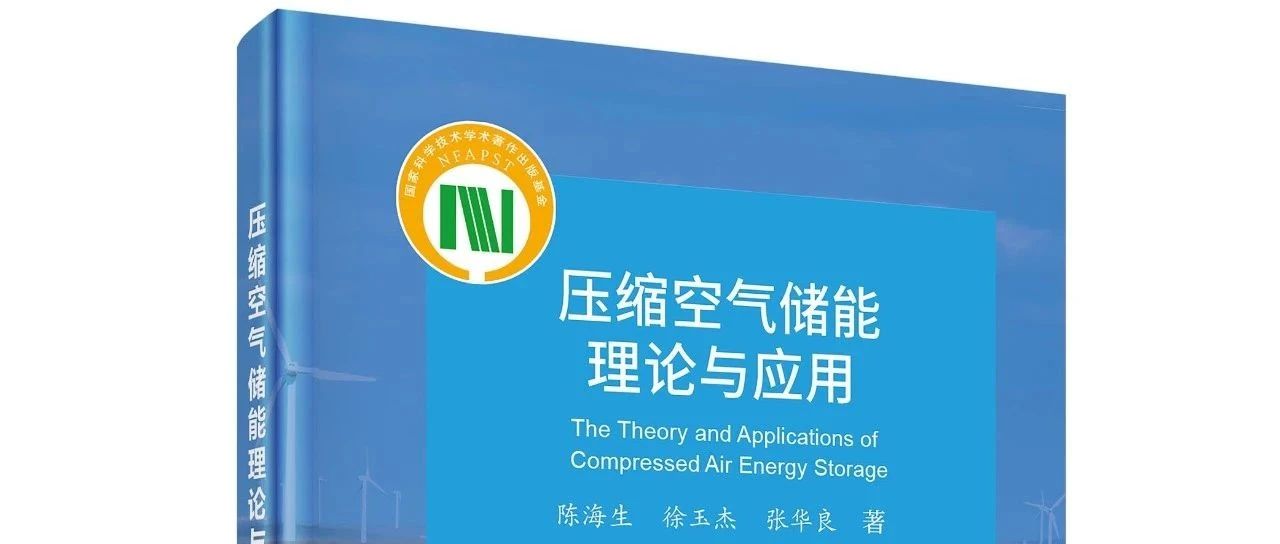
Core Viewpoint - The publication of the first academic monograph on compressed air energy storage (CAES) in China, titled "Theory and Application of Compressed Air Energy Storage," marks a significant milestone in the field, providing a comprehensive resource for researchers and practitioners [4][6]. Group 1: Publication Details - The book was officially released during the 10th Western Energy Storage Forum on August 19 and is published by Science Press, supported by the National Science and Technology Academic Book Publishing Fund [2]. - It consolidates over 20 years of research achievements and collective wisdom from the CAES team led by Professor Chen Haisheng [2][6]. Group 2: Content Overview - The monograph systematically reviews the theoretical foundations, technical principles, design methods, engineering applications, and development trends of CAES, addressing a long-standing gap in the literature [4][6]. - It includes firsthand data on key technological breakthroughs and provides a forward-looking analysis of the industry's future development direction, aligning with national energy strategy needs [4][6]. Group 3: Industry Impact - CAES is recognized for its advantages such as safety, low carbon emissions, large capacity, and long lifespan, making it a crucial technology for building a new power system and a strategic emerging industry [6]. - The book serves as a theoretical reference for researchers and a practical guide for engineers, catering to a wide audience including university faculty, students, and industry decision-makers [6][8]. Group 4: Author Background - Professor Chen Haisheng is the director of the Institute of Engineering Thermophysics at the Chinese Academy of Sciences and has been involved in large-scale physical energy storage research, leading the development of advanced CAES demonstration systems [11][12].
储能10个!国家能源局第五批储能首台(套)重大技术装备名单公示
中关村储能产业技术联盟· 2025-08-20 09:16
Core Viewpoint - The National Energy Administration has announced the fifth batch of major technological equipment in the energy sector, including 82 items, with 10 projects in the energy storage field, highlighting advancements in various storage technologies [1][5]. Group 1: Energy Storage Equipment - The list includes a 6MWh prefabricated lithium-ion battery storage system, a 100MW compressed air storage system, and a 35kV high-voltage direct-connected storage system [2][3]. - Notable projects include a 250MW/1000MWh independent storage project and a 155MW/310MWh storage project [3][4]. - Various technologies are represented, such as lithium-ion batteries, compressed air storage, sodium-ion batteries, vanadium flow batteries, zinc-bromine flow batteries, and semi-solid lithium-ion batteries [1][2]. Group 2: Research and Development Units - Key research and development units include China Railway Engineering Design Consulting Group, the Chinese Academy of Sciences, and Ningde Times New Energy Technology Co., Ltd. [2][3][4]. - Collaborations involve multiple universities and energy companies, indicating a strong partnership between academia and industry [3][4]. Group 3: User Units and Projects - User units for the listed technologies include major energy companies such as China Huadian Corporation and State Grid Corporation of China, indicating significant industry interest [3][4]. - Specific projects mentioned include the Qinghai Province Haixi Prefecture storage project and the Gansu Tengger Desert renewable energy base project [3][4].