中关村储能产业技术联盟

Search documents
业内首批!中车株洲所通过国内首个储能强制性国标认证
中关村储能产业技术联盟· 2025-08-25 09:32
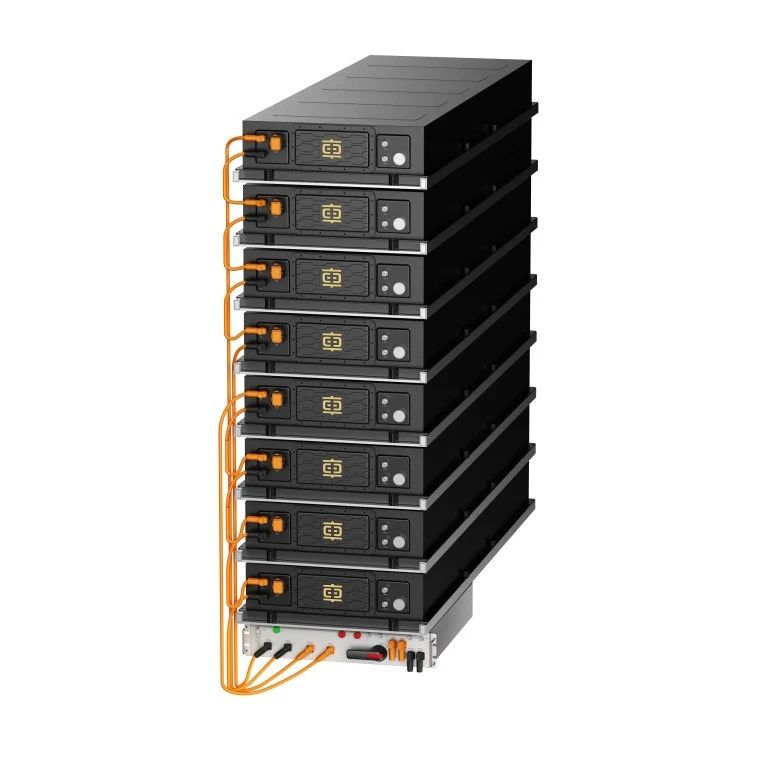
Core Viewpoint - The article highlights that CRRC Zhuzhou Institute has successfully developed a battery system that meets the new national safety standards, marking a significant advancement in China's energy storage industry [2][4][5]. Group 1: Certification and Standards - CRRC Zhuzhou Institute's tPower-FR1005/tPower-FC11 battery system has passed the GB44240-2024 certification, becoming one of the first in the industry to achieve this qualification [2]. - The new GB44240-2024 standard represents a comprehensive upgrade from the previous GB/T36276-2023, aligning closely with international standards such as IEC62619 and UL1973 [4]. - The new standard includes rigorous safety tests, including drop tests simulating extreme transport conditions and overcharge control tests, setting a new benchmark for battery system performance [4]. Group 2: Technological Advantages - The battery management system (BMS) developed by CRRC Zhuzhou Institute demonstrates unique technological advantages, featuring millisecond-level real-time response capabilities to ensure stable operation under extreme conditions [4]. - This combination of "hardware strength and intelligent capability" reflects the company's deep technical accumulation in the energy storage field [4]. Group 3: Industry Impact and Future Directions - The implementation of the new standard is expected to inject strong momentum into the standardized development of China's energy storage industry, promoting higher safety standards and better quality levels [5]. - As a key player in supporting the national "dual carbon" strategy, CRRC Zhuzhou Institute is committed to driving innovation in new energy technologies and has established a complete industrial chain from core technology research to full-process operation services [5]. - The successful certification not only showcases the company's leading capabilities in energy storage product safety but also positions it to lead the industry in accelerating safety technology upgrades [5].

破解储能“卡脖子”难题:多场景收益与碳核算如何量化?
中关村储能产业技术联盟· 2025-08-25 09:32
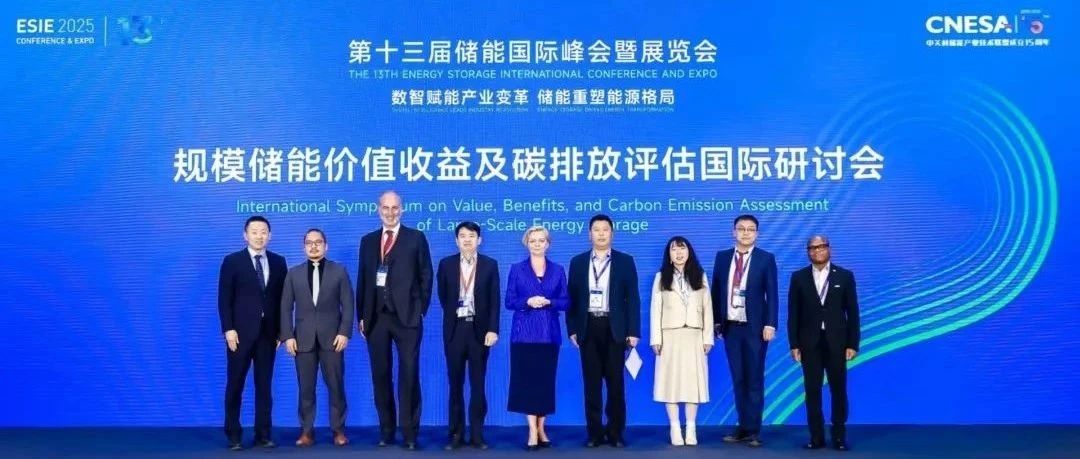
文 | 中关村储能产业技术联盟 国家重点研发计划战略性科技创新合作项目"规模储能价值收益及碳排放评估"(2024YFE0209100)第一次国际研讨会于2025年4月11日在北京 召开。来自产学研各界的专家围绕储能产业核心痛点、技术路径、碳足迹管理及国际合作等议题展开深入研讨。 02 如何构建储能碳排放评估体系及碳足迹管理体系? 中关村储能产业技术联盟常务副理事长俞振华 在会上指出,当前储能行业面临三大核心挑战: 成本评估难 (技术路线多样导致成本演变路径不 明确)、 综合价值评估难 (多场景收益难以量化)、 碳排放标准国际互认难 (国内外核算体系差异显著),导致储能在支持未来碳达峰碳中 和目标实现过程中遭遇重重困难。会议围绕三大挑战展开讨论,专家们抽丝剥茧聚焦堵点痛点纷纷发表精彩观点。CNESA将专家核心观点整理 出来以飨读者。 01全球视野下, 储能在碳达峰碳中和路径上的需求与定位 全球 国际可再生能源署政策官员冯金磊提出 ,根据ARENA的1.5℃温控情景预测,全球需在2050年前部署4000GW储能,其中长时储能占比超40%, 储能直接贡献15%的碳减排量。 欧洲 欧洲储能协会秘书长帕特里克·克莱伦斯 ...
湖北:鼓励光储协同提高自发自用比例,全部自发自用不受容量限制
中关村储能产业技术联盟· 2025-08-25 09:32
Core Viewpoint - The article discusses the draft implementation details for the management of distributed photovoltaic (PV) power generation development in Hubei Province, emphasizing the encouragement of investment and participation from various stakeholders in the sector [2][5]. Group 1: Policy Framework - The draft guidelines are open for public consultation from August 22, 2025, to September 22, 2025, inviting feedback from relevant organizations and the public [3][4]. - The guidelines apply to all types of electricity users, investment enterprises, specialized energy service companies, and individuals who wish to invest in and operate distributed PV projects [2][6]. Group 2: Operational Guidelines - For general commercial distributed PV projects located in public institutions, the grid-connected electricity can be flexibly determined based on actual conditions [6]. - For commercial factory projects, the annual self-consumed electricity should not be less than 50% of the annual generation [6]. - Large commercial distributed PV projects can adopt a self-consumption surplus electricity grid connection model to participate in the spot market, while other distributed PV projects' electricity should generally enter the electricity market [6][12]. Group 3: Registration and Management - Distributed PV projects must be registered at the local county (city, district) level, with investment entities required to provide specific project information through the online approval platform [8][9]. - The guidelines prohibit the imposition of additional pre-registration conditions and ensure timely processing of registrations [9]. - Projects with significant changes in investment entities or project details must notify the registration authority promptly [9][12]. Group 4: Construction and Connection - The construction sites for distributed PV projects must be legal, compliant, and have clear property rights, with assessments conducted prior to implementation [11][12]. - Projects must obtain registration proof and grid connection opinions from the grid enterprise before commencing construction [12][13]. - The grid enterprise is responsible for evaluating the connection capacity and publishing available capacity quarterly [12][14]. Group 5: Operation Management - Before grid connection, distributed PV projects must sign a grid dispatch agreement with the grid enterprise to ensure unified management [17]. - The investment entities must report operational and maintenance unit details to users and local grid enterprises [18].

7个项目中标!阿根廷500MW/2GWh储能项目开标
中关村储能产业技术联盟· 2025-08-25 09:32
Core Viewpoint - The article discusses the recent large-scale battery energy storage system (BESS) tender in Buenos Aires, Argentina, highlighting the competitive bidding process and the implications for the energy market [2]. Group 1: Tender Overview - The tender received 27 proposals from 15 companies, with a total capacity of 1,347 MW, significantly exceeding the 500 MW tender size [2]. - The reference price set by CAMMESA was $15,000 per MW per month, but most bids came in well below this level [2]. - The awarded capacity was expanded due to competitive pricing, with the final awarded price threshold set at approximately $14,100 per MW per month [2]. Group 2: Winning Bids - Central Puerto won a 150 MW project at $10,161 per MW per month, nearly 40% lower than the reference price [2]. - MSU Green Energy secured a 150 MW project at $11,290 per MW per month [3]. - Southern Wind won a bid at $11,461 per MW per month [4]. - Other companies like Genneia and Coral Energía also received awards [5]. Group 3: Market Transformation - This tender marks a transformation in Argentina's electricity wholesale market (MEM), as it is the first time contracts are signed directly between generators and distributors, with CAMMESA acting as a guarantor [2]. - The procurement aims to strengthen key nodes in AMBA, enhance grid reliability, and promote private sector restructuring [2]. - The awarded projects are expected to start operations by January 1, 2027, with a final operational deadline of December 31, 2028, and contracts lasting for 15 years from the start of commercial operation [2].


南开大学陈军:引领全球储能新范式:从“跟跑”到“领跑”的战略路径
中关村储能产业技术联盟· 2025-08-24 15:19
Core Viewpoint - The report highlights the significant role of new energy storage in supporting the energy revolution and achieving the "dual carbon" strategic goals in China, emphasizing the need for top-level design, addressing development bottlenecks, and strategic layout for the new energy storage industry during the 14th Five-Year Plan period [2]. Group 1: Top-Level Design and Industry Practice - A comprehensive policy framework has been established, with new energy storage included in the Energy Law of the People's Republic of China, marking its legal position in power system regulation [3]. - By the end of 2024, China's new energy storage installed capacity reached 73.76 million kilowatts, accounting for over 40% of the global total, with an annual growth rate exceeding 130% [4]. - The technology landscape is diversifying, with lithium-ion batteries dominating at 96.4%, alongside significant advancements in compressed air storage and flow battery projects [4][5]. Group 2: High-Quality Development Bottlenecks - Despite a 25% reduction in lithium-ion battery storage costs compared to 2023, long-duration storage systems still face high initial investments, with vanadium flow battery systems costing 1.6 to 2.5 times more than lithium-ion batteries [7]. - The current standards primarily cover electrochemical storage, but execution gaps reveal systemic challenges in standard implementation, necessitating a tripartite approach of standards, regulation, and resources [8]. - The supply chain has weak links, particularly in high-end materials, which still rely on imports, and there is a need for improved collaboration between research and engineering [9]. Group 3: Leading Global Storage Paradigms - The strategy focuses on meeting diverse demand across short, medium, and long-duration storage, leveraging big data and AI to enhance lithium-ion battery performance and accelerate the commercialization of sodium-ion and solid-state batteries [10]. - A unified capacity compensation mechanism is being promoted to establish a three-pronged revenue model, allowing new energy storage to participate in the spot market and explore innovative business models [12]. - The initiative aims to internationalize storage technology standards and establish a competitive edge in the global market, encouraging domestic companies to expand overseas and shift from product to technology and service exports [13].

Fluence越南35GWh储能工厂投产!东南亚成储能制造新中心?
中关村储能产业技术联盟· 2025-08-24 15:19
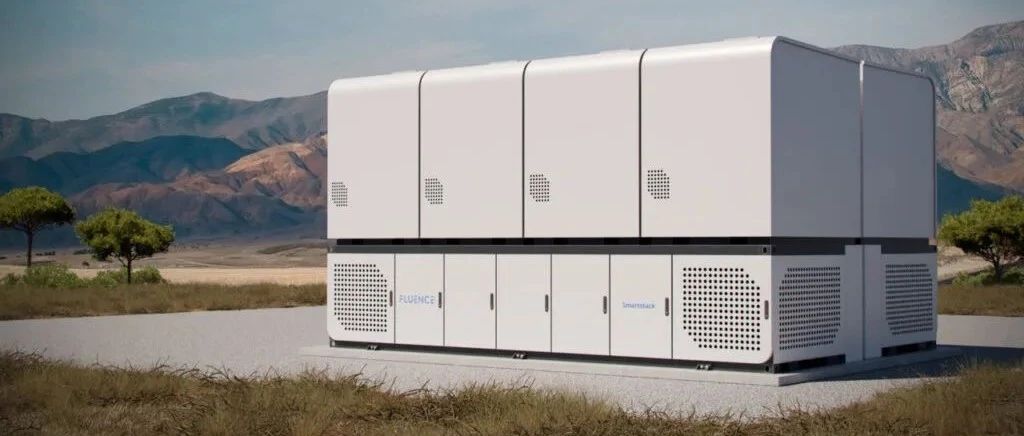
Core Viewpoint - Fluence has officially launched an automated battery storage manufacturing plant in Vietnam's Bắc Ninh Province, with an annual production capacity of 35 GWh, aimed at meeting the growing global demand for battery storage solutions [2][4]. Group 1: Manufacturing and Production Capacity - The new plant's annual capacity can meet the deployment needs of approximately 8.75 GW/4-hour storage systems [3]. - Fluence's Gridstack Pro and Smartstack series products will be produced at this facility, which are the company's latest generation of large-scale storage solutions [4]. - The Gridstack Pro system is designed for utility companies and independent power producers, featuring enhanced safety certifications and optimized design for deployment in capacity-constrained areas [4]. - The Smartstack system is more compact and integrates energy management functions, with a capacity of 7.5 MWh using 314 Ah cells [4]. Group 2: Financial Performance - In the third quarter of FY2025, Fluence reported revenues of $602.5 million, a year-on-year increase of 24.7% [5]. - The company reaffirmed its annual revenue target of $2.6 billion to $2.8 billion but indicated that due to slower-than-expected expansion at its new U.S. plant, revenues are likely to be at the lower end of this range [5]. - Despite delays in expansion affecting some expected revenues, Fluence anticipates that these facilities will reach target capacity by the end of the year, ensuring timely delivery to customers [6]. - As of June 30, 2025, Fluence has deployed 6.3 GW/16.7 GWh of storage systems, with signed pending orders totaling 8.2 GW and a total reserve of planned and under-construction projects amounting to 35.7 GW/114.3 GWh [6]. Group 3: Industry Trends and Expansion - Southeast Asia is increasingly interested in energy storage technology, prompting Fluence to establish a manufacturing facility in Thailand to tap into this emerging market [7]. - Several Chinese energy storage companies are also expanding their manufacturing capacities in Southeast Asia, with notable investments such as CATL's $6 billion integrated battery project in Indonesia [7]. - Other companies like EVE Energy and Guoxuan High-Tech are also making significant strides in establishing production bases in the region, indicating a growing trend of global energy storage manufacturing centers [8][9].
亿纬锂能2025H1储能电池出货28.71GWh,储能营收102.98亿元,同比增长32.47%
中关村储能产业技术联盟· 2025-08-22 10:41
Core Viewpoint - The article highlights the financial performance and market dynamics of EVE Energy in the first half of 2025, emphasizing significant growth in revenue and battery shipments, while also noting a decline in net profit and non-recurring profit [2][6]. Financial Performance - In the first half of 2025, EVE Energy achieved a revenue of approximately 28.2 billion yuan, representing a year-on-year growth of 30.06% [2]. - The net profit attributable to shareholders was 1.605 billion yuan, a decrease of 24.9% year-on-year [2]. - The non-recurring net profit was 1.157 billion yuan, down 22.82% compared to the previous year [2]. Business Segments - The company shipped 21.48 GWh of power batteries, marking a year-on-year increase of 58.58% [3]. - The shipment of energy storage batteries reached 28.71 GWh, reflecting a growth of 37.02% year-on-year [3]. Revenue and Cost Analysis - Revenue from the electronic components manufacturing sector was approximately 28.17 billion yuan, with a gross margin of 17.33%, showing a 1.21% increase year-on-year [4]. - Power battery revenue was 12.75 billion yuan, with a gross margin of 17.60%, up 6.92% year-on-year [4][6]. - Energy storage battery revenue was 10.30 billion yuan, with a gross margin of 12.03%, down 2.32% year-on-year [4][6]. - Domestic revenue was 21.20 billion yuan, with a gross margin of 15.88%, increasing by 1.64% year-on-year [4][6]. - Overseas revenue was 6.97 billion yuan, with a gross margin of 21.71%, showing a slight decrease of 0.02% year-on-year [4][6]. Market Dynamics - The global energy storage demand is experiencing high growth, driven by core market quality improvements and emerging regions [5]. - In China, new energy storage installations reached 42.61 GWh in the first half of 2025, a year-on-year increase of 27.5% [7]. - The U.S. market is expected to reach a cumulative energy storage installation of 49 GWh for the year, while Europe is incentivizing storage development through subsidies [7]. - The company is focusing on strategic partnerships with leading energy firms to accelerate technological innovation and market expansion [7].


25家竞标,报价0.3931-0.52元/Wh!内蒙古能源5.2GWh储能系统中标候选人公示
中关村储能产业技术联盟· 2025-08-22 10:41
Core Viewpoint - The article discusses the procurement results for independent energy storage projects in Inner Mongolia, highlighting the winning bidders and their respective bid prices for three project segments [2][3]. Group 1: Project Overview - The projects include the 500MW/2GWh independent energy storage project in Hohhot, the 400MW/1.6GWh project in Dengkou County, and the 400MW/1.6GWh project in Balinzuoqi, Inner Mongolia [2][6]. - The total number of participating companies in the bidding was 25, with bid prices ranging from 0.3931 to 0.52 yuan/Wh [3]. Group 2: Winning Bidders and Bid Prices - For Segment 1 (Hohhot project), the winning bidders and their bid prices were: - CRRC Zhuzhou Electric Locomotive Research Institute: 792 million yuan, 0.396 yuan/Wh - BYD Auto Industry: 796 million yuan, 0.398 yuan/Wh - Shandong Electric Era Energy Technology: 797.6 million yuan, 0.399 yuan/Wh [5][6]. - For Segment 2 (Dengkou project), the winning bidders and their bid prices were: - BYD Auto Industry: 628.43 million yuan, 0.393 yuan/Wh - Shandong Electric Era Energy Technology: 636.1 million yuan, 0.398 yuan/Wh - Dongfang Electric Automatic Control Engineering: 627.295 million yuan, 0.392 yuan/Wh [5][6]. - For Segment 3 (Balinzuoqi project), the winning bidders and their bid prices were: - Shandong Electric Era Energy Technology: 638.1 million yuan, 0.399 yuan/Wh - Dongfang Electric Automatic Control Engineering: 628.95237 million yuan, 0.393 yuan/Wh - Xuchang XJ Electric Technology: 643.912 million yuan, 0.402 yuan/Wh [5][6]. Group 3: Bid Evaluation and Qualifications - The winning bidders met the qualification requirements, including having the necessary research and manufacturing capabilities for core products such as PCS and BMS, and holding ISO 9001 quality management system certification [7][8]. - The evaluation process ensured that if a bidder was selected as the first candidate for multiple segments, they would only be recommended for the segment with the highest priority [2][3].


国家电网孟庆强:国家电网经营区新型储能装机76GW,推动实现调节资源“同工同酬”
中关村储能产业技术联盟· 2025-08-22 10:41
Core Viewpoint - The article emphasizes the strategic significance of new energy storage in supporting the construction of a new power system and achieving "dual carbon" goals, highlighting the achievements and trends in China's new energy storage development [2][8]. Group 1: Achievements in New Energy Storage Development - The State Grid Corporation has significantly enhanced new energy storage technology innovation and mechanism construction, achieving substantial growth in both scale and quality [3]. - By the end of 2024, the cumulative installed capacity of new energy storage projects in China is expected to reach 73.76 million kilowatts, representing over a 130% increase from the end of 2023 [4]. - As of June 2025, the installed capacity in the State Grid's operating area reached 76.24 million kilowatts, with an annual increase of 17.48 million kilowatts, a year-on-year growth of 100.34% [4]. Group 2: Technological Advancements - The State Grid Corporation is leading the establishment of a technology innovation hub, promoting diverse technological innovations and demonstration applications, including lithium-ion and sodium-ion batteries [6]. - Over 40 national standards for new energy storage have been released or implemented, contributing to the continuous improvement of the standard system [6]. Group 3: Market Mechanism Improvements - The State Grid Corporation has pioneered the construction of a market-oriented mechanism for new energy storage, facilitating the release of its value [7]. - In 2024, the trading volume of new energy storage in the operating area reached 7.12 billion kilowatt-hours, a year-on-year increase of 2.7 times [7]. Group 4: Future Directions for New Energy Storage - The report outlines the need for new energy storage to evolve into a core system regulation component, clarifying its functional positioning within the new energy system [9]. - There is a focus on breakthroughs in long-duration energy storage technologies, with current applications dominated by lithium-ion batteries, which accounted for 96.4% of installed capacity in 2024 [10]. - The establishment of a multi-layered unified electricity market system is essential to enhance the market mechanisms for new energy storage, ensuring reasonable returns and cost distribution [11]. Group 5: Key Initiatives for High-Quality Development - The State Grid Corporation aims to strengthen top-level design and optimize resource allocation to support the implementation of the new energy storage plan [13]. - There is a commitment to tackle core technology challenges and promote the large-scale application of innovative storage technologies [14]. - The corporation will provide technical support for the construction of a unified national electricity market, enhancing the profitability pathways for new energy storage [15].


全球首次!中国月度用电量首破万亿大关,新能源占比显著提升
中关村储能产业技术联盟· 2025-08-21 12:18
Core Insights - In July, China's total electricity consumption exceeded 1 trillion kilowatt-hours for the first time, reaching 1.02 trillion kilowatt-hours, a year-on-year increase of 8.6%, marking a significant milestone in the power industry and reflecting the vitality of the Chinese economy [2] - The increase in electricity consumption was driven by multiple rounds of high temperatures and stable industrial production, with urban and rural residential electricity consumption reaching 203.9 billion kilowatt-hours, a year-on-year increase of 18.0% [2] - The share of renewable energy is undergoing a historic transformation, with the proportion of wind, solar, and biomass power generation rapidly increasing to nearly one-quarter of the total, indicating accelerated progress in China's energy transition [2] Industry Developments - Electricity is becoming a core competitive force in the Fourth Industrial Revolution, with the consensus in the global AI industry that "the end of computing power is electricity" [3] - The "East Data West Computing" strategy is steadily advancing, and new policies are being implemented to meet the growing electricity demand from emerging scenarios such as computing centers and smart factories [3] - The monthly electricity consumption surpassing 1 trillion kilowatt-hours not only signifies China's leading energy supply capacity globally but also indicates a strategic advantage in infrastructure construction for future industrial upgrades [3]